




19th-century Caldas Da Rainha "figulines" Palissy "serpent" Rustic Trompe-l'œil Plate
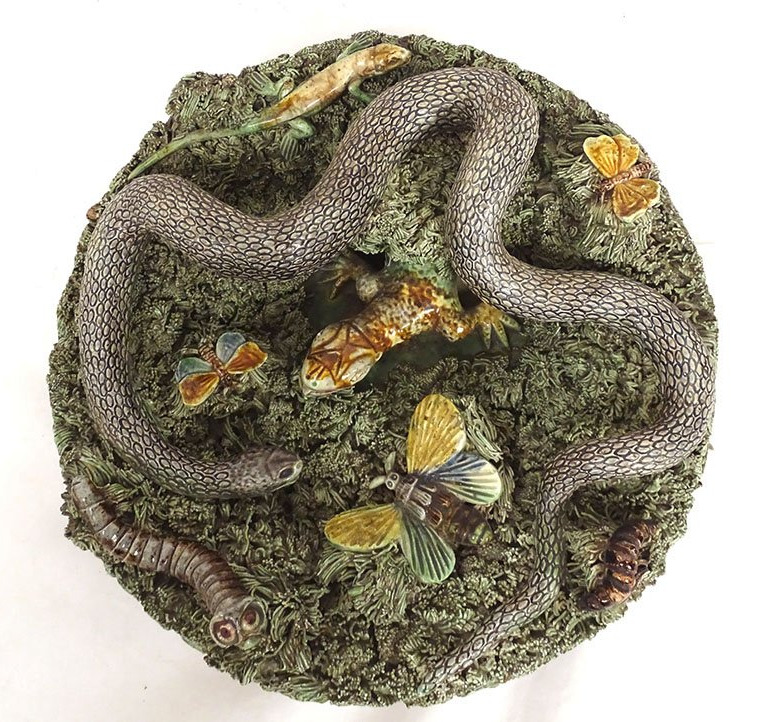
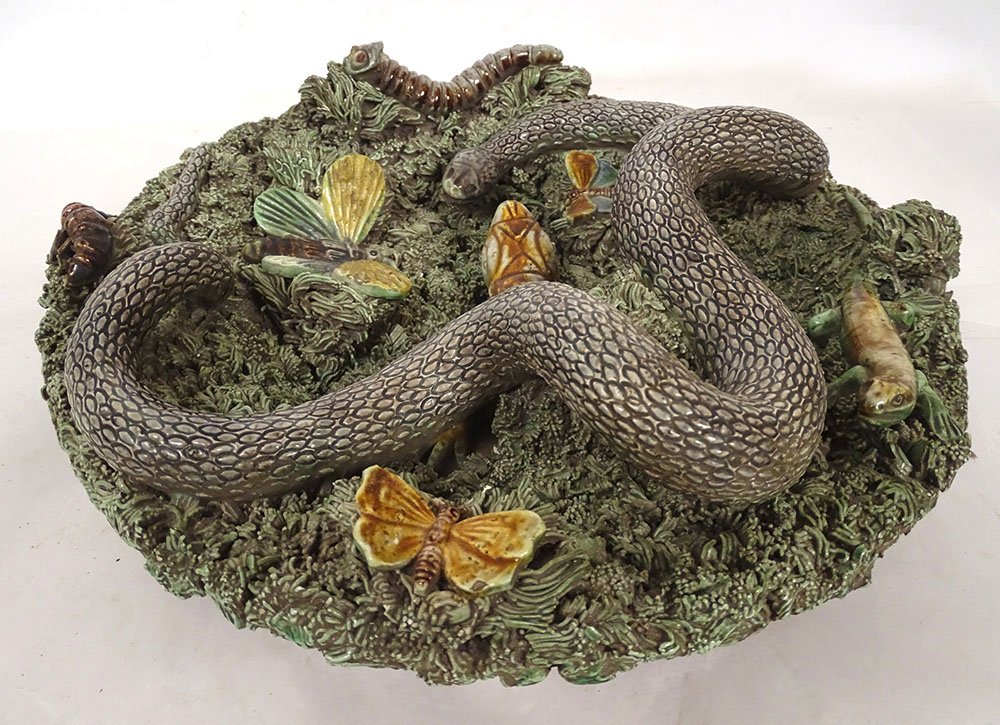
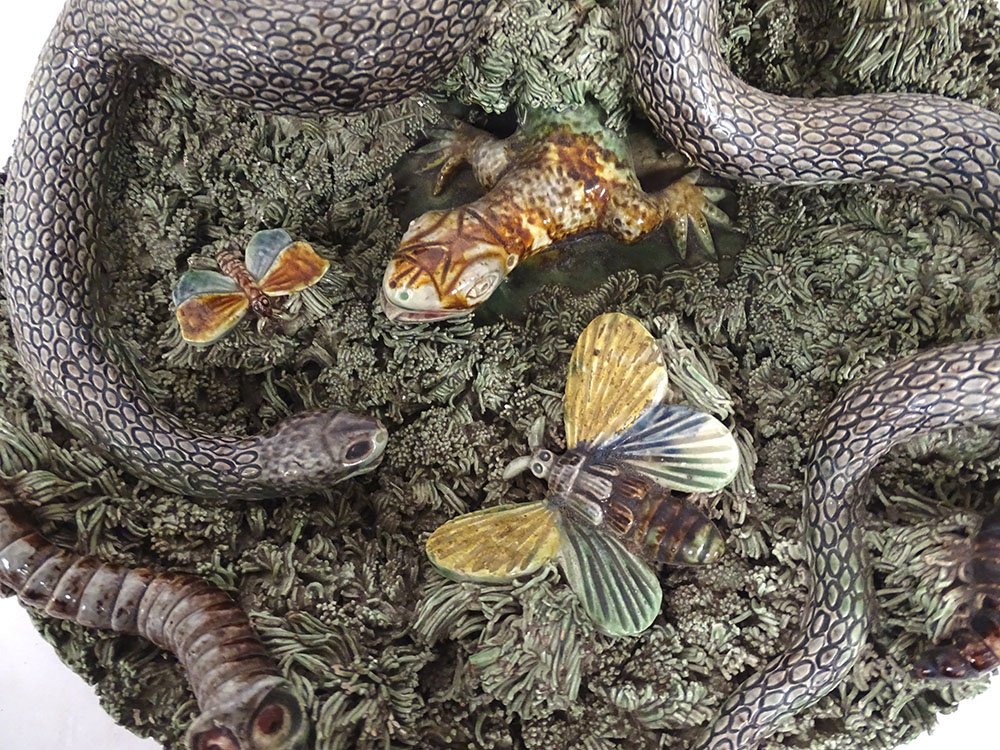
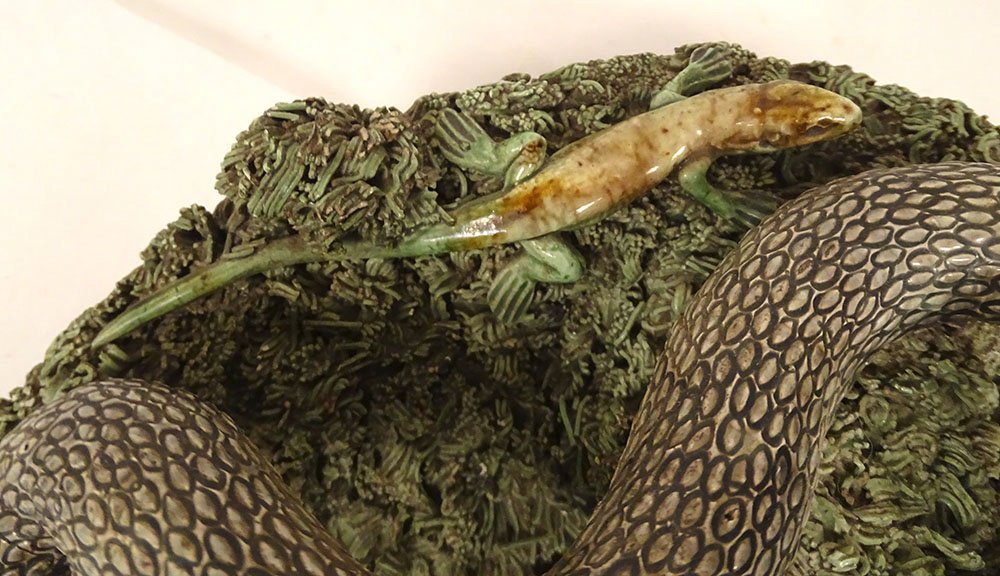
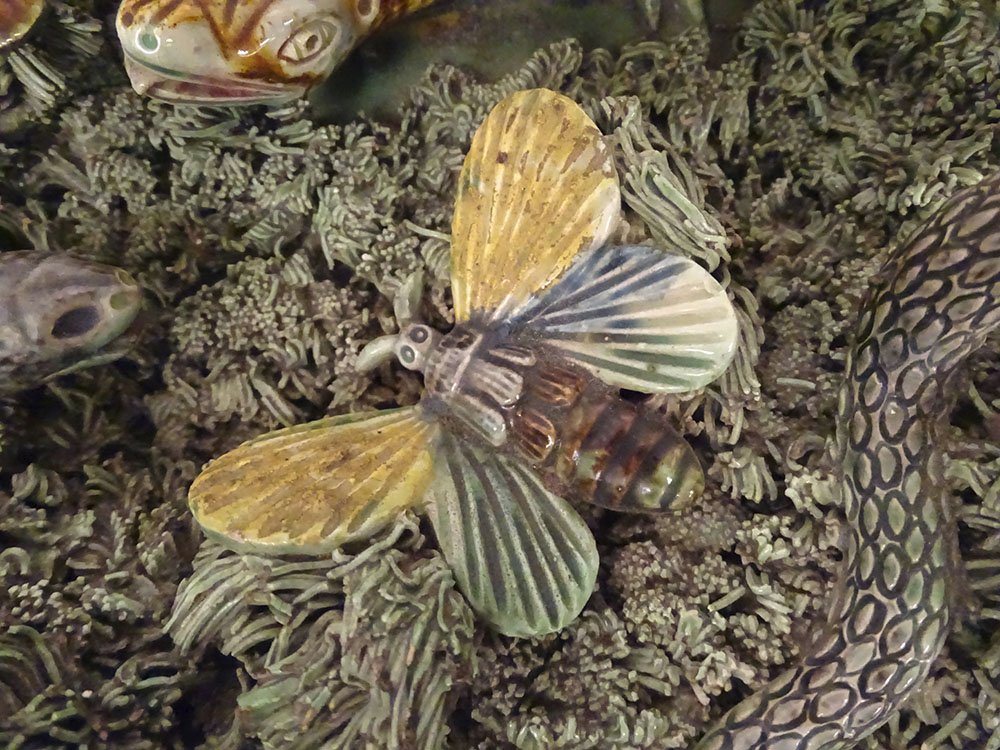
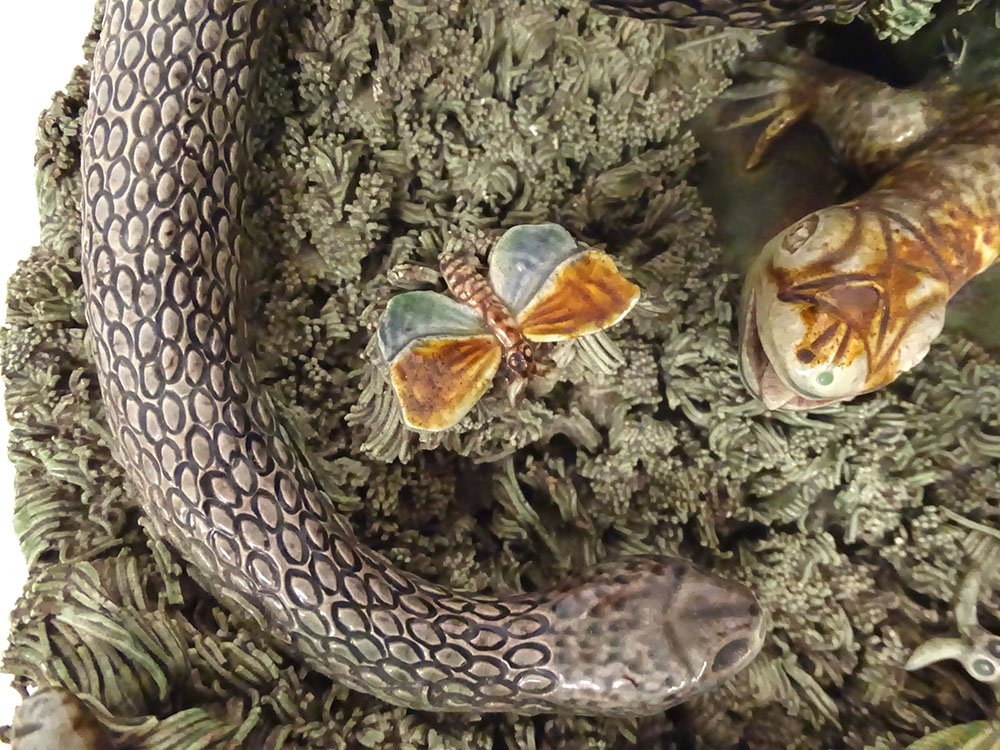
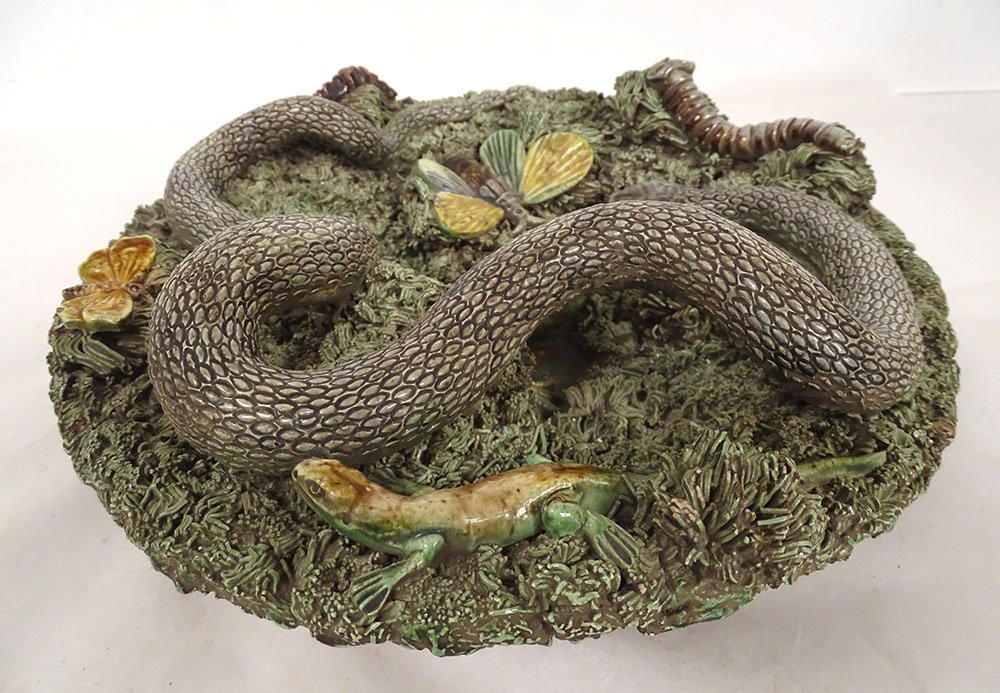
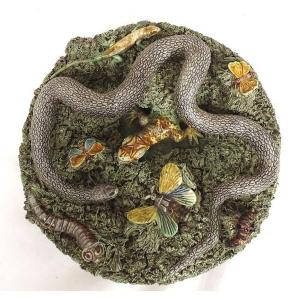
Round polychrome ceramic plate with a trompe l'oeil decoration of rustic figulines* in the tradition of Bernard Palissy. Attributed to the artist José Alves Cunha in the Portuguese workshops of Caldas da Rainha. A large gray snake with textured scales winds its way across the entire piece. In the center, a spotted lizard emerges from the grass, surrounded by an insect, colorful butterflies, and a crawling worm.
The background is rendered using the “musgado” technique: the green background strikingly imitates the moss and twigs of a forest floor.
Portuguese production of “rustic figulines,” heavily inspired by the work of Bernard Palissy, flourished in the 19th century. This movement was centered in Caldas da Rainha, a city that became the Portuguese capital of clay and artistic earthenware.
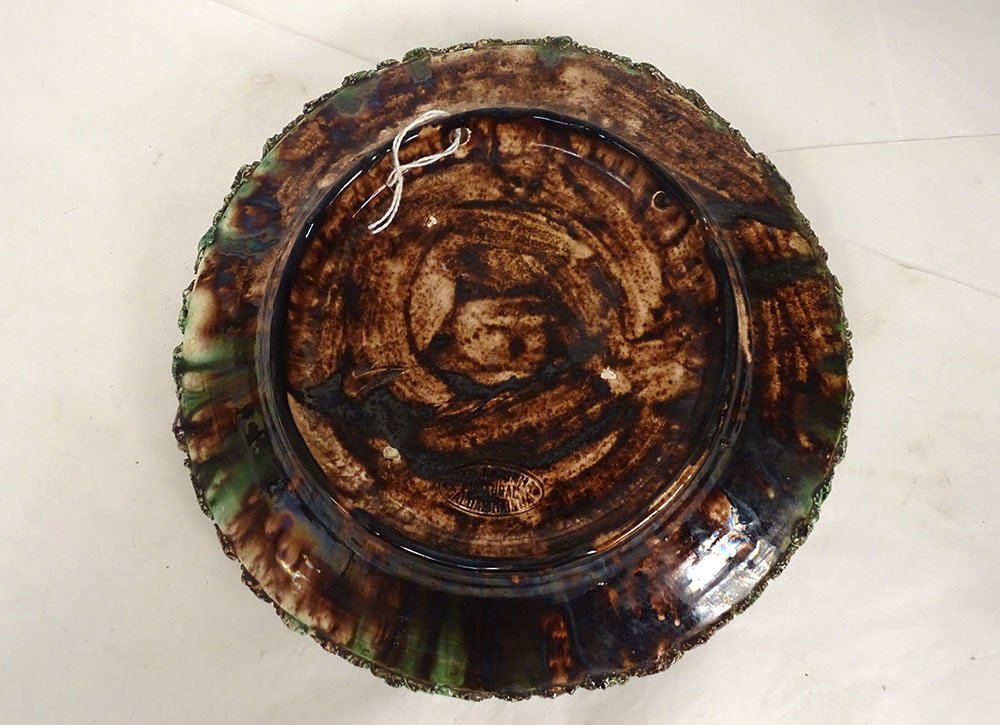
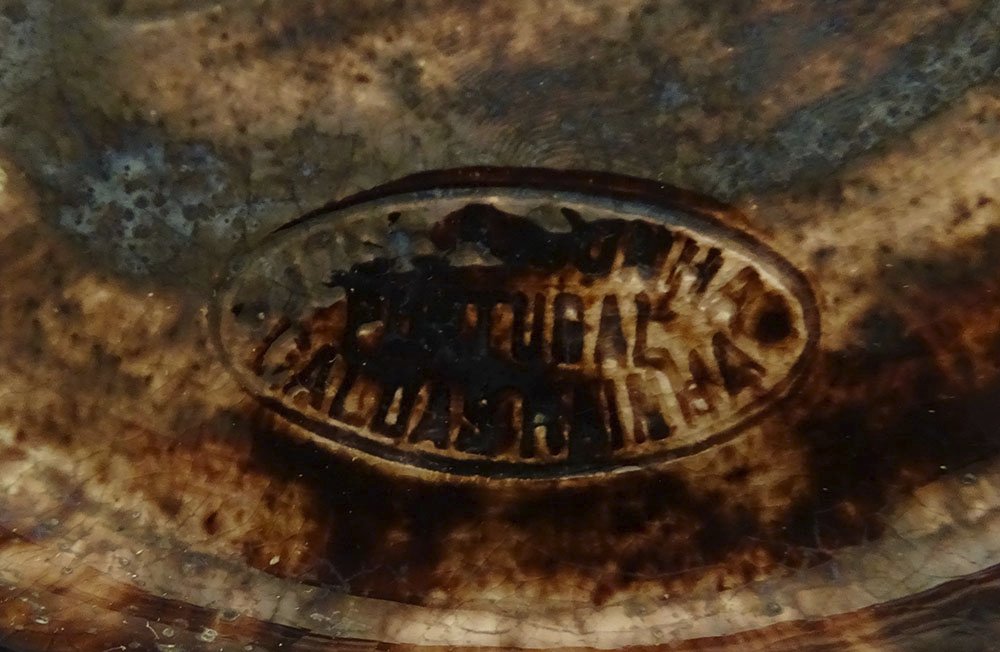
This dish is in good condition and of superb quality. Signed on the foot by the Portuguese workshop.
Please note: micro-chips along the edges of some decorations (foliage or animals), slight imperfections, and signs of age; see photos.
__________________________________
* The history of glazed earthenware during the French Renaissance is marked by the figure of the Saintonge potter Bernard Palissy (1510?–1590), around whom a legend has grown. In addition to his significant scientific contributions, this artist and writer is credited with creating the “rustiques figulines,” for which he received the official title of “Inventor of the King’s Figulines.” This decorative style, known as “rustiques figulines,” consists primarily of animals (fish, lizards, frogs, crayfish), shells, and plants rendered in high relief. The flora and fauna seem to come to life on a rocky surface. The extraordinary precision of the anatomical details and the vigorous naturalism are the result of mastery of the techniques of direct casting from life and overmolding, as well as expertise in marbled glazes. (See the Louvre Museum website).
Dimensions- Diameter 25 cm
- Depth 8 cm
- All photos are available at:
www.antiques-delaval.com
Period: 19th century
Style: Other Style
Condition: Good condition
Diameter: 25 cm
Depth: 8 cm
Reference (ID): 1839401
Availability: In stock