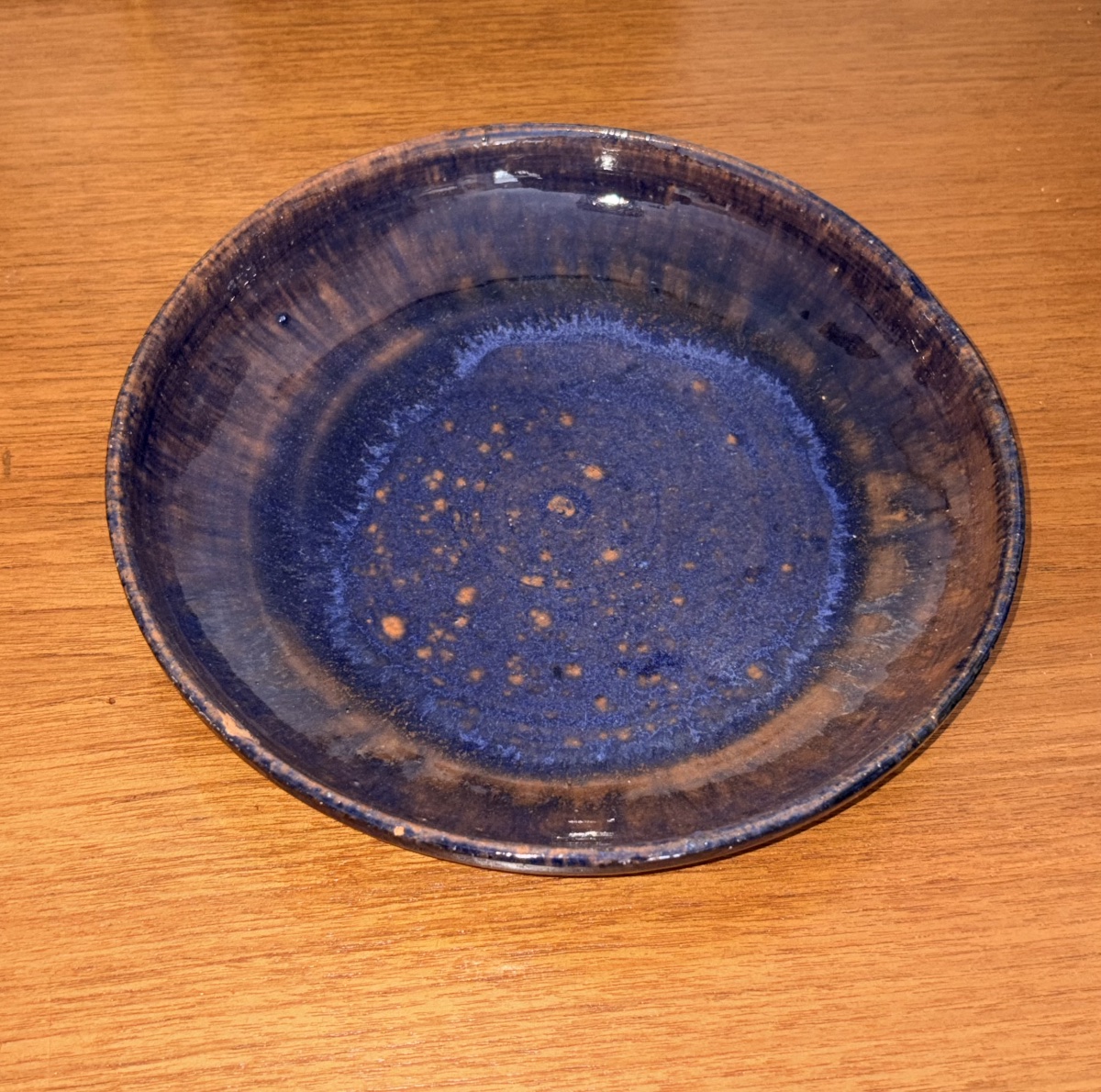
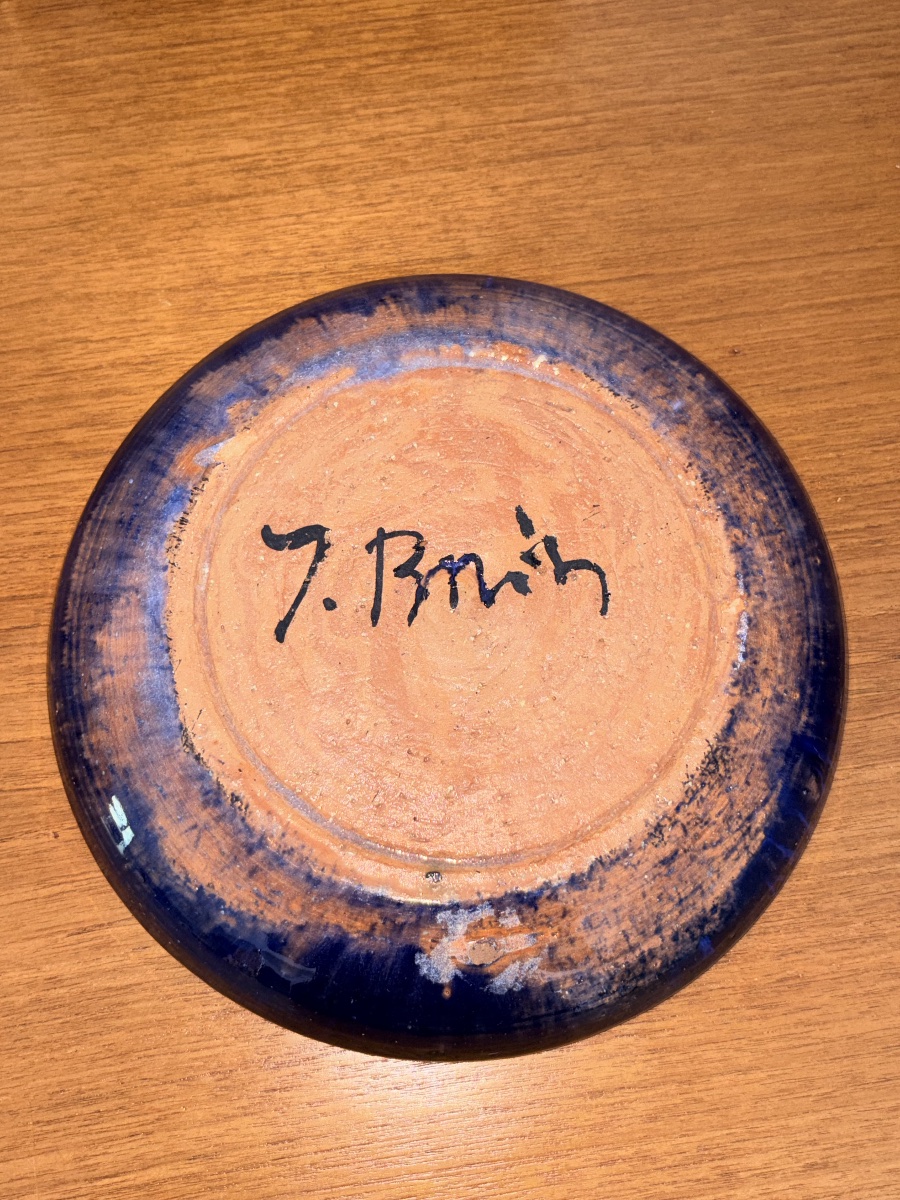
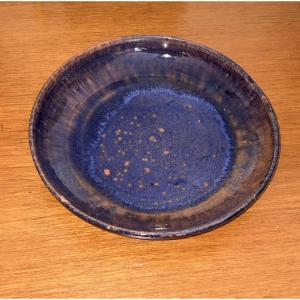


Brisy Jean Glazed Earthenware Plate, 20th Century
A lovely glazed earthenware plate with a blue-tinged glaze by Jean BRISY.
Diameter: 24 cm
Weight: 473 grs
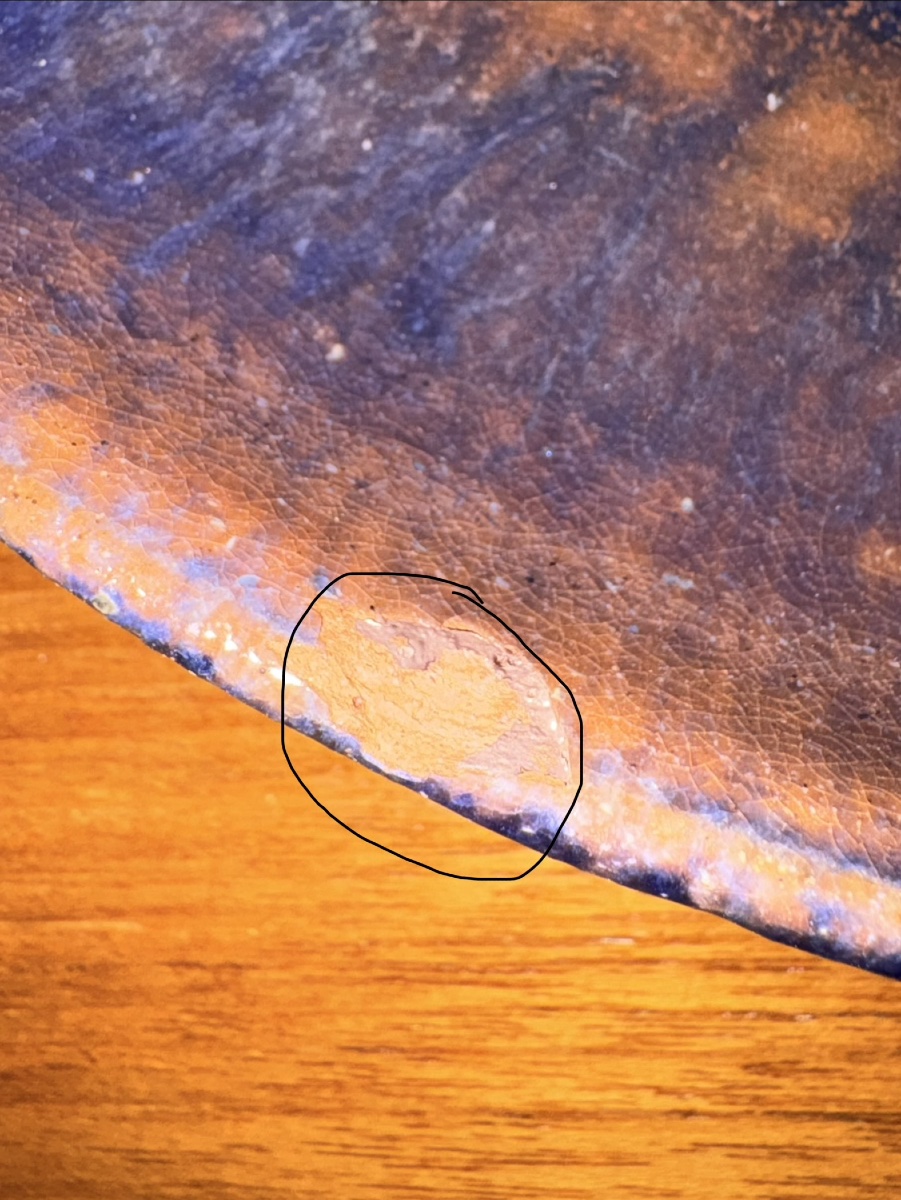
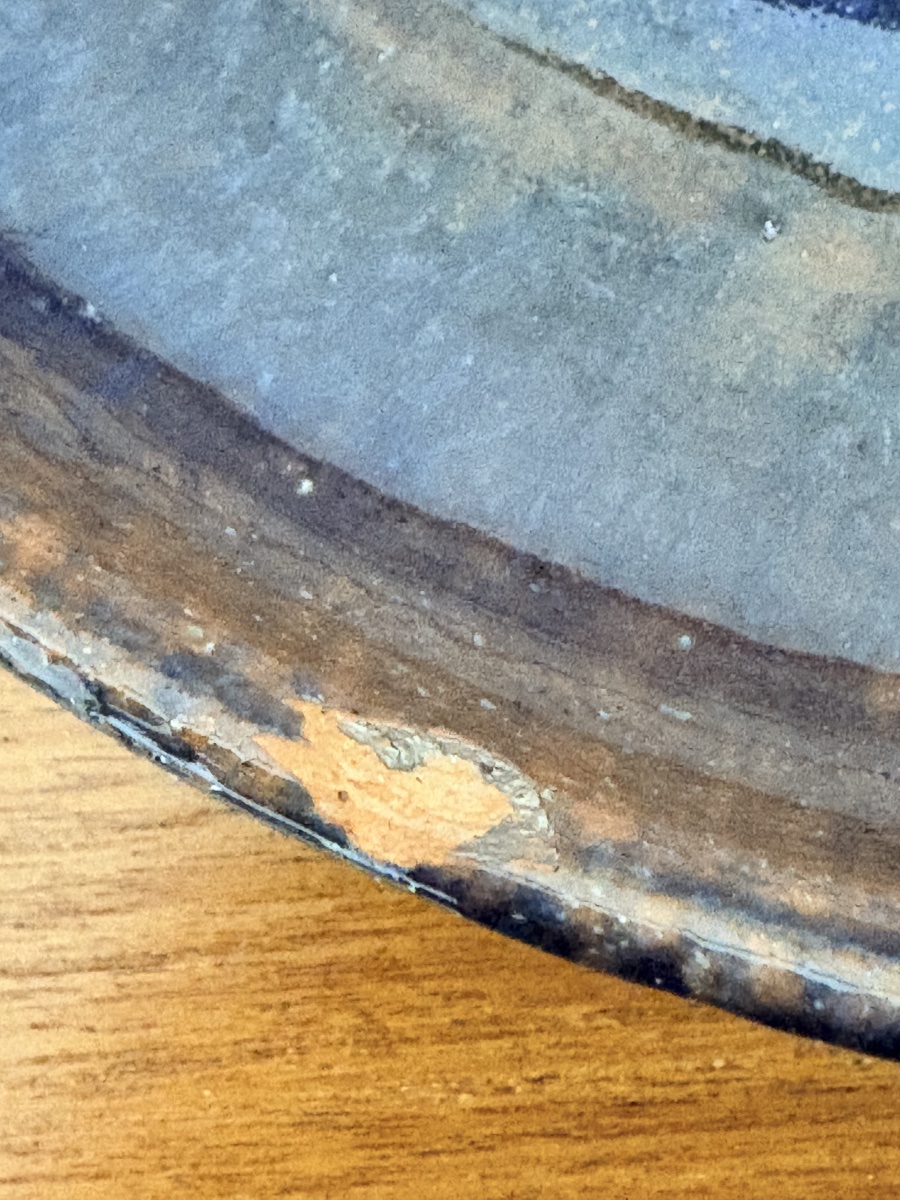
Note: two slight chips in the glaze
Jean Brisy: Jean Brisy was destined for a career in music as a pianist. In 1940, the declaration of war (https://fr.wikipedia.org/wiki/Seconde_Guerre_mondiale) forced him to leave Lille, and he stayed with his grandparents, who were winemakers, in Chenonceaux (https://fr.wikipedia.org/wiki/Chenonceaux).
Upon his return, he decided to enroll at the Lille School of Fine Arts, where he took four years of academic courses and turned his attention to pottery (https://fr.wikipedia.org/wiki/Poterie). Together with his friend Boleslaw Danikowski, whom he met at the Lille School of Fine Arts, he trained as a potter in Saint-Laurent-les-Mâcon (https://fr.wikipedia.org/wiki/Saint-Laurent-les-M%C3%A2con) and shared his first studios[2]. In particular, in the early 1950s, he occupied the ruins of the Moulin des Loups pottery factory in Orchies (https://fr.wikipedia.org/wiki/Orchies) after it had been bombed. There he found lumps of clay, sacks of glazes, and a ruined kiln. They were then given permission to set up shop there and work.
In 1955, he established his own studio in the basement of 61 Rue de la Monnaie in Lille, where he would work until his death.
In 1957, he founded the group with Roger Frezin (https://fr.wikipedia.org/wiki/Roger_Frezin), Pierre Olivier (https://fr.wikipedia.org/wiki/Pierre_Olivier_(painter)), Lyse Oudoire, Jean Parsy (https://fr.wikipedia.org/wiki/Jean_Parsy), and Claude Vallois, L'Atelier de la Monnaie (https://fr.wikipedia.org/wiki/L'Atelier_de_la_Monnaie), an artistic collective that would bring about a true revolution in the art world of the Nord-Pas-de-Calais region [3].
Very early on, he turned to sculpture while continuing his work as a potter, a craft to which he remained deeply attached [4].
Source: Wikipedia
Glazed earthenware plate with blue hues by Jean Brisy
Numerous exhibitions and public collections are or have been on display in northern France
Diameter: 24 cm
Weight: 473 grs
Note: two slight chips in the glaze
Jean Brisy: Jean Brisy was destined for a career in music as a pianist. In 1940, the declaration of war (https://fr.wikipedia.org/wiki/Seconde_Guerre_mondiale) forced him to leave Lille, and he stayed with his grandparents, who were winemakers, in Chenonceaux (https://fr.wikipedia.org/wiki/Chenonceaux).
Upon his return, he decided to enroll at the Lille School of Fine Arts, where he took four years of academic courses and turned his attention to pottery (https://fr.wikipedia.org/wiki/Poterie). Together with his friend Boleslaw Danikowski, whom he met at the Lille School of Fine Arts, he trained as a potter in Saint-Laurent-les-Mâcon (https://fr.wikipedia.org/wiki/Saint-Laurent-les-M%C3%A2con) and shared his first studios[2]. In particular, in the early 1950s, he occupied the ruins of the Moulin des Loups pottery factory in Orchies (https://fr.wikipedia.org/wiki/Orchies) after it had been bombed. There he found lumps of clay, sacks of glazes, and a ruined kiln. They were then given permission to set up shop there and work.
In 1955, he established his own studio in the basement of 61 Rue de la Monnaie in Lille, where he would work until his death.
In 1957, he founded the group with Roger Frezin (https://fr.wikipedia.org/wiki/Roger_Frezin), Pierre Olivier (https://fr.wikipedia.org/wiki/Pierre_Olivier_(painter)), Lyse Oudoire, Jean Parsy (https://fr.wikipedia.org/wiki/Jean_Parsy), and Claude Vallois, L'Atelier de la Monnaie (https://fr.wikipedia.org/wiki/L'Atelier_de_la_Monnaie), an artistic collective that would bring about a true revolution in the art world of the Nord-Pas-de-Calais region [3].
Very early on, he turned to sculpture while continuing his work as a potter, a craft to which he remained deeply attached [4].
Source: Wikipedia
Glazed earthenware plate with blue hues by Jean Brisy
Numerous exhibitions and public collections are or have been on display in northern France
220 €
Period: 20th century
Style: Other Style
Condition: Good condition
Material: Ceramic
Diameter: 24 cm
Reference (ID): 1789063
Availability: In stock
Print