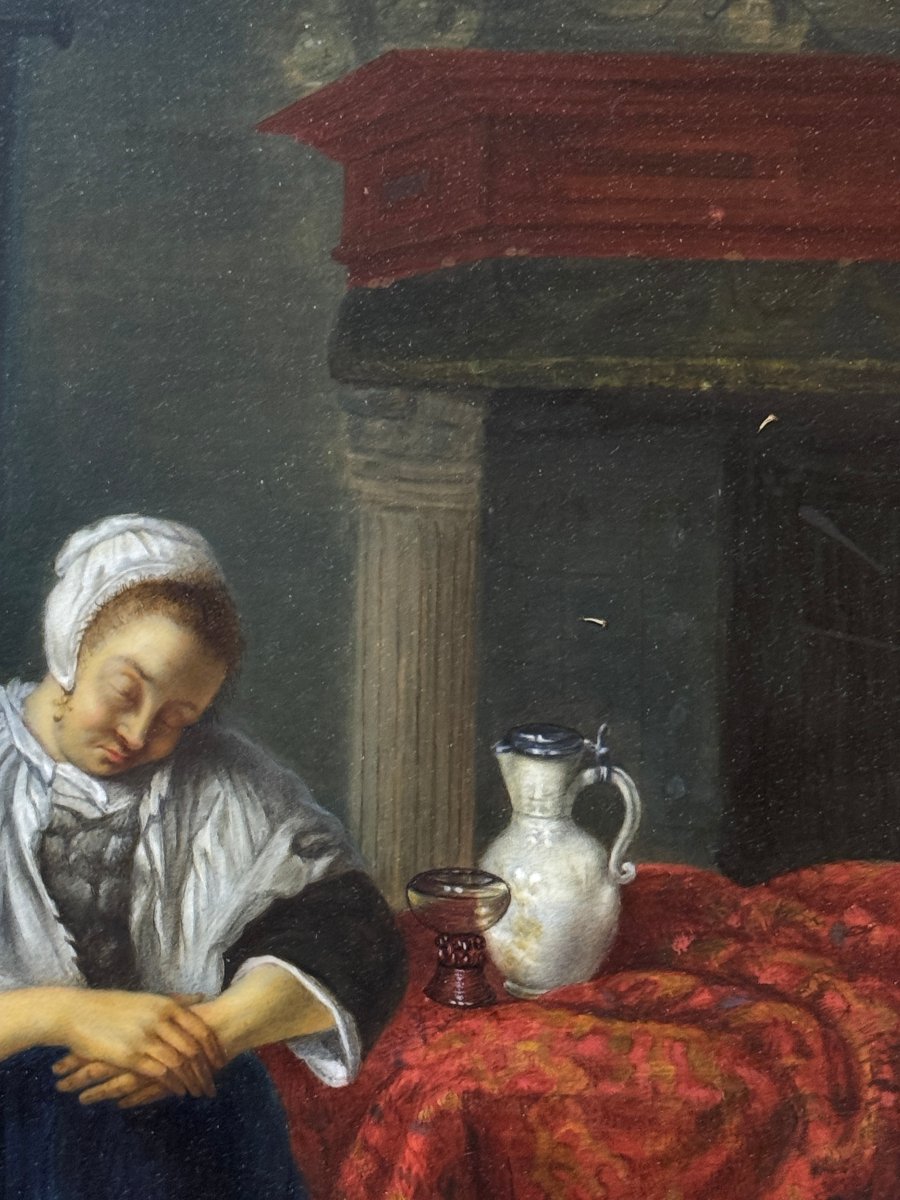
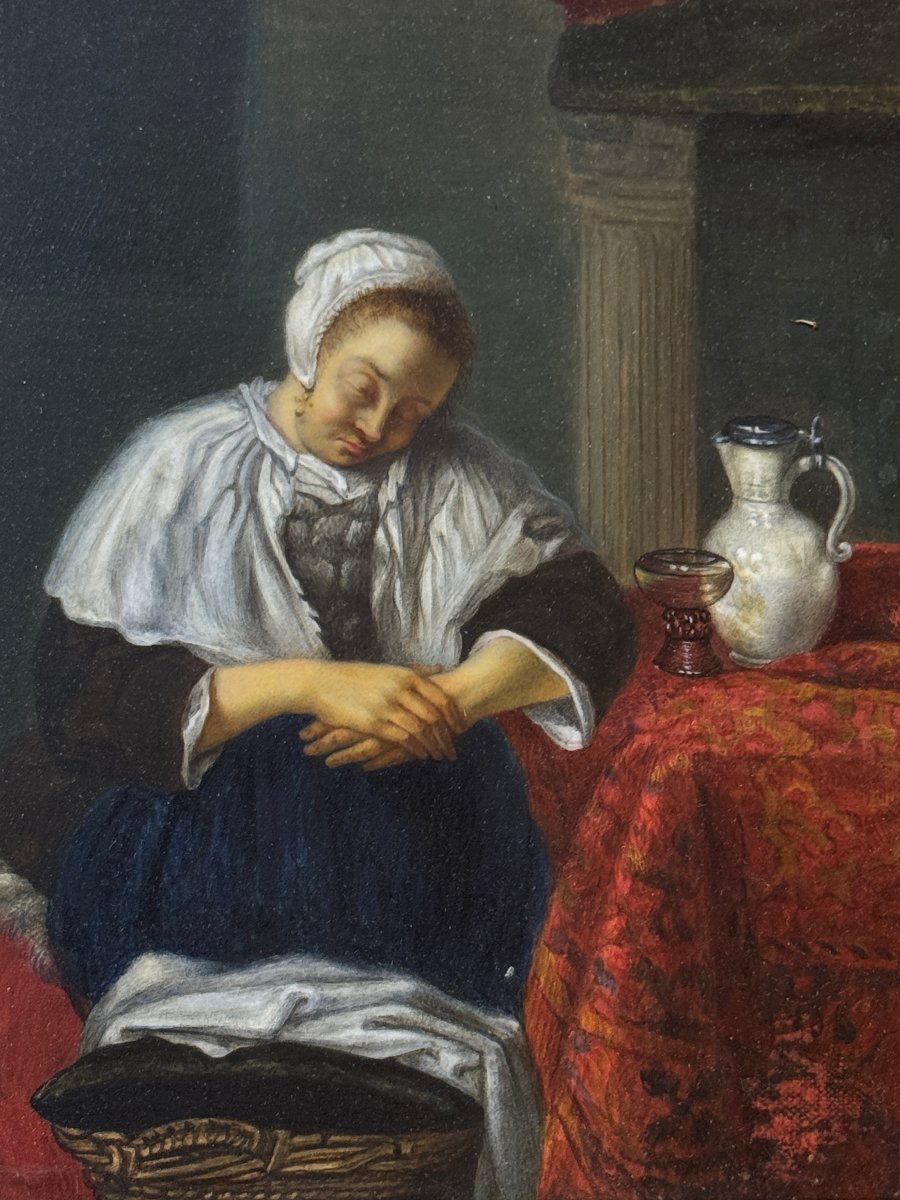
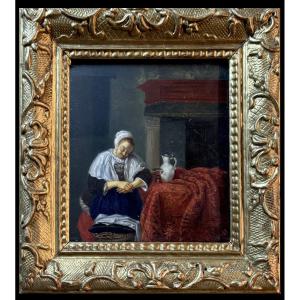


Based On A Work By Gabriel Metsu (1629–1667) That Was Lost During The Holocaust—“sleeping Woman”
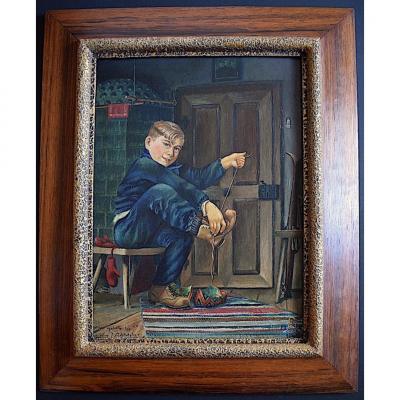
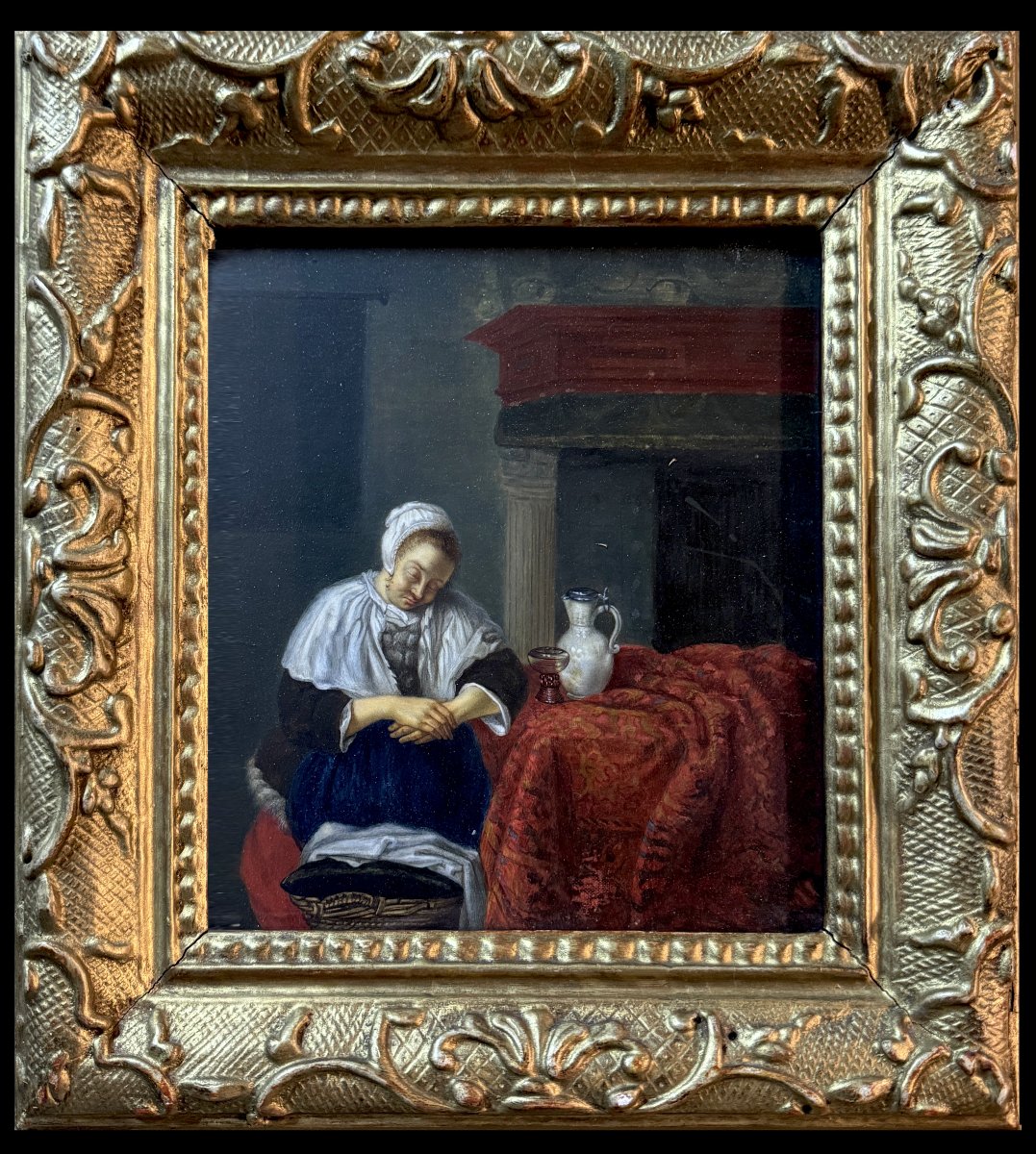
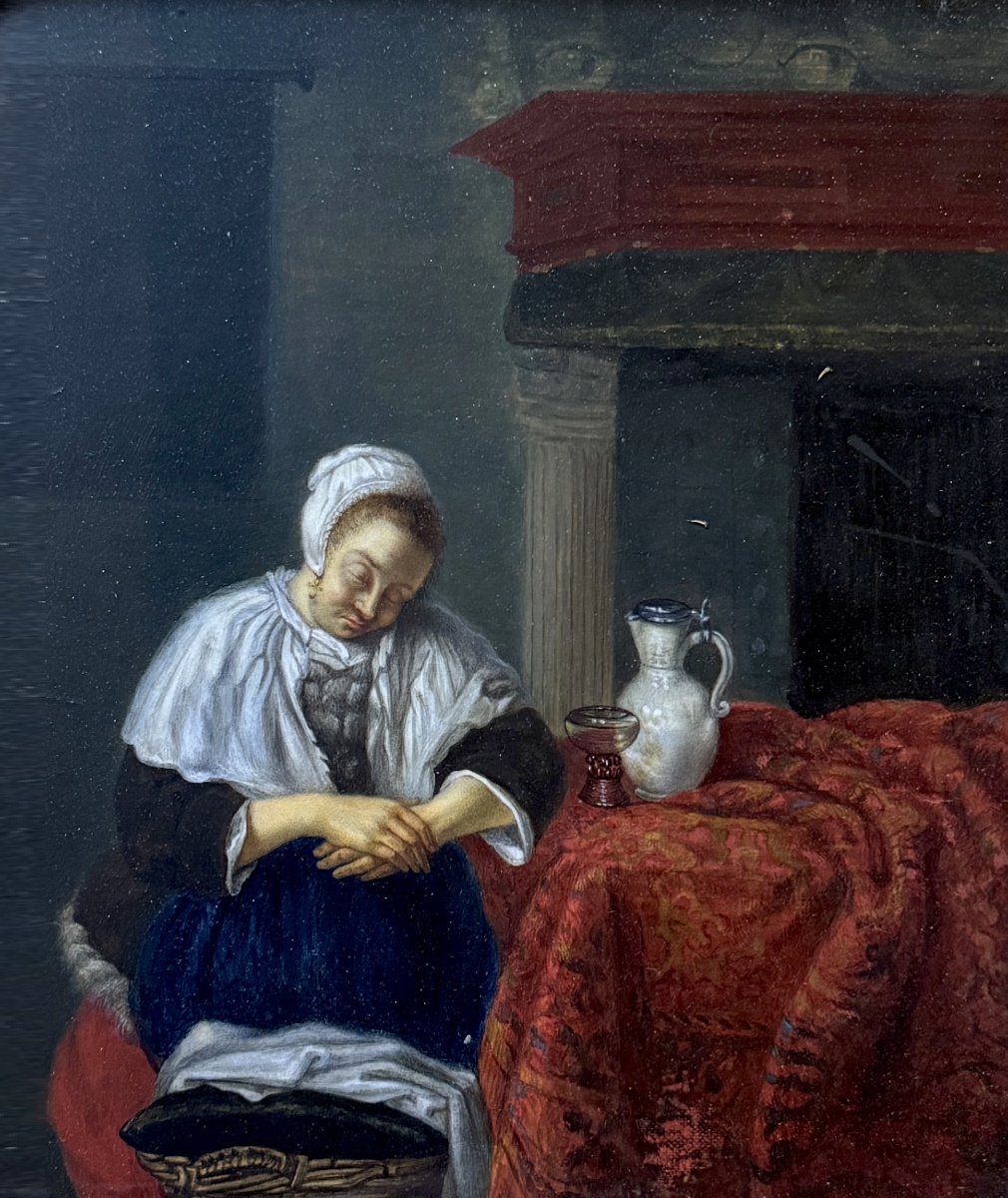
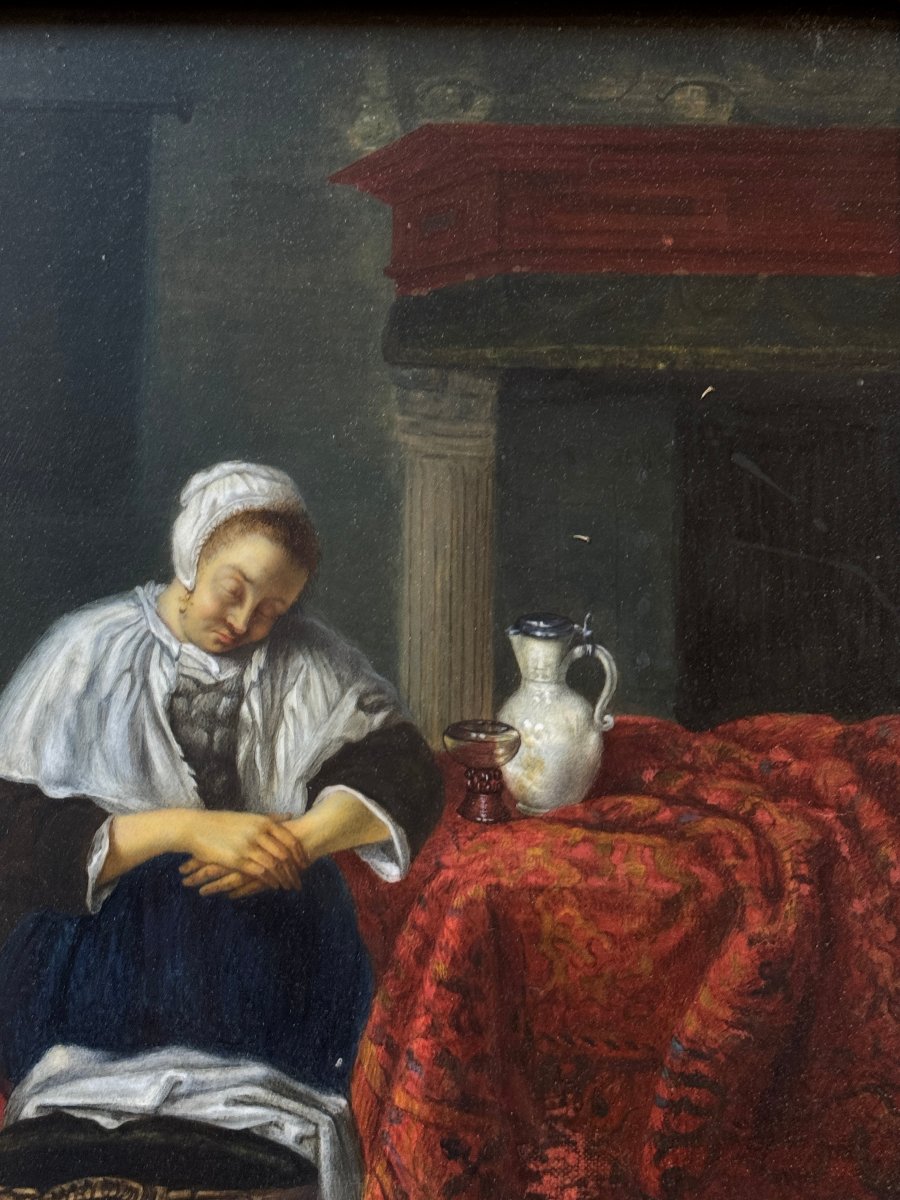
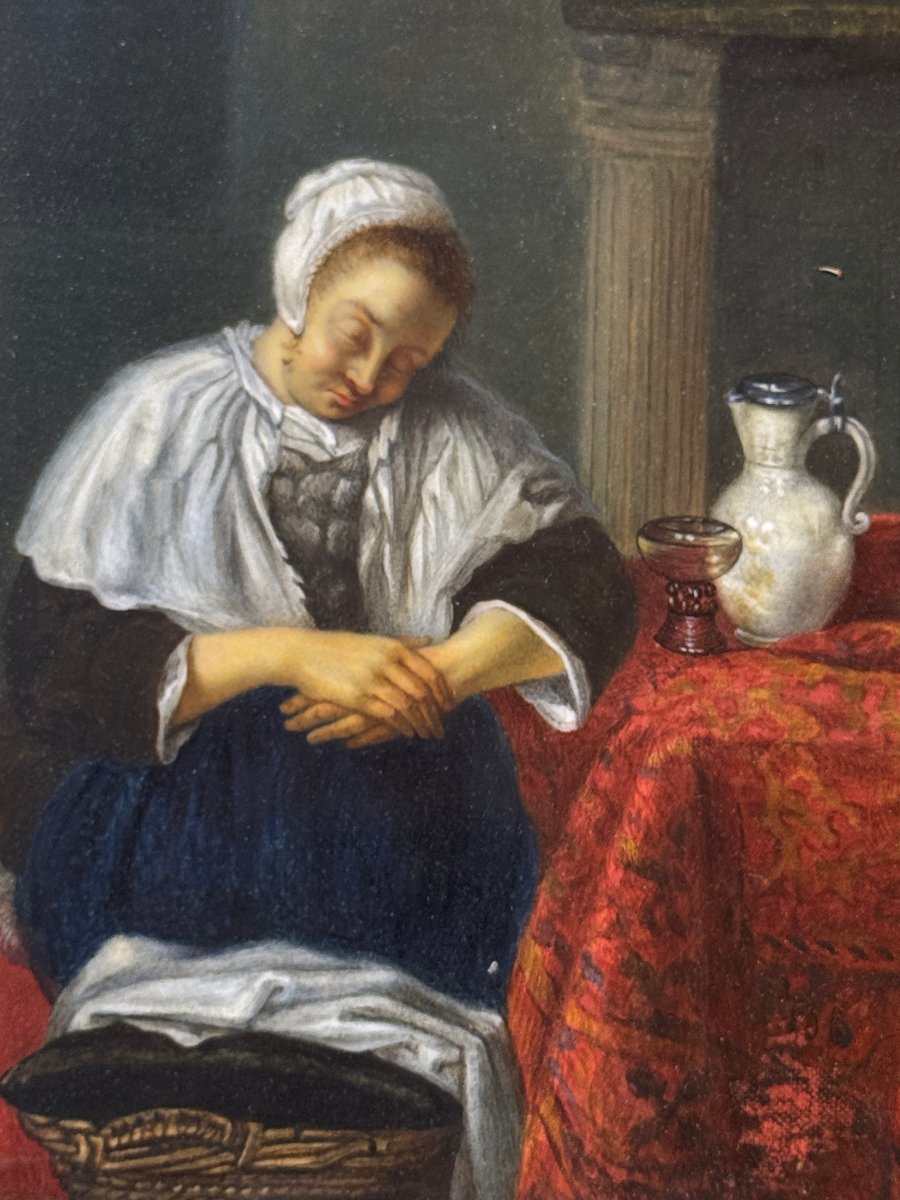
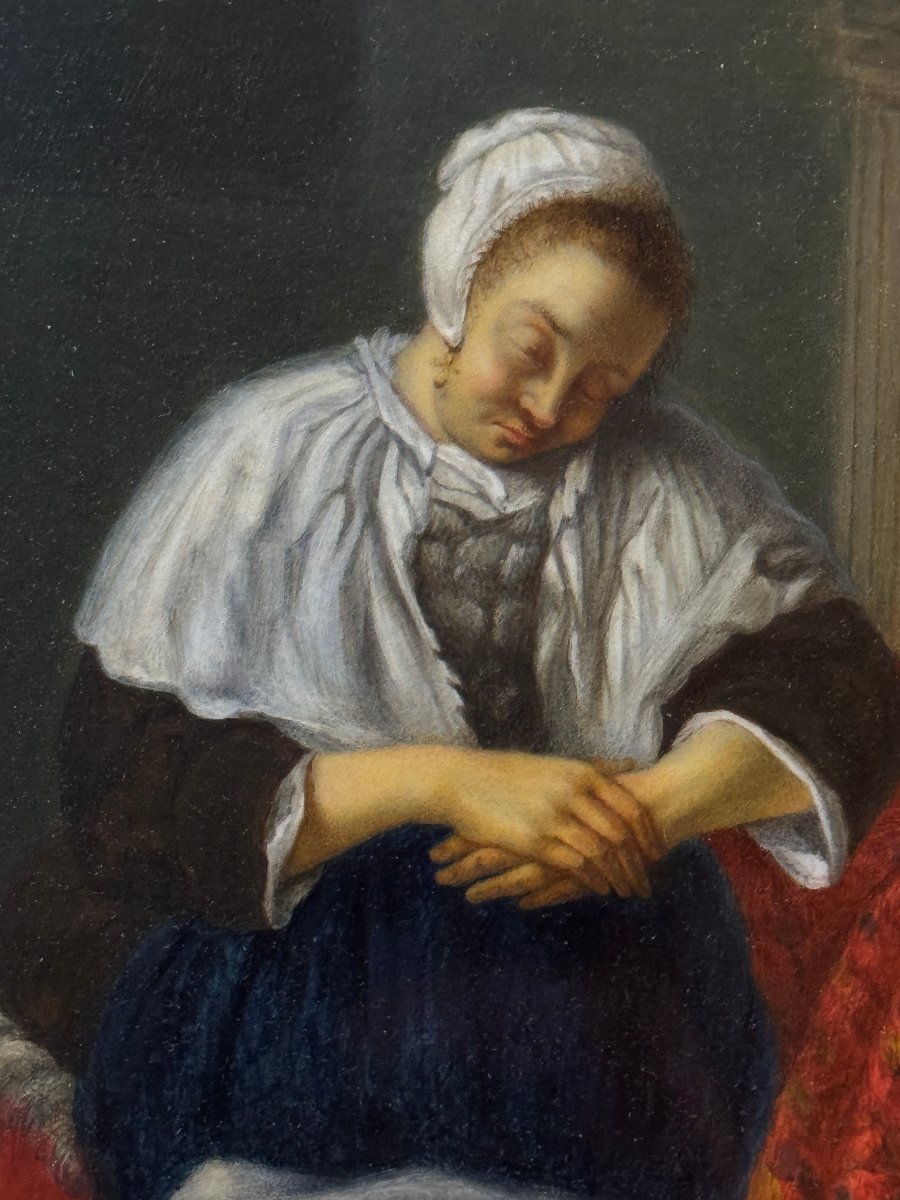
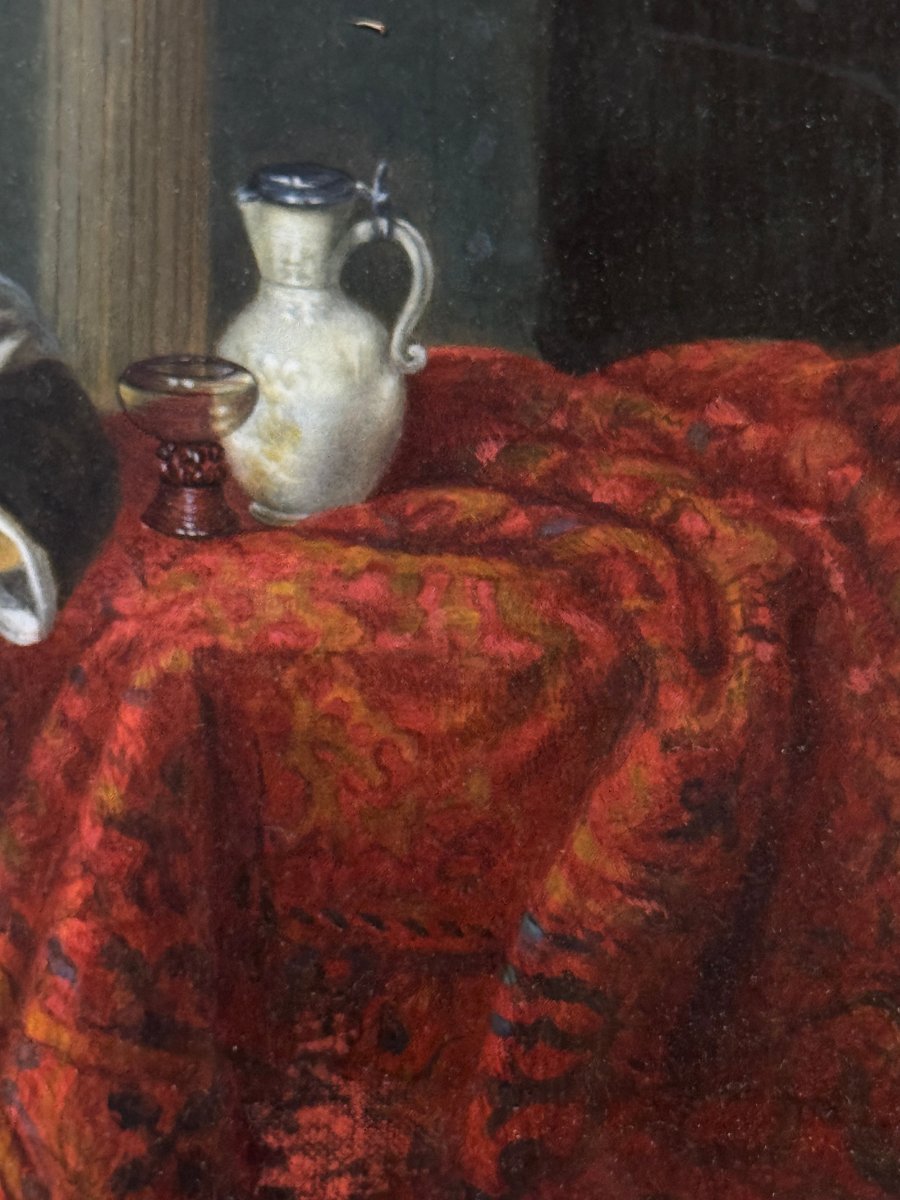
- Oil and gouache on heavy cardboard. An impeccable likeness to Metsu’s lost original.
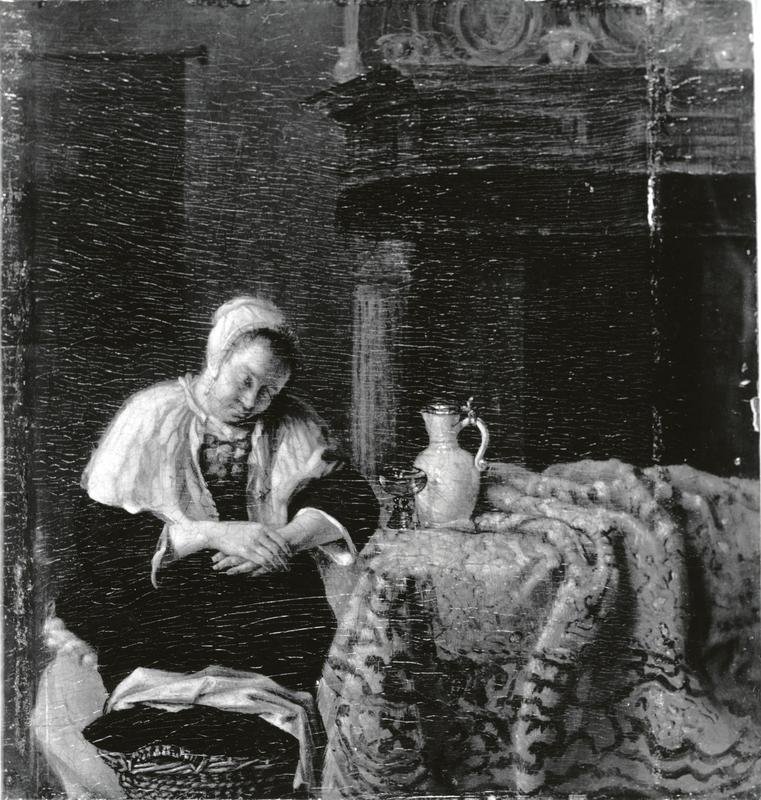
- The painting attributed to Gabriel Metsu, historically known as *Sleeping Woman at the Table* (or *Sleeping Woman by the Hearth*), was part of the prestigious collection of old master art belonging to Adolphe Schloss, a wealthy Jewish collector based in Paris. After the death of Adolphe Schloss in 1910, followed by that of his wife Lucie in 1938, the collection—comprising more than 300 masterpieces by 17th- and 18th-century European painters—remained in the custody of their heirs, amid a climate marked by a growing anti-Semitic threat on the eve of World War II.
When Germany invaded France, the Schloss family’s property was systematically plundered by the Vichy regime and the Nazi regime, which attempted to secretly move and confiscate the paintings. Part of the hidden collection was intercepted and transferred to the Jeu de Paume museum in Paris—which at the time served as a storage and sorting center for stolen works—before many pieces disappeared amid the chaos of the war or into the Gestapo’s basements.
The exact circumstances surrounding the creation of this copy remain unknown; it was most likely painted from life, as suggested by the impressive quality of its details. In any case, it constitutes an exceptional record for the study of works of art that disappeared during the great conflict of the 20th century, and represents the most direct surviving link to Metsu’s lost work.
- Image dimensions without frame: 18 x 20 cm / 28 x 30 cm with an exclusive, custom-made frame.
- The painting attributed to Gabriel Metsu, historically known as *Sleeping Woman at the Table* (or *Sleeping Woman by the Hearth*), was part of the prestigious collection of old master art belonging to Adolphe Schloss, a wealthy Jewish collector based in Paris. After the death of Adolphe Schloss in 1910, followed by that of his wife Lucie in 1938, the collection—comprising more than 300 masterpieces by 17th- and 18th-century European painters—remained in the custody of their heirs, amid a climate marked by a growing anti-Semitic threat on the eve of World War II.
When Germany invaded France, the Schloss family’s property was systematically plundered by the Vichy regime and the Nazi regime, which attempted to secretly move and confiscate the paintings. Part of the hidden collection was intercepted and transferred to the Jeu de Paume museum in Paris—which at the time served as a storage and sorting center for stolen works—before many pieces disappeared amid the chaos of the war or into the Gestapo’s basements.
The exact circumstances surrounding the creation of this copy remain unknown; it was most likely painted from life, as suggested by the impressive quality of its details. In any case, it constitutes an exceptional record for the study of works of art that disappeared during the great conflict of the 20th century, and represents the most direct surviving link to Metsu’s lost work.
- Image dimensions without frame: 18 x 20 cm / 28 x 30 cm with an exclusive, custom-made frame.
2 400 €
Period: 19th century
Style: Other Style
Condition: Excellent condition
Material: Oil painting on wood
Reference (ID): 1839098
Availability: In stock
Print