


A 19th-century Gold And Enamel Necklace Known As A "slavery Necklace"
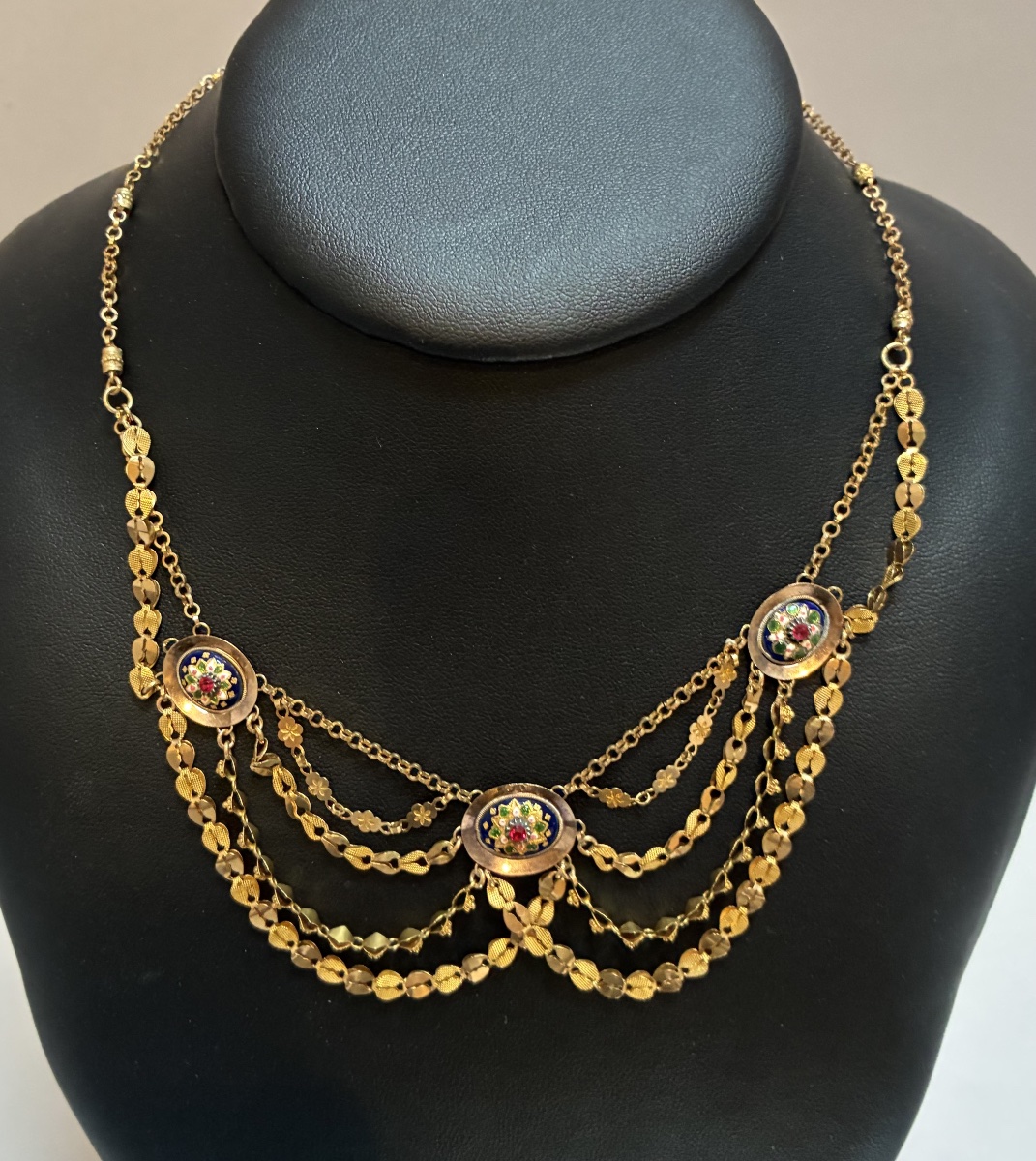
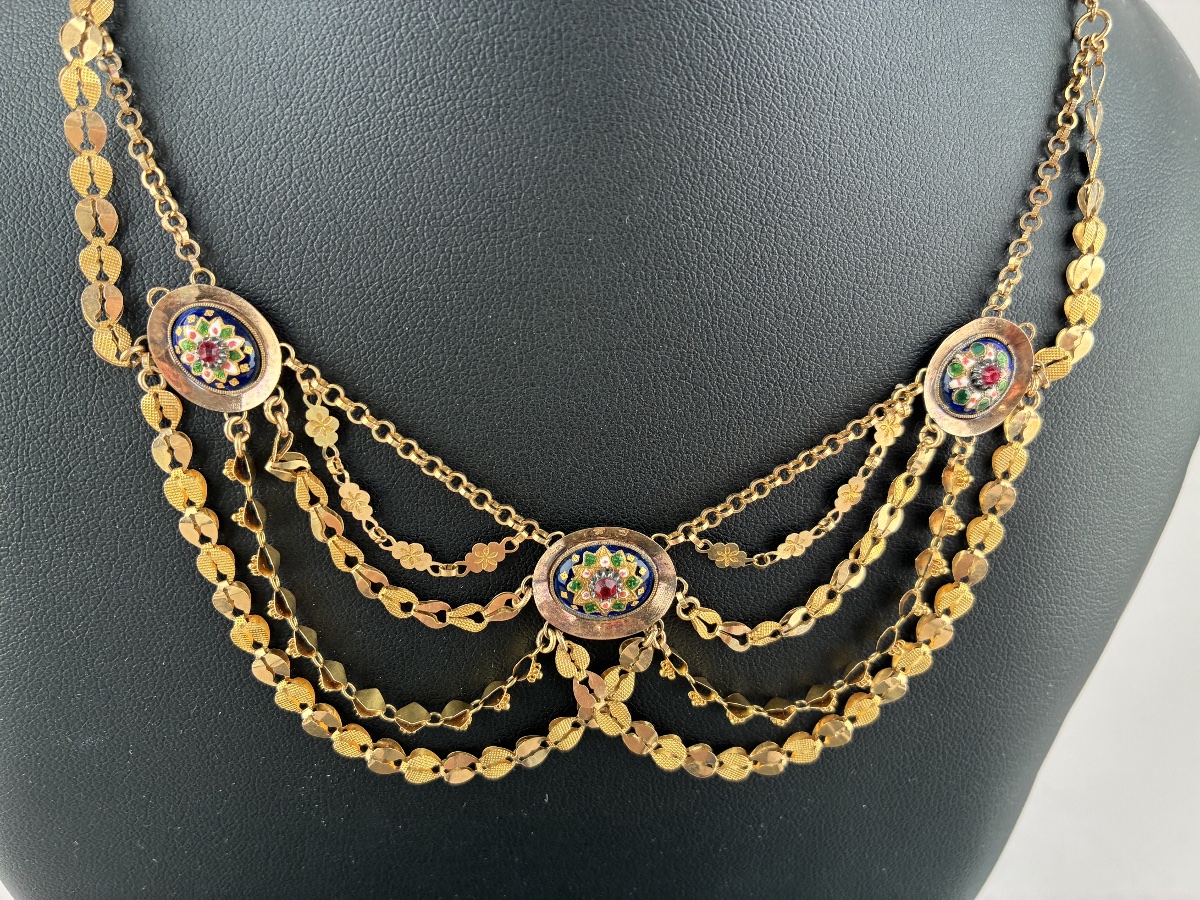
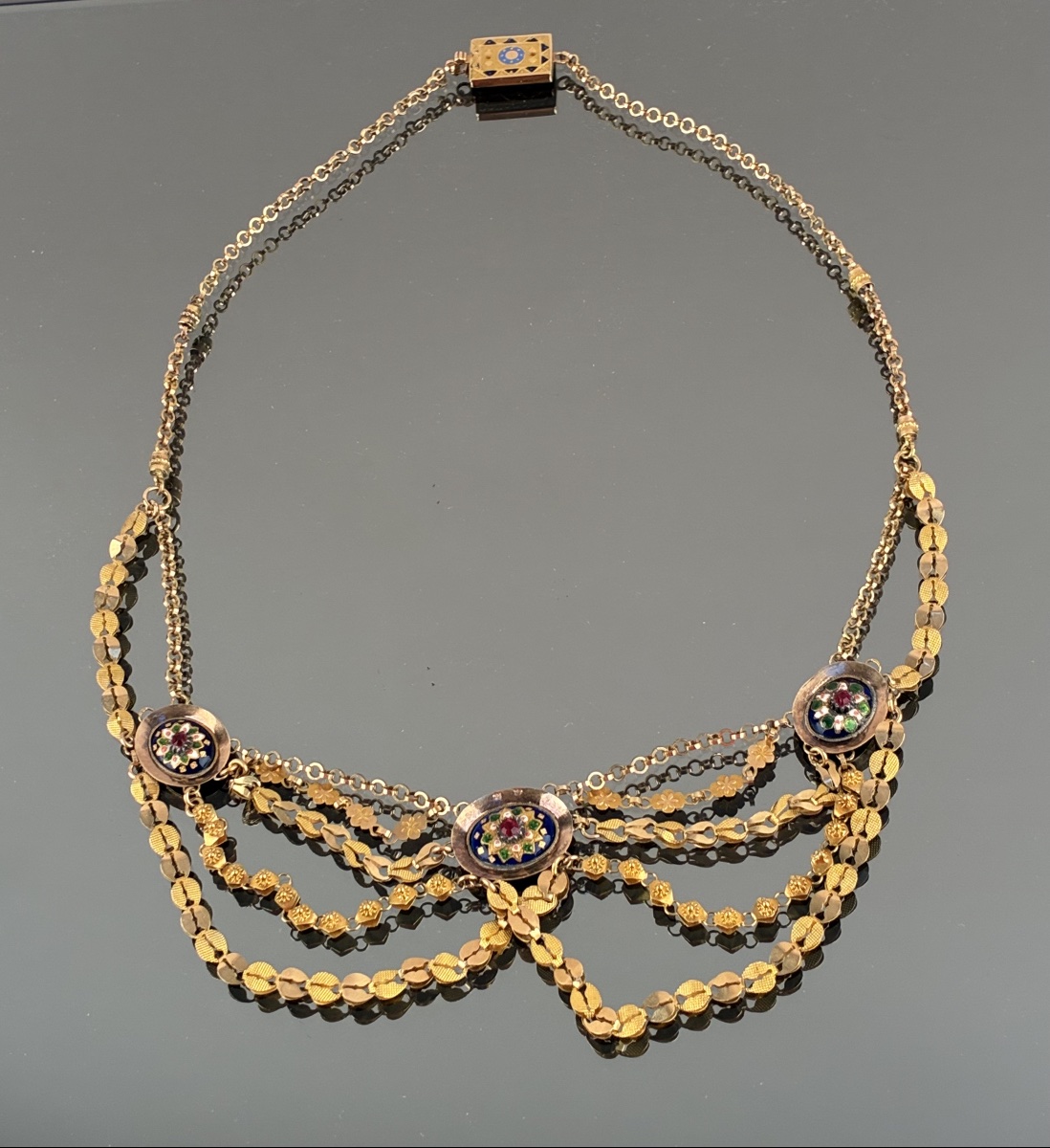
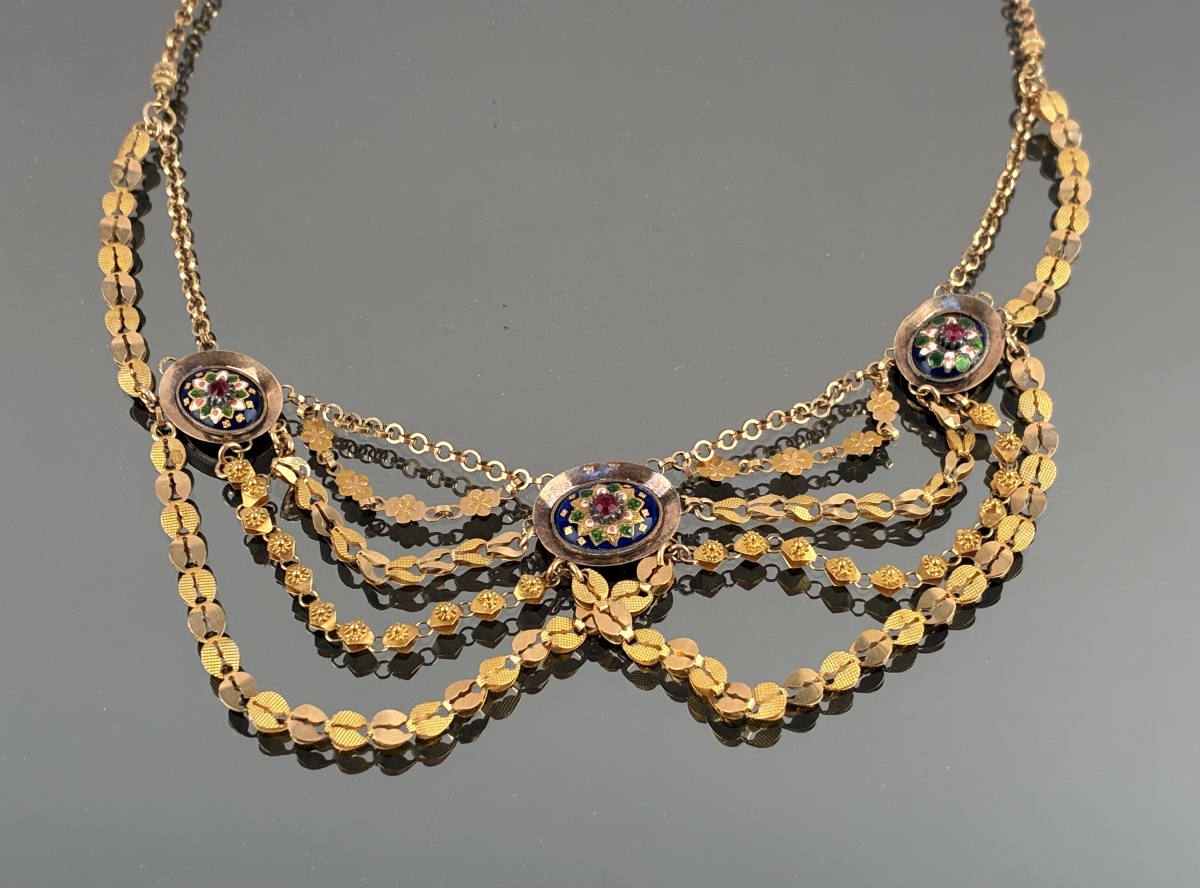
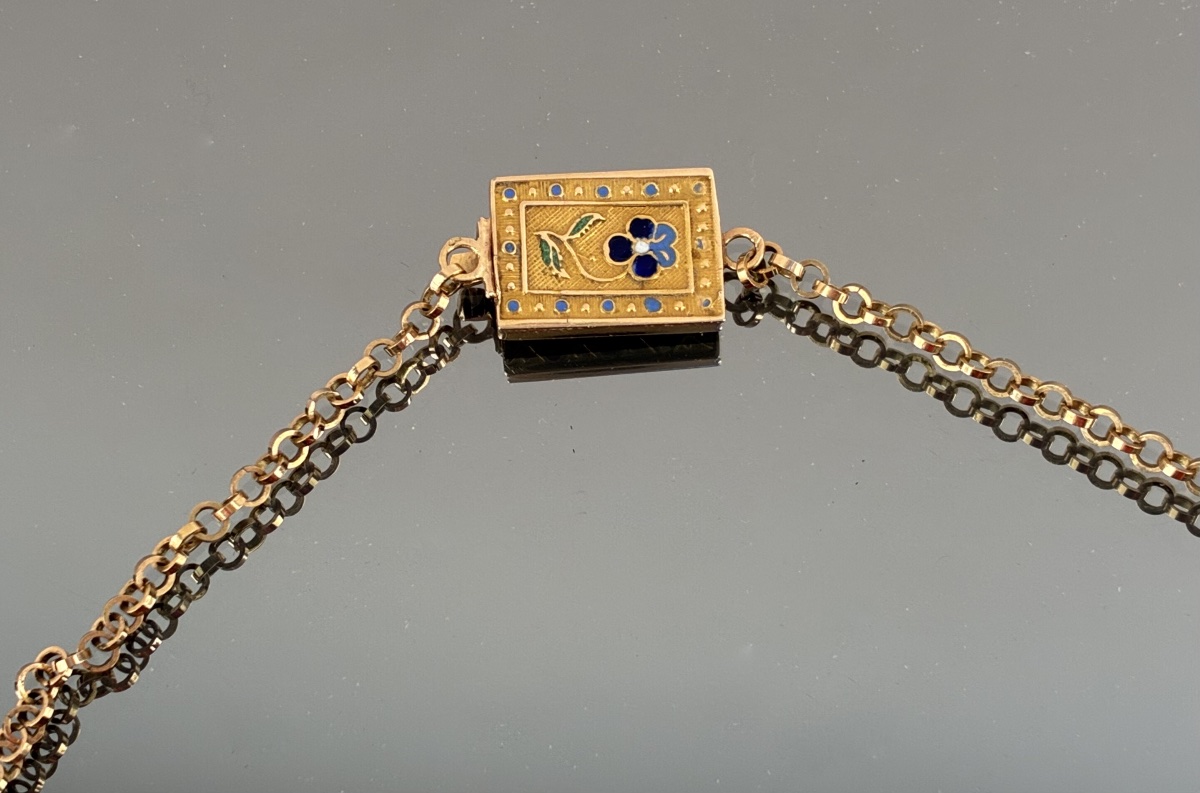
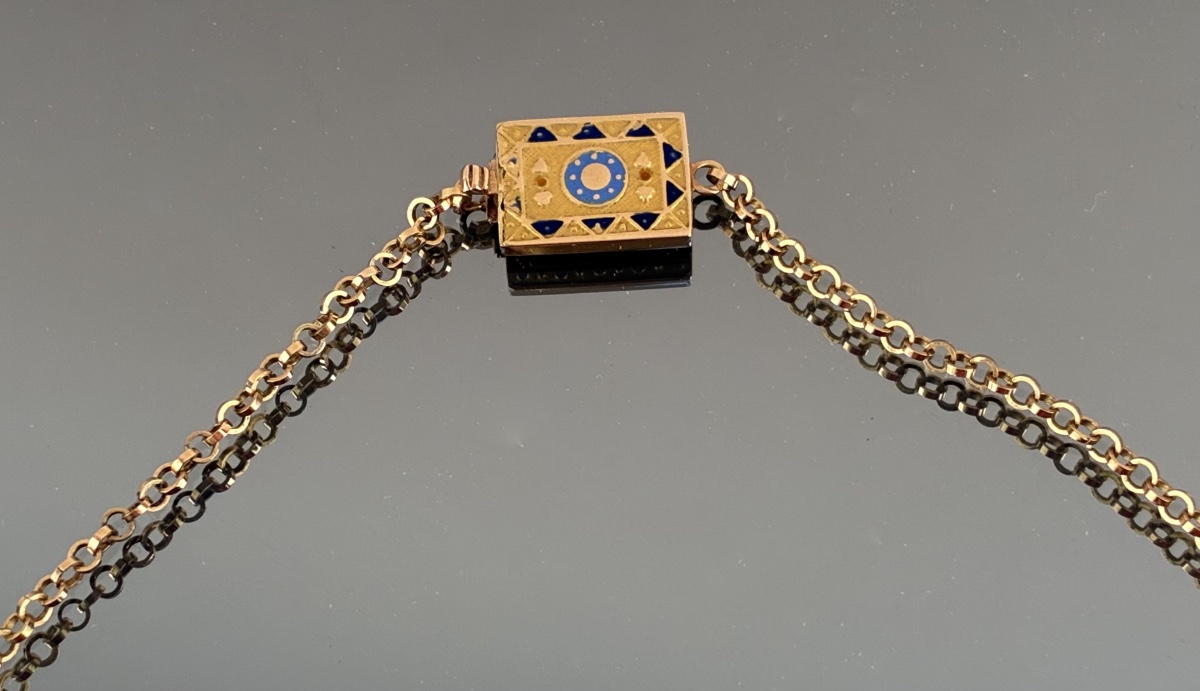
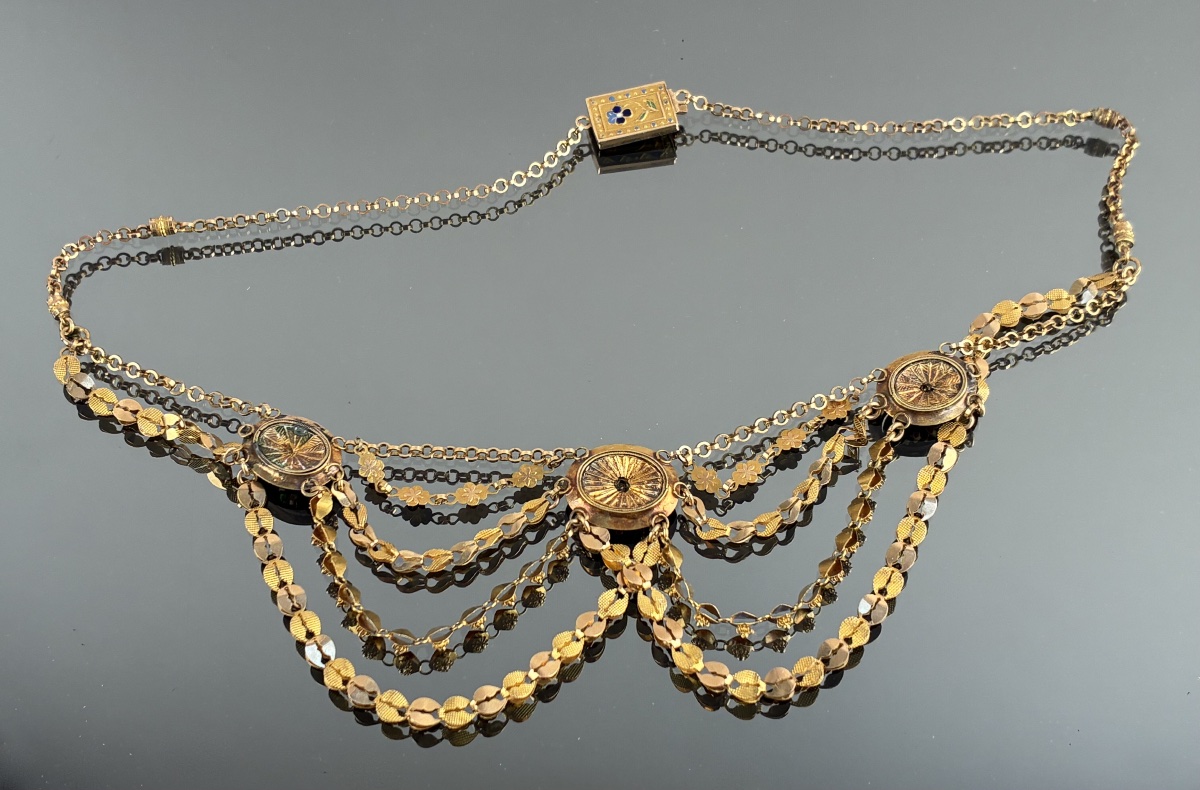
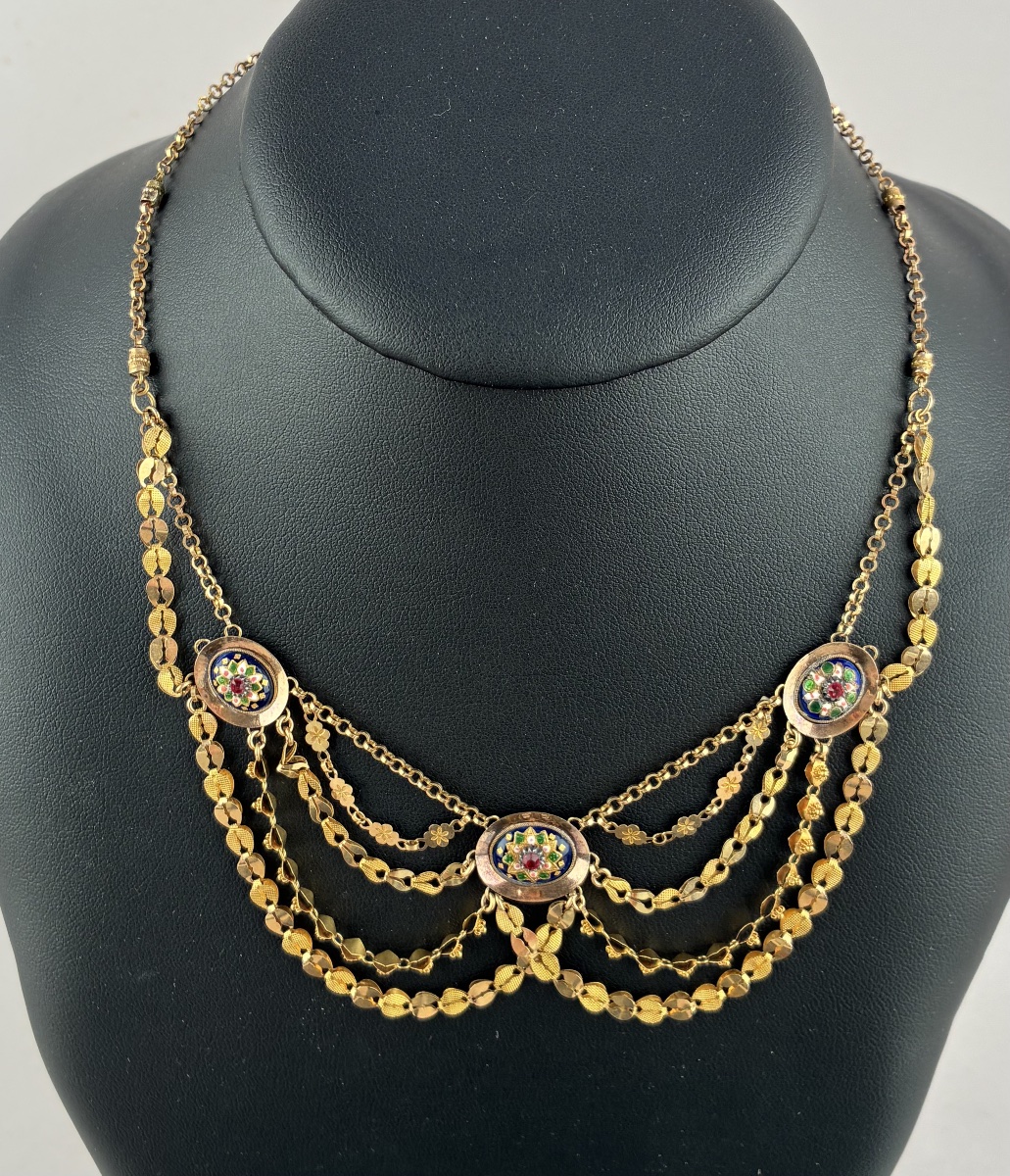
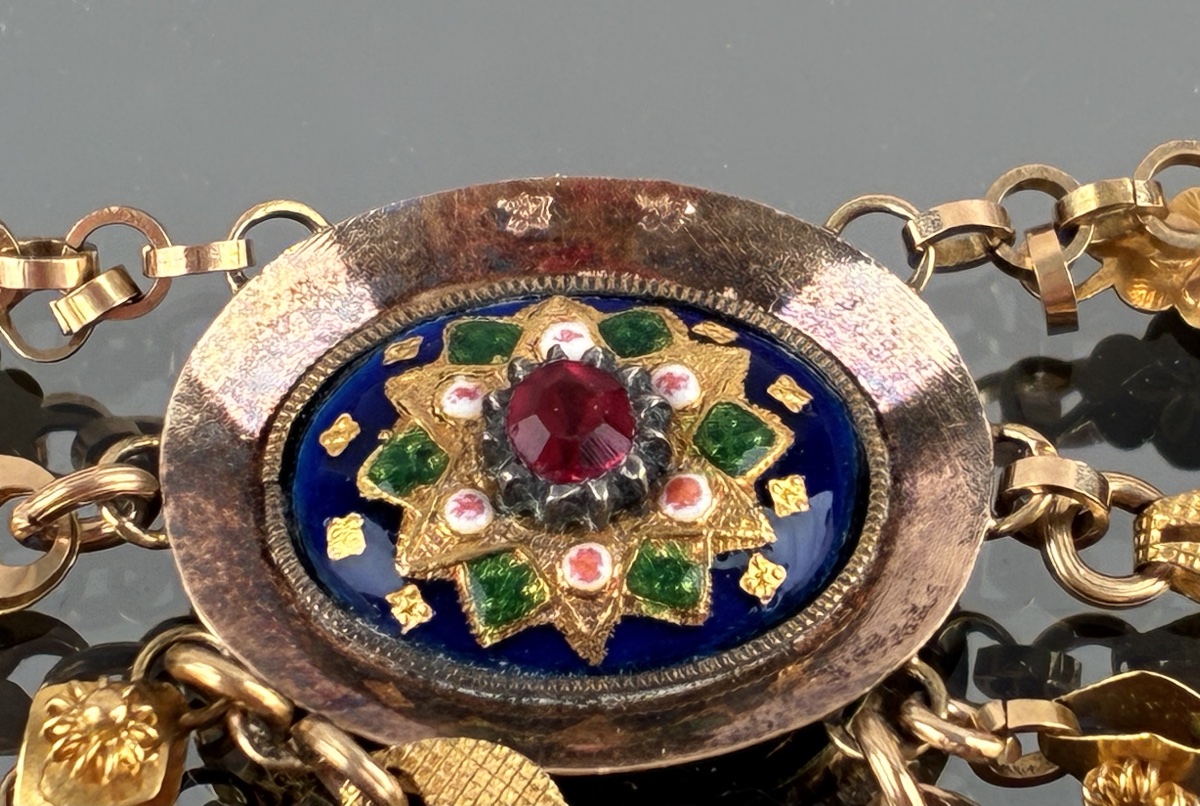
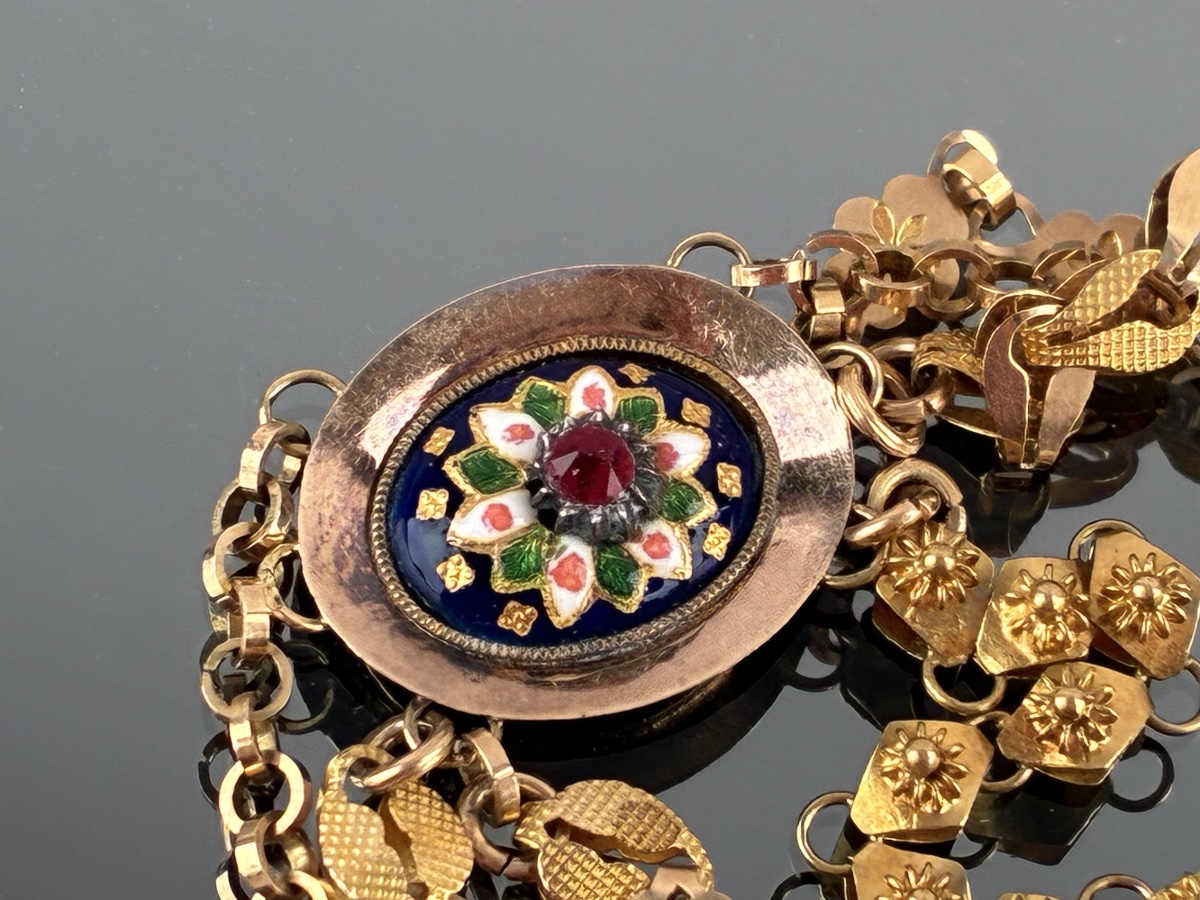
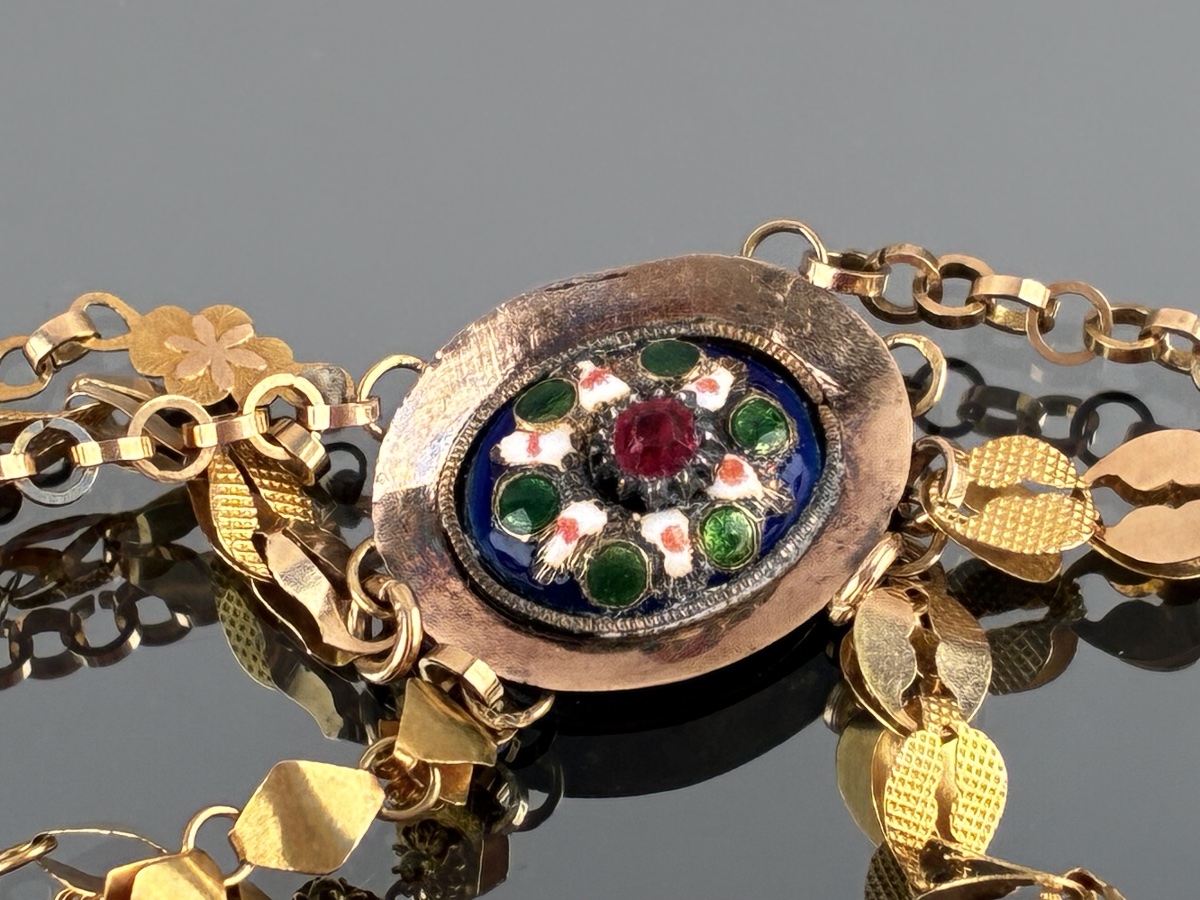
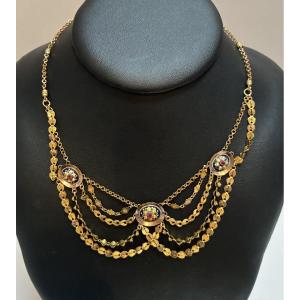
A gold "slave-style" necklace consisting of three enameled gold medallions, five rows of chains with different embossed and textured patterns, and an enameled clasp. This rectangular clasp is adorned with geometric motifs in blue, yellow, and navy blue enamel on one side and a pansy in blue, navy blue, white, and green enamel on the other side. This pansy motif was often found on jewelry and precious objects in the 19th century; it conveys the message “think of me.” The enameled medallions are adorned with raised motifs imitating red gemstones on a navy blue background. The chains feature a variety of links—finely chiseled, textured, and stamped—adorned with small flowers in both recessed and raised designs.
Owl hallmark : in use since 1893, affixed to antique or foreign-made jewelry to guarantee the gold’s legal fineness in France.
Two illegible goldsmith hallmarks on the central medallion.
Total weight: 13.66 g
French craftsmanship from the first half of the 19th century
Good overall condition
Note: This type of jewelry first appeared in the 18th century and enjoyed great popularity in the early 19th century. It can be found in several French regions, such as Bresse, Auvergne, Normandy, Poitou, and Roussillon. In Bresse, it features enamel work and first appeared in the 19th century. This necklace was given by the young man to his fiancée on the occasion of the “accordailles,” or engagement. The term “esclavage” seems to refer to the numerous intertwined chains, although in the regions of Savoie and Genevoix, the expression “to chain one’s wife” may be the origin of the name.
In Bresse, peasant women wore them at family or village celebrations, as can be seen in paintings. These necklaces are often made of gilded metal, but some, like ours, are made of gold; they were worn by wealthier women.
Bresse enamels consist of several layers and require six or seven firings. Thanks to this specialty, the town of Bourg-en-Bresse gained international renown as early as the beginning of the 19th century.
P.S.: The Mucem has a very similar necklace cataloged under number 1986.33.7, dated from 1819 to 1838.
Carefully packaged, shipped with declared value.
3 500 €
Period: 19th century
Style: Louis Philippe, Charles 10th
Condition: Good condition
Material: Gold
Length: 40 cm
Reference (ID): 1838710
Availability: In stock
Print