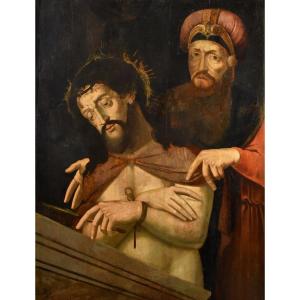


*ecce Homo* With Pontius Pilate, By A Painter From The Circle Of Michael Coxie (mechelen, 1499–1592)
Artist: Cercle De Michael Coxie (malines, 1499 - Malines, 1592)
Circle of Michael Coxie (Mechelen, 1499 – Mechelen, 1592)
Ecce Homo with Pontius Pilate
Oil on wood (mounted on panel)
Flemish School, 16th–17th century
112 x 81 cm. - Framed 121 x 90 cm.
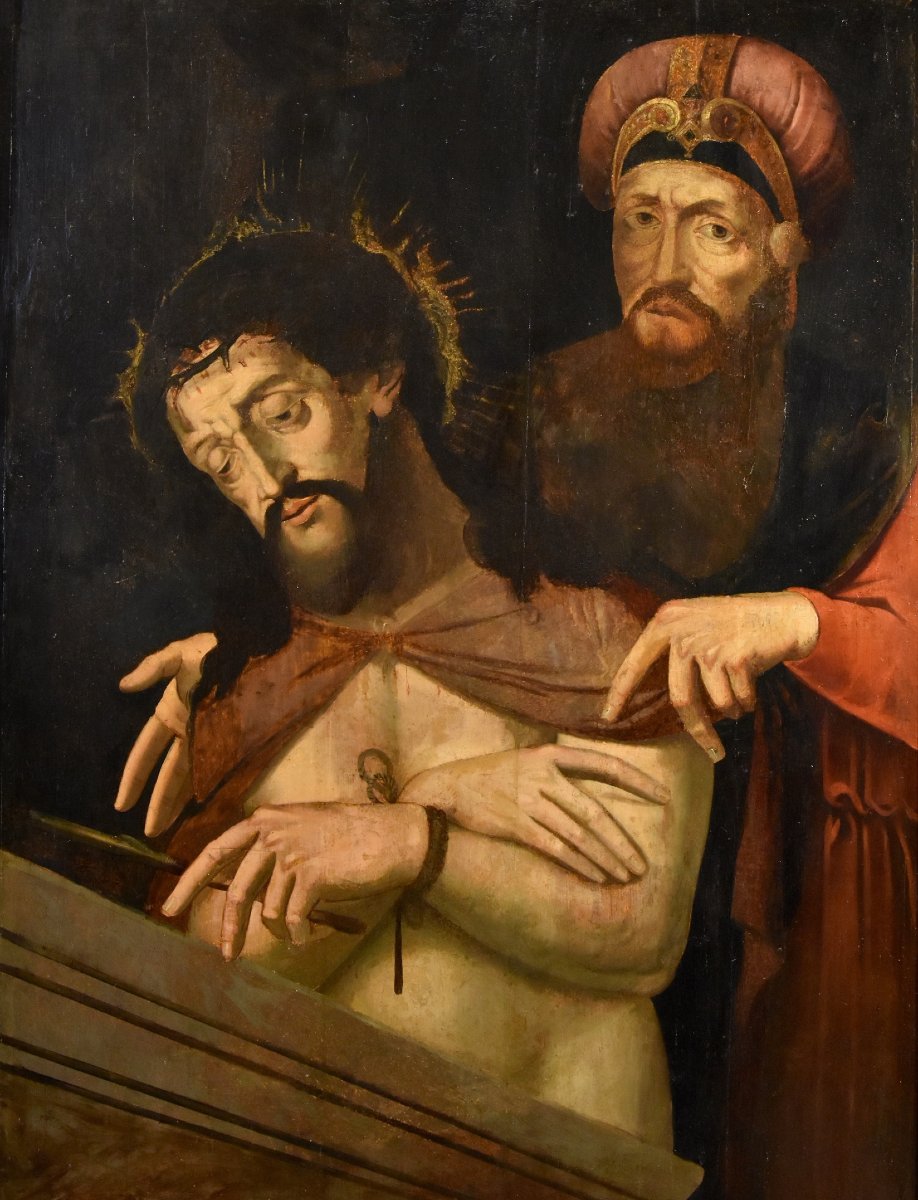
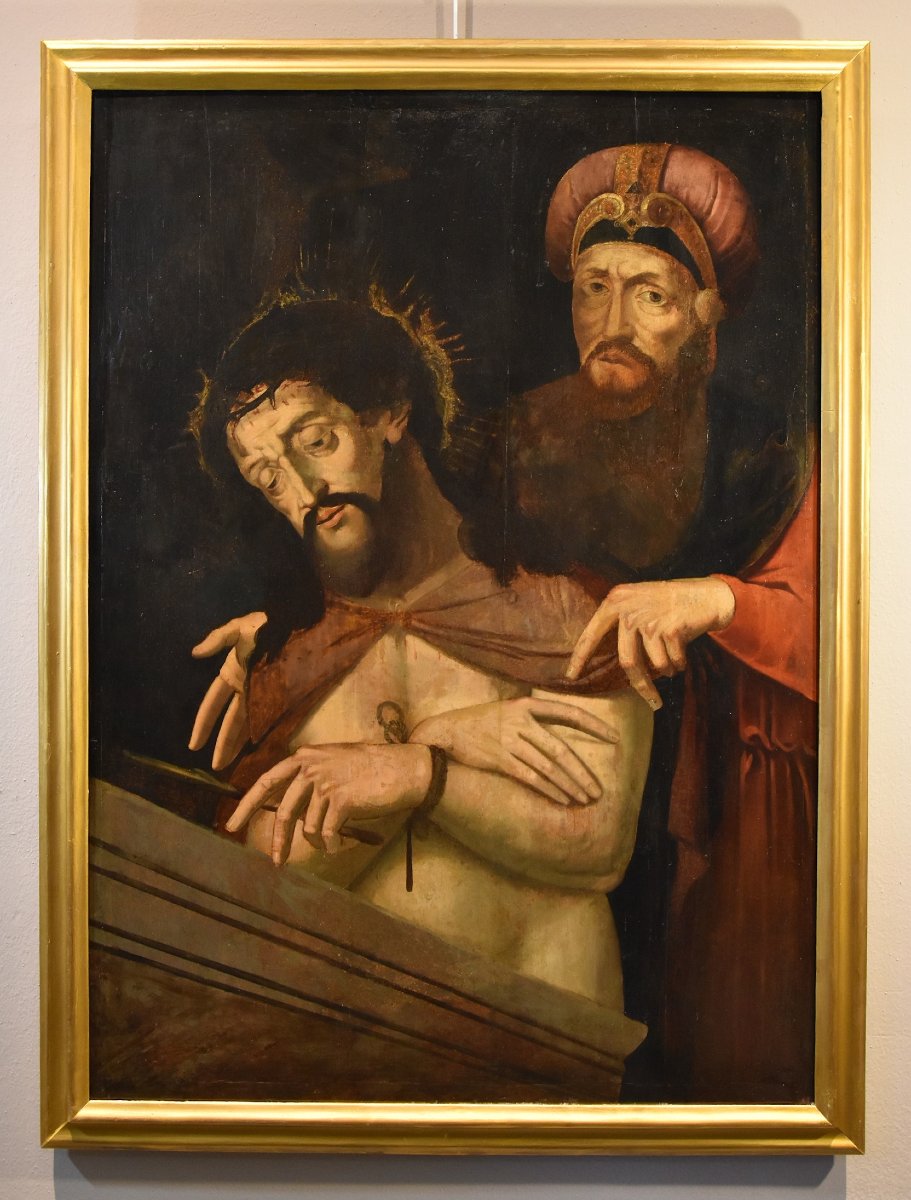
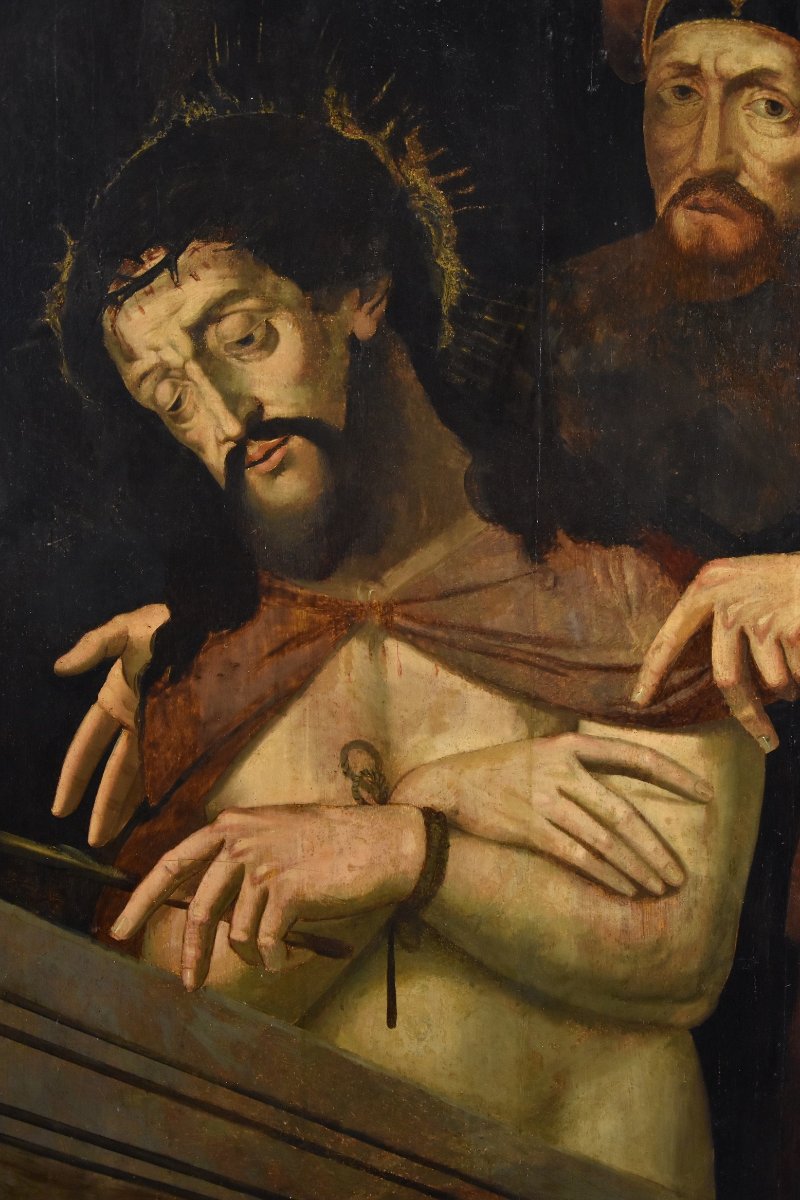
The painting on offer is the work of a Flemish painter active between the 16th and 17th centuries from the circle of Michael Coxie (Mechelen, 1499 – Malines, 1592), emulating the famous compositions of the great master, who brilliantly tackled this classic subject of religious painting on numerous occasions [1], where the dramatic style is brought to life through a skillful interplay of light and shadow.
[1] See, for example, the painting in the Alte Pinakothek in Munich, by a follower of Michiel Coxcie (1497–1592)
Ecce homo, 16th century
URL: https://www.sammlung.pinakothek.de/en/artwork/Y0GR9wrLRX
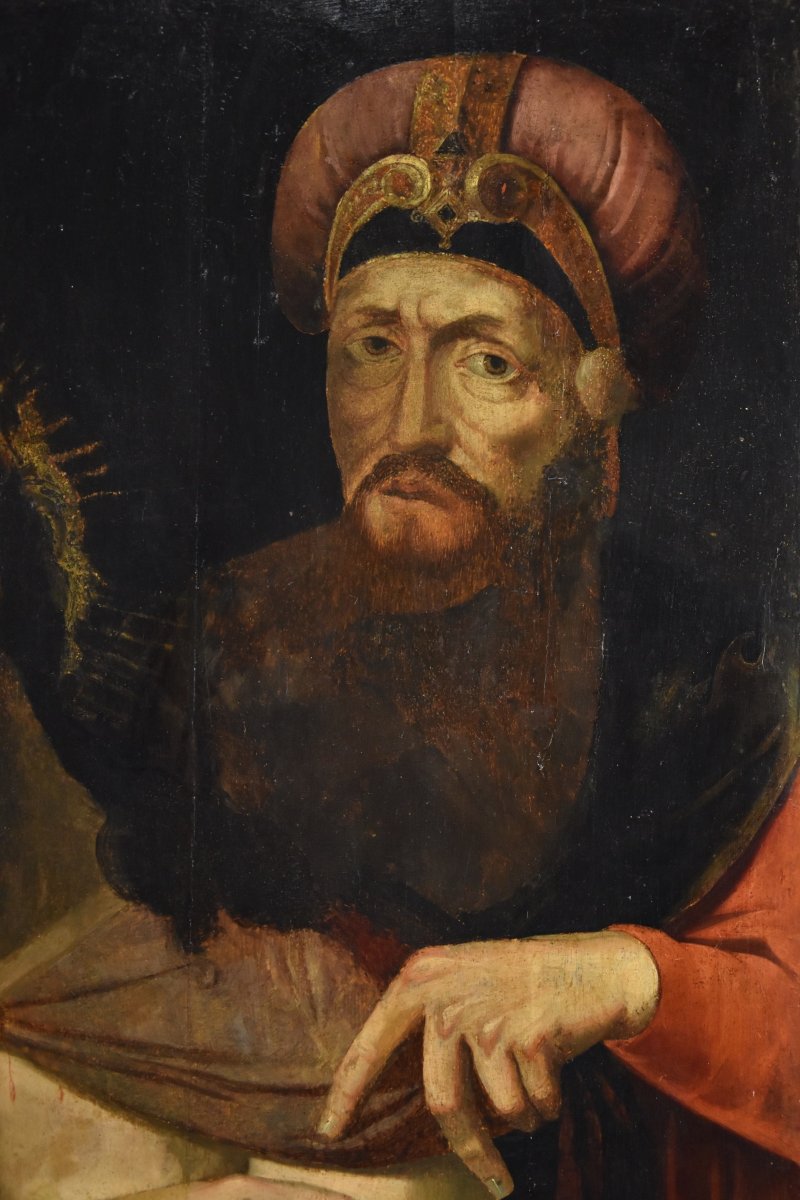
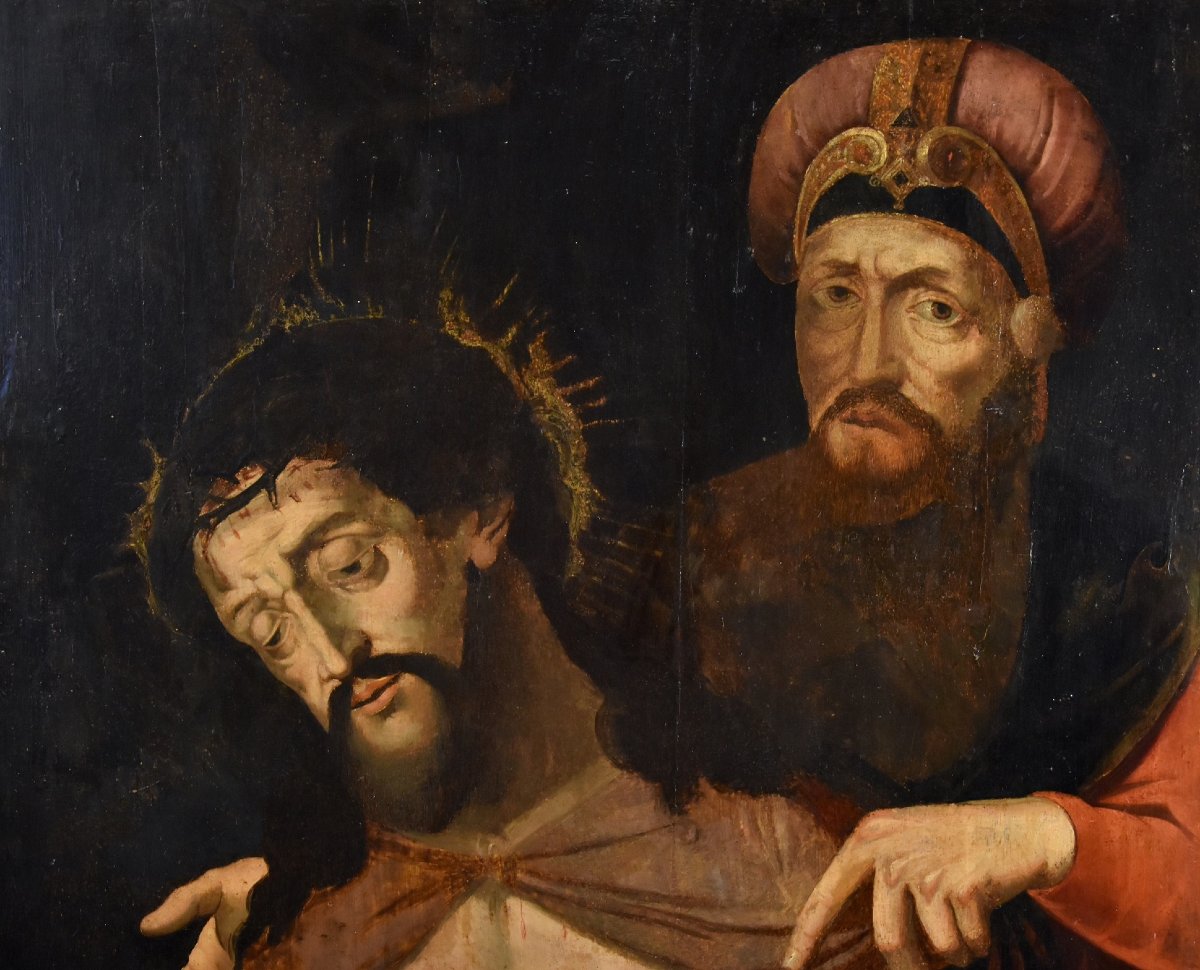
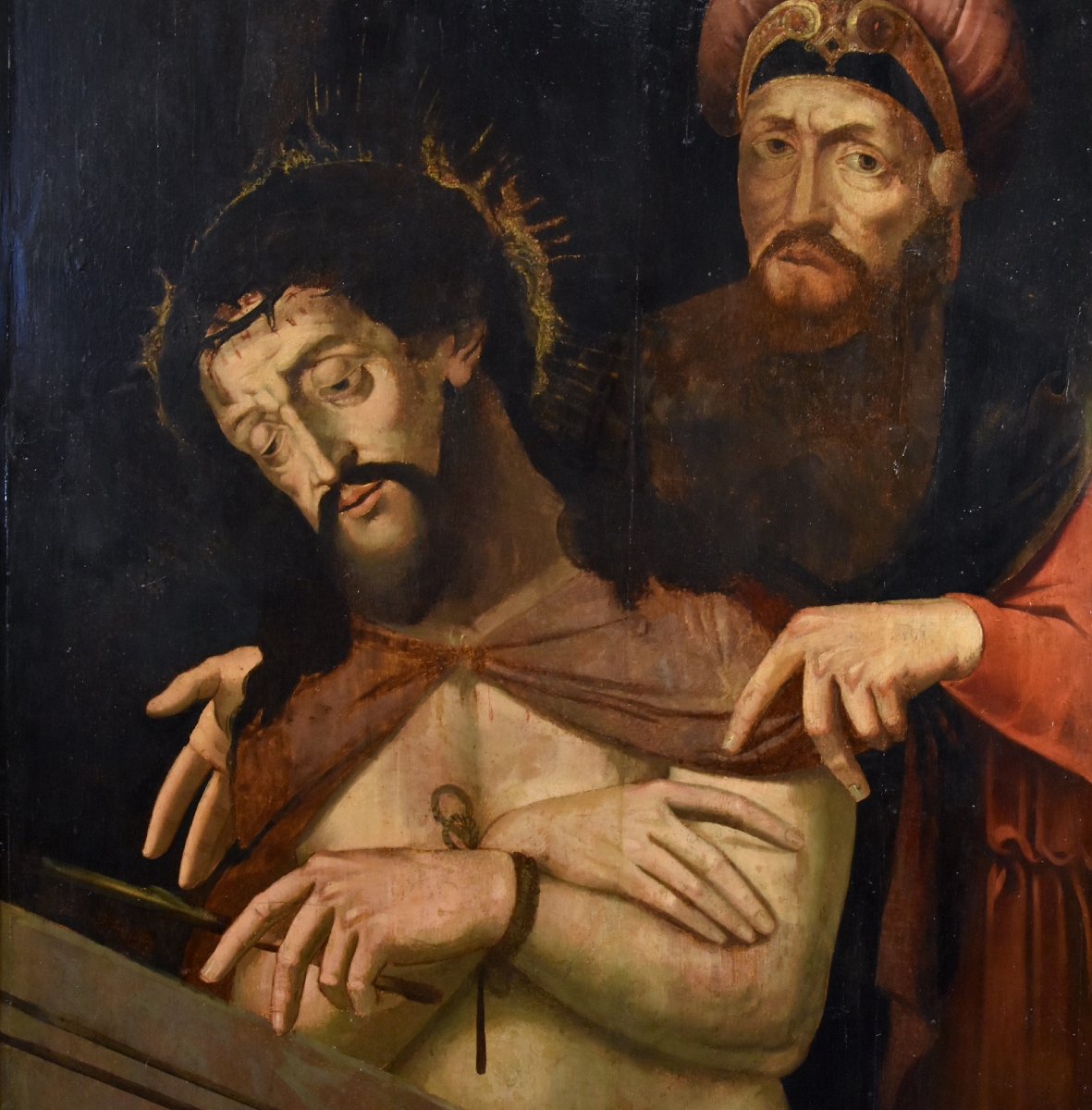
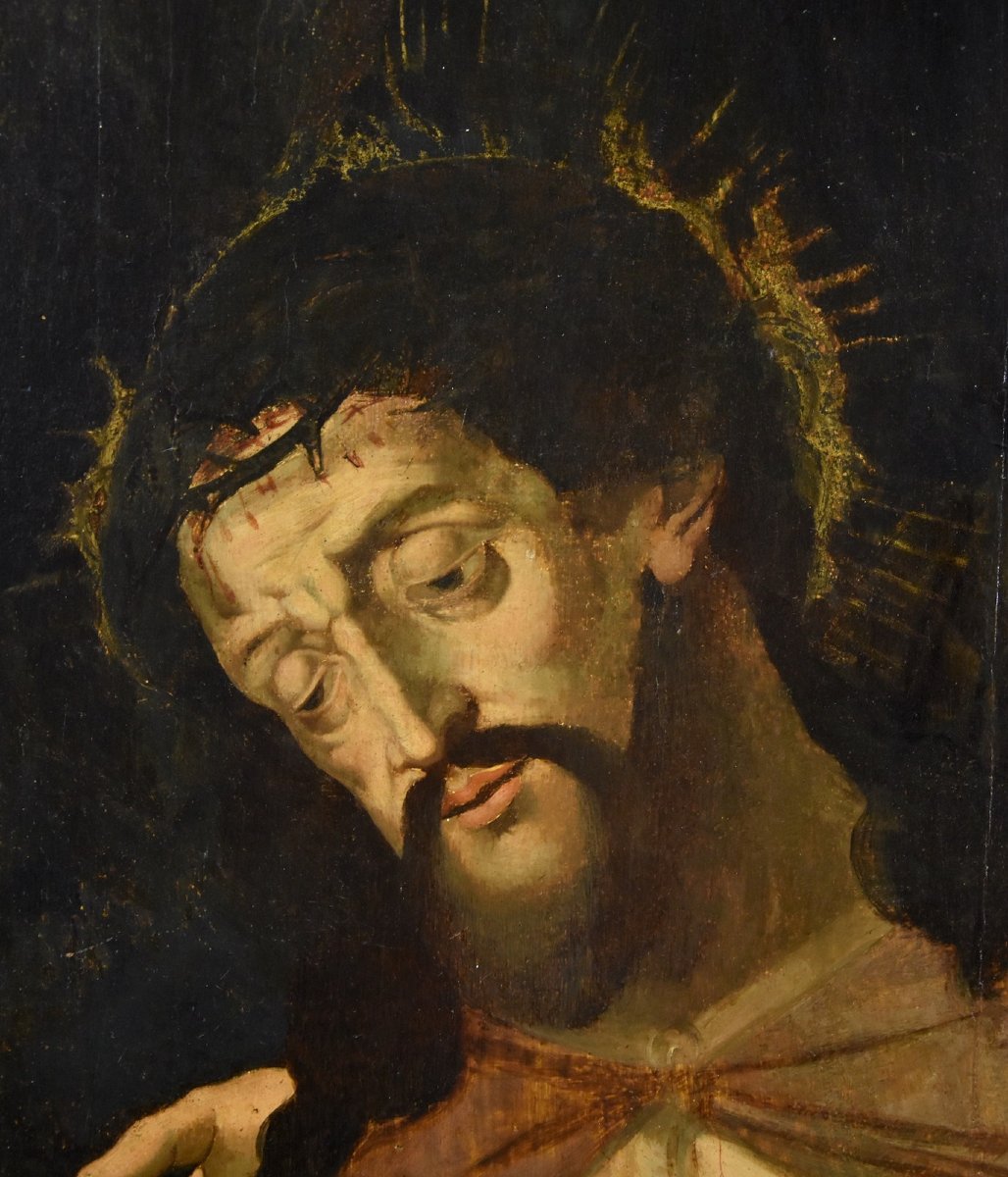
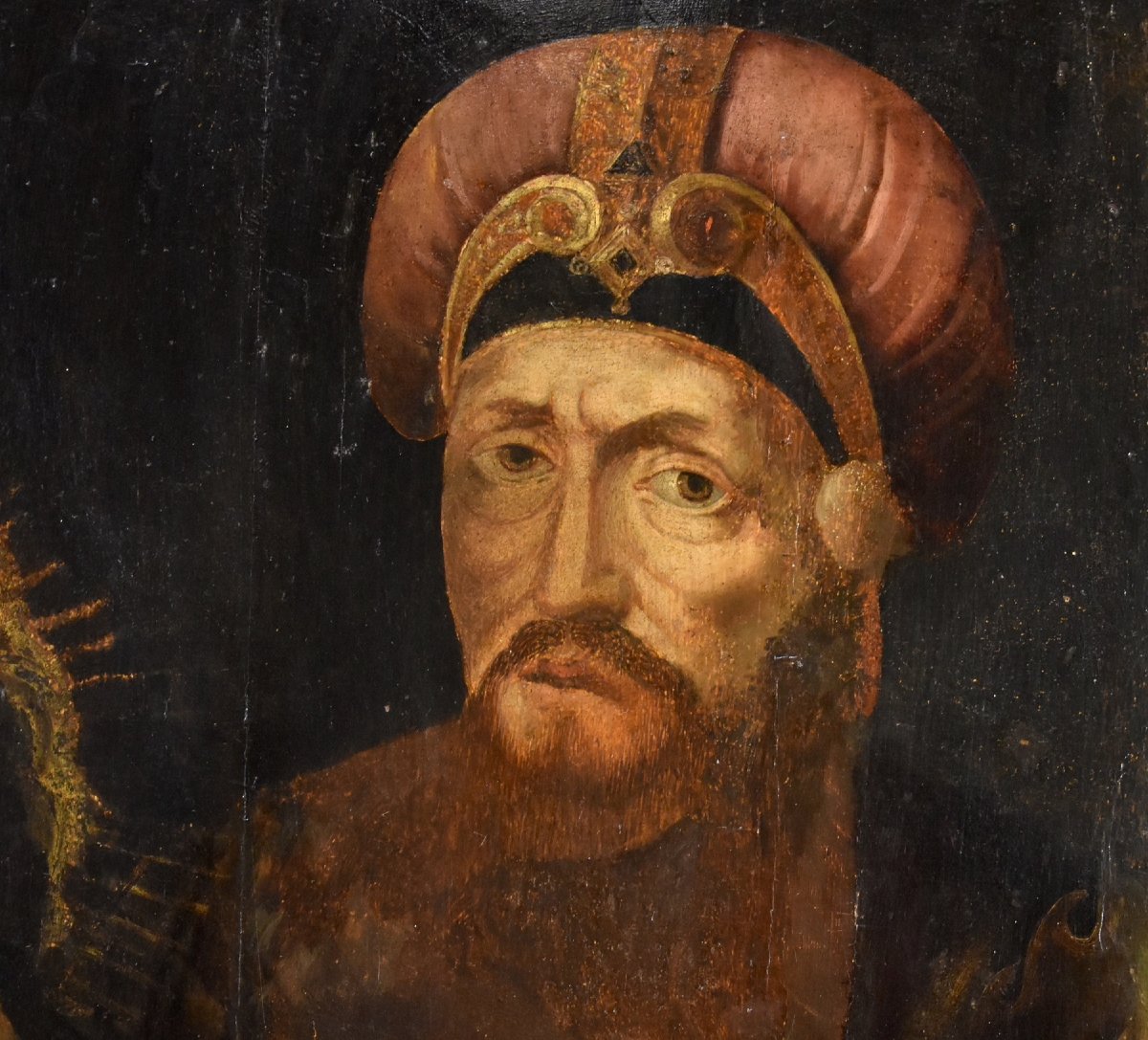
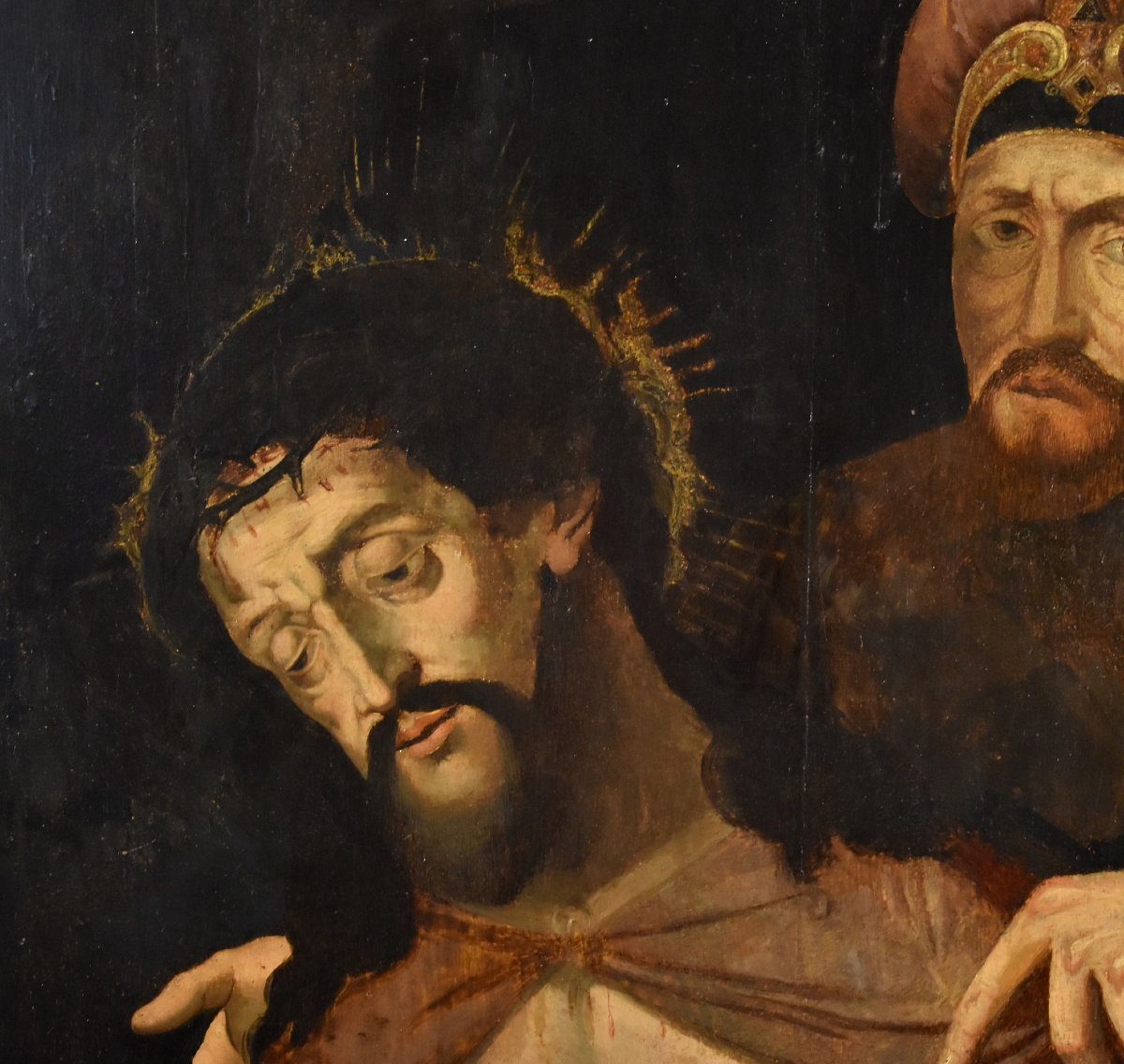
The *Ecce Homo* depicts the Gospel episode in which Jesus, awaiting his sentence and following his scourging, is presented to the people by Pilate, then the Roman governor of Judea, whom we see portrayed here at his side.
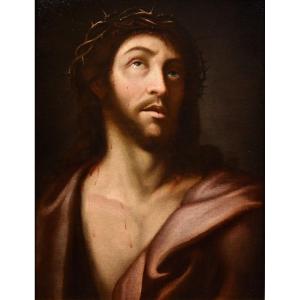
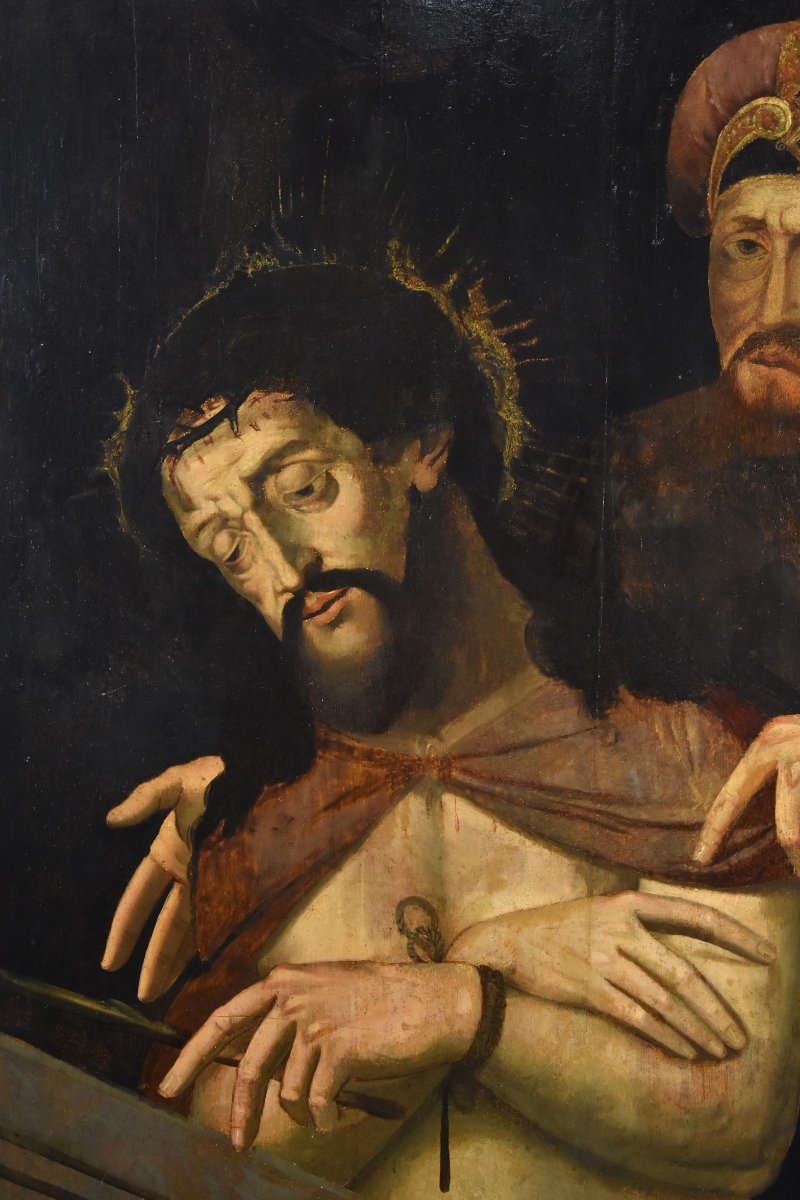
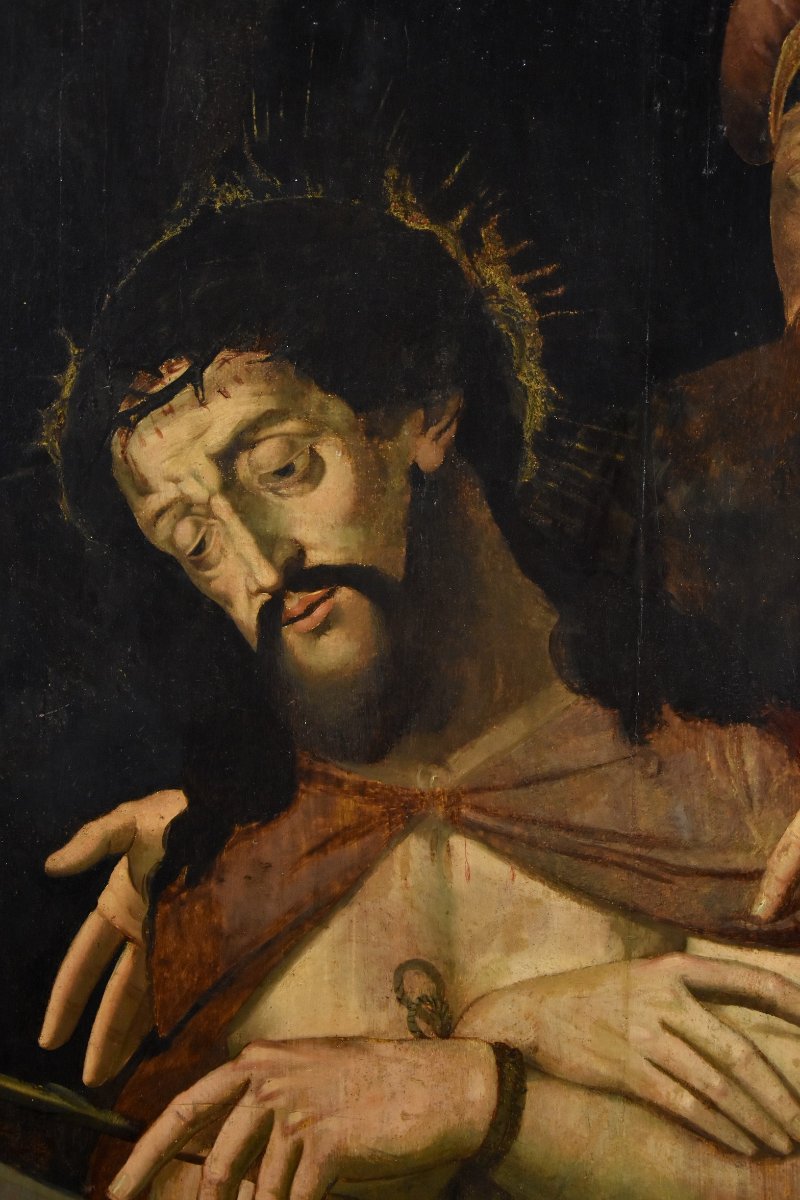
The painting captures the moment when the Savior accepts his ultimate fate: his face reveals not only humiliation but also a moment of profound introspection and emotion. He is depicted with a crown of thorns resting on his long hair and stripped of his clothes, with his hands bound and crossed, alluding to his imminent crucifixion on Golgotha.
“Ecce homo,” which literally means “Behold the Man,” was the phrase uttered by Pilate himself to point to the scourged Jesus and curry favor with the crowd, aware that he had condemned an innocent man.
This type of depiction of Christ became widespread in the 16th century, giving rise to particularly intense works, especially in the Flemish school.
This is certainly not an “easy” work, but it is nonetheless capable of moving the viewer, leaving even those who do not typically favor subjects of such strong emotional impact far from indifferent. Whipped and mocked as he awaits his martyrdom, it is striking that his face appears sad and resigned, yet not suffering, evoking the compassion he showed toward his executioners.
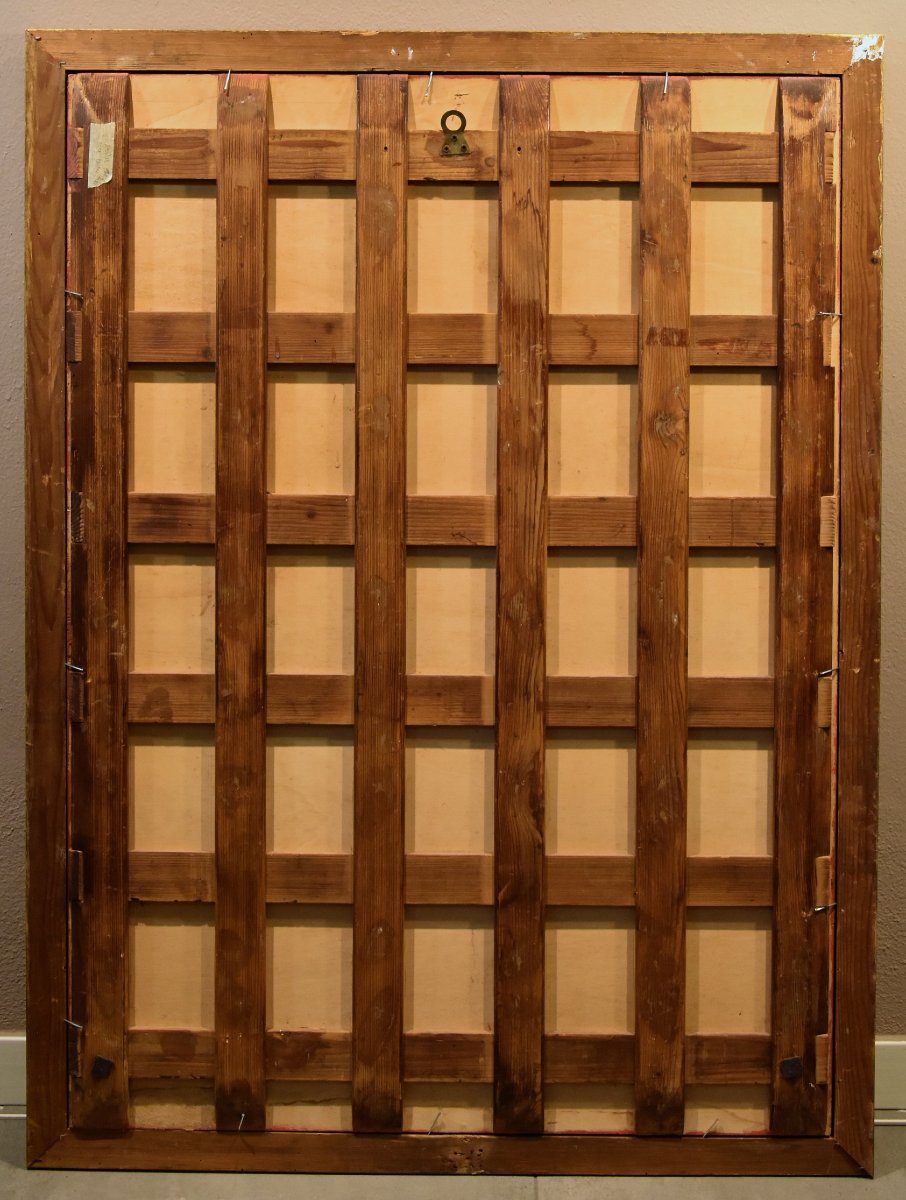
The panel is in good condition, considering its age, and has been mounted on a wooden support to reinforce its structure.
ADDITIONAL INFORMATION:
The sold work is complemented by an attractive gilded wooden frame and comes with a certificate of authenticity and warranty.
We handle and arrange the shipping of purchased works, both within Italy and internationally, using professional and insured carriers.
You can also view the painting at our gallery in Riva del Garda; we would be delighted to welcome you and show you our collection of artworks.
Please feel free to contact us, with no obligation, for any additional information.
Follow us on:
INSTAGRAM https://www.instagram.com/galleriacastelbarco/?hl=it
FACEBOOK https://www.facebook.com/galleriacastelbarco/
Ecce Homo with Pontius Pilate
Oil on wood (mounted on panel)
Flemish School, 16th–17th century
112 x 81 cm. - Framed 121 x 90 cm.
The painting on offer is the work of a Flemish painter active between the 16th and 17th centuries from the circle of Michael Coxie (Mechelen, 1499 – Malines, 1592), emulating the famous compositions of the great master, who brilliantly tackled this classic subject of religious painting on numerous occasions [1], where the dramatic style is brought to life through a skillful interplay of light and shadow.
[1] See, for example, the painting in the Alte Pinakothek in Munich, by a follower of Michiel Coxcie (1497–1592)
Ecce homo, 16th century
URL: https://www.sammlung.pinakothek.de/en/artwork/Y0GR9wrLRX
The *Ecce Homo* depicts the Gospel episode in which Jesus, awaiting his sentence and following his scourging, is presented to the people by Pilate, then the Roman governor of Judea, whom we see portrayed here at his side.
The painting captures the moment when the Savior accepts his ultimate fate: his face reveals not only humiliation but also a moment of profound introspection and emotion. He is depicted with a crown of thorns resting on his long hair and stripped of his clothes, with his hands bound and crossed, alluding to his imminent crucifixion on Golgotha.
“Ecce homo,” which literally means “Behold the Man,” was the phrase uttered by Pilate himself to point to the scourged Jesus and curry favor with the crowd, aware that he had condemned an innocent man.
This type of depiction of Christ became widespread in the 16th century, giving rise to particularly intense works, especially in the Flemish school.
This is certainly not an “easy” work, but it is nonetheless capable of moving the viewer, leaving even those who do not typically favor subjects of such strong emotional impact far from indifferent. Whipped and mocked as he awaits his martyrdom, it is striking that his face appears sad and resigned, yet not suffering, evoking the compassion he showed toward his executioners.
The panel is in good condition, considering its age, and has been mounted on a wooden support to reinforce its structure.
ADDITIONAL INFORMATION:
The sold work is complemented by an attractive gilded wooden frame and comes with a certificate of authenticity and warranty.
We handle and arrange the shipping of purchased works, both within Italy and internationally, using professional and insured carriers.
You can also view the painting at our gallery in Riva del Garda; we would be delighted to welcome you and show you our collection of artworks.
Please feel free to contact us, with no obligation, for any additional information.
Follow us on:
INSTAGRAM https://www.instagram.com/galleriacastelbarco/?hl=it
FACEBOOK https://www.facebook.com/galleriacastelbarco/
6 800 €
Period: 16th century
Style: Renaissance, Louis 13th
Condition: Excellent condition
Material: Oil painting on wood
Width: encadré 90 cm.
Height: encadré 121 cm.
Reference (ID): 1838424
Availability: In stock
Print