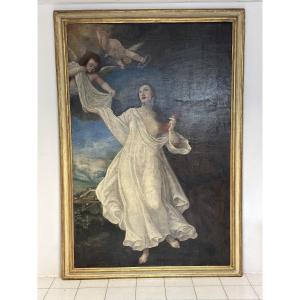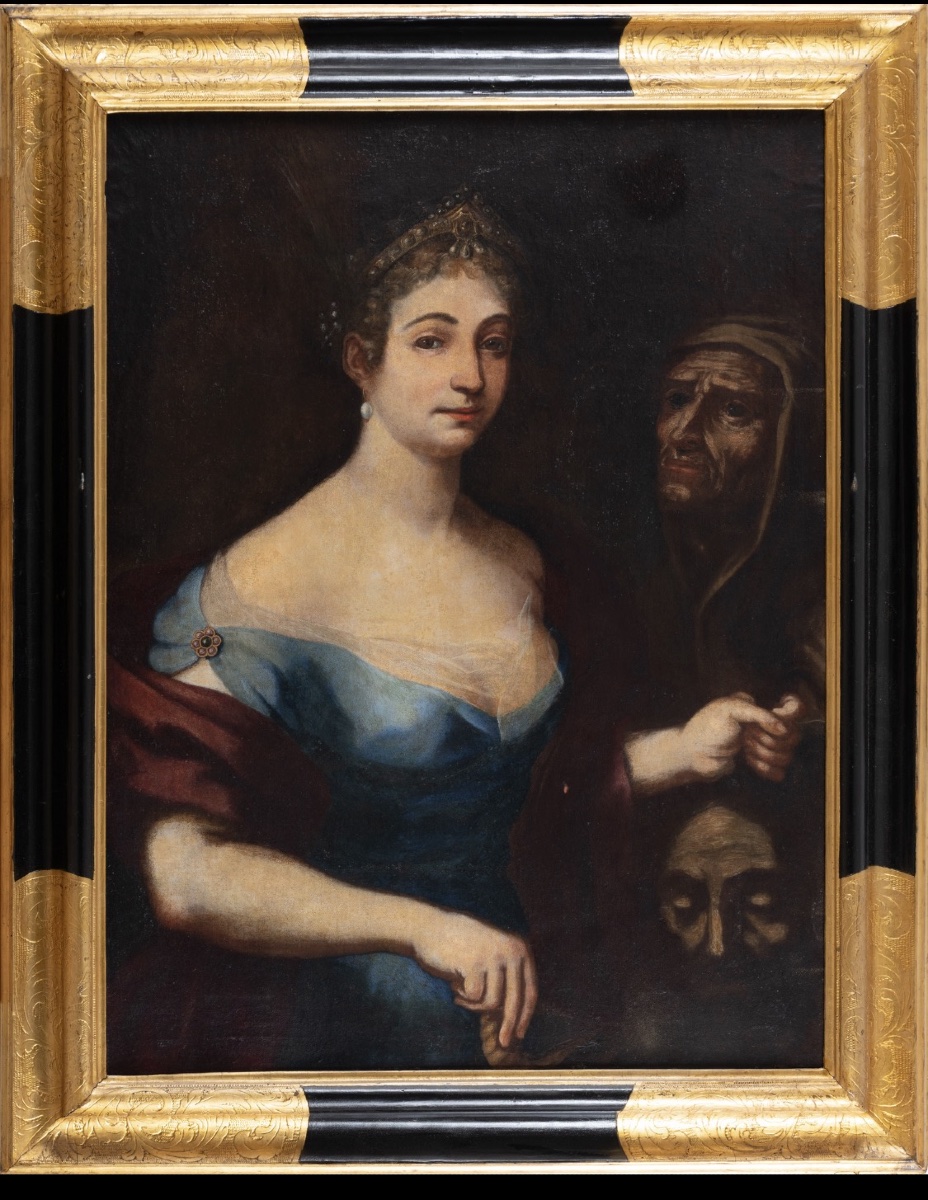
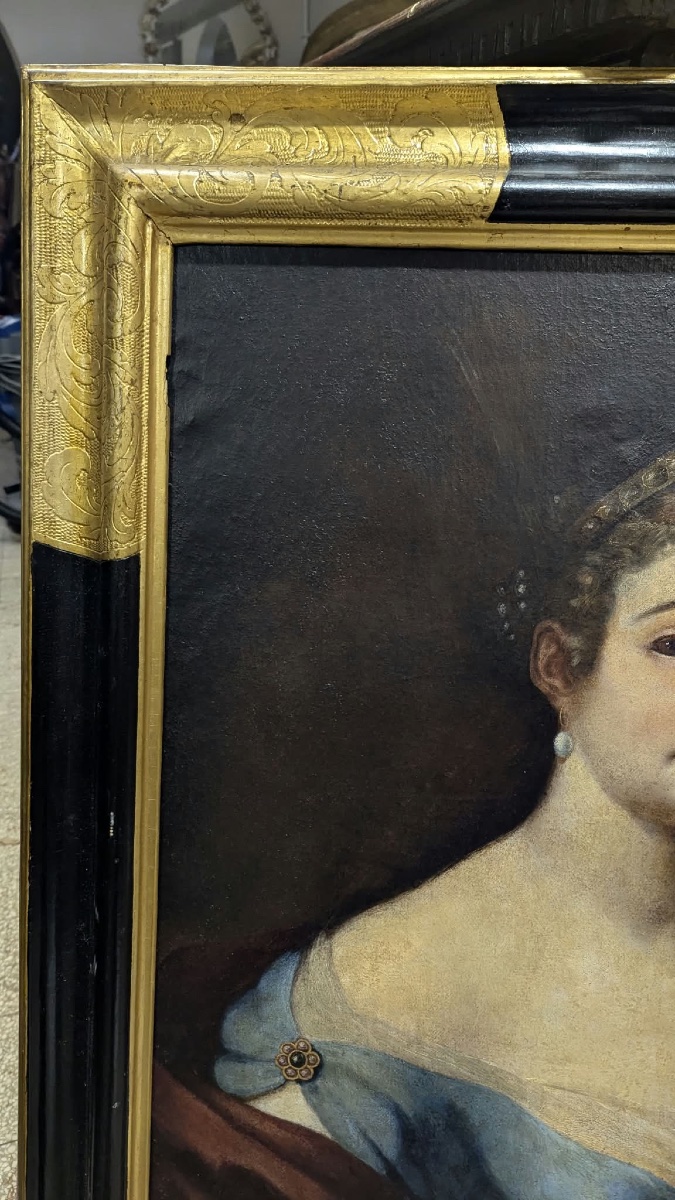
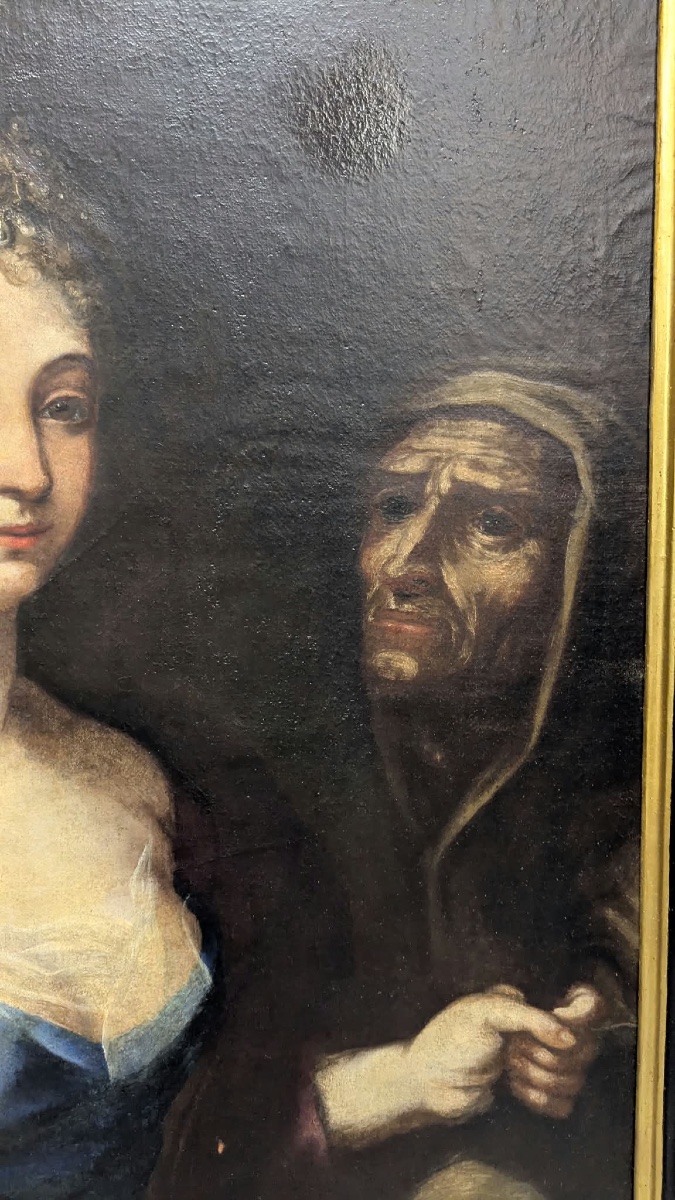
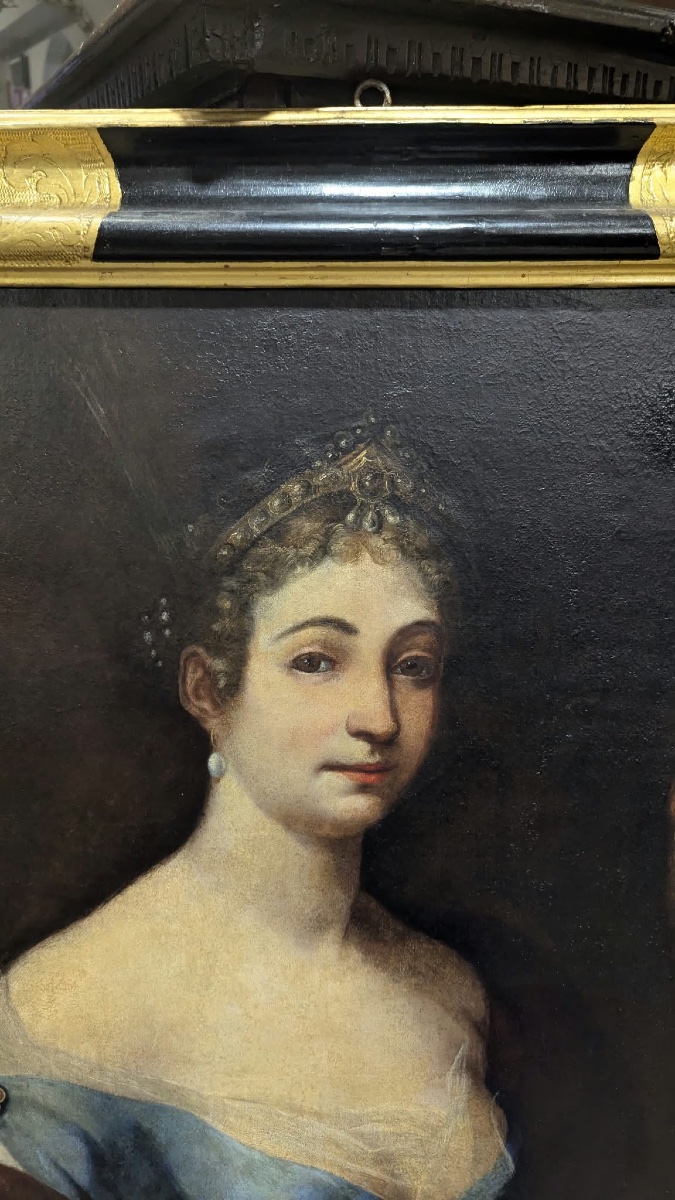
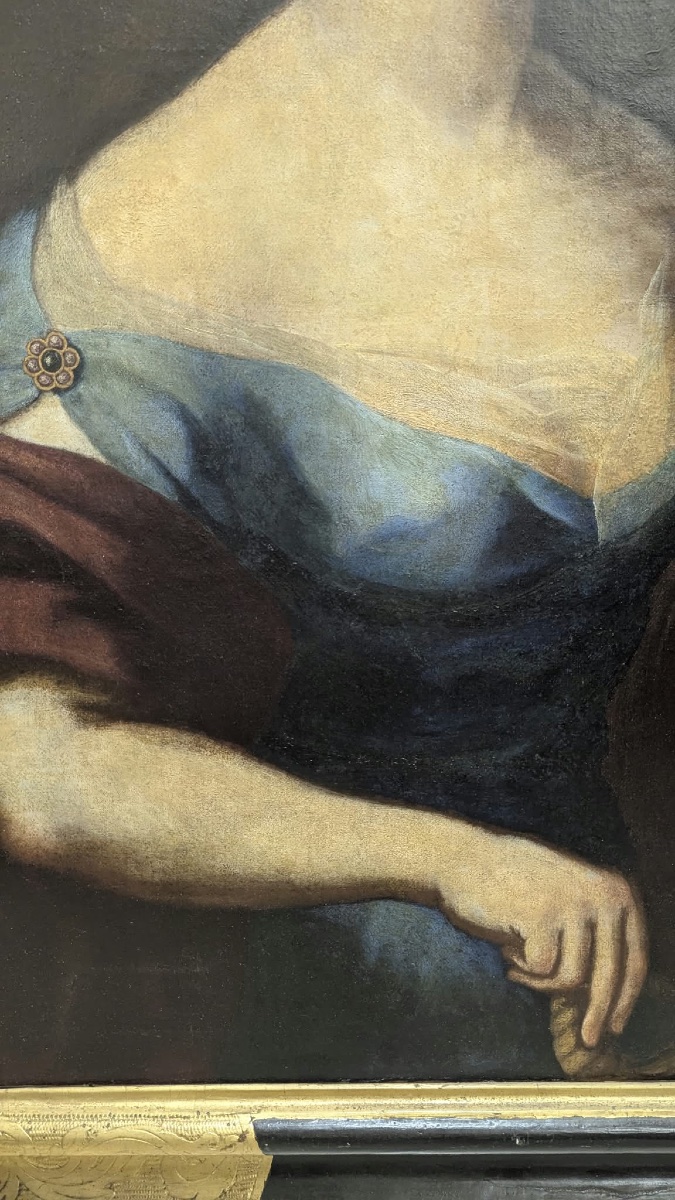
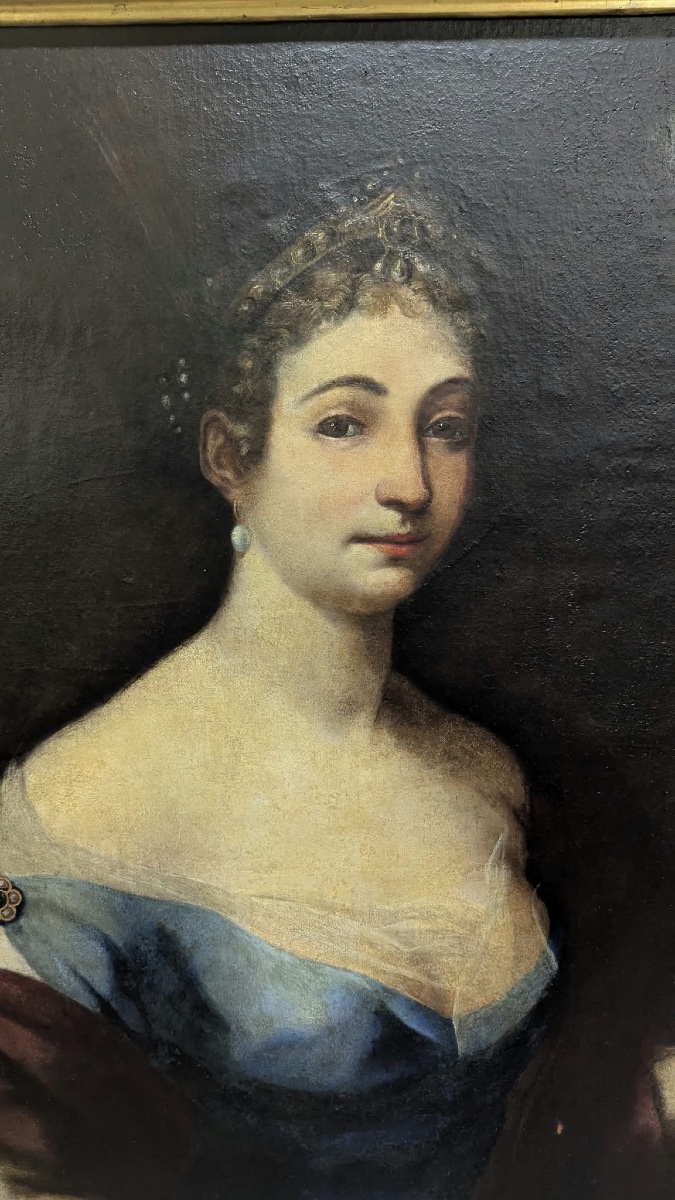
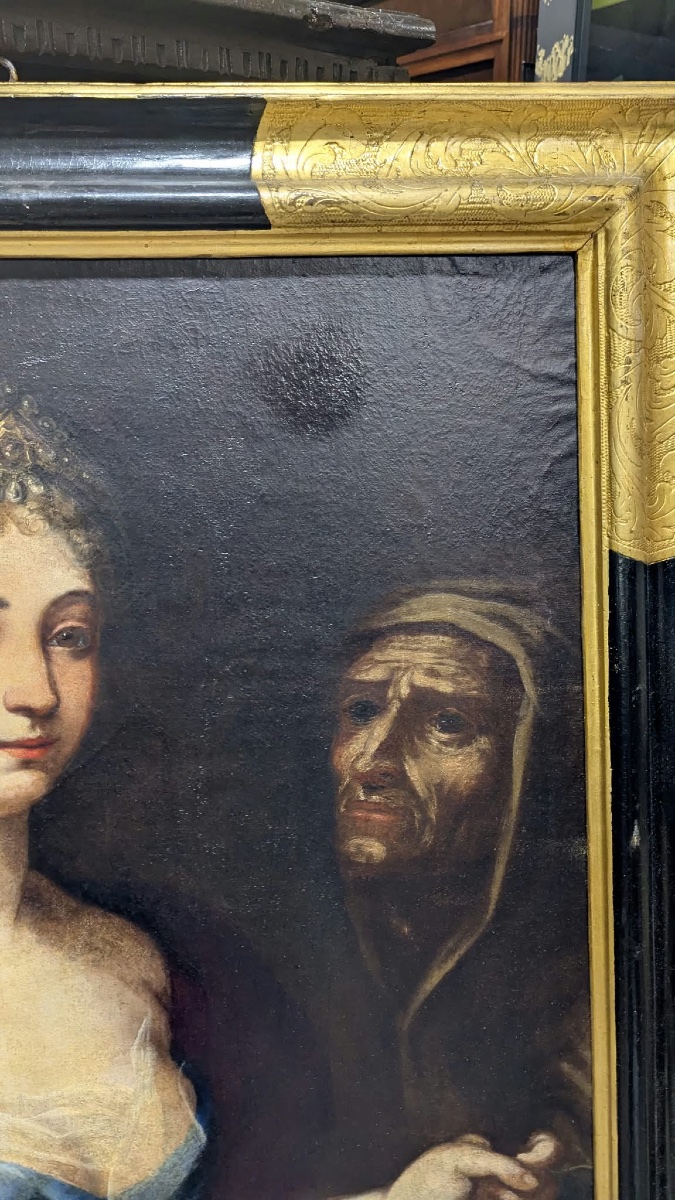

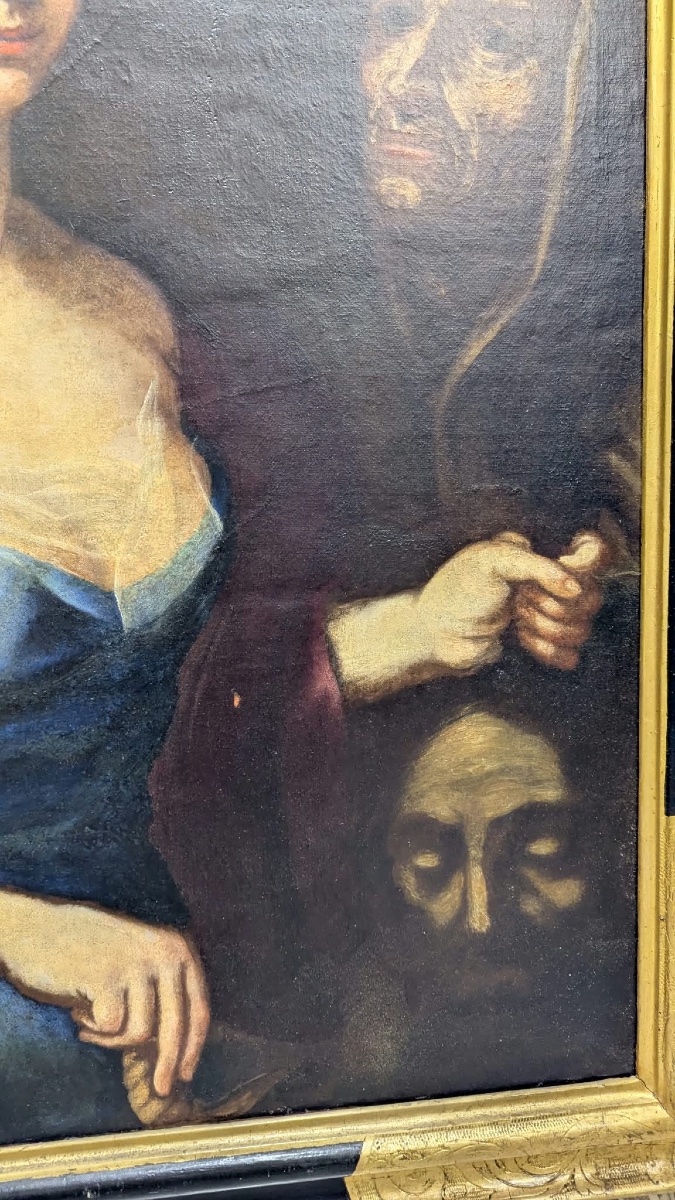
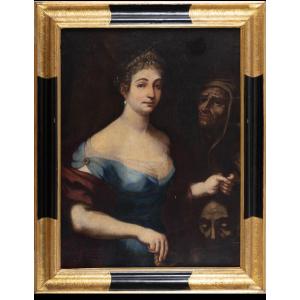


Subject: Salome With The Head Of John The Baptist Artist: Onorio Marinari (1627–1715) 120 X 80
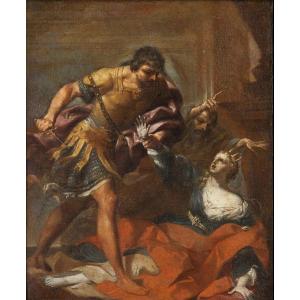
Subject: Salome with the Head of John the Baptist
Artist: Onorio Marinari (1627–1715)
Technique and dimensions: oil on canvas; 120 x 80 cm.
The painting we present here is striking for its close stylistic affinity and a common thematic thread (a biblical female figure with a severed head) with two masterpieces by the fresco painter, Florentine fresco painter, engraver, and draftsman Onorio Marinari (1627–1715), cousin and pupil of Carlo Dolci (1616–1686), whose school he carried on for a time by taking Dolci’s place, upon his death in 1686, through a prolific career at the Grand Ducal court of Tuscany: we are referring to the *Salome with the Head of John the Baptist* at the Minneapolis Institute of Art and the *Judith with the Head of Holofernes* at the Museum of Fine Arts in Budapest.
An eclectic and versatile figure—not least in the scientific realm (we recall the publication of one of his essays on astronomy)—Marinari began his painting career with a style deferential to Dolci’s manner, even serving as his copyist (suffice it to recall the dispute over the now-lost painting “The Crowning with Thorns” from 1648, commissioned by the Oratory of San Nicolò del Ceppo and attributed by Marangoni to Dolci in the early 20th century: P. Bruscoli, “The Florentine Seventeenth Century,” 1986, p. 113).
Among the very earliest mentions of our painter is that of Pellegrino Orlandi, who praises him in the *Abecedario pittorico* of 1733, as well as the extensive references by Lanzi in the *Storia pittorica dell’Italia*, published in Milan in 1831.
A detailed description of Marinari’s style found in the 1833 General Catalog of the Uffizi Gallery reads: “He painted with good taste and in a highly refined and correct manner in his drawing; in his homeland, there are quite a few of his paintings in private and public collections, and particularly in churches. The most highly regarded works from his early period are preserved in the Badia and in Santa Maria Maddalena dei Pazzi, according to Orlandi. After imitating his master—which is usually the first exercise for novice painters—and often, due to the diversity of the subject matter, their first stumbling block, he developed—as Lanzi also observes—a second style, following his own talent: one that was more grandiose, more idealized, and with a bolder brushstroke, as artists put it. Various examples of this style remain in Santa Maria Maggiore, San Simone, and in various Florentine art galleries.”
Among Marinari’s works located outside Florence, the following are worthy of mention in addition to the aforementioned female subjects (truly the painter’s signature subject, as can also be inferred from similar iconographic examples that have appeared in more or less recent times on the antiquities market) the figure of a woman in the Civic Art Gallery of Forlì and the Annunciation in the church of San Biagio in Lucignano.
The subject depicted here, which embodies an iconographic theme that enjoyed particular popularity in the seventeenth century—both within the classicist tradition of Reni and the naturalist tradition of Caravaggio—marks a mature phase in Marinari’s artistic language, characterized by chiaroscuro contrasts, in which the typical refinement of the drawing enhances the delicate rendering of the woman’s face—enchanting and delicate at the same time—in stark contrast to the sense of death emanating from the severed head of the male victim set against the funereal darkness: Eros and Thanatos are united, indissolubly, forever.
Period: 17th century
Style: Louis 14th, Regency
Condition: Excellent condition
Material: Oil painting
Reference (ID): 1838035
Availability: In stock