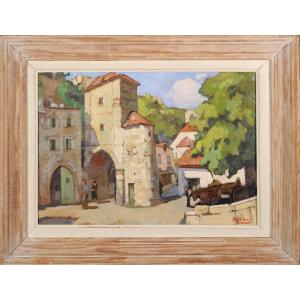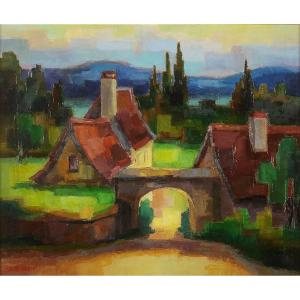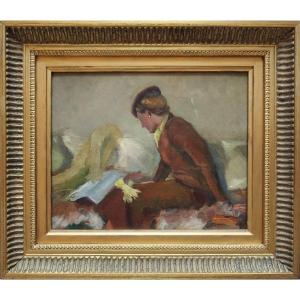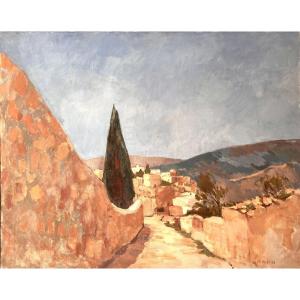


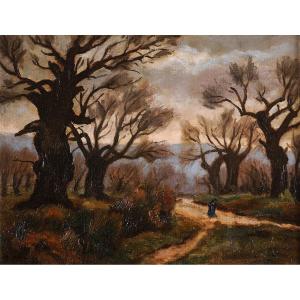


Maurice Albe (1900–1995) The Chestnut Grove In Winter, Périgord, Dordogne
Maurice ALBE
(Beaugency 1900 – Périgueux 1995)
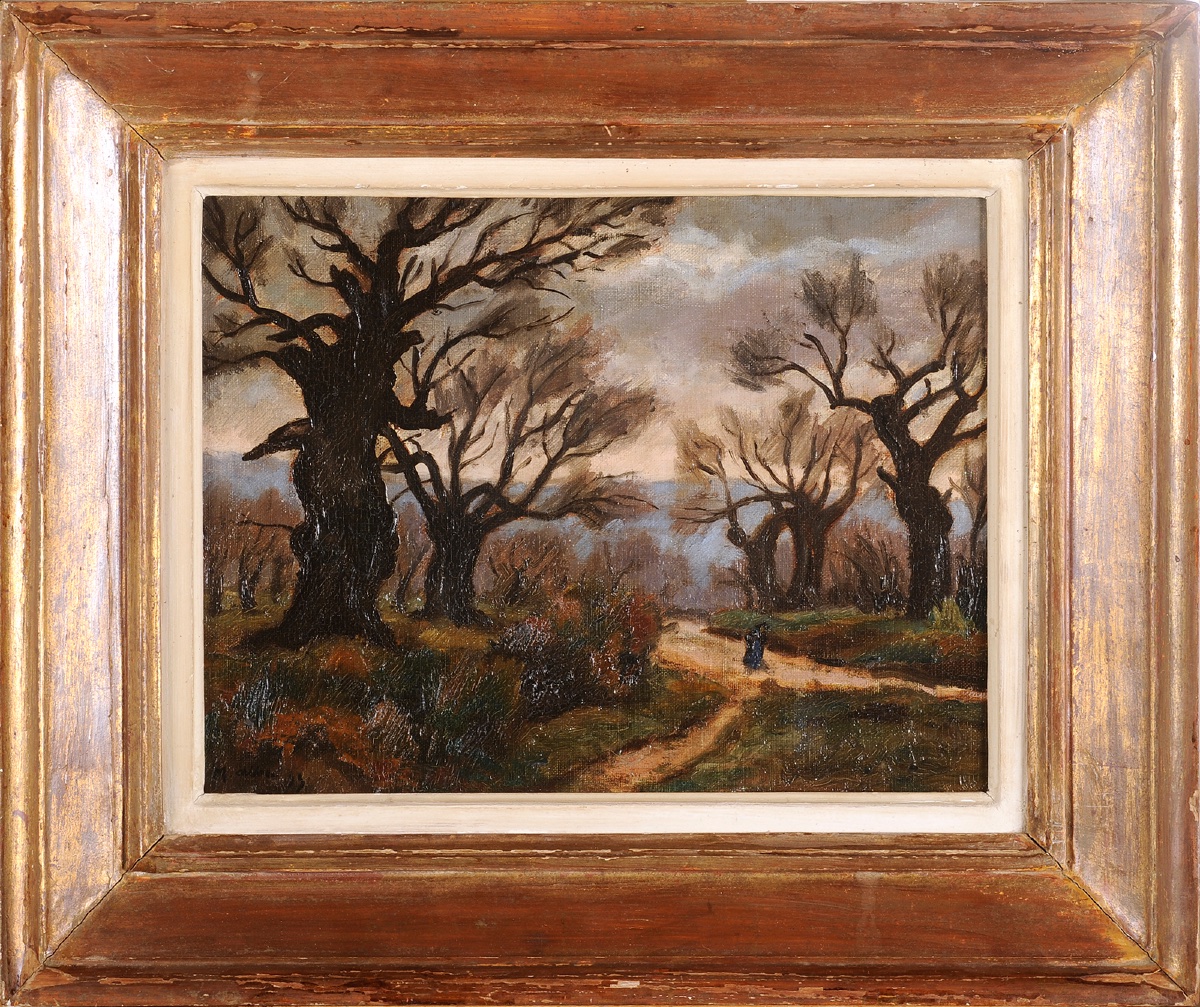
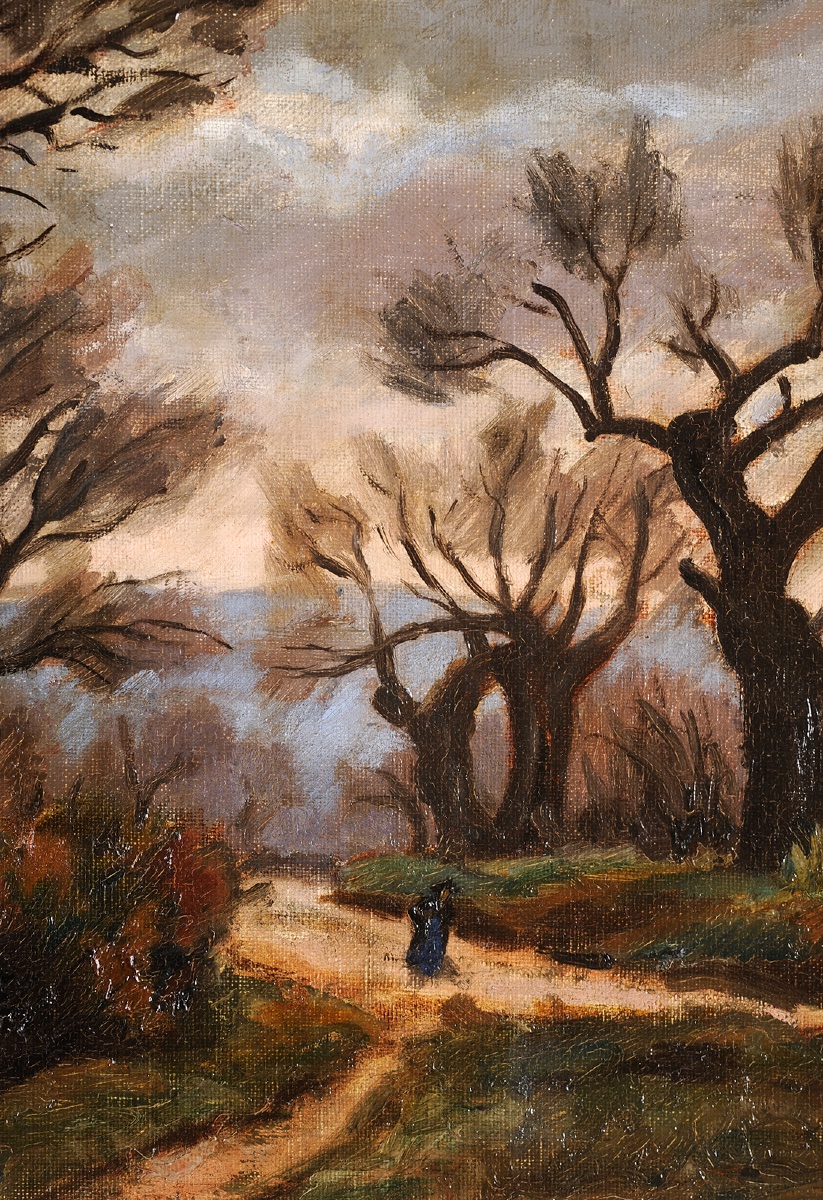
Winter Path with Chestnut Trees
Oil on canvas-backed cardboard
H. 27 cm; W. 35 cm
Signed and dated lower left—1933
Surprisingly, Maurice Albe was born in Beaugency, in the Loiret department, on January 15, 1900. A child of the early 20th century, he moved to the Périgord region around 1905, where his father took over management of the Sarlat gas plant. A native of the region—his parents were from Quercy—he experienced the joys of the Périgord Noir countryside, playing among the old chestnut trees on the arid hills where the rock outcrops. It was also thanks to his uncle, Canon Edmond Albe, that the young Maurice came to see the Sarlat region through the lens of its cultural heritage. As he roamed the hills steeped in history and took in the sight of farmers working the land, the cultural education provided by this clergyman would deeply root the future artist in his native region.
His early years of art study took place in Paris after World War I, where he met the most famous artists of the 20th century. Long days on the terraces of Montparnasse would bring him into contact with Picasso, Braque, Juan Gris, Lurçat, and above all André Lhote, to whom his work would owe so much. These formative years would continue notably at the École Estienne, the holy of holies of the book arts. Prior to that, he attended the ABC School of Drawing. This art magazine would later offer him his first publications, as he designed the cover of a 1925 issue with a woodcut depicting the Périgord region. This marked the beginning of a very long career as an illustrator and artist, as he would exhibit his woodcuts throughout his career and receive commissions from numerous writers and publishers to illustrate their works. Two people played a significant role in his life: the historian of the Périgord, Abbé Georges Rocal, for whom Albe illustrated about ten books and whose advice—as a great connoisseur of our region’s customs and countryside—he followed; and Eugène Le Roy, the famous Périgord writer, best known as the author of *Jacquou le Croquant*, which the painter illustrated twice during his career. An admirer of Le Roy for his descriptions of the region and his vision of peasant life, Albe even became president of the Association des Amis d’Eugène Le Roy in 1963, a position he held for many years. A third man also played a significant role in the painter’s life: Pierre Fanlac, founder of the publishing house bearing his name. His printing presses, located near the Tour de Vésonne in Périgueux, produced numerous high-quality works illustrated by Maurice Albe.
After traveling back and forth between Paris and the Sarladais region, Maurice Albe settled in Périgord in 1946, where his style evolved dramatically into what he himself called “figurative Cubism.” This technique of compartmentalization can now be found in all his works—both engravings and paintings—which, incidentally, generally stem from one another. Hunchbacked peasants resting in front of a village with heavy stone roofs, an old chestnut tree still full of life, a country market from which the chatter of women drifts, a goose herder with a piercing gaze—these are very popular subjects that, at first glance, seem ill-suited to artistic depiction. Yet Albe infused them with every possible harmony through his very distinctive style, having had the good fortune to receive numerous commissions from institutions in the Périgord, as well as to participate in regular joint exhibitions with his Parisian painter friends, which allowed him to sell his paintings worldwide. Maurice Albe also taught drawing at several institutions in Périgueux—both schools and recreational centers—forging a connection with an entire generation and passing on to them his passion for the Périgord and the expertise he had accumulated over a seventy-five-year career. Toward the end of his life, he was still being honored for his work and passed away just a few days before his ninety-fifth birthday.
It was at the age of thirty-three that Albe painted this winter scene, which beautifully evokes rural Périgord. It reminds us of Eugène Le Roy’s writings in L’ennemi de la Mort or Les gens d’Auberoque, where humble folk traverse forests strewn with dangers both real and imagined. This chestnut grove, shaped by human hands, is a reminder of a culture—one of great poverty—that shaped the lives of our ancestors. Today, a few of these trees still stand along the winding paths: soulless forms...
Period: 20th century
Style: Modern Art
Condition: Perfect condition
Material: Oil painting
Length: 27 cm hors cadre
Width: 35 cm hors cadre
Reference (ID): 1837677
Availability: In stock