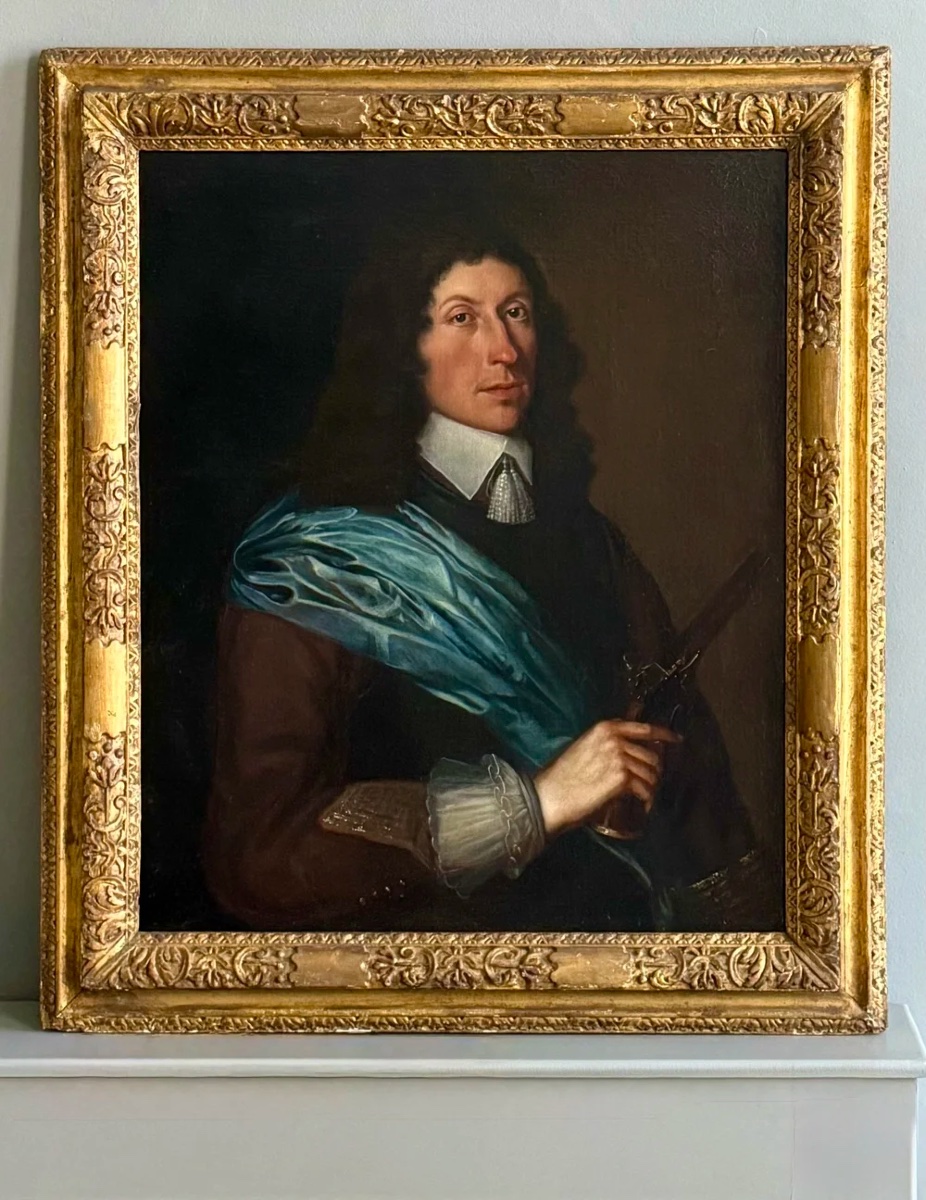

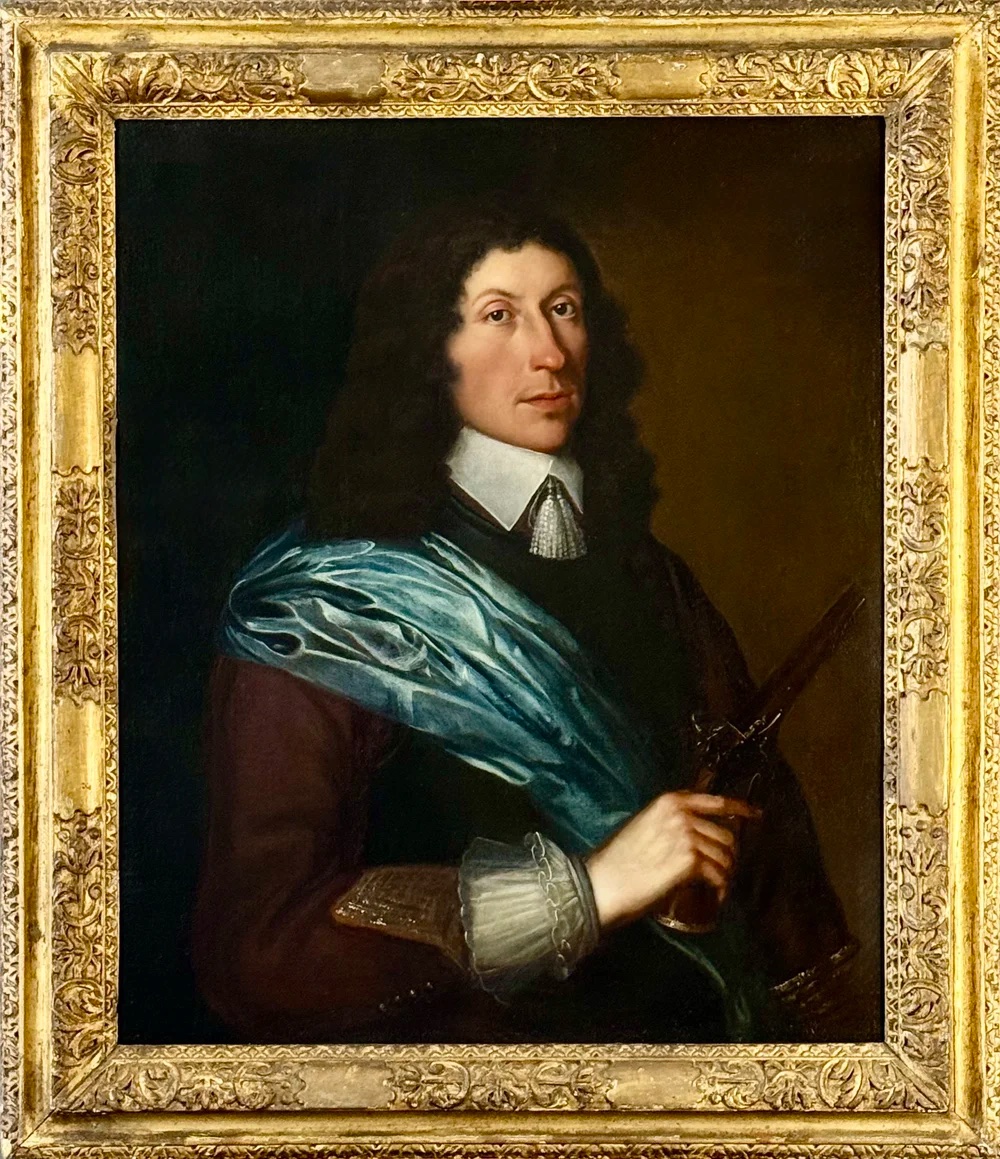



17th-century Irish School – Portrait Of M. Pennefather (1618–1688), Brandishing A Pistol
Artist: Ecolr Irlandiase
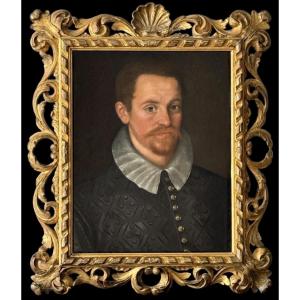
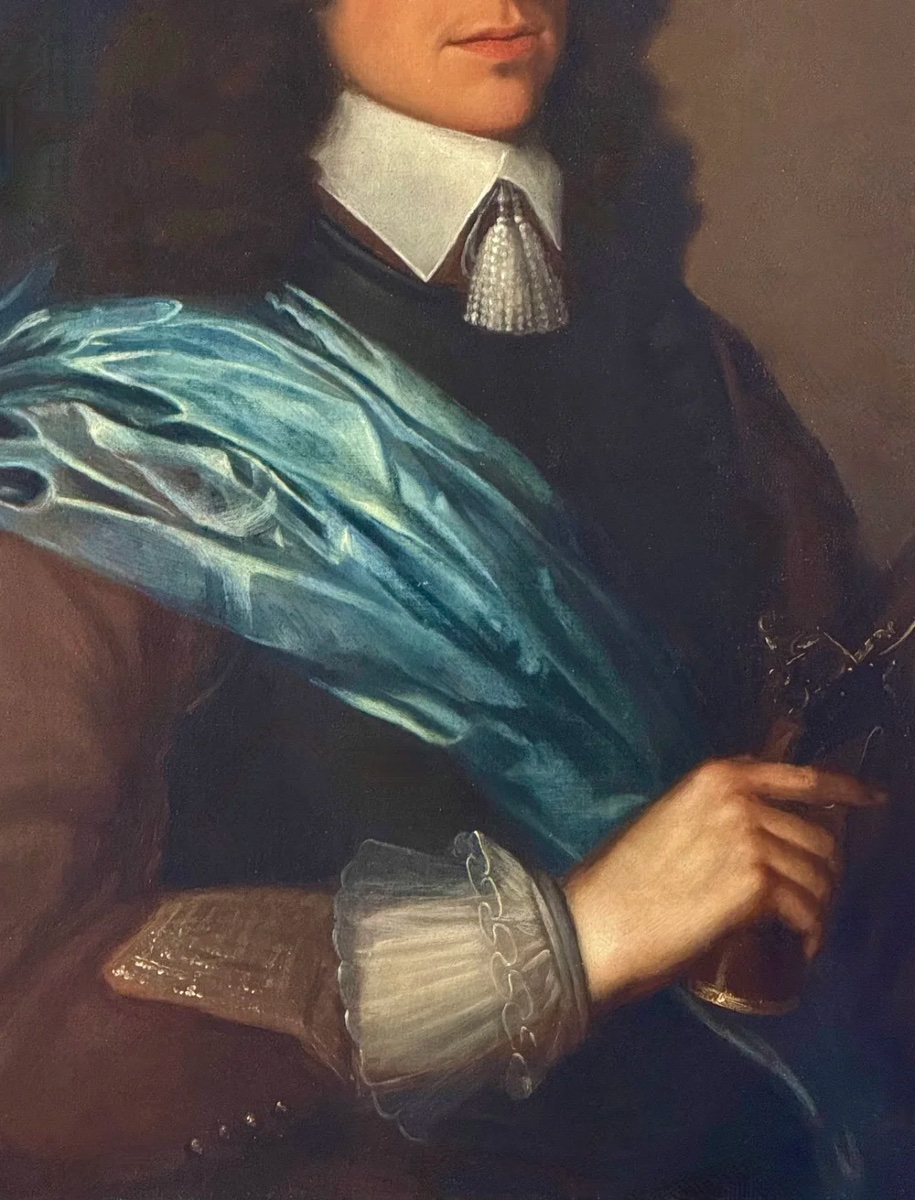
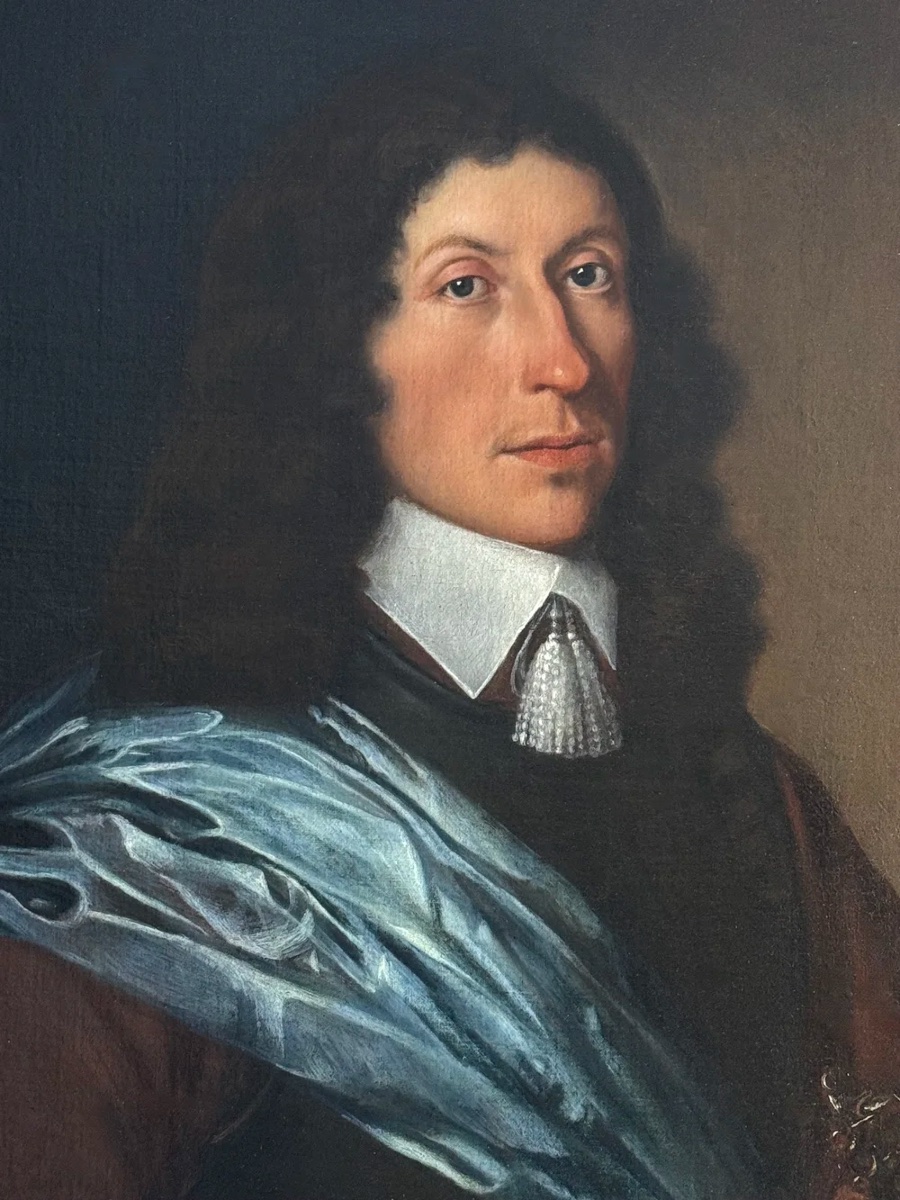
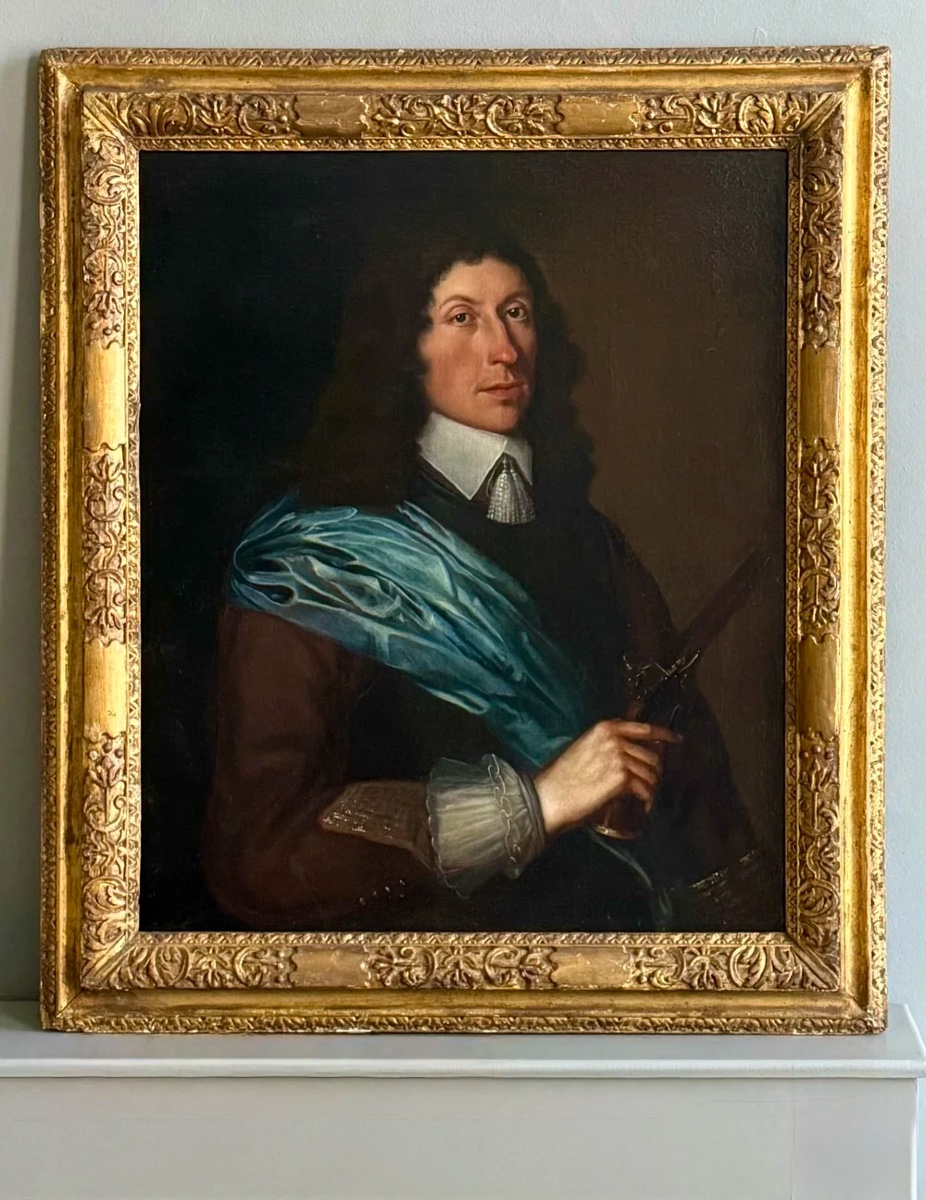
A portrait of great historical significance depicting Cornet Matthew Pennefather (1618–1688) in a half-length portrait, wearing a brown jacket and a blue scarf, brandishing a pistol.
Cornet Matthew Pennefather (1618–1688); according to *Burke’s LGI* (entry “Pennefather of Rathsallagh,” accessed July 2026): “the first member of this family to settle in Ireland… a cornet in the army, son of Abraham Pennefather and younger brother of Abraham Pennefather of Hanbury-on-the-Hill (Staffordshire). In 1666, he acquired by letters patent the estates of Clonegoose, Ballylanigan, etc., in County Tipperary” (the *Landed Estates* database lists 1667 for the grant; both dates—that of the letters patent and that of the grant—are documented). He arrived in Ireland around 1648 with Cromwell’s army; he served as quartermaster in the Earl of Mountrath’s regiment in 1662; resided at Gort McEllis Castle, near Cashel; buried at the Rock of Cashel.
Originally from the family’s ancestral estate in Staffordshire, the Pennefather family settled in County Tipperary, Ireland, around 1648. In 1662, records show that he held the rank of quartermaster in the Earl of Mountrath’s regiment, with postings in Birr (1664). In 1666, he acquired by letters patent the estates of Clonegoose, Ballylanigan, and others in County Tipperary. This was the period of Oliver Cromwell’s “colonization” of Ireland, during which most of the land was confiscated from Catholics and redistributed to English Protestants. After serving in Athy (around 1668), he left military service before 1685.
After his marriage to Levina Kingsmill, the couple settled at Gort McEllis Castle, near Cashel, before inheriting the Ballyowen estate—later renamed New Park—upon the death of Levina’s father. Matthew Pennefather and his wife are both buried at the Rock of Cashel. For several generations, members of the Pennefather family represented Cashel in Parliament.
The surname Pennefather (the spelling of which has varied over time, with forms such as Pennyfather or Pennyfeather) originates from an Old English nickname meaning a miser or a person of extreme frugality (“ penny-father”).
This work is in excellent condition and is presented in its original hand-carved and gilded “Lely” style frame, which is a work of art in its own right.
Provenance: the Pennefather family, New Park (County Tipperary); by descent.
Canvas: 70 cm x 65 cm.
With frame: 86 cm x 74 cm.
Cornet Matthew Pennefather (1618–1688); according to *Burke’s LGI* (entry “Pennefather of Rathsallagh,” accessed July 2026): “the first member of this family to settle in Ireland… a cornet in the army, son of Abraham Pennefather and younger brother of Abraham Pennefather of Hanbury-on-the-Hill (Staffordshire). In 1666, he acquired by letters patent the estates of Clonegoose, Ballylanigan, etc., in County Tipperary” (the *Landed Estates* database lists 1667 for the grant; both dates—that of the letters patent and that of the grant—are documented). He arrived in Ireland around 1648 with Cromwell’s army; he served as quartermaster in the Earl of Mountrath’s regiment in 1662; resided at Gort McEllis Castle, near Cashel; buried at the Rock of Cashel.
Originally from the family’s ancestral estate in Staffordshire, the Pennefather family settled in County Tipperary, Ireland, around 1648. In 1662, records show that he held the rank of quartermaster in the Earl of Mountrath’s regiment, with postings in Birr (1664). In 1666, he acquired by letters patent the estates of Clonegoose, Ballylanigan, and others in County Tipperary. This was the period of Oliver Cromwell’s “colonization” of Ireland, during which most of the land was confiscated from Catholics and redistributed to English Protestants. After serving in Athy (around 1668), he left military service before 1685.
After his marriage to Levina Kingsmill, the couple settled at Gort McEllis Castle, near Cashel, before inheriting the Ballyowen estate—later renamed New Park—upon the death of Levina’s father. Matthew Pennefather and his wife are both buried at the Rock of Cashel. For several generations, members of the Pennefather family represented Cashel in Parliament.
The surname Pennefather (the spelling of which has varied over time, with forms such as Pennyfather or Pennyfeather) originates from an Old English nickname meaning a miser or a person of extreme frugality (“ penny-father”).
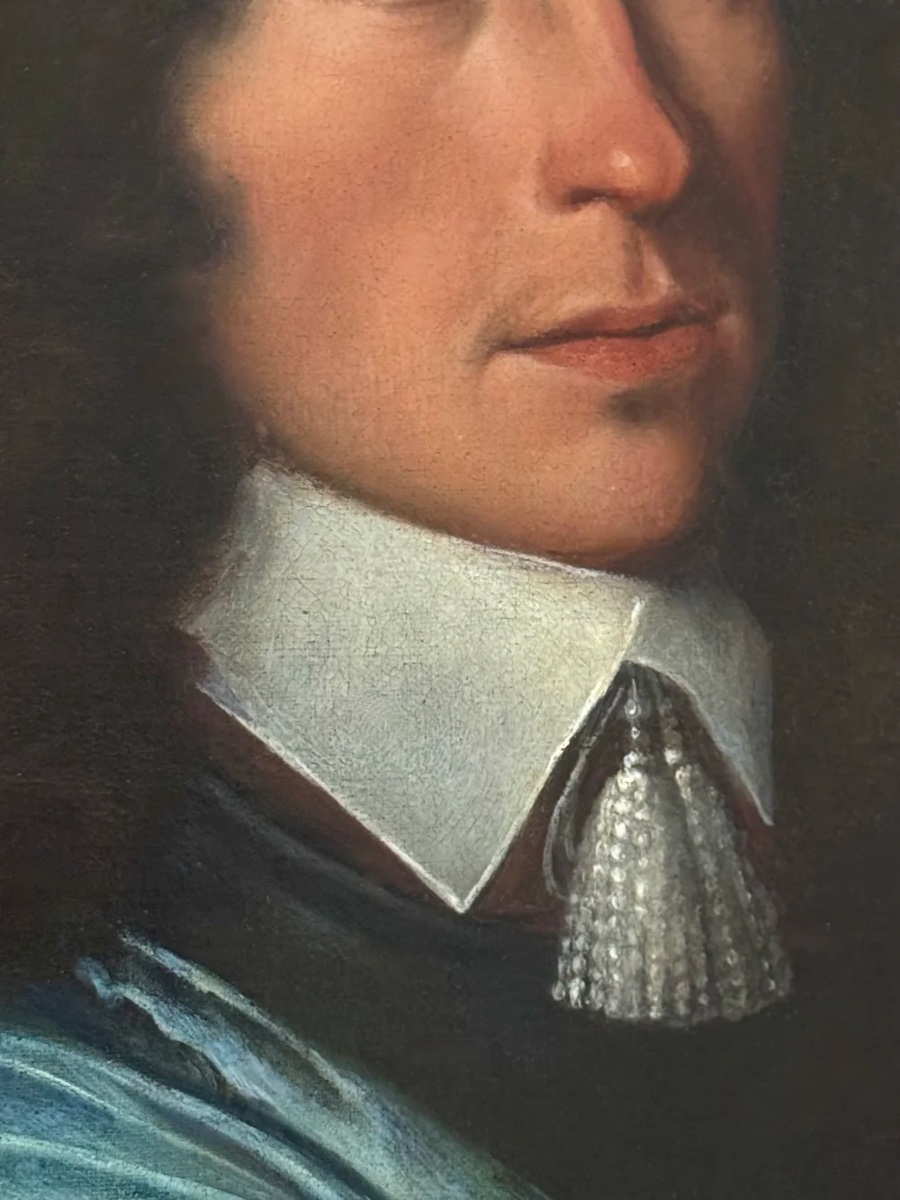
This work is in excellent condition and is presented in its original hand-carved and gilded “Lely” style frame, which is a work of art in its own right.
Provenance: the Pennefather family, New Park (County Tipperary); by descent.
Canvas: 70 cm x 65 cm.
With frame: 86 cm x 74 cm.
10 000 €
Period: 17th century
Style: Other Style
Condition: Excellent condition
Material: Oil painting
Length: 74
Height: 86cm
Reference (ID): 1836973
Availability: In stock
Print