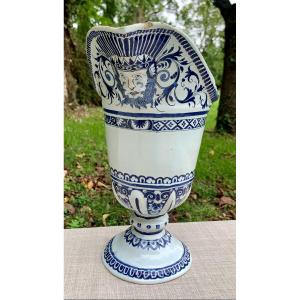


Very Large Late 17th Rouen Ceramic Ewer Shades Of Blue, With Relief Lambrequins & Indian Head
Artist: Faïence De Rouen Fin Xviie Ou Début Xviiie D
FRENCH EARTHENWARE
Late 17th or early 18th century
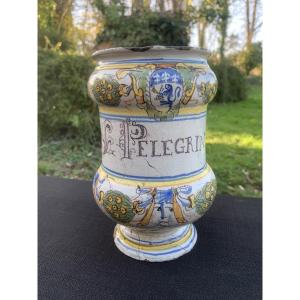
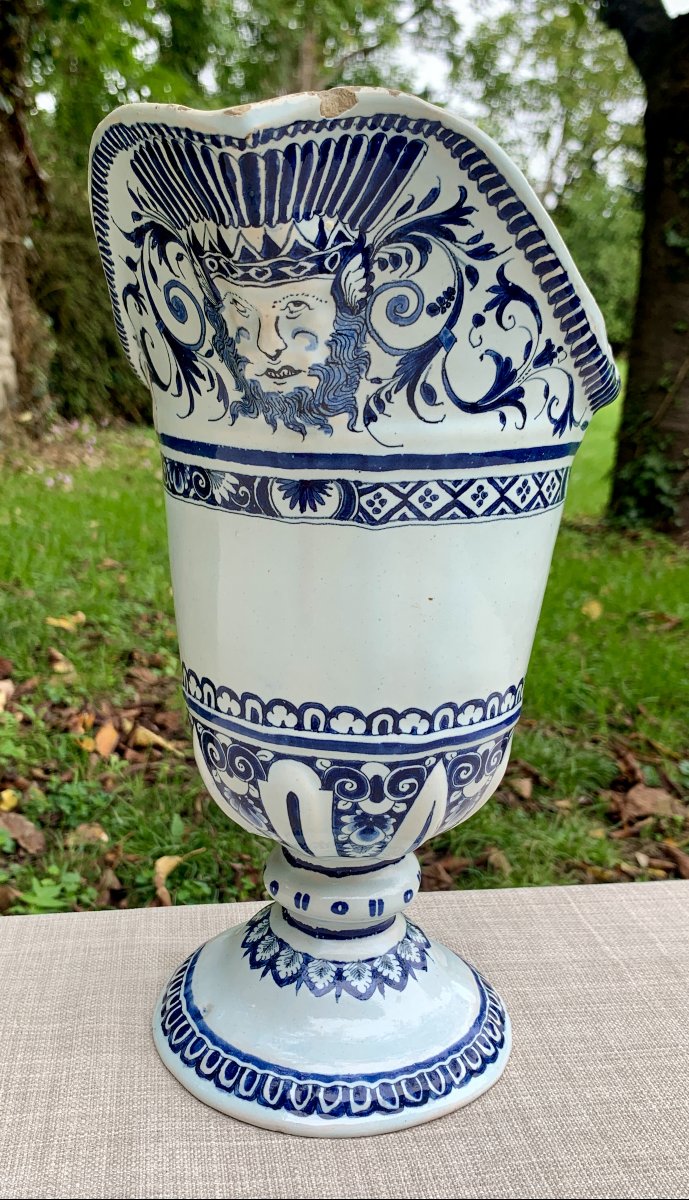
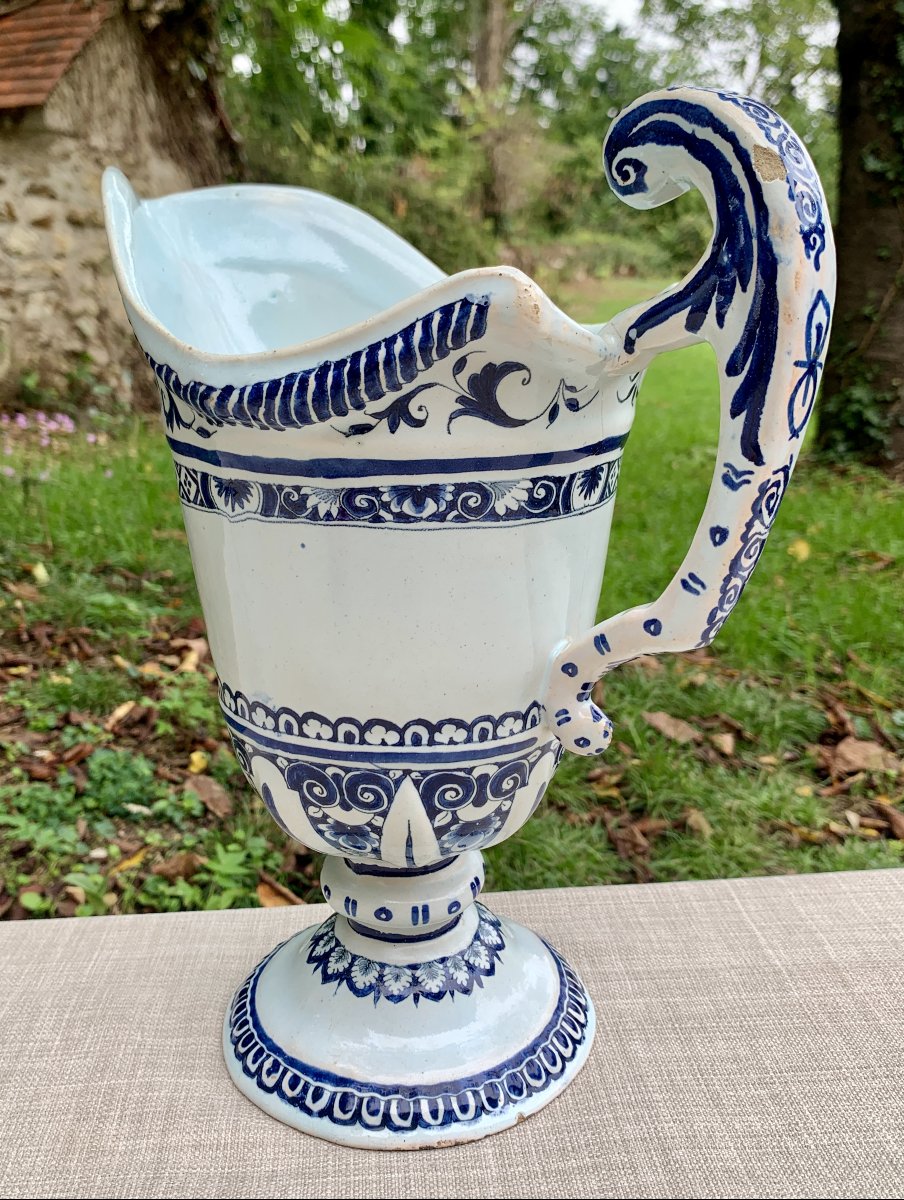
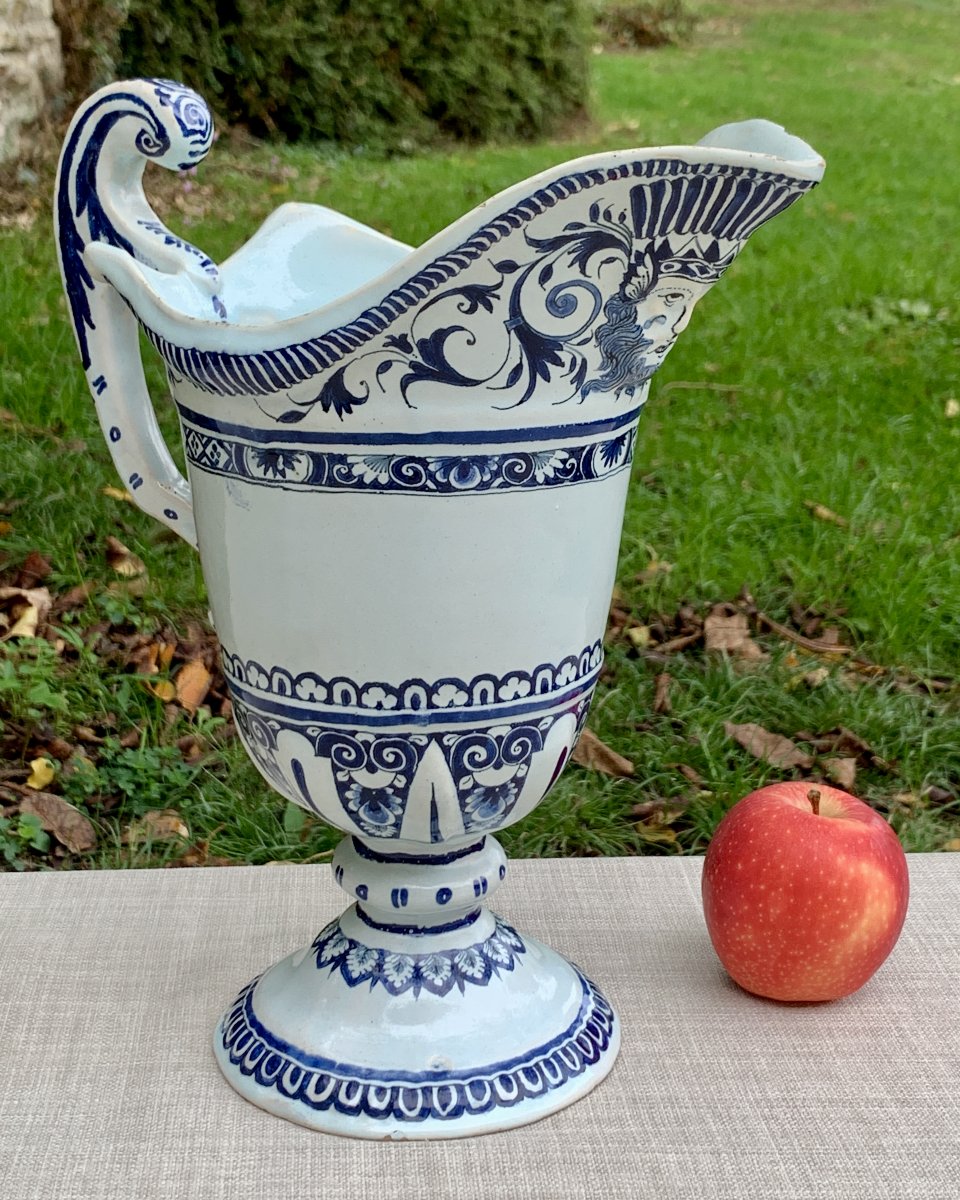
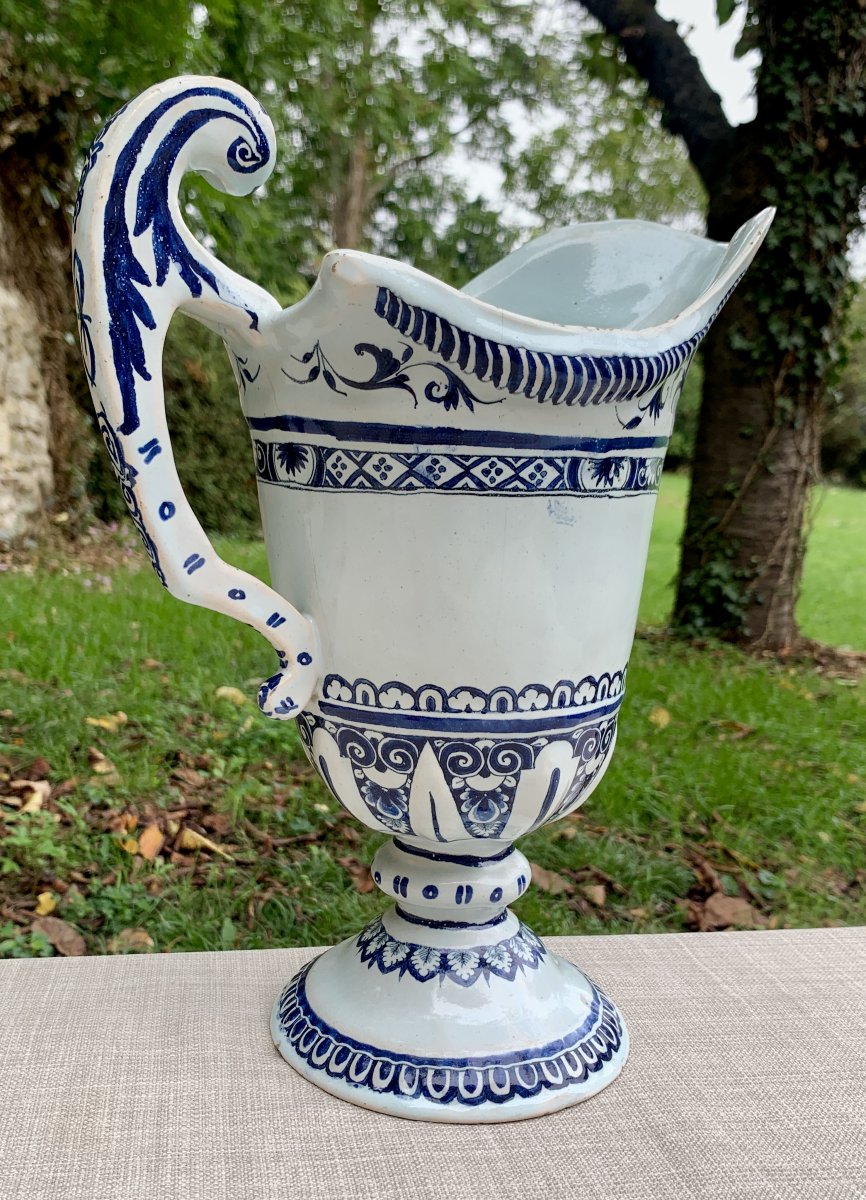
Beautiful and very large plain fired Rouen earthenware jug / ewer,
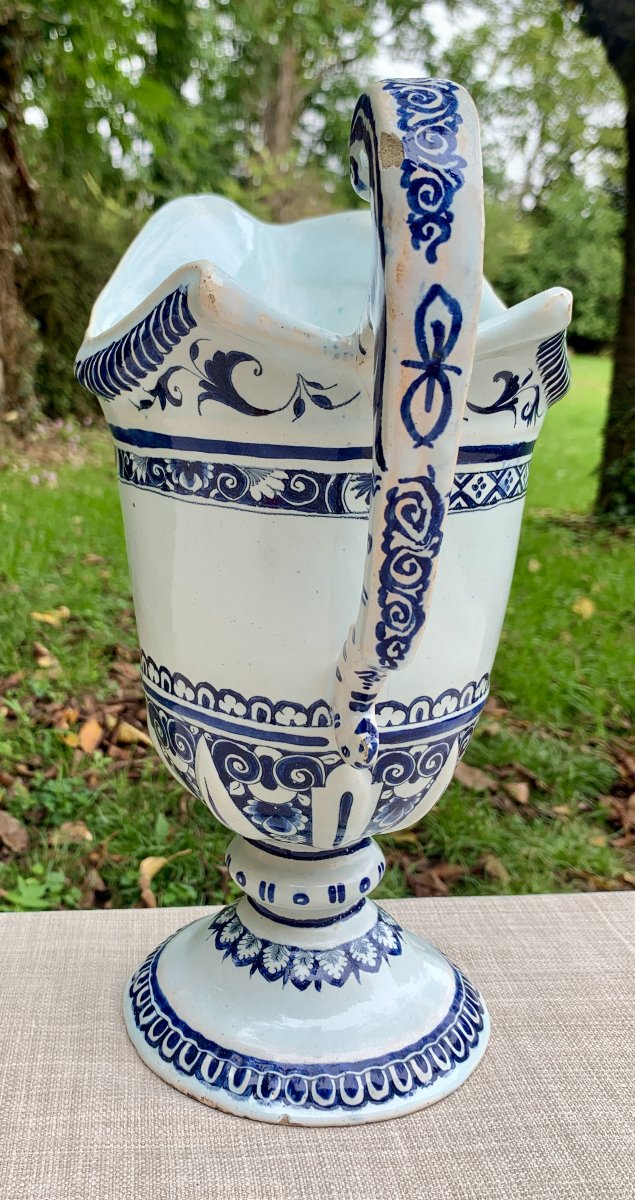
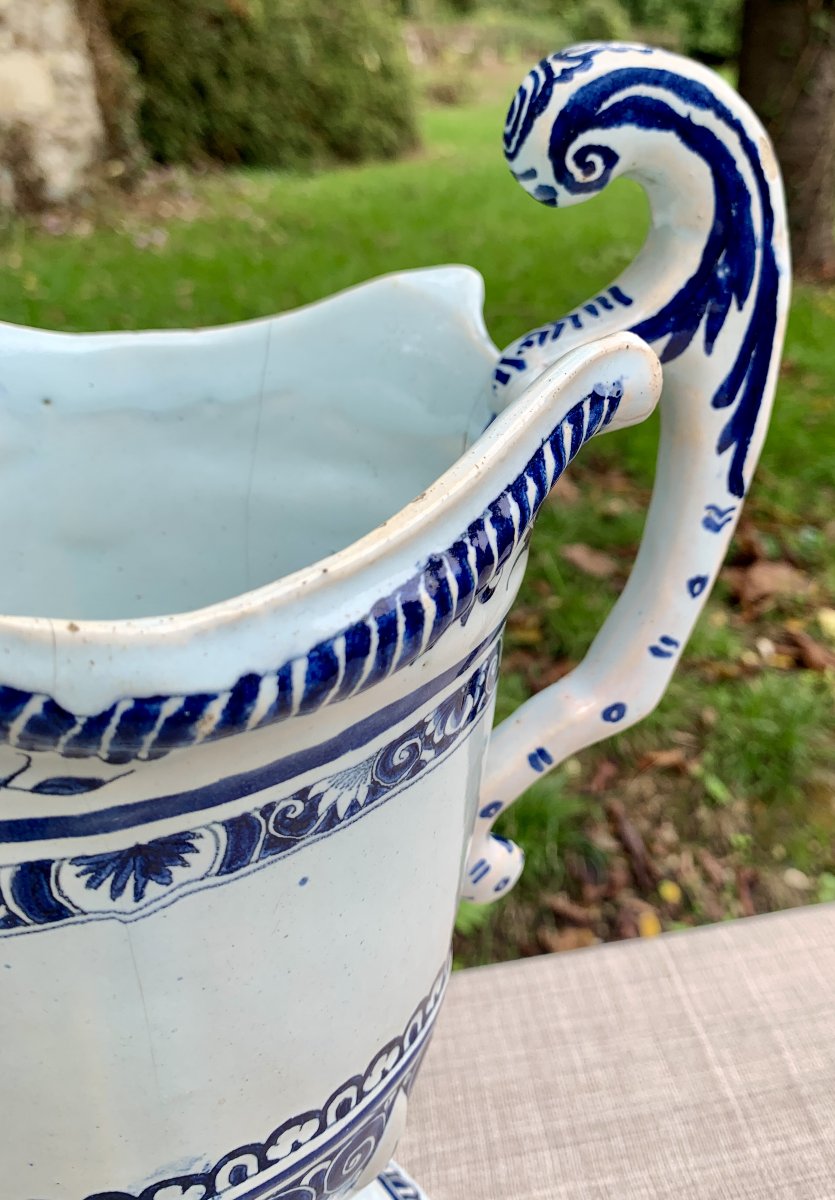
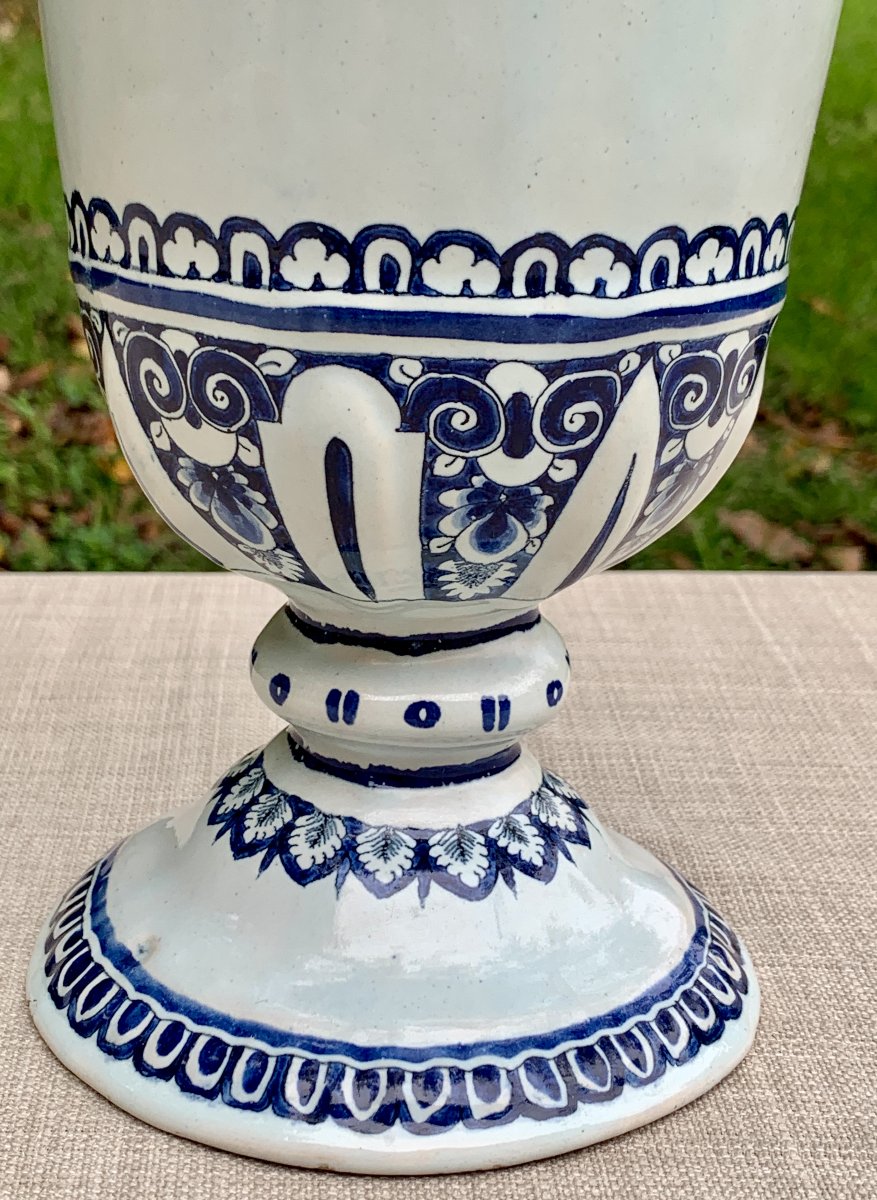
Simple, refined decoration in shades of blue on a bluish background, featuring friezes of lambrequins in slight relief (the faience maker directly replicated the silverware shape models here)
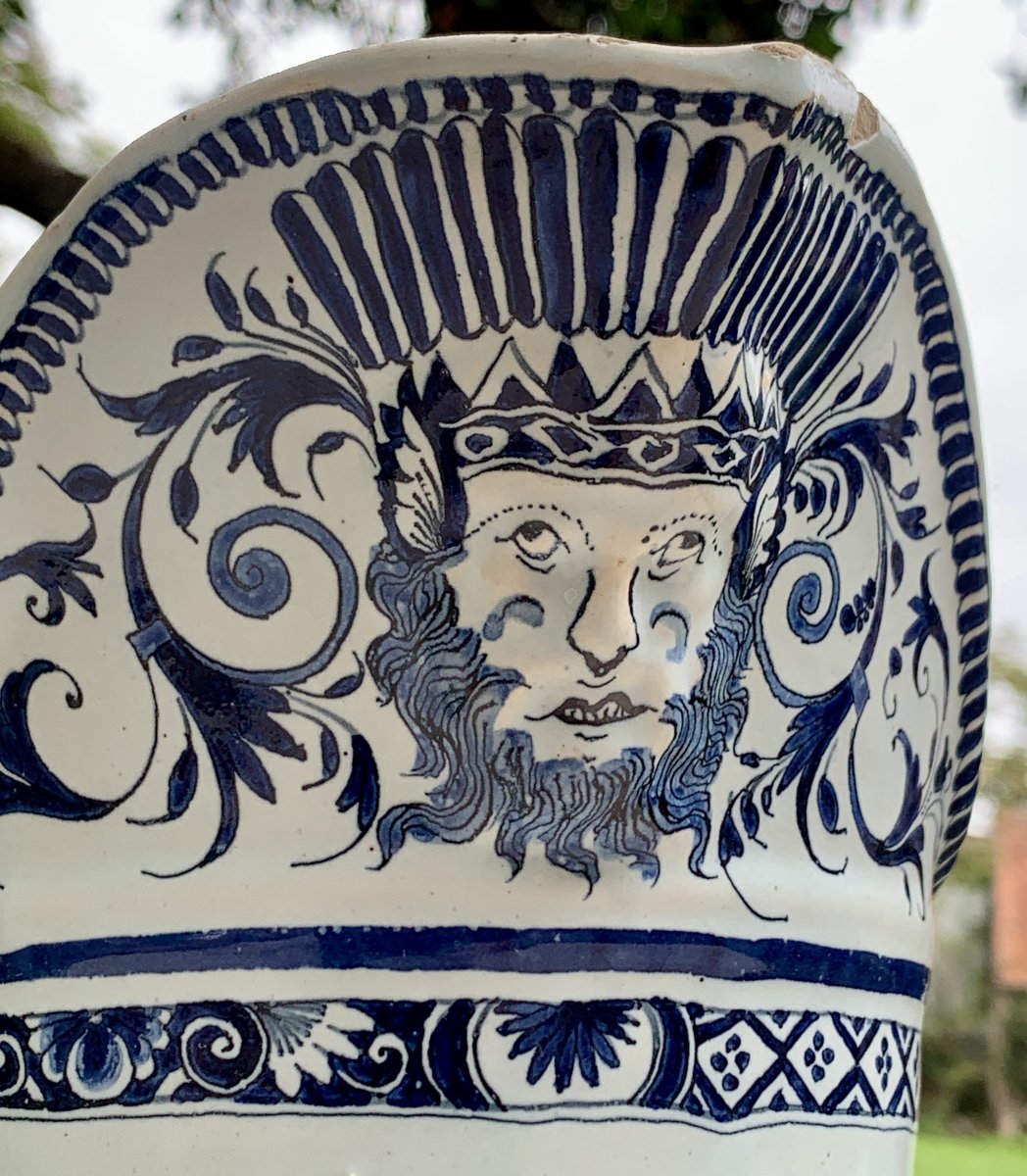
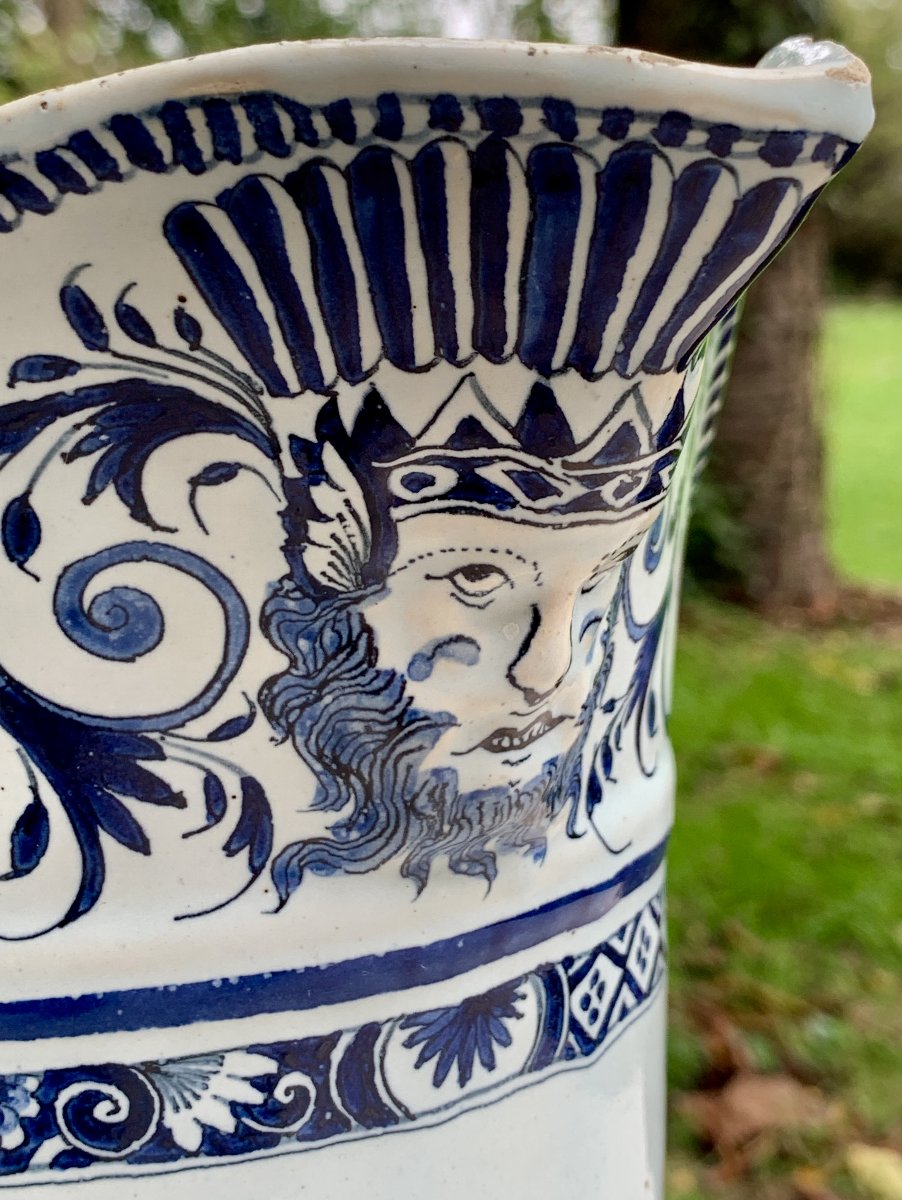
Of particular note is the beautiful, large face of a bearded man wearing an Indian headdress, which accentuates the spout of the ewer on its exterior. This motif is a very common design on this type of pitcher.
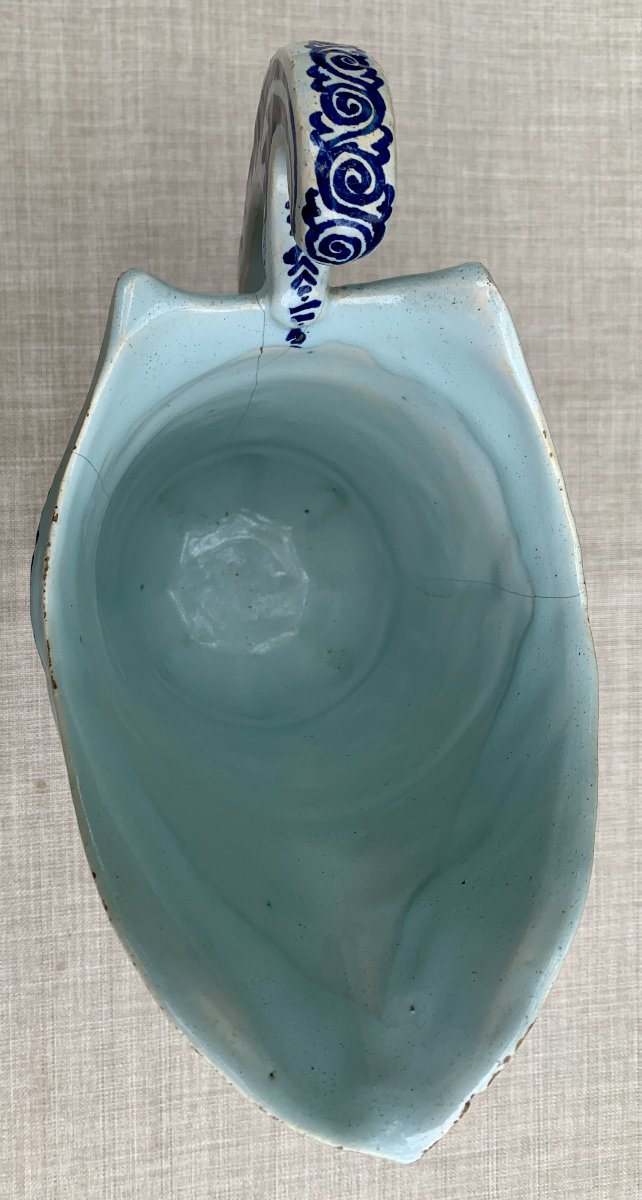
The curve of the handle (curiously intact on this type of ewer) is also particularly well-executed and elegant, lending full grandeur to this iconic element of Louis XIV-era tableware
Condition:
3 slight vertical chips starting from the rim of the hanap, and a small chip on the edge of the pitcher near the spout
No restoration
Dimensions:
30 cm high
27 cm (including the handle and spout) and 16 cm (without) in diameter
Provenance:
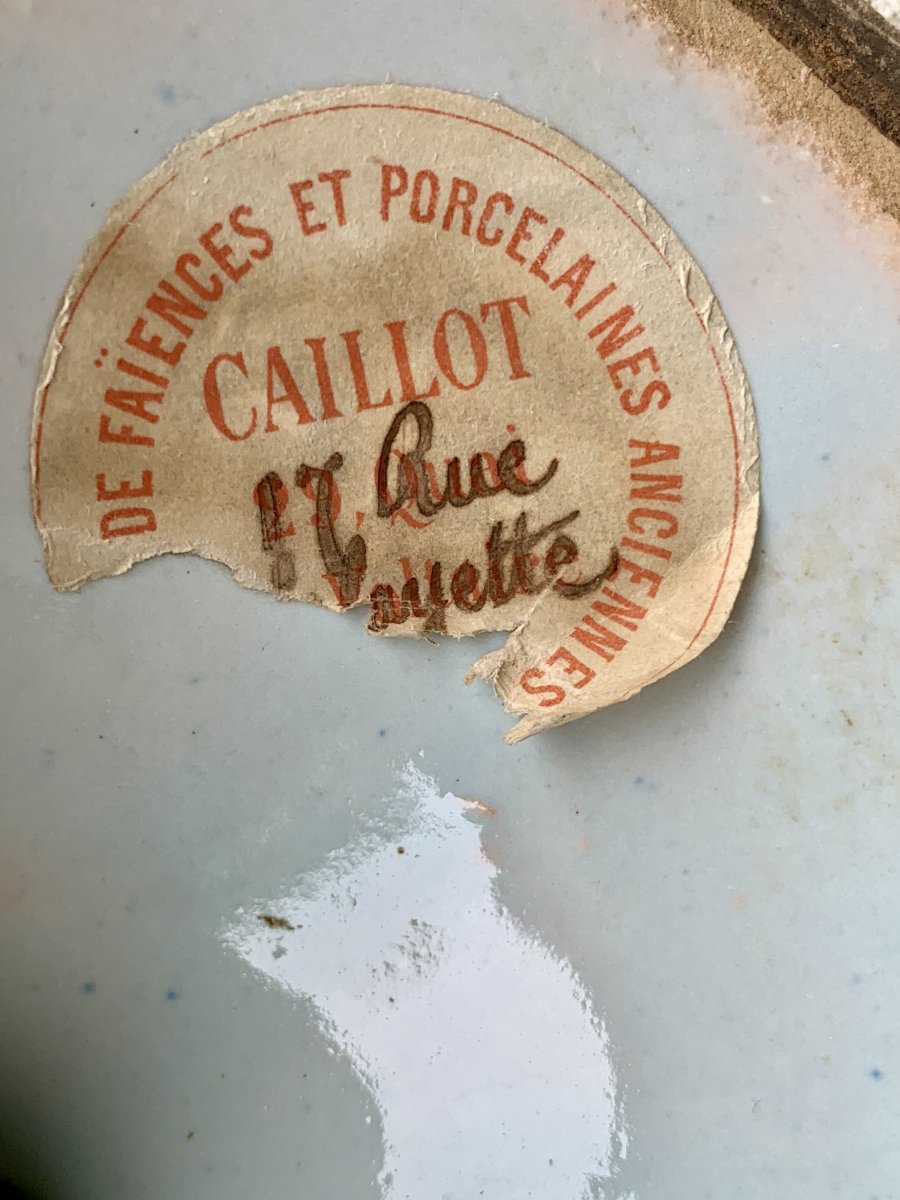
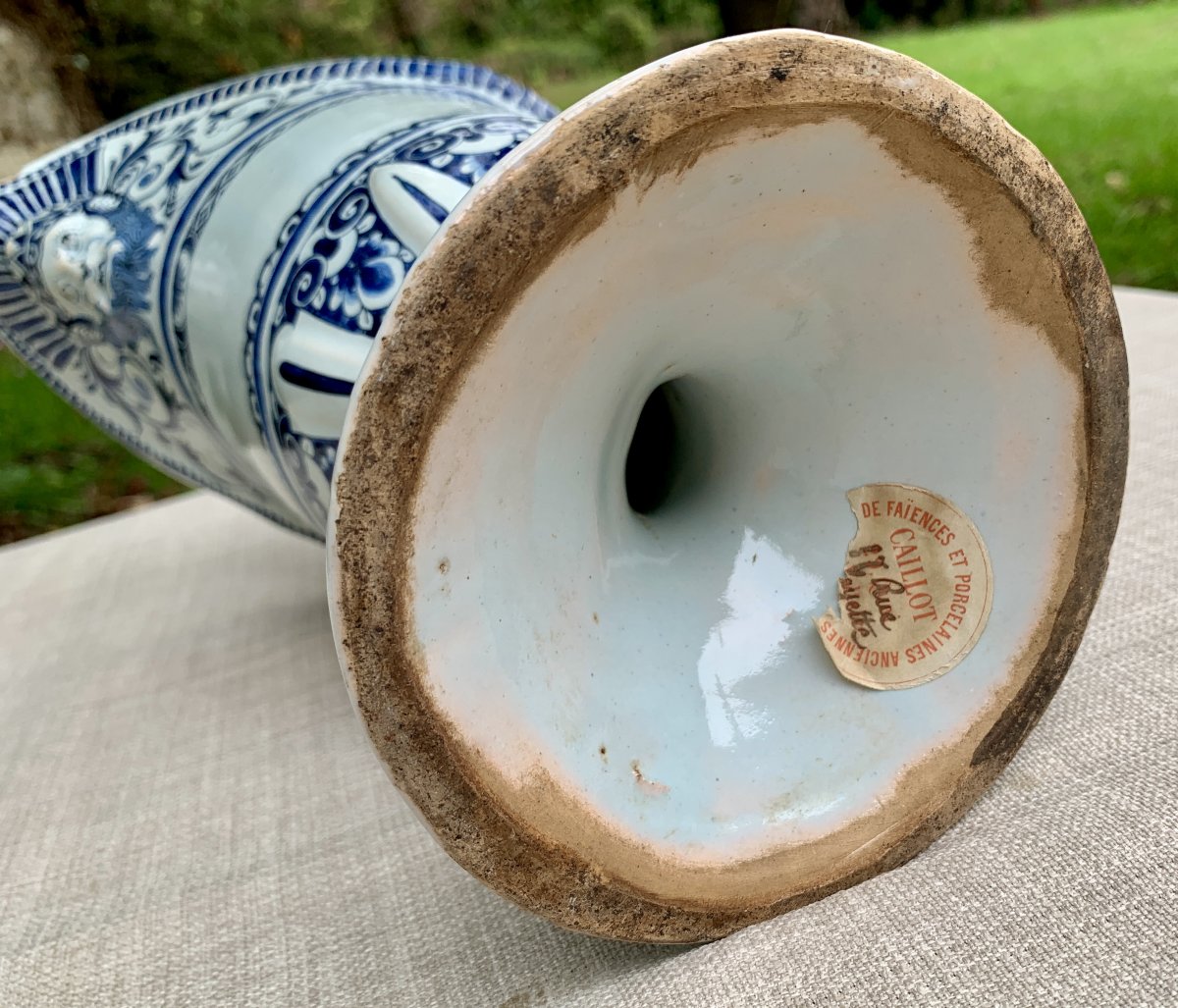
The hanap bears on its reverse side a valuable gallery label from late 19th century or very early 20th century, CAILLOT, dealer and expert in earthenware and porcelain, with an original address “29 Quai Voltaire in Paris,” handwritten over in ink with a new address “16? Rue Lafayette”
This provides us with an important chronological reference: the Louvre Museum documents a purchase made from Caillot at 29 Quai Voltaire on July 7, 1877. Rue Lafayette obviously corresponds to a later address following a move.
The name of this specialist in antique ceramics also appears very regularly in inventories of major collections and other prestigious auction catalogs from very early 19th century...
Late 17th or early 18th century
Beautiful and very large plain fired Rouen earthenware jug / ewer,
Simple, refined decoration in shades of blue on a bluish background, featuring friezes of lambrequins in slight relief (the faience maker directly replicated the silverware shape models here)
Of particular note is the beautiful, large face of a bearded man wearing an Indian headdress, which accentuates the spout of the ewer on its exterior. This motif is a very common design on this type of pitcher.
The curve of the handle (curiously intact on this type of ewer) is also particularly well-executed and elegant, lending full grandeur to this iconic element of Louis XIV-era tableware
Condition:
3 slight vertical chips starting from the rim of the hanap, and a small chip on the edge of the pitcher near the spout
No restoration
Dimensions:
30 cm high
27 cm (including the handle and spout) and 16 cm (without) in diameter
Provenance:
The hanap bears on its reverse side a valuable gallery label from late 19th century or very early 20th century, CAILLOT, dealer and expert in earthenware and porcelain, with an original address “29 Quai Voltaire in Paris,” handwritten over in ink with a new address “16? Rue Lafayette”
This provides us with an important chronological reference: the Louvre Museum documents a purchase made from Caillot at 29 Quai Voltaire on July 7, 1877. Rue Lafayette obviously corresponds to a later address following a move.
The name of this specialist in antique ceramics also appears very regularly in inventories of major collections and other prestigious auction catalogs from very early 19th century...
950 €
Period: 17th century
Style: Louis 14th, Regency
Condition: Good condition
Material: Ceramic
Diameter: 27 cm (avec l'anse et le bec verseur) et 16 cm (sans) de diamètres
Height: 30 cm
Reference (ID): 1835158
Availability: In stock
Print