




Divination Dagger Featuring An Ancestor's Image – Iatmul – Papua New Guinea
Divination dagger bearing the effigy of an ancestor – Iatmul –Papua New Guinea
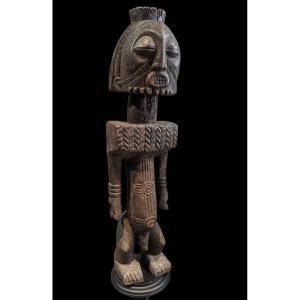
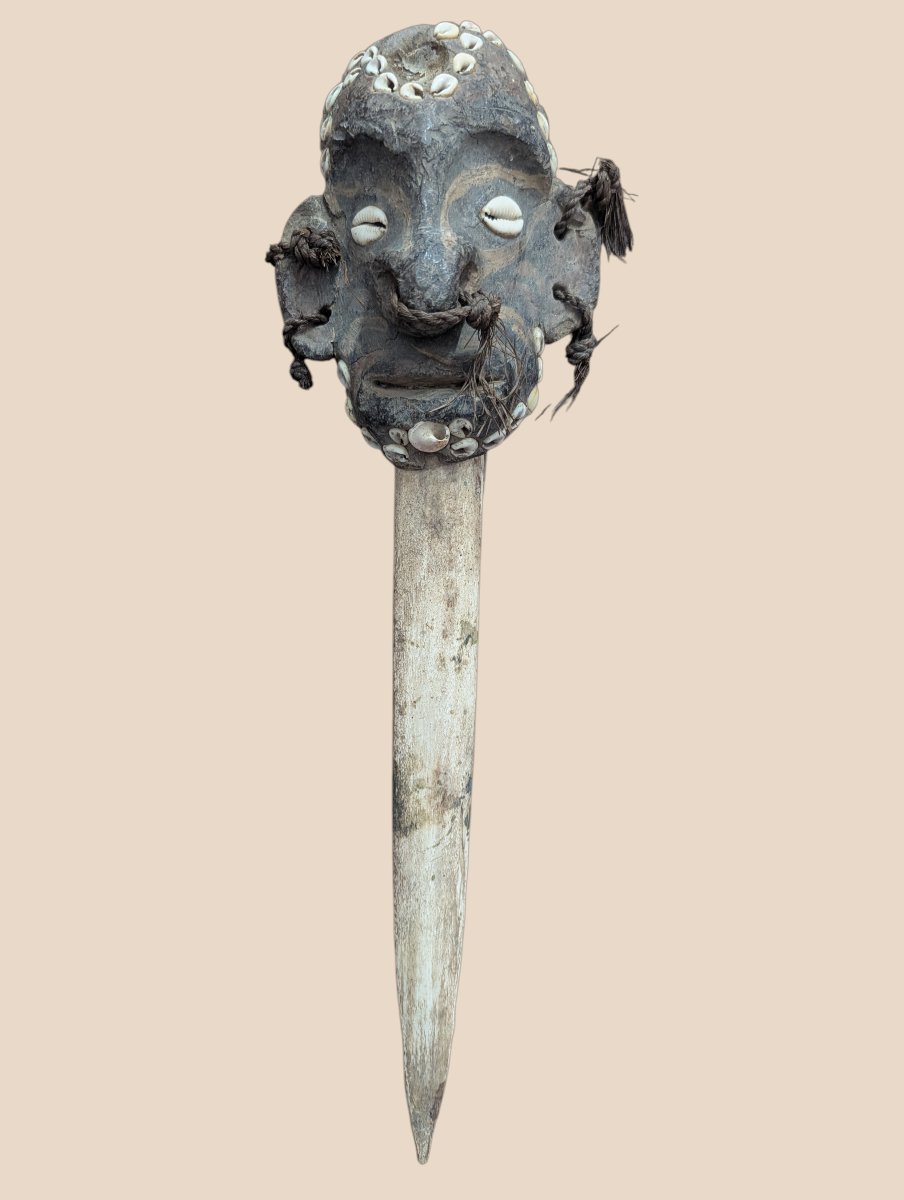
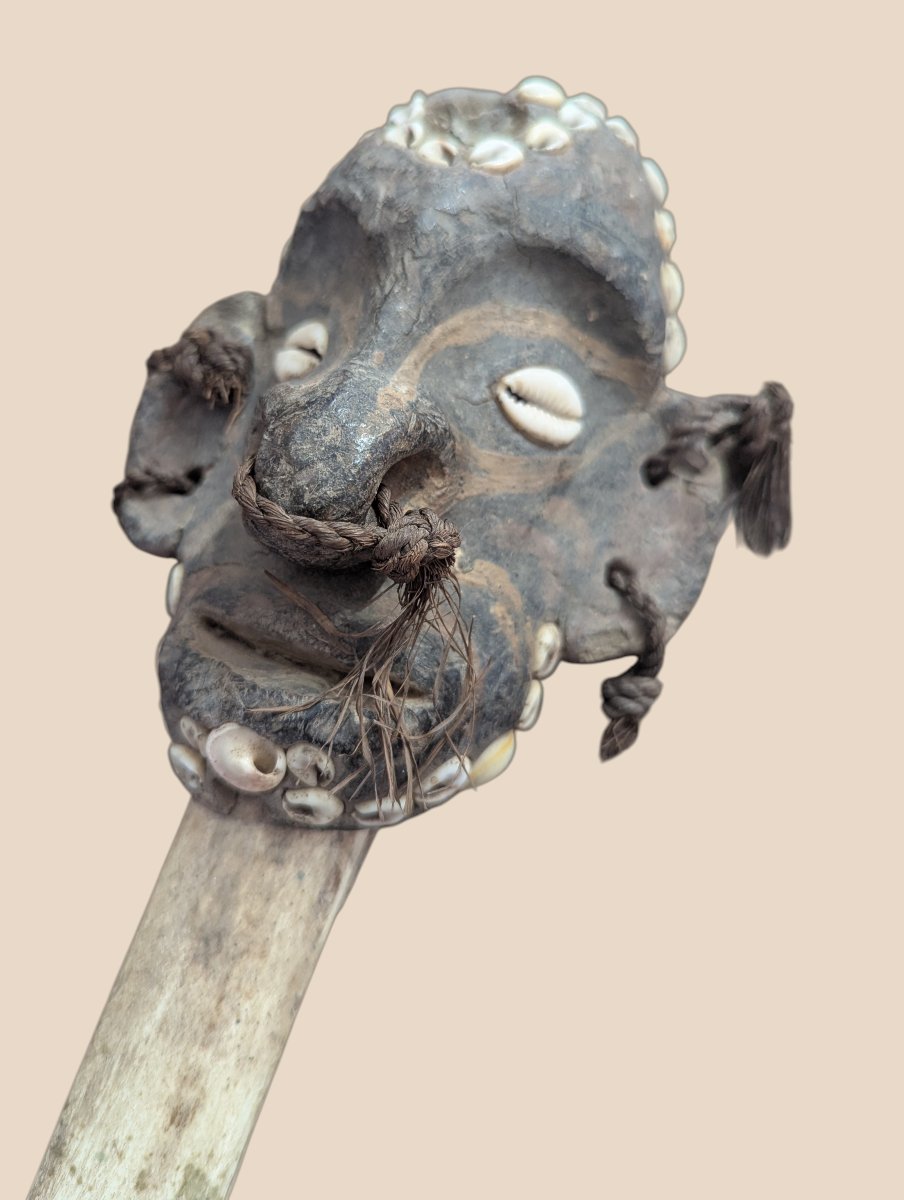
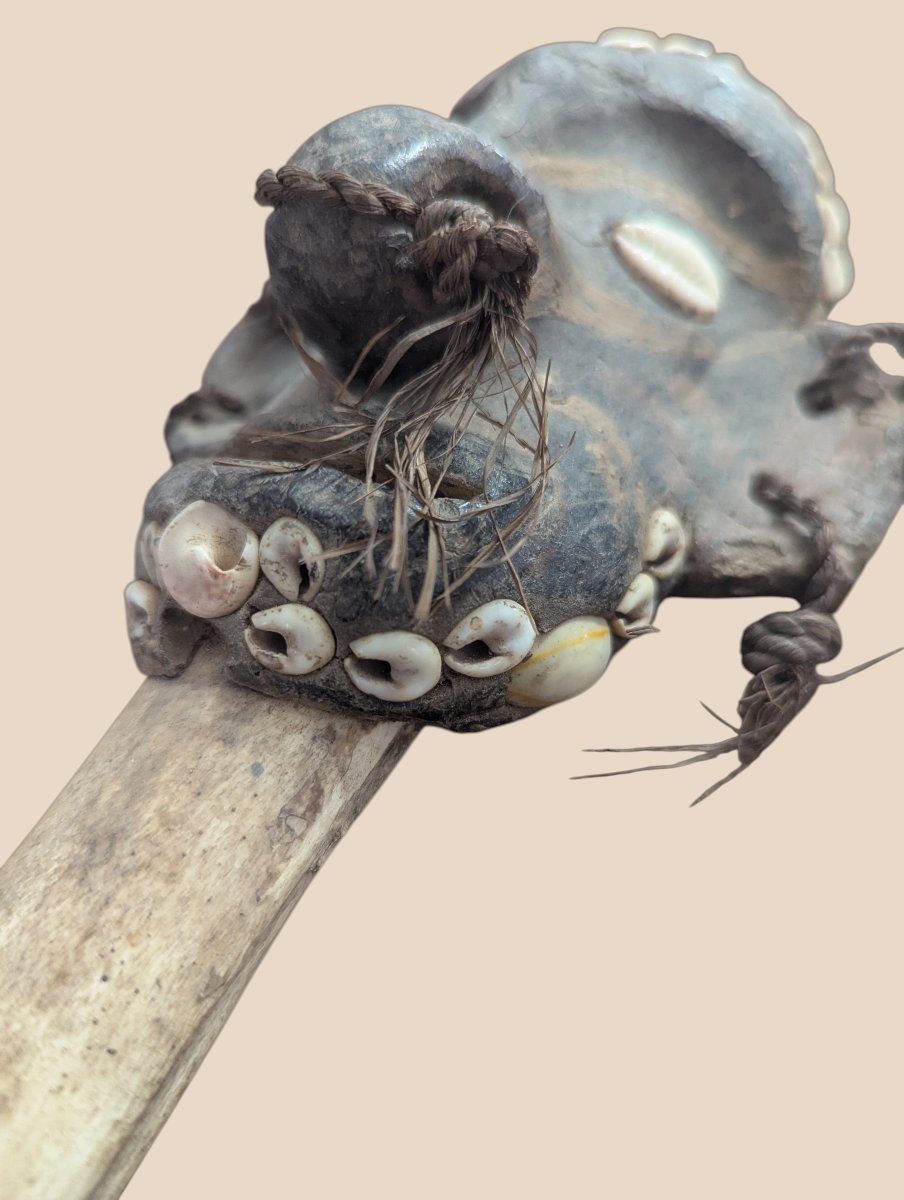
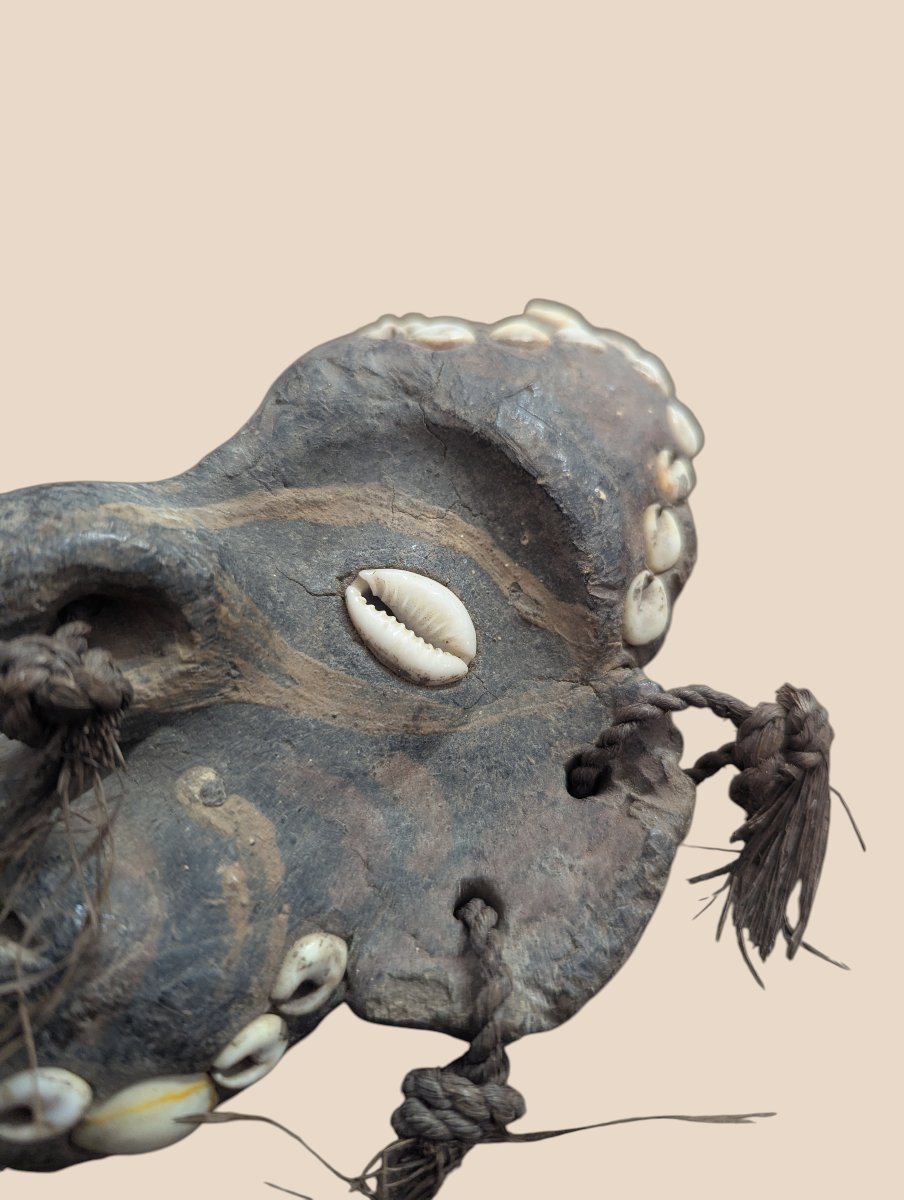
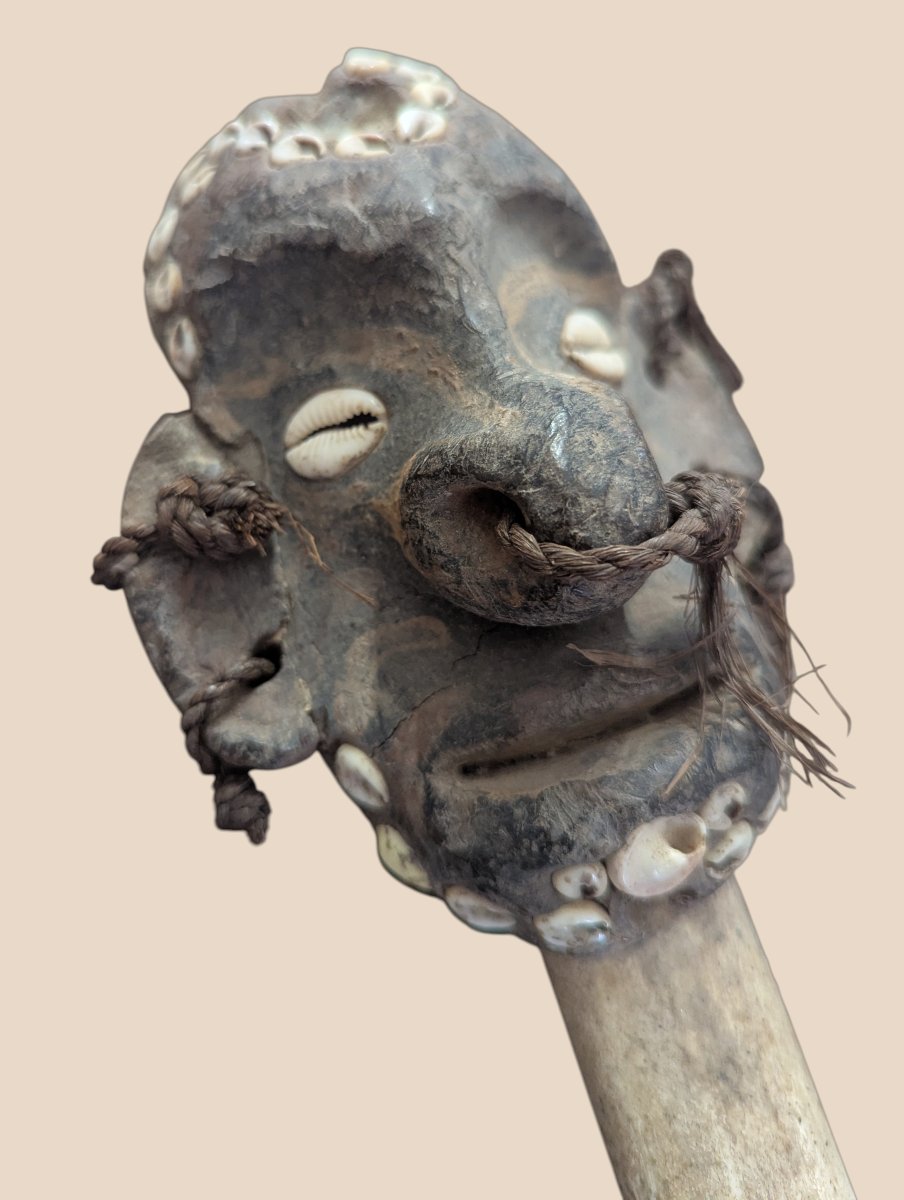
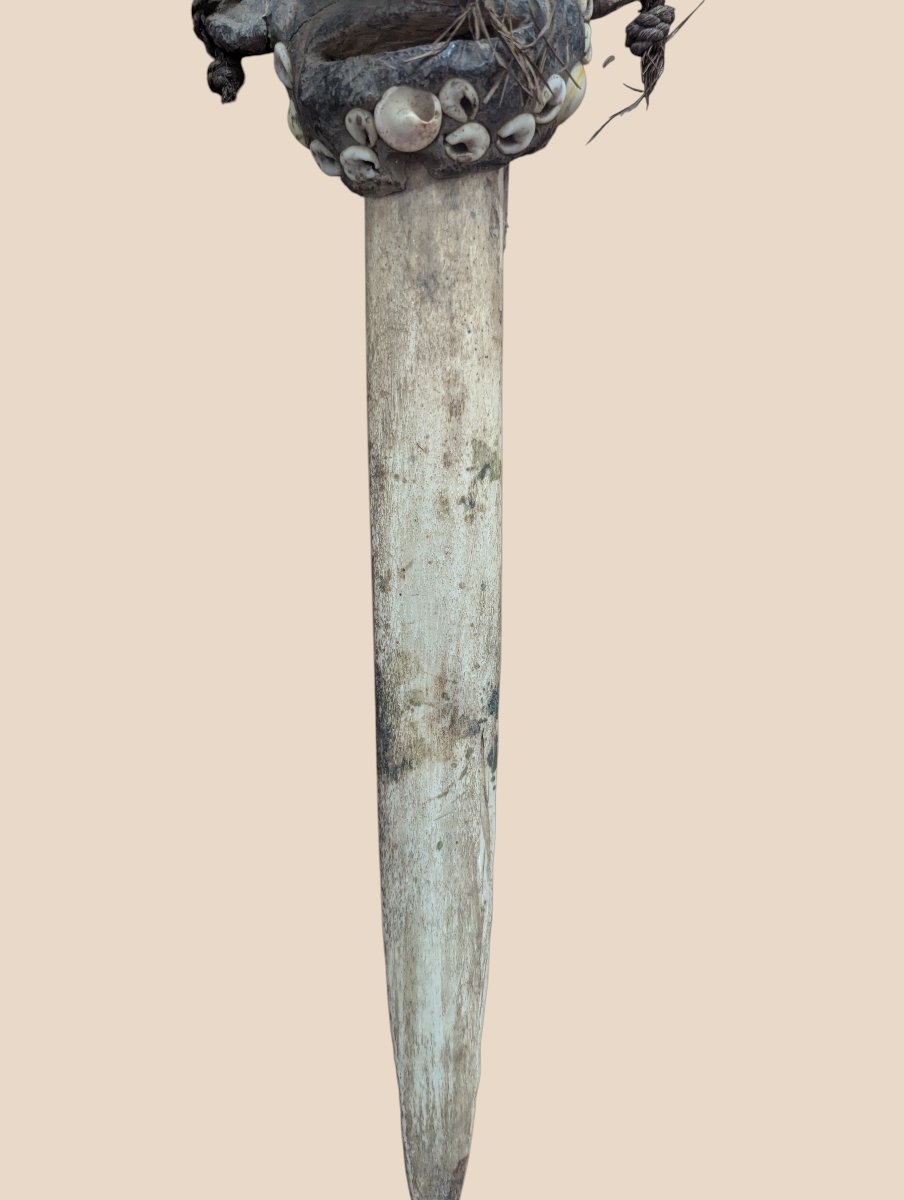
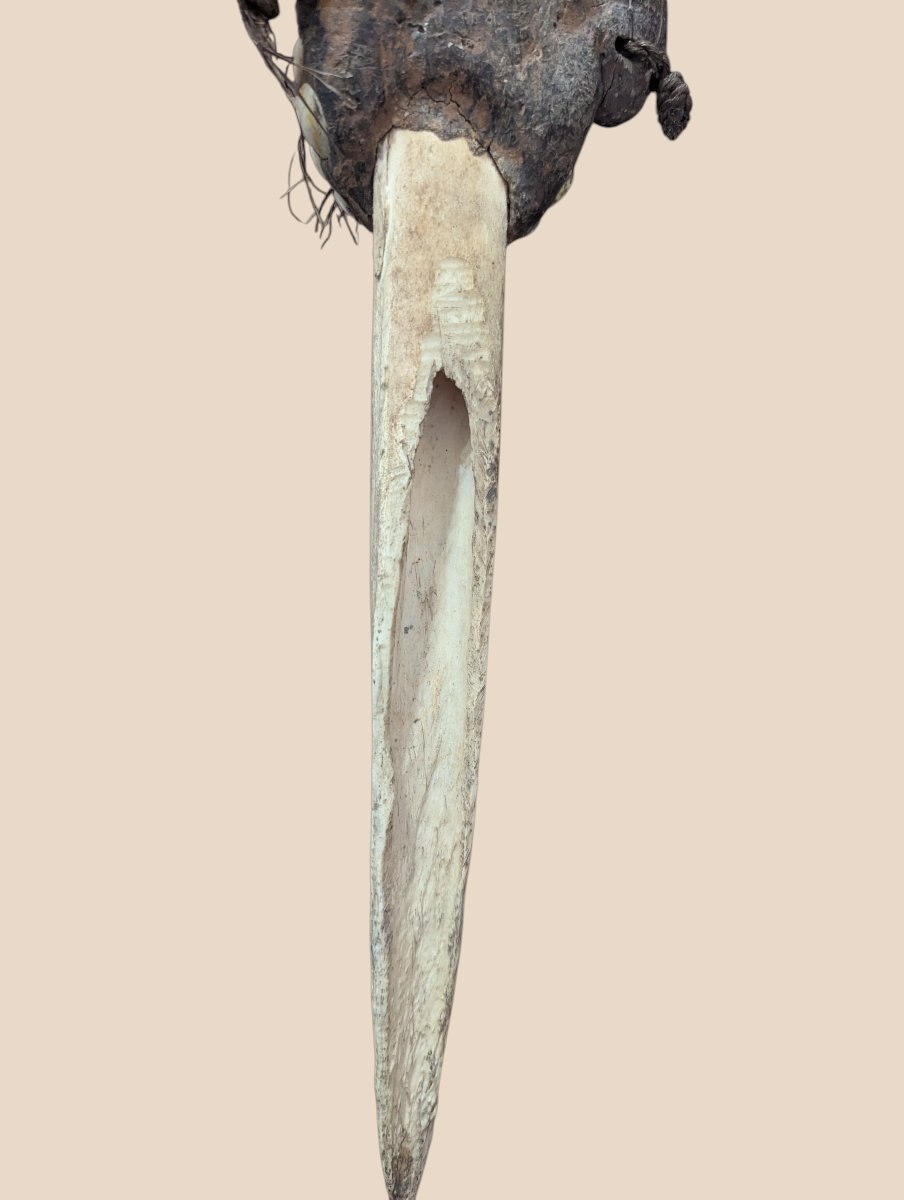
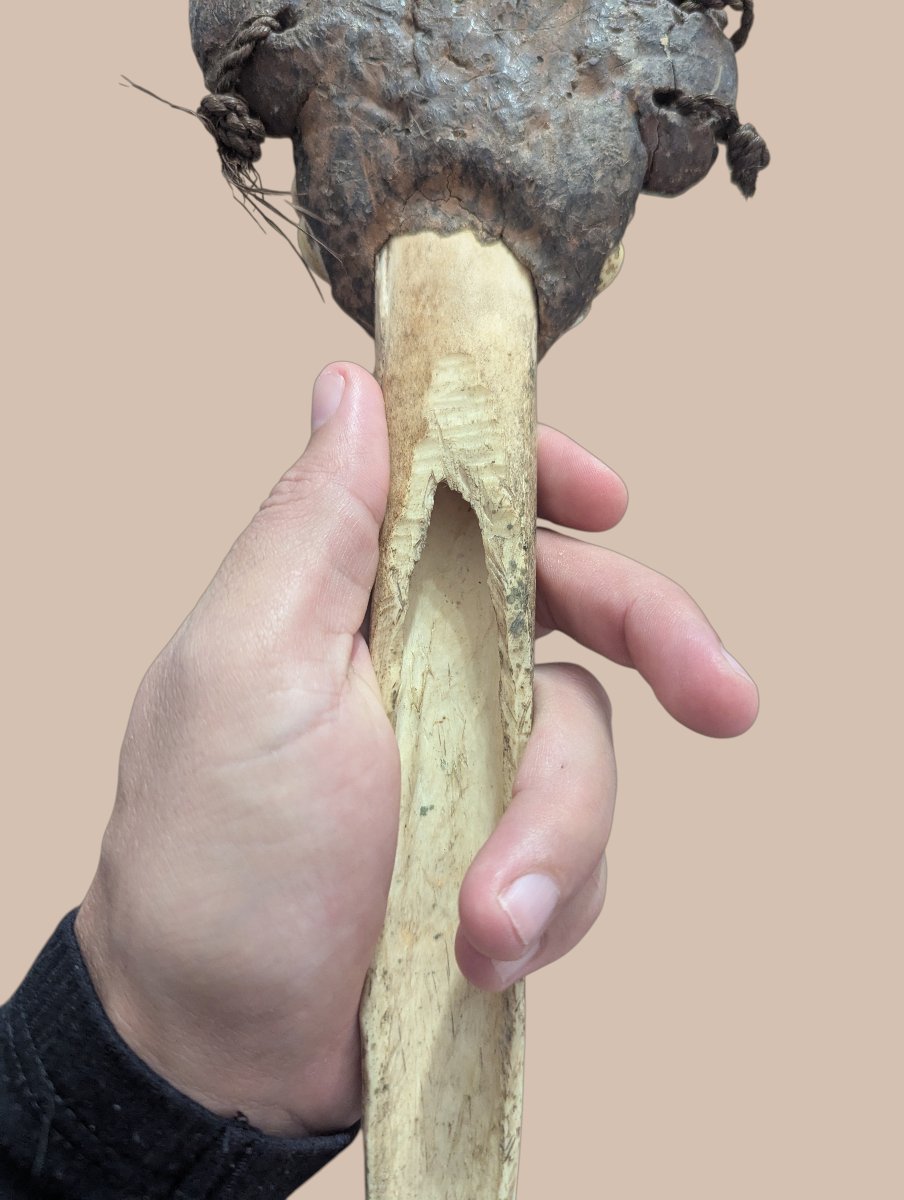
Divination dagger featuring anancestor effigy, made of cassowary cannon bone, molded and painted clay,and Cypraea and Nassa shells.
The handle is adorned with anancestor mask modeled from clay, carefully painted, and embellished with smallshell ornaments. The piece as a whole attests to the remarkableartistic skill of the Iatmul, a people settled primarily along theSepik River in northern Papua New Guinea.
These objects, associated with theritual world and divination practices, are part of the particularly rich ceremonialtradition of Sepik societies. Among the Iatmul,depictions of ancestors play a central role in ritual objects andin conveying the relationships between the living, the dead, and thespiritual world.The blade, made from the bone of acassowary’s leg, has a long, tapered shape. The cassowary,an emblematic animal of the region, holds an important place in the imaginationand traditional practices of many New Guinean peoples.
This piece is particularlyinteresting for its combination of natural materials—bone, clay, and shells—and for the presence of this sculpted ancestral figure, which lends the objectgreat expressive power.
37.5 cm
Provenance: private collection in Nièvre
References: - Newton, Douglas, *Arts of the South Pacific*, The Metropolitan Museum ofArt, New York, 1967.
-Hauser-Schäublin, Brigitta, *The Sepik River: Tradition and Change in PapuaNew Guinea*, Museum Rietberg, Zurich.
-Bühler, Alfred, *The Art of the Sepik*, Basel / Museum der Kulturen.
Divination dagger featuring anancestor effigy, made of cassowary cannon bone, molded and painted clay,and Cypraea and Nassa shells.
The handle is adorned with anancestor mask modeled from clay, carefully painted, and embellished with smallshell ornaments. The piece as a whole attests to the remarkableartistic skill of the Iatmul, a people settled primarily along theSepik River in northern Papua New Guinea.
These objects, associated with theritual world and divination practices, are part of the particularly rich ceremonialtradition of Sepik societies. Among the Iatmul,depictions of ancestors play a central role in ritual objects andin conveying the relationships between the living, the dead, and thespiritual world.The blade, made from the bone of acassowary’s leg, has a long, tapered shape. The cassowary,an emblematic animal of the region, holds an important place in the imaginationand traditional practices of many New Guinean peoples.
This piece is particularlyinteresting for its combination of natural materials—bone, clay, and shells—and for the presence of this sculpted ancestral figure, which lends the objectgreat expressive power.
37.5 cm
Provenance: private collection in Nièvre
References: - Newton, Douglas, *Arts of the South Pacific*, The Metropolitan Museum ofArt, New York, 1967.
-Hauser-Schäublin, Brigitta, *The Sepik River: Tradition and Change in PapuaNew Guinea*, Museum Rietberg, Zurich.
-Bühler, Alfred, *The Art of the Sepik*, Basel / Museum der Kulturen.
420 €
Period: 20th century
Style: Tribal Art
Condition: Excellent condition
Material: Other
Height: 37,5
Reference (ID): 1832604
Availability: In stock
Print