


Feathered War Bonnet – War Bonnet
Great Plains of North America
Attributed to: Lakota (Sioux)
Late 19th – first half of the 20th century
Feathers, skin, down, horsehair, glass beads, fabric, and fur
Diameter: approximately 80 cm
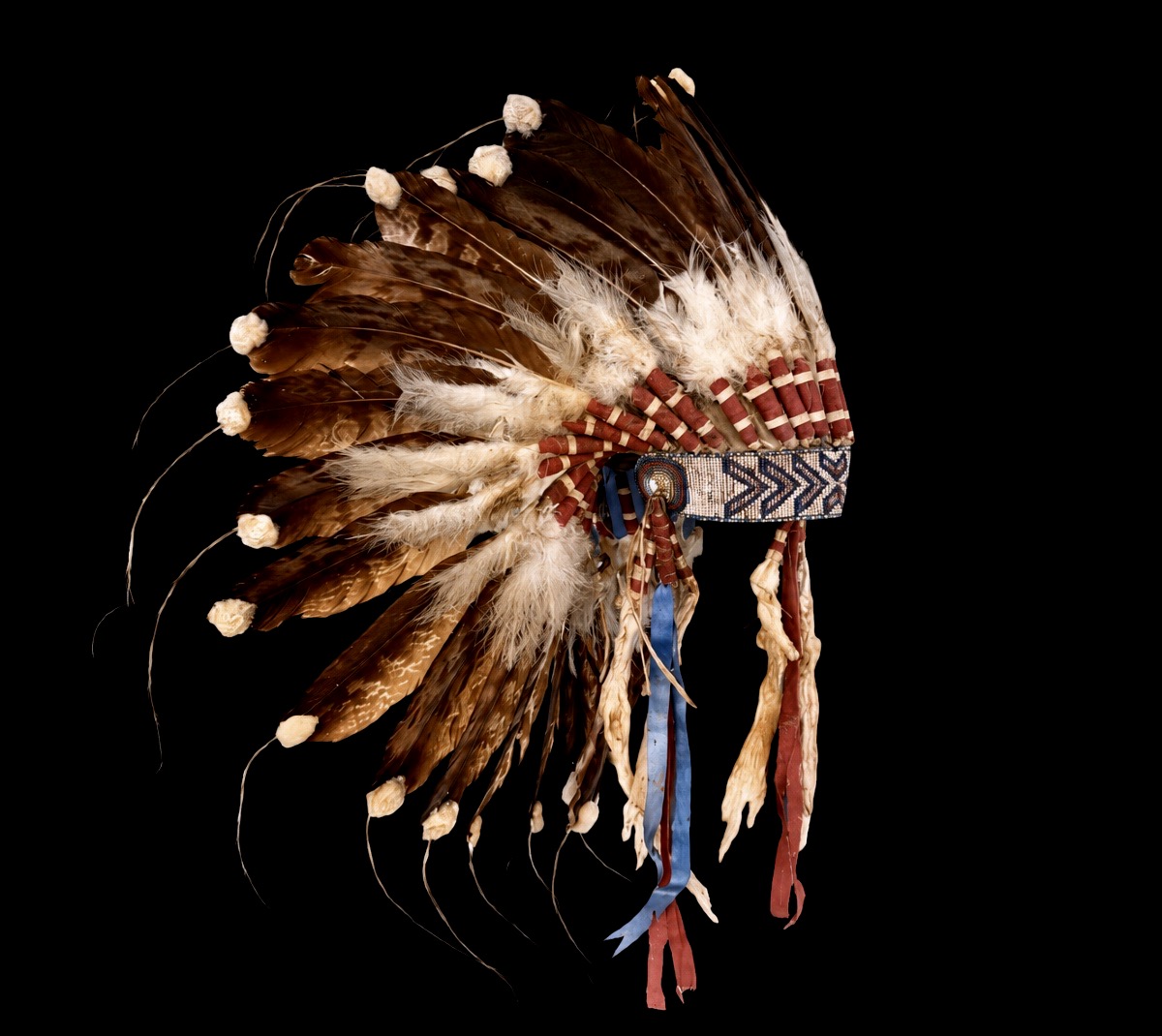
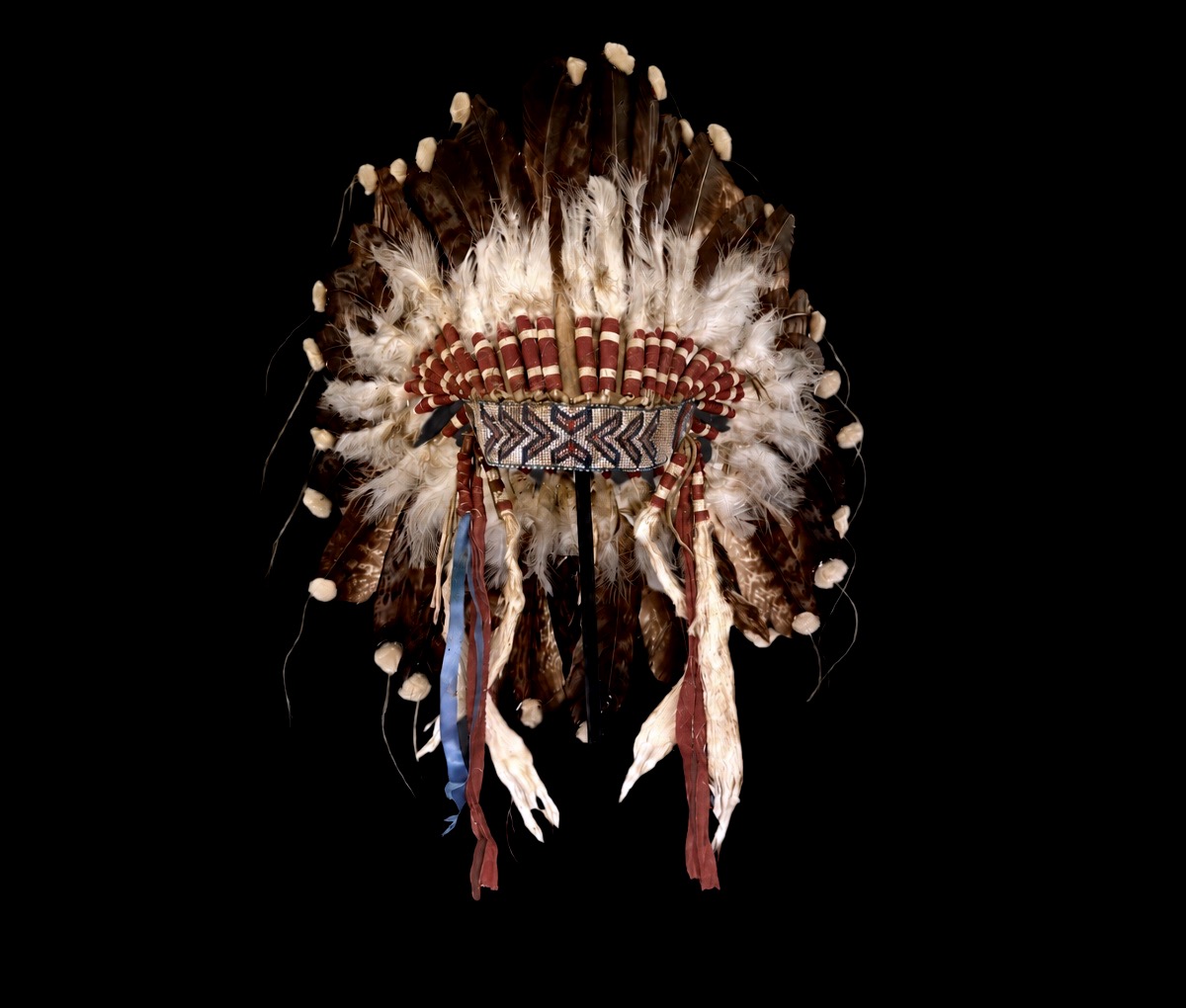
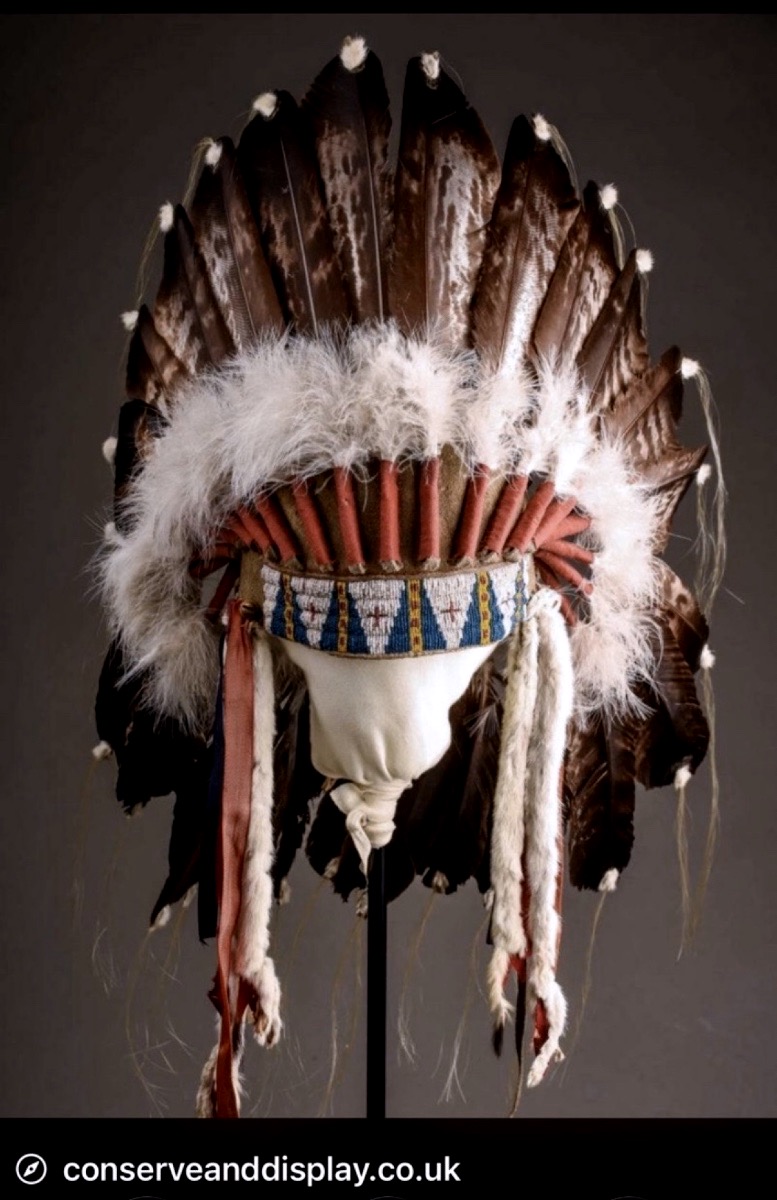
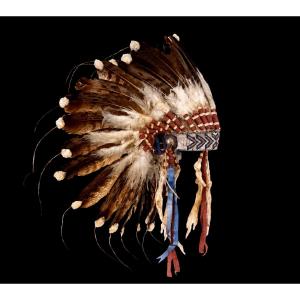
A large ceremonial feather headdress of the war bonnet type, featuring a broad, radiating crown of large brown feathers, each individually mounted on a skin cap.
The feather shafts are secured at their bases by red fabric sheaths, regularly punctuated by light-colored ties. They emerge from an abundant trim of white down forming a crown around the head. At the tips of the large feathers, small light-colored tufts are combined with long, supple horsehair strands that accentuate the movement and fullness of the headdress.
The forehead is encircled by a wide leather headband entirely embroidered with small glass beads. Against a predominantly white background unfolds a polychrome geometric design: large chevrons and interlocking angular motifs in dark blue, accented with light blue and orange-red. The sides are embellished with circular beaded rosettes featuring concentric patterns. Various elements made of leather or fur, as well as long red and blue fabric ribbons, hang from them.
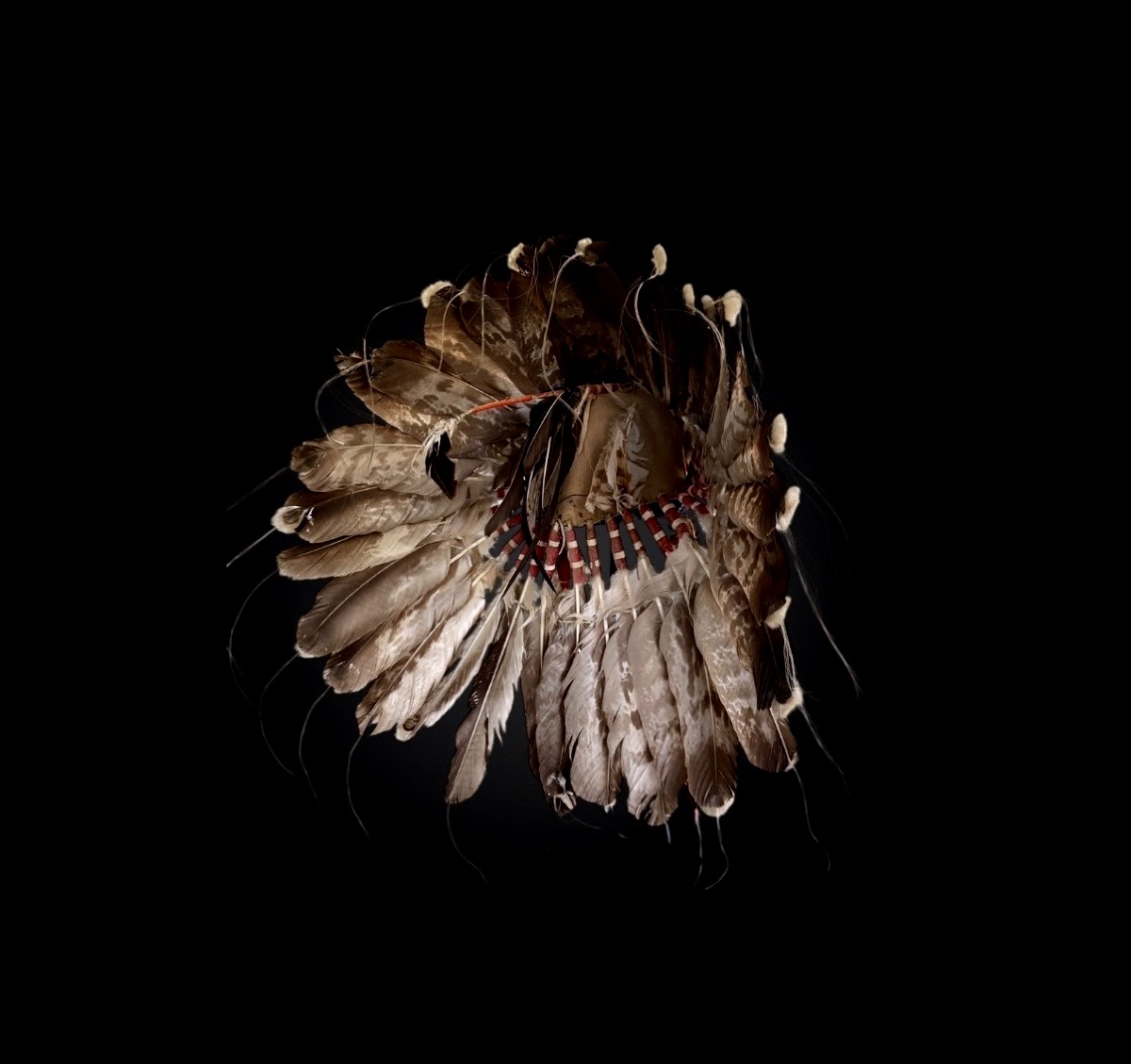
The reverse side reveals the headdress’s construction: a leather cap, a radiating arrangement of feathers, and a fastening system designed to maintain their fan-like arrangement.
With its construction, beaded headband, red wrapping around the quills, abundant down filling, and horsehair attached to the tips of the feathers, this headdress follows the tradition of the great ceremonial headdresses of the Plains peoples. In particular, it bears similarities to a Lakota example housed at the Natural History Museum of Lille, which the museum dates to the 20th century.
The large brown feathers are listed here without a specific species designation, as this cannot be determined with certainty based solely on the available evidence.
These headdresses, now often referred to as “war bonnets,” were symbols of prestige and honor. Their significance extended beyond their ornamental function and was deeply rooted in the ceremonial traditions of the Great Plains peoples.
Condition: generally good, with occasional wear, discoloration, and losses consistent with the piece’s age and the fragility of its materials.
Period: 20th century
Style: Tribal Art
Condition: Excellent condition
Reference (ID): 1832086
Availability: In stock