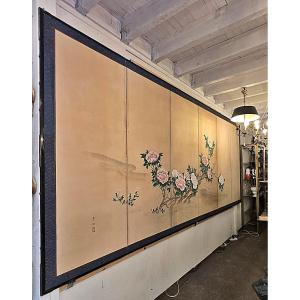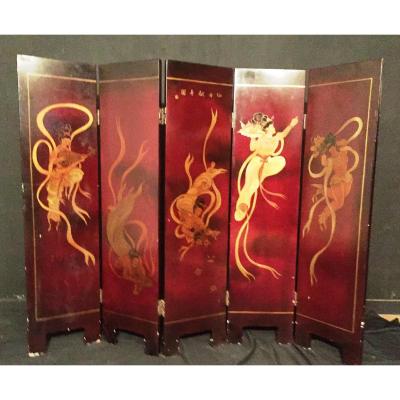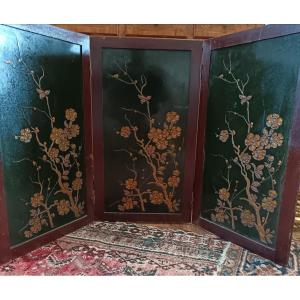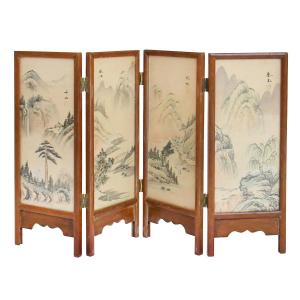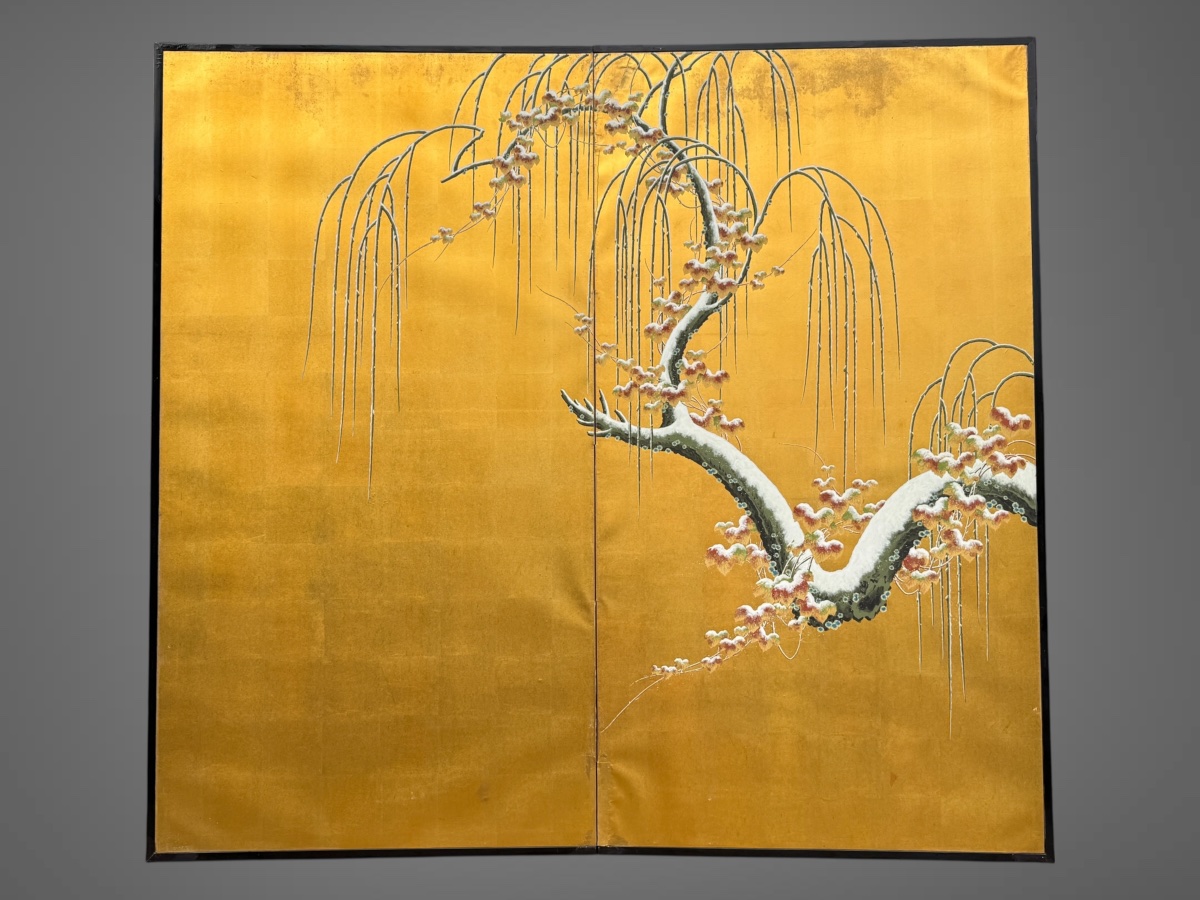









Important Two-panel Folding Screen—willow Trees In The Snow—meiji Period (1868–1912).
JAPAN - Meiji Period (1868–1912).
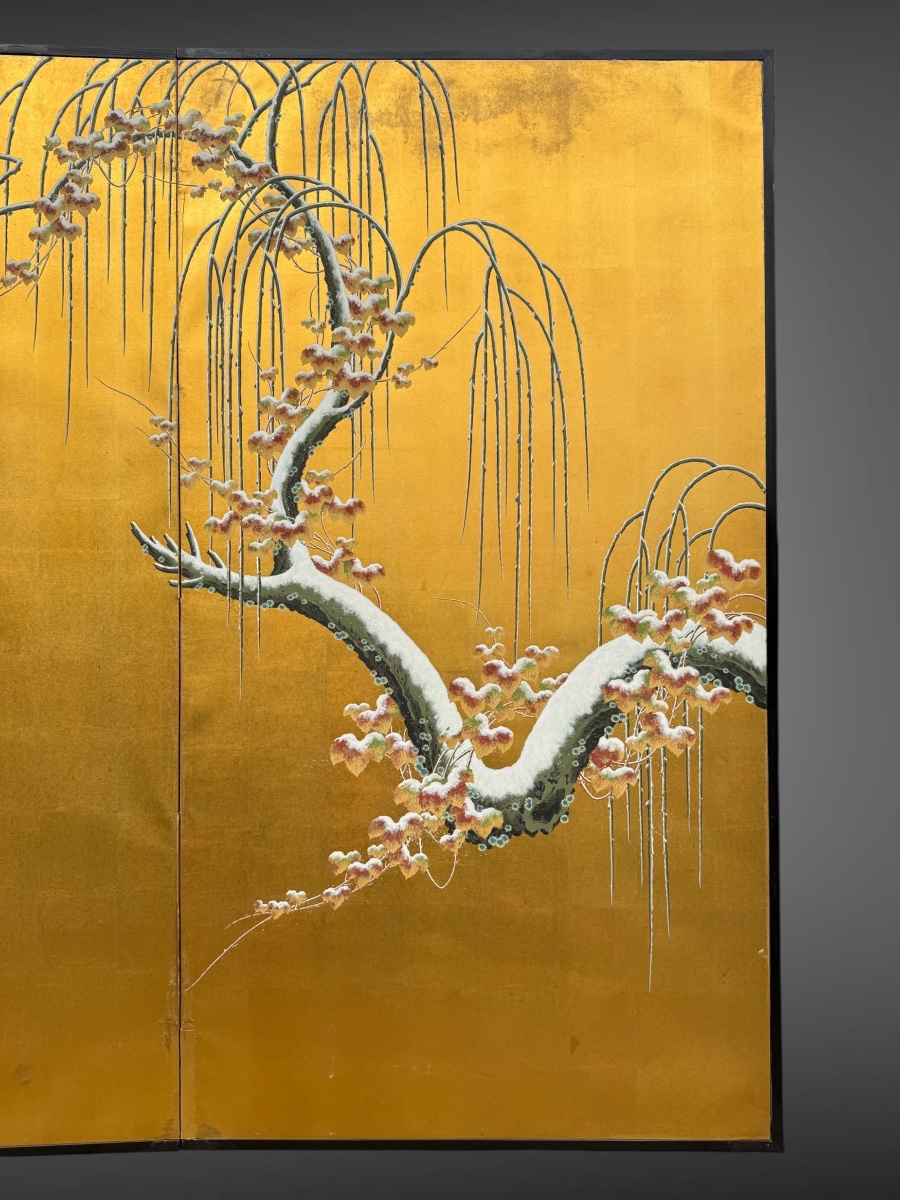
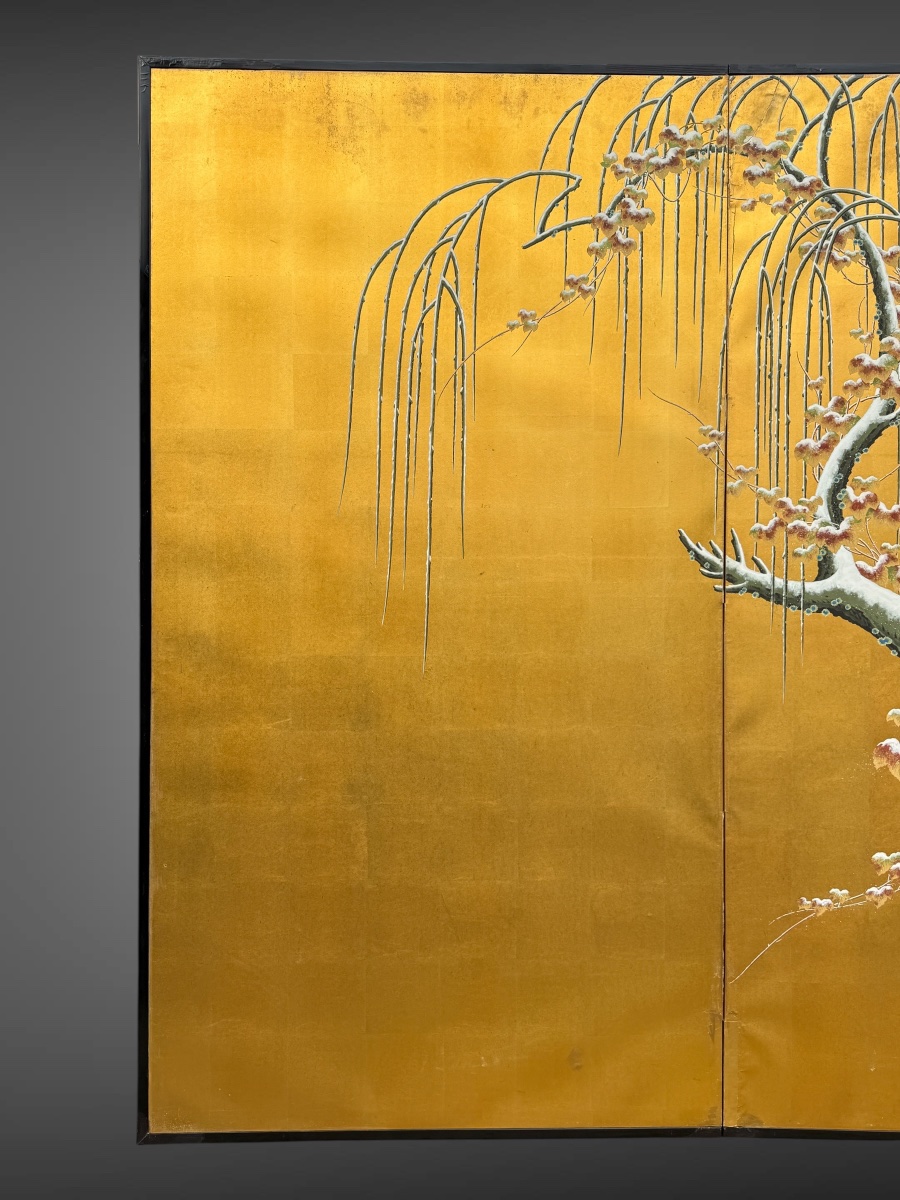
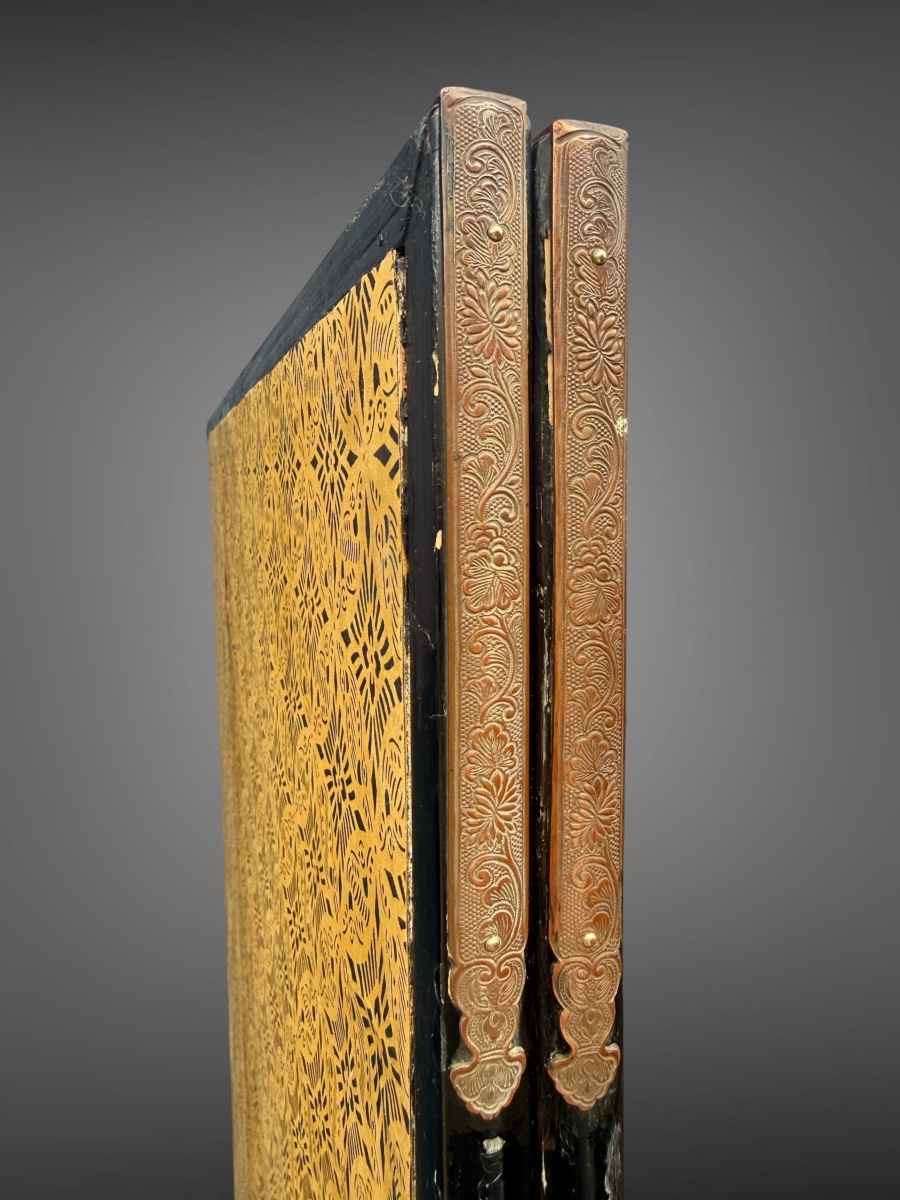
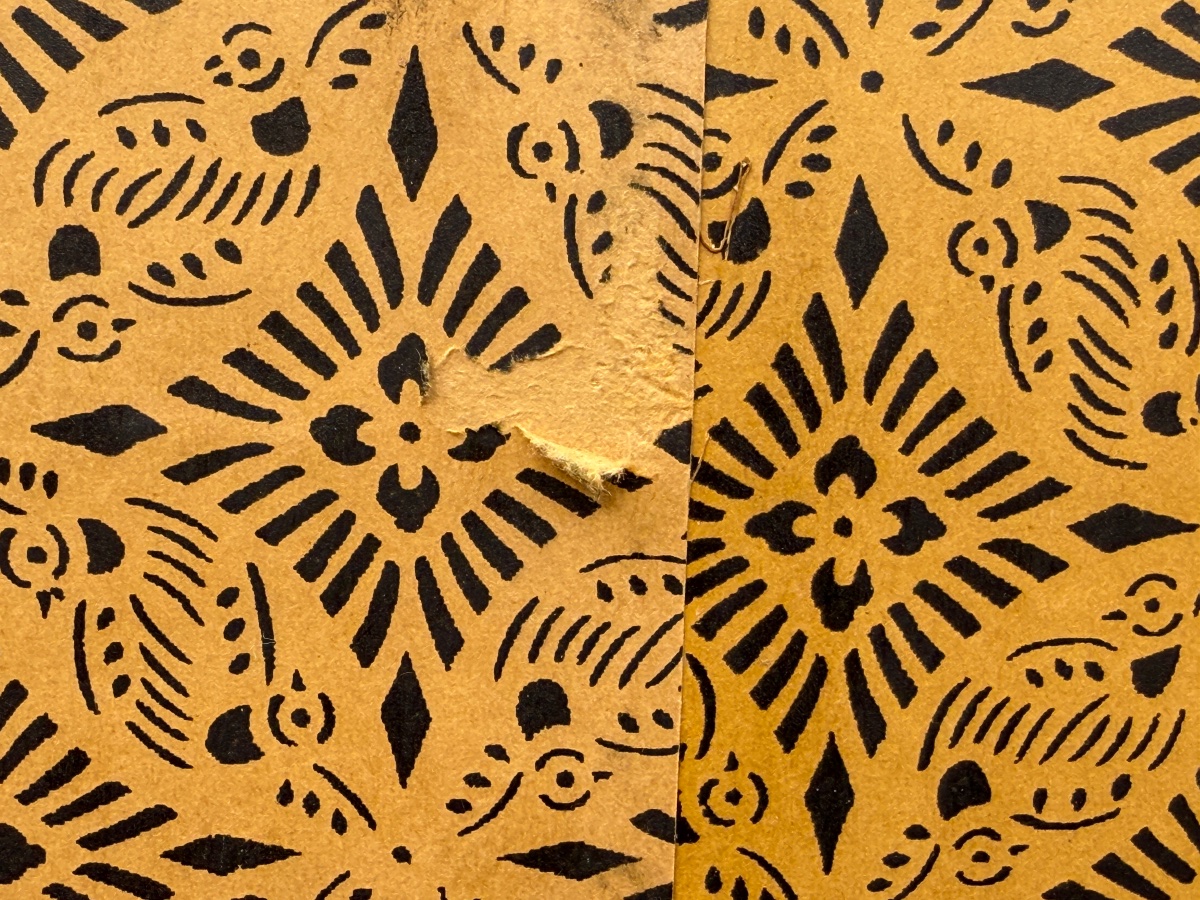
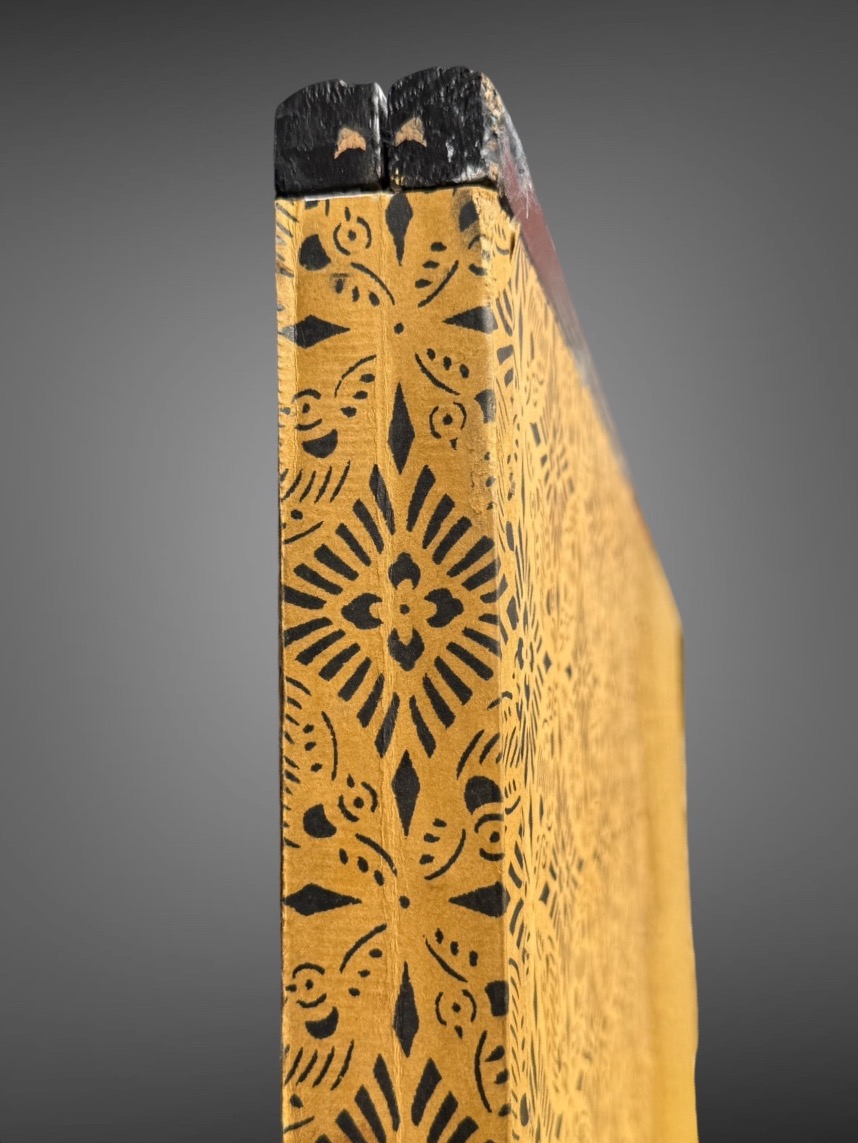
Important two-panel folding screen depicting a willow tree under the snow; the reverse side is made of paper stamped with a geometric pattern (very slight damage); the frame is made of lacquered wood with chiseled copper reinforcements featuring foliage scrolls on a nanako background. Highly decorative.
Dimensions when open: 171 x 186 x 2 cm.
Notes: In Japanese iconography, the willow under the snow (yuki no yanagi,雪の柳) combines two images of profound symbolic significance. The willow (yanagi), with its supple, drooping branches, traditionally evokes flexibility, resilience, and the ability to bend without breaking. Snow (yuki), for its part, symbolizes purity, silence, and the ephemeral nature of the natural world.
The contrast between the willow’s delicate branches and the weight of the snow thus expresses peaceful resilience in the face of adversity: the willow bends under the weight but returns to its original shape once the snow melts. In samurai culture, this image particularly resonated with the ideal of one who knows how to adapt to circumstances without sacrificing inner strength. It also reflects the Japanese sensibility toward mujō (無常), the impermanent and ever-changing nature of all things.
The snow-covered willow can thus be understood as both a seasonal motif evoking resilience, elegance in the face of adversity, and the impermanence of all things.
Period: 20th century
Style: Asian art
Condition: Good condition
Material: Paper
Width: 186 cm.
Height: 171 cm.
Depth: 2 cm.
Reference (ID): 1829411
Availability: In stock