

Domien Ingels For Ceramaes “dindon”—a Rare Polychrome Animal Sculpture, Ca. 1930
Artist: Domien Ingels
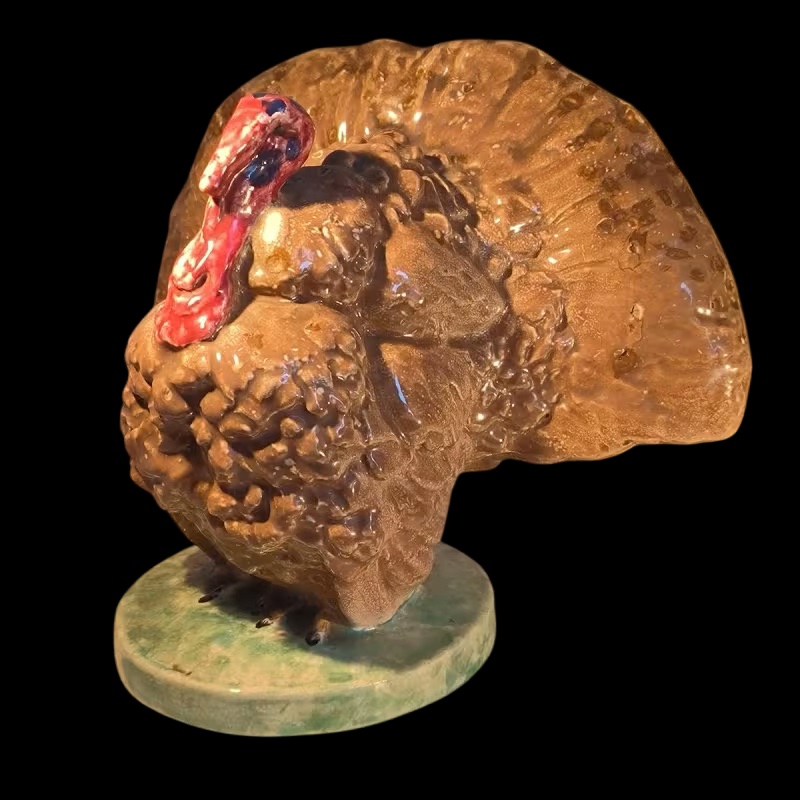
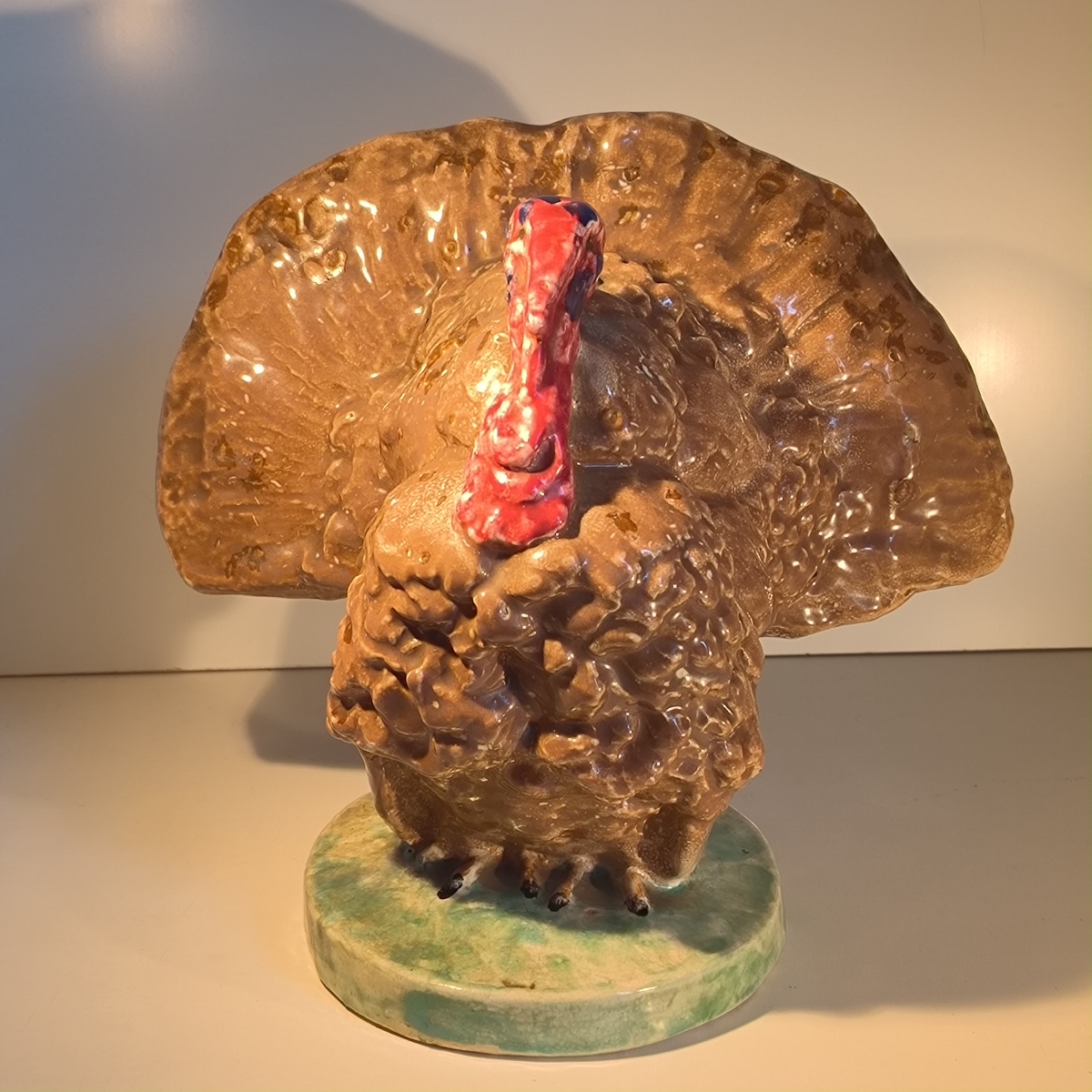
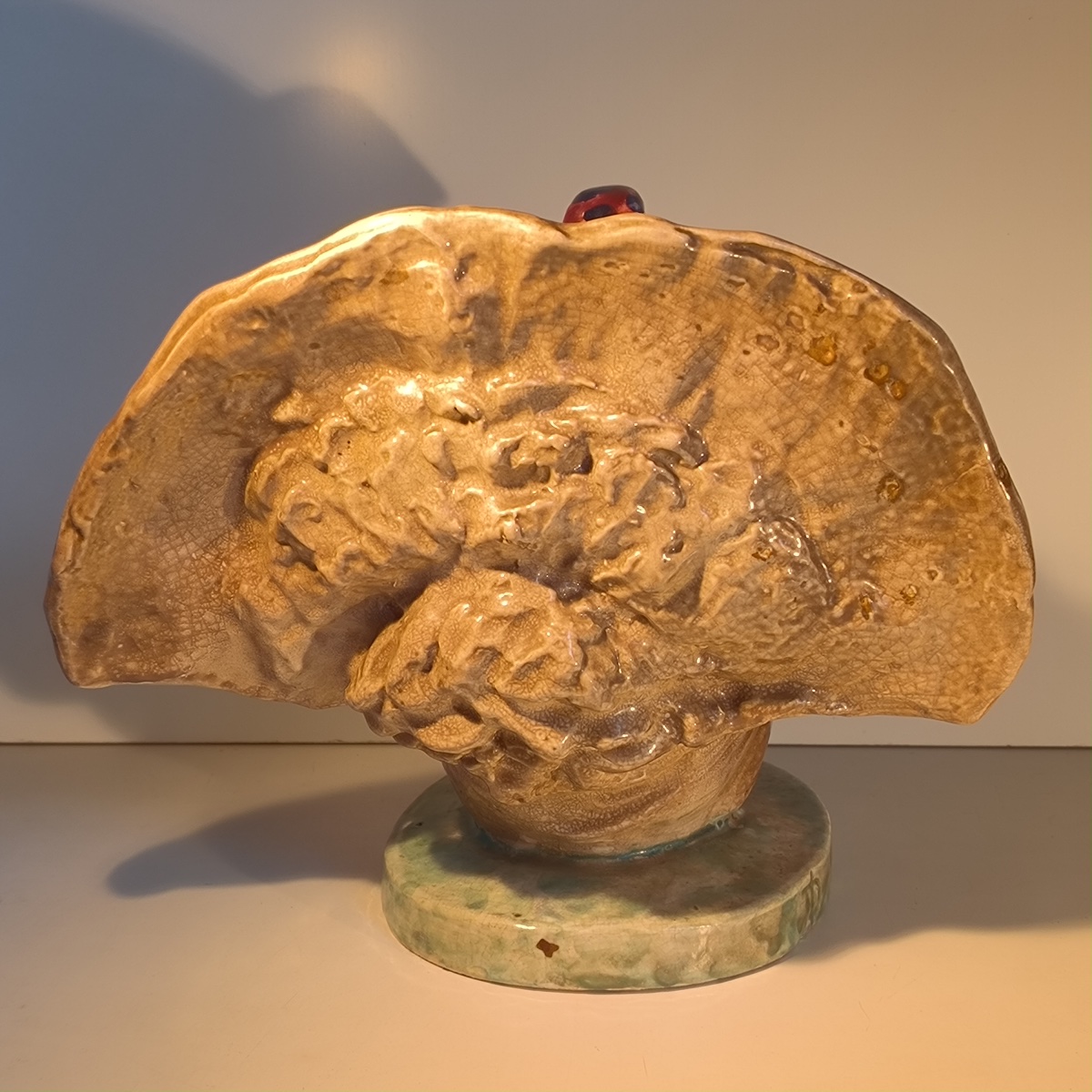
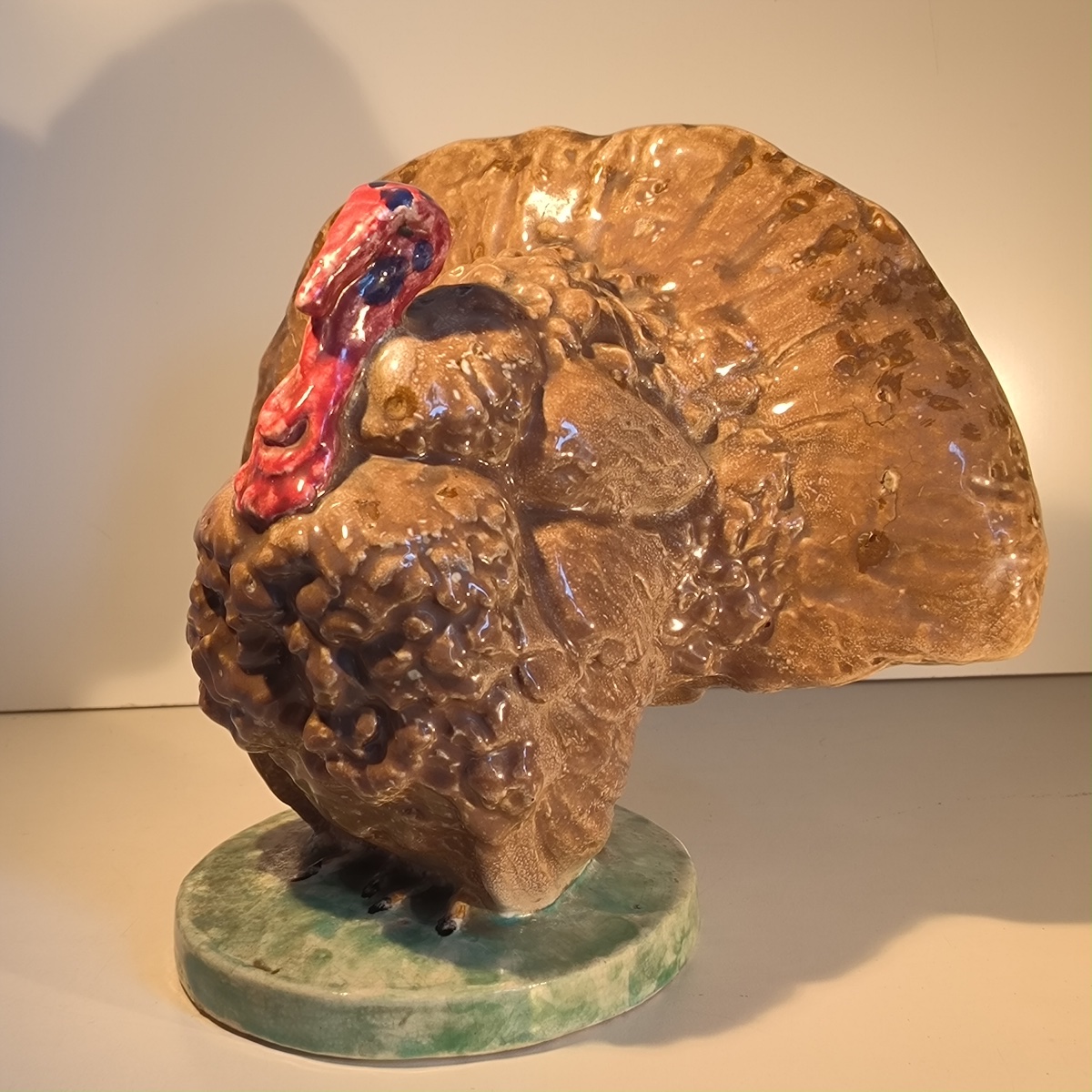
A rare animal sculpture (large version) in polychrome glazed ceramic depicting a turkey displaying its tail feathers, created by Domien Ingels and produced by Ceramaes in Ghent, ca. 1930.
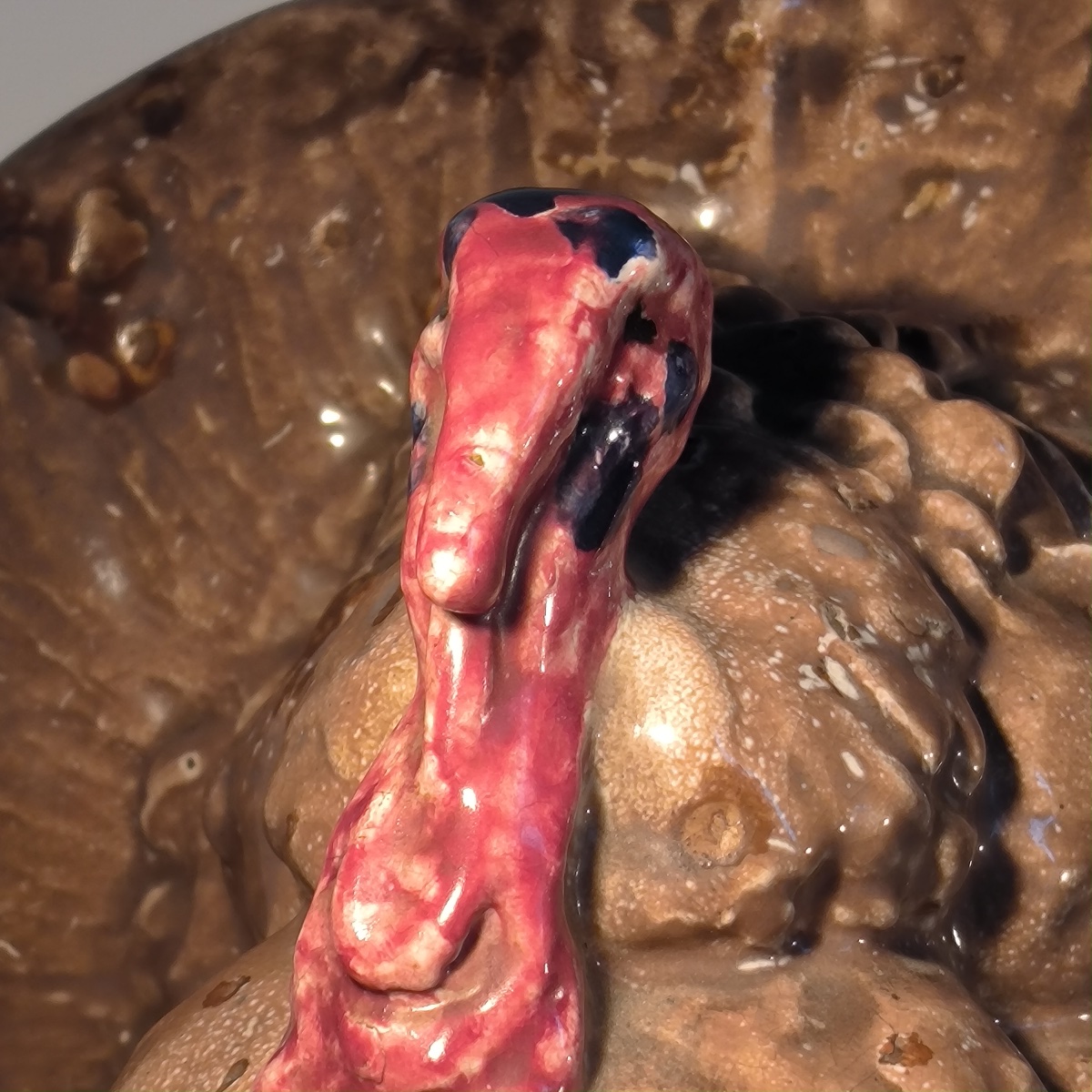
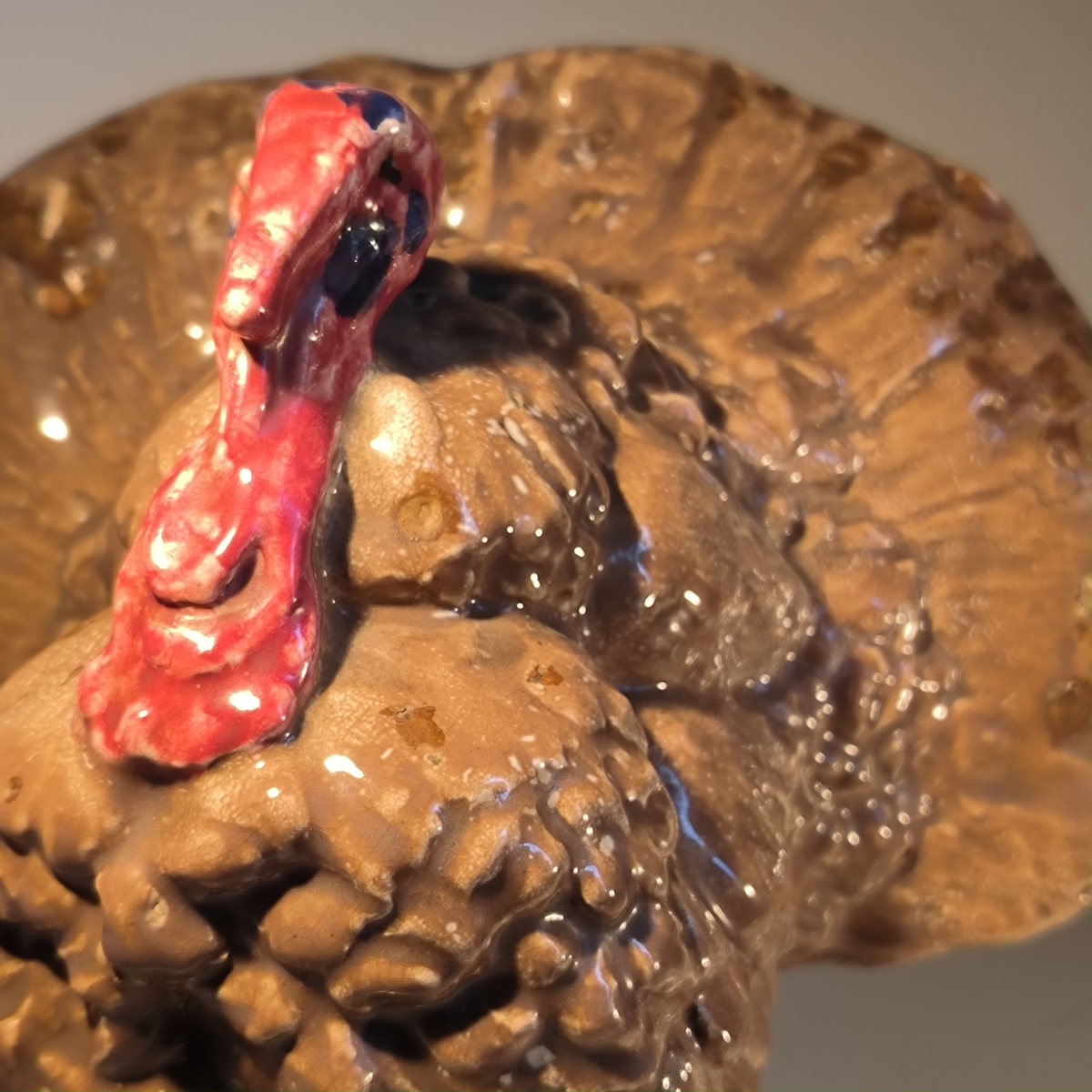
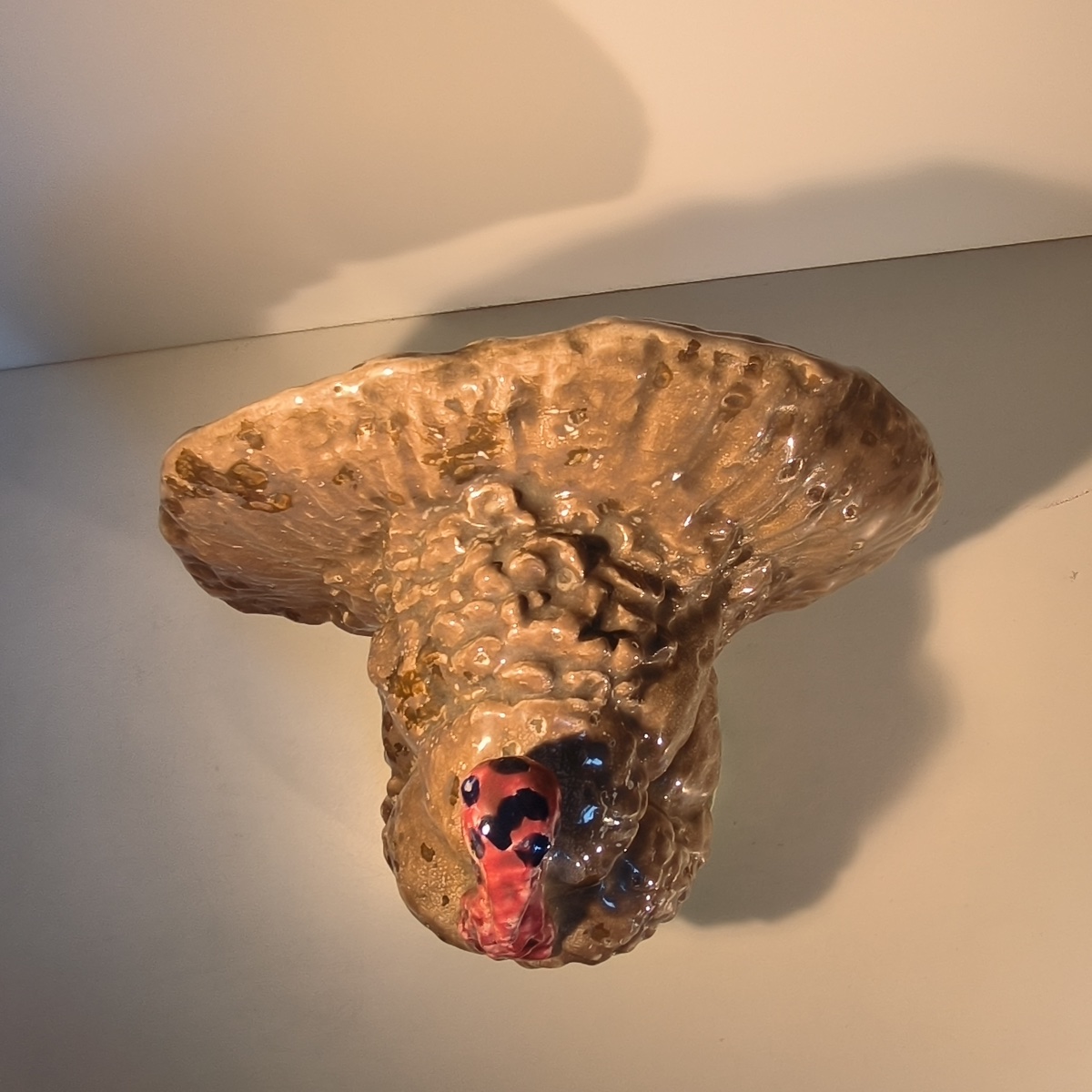
The subject is rendered with great presence: the compact, strongly modeled body contrasts with the large, fully spread tail, whose feathers are suggested by particularly expressive relief work and glazing. The head and neck, vividly colored in red and black, lend an almost naturalistic touch to an otherwise highly stylized composition, characteristic of Belgian Art Deco animal sculpture.
The monogram “D.I.” appears on the breastplate, beneath the wattle, which is consistent with the signatures found on Domien Ingels’s animal-themed ceramics for Ceramaes.
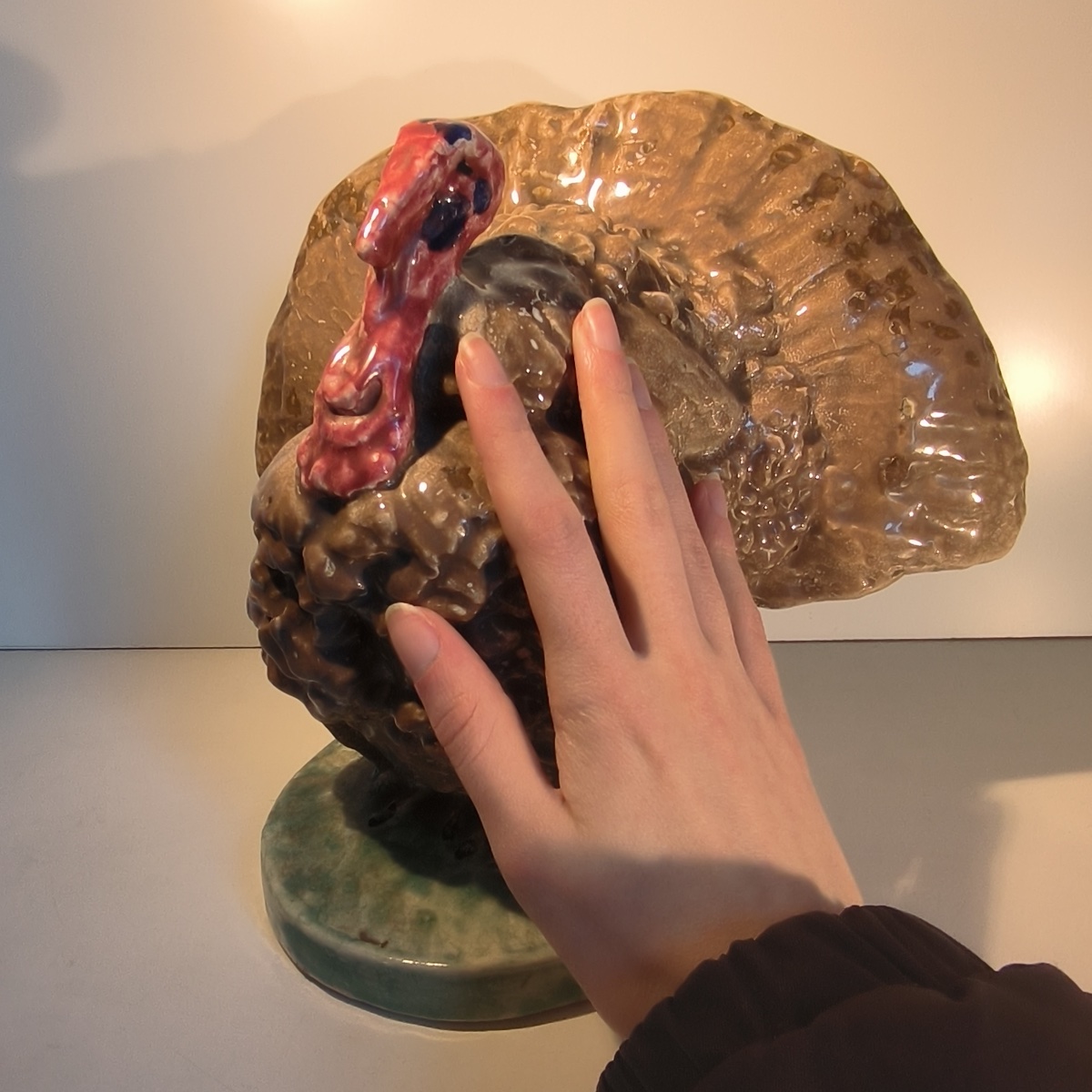
At 21 cm tall, this piece stands out clearly from the smaller versions of turkeys known from this series, which are generally around 9 to 10 cm. The subject itself is part of Ingels’s animal repertoire, but this large-scale version with polychrome decoration appears to be significantly less common.
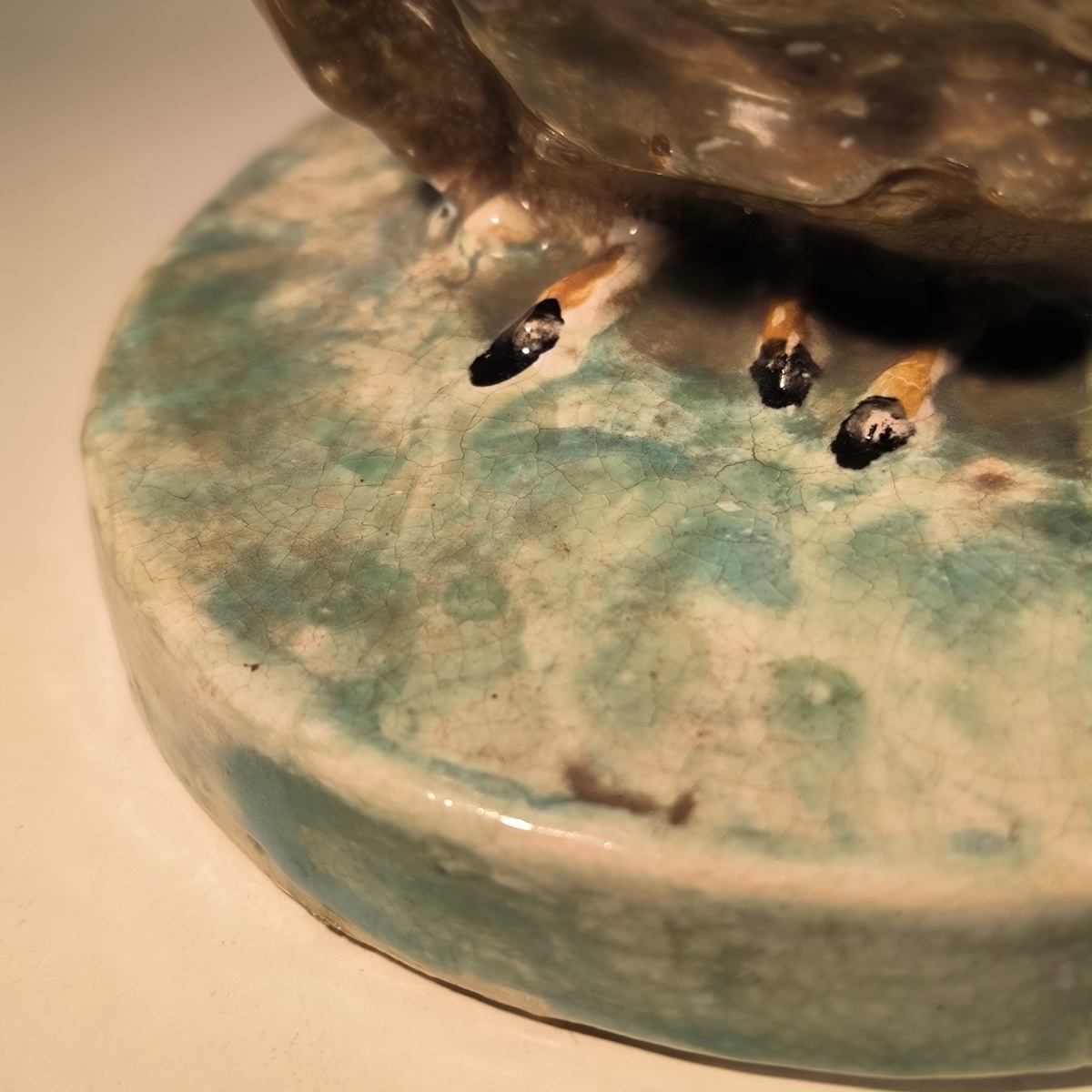
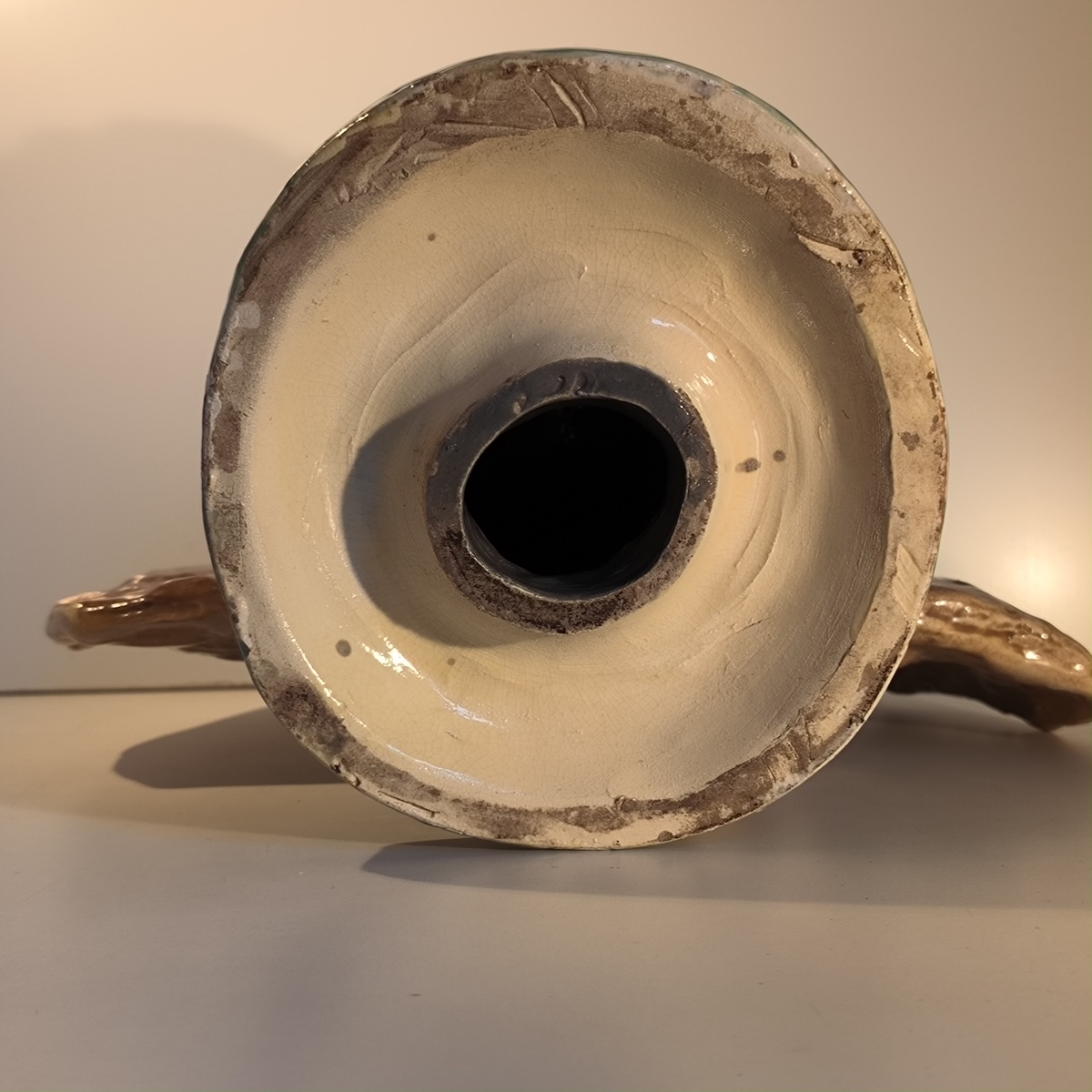
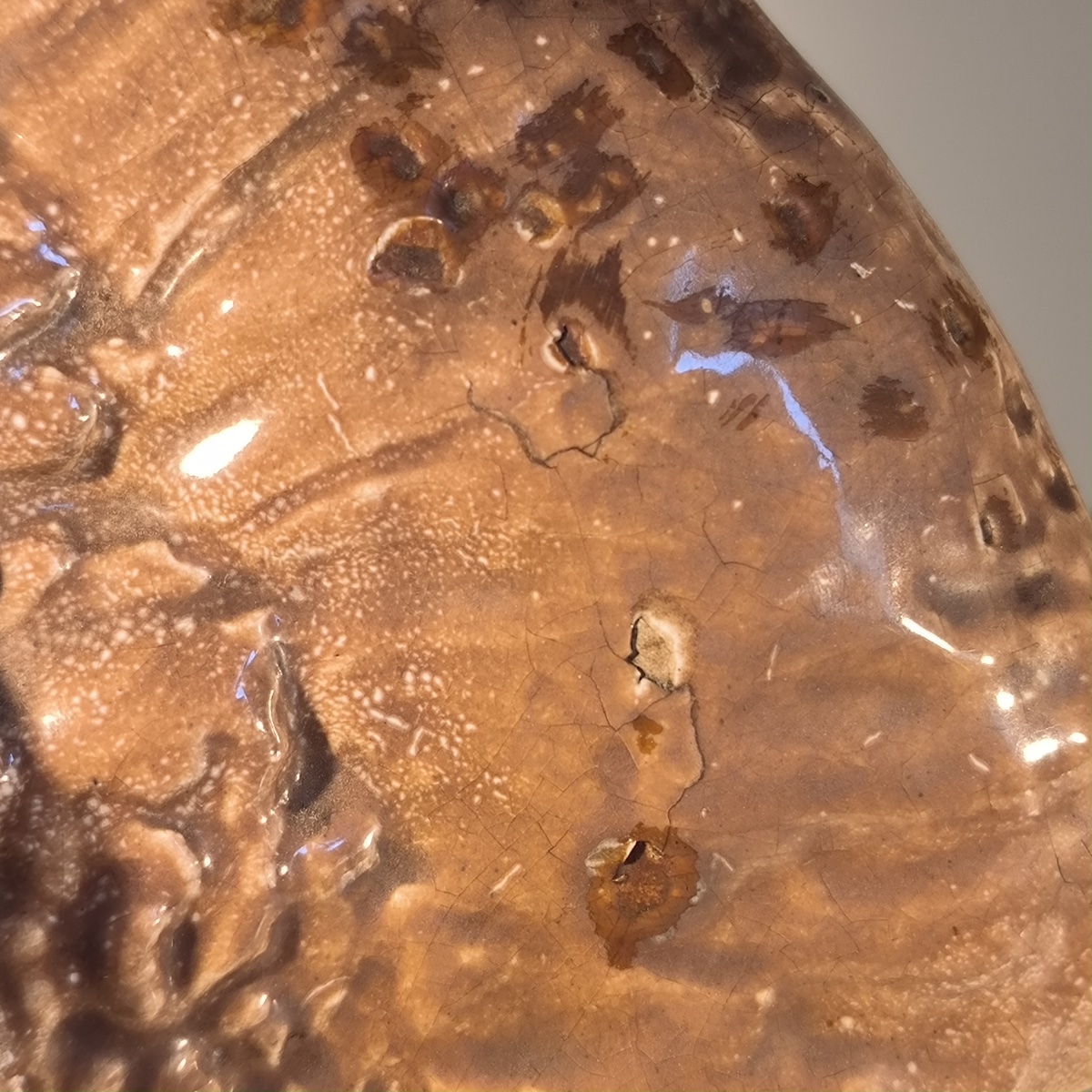
A few fine cracks and minor original firing defects are visible in the glaze, particularly on the wheel. They appear to be related to the firing process and the thickness of the glaze rather than to subsequent damage, as this type of phenomenon is fairly common on large glazed ceramics from this period.
Biography
Domien Ingels (1881–1946) was one of the leading figures in Belgian animal sculpture during the first half of the 20th century. Born and active in Ghent, he developed a body of work devoted largely to animals, which he depicted in both bronze and ceramics. He collaborated notably with Roger Guérin in Bouffioulx and with the Maes/Ceramaes studios in Ghent, for which he created several animal models in stoneware and glazed ceramics.
His work follows in the tradition of the great Belgian animal sculpture of the interwar period, alongside artists such as Albéric Collin, Raymond de Meester de Betzenbroeck, and Thierry Van Rijswijck.
The subject is rendered with great presence: the compact, strongly modeled body contrasts with the large, fully spread tail, whose feathers are suggested by particularly expressive relief work and glazing. The head and neck, vividly colored in red and black, lend an almost naturalistic touch to an otherwise highly stylized composition, characteristic of Belgian Art Deco animal sculpture.
The monogram “D.I.” appears on the breastplate, beneath the wattle, which is consistent with the signatures found on Domien Ingels’s animal-themed ceramics for Ceramaes.
At 21 cm tall, this piece stands out clearly from the smaller versions of turkeys known from this series, which are generally around 9 to 10 cm. The subject itself is part of Ingels’s animal repertoire, but this large-scale version with polychrome decoration appears to be significantly less common.
A few fine cracks and minor original firing defects are visible in the glaze, particularly on the wheel. They appear to be related to the firing process and the thickness of the glaze rather than to subsequent damage, as this type of phenomenon is fairly common on large glazed ceramics from this period.
Biography
Domien Ingels (1881–1946) was one of the leading figures in Belgian animal sculpture during the first half of the 20th century. Born and active in Ghent, he developed a body of work devoted largely to animals, which he depicted in both bronze and ceramics. He collaborated notably with Roger Guérin in Bouffioulx and with the Maes/Ceramaes studios in Ghent, for which he created several animal models in stoneware and glazed ceramics.
His work follows in the tradition of the great Belgian animal sculpture of the interwar period, alongside artists such as Albéric Collin, Raymond de Meester de Betzenbroeck, and Thierry Van Rijswijck.
1 300 €
Period: 20th century
Style: Art Deco
Condition: Excellent condition
Material: Ceramic
Width: 2(
Height: 21
Depth: 25
Reference (ID): 1828274
Availability: In stock
Print