

Jean-gabriel Domergue (1889–1962) The Luxembourg Palace And Its Pond In Paris
Jean-Gabriel DOMERGUE
(Bordeaux 1889 – Paris 1962)
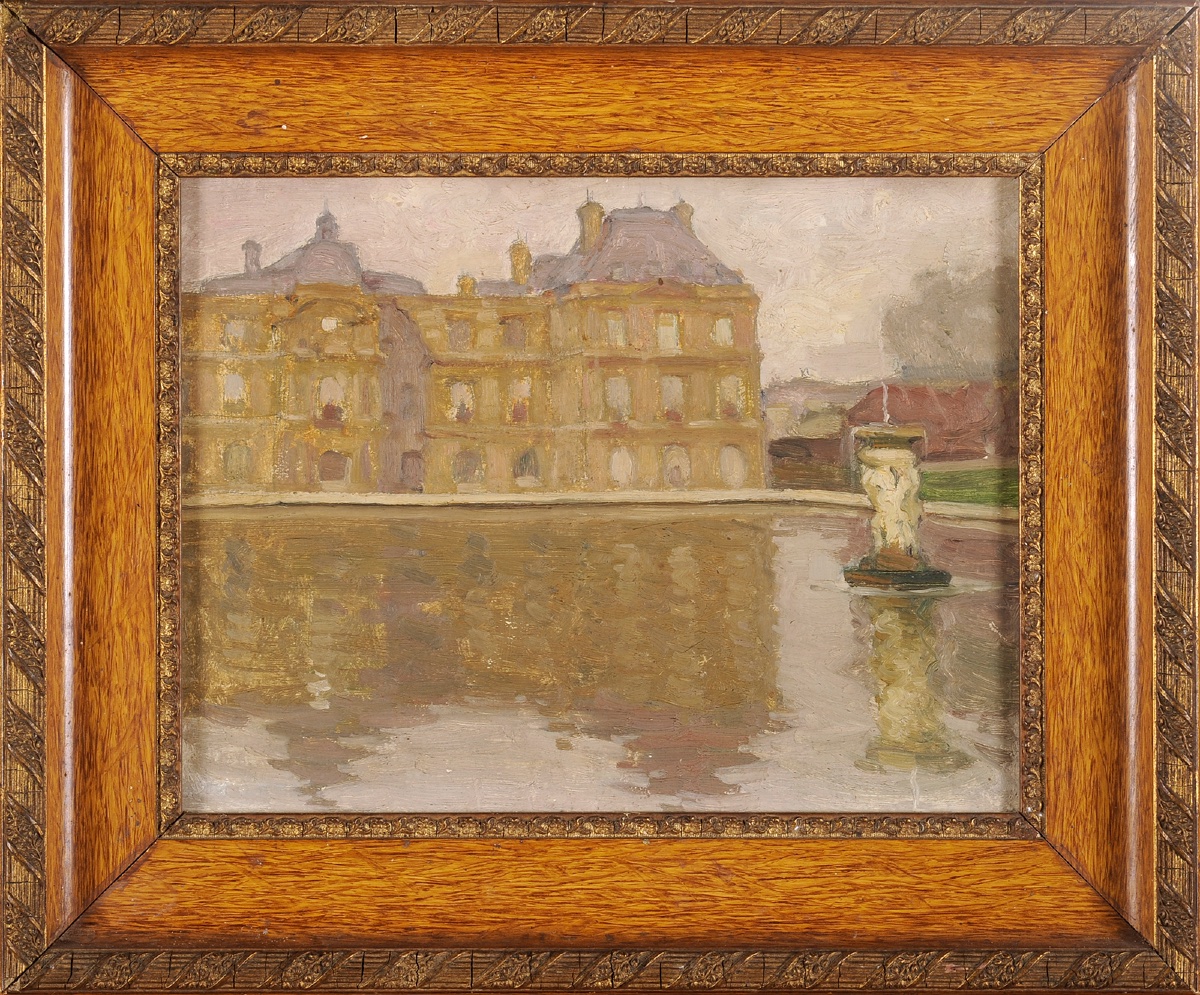
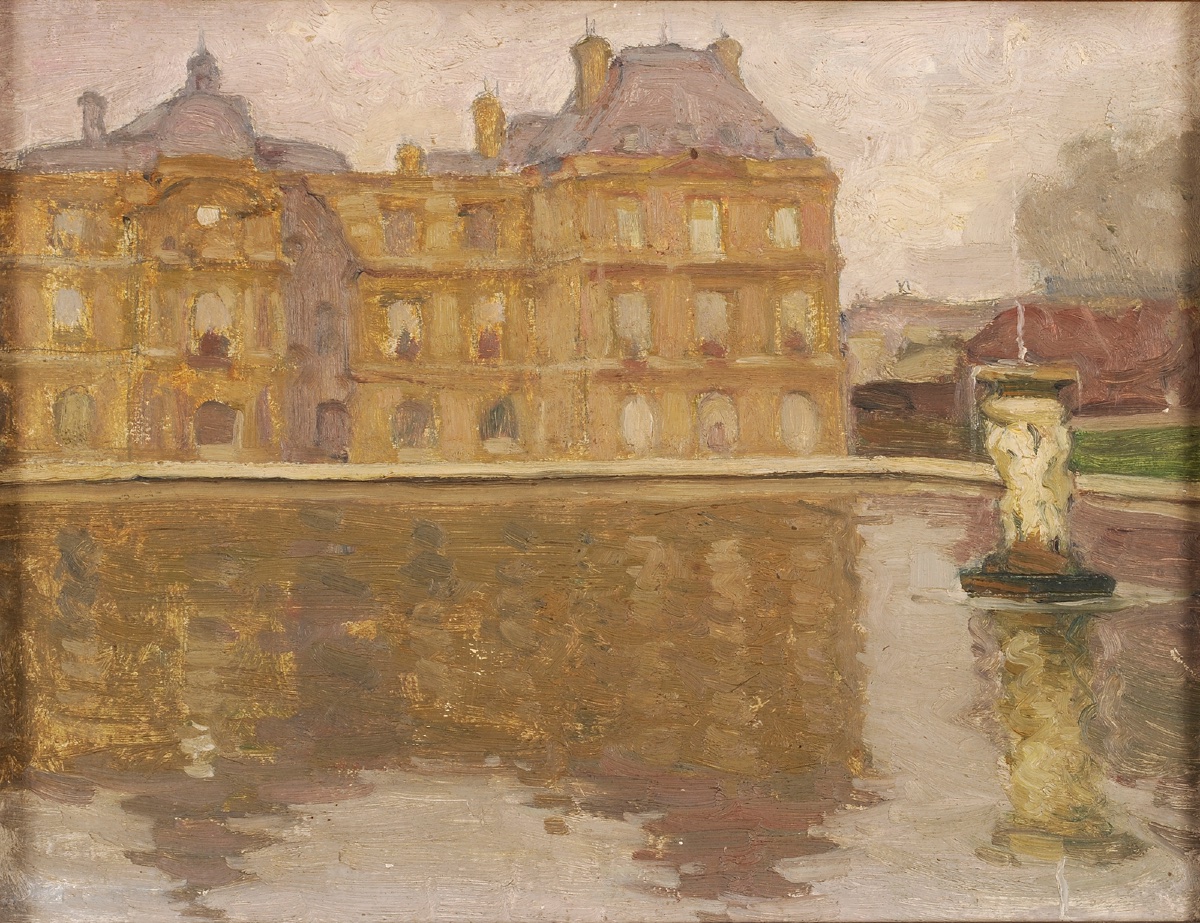
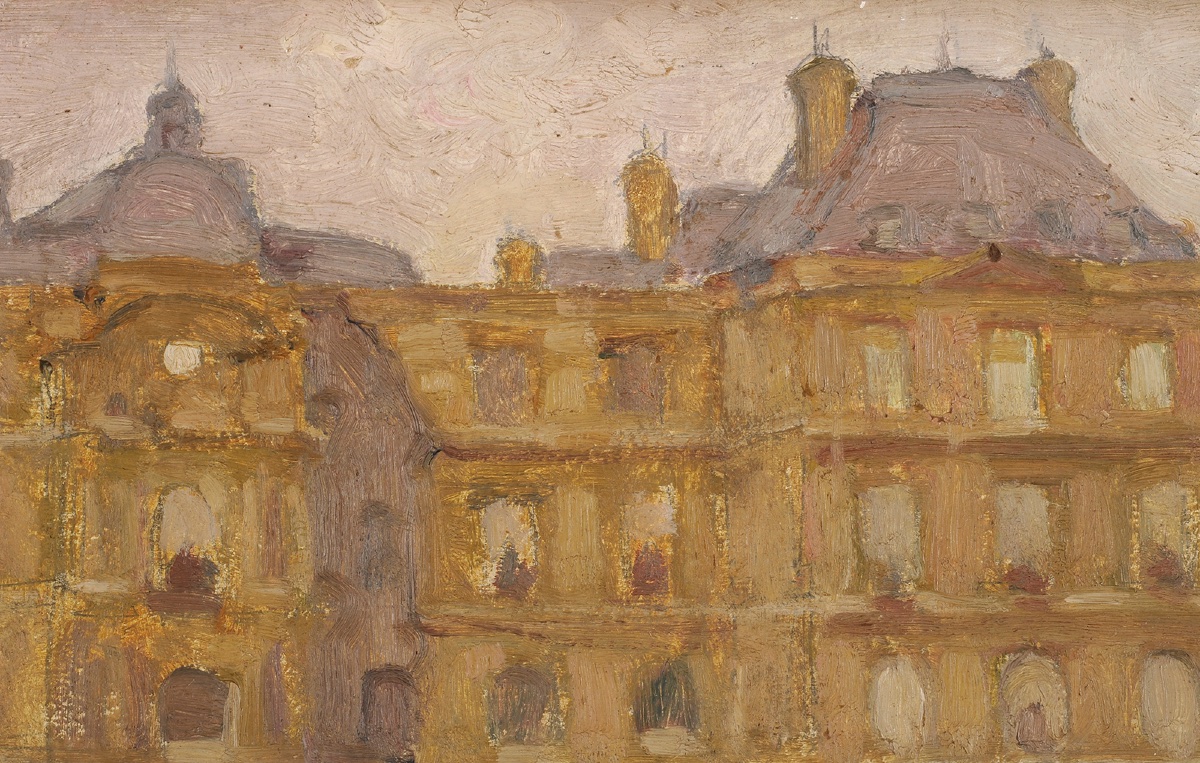
The Luxembourg Palace and Its Pond
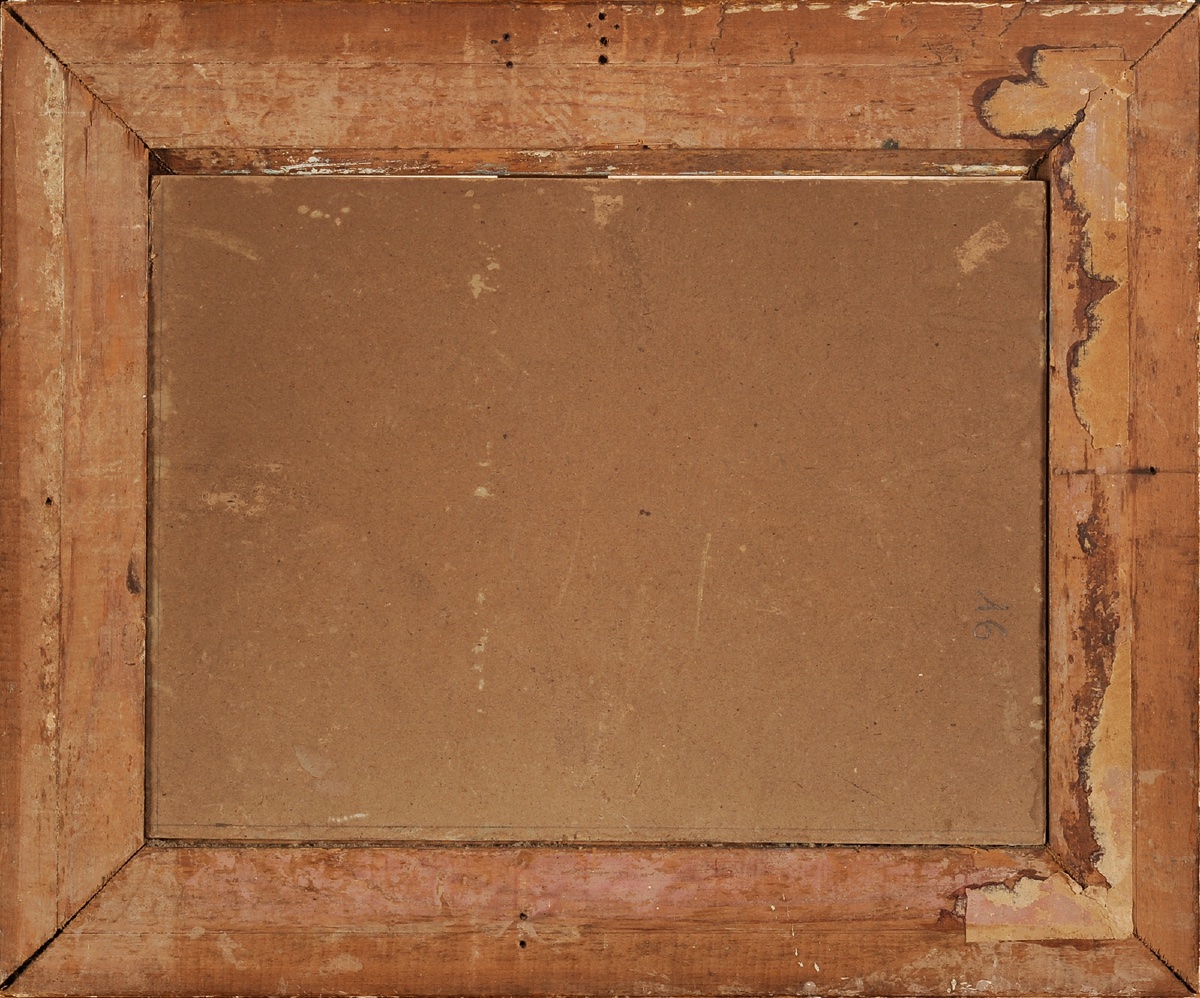
Oil on cardboard
H. 24 cm; W. 35 cm
Circa 1906
Provenance: Collection of the artist’s family. Five other works, some of which are signed, from this collection have passed through our hands.
Before becoming, in the 1920s, the iconic painter of Parisian women, Jean-Gabriel Domergue was first and foremost a precocious artist, trained in the academic tradition and particularly noted for his landscapes and plein air scenes.
Born in Bordeaux in 1889, he showed exceptional talent for drawing from a very early age. After moving to Paris, he attended the École des Beaux-Arts and the studios of Jules Lefebvre, Jules Adler, Ferdinand Humbert, Tony Robert-Fleury, and François Flameng. His artistic development was also influenced by his friendship with Toulouse-Lautrec, his distant cousin, and by his admiration for Edgar Degas.
At just seventeen years old, Domergue exhibited at the Salon des Artistes Français in 1906. His early works reveal a marked interest in observing contemporary life, as well as in landscape. His views of Bordeaux, Versailles, and the provinces reveal a painter attentive to variations in light, atmospheric effects, and the decorative composition of space. Gardens, ponds, harbors, and outdoor scenes thus served as a veritable pictorial laboratory.
This period also saw the emergence of a style characterized by a lively and supple brushstroke, drawing on the modernity of the Belle Époque while remaining firmly rooted in the Salon tradition. In 1911, Domergue received an official commission for a decorative panel, L’Arcadie; in 1912, he exhibited, among other works, La Robe jonquille. In 1913, his talent was recognized when he won the Second Grand Prix de Rome for painting, for a historical composition titled A Rhapsodist Singing the Glory of a Hero on the Outskirts of an Ancient Village.
World War I interrupted this rise to prominence. Mobilized as a stretcher-bearer, Domergue nevertheless continued his artistic work, creating, in particular, drawings and lithographs dedicated to the conflict.
His works from before 1920 thus offer a chance to rediscover a Domergue still far removed from the sophisticated image that would later make him famous: a young painter of landscapes, outdoor scenes, and decorative compositions, whose personal style emerged from the interplay of academic tradition, the Belle Époque, and the artistic experiments of his time. This period of formation and self-discovery is an essential step in understanding the evolution of his work.
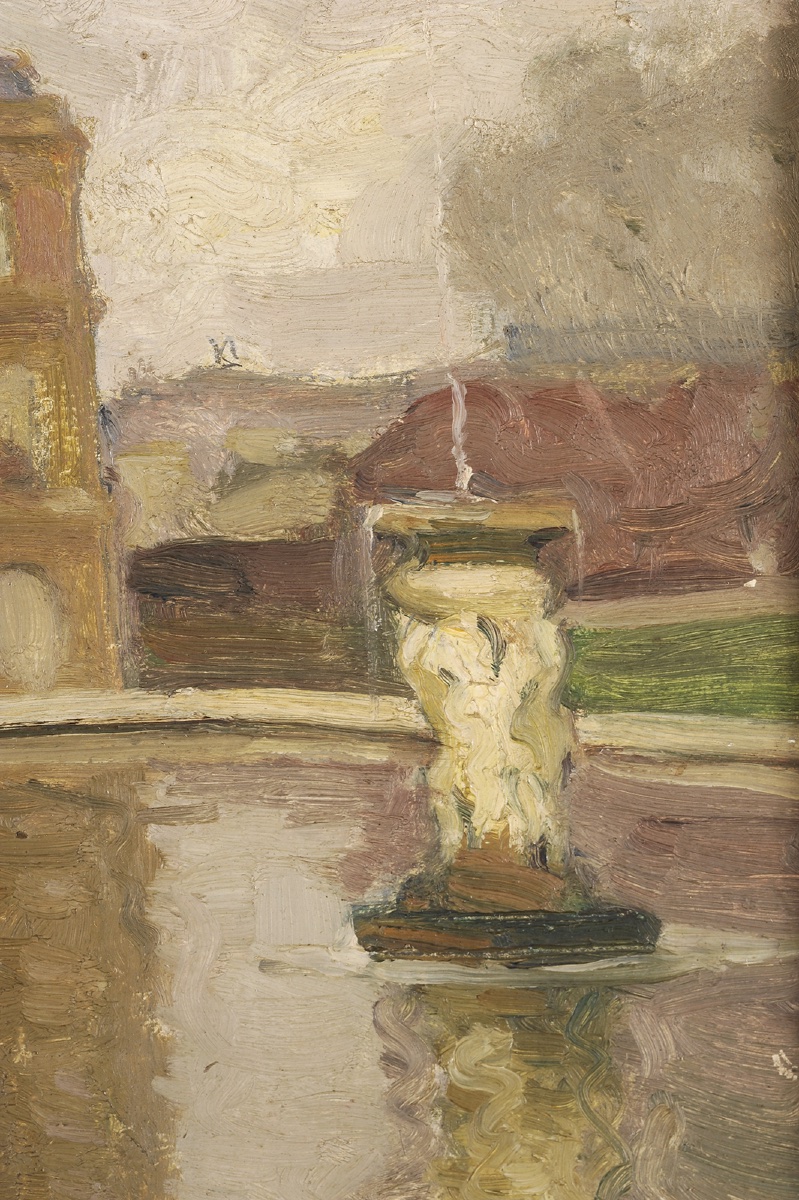
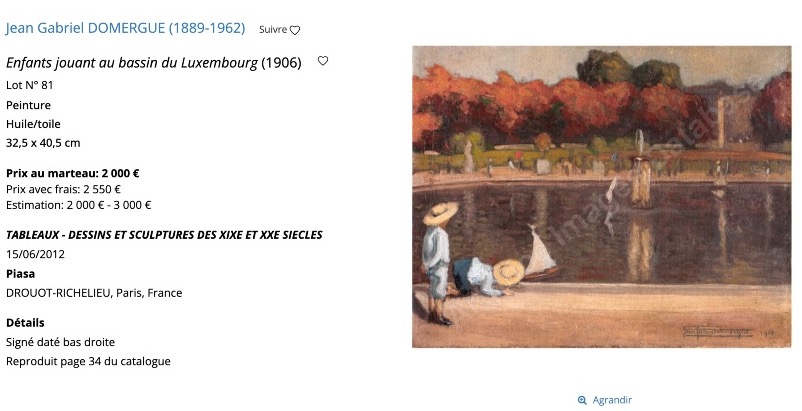
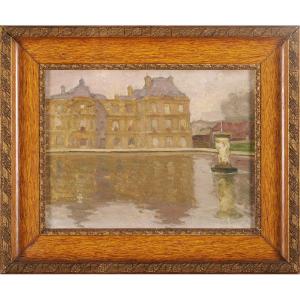
Our oil on cardboard, from the painter’s family collection, depicts the Luxembourg Palace, now the seat of the Senate. Another work dated 1906, depicting the pond in the foreground (this time with people in it), allows us to date our painting to around that time and thus to his arrival in Paris.
Period: 20th century
Style: Modern Art
Condition: Perfect condition
Material: Oil painting on cardboard
Length: 24 cm hors cadre
Width: 33 cm hors cadre
Reference (ID): 1827934
Availability: In stock