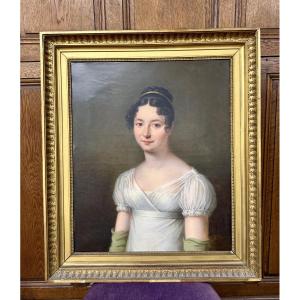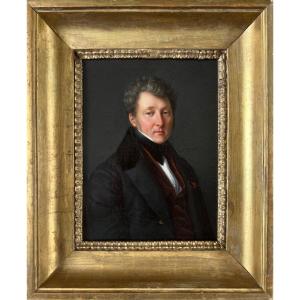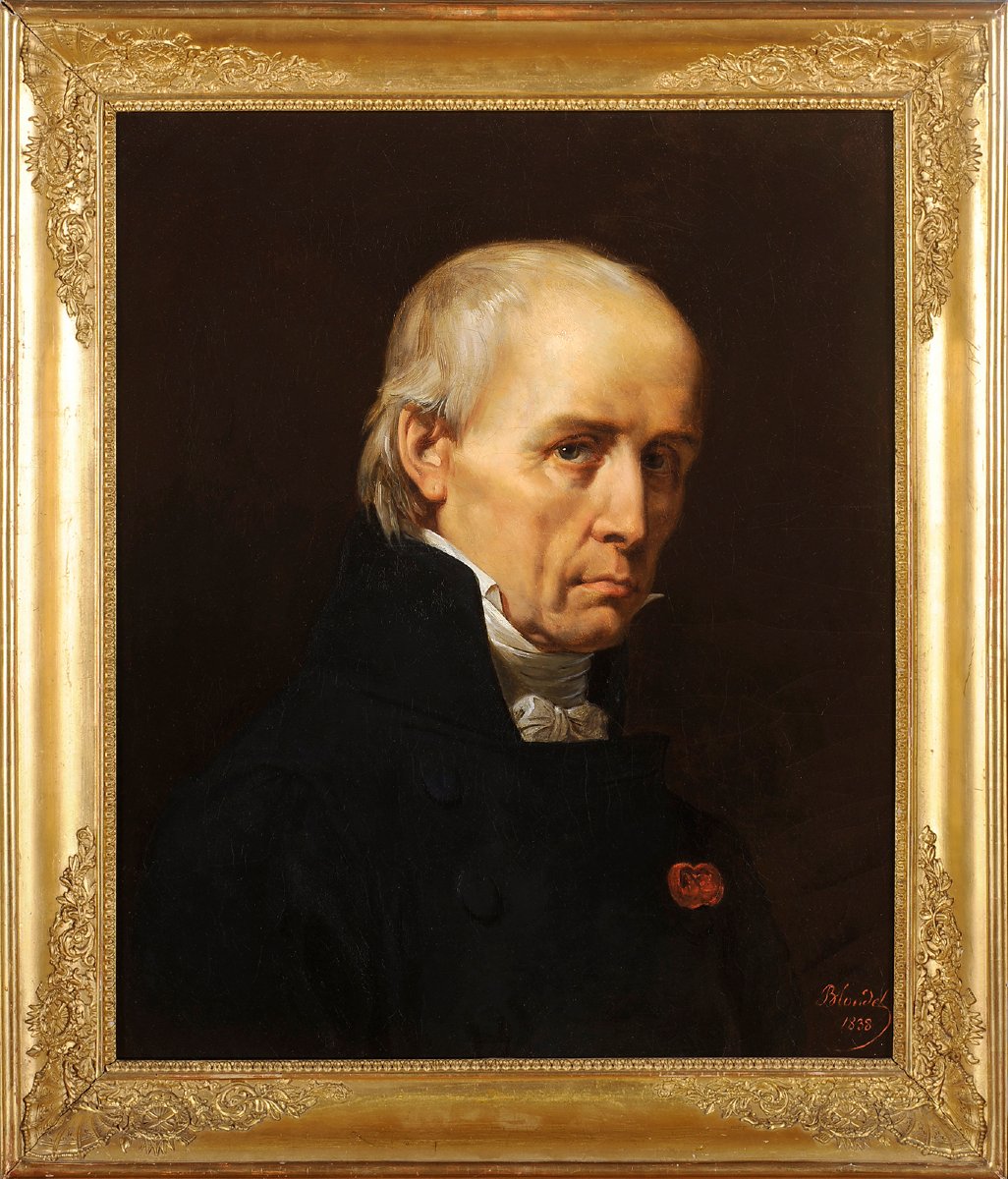
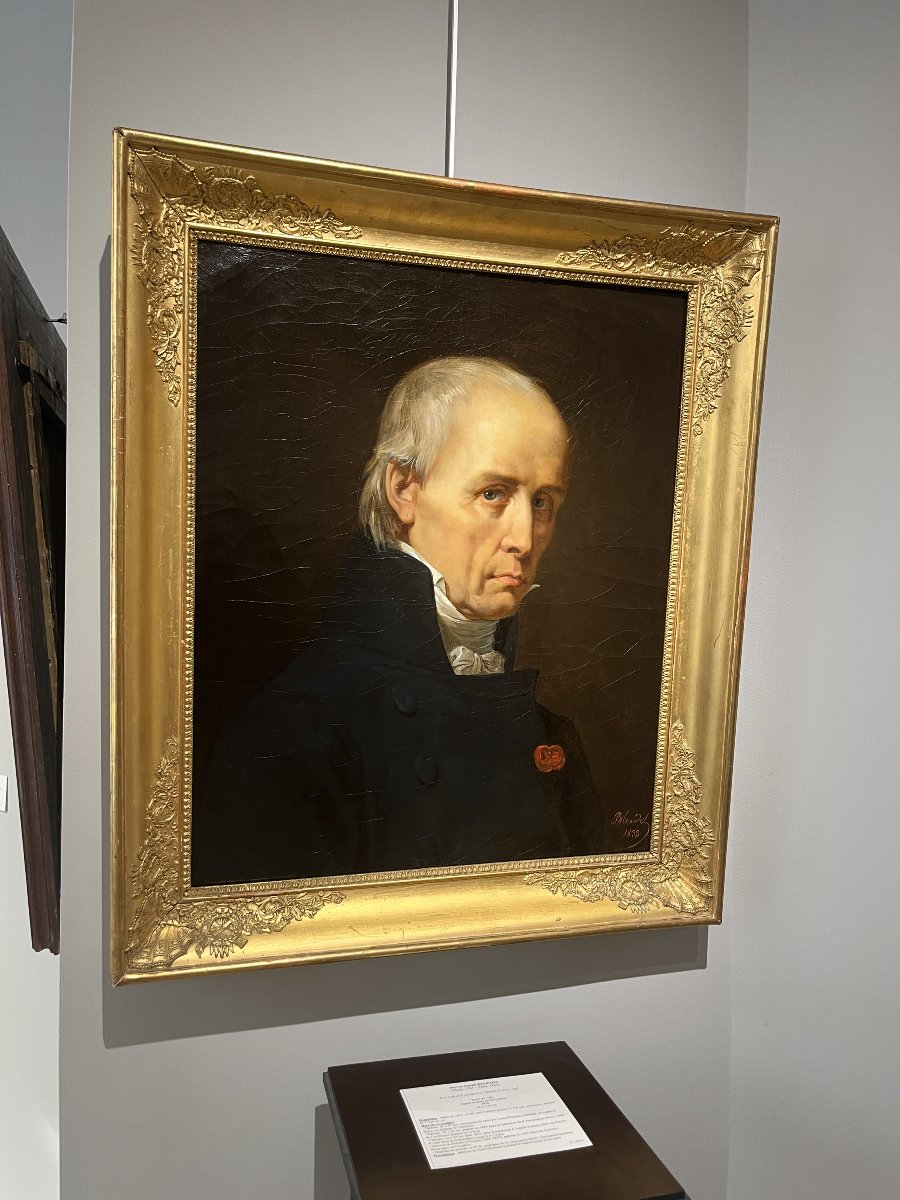
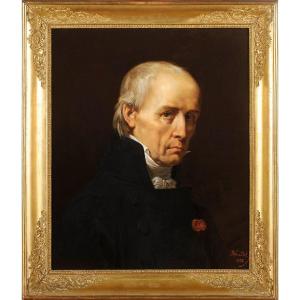


Merry-joseph Blondel (1781–1853) Portrait Of The Architect Charles Percier In 1838
Merry-Joseph BLONDEL
(Paris, 1781 – Paris, 1853)
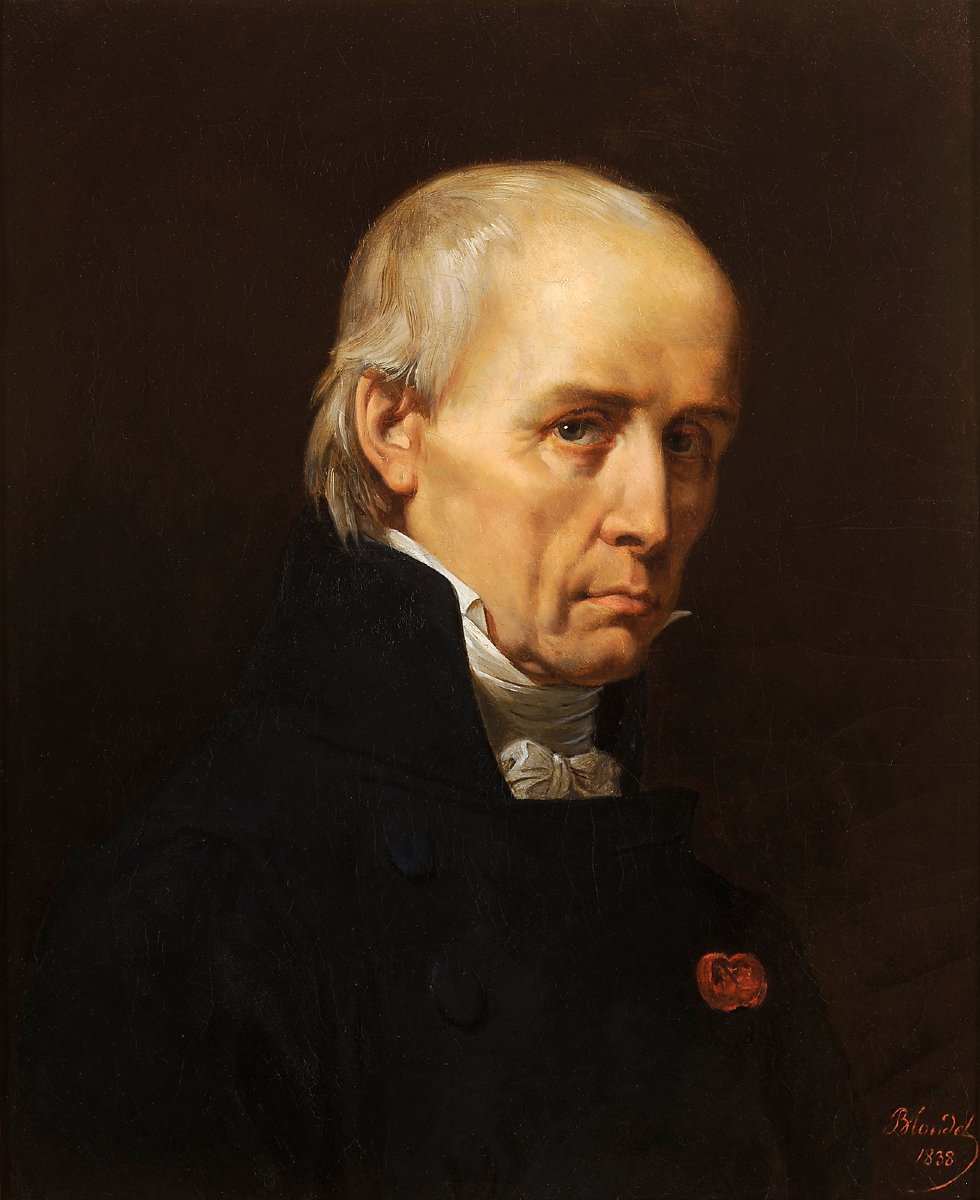
Portrait of Charles Percier in his later years
Oil on canvas
H. 61.5 cm ;W.51 cm
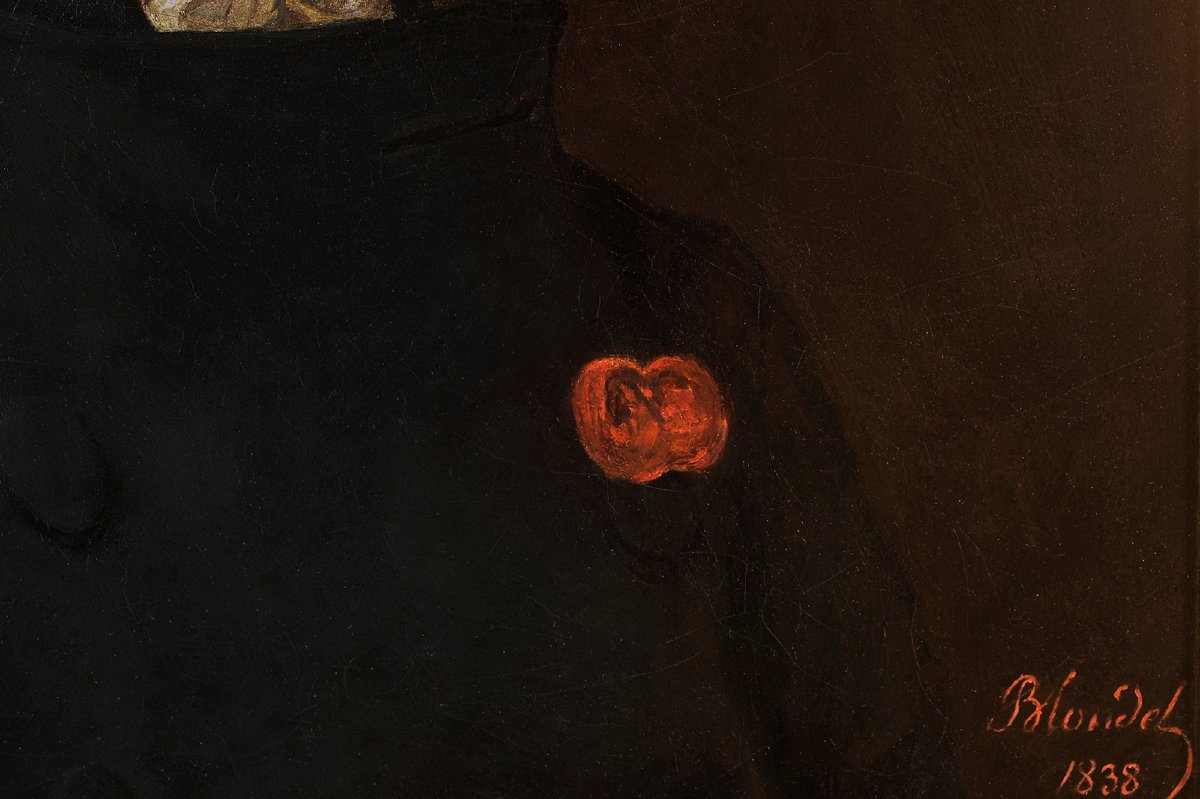
Signed and dated lower right
1838
Exhibition : 1839 Salon, no. 190, titled Portrait of the late Ch. Percier, architect, member of the Institut, etc.
Related works:
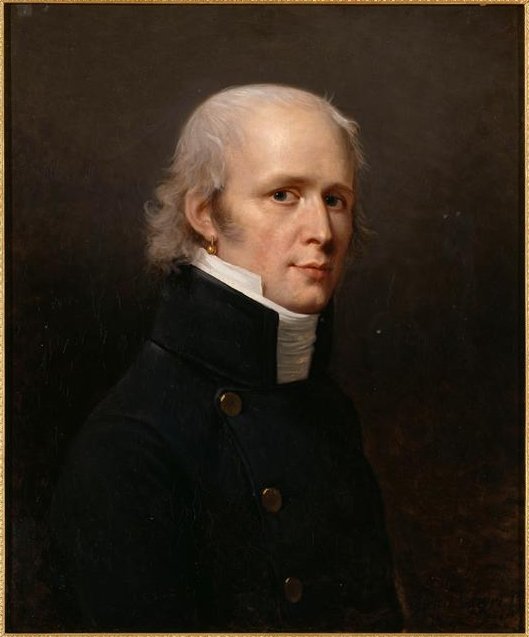
-Painting, 64 x 53 cm, commissioned in 1840 by Louis-Philippe from Blondel,and preserved ever sinceat the Palace of Versailles
-Painting, 30 x 20 cm, in the collection ofAlexandrine Halévy (daughter of the architectHippolyte Le Bas)
-Painting, 32 x 24 cm, dated 1839, in the collection of AchilleLeclere, a student of Percier, and remainedin his family until recently
-Engraving by Polydore Pauquet (1800–1879), published in 1840 in theHistorical Galleriesof Versailles
-Sketch for the portrait, no. 49 in the posthumous auction catalog,location unknown
Provenance : heirs of Pierre-François Léonard Fontaine to the presentday
Charles Percier (Paris, 1764–Paris, 1838) needs no introduction; he wasperhaps the greatest neoclassical architect and interior designer ofthe late 18thcentury and the first third of the 19thcentury, and known for being, along with his colleague and friendPierre-François Léonard Fontaine (1762–1853), the inventor andleading exponent of the Empire style.
Blondelwas closely connected to architectural circles; in1811, in Rome, he painted the portrait of Hippolyte Le Bas, himself a student ofPercier, and probably that of Achille Leclere as well. The secondExhibitionof Portraits of the Century,held at the École des Beaux-Arts in Paris in 1885, featured this portraitof Le Bas and another of Percier, both of which belonged toAlexandrine Halévy, Le Bas’s daughter. He also exhibited at the Salonof 1824 a Portraitof M***, architect(mostlikely that of Jean-Baptiste Lepère, painted in 1823) and thatof Hurtault (both of these paintings are now in the Louvre), followed in1843 by that of Alphonse de Gisors.
Fontaine(of whom he drew a portrait included in thepostmortem sale of Blondel’s estate) would also serve as a witness at hiswedding in 1832 to the daughter of the painter Pierre MaximilienDelafontaine.
Thisclose relationship can likely be explained first by the fact thatBlondel’s older brother, Charles-François-Armand (1770–1854), washimself an architect. Second, by the nature of his workas part of his commissions for set designs, Blondel came towork alongside architects on various construction sites, such as those at theLouvre and Fontainebleau, which were overseen by Fontaine and Percier in theearly 1820s; it was during this period thatthe first connections between Blondel and Percier certainly date back. Nowfriends, they would also have the opportunity to meet frequently atthe Académie des Beaux-Arts and on competition juries.
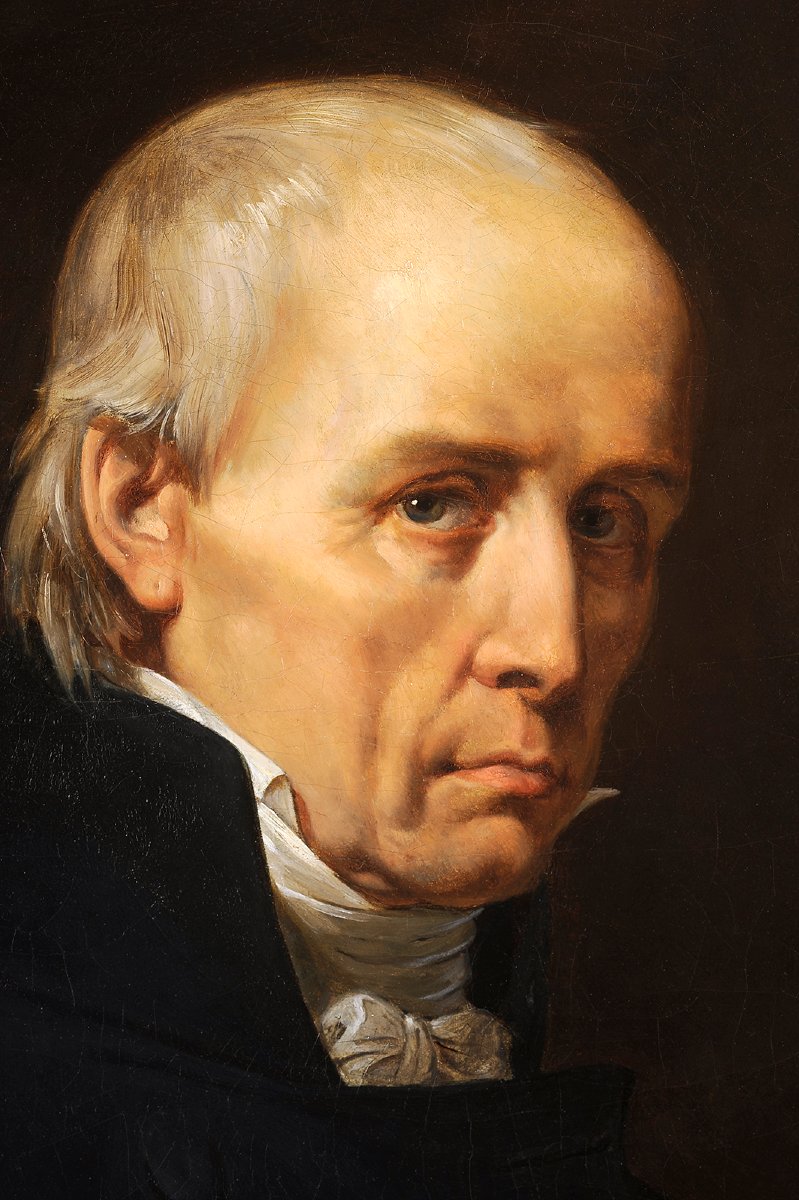
Listedin the Salon catalog as “paintedfrom memory,”(he diedon September 5, 1838, which implies that our painting was createdduring the last quarter of that year), Percier appears herewith a pensive and melancholic expression, wearing the clothes of hisyouth. But Blondel does not fail to clearly depict thepierced earlobe, thus reminding us that Percier (true tohis name) was one of the first “celebrities” to embrace piercing!
Veryfashionable among men during the Renaissance, andparticularly in England (see King CharlesI’s pearl earring), wearing an earring came back into fashion inFrance under the Directory and spread rapidly during the First Empire,especially in the army. But this aesthetic was also foundin artistic circles in Rome at the end of the 18thcentury, symbolizing a certain freedom or nonconformity;it was during his stay in Rome before the Revolution that Percieradopted this practice, which he continued after his return to Paris,for nearly his entire life, as attested by severalwritten accounts. This ring is clearly visible in a painting byRobert Lefèvre dated 1807.
Period: 19th century
Style: Louis Philippe, Charles 10th
Condition: Perfect condition
Material: Oil painting
Length: 61,5 cm hors cadre
Width: 51 cm hors cadre
Reference (ID): 1827208
Availability: In stock