

Louis Cabié (1853–1939) The Saint-antoine Bridge In Clisson, Loire-atlantique, Nantes
Artist: Louis-alexandre Cabié
Louis-Alexandre CABIÉ
(Dol-de-Bretagne 1853 – Bordeaux 1939)
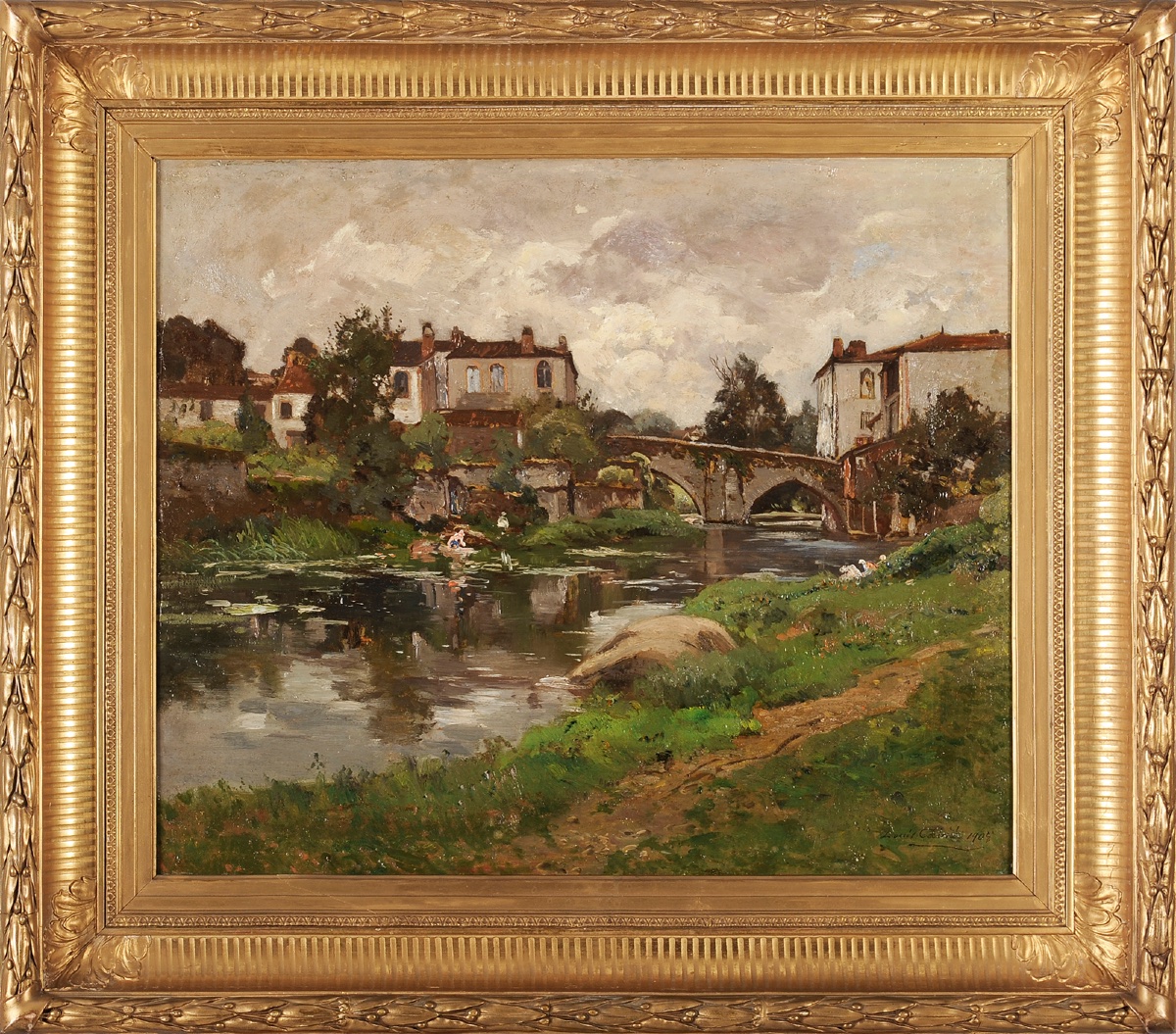
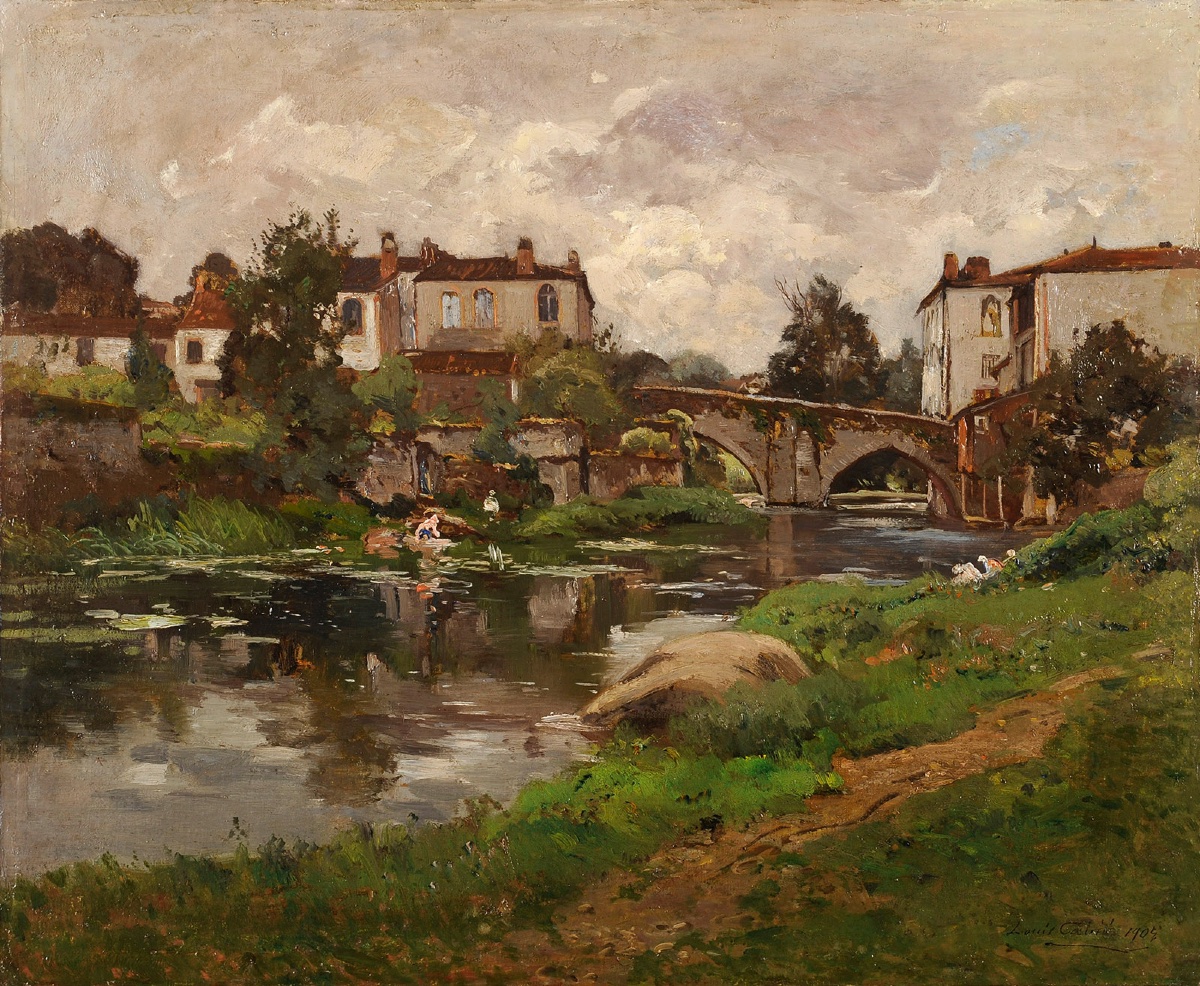
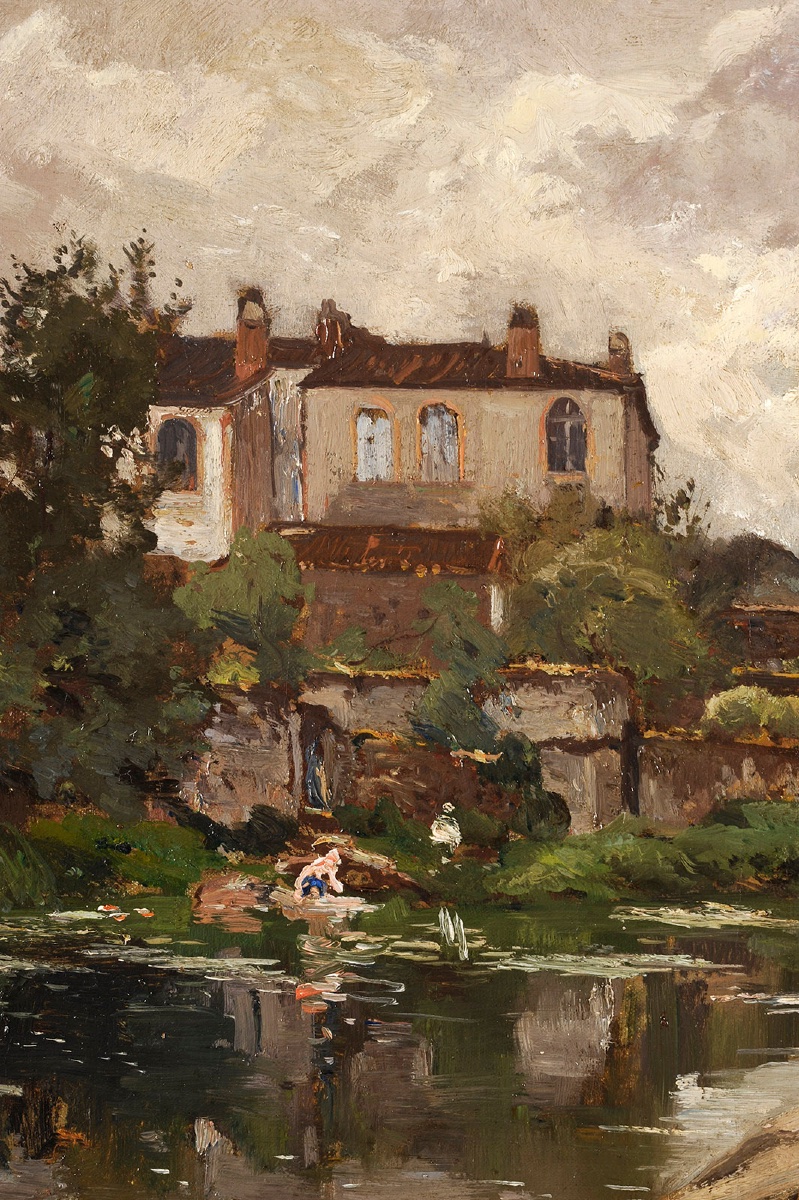
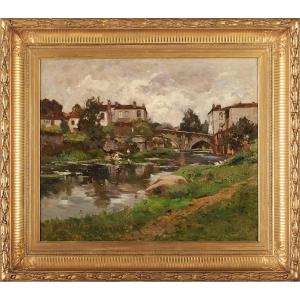
The Saint-Antoine Bridge in Clisson
Oil on canvas
H. 50 cm; W. 61 cm
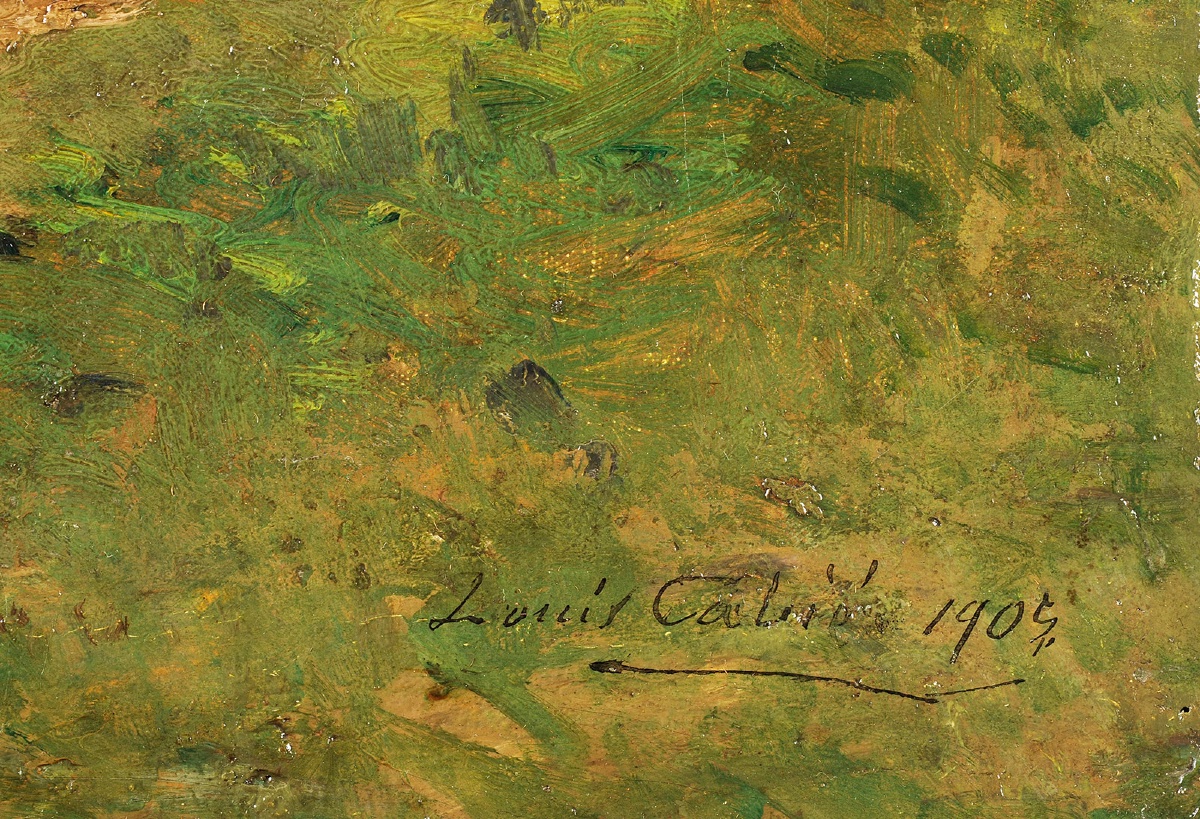
Signed lower right, dated 1905
Provenance: Private collection, southeastern France
Louis Cabié, a renowned artist in France—and particularly in the Bordeaux region—even during his lifetime, traveled throughout the greater southwest throughout his life. A student of Harpignies, whose passion for vegetation in the style of the Barbizon School is evident in his work, he continued to capture the simplicity of picturesque French landscapes until his death. Spectacular trees, forest scenes, places steeped in history, enchanting valleys, or even a landscape in its simplest form—he knew how to bring out its vital contrast.
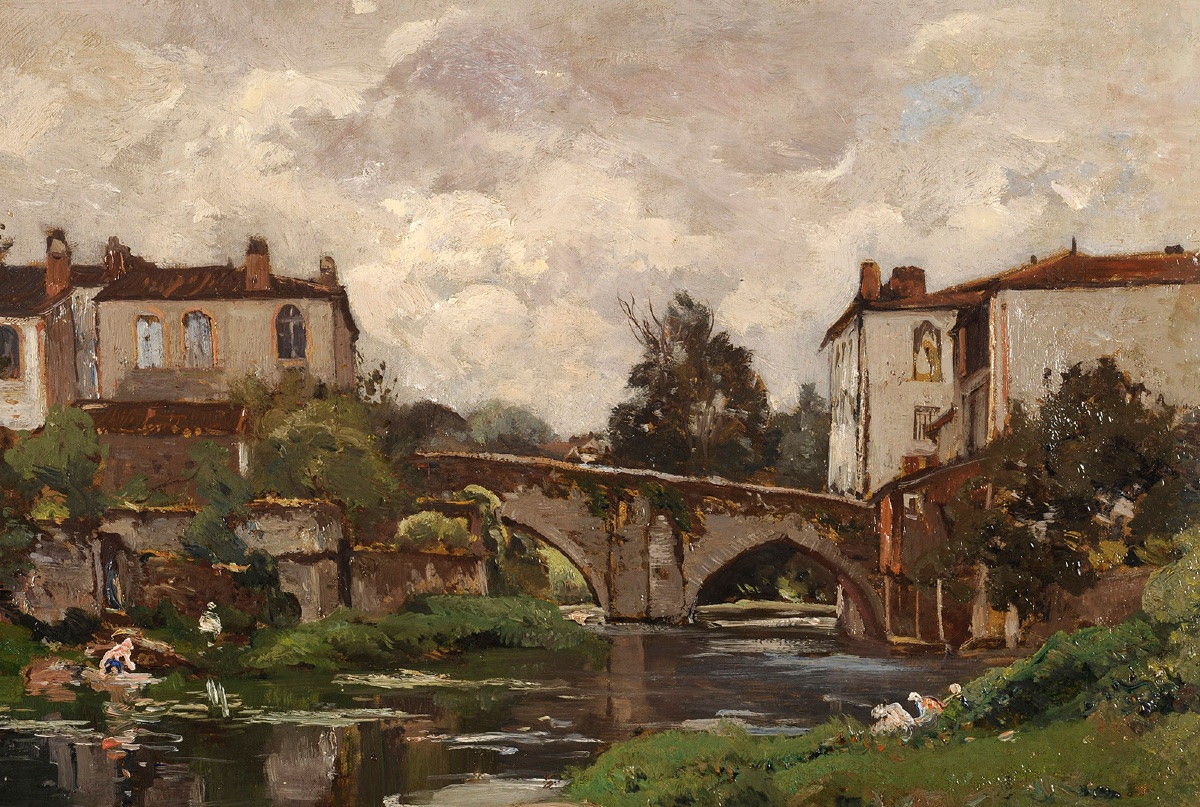
It was in 1899 that Louis-Alexandre Cabié appears to have first visited the banks of the Sèvre Nantaise, painting on several occasions that year a windmill, the Clisson bridge, as well as a view of the town and the feudal castle. Full of light, these various paintings show us the region in summer, in bright sunshine or on a gray day, almost as heavy as a sailor’s canvas. Such a depiction of an “urban” landscape is quite unusual for Cabié, who devoted 98 percent of his time to pure natural landscapes.
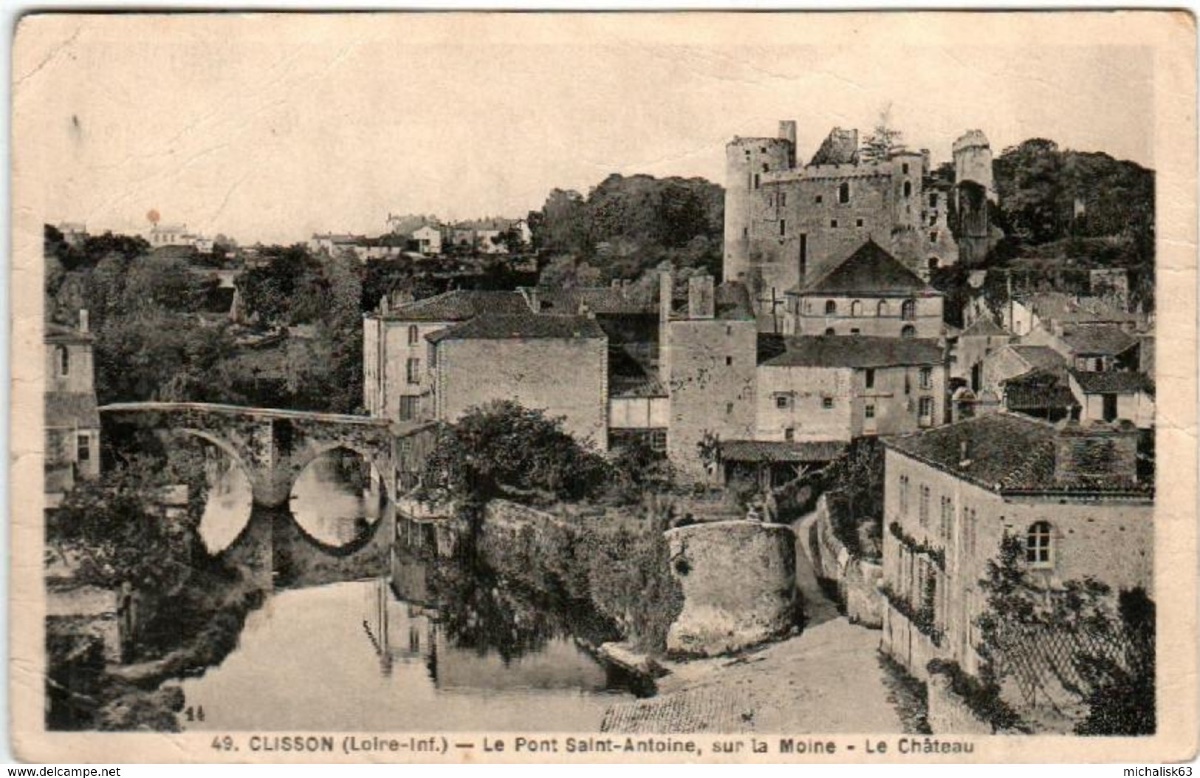
The old Saint-Antoine Bridge spanning the Moine River is situated below the medieval fortress, which the painter conceals. His aim is not grandeur, but composition.
We are seeking any works or information related to the artist to complete his biography as well as a catalogue raisonné currently in progress.
(Dol-de-Bretagne 1853 – Bordeaux 1939)
The Saint-Antoine Bridge in Clisson
Oil on canvas
H. 50 cm; W. 61 cm
Signed lower right, dated 1905
Provenance: Private collection, southeastern France
Louis Cabié, a renowned artist in France—and particularly in the Bordeaux region—even during his lifetime, traveled throughout the greater southwest throughout his life. A student of Harpignies, whose passion for vegetation in the style of the Barbizon School is evident in his work, he continued to capture the simplicity of picturesque French landscapes until his death. Spectacular trees, forest scenes, places steeped in history, enchanting valleys, or even a landscape in its simplest form—he knew how to bring out its vital contrast.
It was in 1899 that Louis-Alexandre Cabié appears to have first visited the banks of the Sèvre Nantaise, painting on several occasions that year a windmill, the Clisson bridge, as well as a view of the town and the feudal castle. Full of light, these various paintings show us the region in summer, in bright sunshine or on a gray day, almost as heavy as a sailor’s canvas. Such a depiction of an “urban” landscape is quite unusual for Cabié, who devoted 98 percent of his time to pure natural landscapes.
The old Saint-Antoine Bridge spanning the Moine River is situated below the medieval fortress, which the painter conceals. His aim is not grandeur, but composition.
We are seeking any works or information related to the artist to complete his biography as well as a catalogue raisonné currently in progress.
1 950 €
Period: 19th century
Style: Napoleon 3rd
Condition: Perfect condition
Material: Oil painting
Length: 50 cm hors cadre
Width: 61 cm hors cadre
Reference (ID): 1826669
Availability: In stock
Print