

Jean-georges Pasquet (1851–1936) l'Isle, Périgueux, Dordogne
Artist: Jean-georges Pasquet
Jean-Georges PASQUET
(Périgueux 1851–1936)
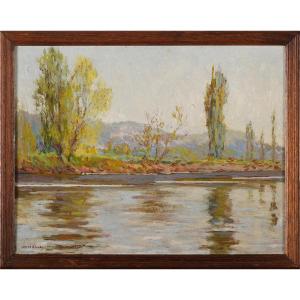
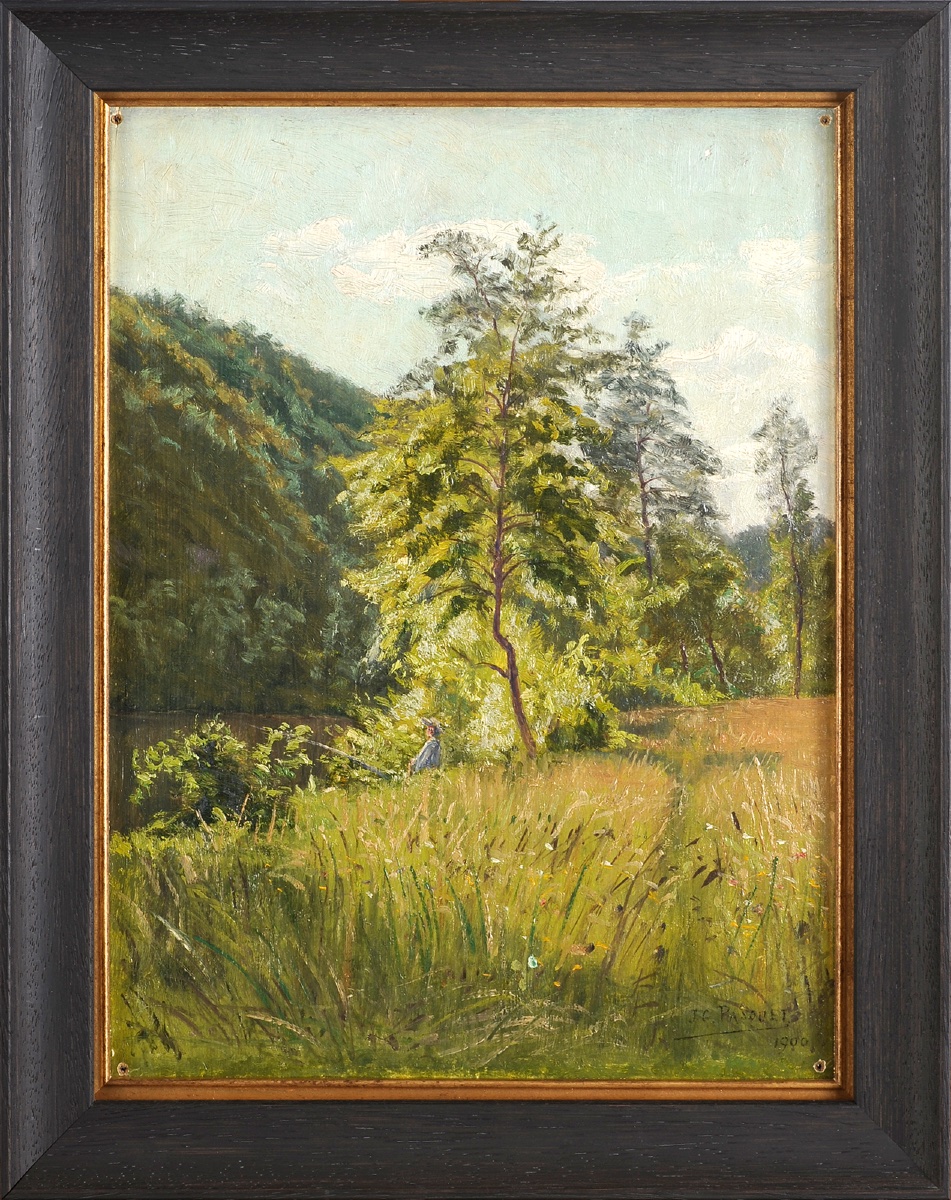
The Banks of the Isle in Périgueux
Oil on panel
H. 36 cm; W. 25 cm
Signed and dated 1900 in the lower right corner. Signed on the back.
Provenance: Private collection, Périgueux
Jean-Georges Pasquet was born in 1851 in Périgueux. After a childhood in the Périgord region about which very little is known, the young artist arrived in Paris and enrolled at the École des Beaux-Arts, from which he graduated with honors a few years later. He returned to his native region in 1879 to take over as director of the Municipal School of Drawing in Périgueux, and also became a drawing instructor at the teacher-training colleges for boys and girls.
A student of Gustave Boulanger, Jules Lefèvre, and Jean-Joseph Benjamin-Constant, the painter set up his easel along the banks of the Dordogne or the Isle to “recount a few memories” through realistic landscapes filled with gentleness. Through his style, the painter conveyed a profound sense of his homeland and heritage to his compatriots. His works, stripped of artifice, depict local residents working their fields or simply strolling along country paths. These paintings and drawings by Pasquet depict life in the Périgord at the dawn of and throughout the 20th century, always set in specific locations.
He is one of the artists of the Périgueux School. This school, somewhat overlooked in art history, highlights the heritage and identity of the Périgord region. Among its representatives are Jean-Louis Daniel, André Saigne, Georges Darnet, René Laforest, Roger Favard, and André Prugent. This movement shares a common theme that stands apart from the artistic norms of the time: the landscape.
“It is a school without a leader or a dominant style, but one that worked with extraordinary enthusiasm. They loved to tackle fragments of nature that we call ‘picadis’ here.”
Jean-Michel Linfort
The artist painted the Dordogne, but not exclusively; he also traveled to the Creuse and visited Saint-Georges-de-Didonne very regularly. There he paints rivers, the sea, harbors, bridges, dunes, and forests. He skillfully captures these subjects and brings them to life through vibrant colors and the movement of his brushstrokes, lending depth to the landscapes.
The outskirts of Périgueux are a common theme in the painter’s work. From Chancelade to Trélissac, he traverses the banks of the Isle River to capture contrasting scenes, often enlivened by a few figures going about their daily activities. Here, the scene is a typical depiction of a fisherman at the foot of the hills overlooking the left bank of the Isle. It captures a sunny day in the spring or summer of 1900, a painting that Pasquet would present to the Peyré family on February 7, 1904.
(Périgueux 1851–1936)
The Banks of the Isle in Périgueux
Oil on panel
H. 36 cm; W. 25 cm
Signed and dated 1900 in the lower right corner. Signed on the back.
Provenance: Private collection, Périgueux
Jean-Georges Pasquet was born in 1851 in Périgueux. After a childhood in the Périgord region about which very little is known, the young artist arrived in Paris and enrolled at the École des Beaux-Arts, from which he graduated with honors a few years later. He returned to his native region in 1879 to take over as director of the Municipal School of Drawing in Périgueux, and also became a drawing instructor at the teacher-training colleges for boys and girls.
A student of Gustave Boulanger, Jules Lefèvre, and Jean-Joseph Benjamin-Constant, the painter set up his easel along the banks of the Dordogne or the Isle to “recount a few memories” through realistic landscapes filled with gentleness. Through his style, the painter conveyed a profound sense of his homeland and heritage to his compatriots. His works, stripped of artifice, depict local residents working their fields or simply strolling along country paths. These paintings and drawings by Pasquet depict life in the Périgord at the dawn of and throughout the 20th century, always set in specific locations.
He is one of the artists of the Périgueux School. This school, somewhat overlooked in art history, highlights the heritage and identity of the Périgord region. Among its representatives are Jean-Louis Daniel, André Saigne, Georges Darnet, René Laforest, Roger Favard, and André Prugent. This movement shares a common theme that stands apart from the artistic norms of the time: the landscape.
“It is a school without a leader or a dominant style, but one that worked with extraordinary enthusiasm. They loved to tackle fragments of nature that we call ‘picadis’ here.”
Jean-Michel Linfort
The artist painted the Dordogne, but not exclusively; he also traveled to the Creuse and visited Saint-Georges-de-Didonne very regularly. There he paints rivers, the sea, harbors, bridges, dunes, and forests. He skillfully captures these subjects and brings them to life through vibrant colors and the movement of his brushstrokes, lending depth to the landscapes.
The outskirts of Périgueux are a common theme in the painter’s work. From Chancelade to Trélissac, he traverses the banks of the Isle River to capture contrasting scenes, often enlivened by a few figures going about their daily activities. Here, the scene is a typical depiction of a fisherman at the foot of the hills overlooking the left bank of the Isle. It captures a sunny day in the spring or summer of 1900, a painting that Pasquet would present to the Peyré family on February 7, 1904.
620 €
Period: 19th century
Style: Napoleon 3rd
Condition: Perfect condition
Material: Oil painting on wood
Length: 36 cm hors cadre
Width: 25 cm hors cadre
Reference (ID): 1800507
Availability: In stock
Print