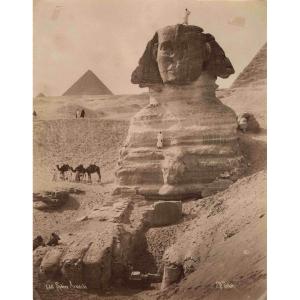


Pascal Sebah (1823–1886) The Sphinx, Egypt, C. 1880 Albumen Print
Albumin print, circa 1880; printed around 1890
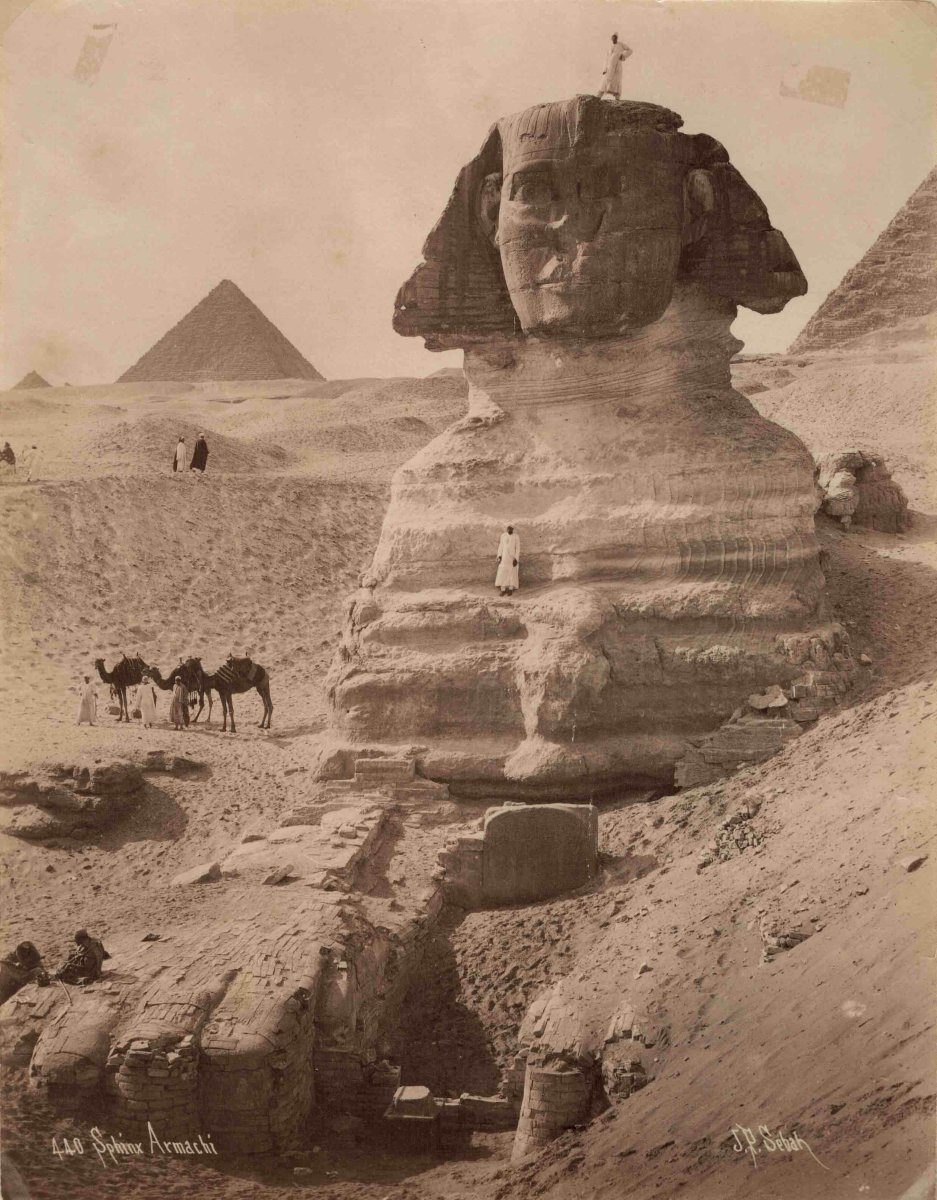
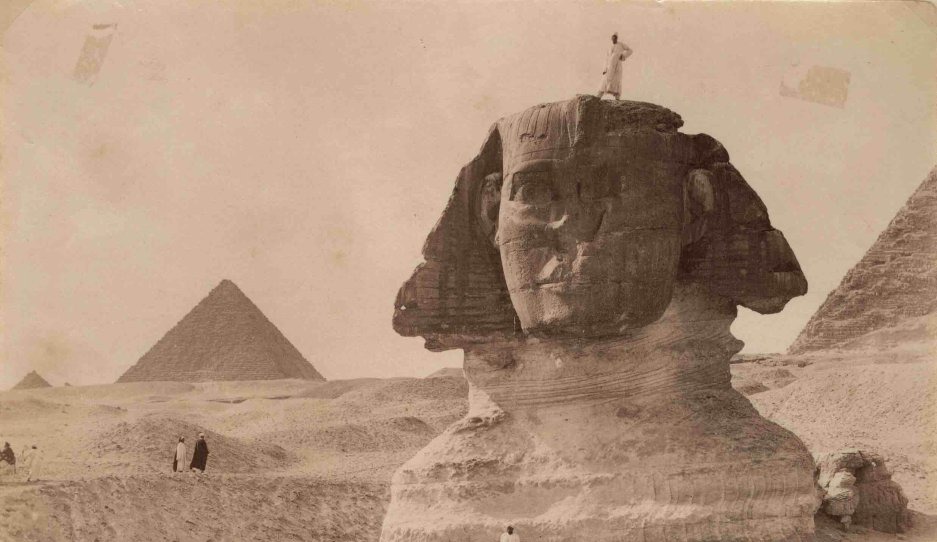
The Sphinx, Egypt.
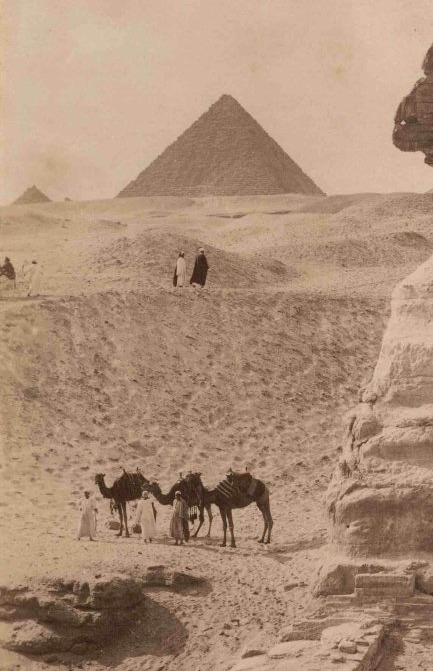
Human figures and camels can be seen, appearing minuscule next to these colossal monuments, which highlight the scale of these structures.
In 1880, the Sphinx of Giza was still partially buried in sand, as it had been for centuries. The Sphinx, carved from a natural limestone promontory, was already 73 meters long and 20 meters high, with its head facing east.
La République française wrote the following in its columns: "It was to France, the favored homeland of Egyptology, that Mr. Maspéro requested subsidies to clear the sand from the buried colossus."
Work then began in the 1880s.
Pascal Sébah (1823–1886), an Ottoman photographer of Armenian origin, settled in Cairo in 1873, where he opened a studio and documented Egypt with recognized talent: he captured major ancient monuments and landscapes, as well as daily life, traditional costumes, and street scenes, meeting the growing demand from European travelers for Orientalist souvenirs. Collaborating with artists and archaeologists, he exhibited his works at international salons and won a silver medal at the 1878 Paris World’s Fair for his Egyptian photographs, thereby helping to popularize the image of Egypt in Europe.
The signature “J.P. Sébah” on certain photographs attributed to Pascal Sébah can be explained by the fact that his son, Jean-Pascal Sébah (1872–1947), took over He took over part of the family studio’s operations, notably the Cairo branch. Some prints inherited from Pascal Sébah’s collection were signed or reissued under the name Jean-Pascal Sébah.
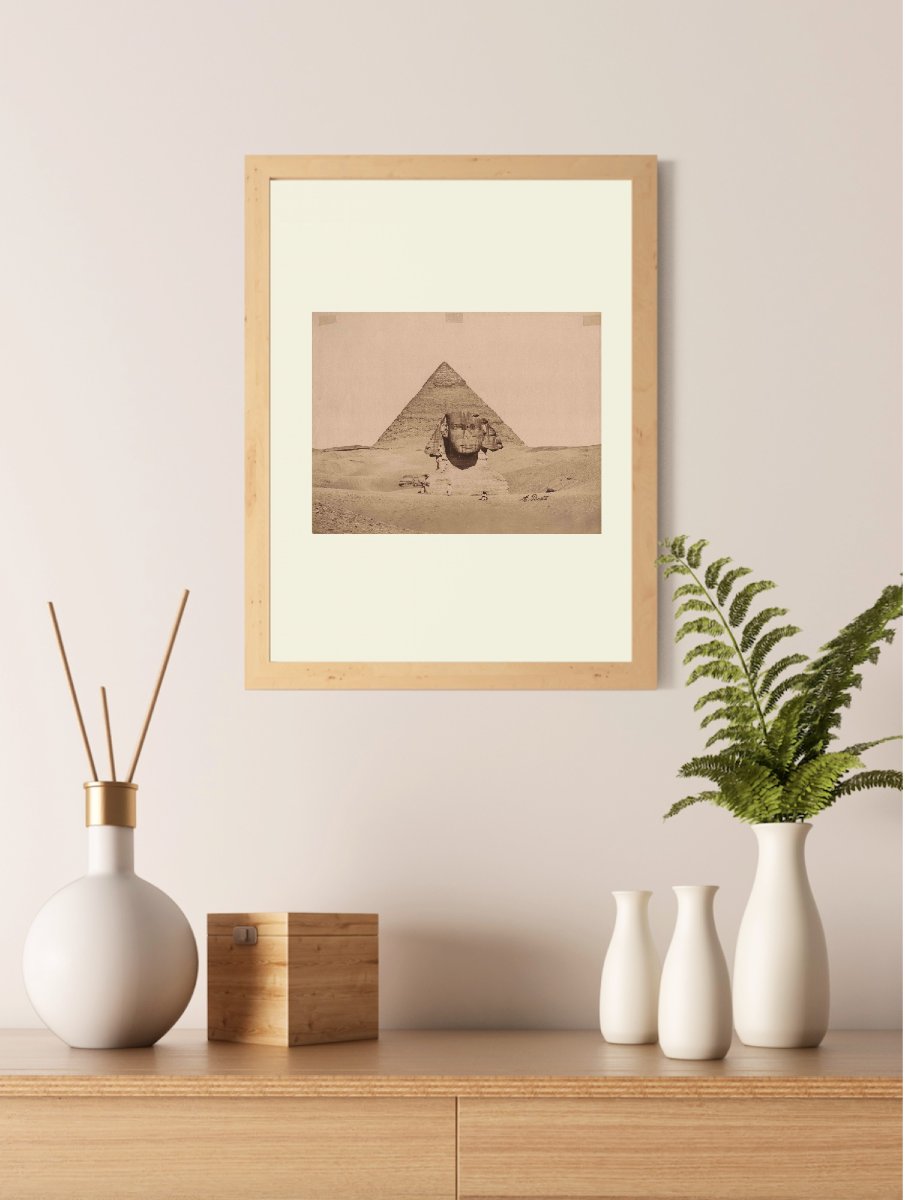
- Photo size: 21 x 27 cm
- Mat-mounted 40x50 cm
link to the website https://www.lavalisearlesienne.com/product-page/pascal-sebah-1823-1886-le-sphinx-egypte-c-1880
Period: 19th century
Style: Orientalism
Condition: Excellent condition
Material: Paper
Reference (ID): 1826627
Availability: In stock