


Saint-tropez By Laszlo Barta (1902–1961)
Artist: Laszlo Barta 1902-1961
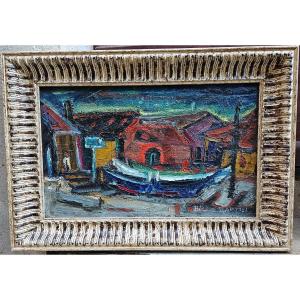
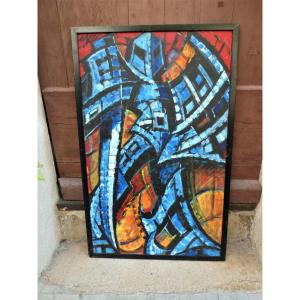
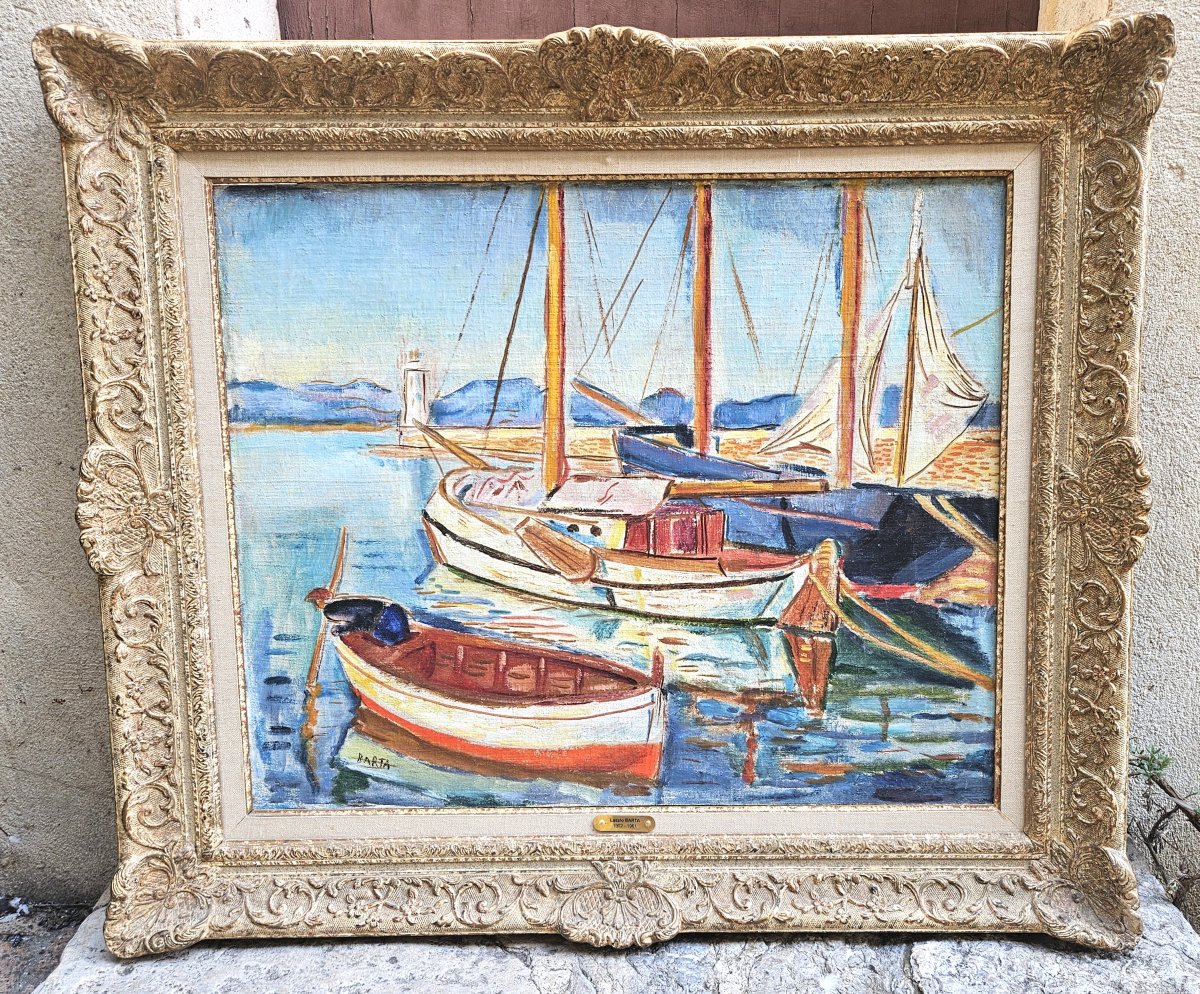
Oil on wood measuring 60 cm x 73 cm, plus frame 79 cm x 92 cm
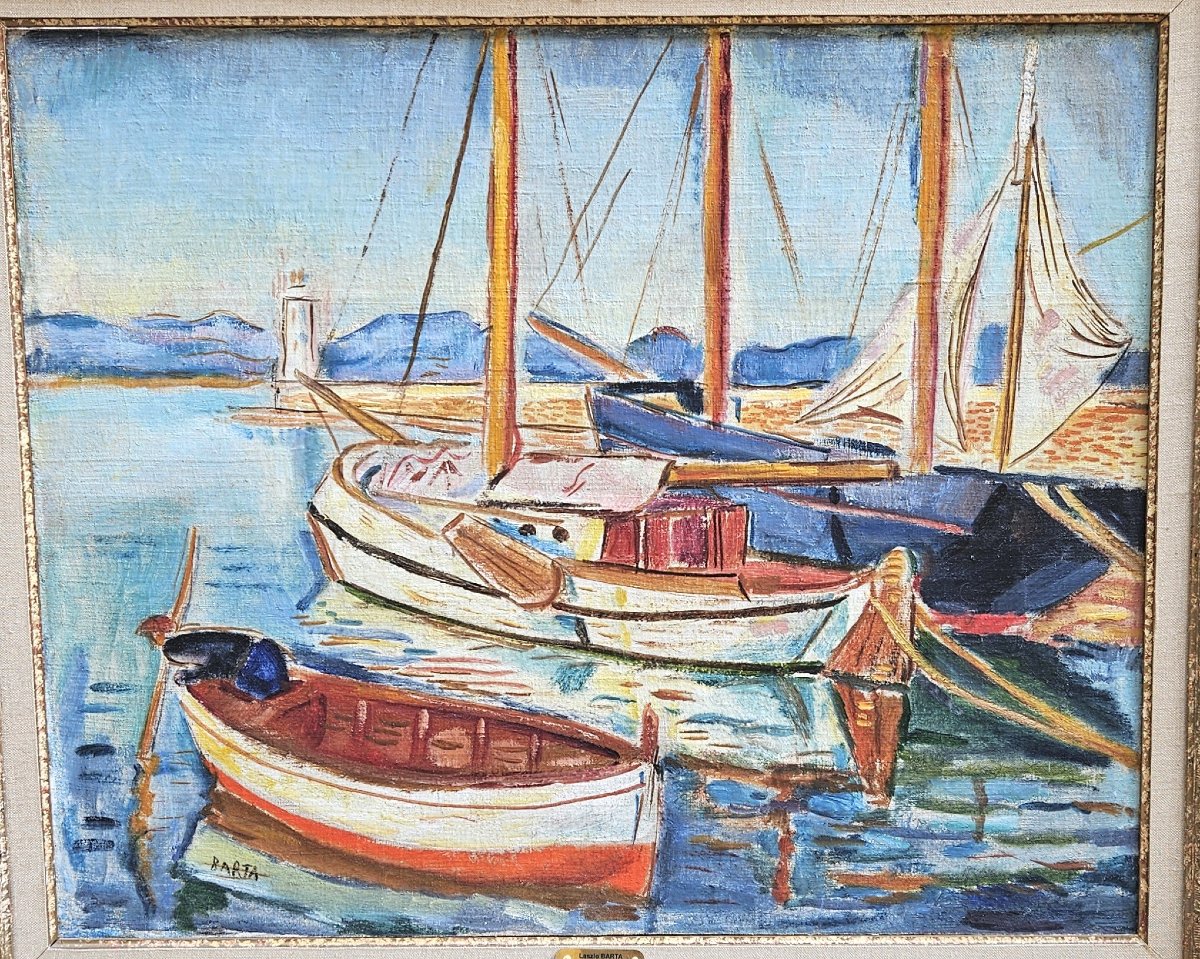
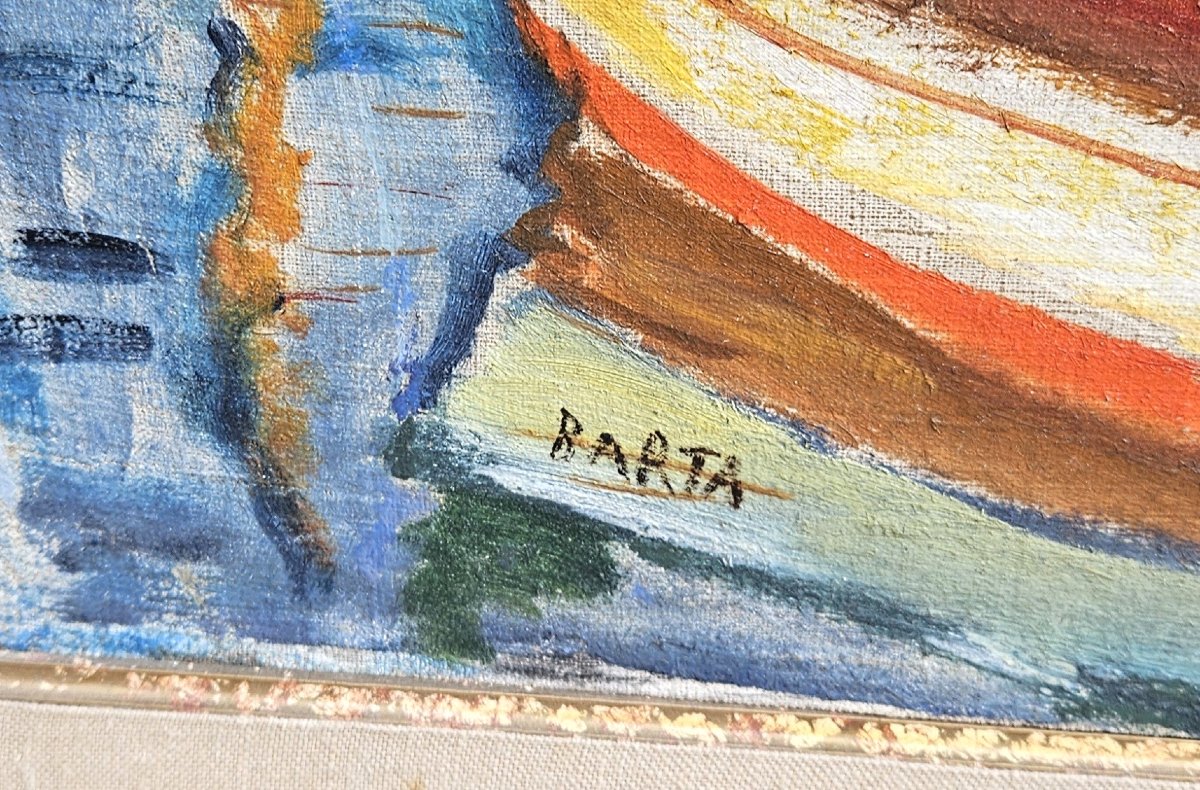
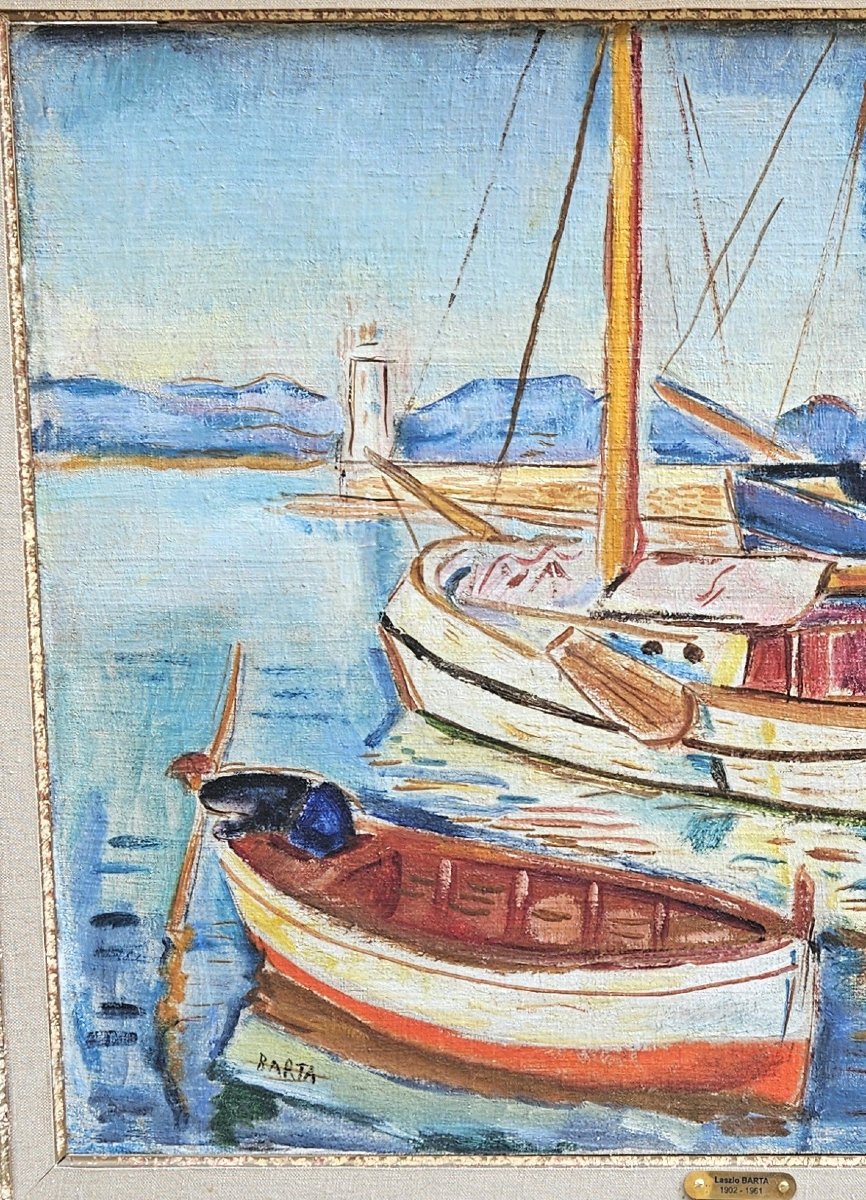
Signed "BARTA" in the lower left corner
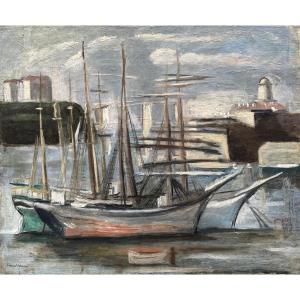
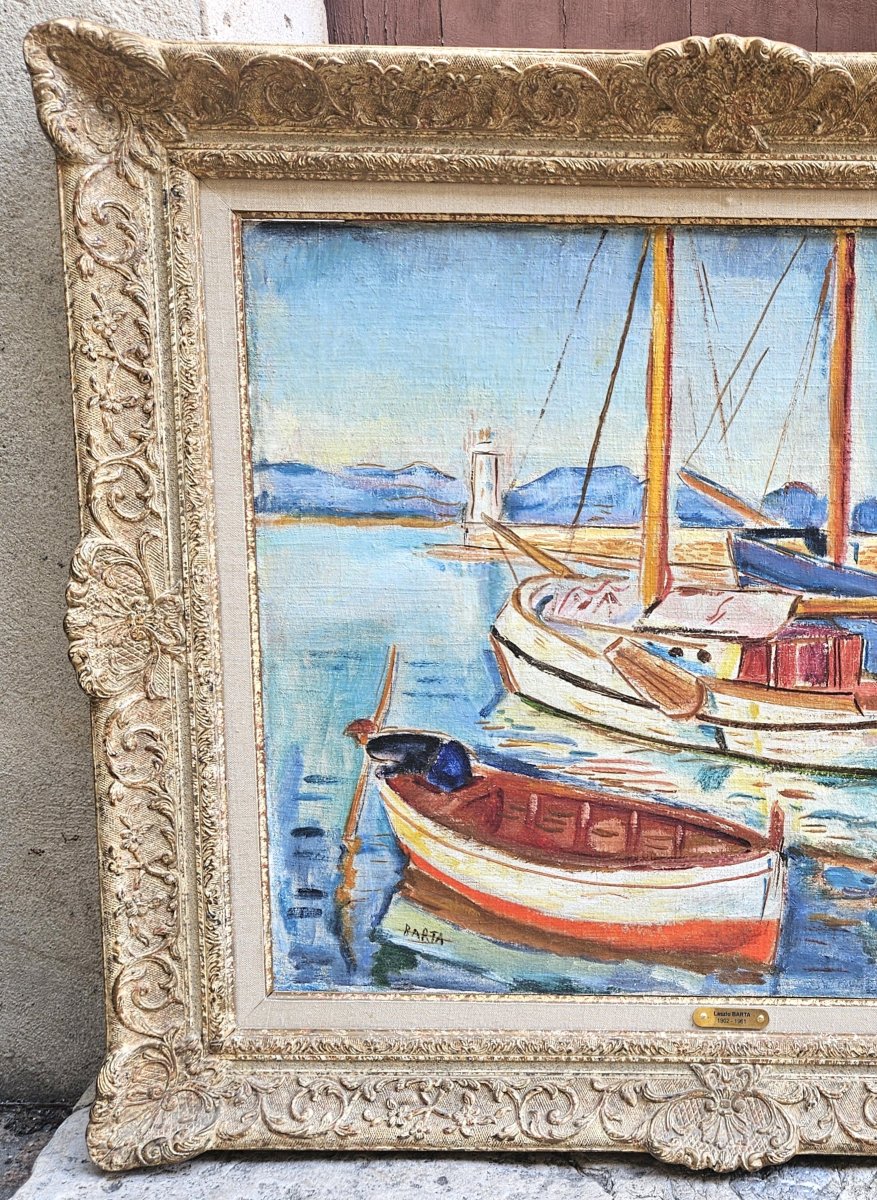
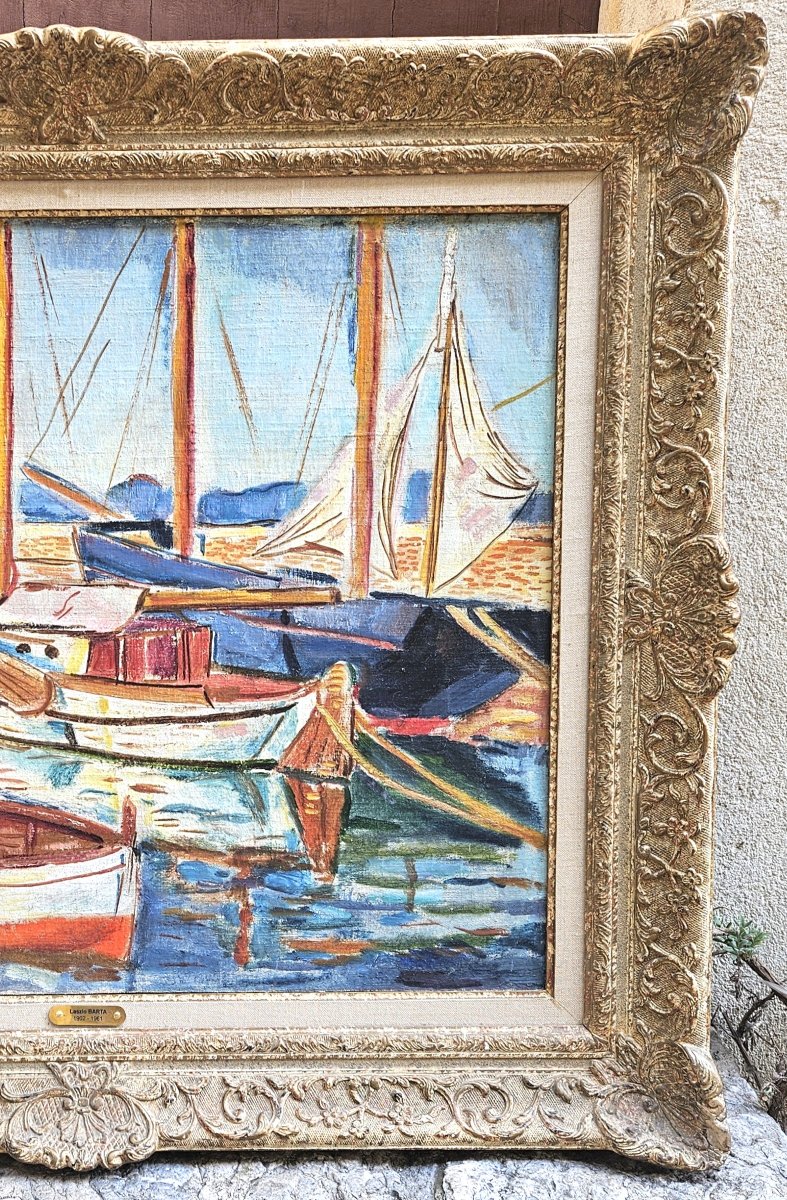
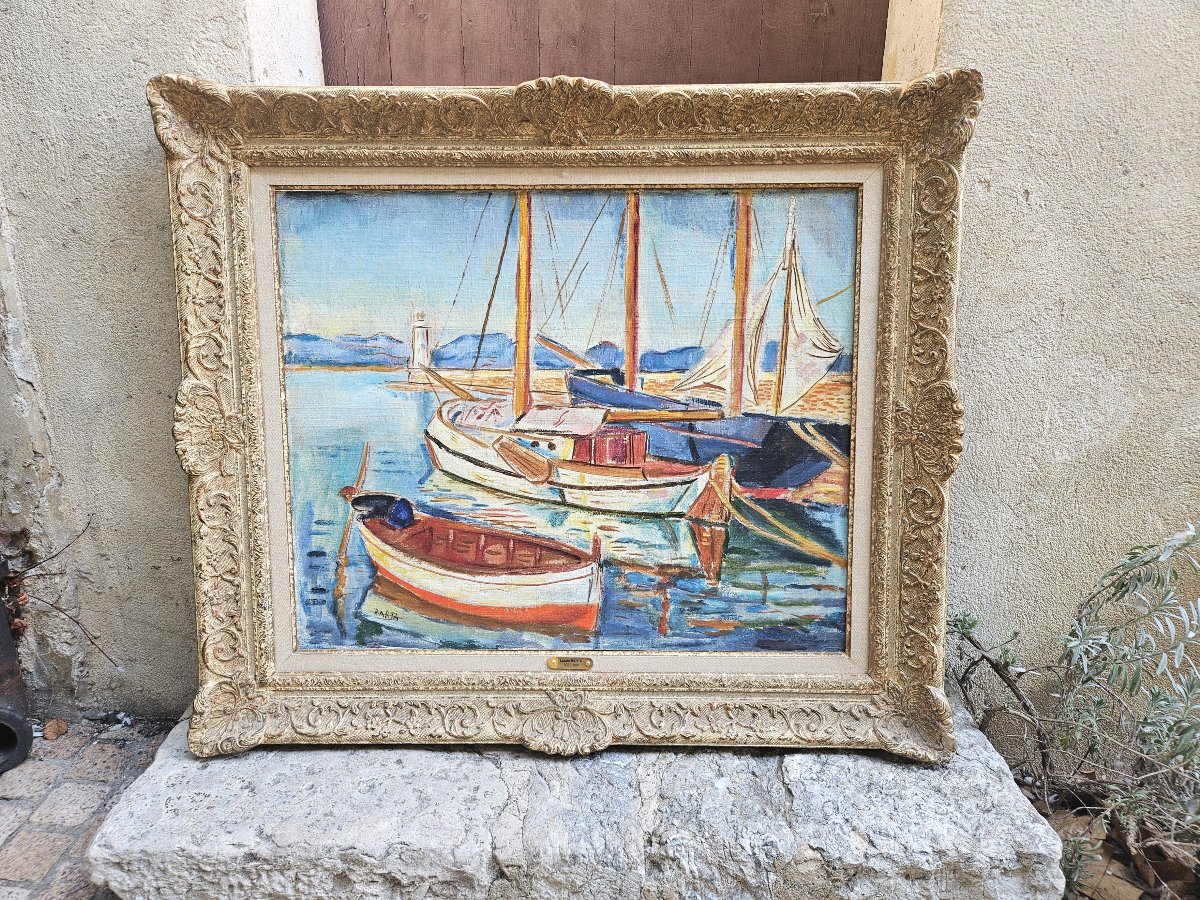
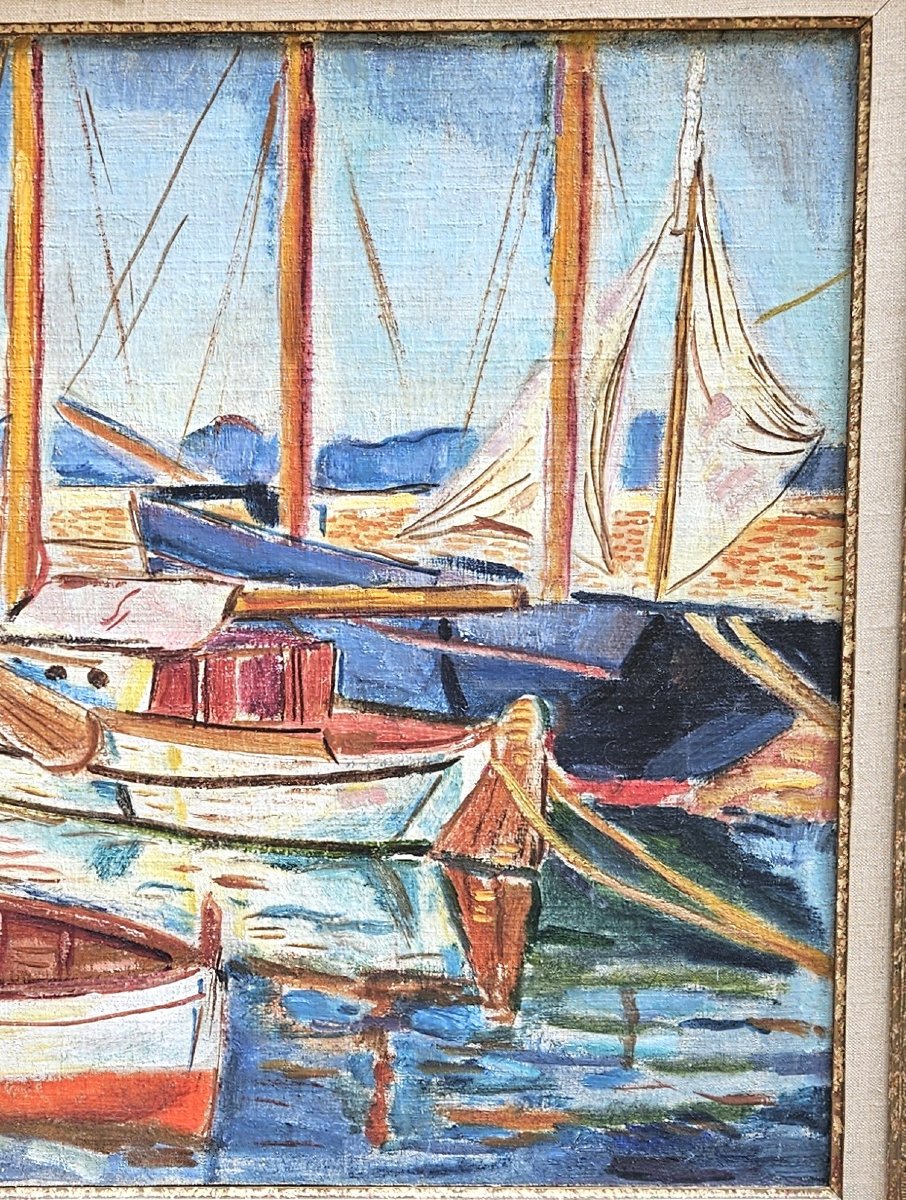
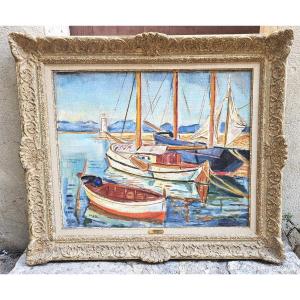
This painting depicts a section of the port of Saint-Tropez
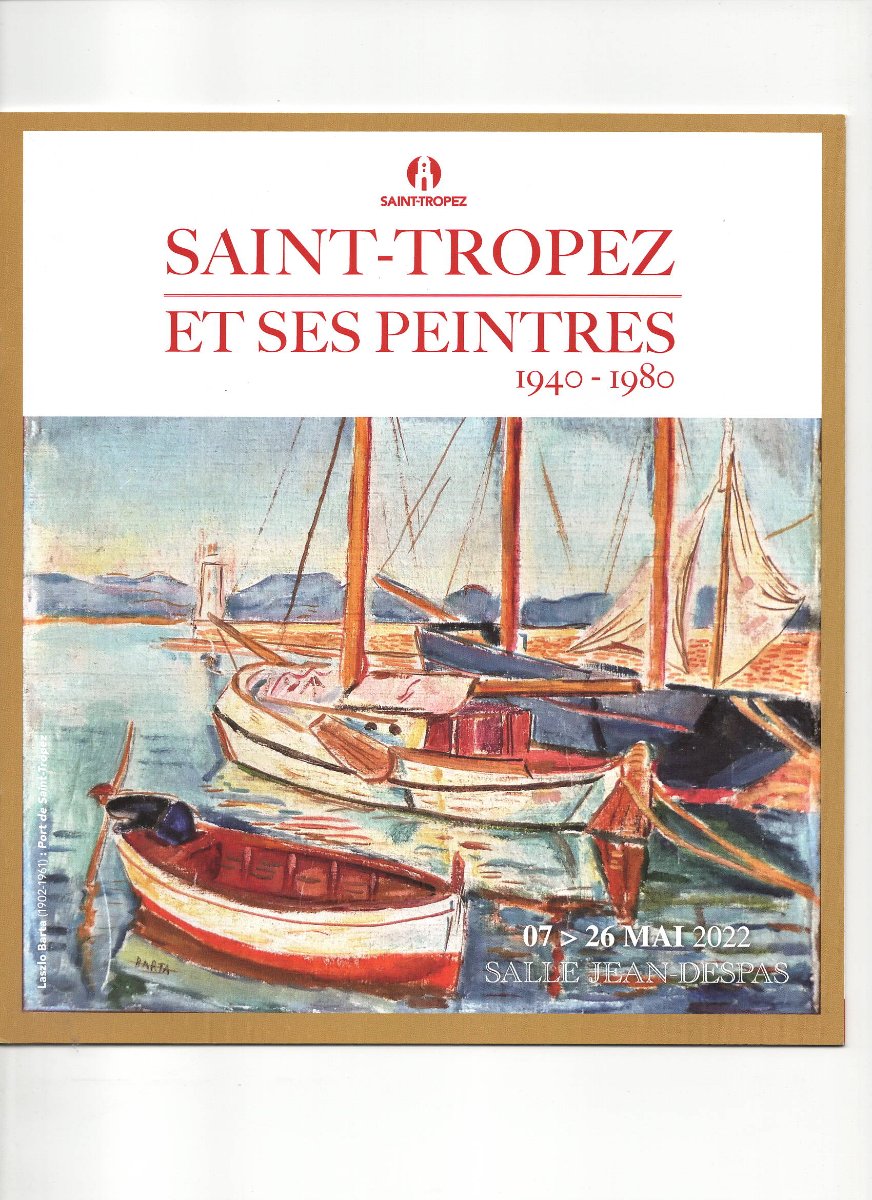
It was displayed at the exhibition "Saint-Tropez and Its Painters, 1940–1980" in the Jean Despas Hall from May 7 to 26, 2022, organized by the City of Saint-Tropez
This painting served as thea poster and was displayed throughout the region; it also appeared on the cover of the exhibition catalog, which will be included with the painting
A beautiful modernist composition with a magical array of colors and a hint of pointillism from this artist, who evolved from Fauvist Expressionism towardabstraction via Cubism
This painting depicts the famous port of Collioure with three figures pulling a rowboat marked “Port Vendres”
Very good condition
Born in 1902 in Hungary, Laszlo BARTA studied at the Budapest Academy of Fine Arts, where he received an award in 1925. He left his country very soon afterward due to his political convictions and his membership in the Jewish community.
After arriving in France in 1926, he exhibited at the Salon d’Automne from 1927 through 1938, as well as at the Société Nationale des Beaux-Arts in 1927 and 1928.
During World War II, he took refuge in Saint-Florent, Corsica, where he joined the Resistance under the alias “Brutus.” He was arrested and imprisoned in Italy in 1943. At the end of the war in 1948, he was naturalized as a French citizen for his service in the Resistance.
Having arrived in Saint-Tropez in 1930, he married a young woman from Toulon in 1947, and they turned their home into a sort of communal living space.
A much-loved figure in the village, he was close friends with Robert Baudinière.
Mosaic became his primary medium of expression starting in the 1950s. He received several commissions for schools in Paris and Saint-Lô, as well as for the National Museum of Rhodesia (now Zimbabwe) in Salisbury. He collaborated with Raymond SUBE on the design of furniture.
His painting, initially figurative and reminiscent of the Fauvists, was heavily inspired by the landscapes of Saint-Tropez, but his encounter with Albert GLEIZES definitively steered him toward an art style closer to Cubism and abstraction.
He died in 1961 in Saint-Tropez, where he was buried.
An exhibition was held in Saint-Tropez in 2022, where he was honored.
A large painting sold in Budapest for over 20,000 euros in 2024
The Galerie Guardia in Le Castellet specializes in his work and has a permanent collection of his pieces
Sold with a certificate of authenticity
Free shipping within the European Union
350 euros for international shipping
Signed "BARTA" in the lower left corner
This painting depicts a section of the port of Saint-Tropez
It was displayed at the exhibition "Saint-Tropez and Its Painters, 1940–1980" in the Jean Despas Hall from May 7 to 26, 2022, organized by the City of Saint-Tropez
This painting served as thea poster and was displayed throughout the region; it also appeared on the cover of the exhibition catalog, which will be included with the painting
A beautiful modernist composition with a magical array of colors and a hint of pointillism from this artist, who evolved from Fauvist Expressionism towardabstraction via Cubism
This painting depicts the famous port of Collioure with three figures pulling a rowboat marked “Port Vendres”
Very good condition
Born in 1902 in Hungary, Laszlo BARTA studied at the Budapest Academy of Fine Arts, where he received an award in 1925. He left his country very soon afterward due to his political convictions and his membership in the Jewish community.
After arriving in France in 1926, he exhibited at the Salon d’Automne from 1927 through 1938, as well as at the Société Nationale des Beaux-Arts in 1927 and 1928.
During World War II, he took refuge in Saint-Florent, Corsica, where he joined the Resistance under the alias “Brutus.” He was arrested and imprisoned in Italy in 1943. At the end of the war in 1948, he was naturalized as a French citizen for his service in the Resistance.
Having arrived in Saint-Tropez in 1930, he married a young woman from Toulon in 1947, and they turned their home into a sort of communal living space.
A much-loved figure in the village, he was close friends with Robert Baudinière.
Mosaic became his primary medium of expression starting in the 1950s. He received several commissions for schools in Paris and Saint-Lô, as well as for the National Museum of Rhodesia (now Zimbabwe) in Salisbury. He collaborated with Raymond SUBE on the design of furniture.
His painting, initially figurative and reminiscent of the Fauvists, was heavily inspired by the landscapes of Saint-Tropez, but his encounter with Albert GLEIZES definitively steered him toward an art style closer to Cubism and abstraction.
He died in 1961 in Saint-Tropez, where he was buried.
An exhibition was held in Saint-Tropez in 2022, where he was honored.
A large painting sold in Budapest for over 20,000 euros in 2024
The Galerie Guardia in Le Castellet specializes in his work and has a permanent collection of his pieces
Sold with a certificate of authenticity
Free shipping within the European Union
350 euros for international shipping
12 500 €
Period: 20th century
Style: Modern Art
Condition: Excellent condition
Material: Oil painting
Reference (ID): 1825893
Availability: In stock
Print