

Mythological Scene "the Cup Of Ceres" By Frans Floris De Vriendt (1517–1570)
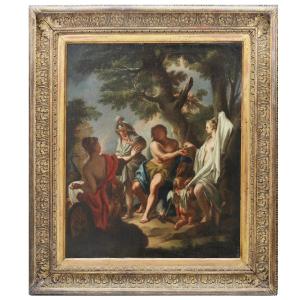
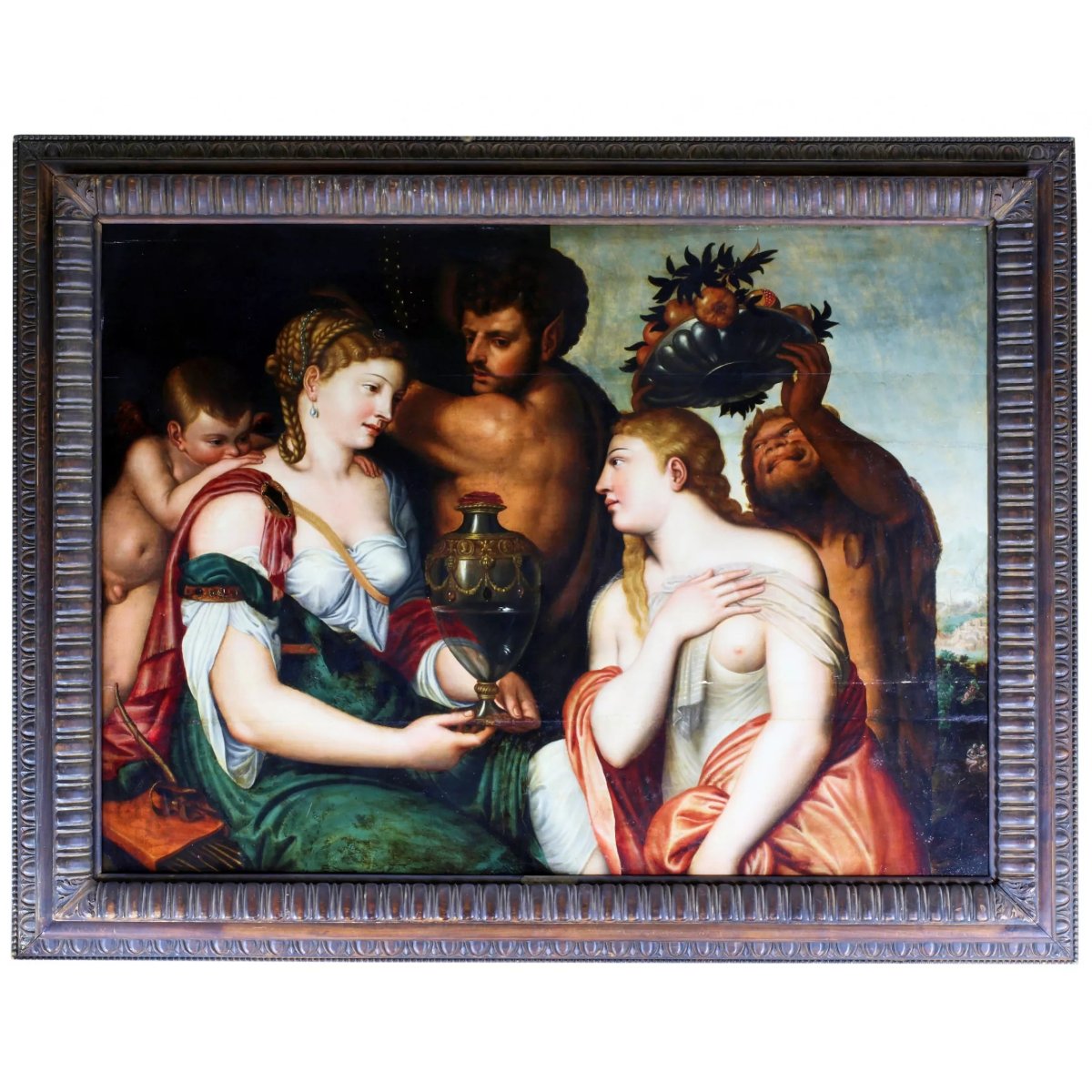
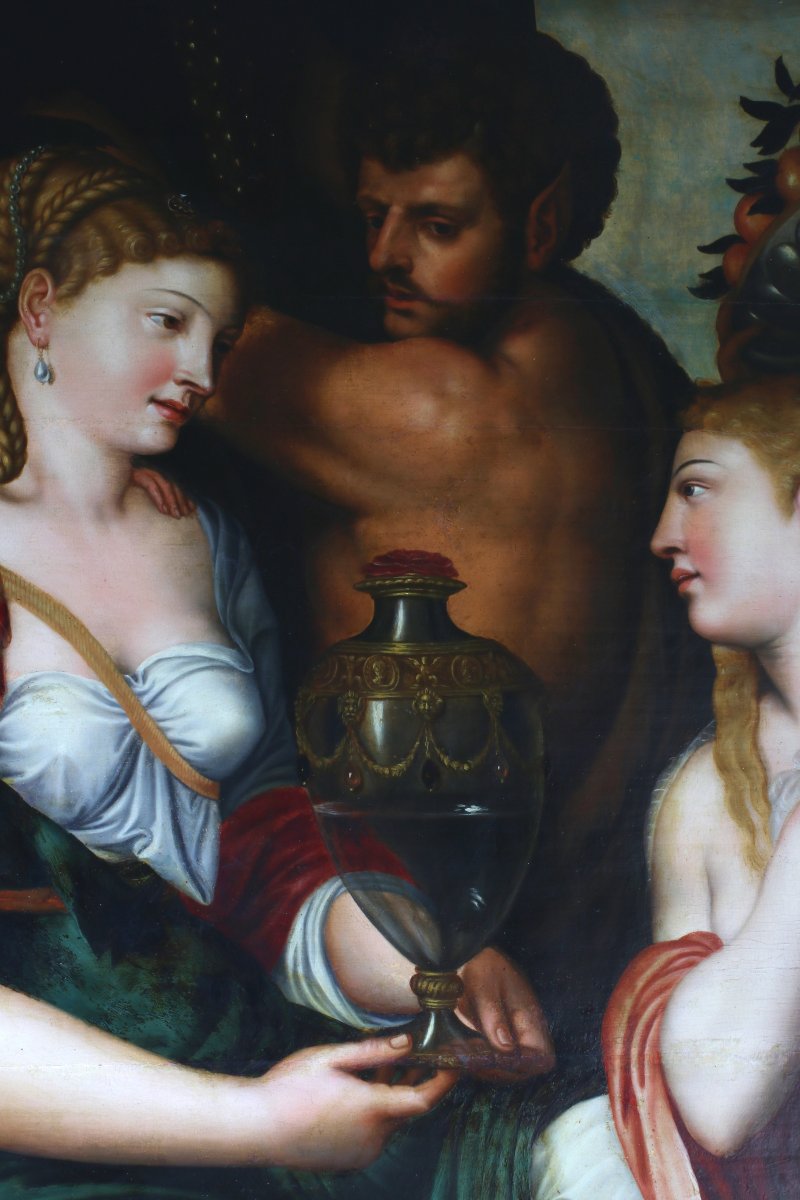
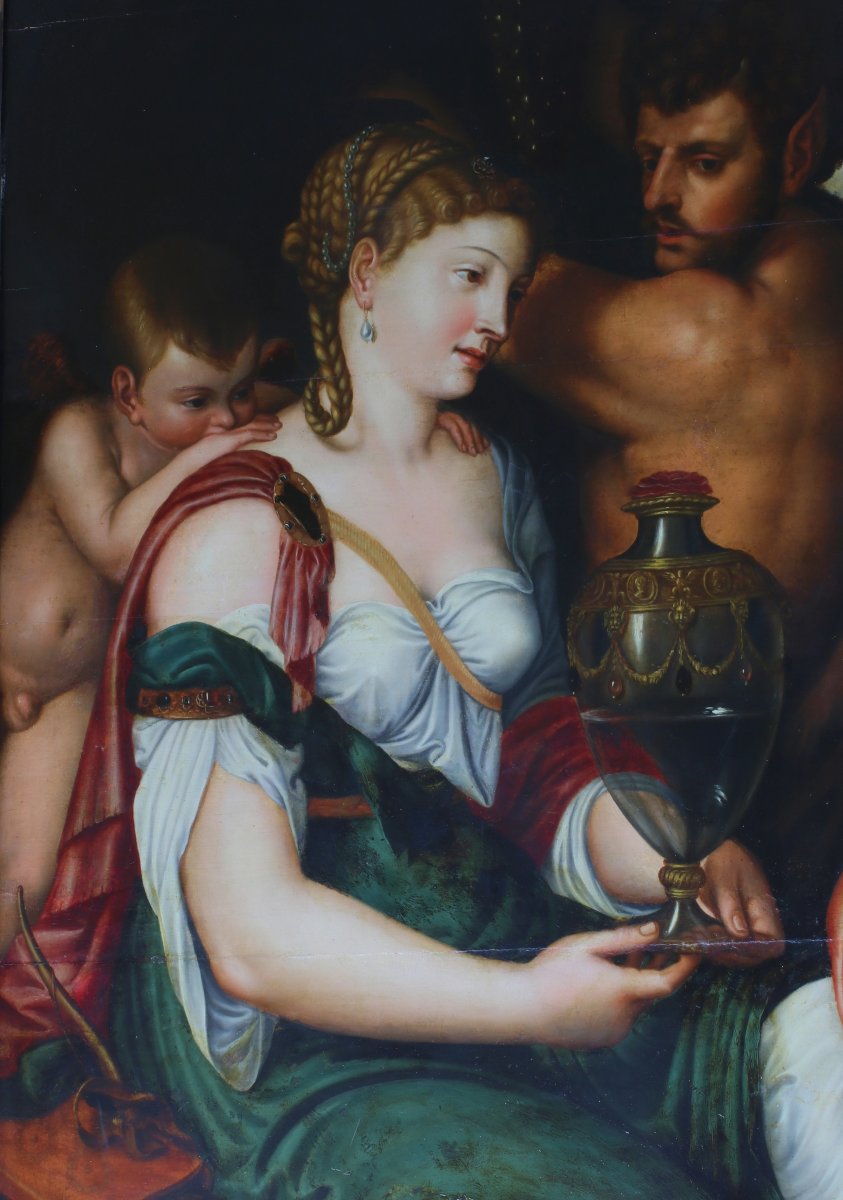
“The Cup of Ceres,” a major Flemish composition painted in oil on a wooden panel, is a remarkable example of the synthesis between the Italian Renaissance and Northern Mannerism. The composition is based on the ancient adage by Terence, *Sine Cerere et Libero friget Venus*, which translates to “Without Ceres and Bacchus, Venus grows cold.” The conceptual structure of the scene unfolds through a harmonious triangular grouping of figures and a richly elaborated allegorical program.
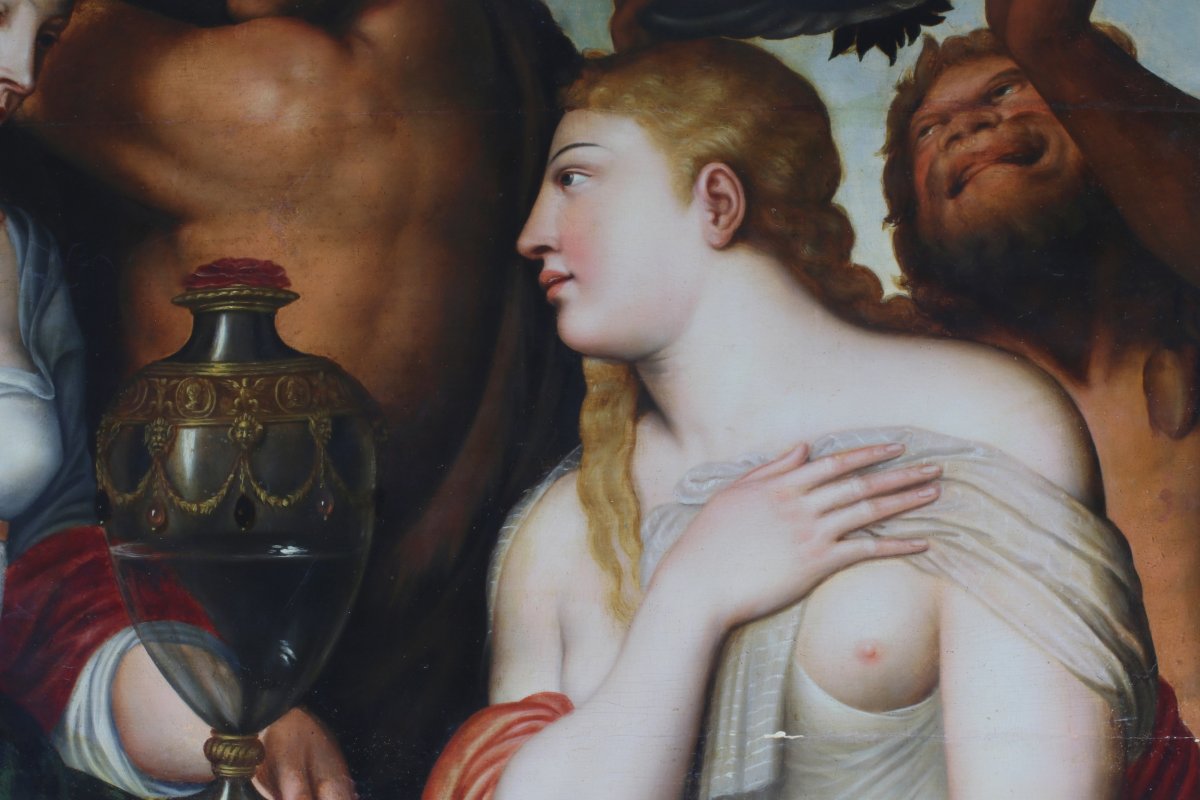
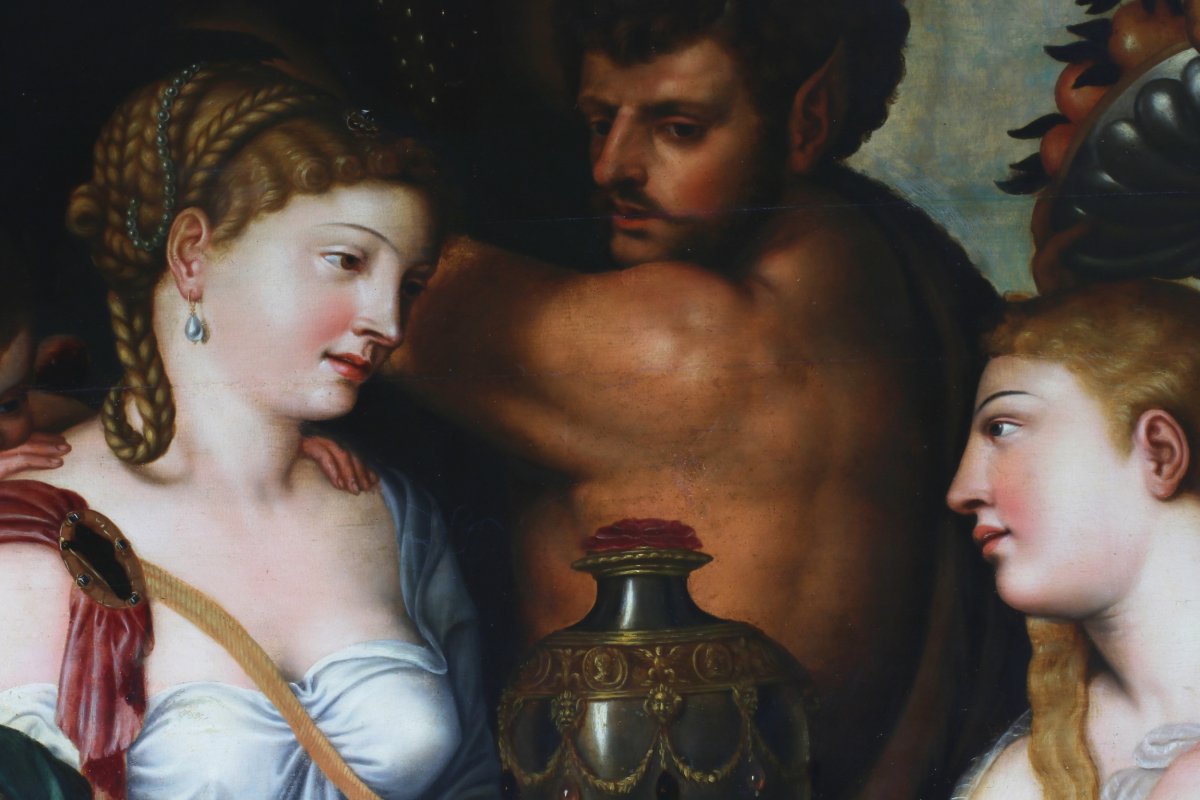
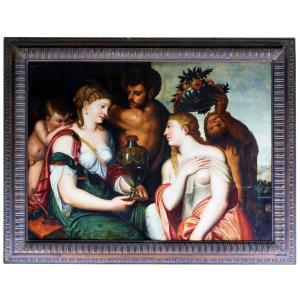
At the center of the composition stands a transparent urn crowned with a blooming rose, a symbol of vitality and love. On the left is a female figure draped in the classical style, accompanied by a Cupid perched on her shoulder. On the right stands a nude Venus, whose gesture emphasizes intimacy and sensuality. Behind them stands a faun, while in the background a bearded servant carrying a basket of fruit reinforces the theme of abundance and fertility. The mountainous landscape, animated by scenes related to the cult of Bacchus, expands the iconographic program. The color palette relies on the contrast between warm skin tones and fabrics in deep emerald and crimson red hues, emphasizing the sculptural modeling of the figures and revealing the influence of Italian sculpture adapted to the Northern European tradition.
According to the expert assessment by Dr. Ernst Wengenmayer, Munich, December 7, 1962, the work is an independent version of a similar composition housed in the Alte Pinakothek, acquired in 1792 by Elector Charles Theodore and formerly attributed to Titian’s workshop. According to the expert, this version was painted by Frans Floris shortly after his return from Italy, after 1540, and is distinguished by a modified mountainous background as well as iconographic details characteristic of the artist.
Dimensions: Height: 111 cm; Width: 149 cm
Material: Oil on wood panel
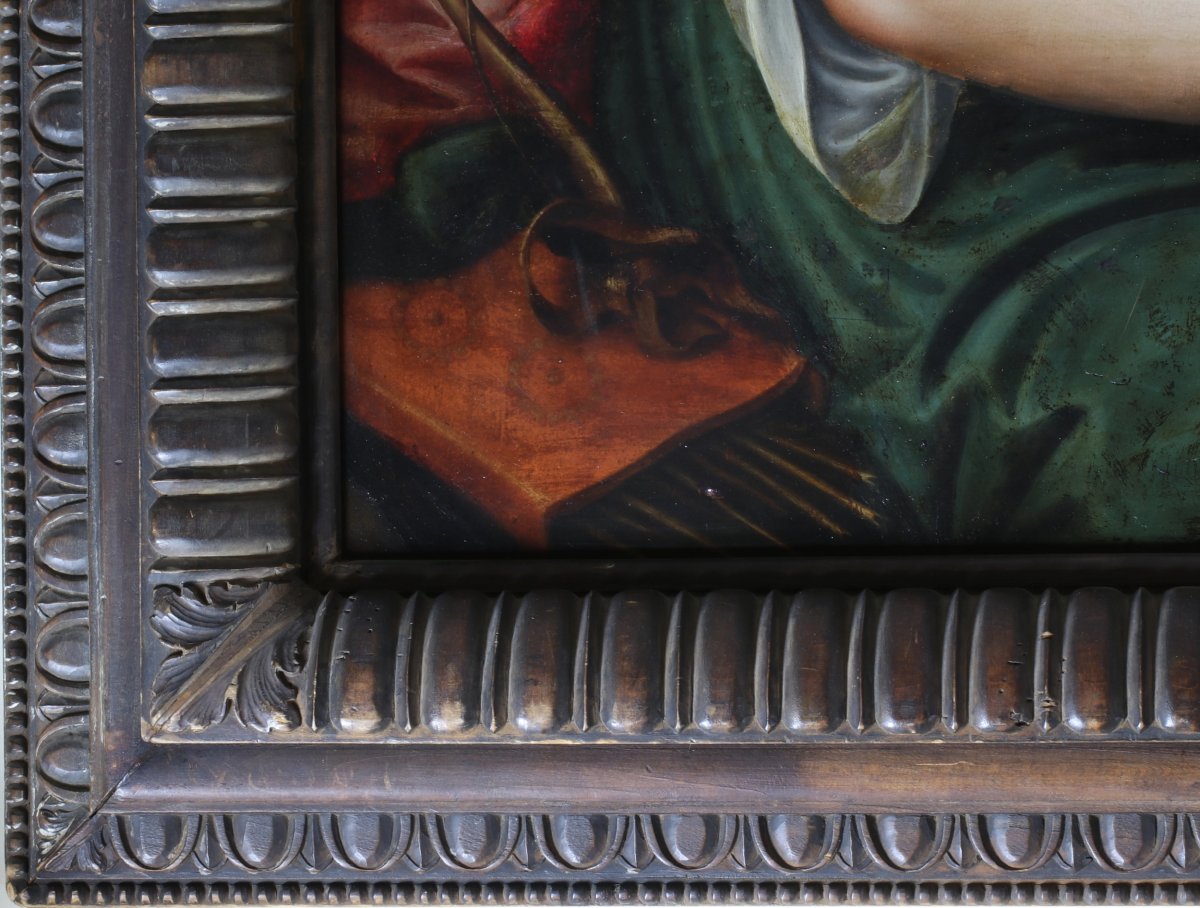
Condition: Traces of past restoration, slight loss of paint, historical structural reinforcement of the panel using parquetry. Overall, in very good condition considering its age. Presented in an old carved frame.
Provenance: European private collection. Acquired at an auction at Schloss Alden, Germany.
Appraisal: Dr. Ernst Wengenmayer, Munich, December 7, 1962; attributed to Frans Floris de Vriendt.
Period: 16th century
Style: Other Style
Condition: Good condition
Width: 150
Diameter: 10
Height: 112
Reference (ID): 1825548
Availability: In stock