

Neoclassical Alabaster Tazza . Italy, Late 19th Century
NEOCLASSICAL ALABASTER TAZZA. ITALY, LATE 19TH CENTURY
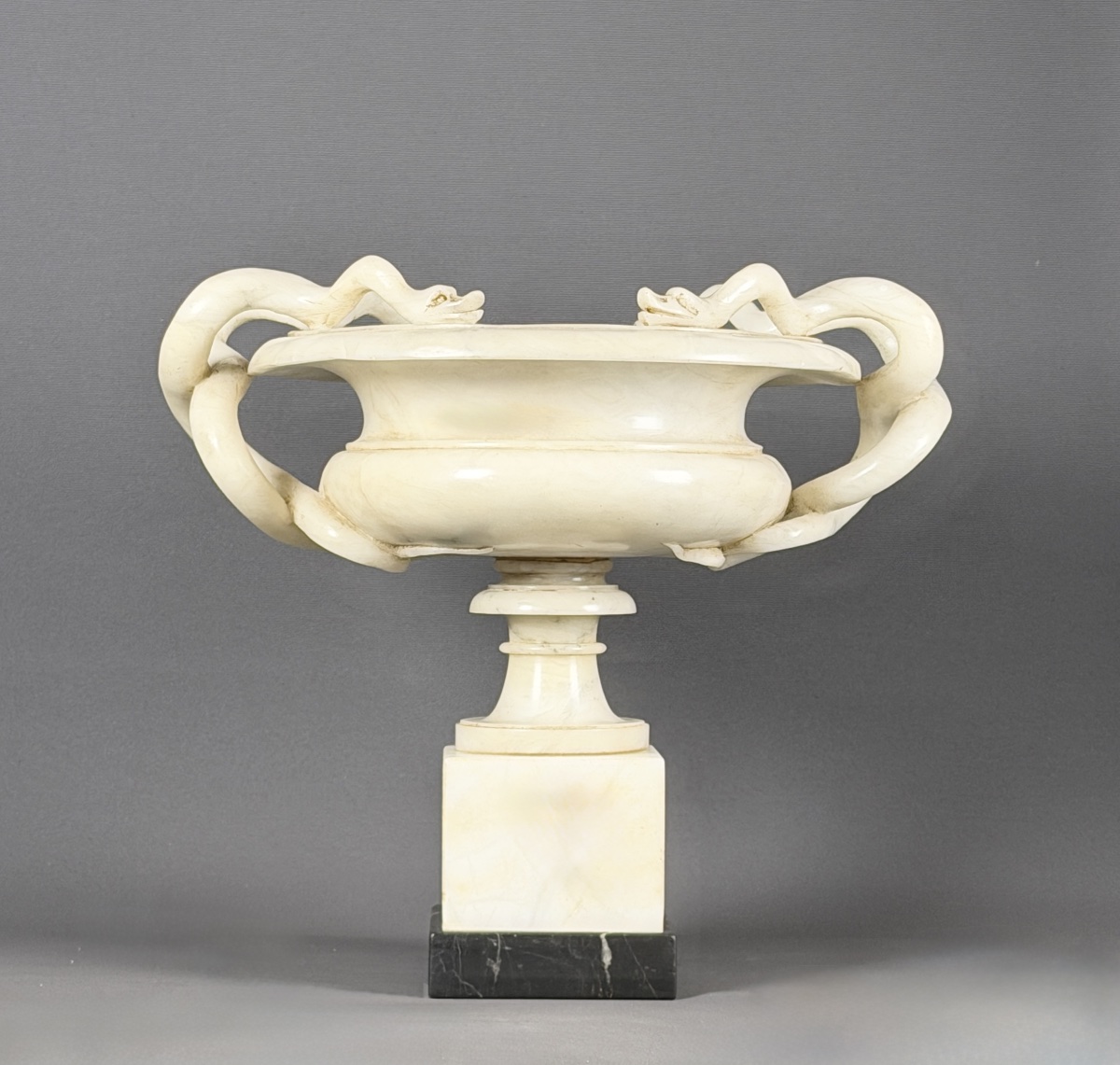
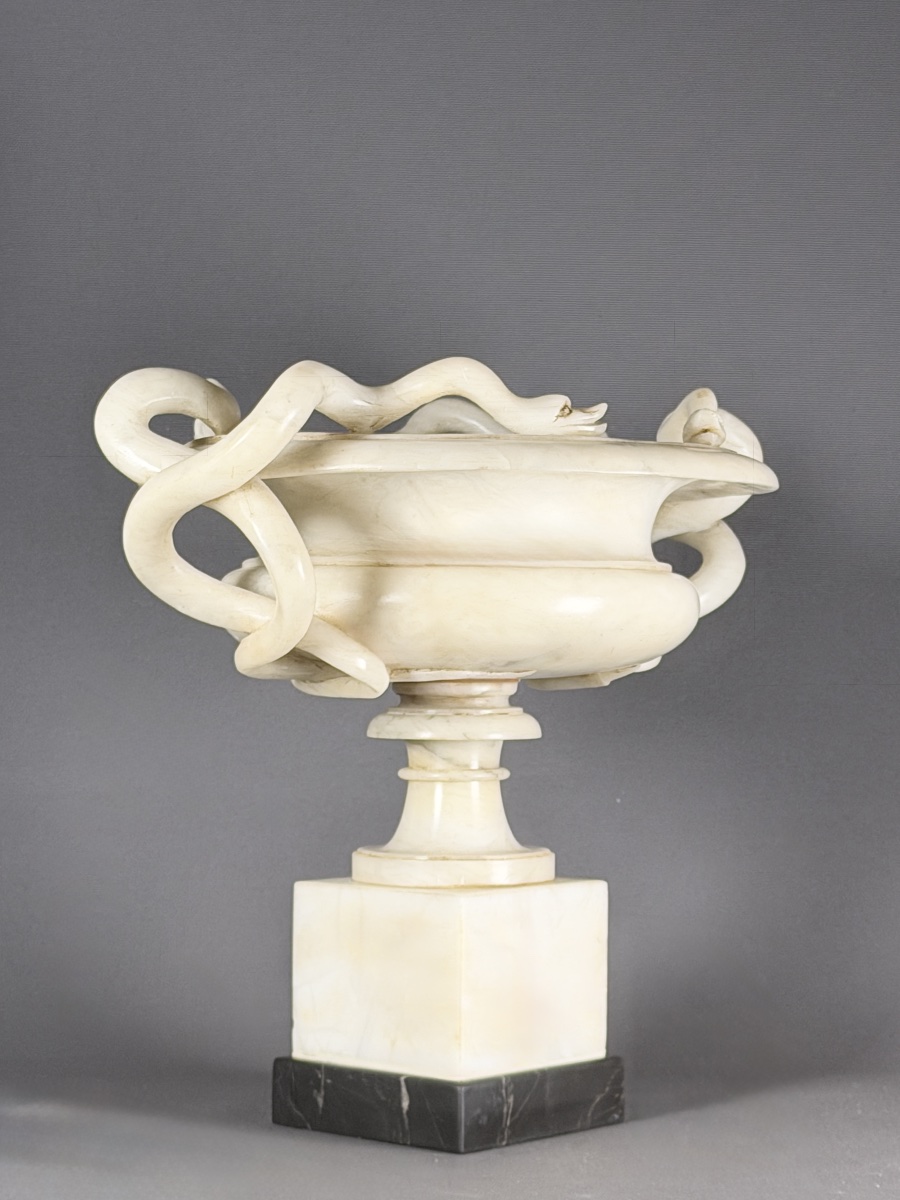
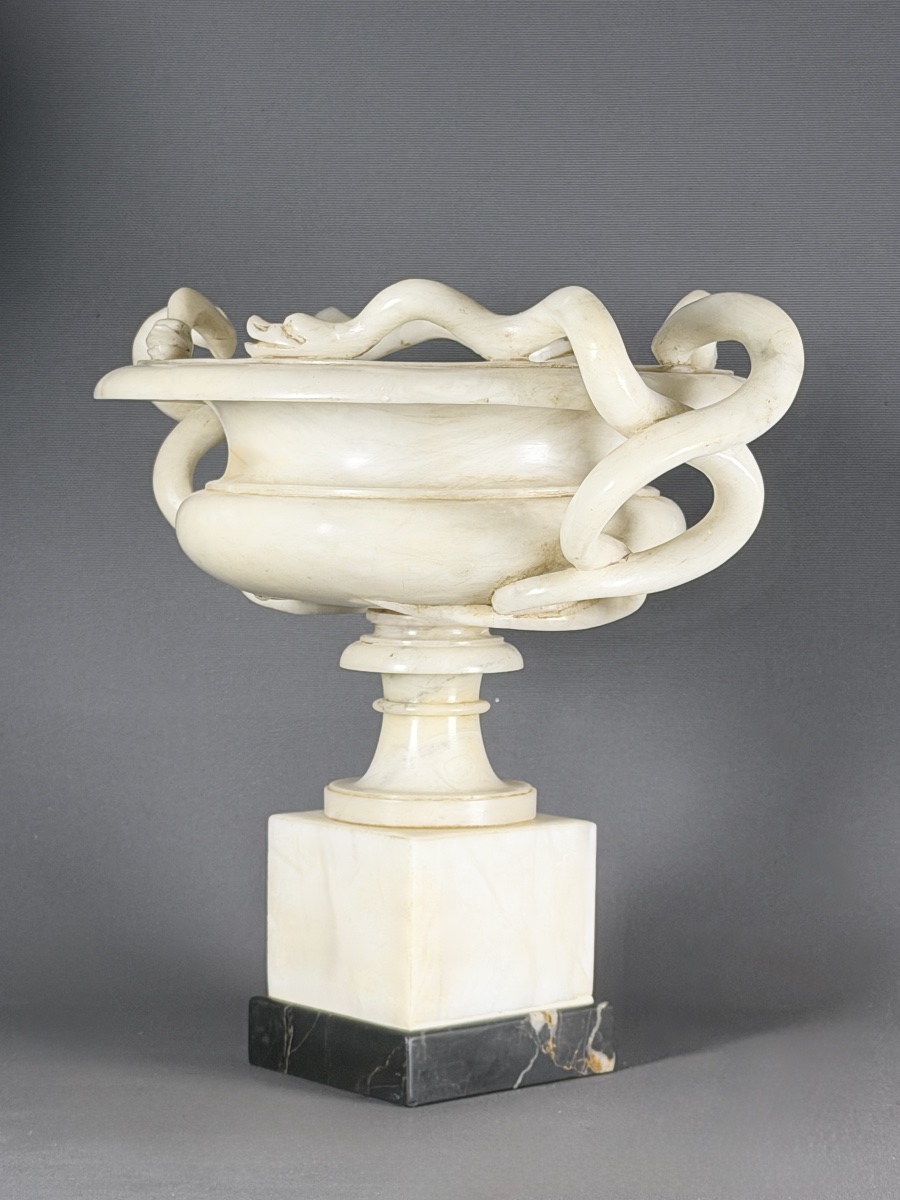
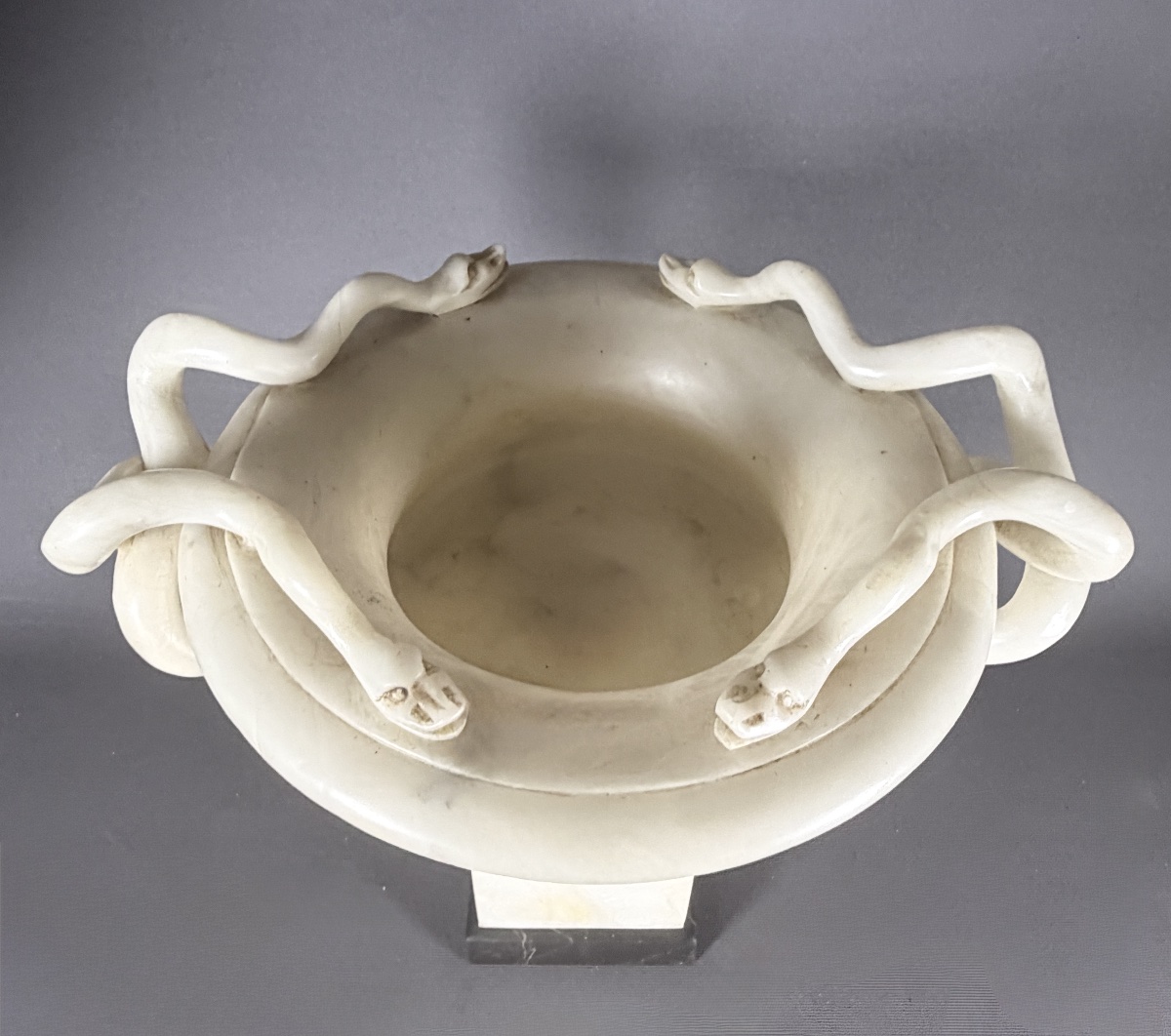
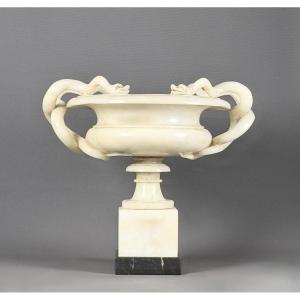
Carved in alabaster, the circular bowl rests on a moulded stem, itself supported by a square alabaster base standing on a black marble plinth. The finely sculpted side handles take the form of intertwined serpents, their sinuous bodies curling around the upper rim before meeting and confronting one another.
Height: 30 cm.
Width: 35 cm.
This elegant tazza belongs to the tradition of decorative objects produced in Italy for the amateurs and collectors of the Grand Tour, the educational journey of artistic and cultural discovery undertaken by the European aristocracy and upper classes during the 18th and 19th centuries.
Italy, and particularly the renowned centres of Florence and Volterra, developed an important production of decorative alabaster objects, a material especially prized for its translucency, fine grain and the softness it lends to carved forms.
The motif of intertwined serpents forming the handles draws upon the ornamental vocabulary of Classical Antiquity, whose forms were extensively reinterpreted by Neoclassical artists and craftsmen. The rediscovery of ancient remains during the excavations at Pompeii and Herculaneum, in particular, contributed from the 18th century onwards to the renewal of this decorative vocabulary and to its popularity among Grand Tour collectors.
Period: 19th century
Style: Rome and Antic Greece
Condition: Excellent condition
Material: Alabaster
Width: 35 cm
Height: 30 cm
Reference (ID): 1825458
Availability: In stock