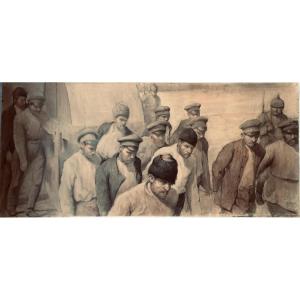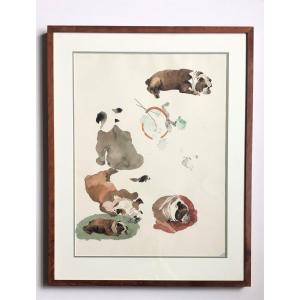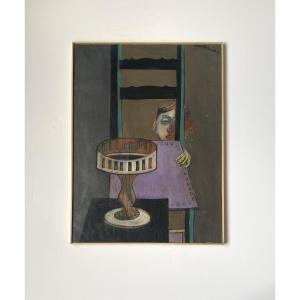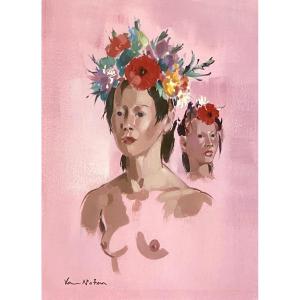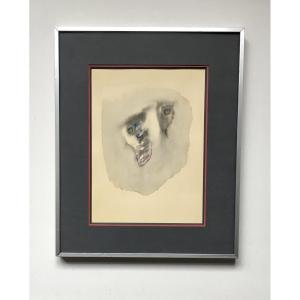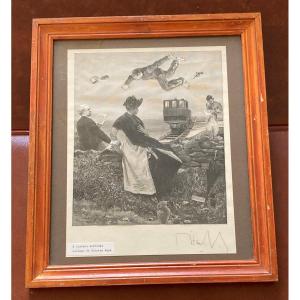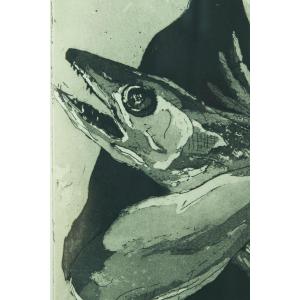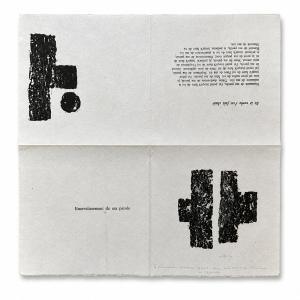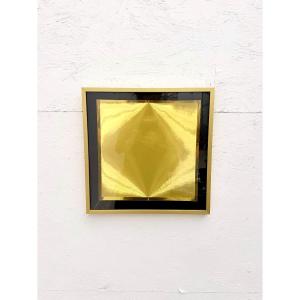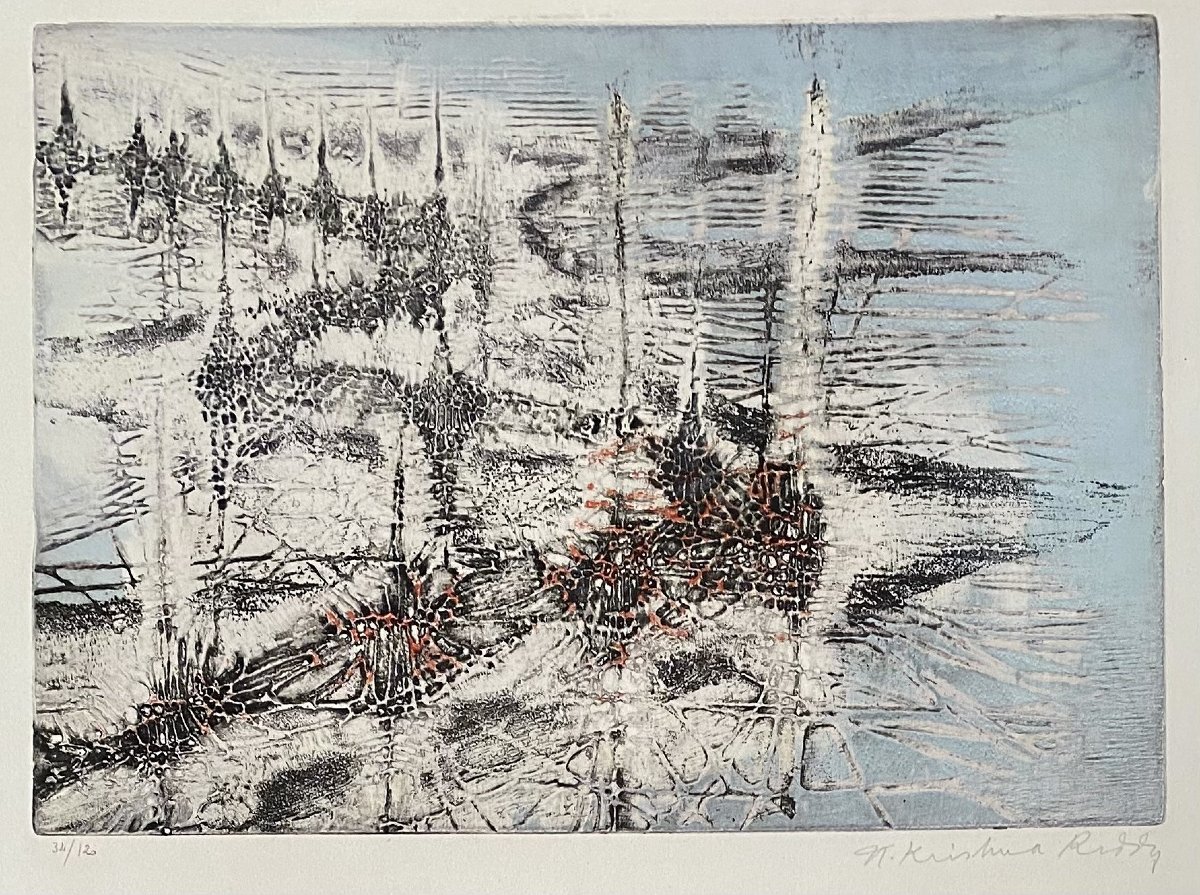
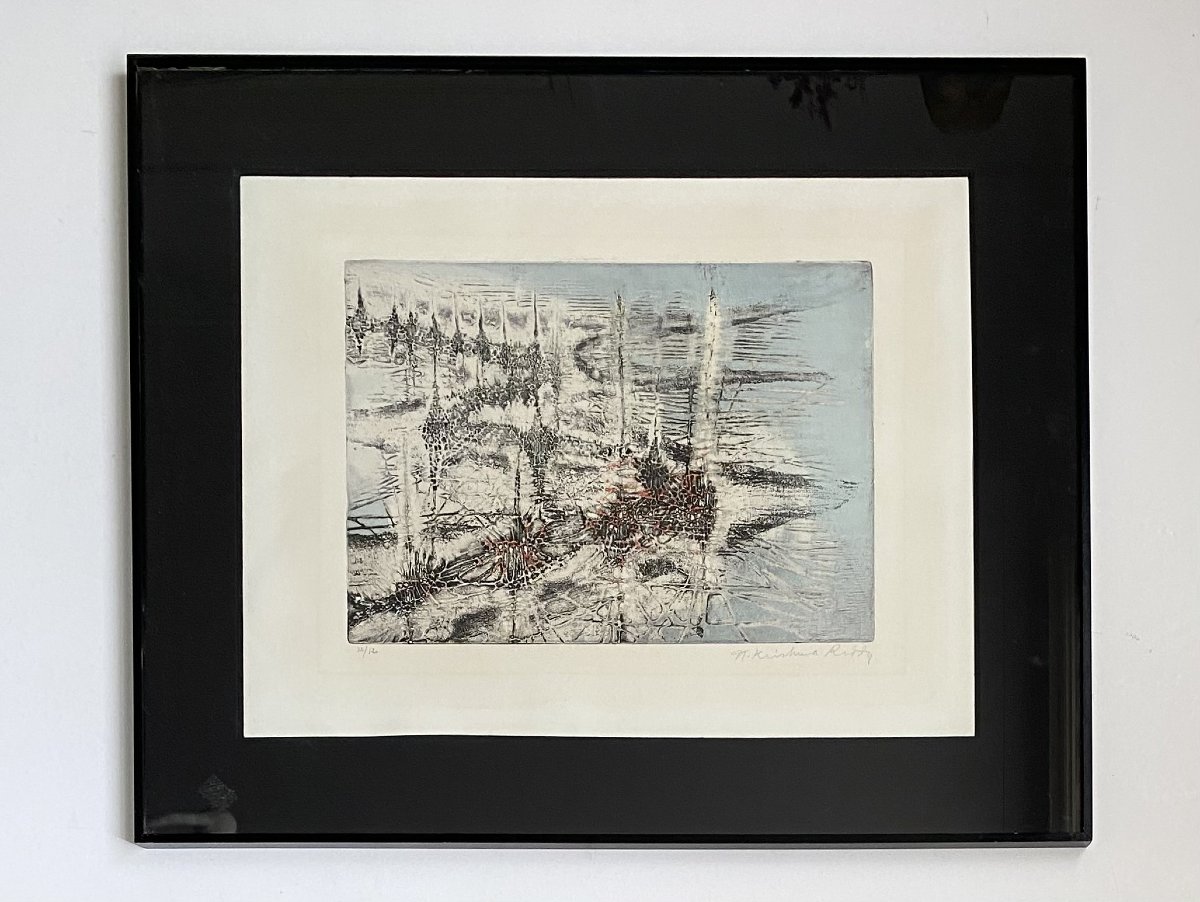
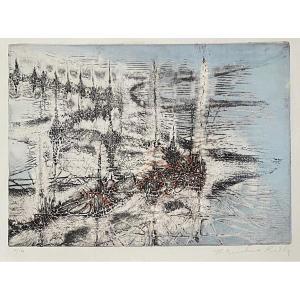


Krishna Reddy (nandanoor, India, 1925 – New York, United States, 2018). "river." 1959. Engraving.
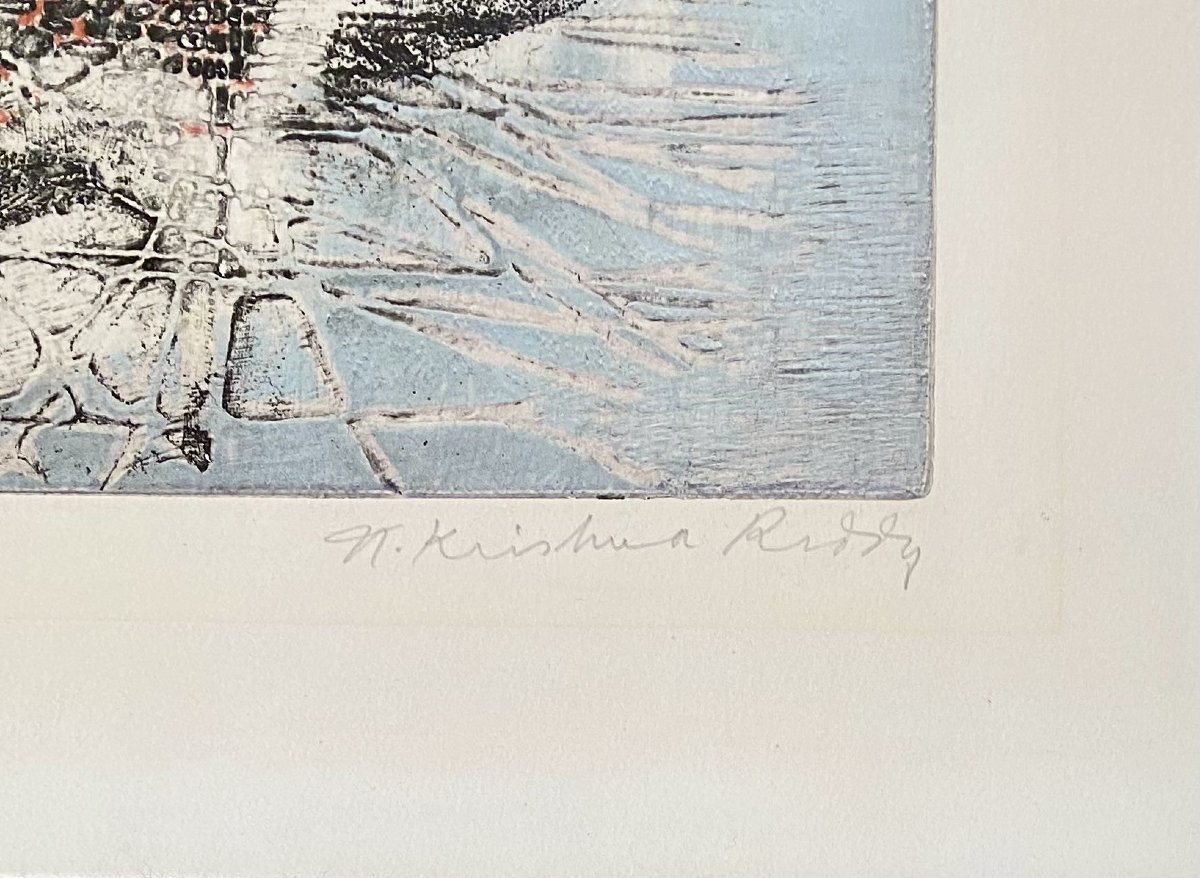
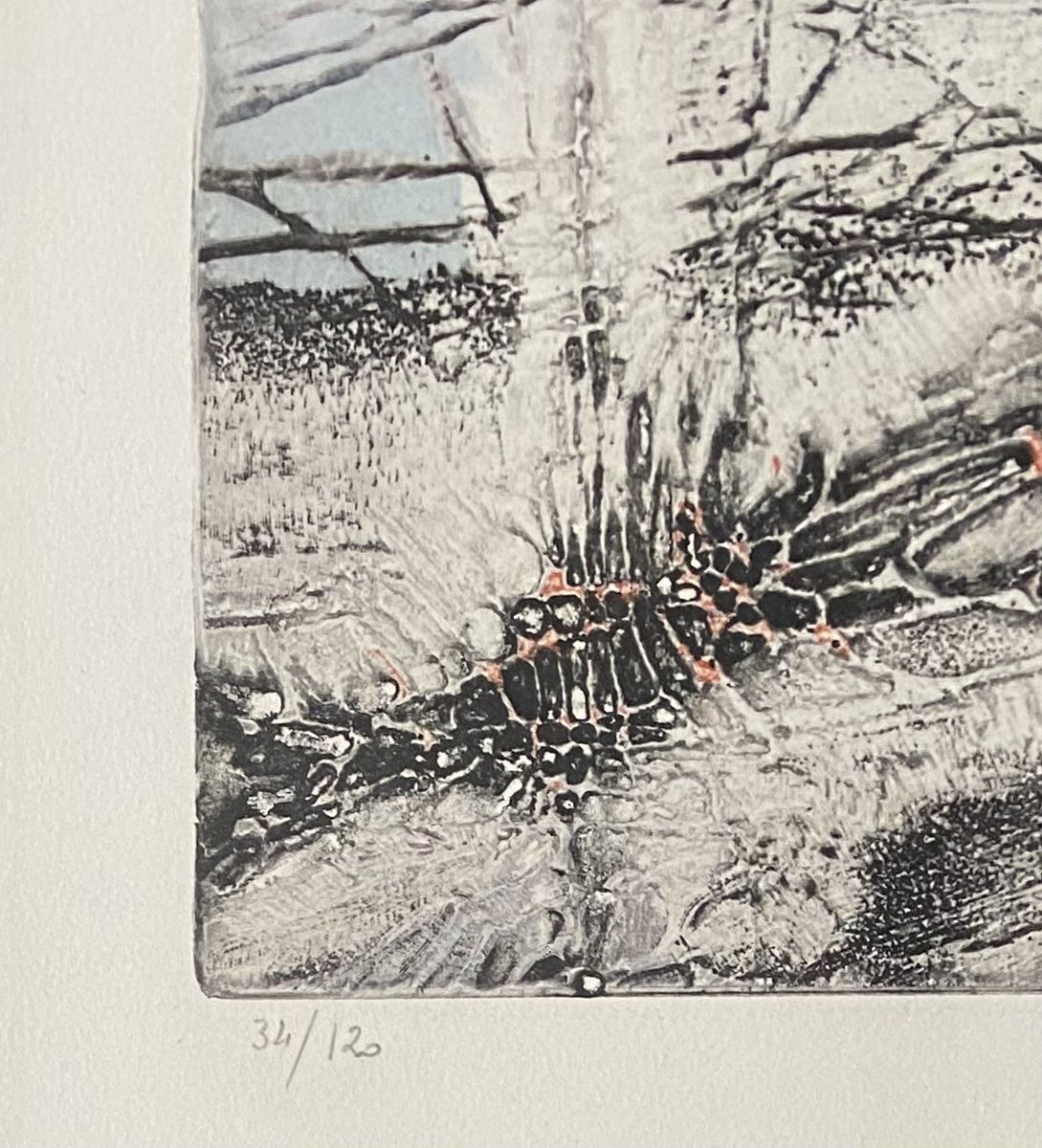
Visible dimensions of the color engraving: 49 x 64 cm. Signed, numbered 34/120.
The colors are vibrant. A few slightly yellowed spots in the margins. All photographs were taken through the glass, which explains some of the reflections.
Krishna Reddy (Nandanoor, India 1925 – New York, United States 2018).
From 1941 to 1946, Reddy studied at the Institute of Fine Arts (Kala Bhavana) at Visva-Bharati University under Nandalal Bose and earned a degree in fine arts. From 1947 to 1949, he headed the art department at the Kalakshetra Foundation and also taught art at the Montessori Teacher Training Center in Madras. It was during this period that he developed an interest in sculpture and painting.
In 1949, he moved to London and continued his studies in sculpture under Henry Moore at the Slade School of Fine Arts at the University of London. In 1950, Reddy moved to Paris and met the artist Constantin Brâncuși. Through Brâncuși, he discovered artistic discussions in cafés and met many famous artists during studio visits. During his stay in Paris, he studied sculpture under Ossip Zadkine and printmaking under Stanley William Hayter.
In 1957, he went to the Brera Academy of Fine Arts in Milan to study under Marino Marini. In 2016, he was among the artists featured in the exhibition “Studio and Legacy: Stanley William Hayter, Krishna Reddy, Zarina Hashmi” at the Metropolitan Museum of Art. His works are part of the permanent collection of the National Gallery of Art in Washington, D.C.
Reddy was considered a master of intaglio printmaking, and after 1965, he served as assistant director of Hayter’s Atelier 17.
Reddy’s technique and style distinguished him as an important printmaker. His abstract prints are created from subtle grid-like patterns on plates with complex textures. The myriad of complex colors he introduced into his prints reflects a contemplative approach to the infinite mysteries of nature. At Atelier 17, Reddy played a pivotal role in developing a new printing process that allowed for the production of multicolored prints from a single plate by exploiting the viscosity and adhesion of the inks; a process that was later named viscosity printing.
Period: 20th century
Style: Design 50's and 60's
Condition: Good condition
Material: Paper
Length: 84 cm
Height: 69 cm
Reference (ID): 1824775
Availability: In stock