THIS OBJECT WAS SOLD
Burgundy? Early 15th Cty Polychrome St. Eloi Stone Carved, Patron Saint Of Blacksmiths


HAUTE EPOQUE
SCULPTURE
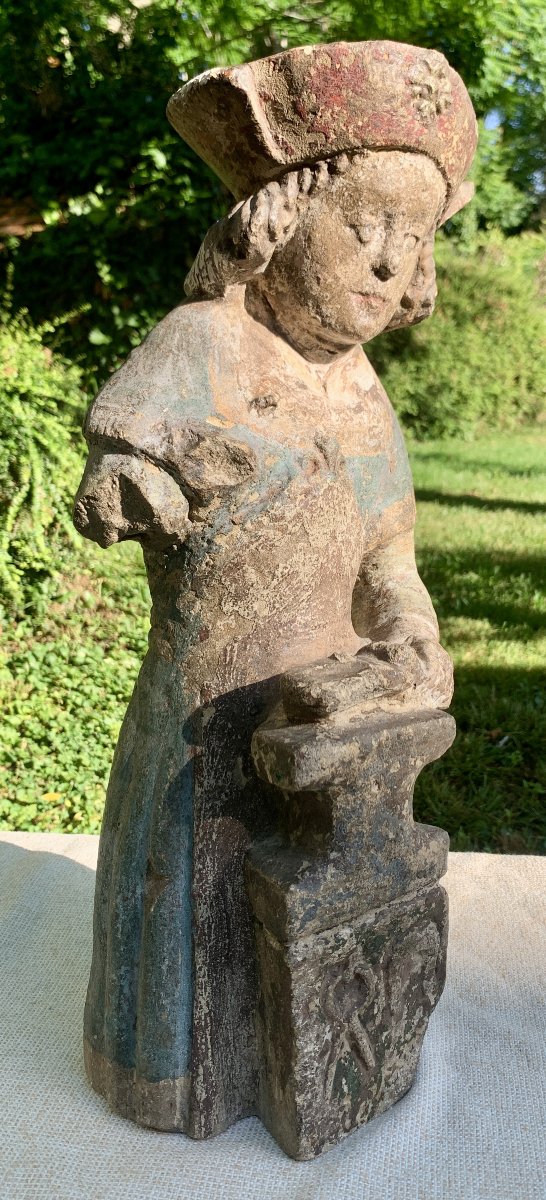
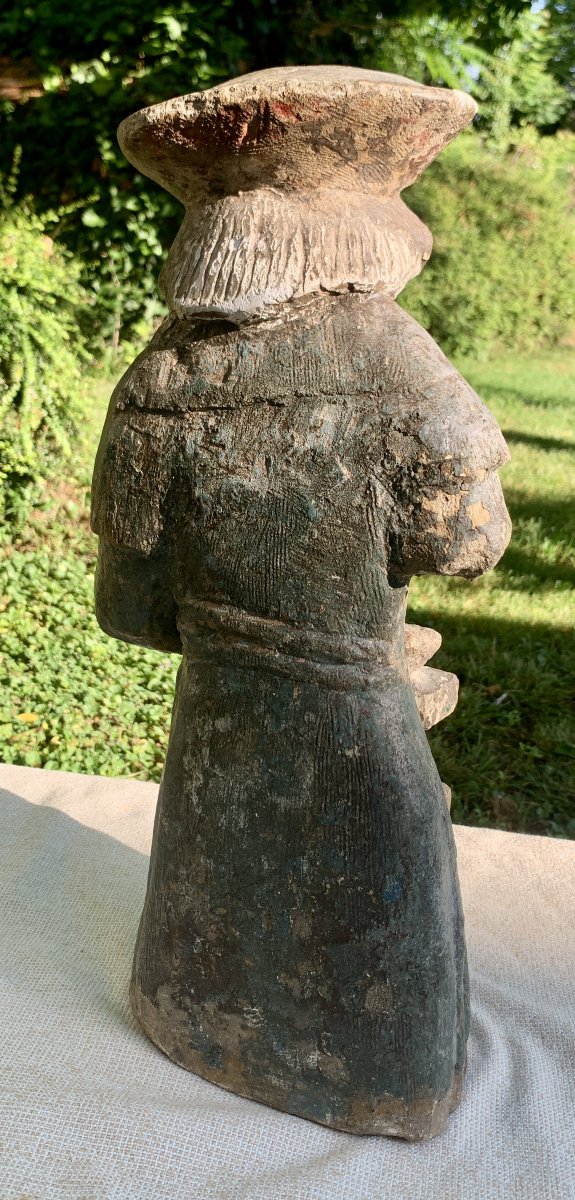
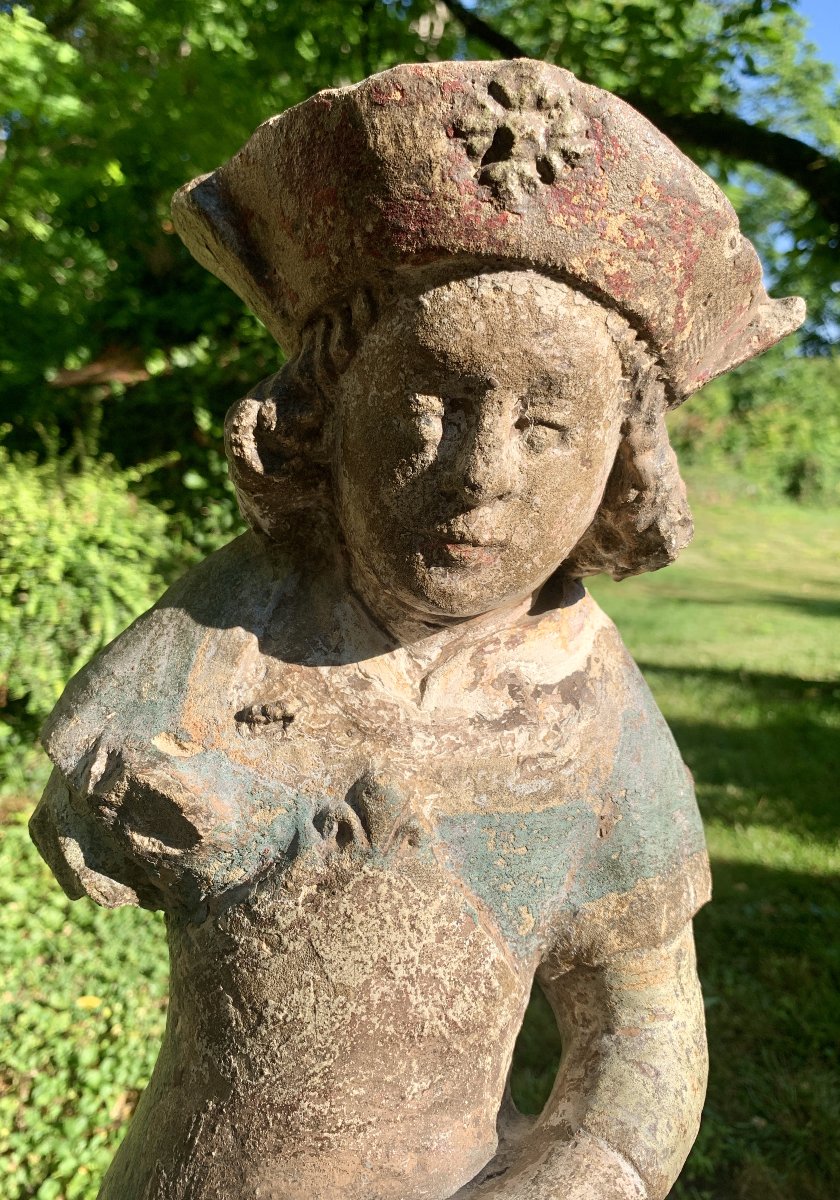
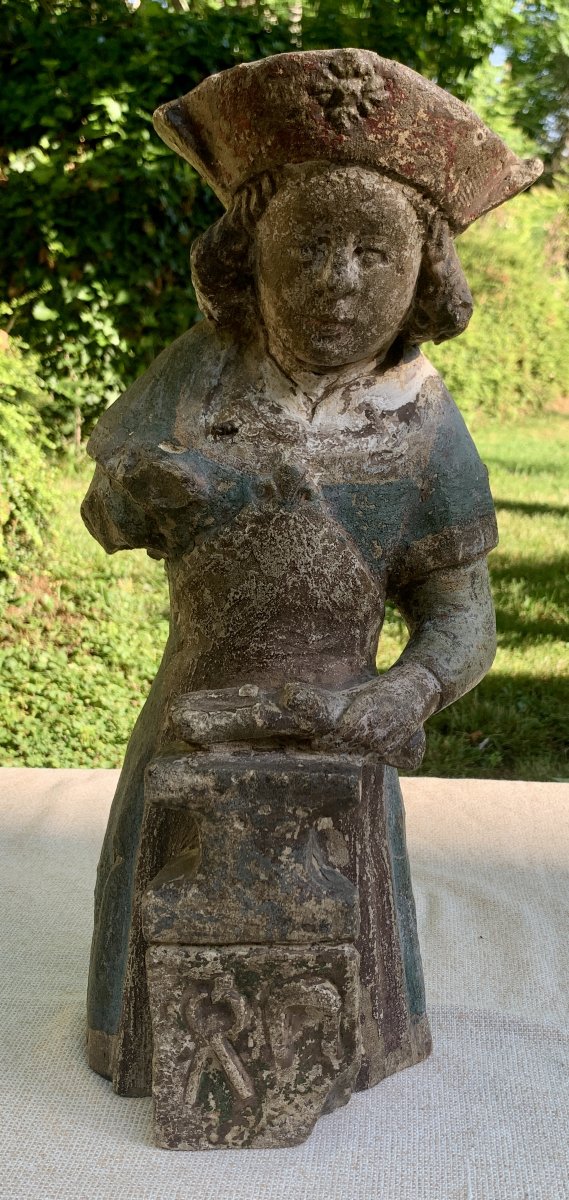
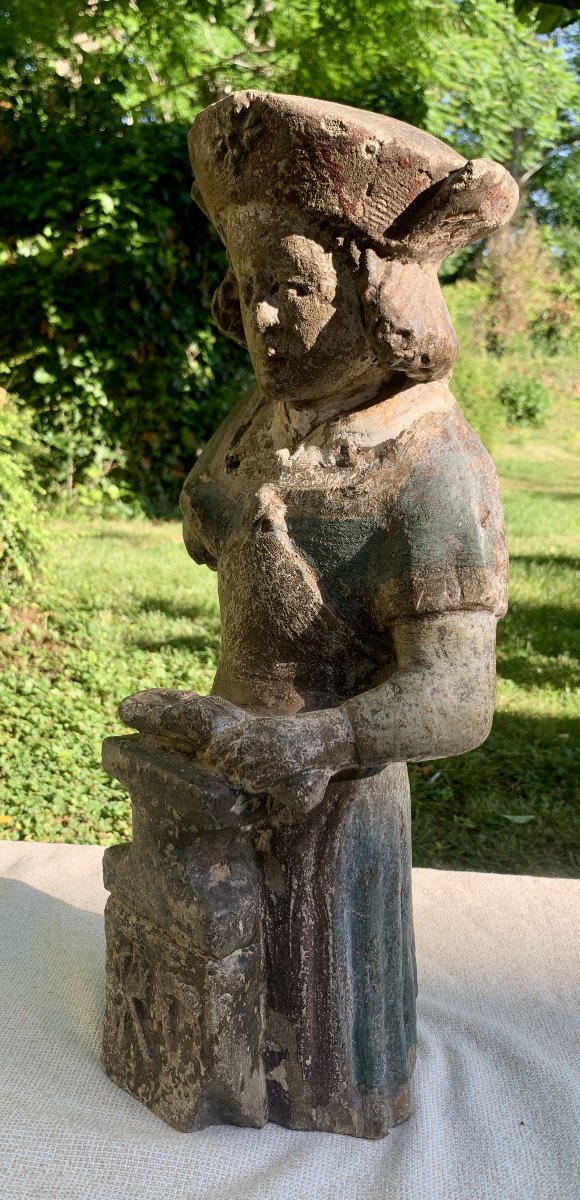
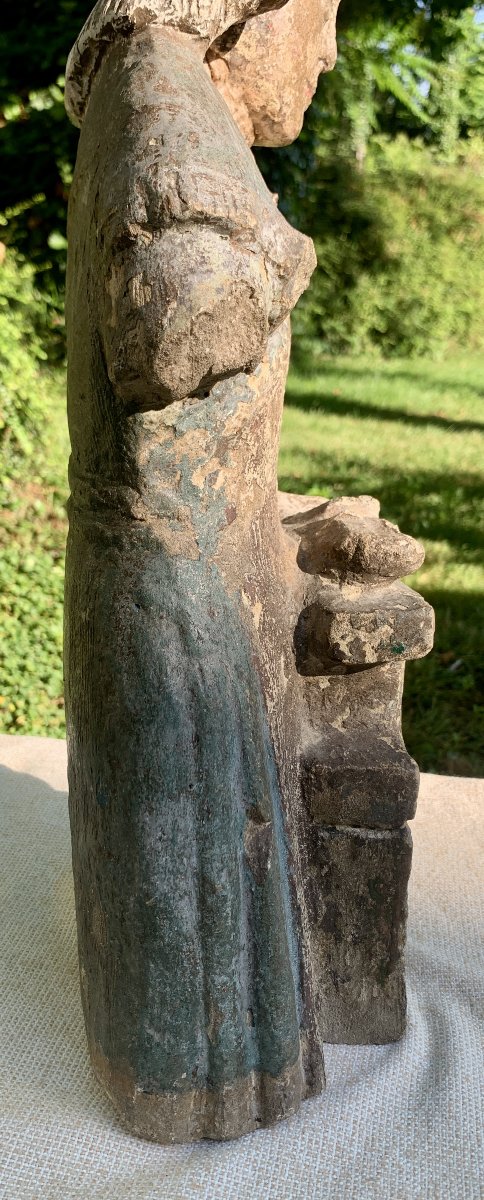
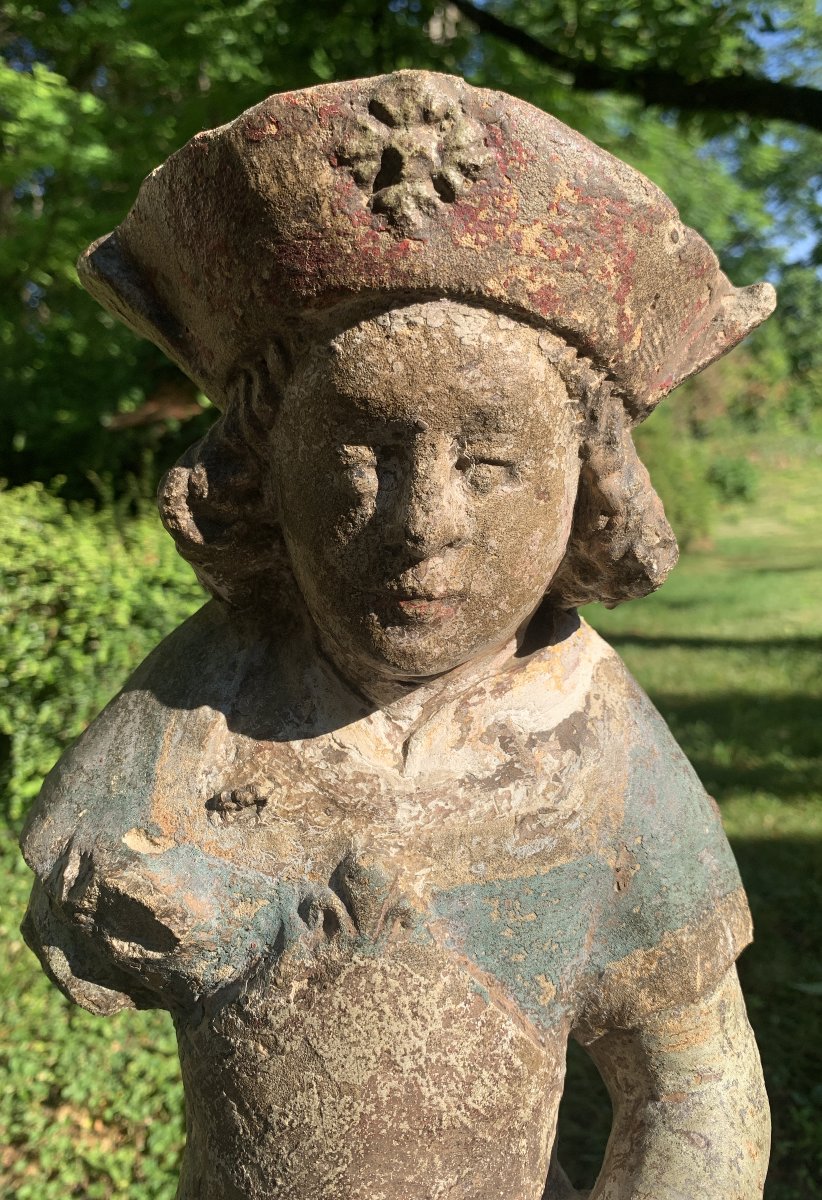
A superb stone sculpture depicting St. Eloi, patron saint of the blacksmiths’ guild, working at his anvil.
Burgundy?
Early 15th century
Condition:
Despite the absence of his right arm, one can easily imagine the artisan at work, holding his tool aloft to hammer his creation.
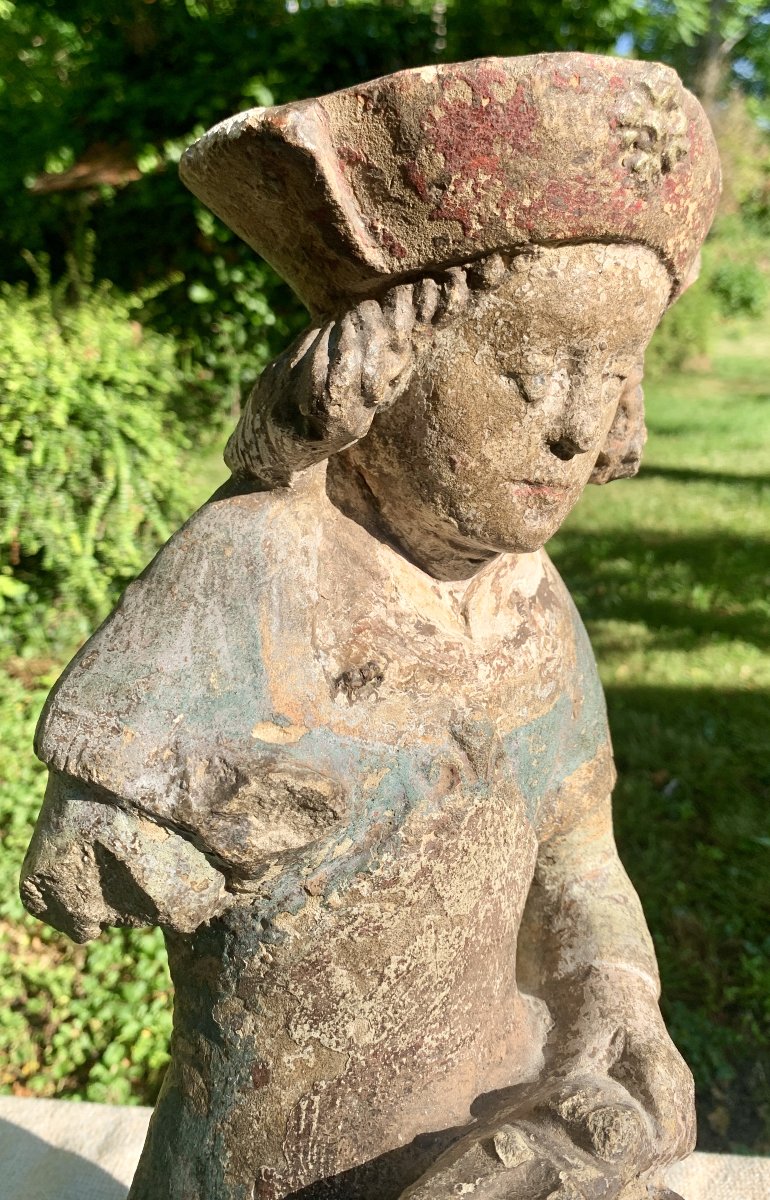
The polychromy is very well preserved, sky blue (his cloak and garment), white, and red (hat)
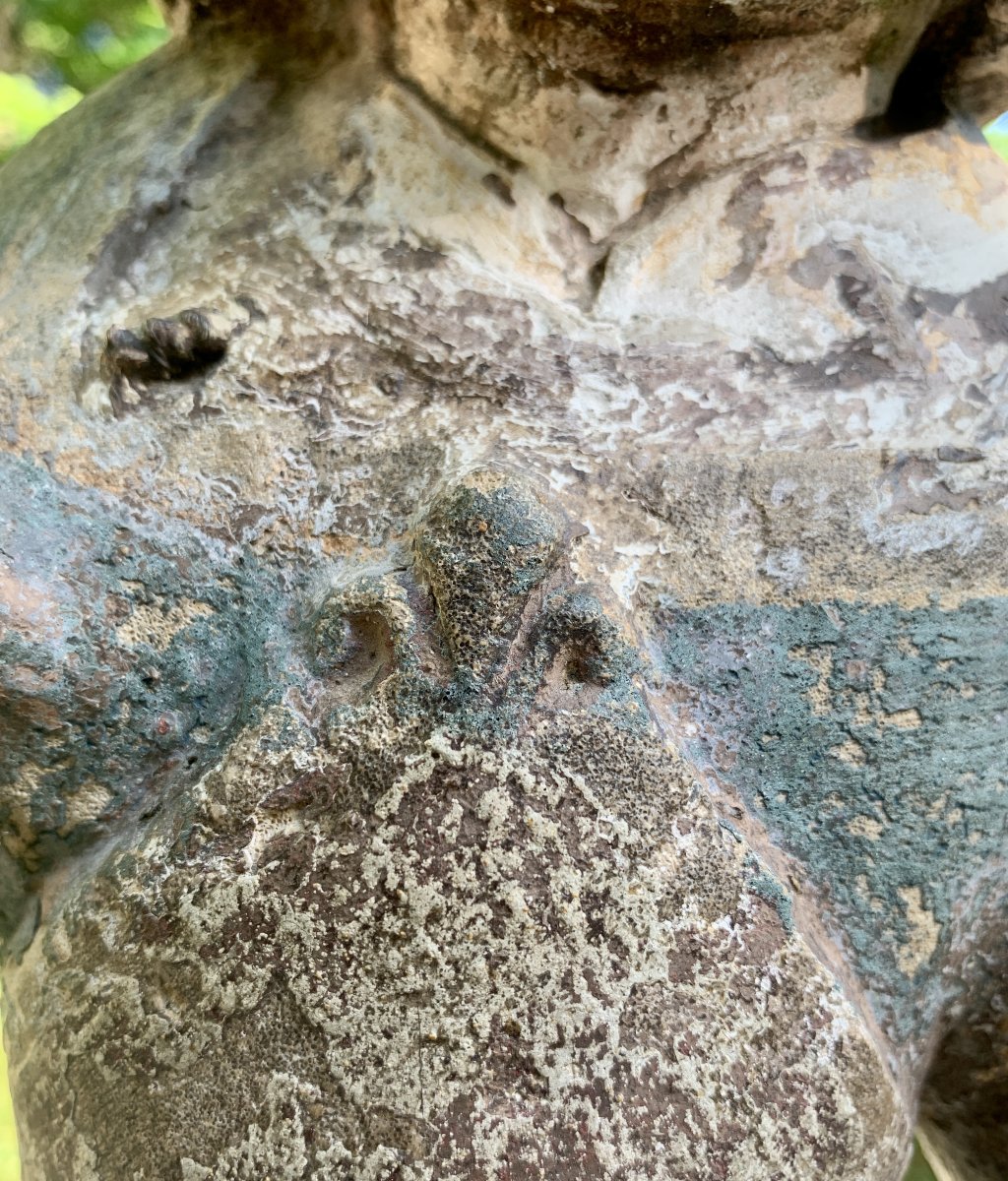
The hat is adorned with a relief star, while St. Eloi’s cloak is fastened around his neck with a fleur-de-lis.
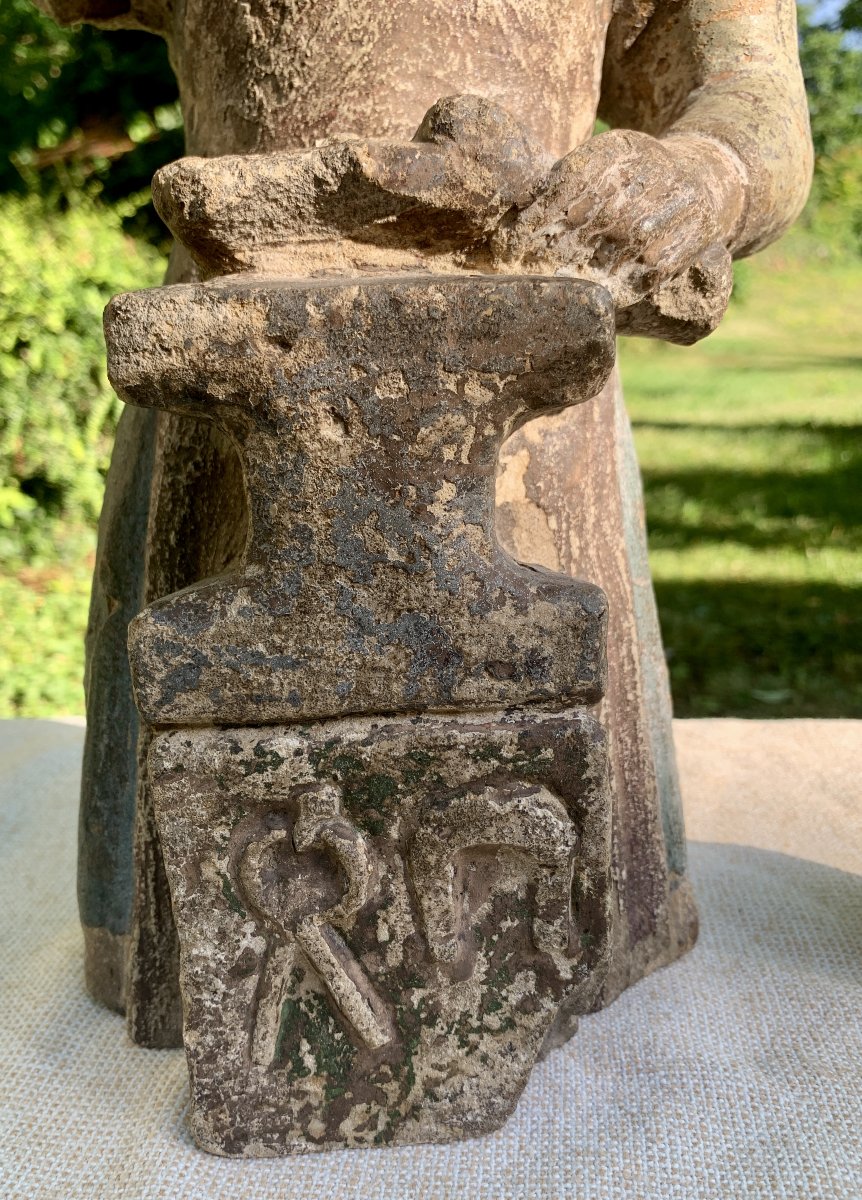
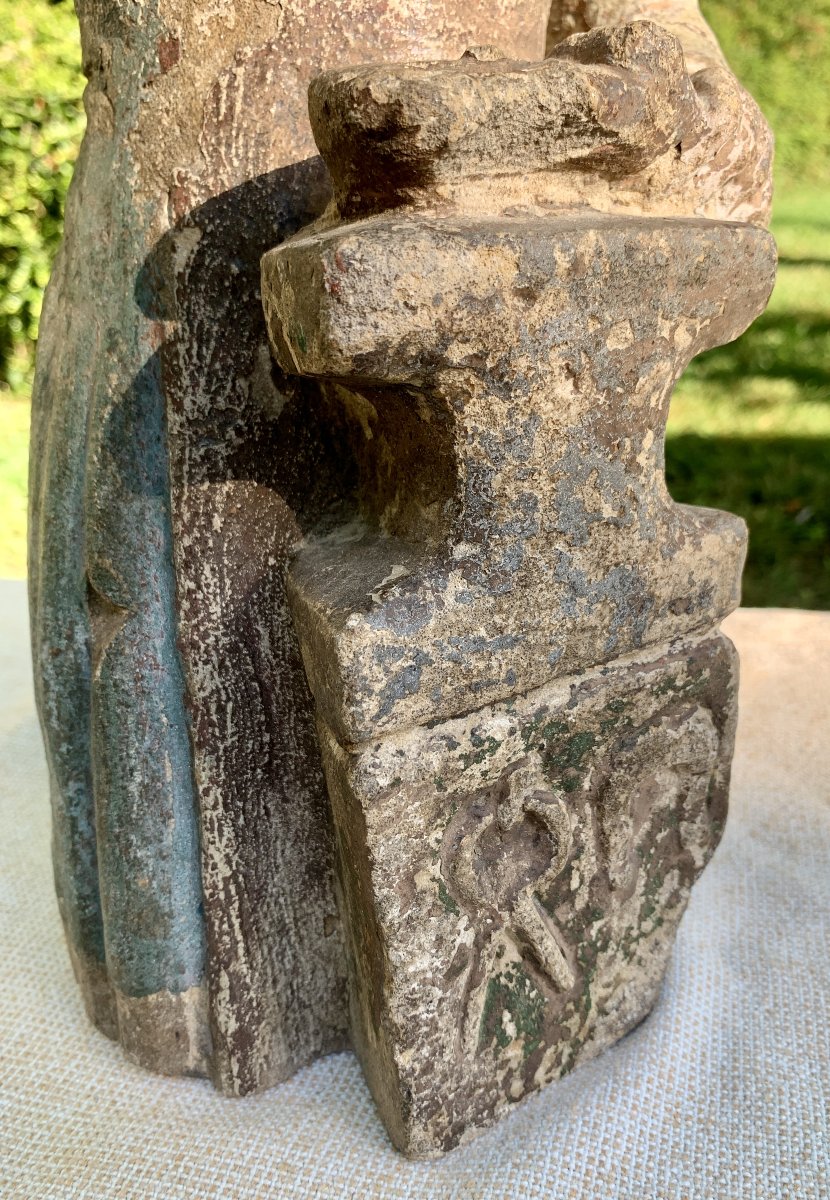
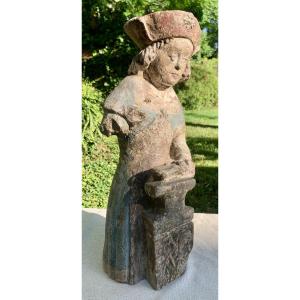
The anvil is Gothic in shape and is decorated on its front with tools—including, it appears, a pair of pliers.
Dimensions
https://www.alat.fr/documentation-alat-traditions-saint-eloi.htm
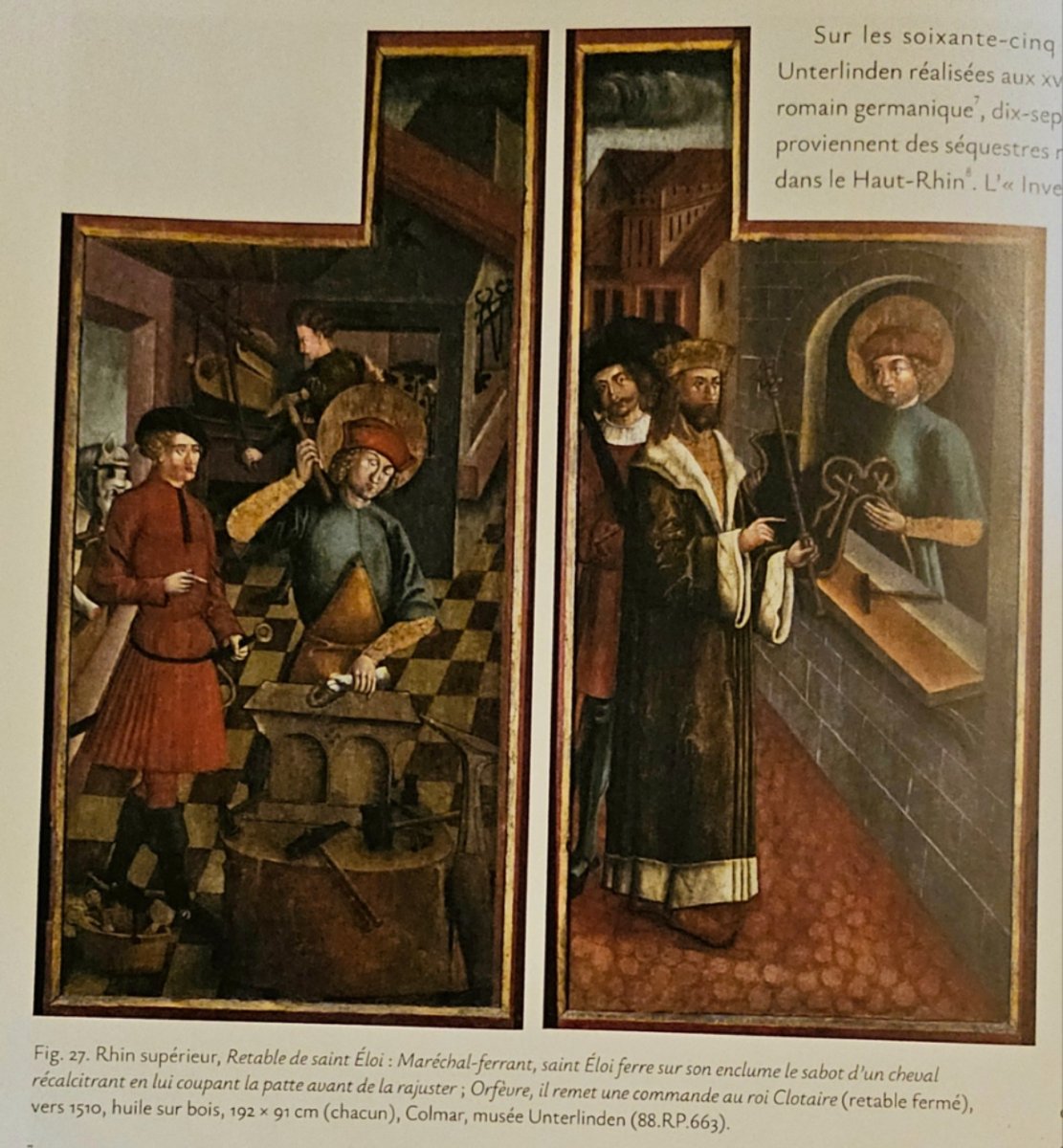
Saint Éloi (around 588 – 660) was born in Chaptelat near Limoges, into a family that had been Christian for generations. His father apprenticed him in Limoges with Abbon, a well-known goldsmith. Then he went to work for the goldsmith Bobbon, who received an order from King Clotaire II to make a golden throne decorated with precious stones. Éloi's skill led to him being chosen for the task. Making the best use of the gold he was given, Éloi created not one throne, but two. He was admired not only for the quality of his work but even more for his honesty. The king made him one of his minister-advisors and later put him in charge of minting the royal coins. At the same time, Éloi continued his goldsmith work, creating many masterpieces of sacred and funeral art. After Dagobert died in 633, he entered the clergy and was called to the bishopric of Noyon, where he devoted himself to evangelizing pagans. ...
SCULPTURE
A superb stone sculpture depicting St. Eloi, patron saint of the blacksmiths’ guild, working at his anvil.
Burgundy?
Early 15th century
Condition:
Despite the absence of his right arm, one can easily imagine the artisan at work, holding his tool aloft to hammer his creation.
The polychromy is very well preserved, sky blue (his cloak and garment), white, and red (hat)
The hat is adorned with a relief star, while St. Eloi’s cloak is fastened around his neck with a fleur-de-lis.
The anvil is Gothic in shape and is decorated on its front with tools—including, it appears, a pair of pliers.
Dimensions
https://www.alat.fr/documentation-alat-traditions-saint-eloi.htm
Saint Éloi (around 588 – 660) was born in Chaptelat near Limoges, into a family that had been Christian for generations. His father apprenticed him in Limoges with Abbon, a well-known goldsmith. Then he went to work for the goldsmith Bobbon, who received an order from King Clotaire II to make a golden throne decorated with precious stones. Éloi's skill led to him being chosen for the task. Making the best use of the gold he was given, Éloi created not one throne, but two. He was admired not only for the quality of his work but even more for his honesty. The king made him one of his minister-advisors and later put him in charge of minting the royal coins. At the same time, Éloi continued his goldsmith work, creating many masterpieces of sacred and funeral art. After Dagobert died in 633, he entered the clergy and was called to the bishopric of Noyon, where he devoted himself to evangelizing pagans. ...
Explore similar pieces and discover your ideal find:
Marble & Stone Sculptures