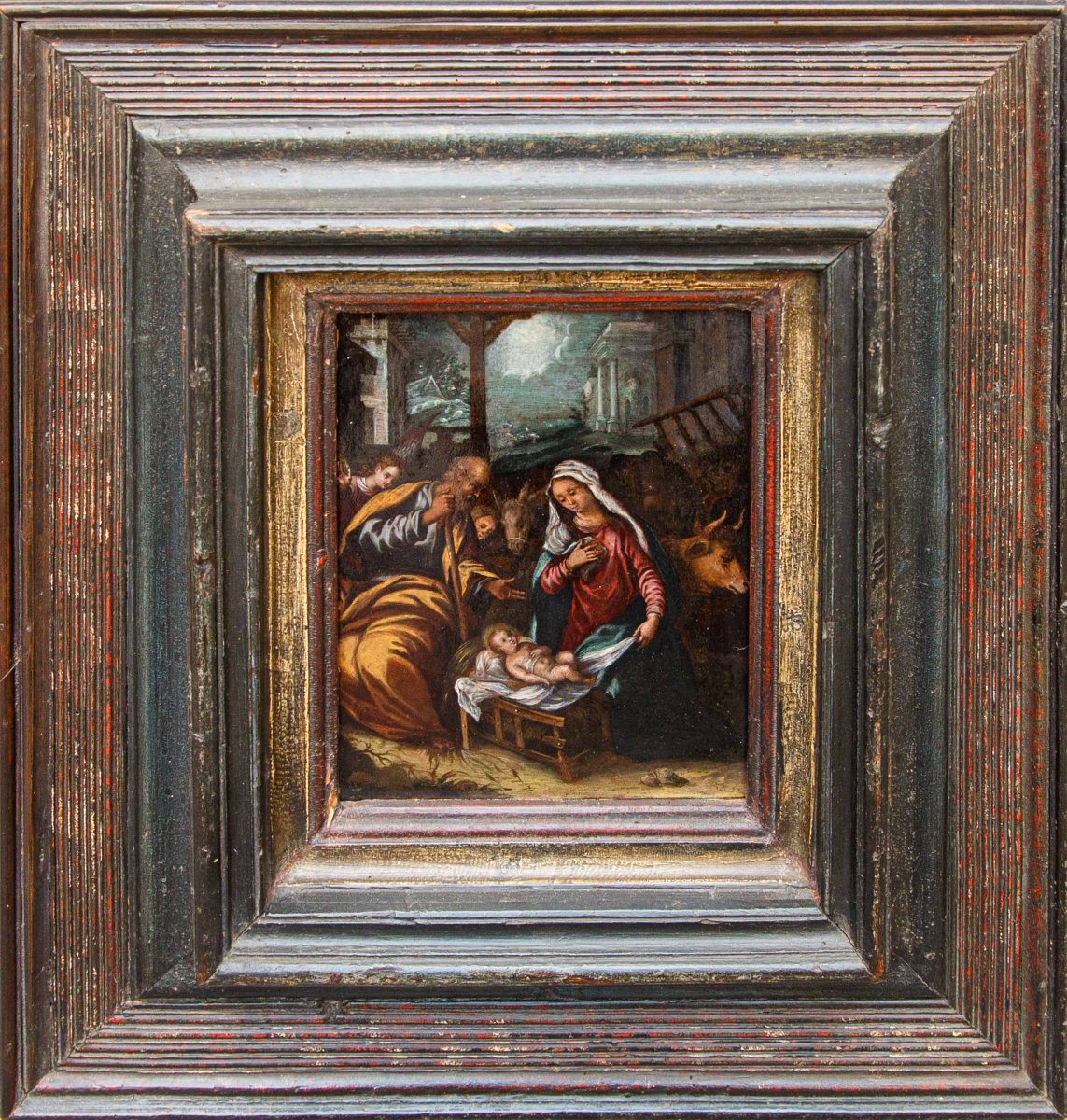


Ferrara School, Second Half Of The 16th Century, The Nativity
Ferrara School, second half of the 16th century
Nativity
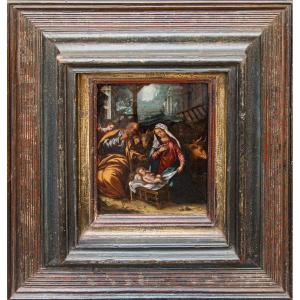
Oil on copper, 23 x 18.5 cm – with frame, 52 x 48 cm
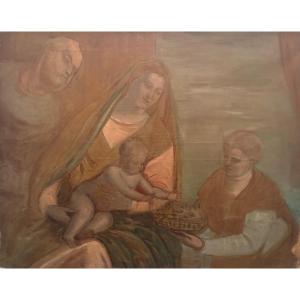
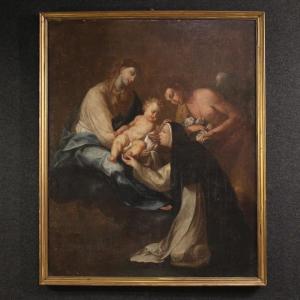
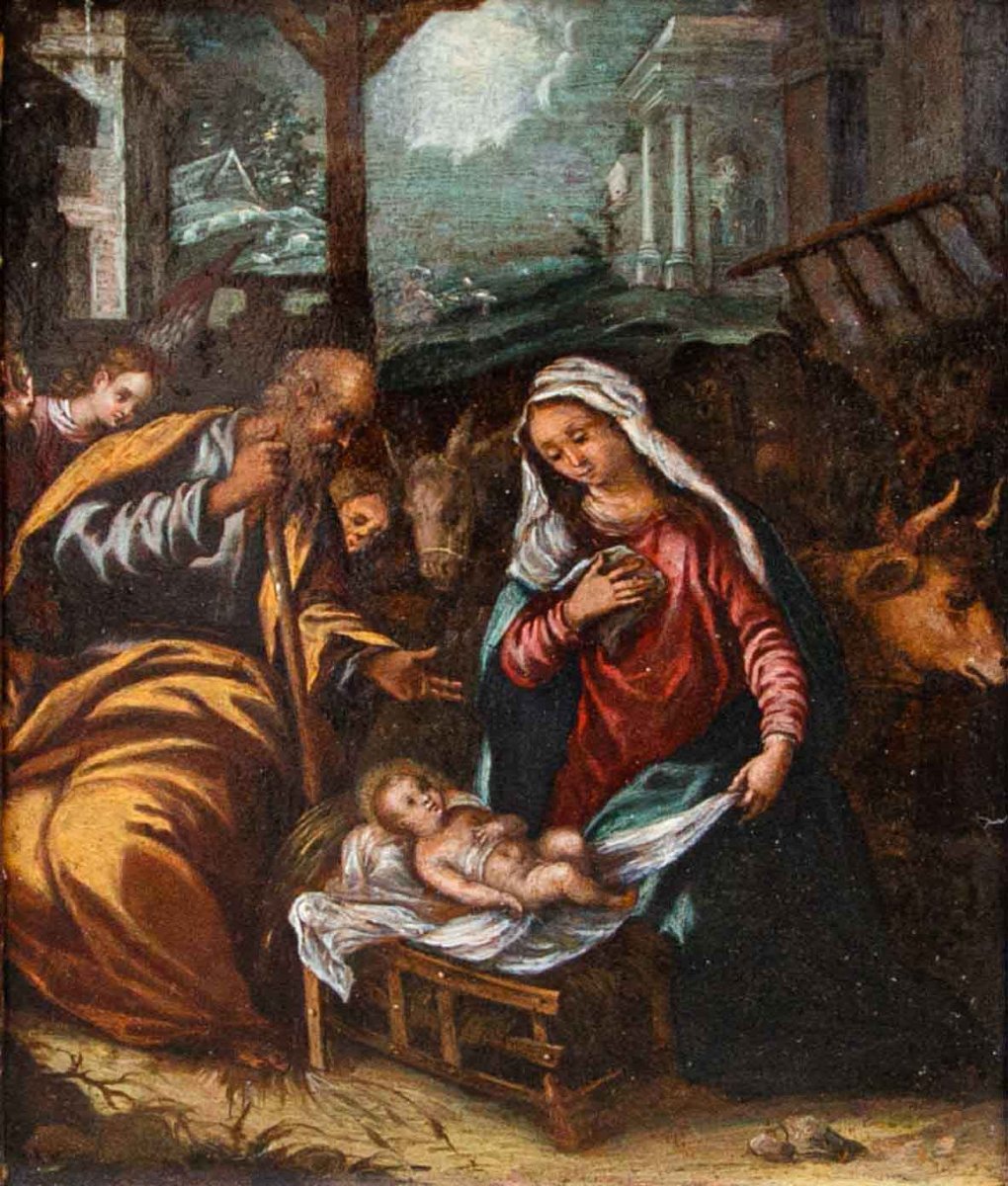
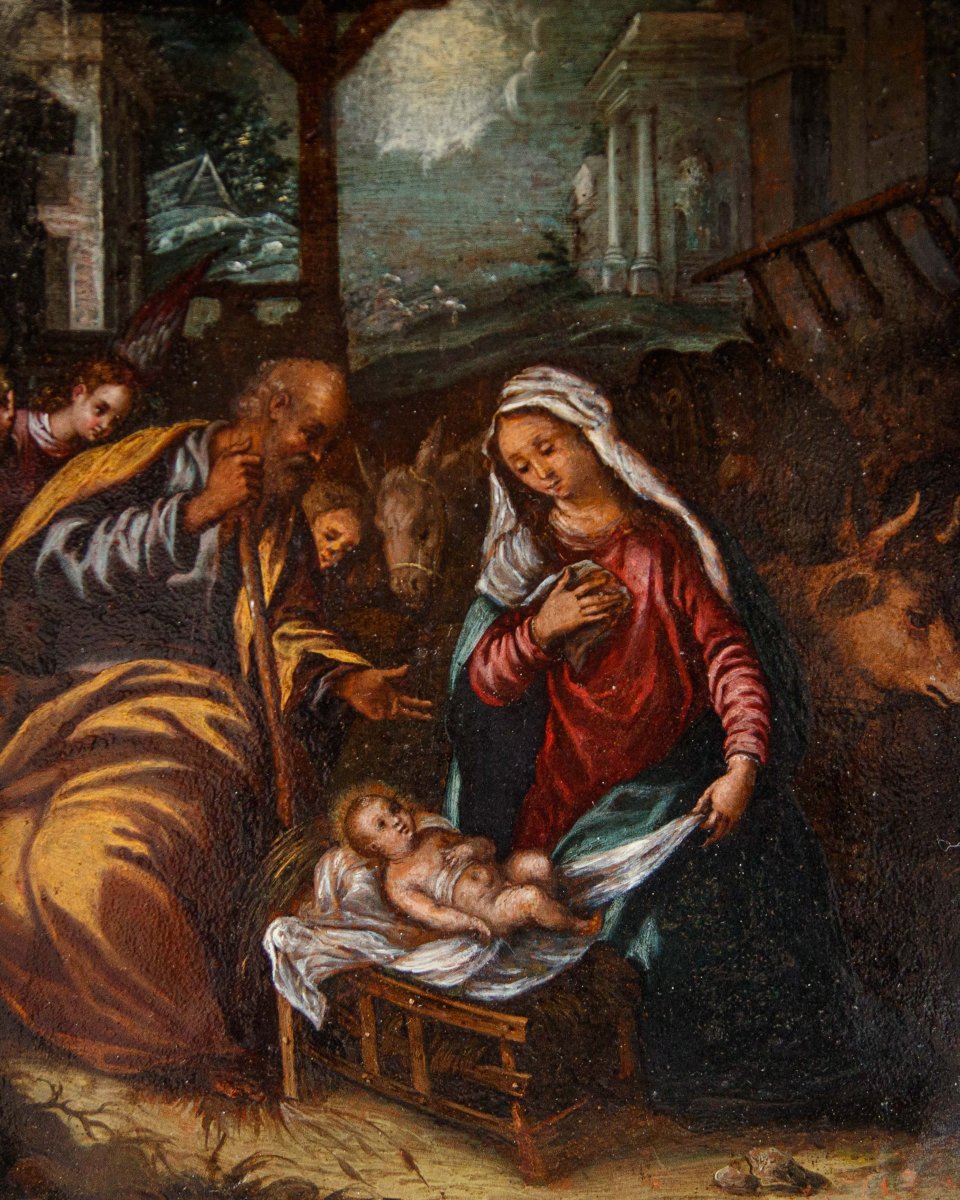
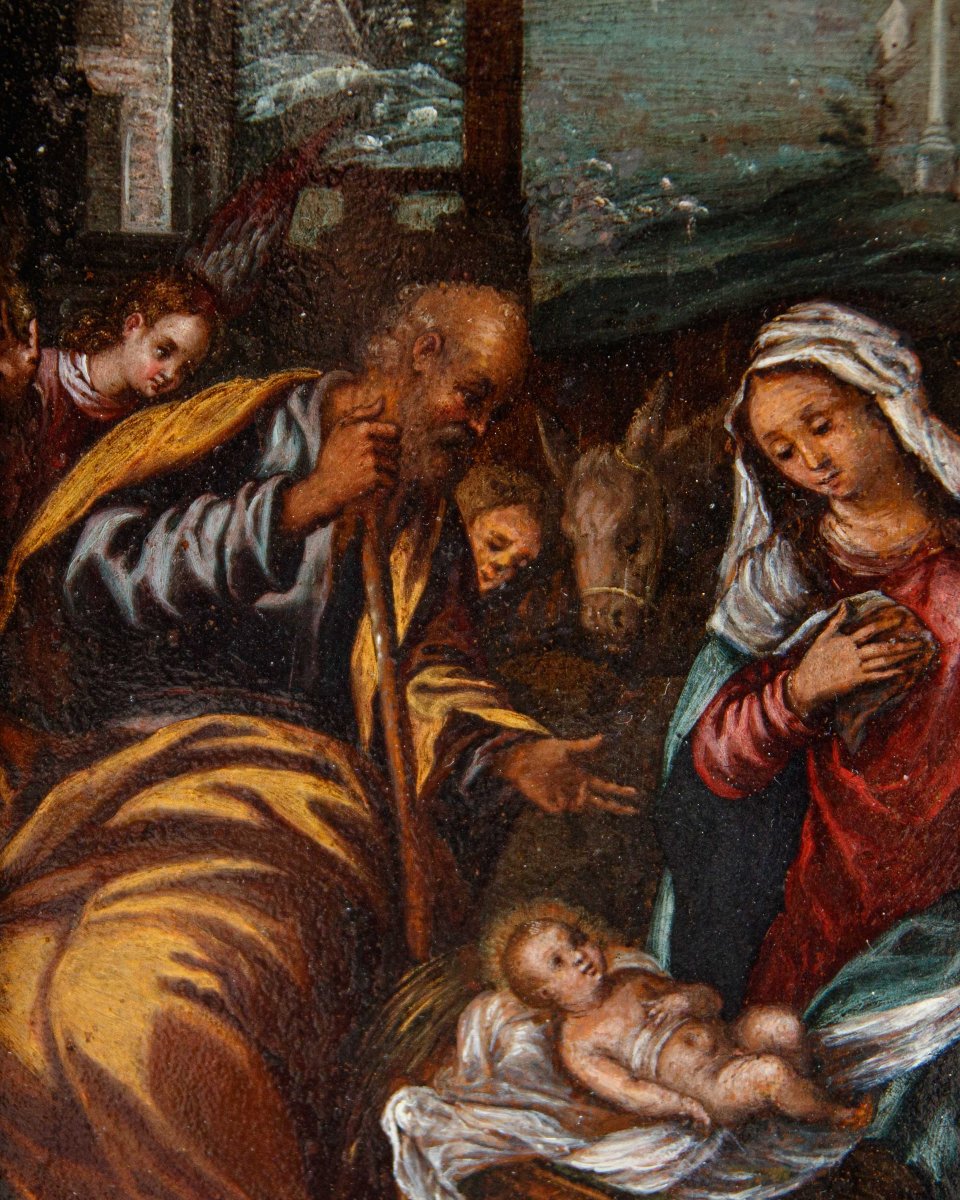
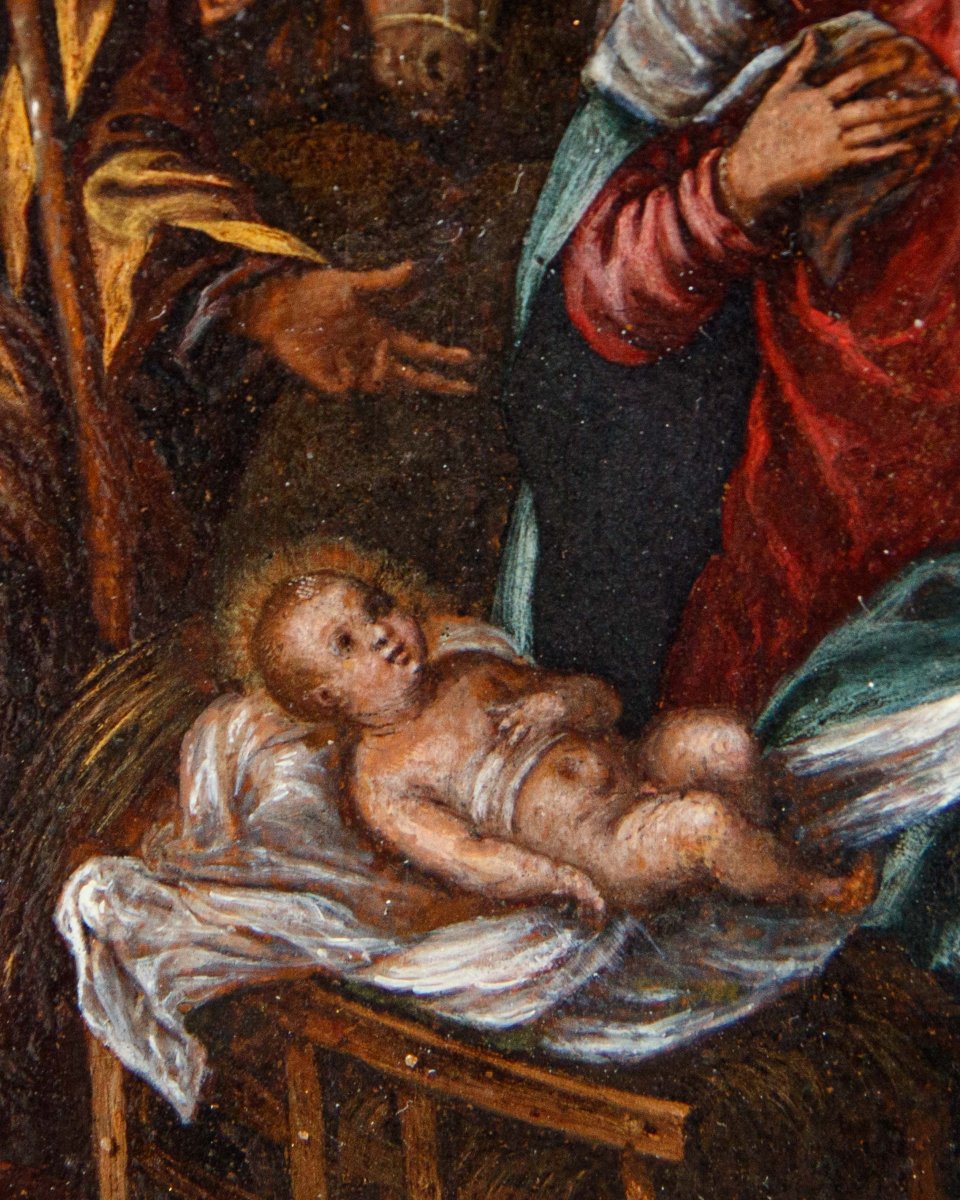
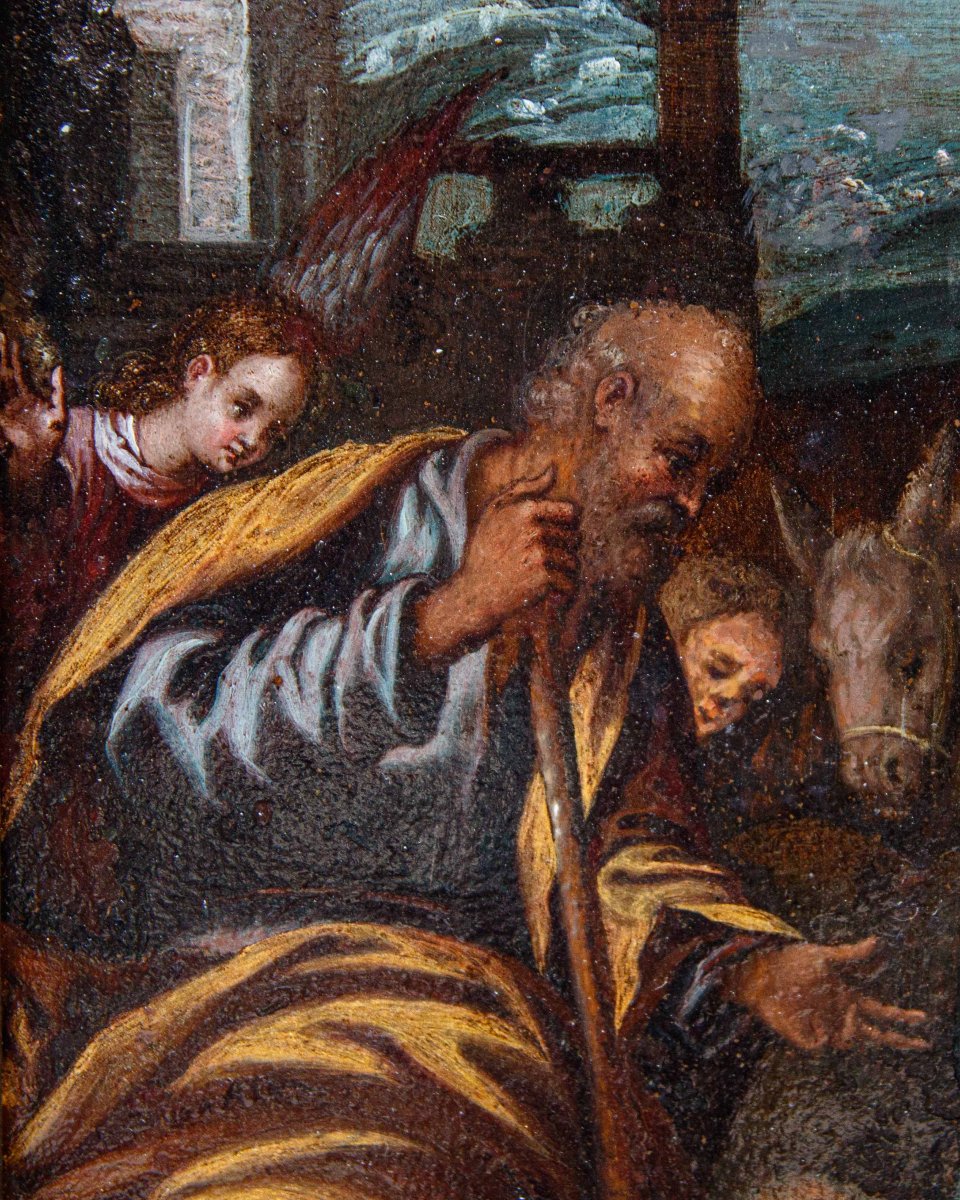
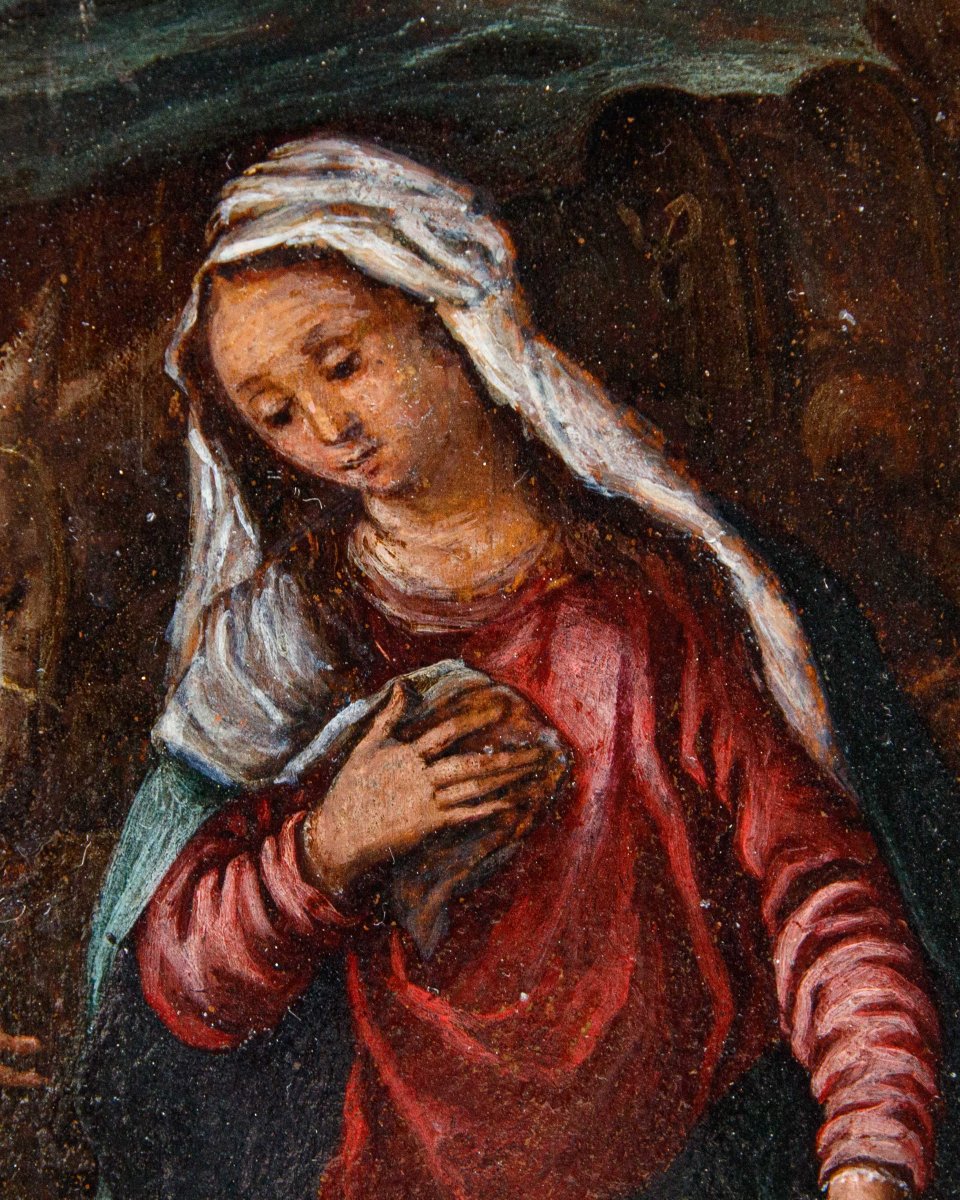
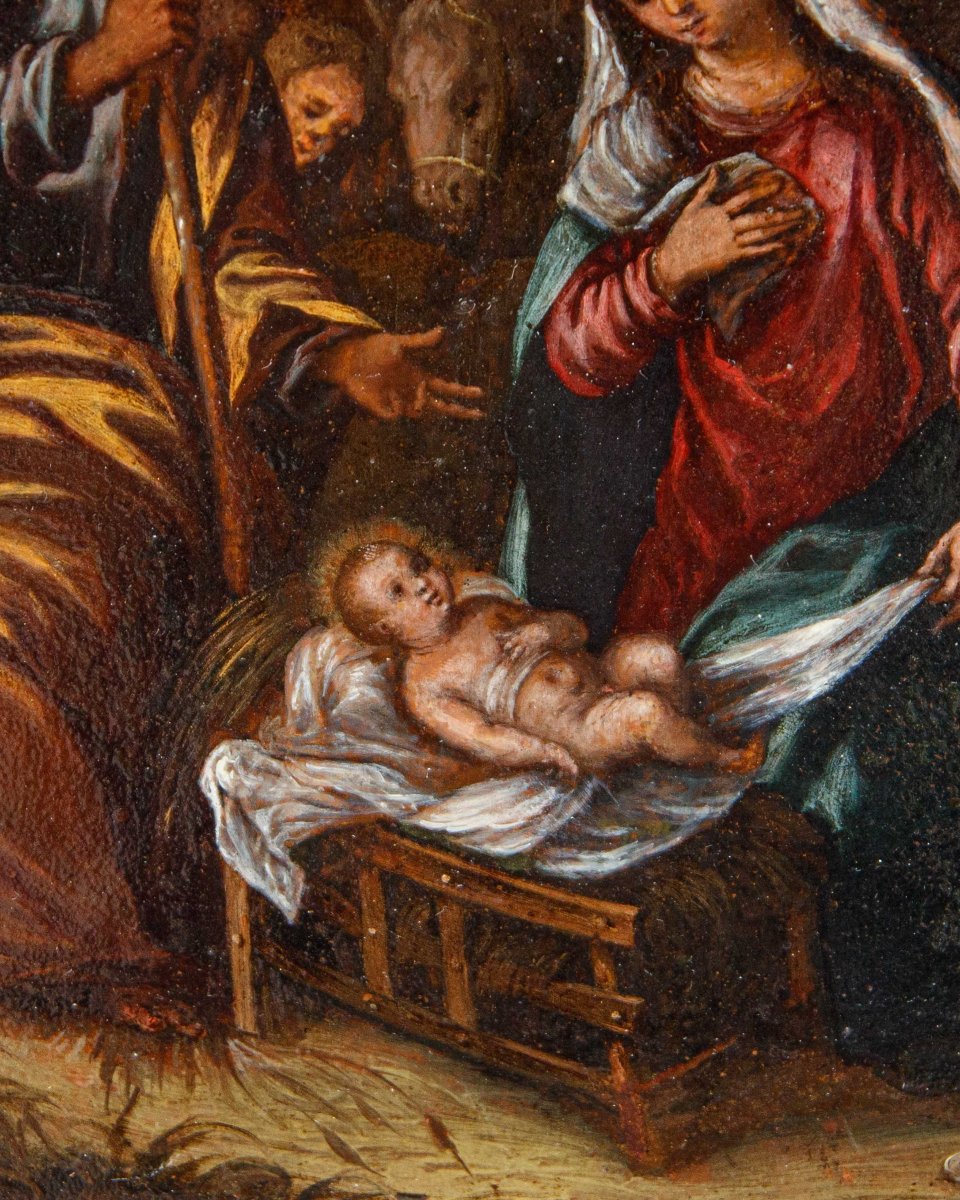
The painting depicts the Nativity according to a compositional scheme that was widespread in Italy during the second half of the 16th century through Flemish prints, and in particular closely echoes a composition by Marten de Vos, an Antwerp painter whose sacred works circulated widely in print form thanks to engravers such as Adriaen Collaert, Johannes Sadeler, and Hieronymus Wierix. The diagonal arrangement of the scene derives from these engravings, the group of the Virgin leaning over the Child laid on a bed of straw inside a basket, the figure of Saint Joseph leaning on his staff in a gesture of wonder, and the pair of angels in the upper left corner, observing the scene against the light. On a copper support—a technique that spread throughout the Emilia region in the second half of the century due to the enamel-like and luminous rendering of the colors—the anonymous painter from Ferrara translates the engraved model into a warm palette, featuring reds, ochres, and brown glazes, with an affectionate naturalism in the faces and gestures.
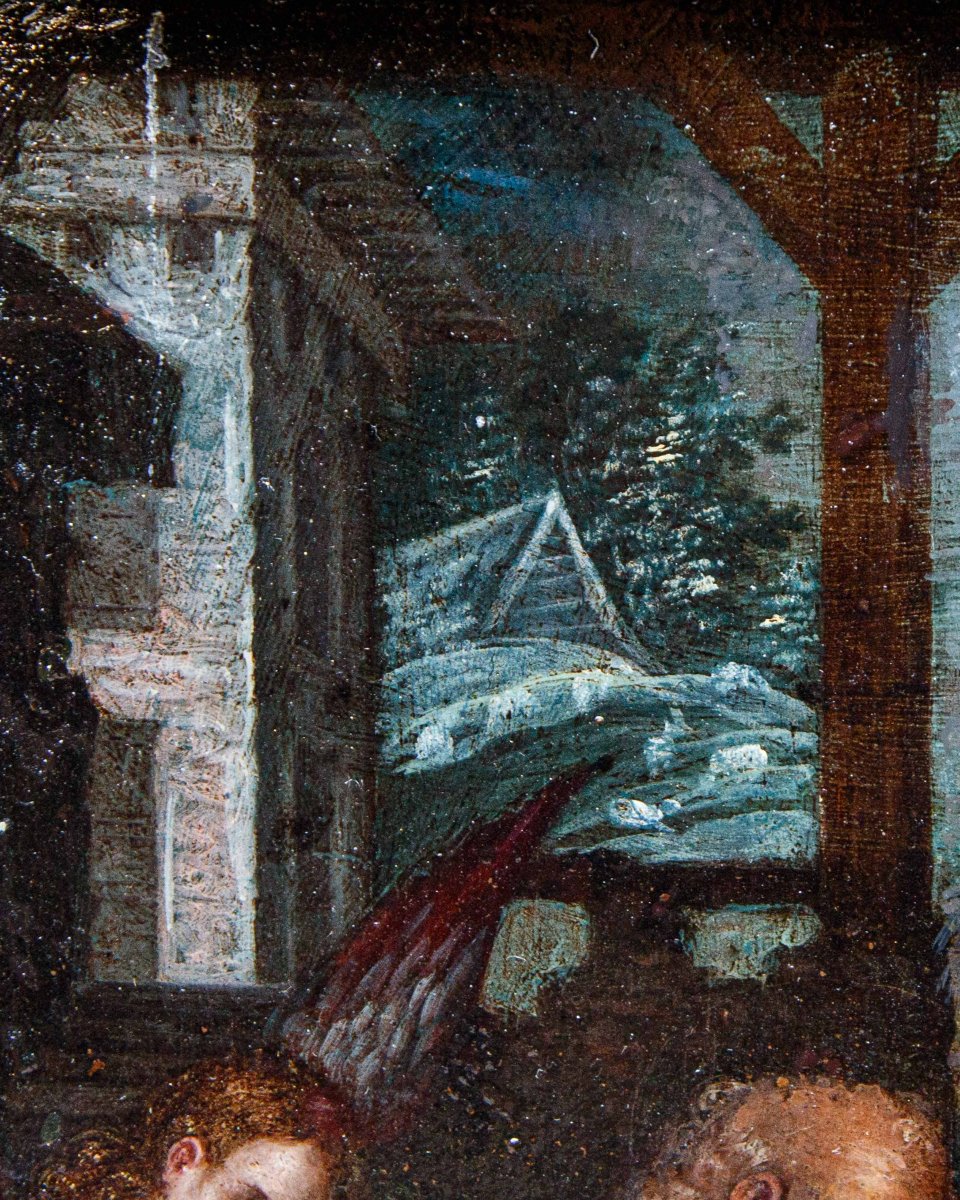
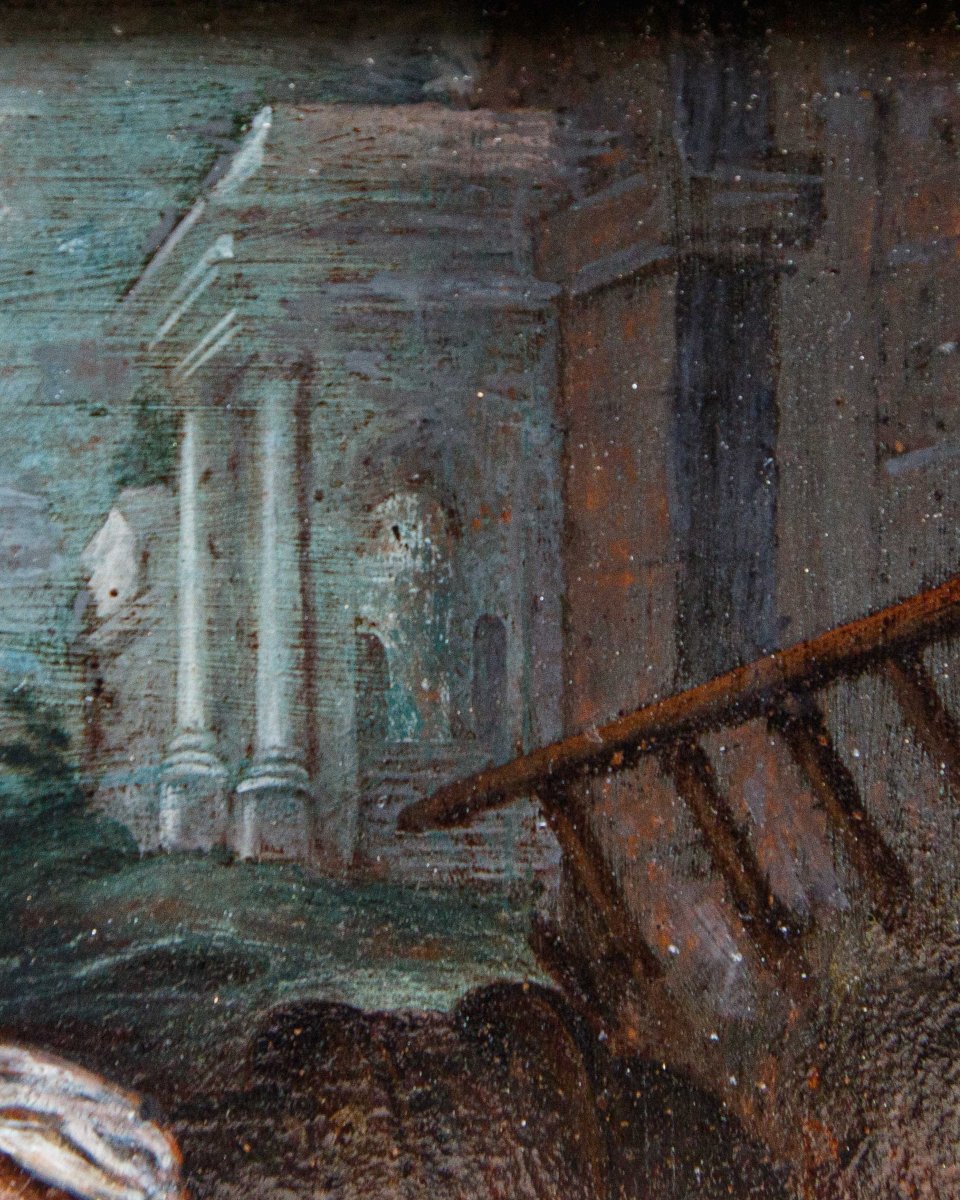
Ferrara’s figurative art of the second half of the sixteenth century—heir to the era of Dosso Dossi and Garofalo but now open to the languages of the Counter-Reformation—developed during these very decades a repertoire of Nativity and Adoration scenes marked by the convergence of classical tradition and nocturnal sensibility. Sebastiano Filippi, known as “il Bastianino,” the leading figure behind the decoration of Ferrara Cathedral, introduced ancient-style architecture, ruins, and colonnades that allude to the pagan world superseded by the advent of Christ, along with a taste for elongated figures and twilight effects that bring his sacred compositions closer to the one examined here, where the classical ruins in the background on the right serve the same symbolic function.
Alongside him, Ippolito Scarsella, known as “lo Scarsellino,” developed a similar predilection for twilight landscapes, populated by ruins and classical-style buildings bathed in fading light: his *Adoration of the Magi*, now in a private collection, shows stylistic similarities in the construction of the figures and the drapery, while the version housed at the Walters Art Museum in Baltimore, with its choice of a nocturnal landscape illuminated by diffused glimmers, offers lighting and color schemes very similar to those of our painting. The work under consideration fits into this dialogue between Northern European graphic art and the local pictorial tradition, serving as a minor yet consistent testament to the popularity of Flemish models in Ferrara during the second half of the sixteenth century.
Period: 16th century
Style: Other Style
Condition: Good condition
Material: Oil painting on copper
Width: 18,5
Height: 23
Reference (ID): 1822748
Availability: In stock