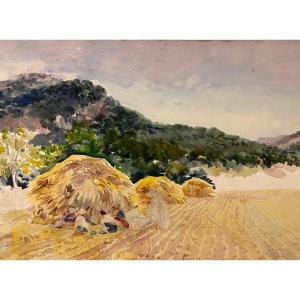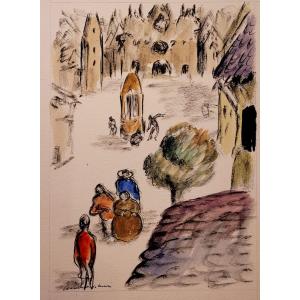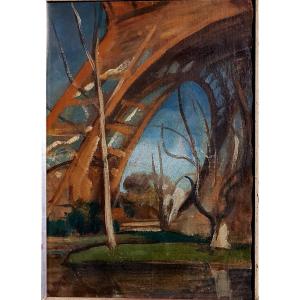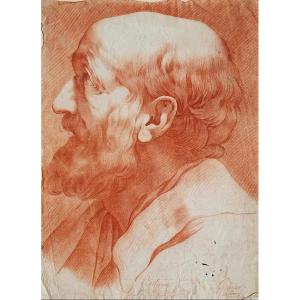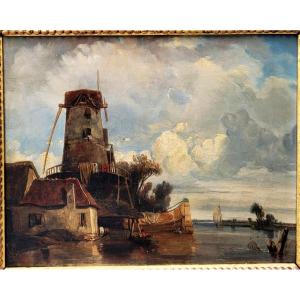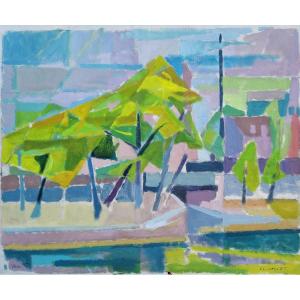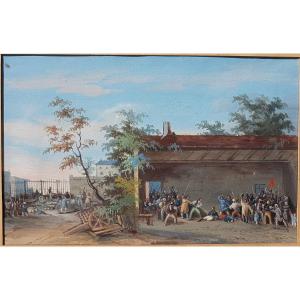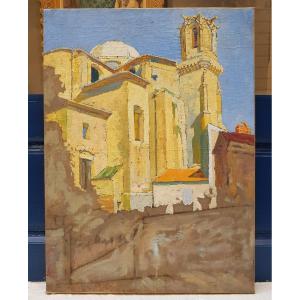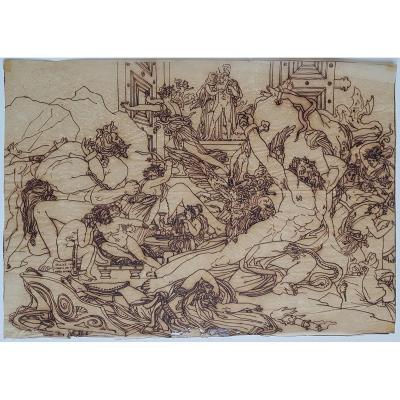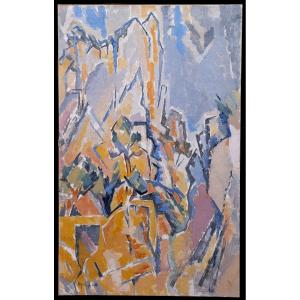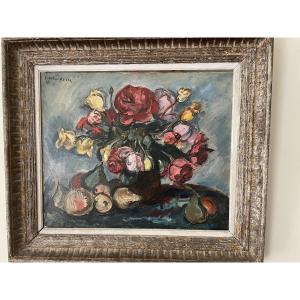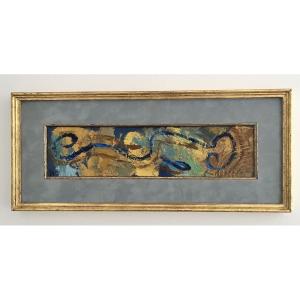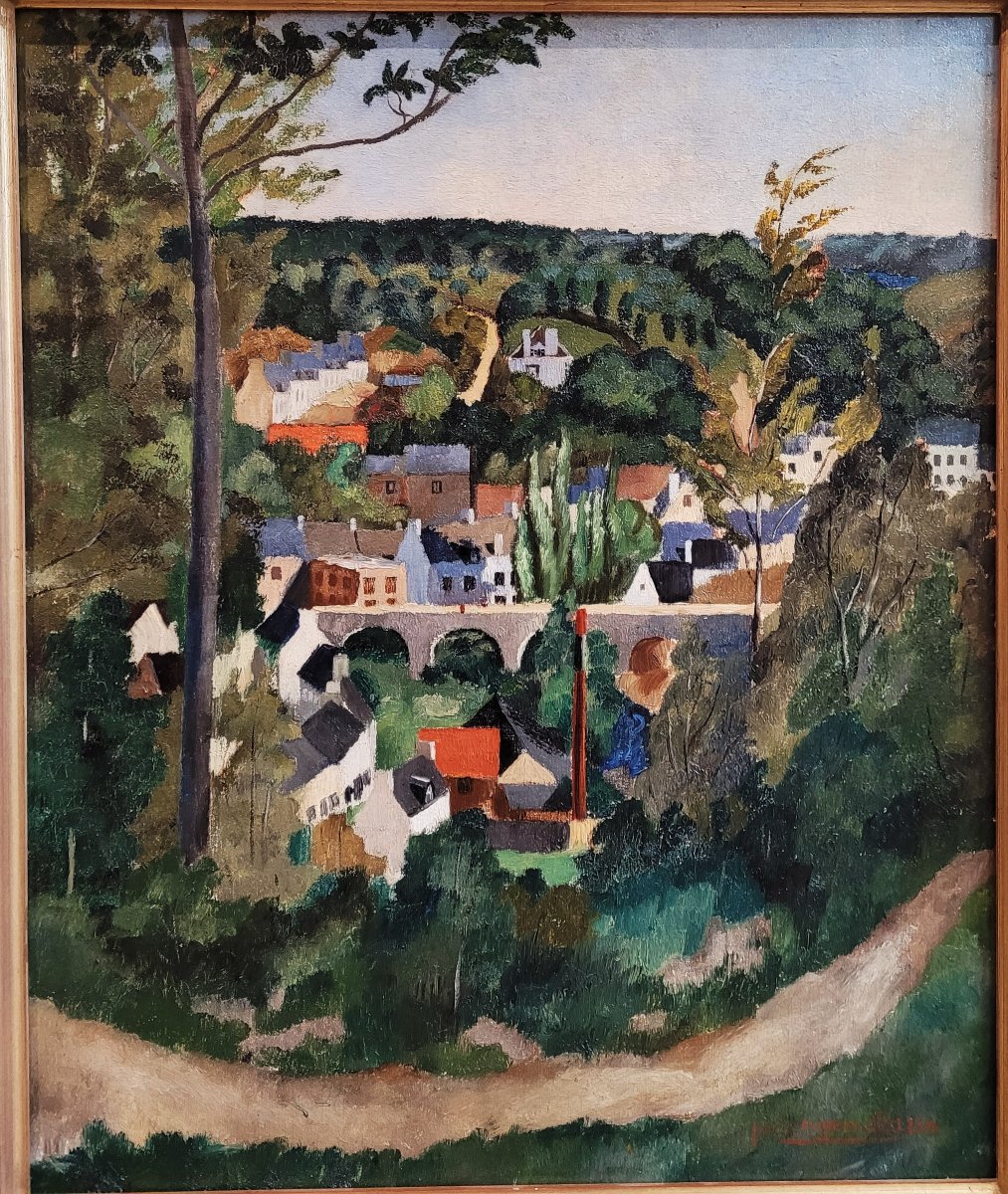
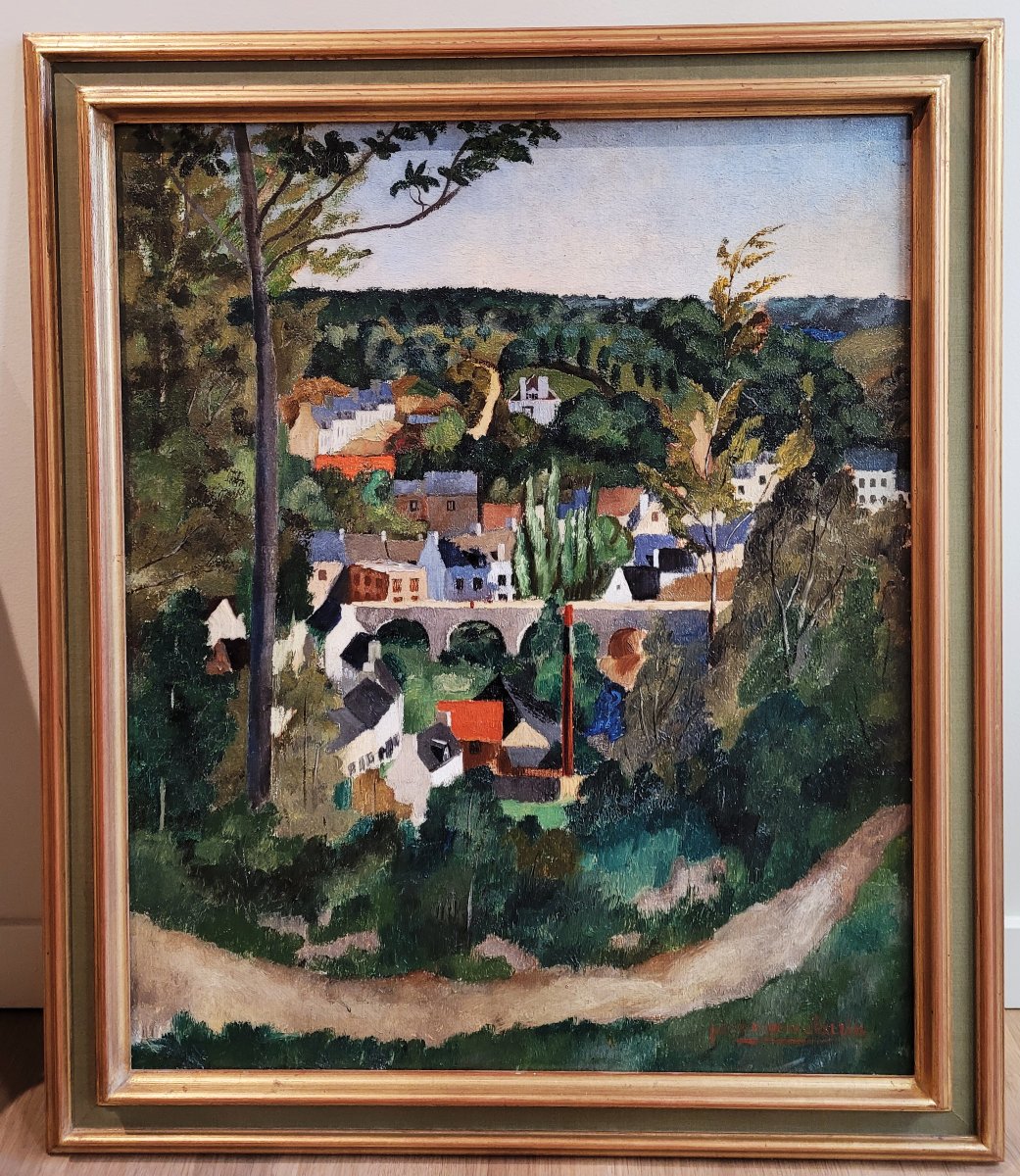
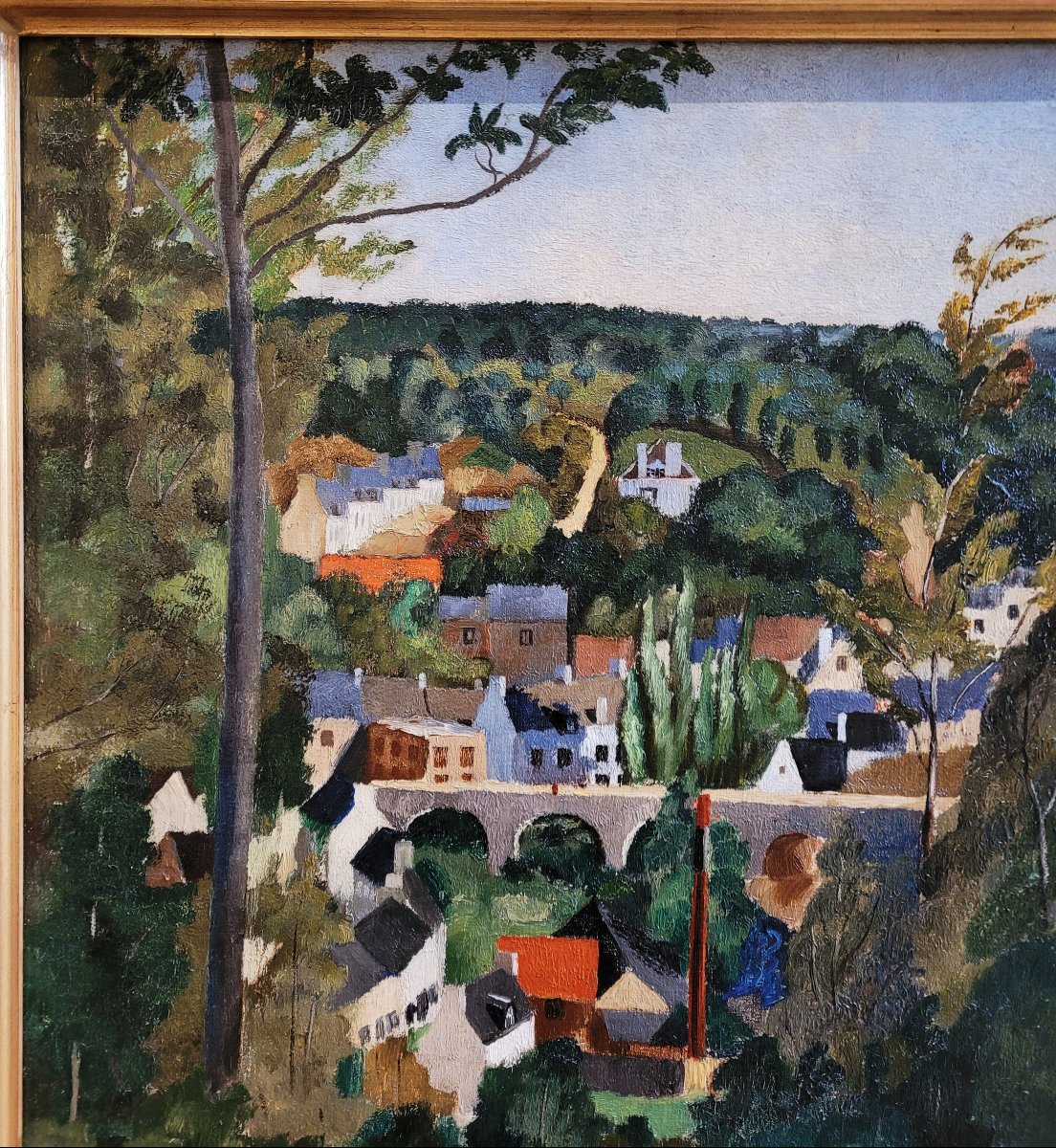
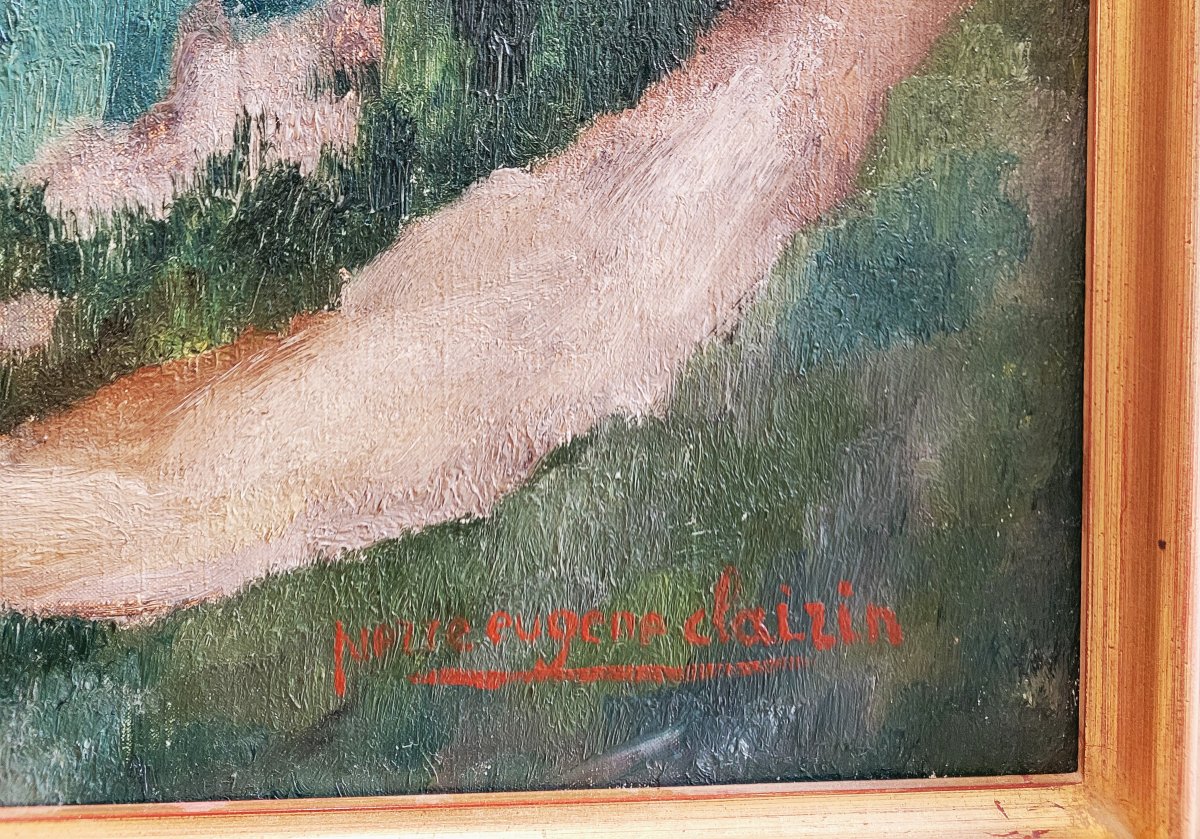
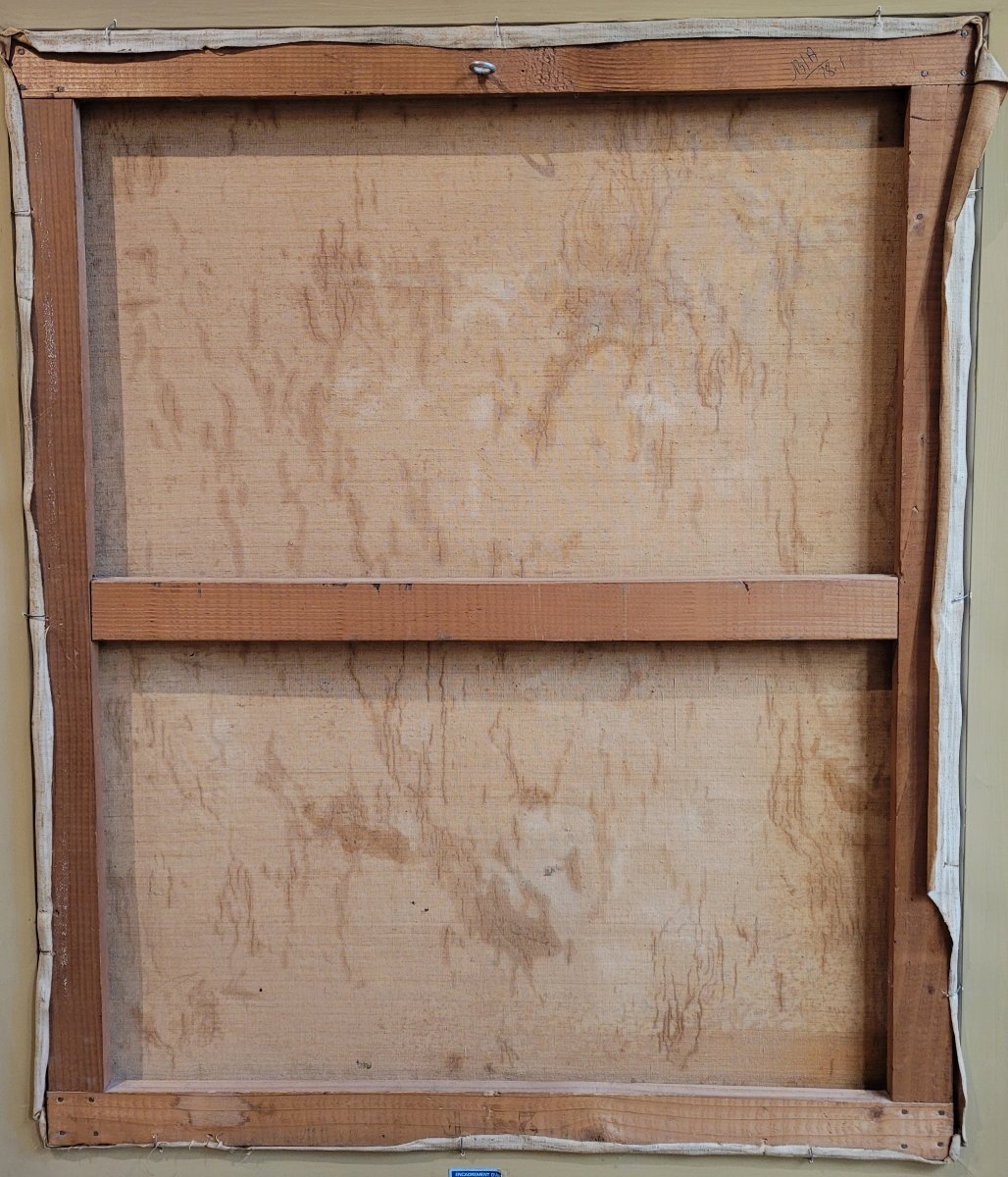
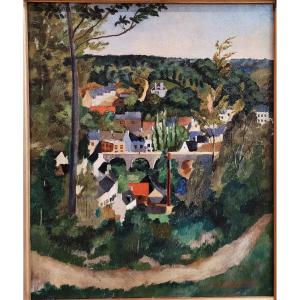


Pierre-eugène Clairin (1897–1980) Landscape In Brittany
Pierre-Eugène Clairin, born in Cambrai (Nord) on March 14, 1897, and died in Thorigné-en-Charnie (Mayenne) on July 7, 1980, was a French painter, illustrator, engraver, and member of the Resistance.
Pierre-Eugène Clairin studied in England and enrolled at the École des Beaux-Arts in Paris in Fernand Cormon’s studio in 1913. He enlisted in the cavalry, then, in 1915, in the Air Force. After becoming a fighter pilot, he was awarded the Croix de Guerre, the Military Medal, and the Legion of Honor.
In 1919, he joined Paul Sérusier’s studio at the Académie Ranson. There he met Maurice Denis and Édouard Vuillard, who introduced him to printmaking and lithography. As a child, he spent his summers in Brittany with the family of his uncle Georges Clairin, and at the 1921 Salon d’Automne, he presented Breton landscapes, including his *View of Pont-Aven*, which attests to the influence of his teachers at the Académie Ranson, and exhibited his Pont-Aven paintings at the Druet Gallery, where he met Pierre Farrey.
In 1927, he signed a contract with the Bernheim Gallery, which exhibited his work in New York. In 1929, he was awarded the Abd-el-Tif Prize. He spent two years at the Villa Abd-el-Tif, a stay he extended until 1934 with trips to Morocco and southern Algeria. He would return regularly to Algeria after 1945.
Upon his return in 1934, he settled in Saint-Loup-de-Naud and, for the 1937 World’s Fair, he decorated the Île-de-France and Vatican City pavilions (for which he was awarded a gold medal) as well as the National Conservatory of Music. Drafted in 1939 and then demobilized in 1940, he organized a Resistance network in Saint-Loup-de-Naud.
In 1946, he embarked on a mission and lecture tour in the United States and worked in particular for and with Albert Camus, whom he had met in 1929 in Algiers, through Edmond Charlot, at the bookstore-gallery “Les Vraies Richesses.” In 1950, he published a series of illustrations based on the works of Camus (Noces, L’Exil et le Royaume, La Femme adultère) and Henry de Montherlant through Rombaldi Publishers. He received the Grand Prix de l’Île-de-France in 1957.
Beginning in 1960, he painted primarily in the Île-de-France region and around Pont-Aven. He was elected a member of the Académie des Beaux-Arts in 1967 (Section IV: Engraving—Seat 4) and president of the Société des Peintres-Graveurs Français in 1970. He died upon returning from one of his final exhibitions in Pont-Aven in July 1980.
Paul Sérusier wrote to Clairin, whom he considered his spiritual successor: “I would like to see in you the heir to a tradition that my masters bequeathed to me, and to which I believe I have added something, if only a little order.” ” Pierre-Eugène Clairin was one of the last painters to have worked in Paul Gauguin’s studio in Lezaven, Pont-Aven.
Period: 20th century
Style: Modern Art
Condition: Excellent condition
Material: Oil painting
Width: 60
Height: 73
Reference (ID): 1822119
Availability: In stock