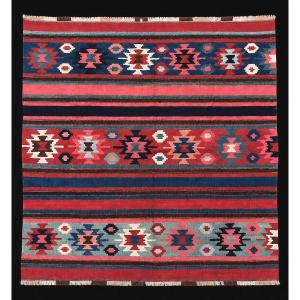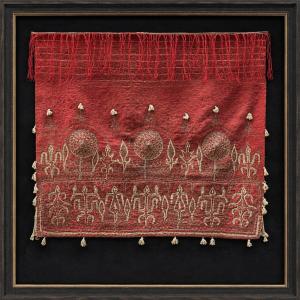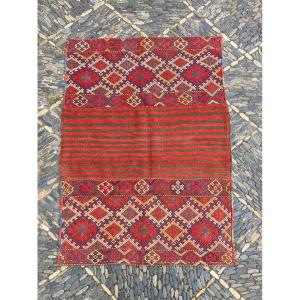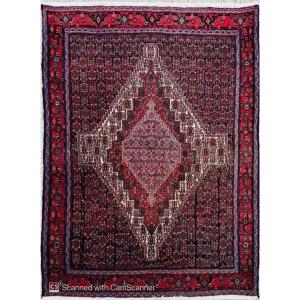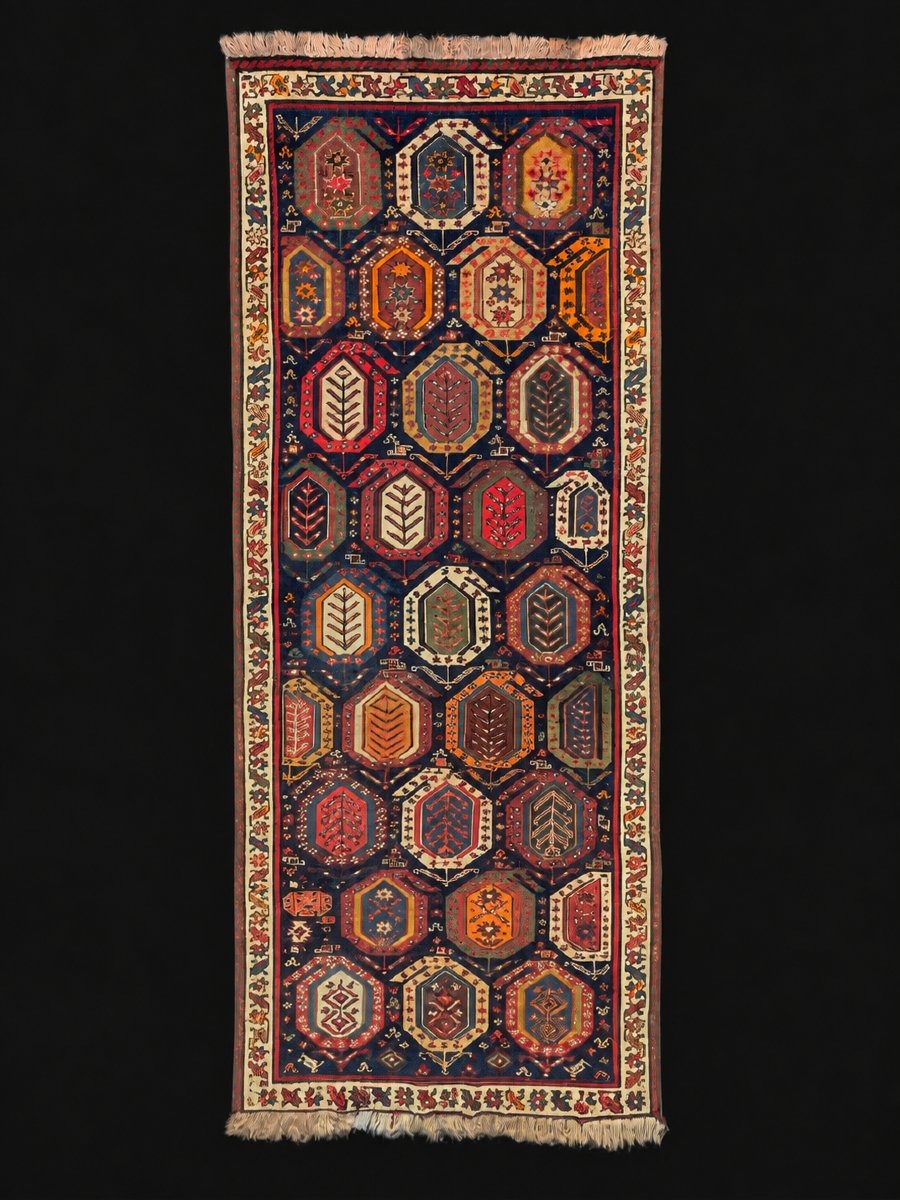
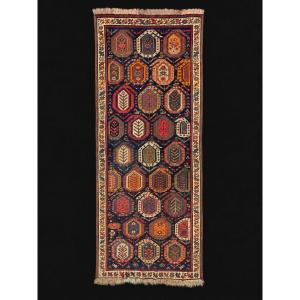


Shirvan Rug - Caucasus. Boteh Pattern. Circa 1900. 225 X 85 Cm
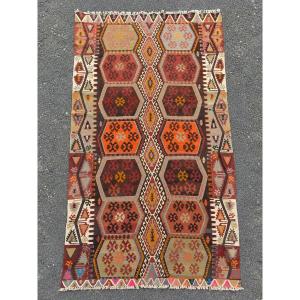
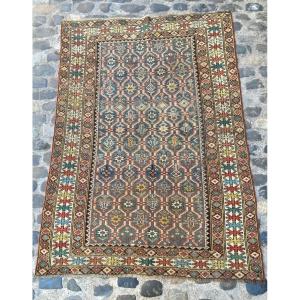
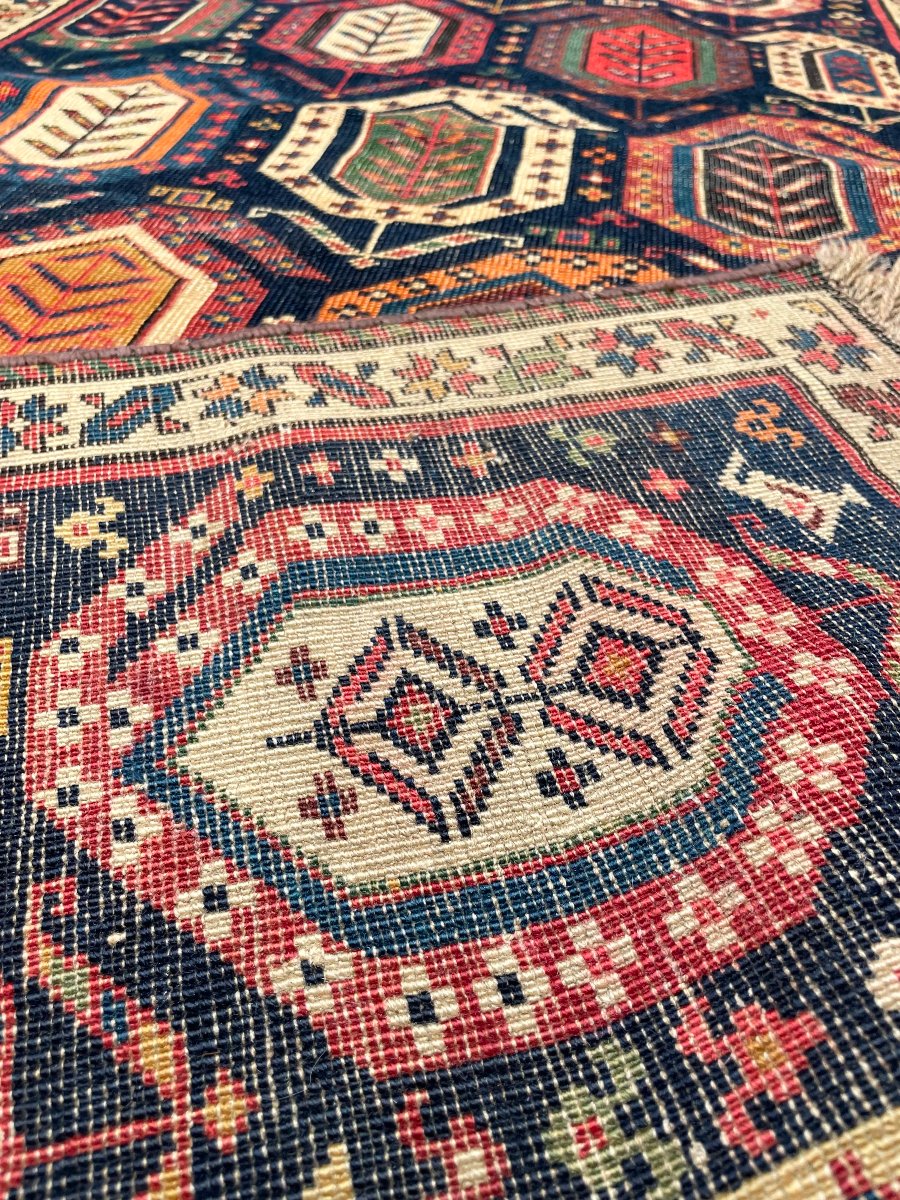
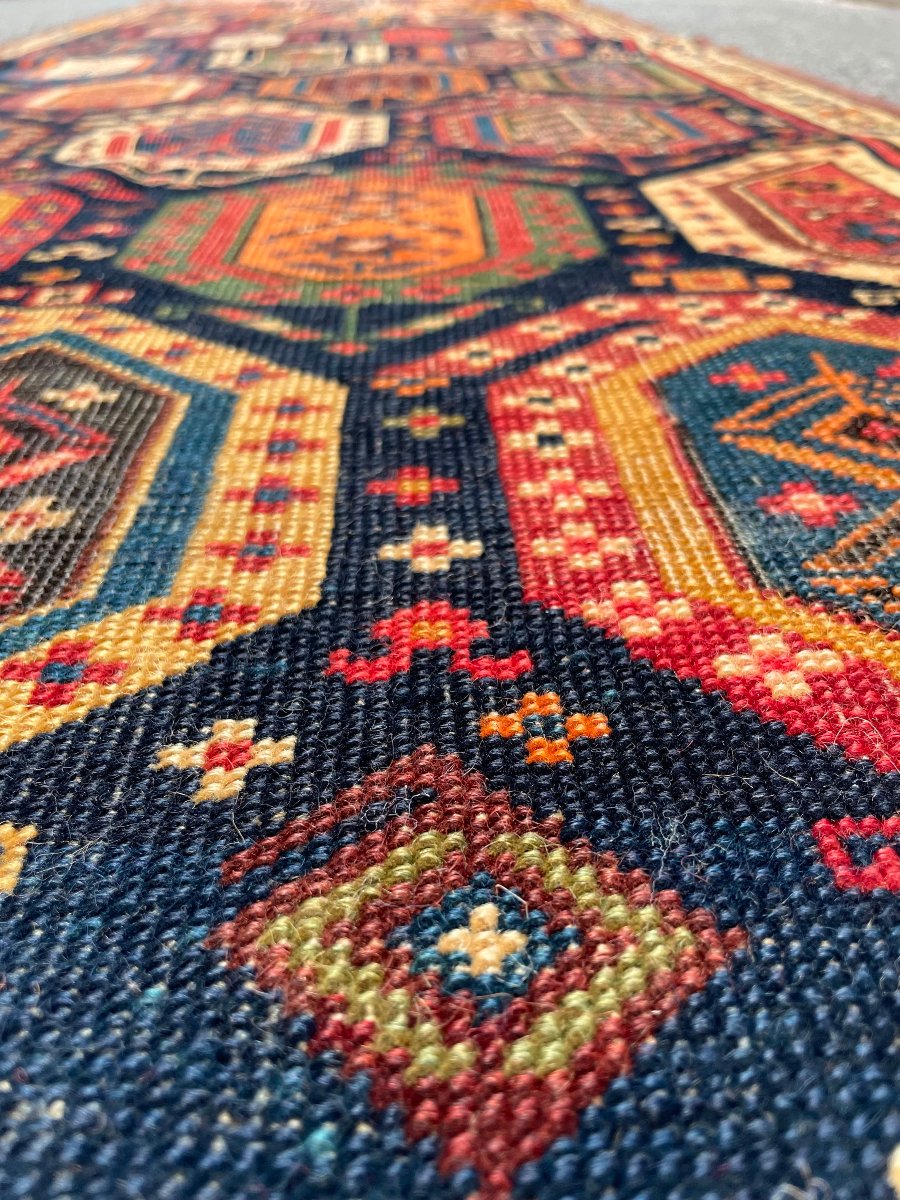
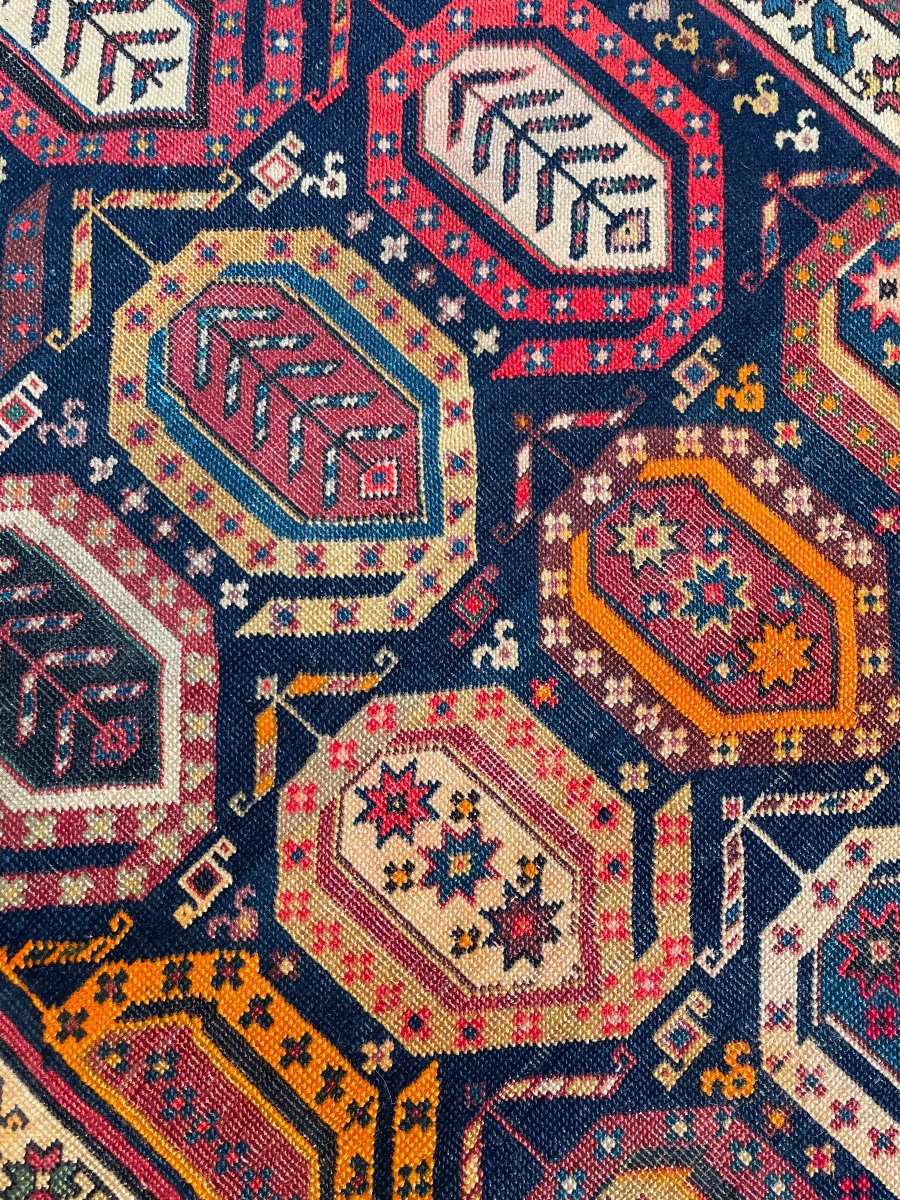
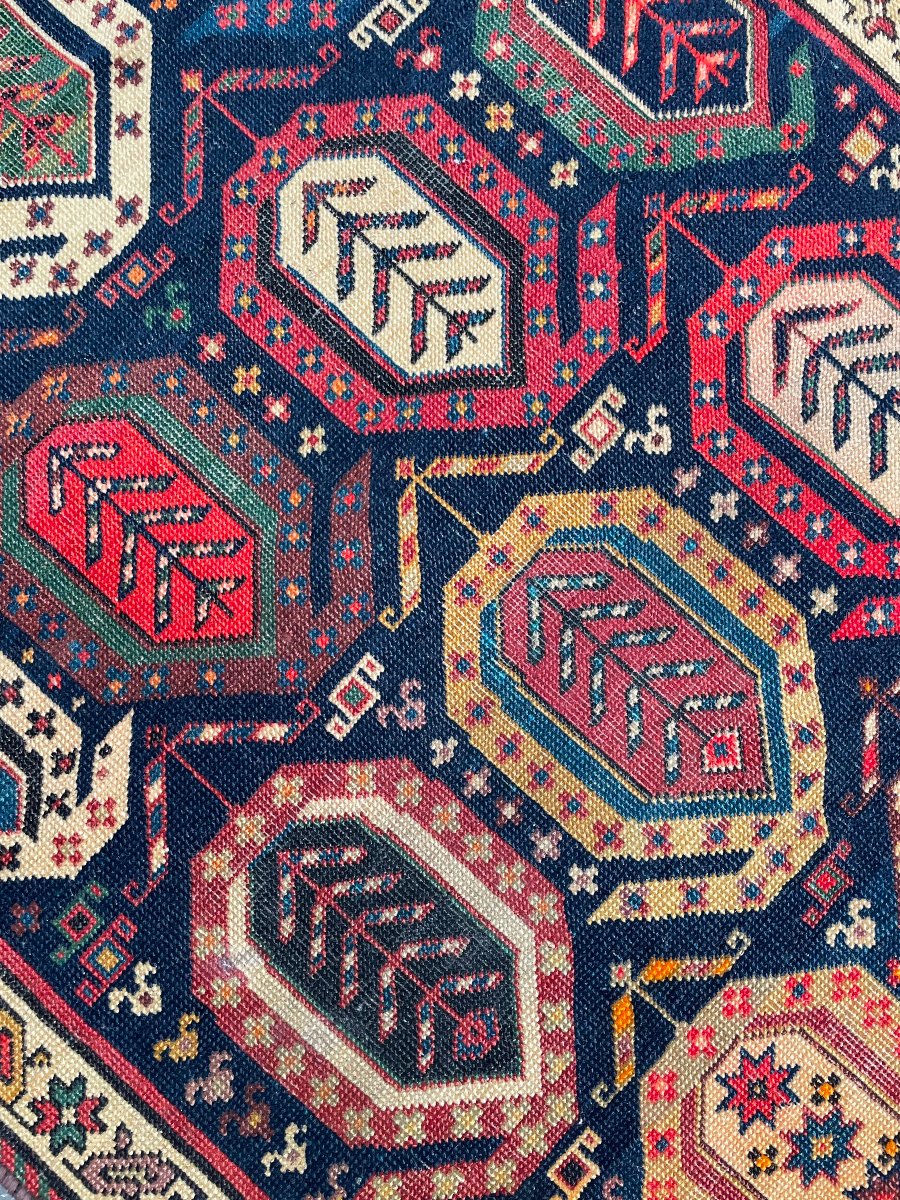
There is something particularly structured about this piece. The eye is immediately drawn to the repetition—to the almost methodical arrangement of large Boteh motifs arranged in successive rows against a deep indigo-blue background.
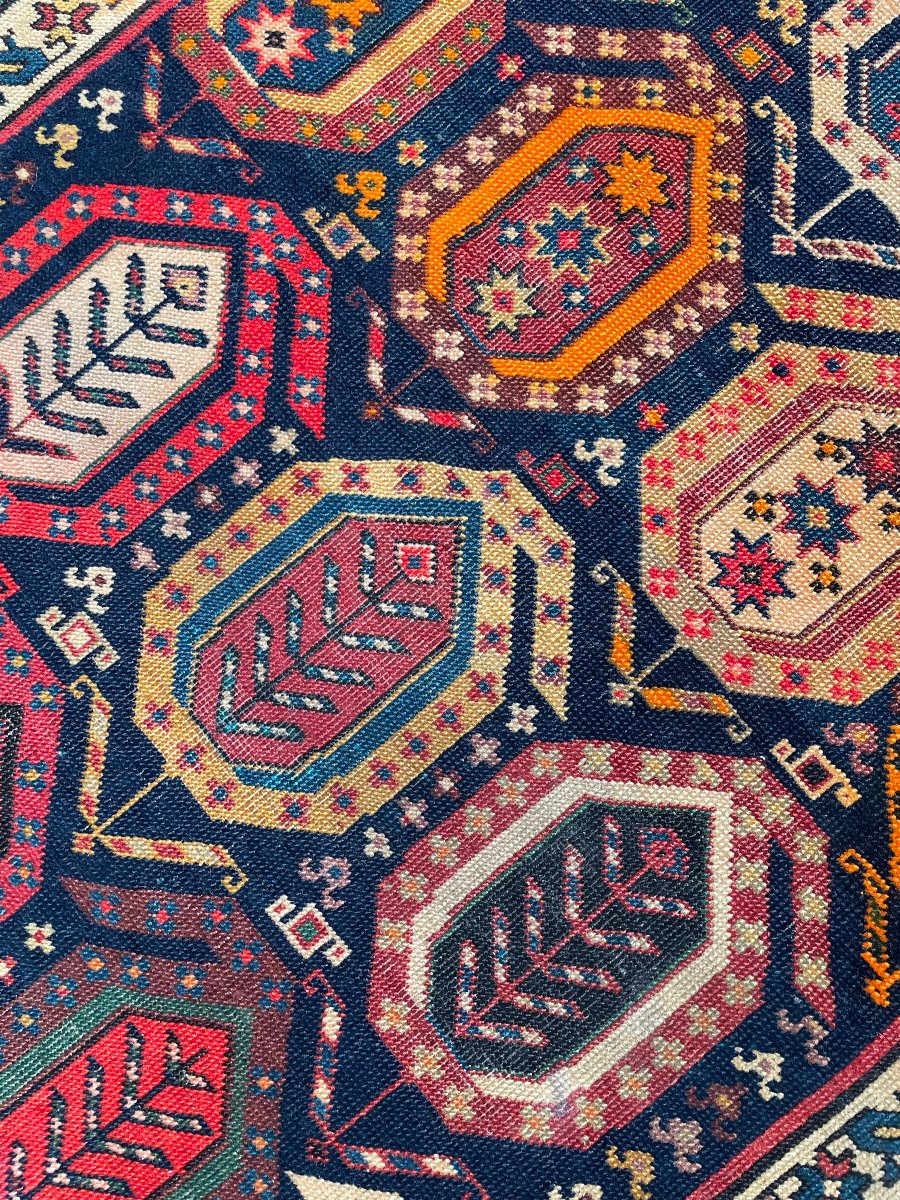
This repetition gives rise to the rug’s graphic design. The shapes align, echo one another, and ultimately form a true textile architecture. Yet, upon closer inspection, this apparent rigor gives way to a multitude of variations: no two motifs are exactly alike. The proportions shift slightly, the contours curve, the colors alternate, and the interior designs transform. Order is certainly present, but it is never mechanical.
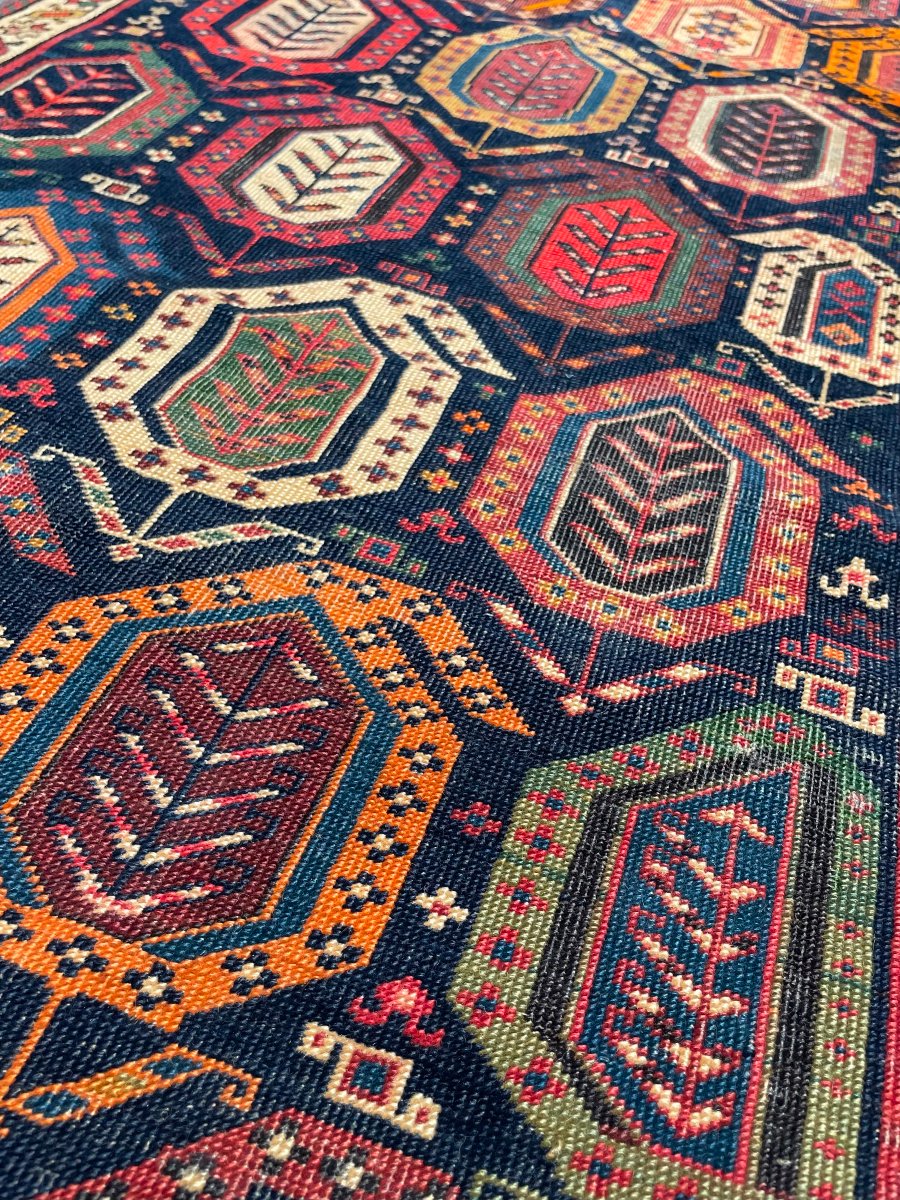
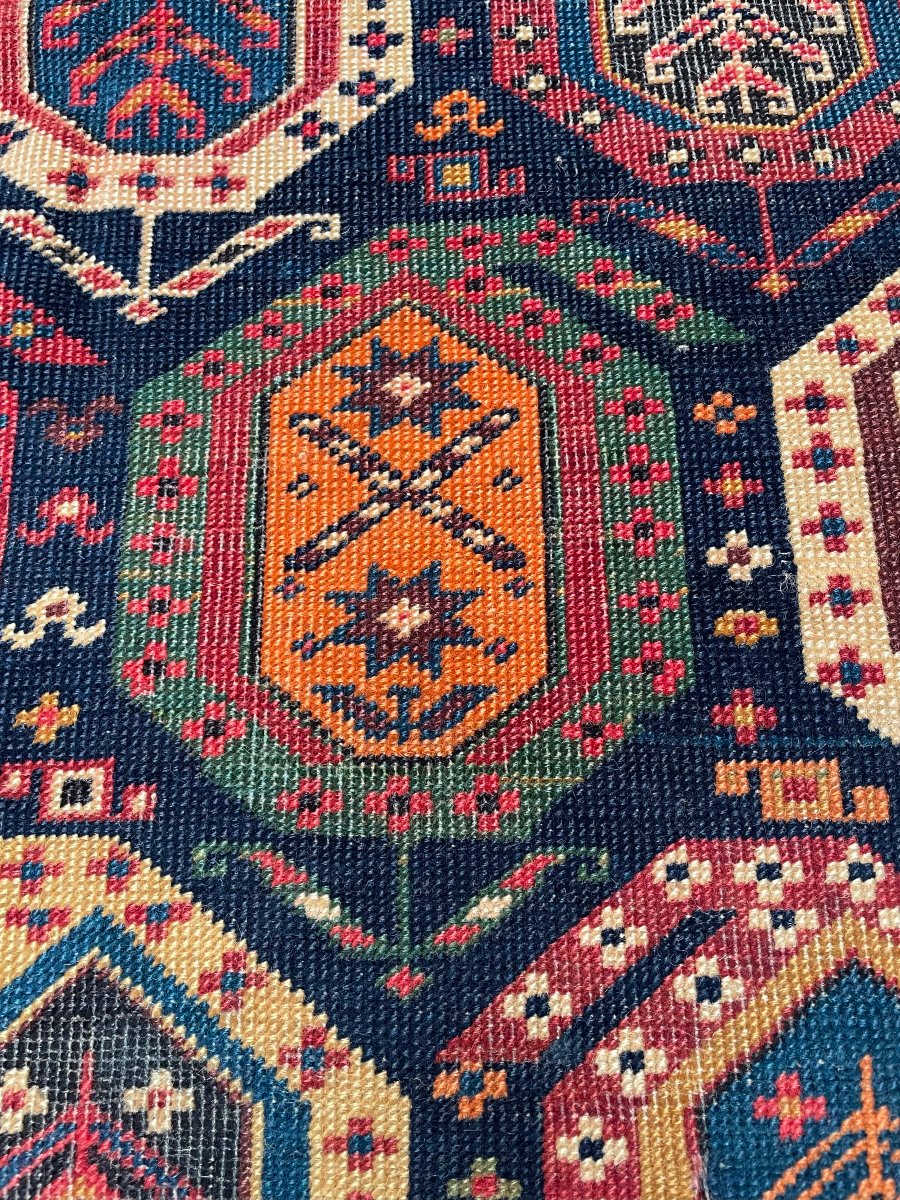
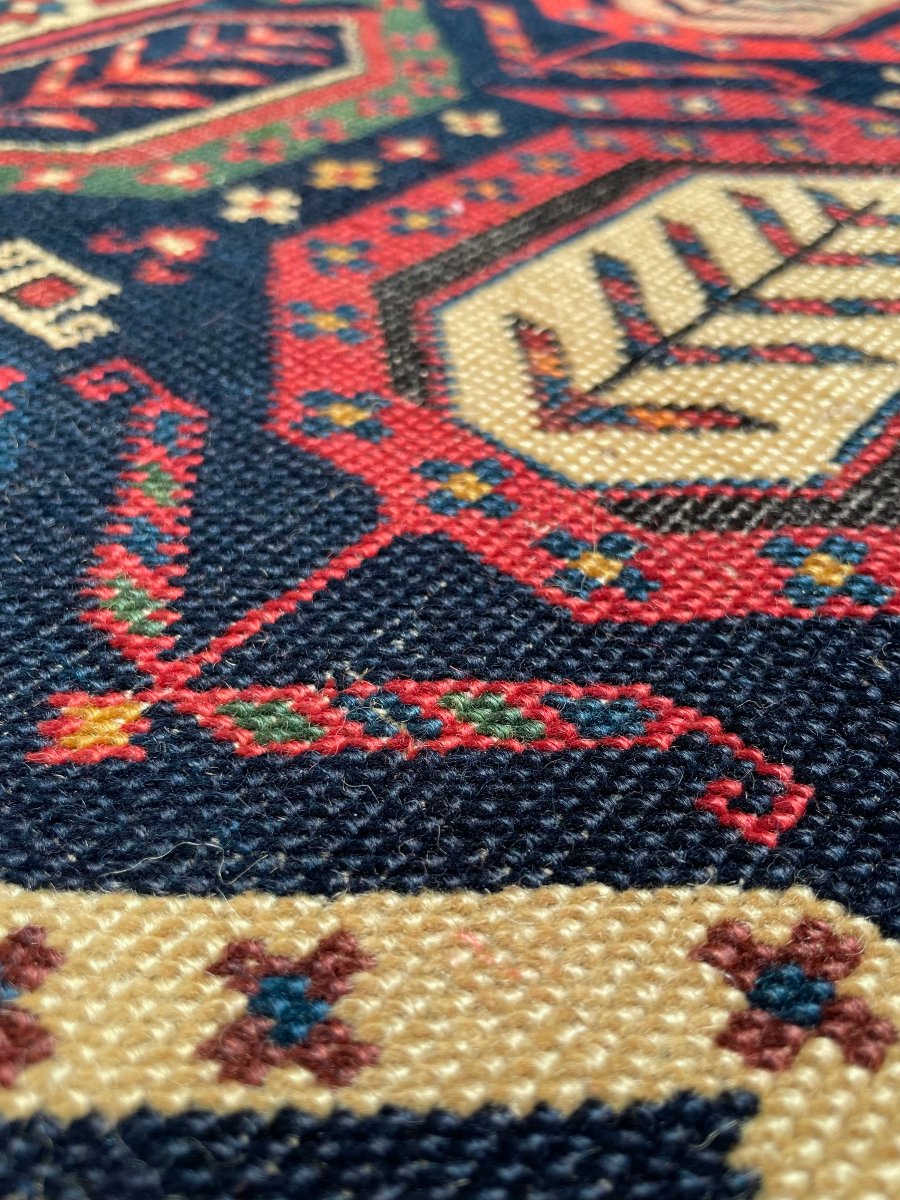
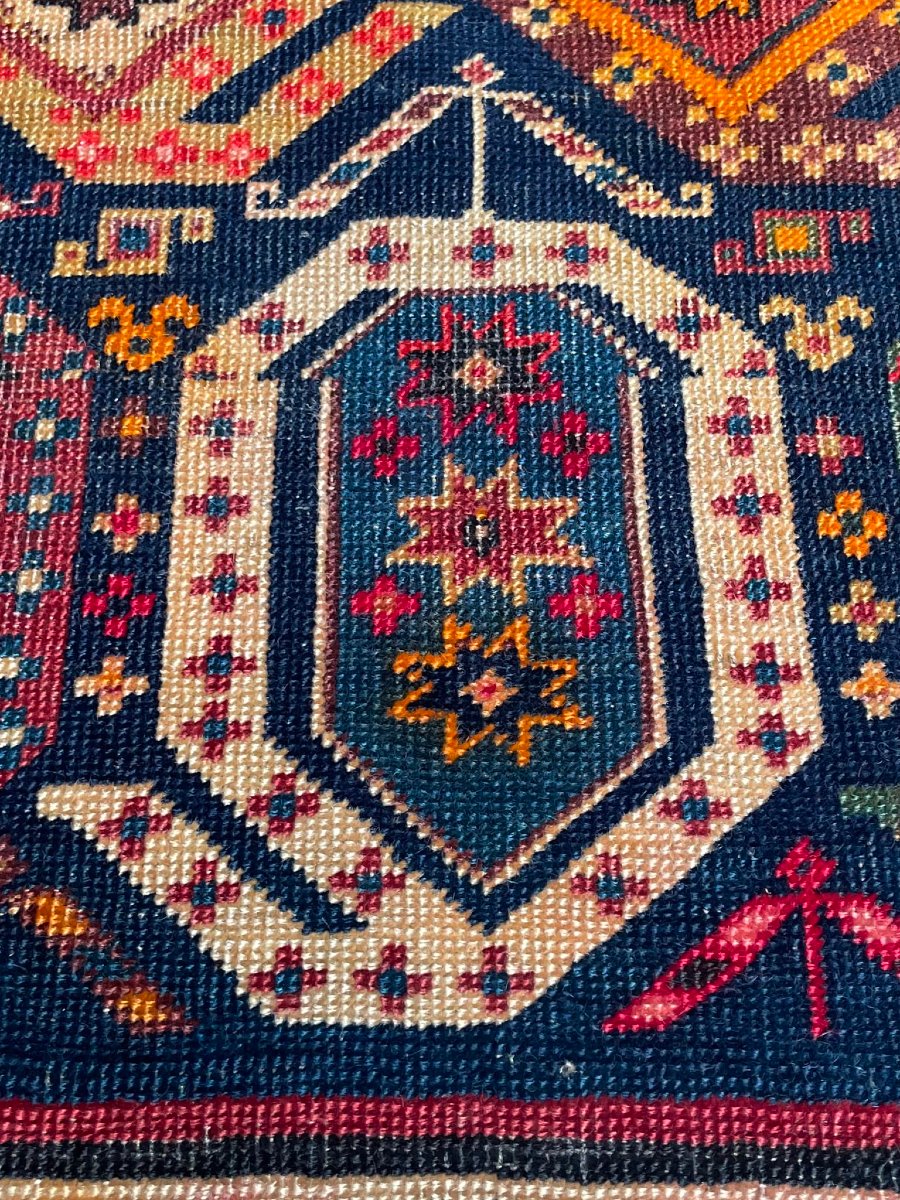
The entire composition revolves around the boteh, an ancient motif found in both Persian and Caucasian textile arts. Its characteristic shape, curved at the tip, has been interpreted in various ways as a leaf, a flame, or even a stylized cypress tree. Here, the boteh is significantly enlarged and rendered in a geometric style. It is no longer a mere decorative motif: it becomes almost a medallion and, through its repetition, forms the very framework of the rug.
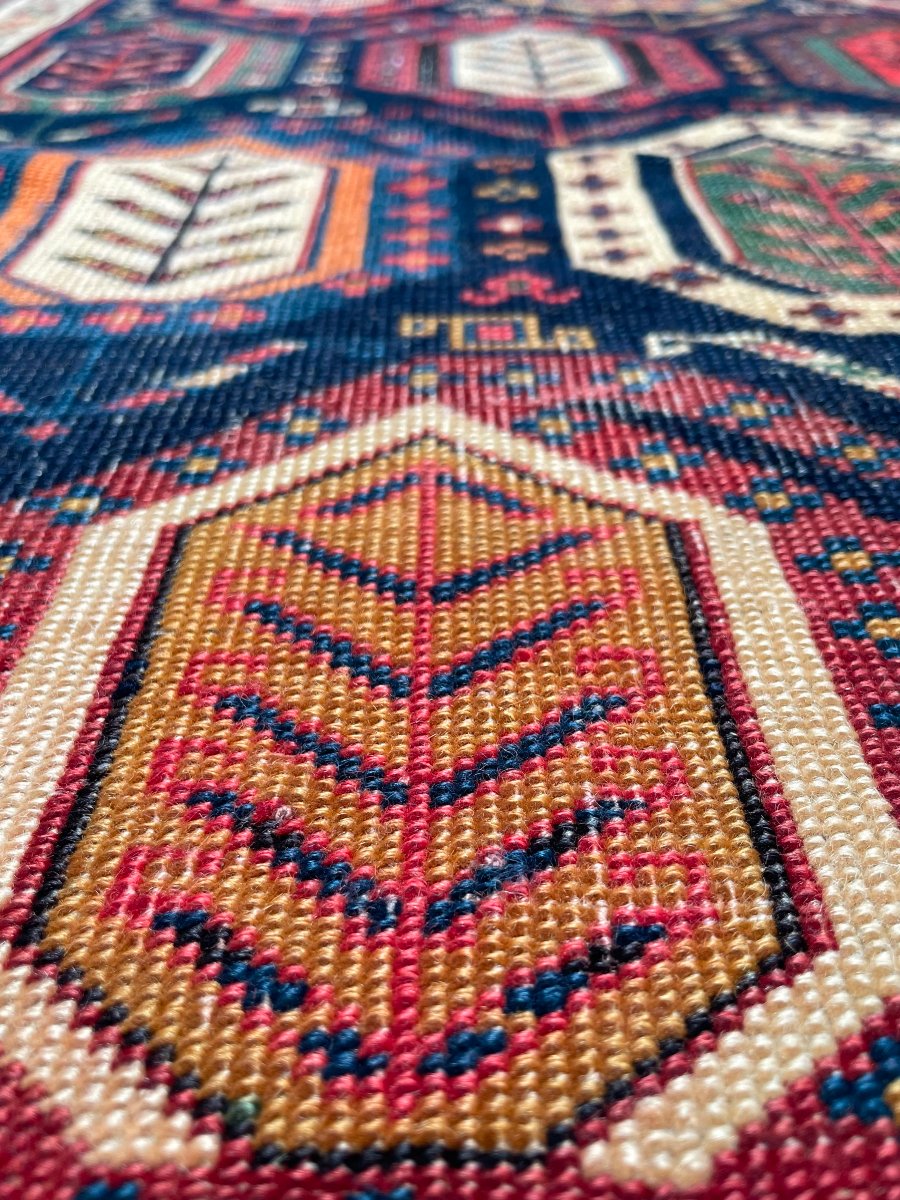
Within the numerous boteh motifs, a second symbol appears: the tree of life. An ancient symbol of growth, fertility, continuity, and renewal, it too is repeated without ever being reproduced identically. Some trees are very bare, others more branched; their shapes and colors evolve throughout the composition.
Perhaps this is where the true strength of this rug lies: repeating without replicating. The same structure, the same vocabulary, but a succession of variations that prevent any sense of monotony. The rigor of the architecture and the freedom of the hand thus come together in a composition of astonishing graphic modernity.
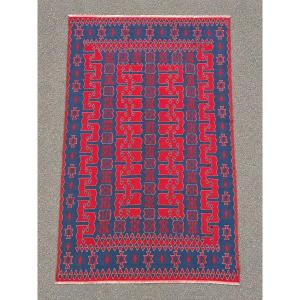
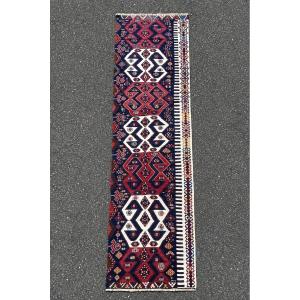
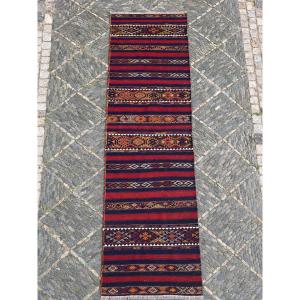
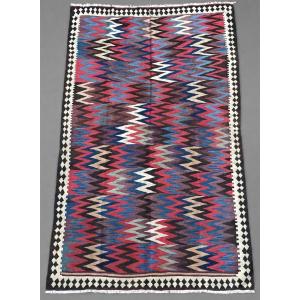
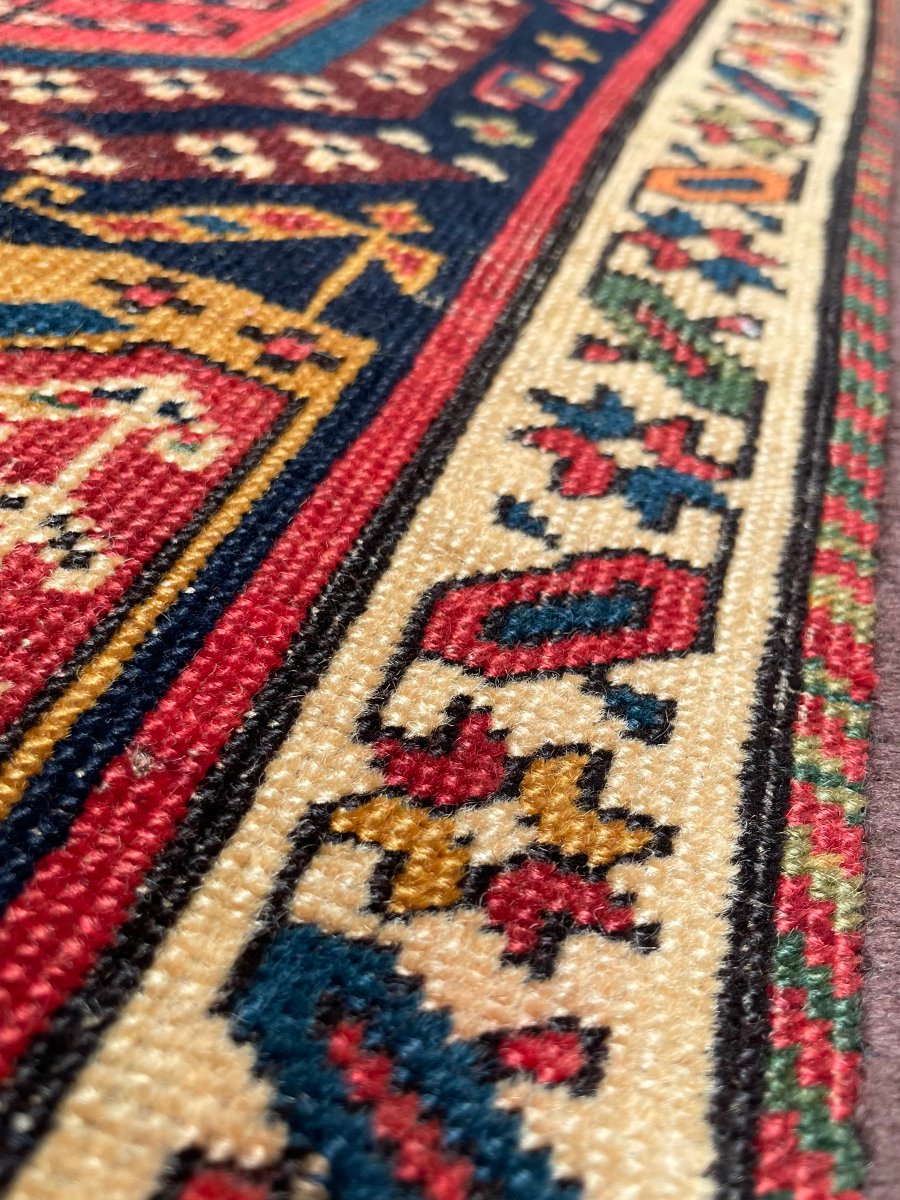
Color plays a full part in this balance. The deep indigo blue, omnipresent in the central field, serves as a backdrop for a particularly rich palette: madder red, brick red, terracotta, mahogany brown, yellow ochre, orange, dusty rose, olive green, verdigris, midnight blue, and natural ivory. The wide ivory border illuminates and frames the entire piece, while the alternating colors within the boteh motifs further accentuate the composition’s rhythm.
An antique piece with powerful design, whose extraordinary presence ultimately stems from a very simple principle: the order of repetition and the freedom of variation.
Shirvan, Eastern Caucasus – present-day Azerbaijan
Date: circa 1900
Technique: knotted weave, wool on wool
Dimensions: 225 x 85 cm
Laurent
Beauty of Kilims
This repetition gives rise to the rug’s graphic design. The shapes align, echo one another, and ultimately form a true textile architecture. Yet, upon closer inspection, this apparent rigor gives way to a multitude of variations: no two motifs are exactly alike. The proportions shift slightly, the contours curve, the colors alternate, and the interior designs transform. Order is certainly present, but it is never mechanical.
The entire composition revolves around the boteh, an ancient motif found in both Persian and Caucasian textile arts. Its characteristic shape, curved at the tip, has been interpreted in various ways as a leaf, a flame, or even a stylized cypress tree. Here, the boteh is significantly enlarged and rendered in a geometric style. It is no longer a mere decorative motif: it becomes almost a medallion and, through its repetition, forms the very framework of the rug.
Within the numerous boteh motifs, a second symbol appears: the tree of life. An ancient symbol of growth, fertility, continuity, and renewal, it too is repeated without ever being reproduced identically. Some trees are very bare, others more branched; their shapes and colors evolve throughout the composition.
Perhaps this is where the true strength of this rug lies: repeating without replicating. The same structure, the same vocabulary, but a succession of variations that prevent any sense of monotony. The rigor of the architecture and the freedom of the hand thus come together in a composition of astonishing graphic modernity.
Color plays a full part in this balance. The deep indigo blue, omnipresent in the central field, serves as a backdrop for a particularly rich palette: madder red, brick red, terracotta, mahogany brown, yellow ochre, orange, dusty rose, olive green, verdigris, midnight blue, and natural ivory. The wide ivory border illuminates and frames the entire piece, while the alternating colors within the boteh motifs further accentuate the composition’s rhythm.
An antique piece with powerful design, whose extraordinary presence ultimately stems from a very simple principle: the order of repetition and the freedom of variation.
Shirvan, Eastern Caucasus – present-day Azerbaijan
Date: circa 1900
Technique: knotted weave, wool on wool
Dimensions: 225 x 85 cm
Laurent
Beauty of Kilims
1 400 €
Period: 20th century
Style: Orientalism
Condition: Excellent condition
Material: Wool
Length: 225 cm
Width: 85 cm
Reference (ID): 1820502
Availability: In stock
Print