

Charles Rouvière – Riverside, Seated Woman – Oil On Canvas – Signed And Dated 1882
Artist: Rouvière Charles (1866 – 1924, France)
Charles Rouvière (1866–1924)
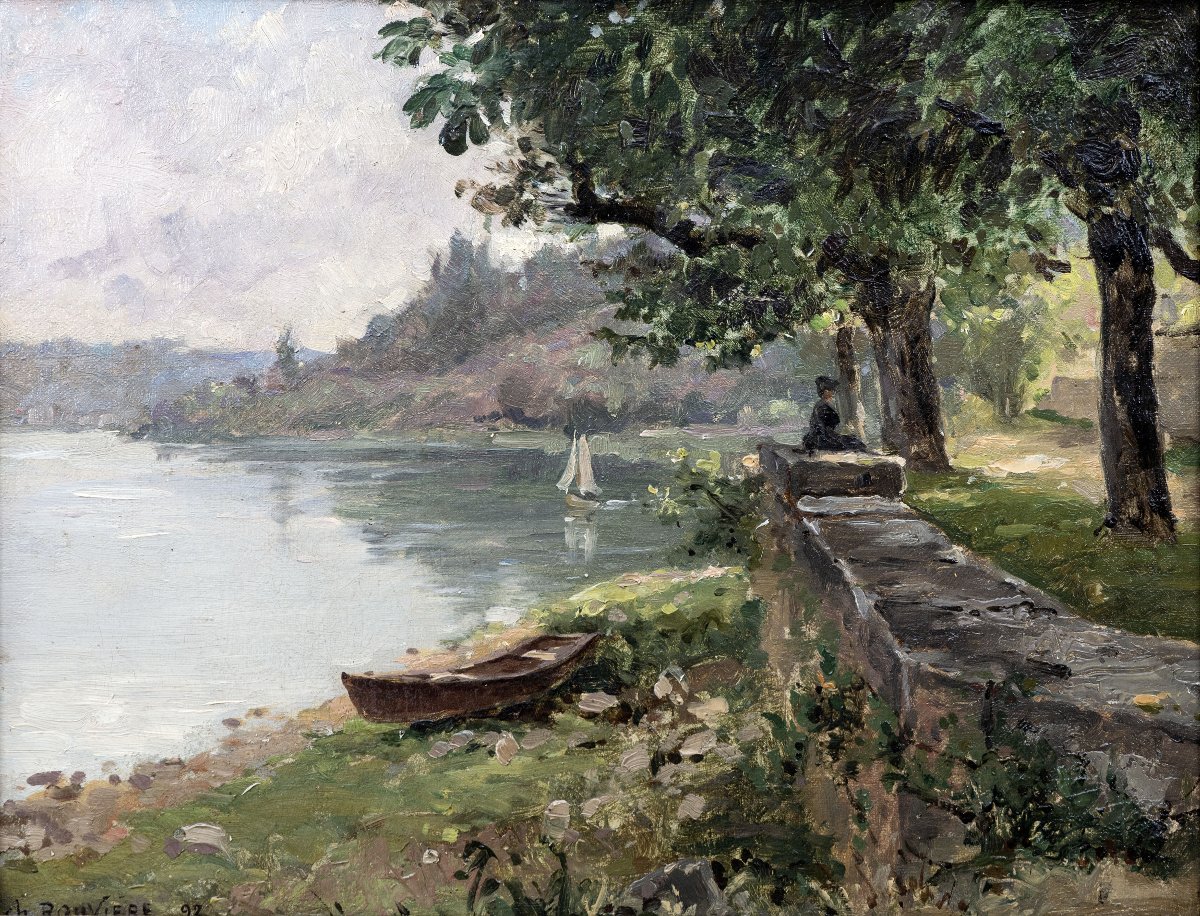
Riverbank, Woman Seated Under the Trees – 1892
Oil on canvas
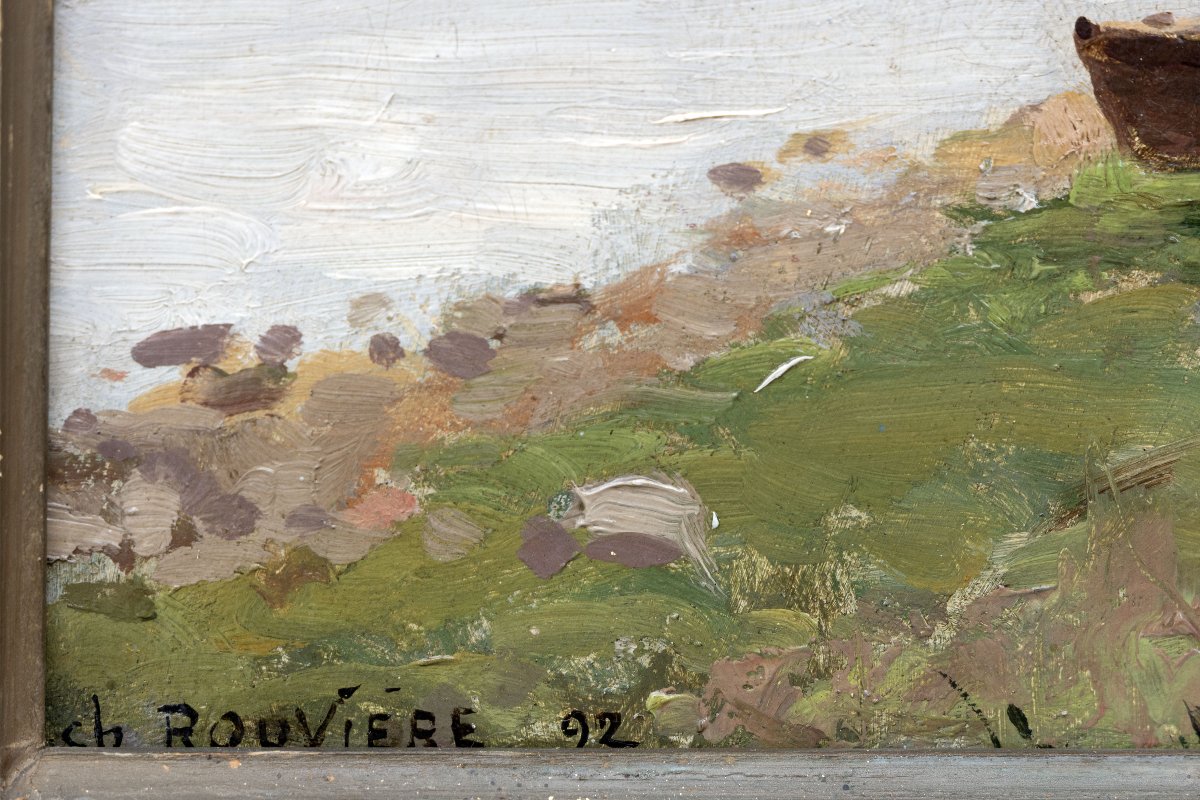
Signed and dated “Ch Rouvière 92” in the lower left corner
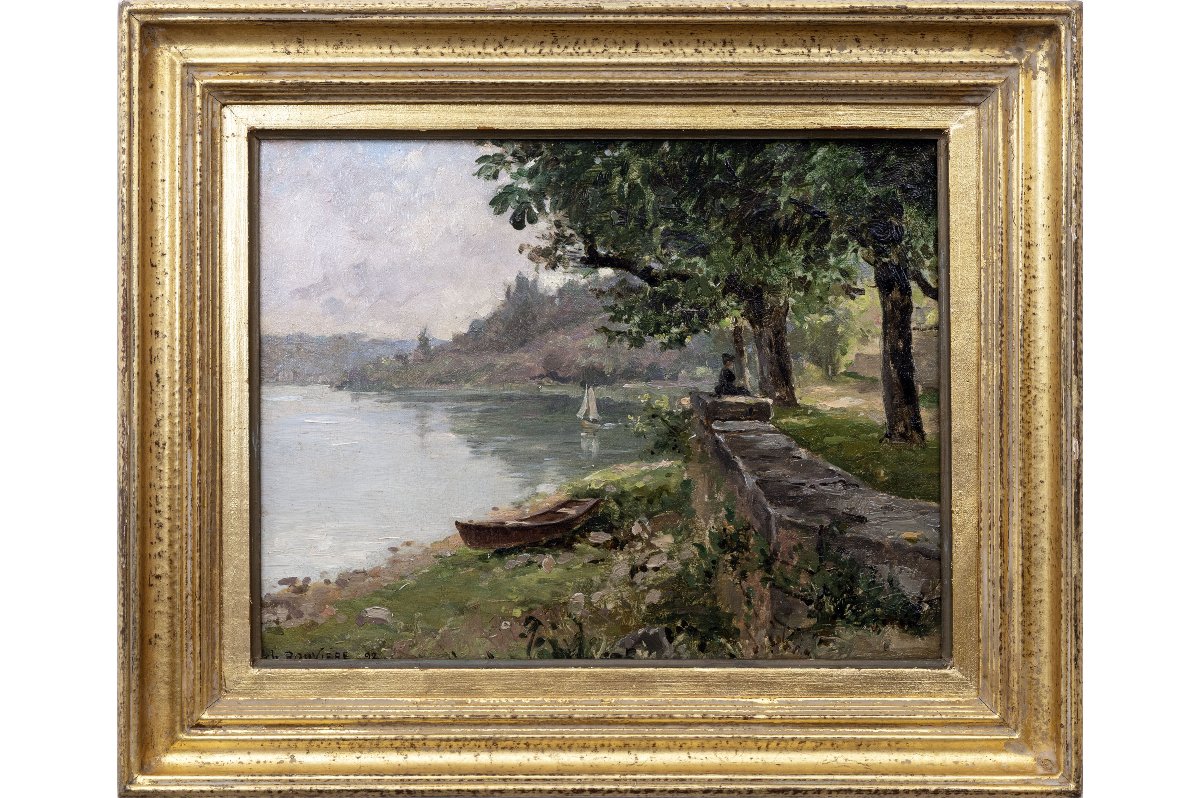
Dimensions: 35 x 27 cm (5 F format) – 46 x 38 cm with frame
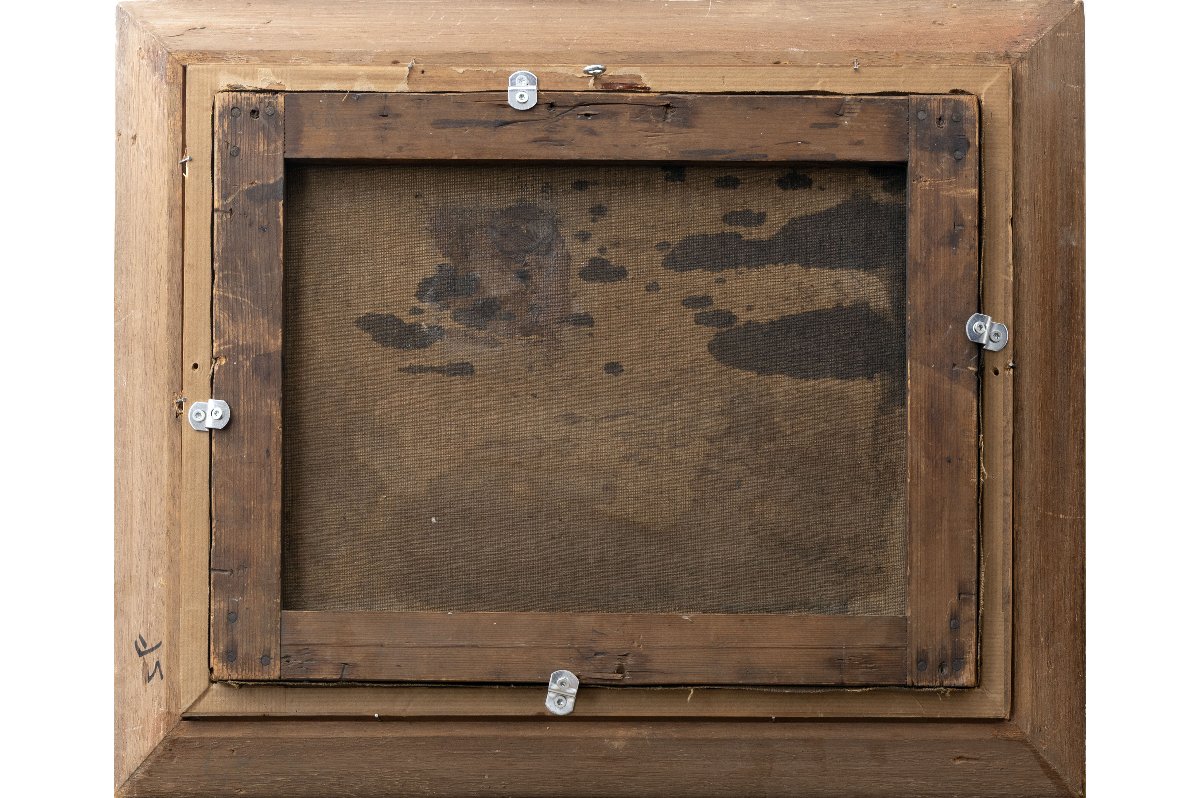
Condition: very good overall condition, fresh colors. One visible repair on the back, invisible from the front
Frame: modern gilded frame, in good condition
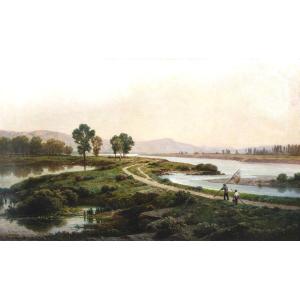
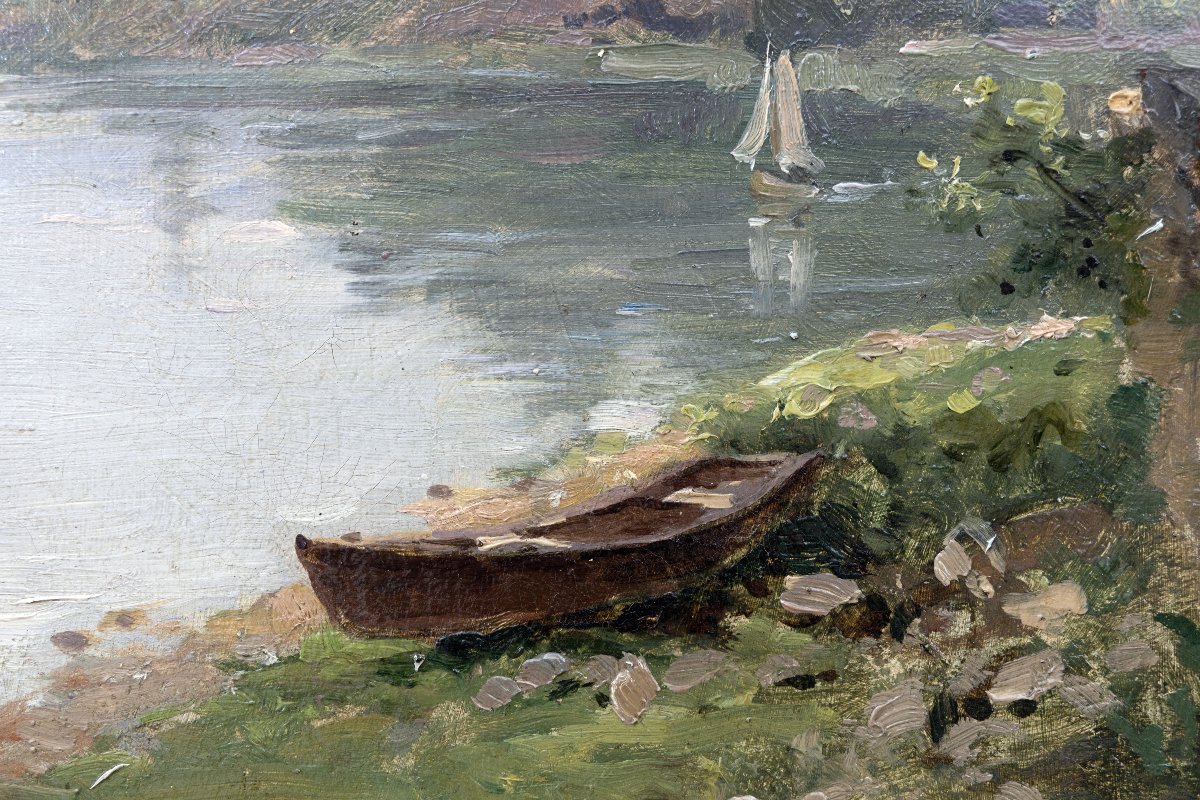
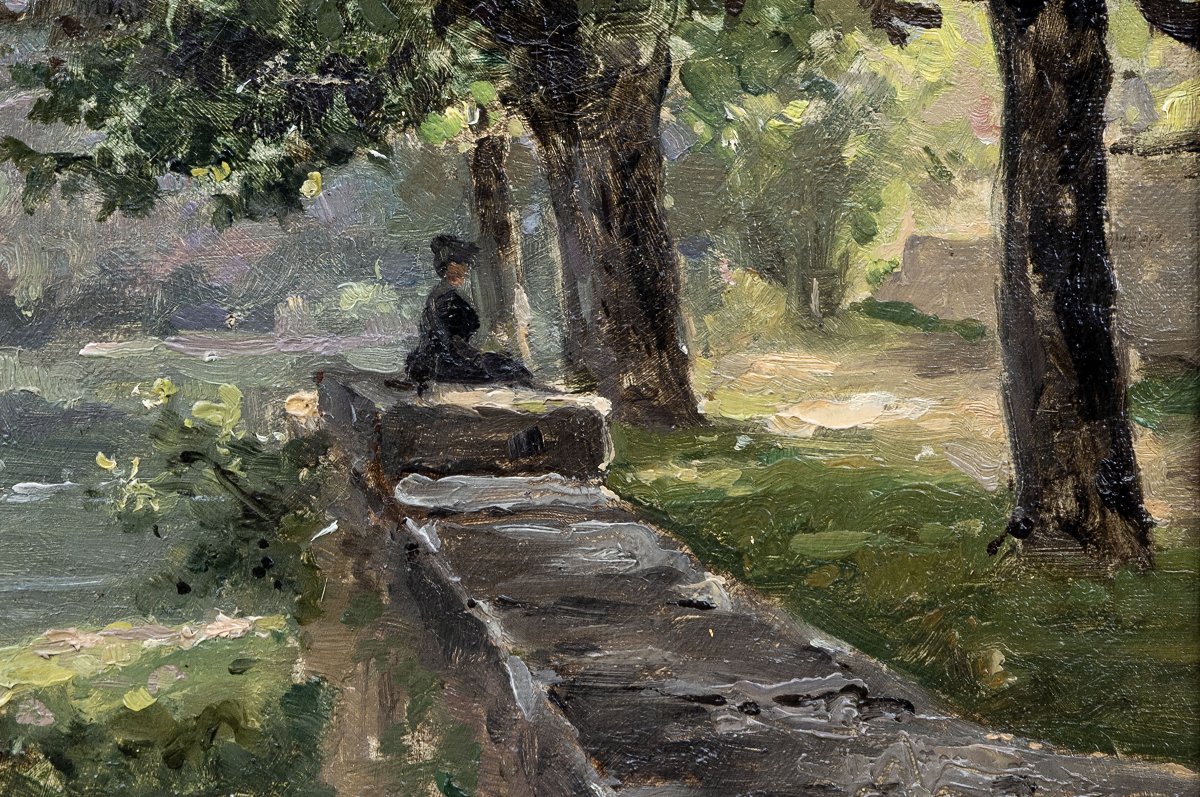
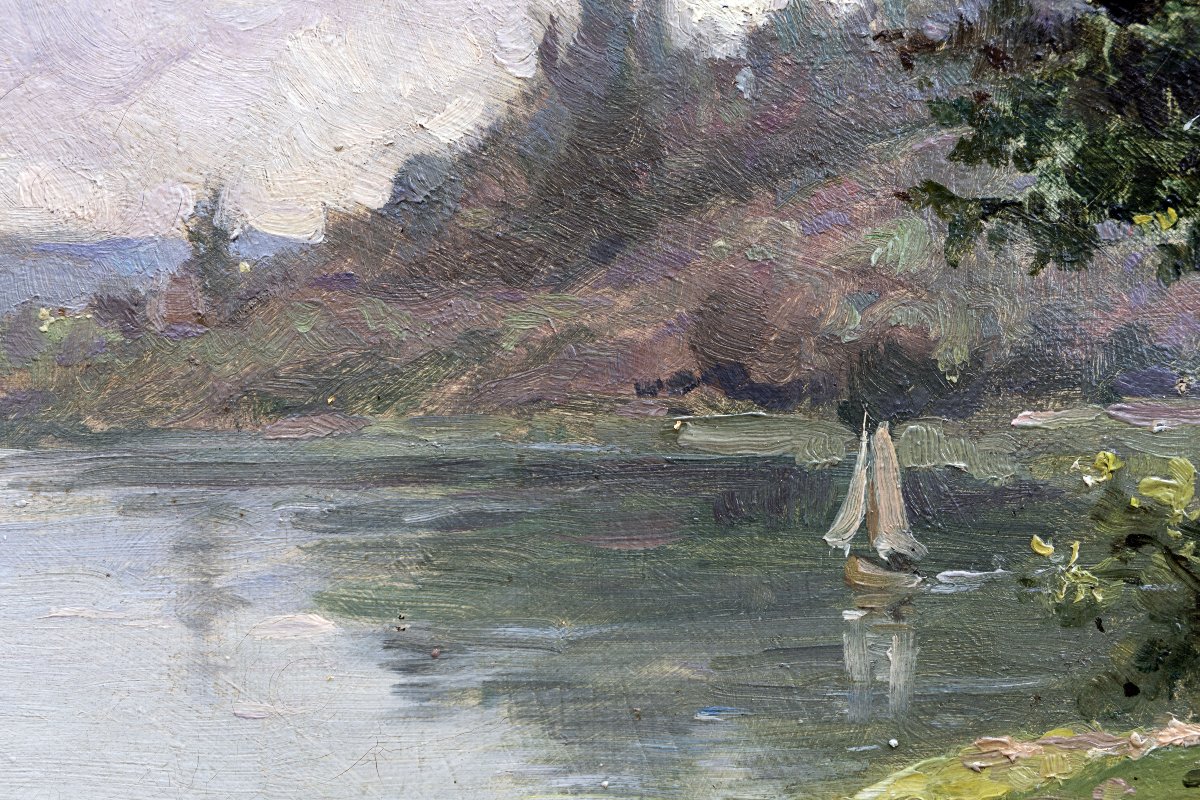
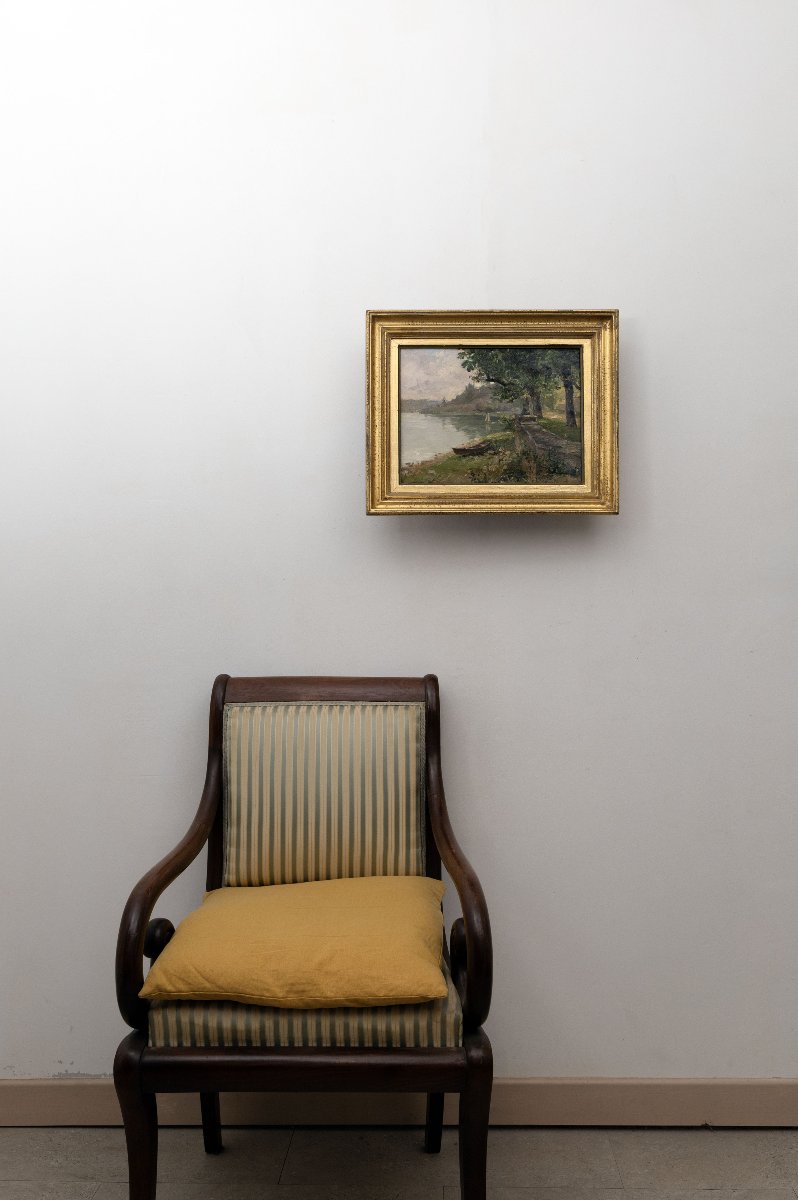
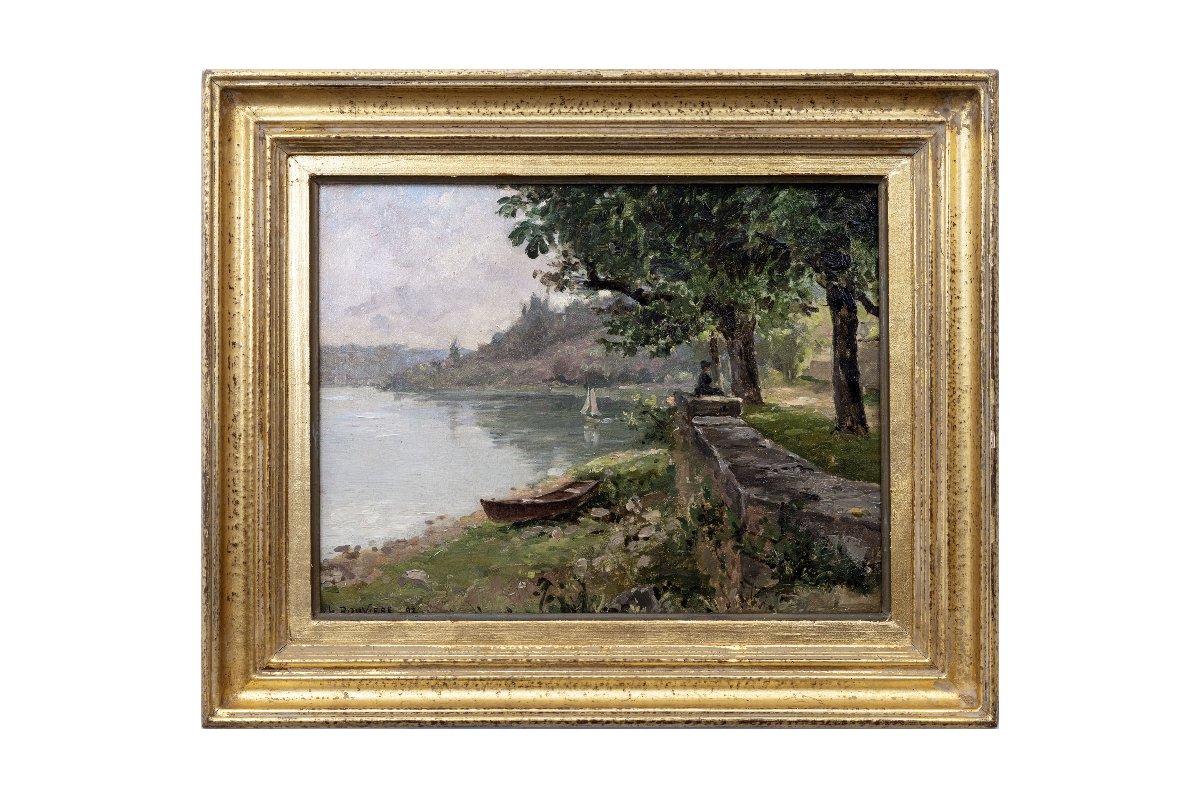
A woman in a dark dress is seated at the end of a low stone wall, in the shade of the trees. In front of her lies the river. A small sailboat glides across the calm water. The scene is simple: all its charm comes from the light.
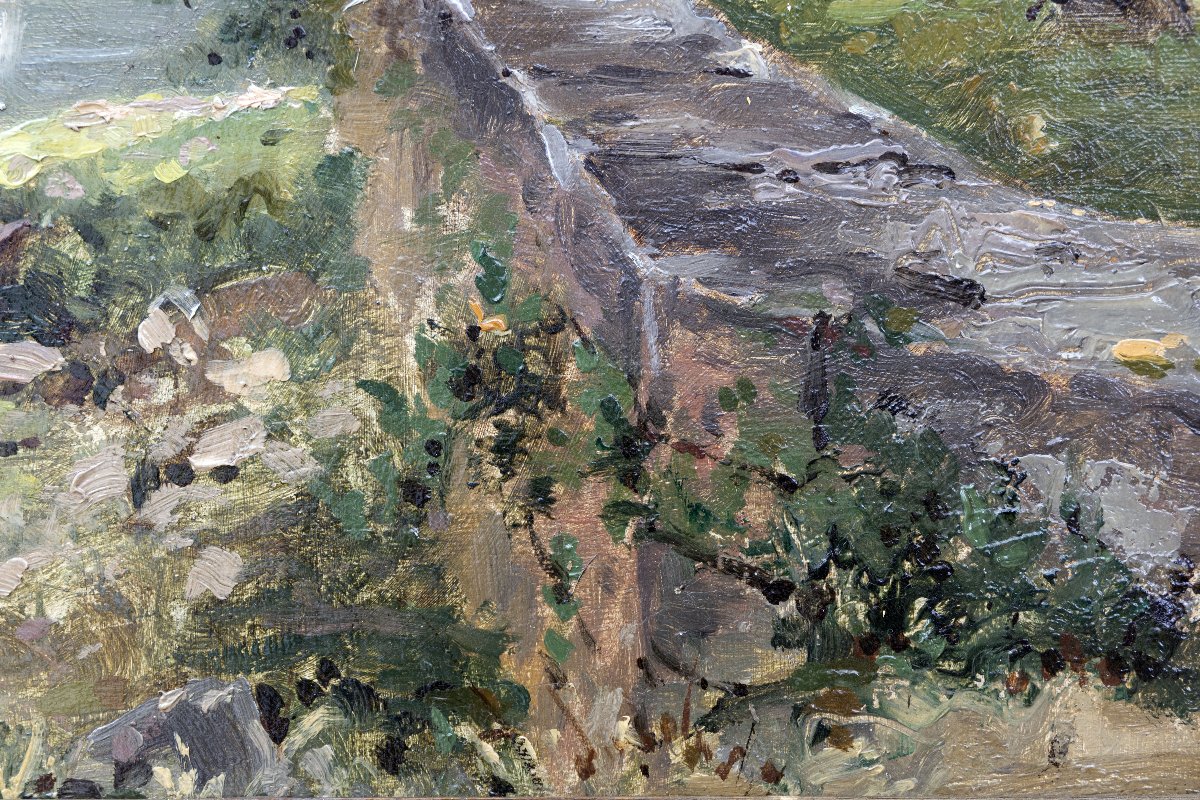
Charles Rouvière constructs his painting with great naturalness. The low wall extends from the lower right corner and draws the eye toward the woman. Above her, the tall trees frame the composition with their dense foliage. On the left, however, the scene opens up. The water and sky echo each other in silvery grays and very soft mauves. On the opposite bank, a wooded hill fades into the mist, and a few houses can be glimpsed in the distance.
In the foreground, a brown rowboat is pulled up onto the grass. The pebbles along the bank are rendered in thick strokes of mauve, beige, and pinkish hues. To the right, a sun-drenched path leads toward a house almost obscured by the light.
The brushwork is free and rapid, characteristic of a painter working from life. By 1892, Rouvière had taken the Impressionists’ lesson to heart: light guides everything, shadows take on a mauve hue, and the foliage is rendered with small brushstrokes placed side by side. Yet he retains a solid draftsmanship, inherited from the Lyon landscape painters. The low wall, the boat, and the tree trunks remain firmly constructed. The paint is thick in the foreground, more fluid in the water. Rouvière was 26 years old when he painted this canvas. It is a spontaneous early work, in which one senses the joy of painting outdoors.
The Artist
Charles Claude Étienne Rouvière was born in Lyon on November 8, 1866. A Lyon-based landscape painter, he worked primarily outdoors.
He was deeply attached to Isle-Crémieu, and in particular to the village of Optevoz, in northern Isère. As early as the beginning of the 19th century, landscape painters from Lyon and Grenoble came there in search of picturesque subjects. Auguste Ravier and Paul Flandrin worked there, as did Corot, Daubigny, and Courbet, who painted the lock at the Étang de la Tuille in Optevoz. At the end of the century, a new generation of artists settled in Optevoz, drawn by the reputation of their predecessors. Rouvière was among them, and he left behind painted murals in several houses in the canton. He also painted the village’s large washhouse. Optevoz has honored him: a square now bears his name.
His work is not limited to the Isère region. He is known for his views of Lyon, such as the Guillotière Bridge; mountain landscapes with herds; alpine lakes; views of the French Riviera, such as Villefranche-sur-Mer; and, more rarely, still lifes.
Little is known about his training. He is listed in the Bénézit dictionary.
Work on display at the gallery (07240)
Shipping: Please contact us for shipping rates within France and internationally.
Riverbank, Woman Seated Under the Trees – 1892
Oil on canvas
Signed and dated “Ch Rouvière 92” in the lower left corner
Dimensions: 35 x 27 cm (5 F format) – 46 x 38 cm with frame
Condition: very good overall condition, fresh colors. One visible repair on the back, invisible from the front
Frame: modern gilded frame, in good condition
A woman in a dark dress is seated at the end of a low stone wall, in the shade of the trees. In front of her lies the river. A small sailboat glides across the calm water. The scene is simple: all its charm comes from the light.
Charles Rouvière constructs his painting with great naturalness. The low wall extends from the lower right corner and draws the eye toward the woman. Above her, the tall trees frame the composition with their dense foliage. On the left, however, the scene opens up. The water and sky echo each other in silvery grays and very soft mauves. On the opposite bank, a wooded hill fades into the mist, and a few houses can be glimpsed in the distance.
In the foreground, a brown rowboat is pulled up onto the grass. The pebbles along the bank are rendered in thick strokes of mauve, beige, and pinkish hues. To the right, a sun-drenched path leads toward a house almost obscured by the light.
The brushwork is free and rapid, characteristic of a painter working from life. By 1892, Rouvière had taken the Impressionists’ lesson to heart: light guides everything, shadows take on a mauve hue, and the foliage is rendered with small brushstrokes placed side by side. Yet he retains a solid draftsmanship, inherited from the Lyon landscape painters. The low wall, the boat, and the tree trunks remain firmly constructed. The paint is thick in the foreground, more fluid in the water. Rouvière was 26 years old when he painted this canvas. It is a spontaneous early work, in which one senses the joy of painting outdoors.
The Artist
Charles Claude Étienne Rouvière was born in Lyon on November 8, 1866. A Lyon-based landscape painter, he worked primarily outdoors.
He was deeply attached to Isle-Crémieu, and in particular to the village of Optevoz, in northern Isère. As early as the beginning of the 19th century, landscape painters from Lyon and Grenoble came there in search of picturesque subjects. Auguste Ravier and Paul Flandrin worked there, as did Corot, Daubigny, and Courbet, who painted the lock at the Étang de la Tuille in Optevoz. At the end of the century, a new generation of artists settled in Optevoz, drawn by the reputation of their predecessors. Rouvière was among them, and he left behind painted murals in several houses in the canton. He also painted the village’s large washhouse. Optevoz has honored him: a square now bears his name.
His work is not limited to the Isère region. He is known for his views of Lyon, such as the Guillotière Bridge; mountain landscapes with herds; alpine lakes; views of the French Riviera, such as Villefranche-sur-Mer; and, more rarely, still lifes.
Little is known about his training. He is listed in the Bénézit dictionary.
Work on display at the gallery (07240)
Shipping: Please contact us for shipping rates within France and internationally.
340 €
Period: 19th century
Style: Modern Art
Condition: Excellent condition
Material: Oil painting
Width: 35 cm / 46 cm encadré
Height: 27 cm / 38 cm encadré
Reference (ID): 1820332
Availability: In stock
Print