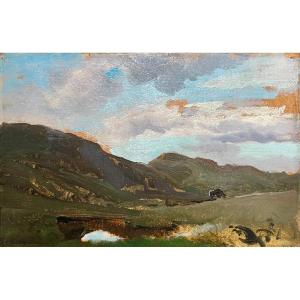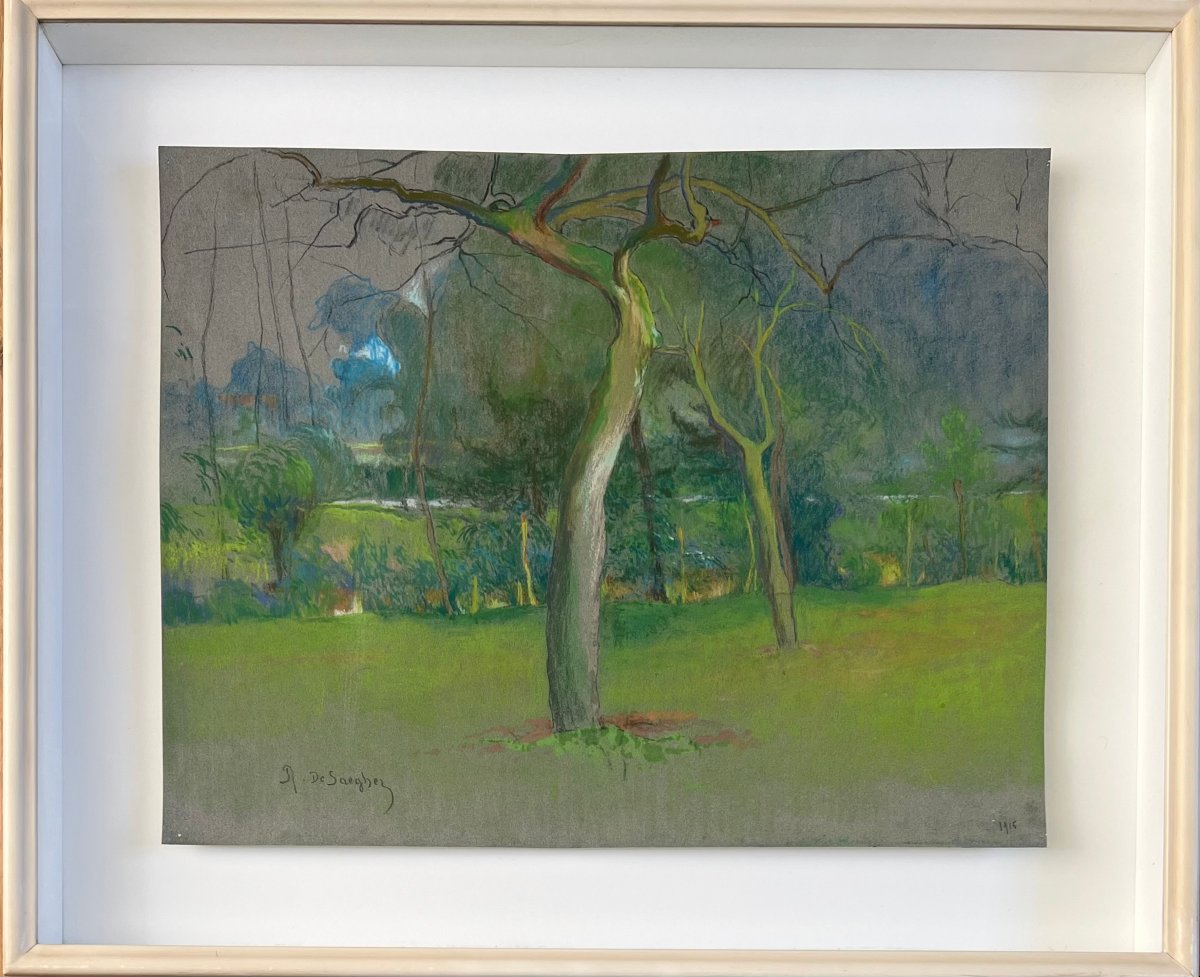
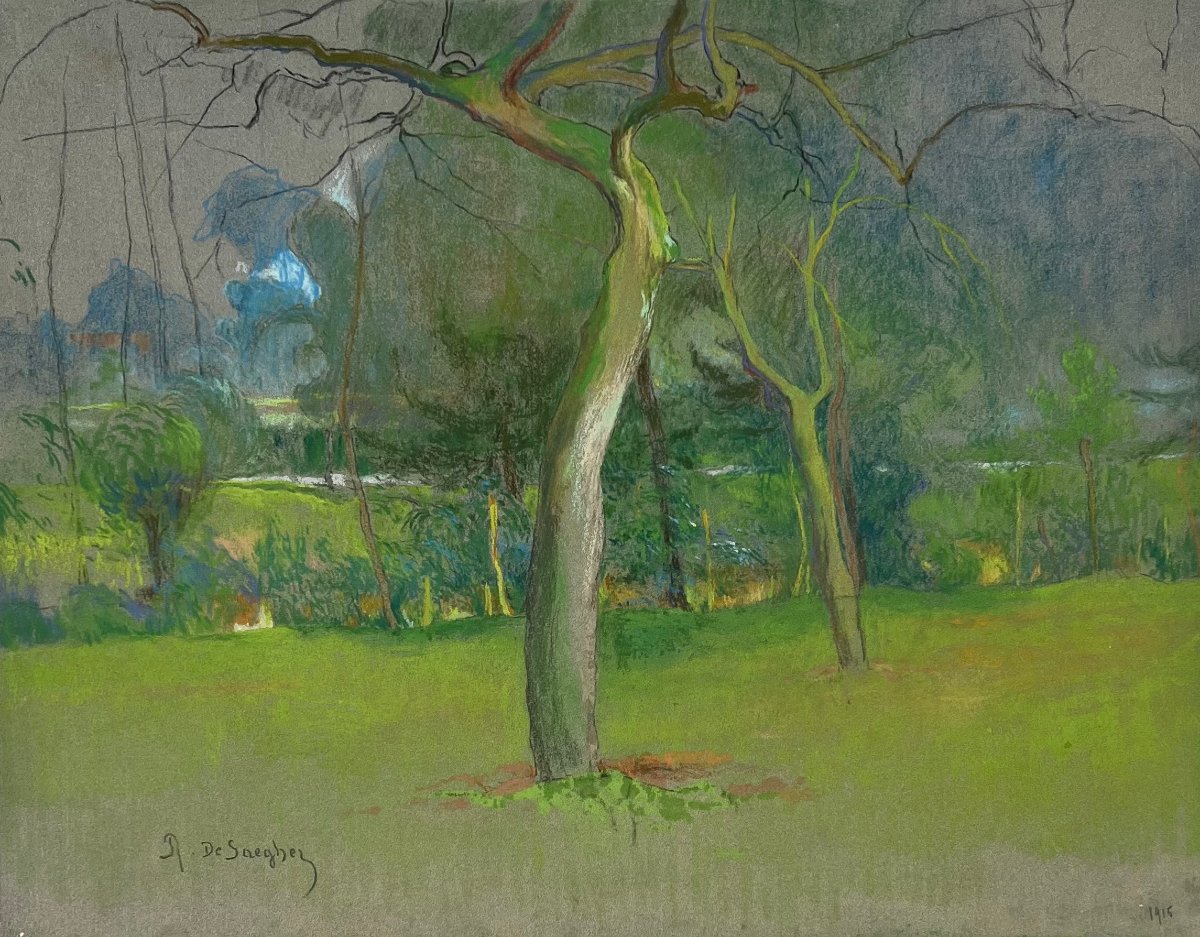
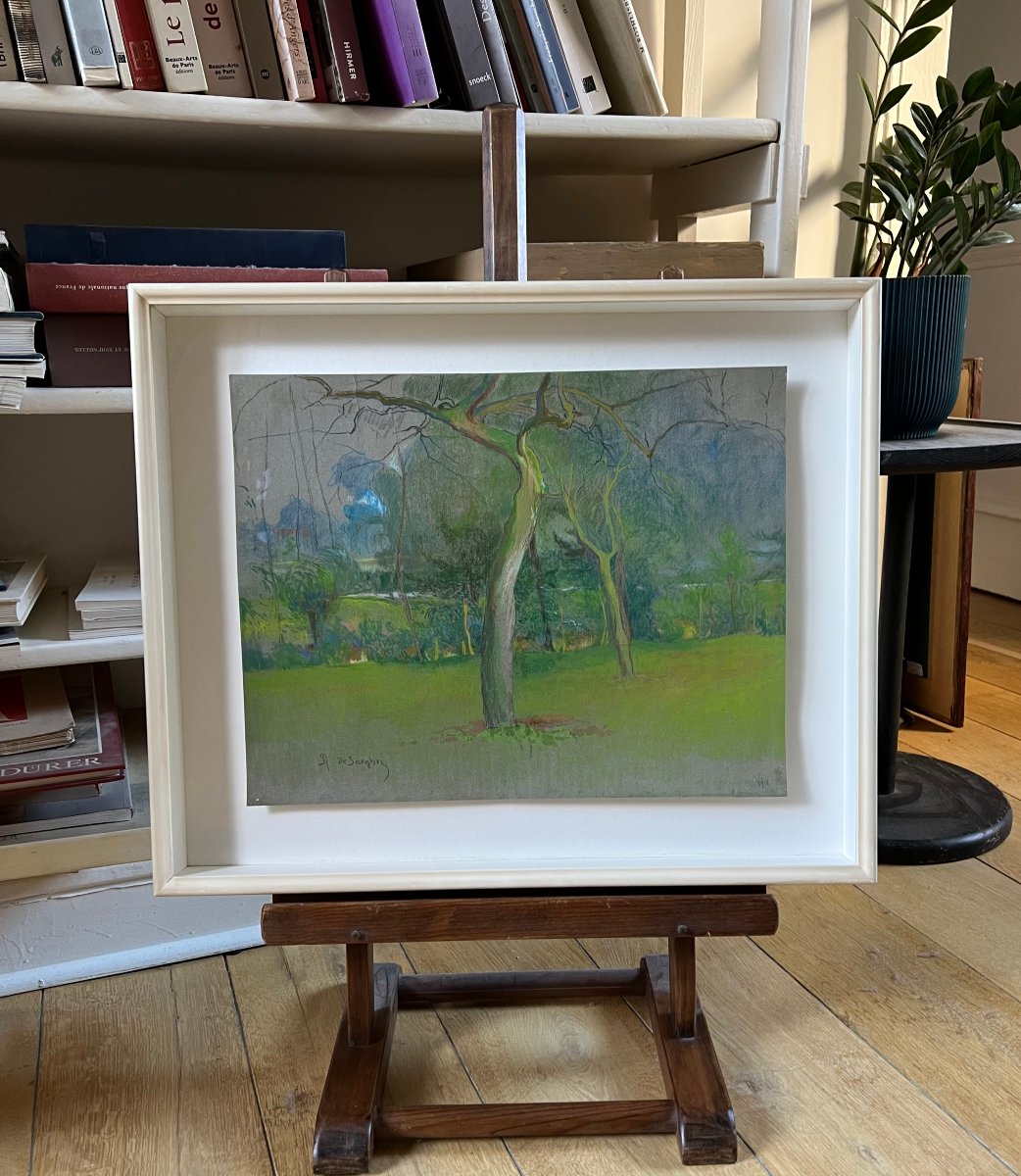
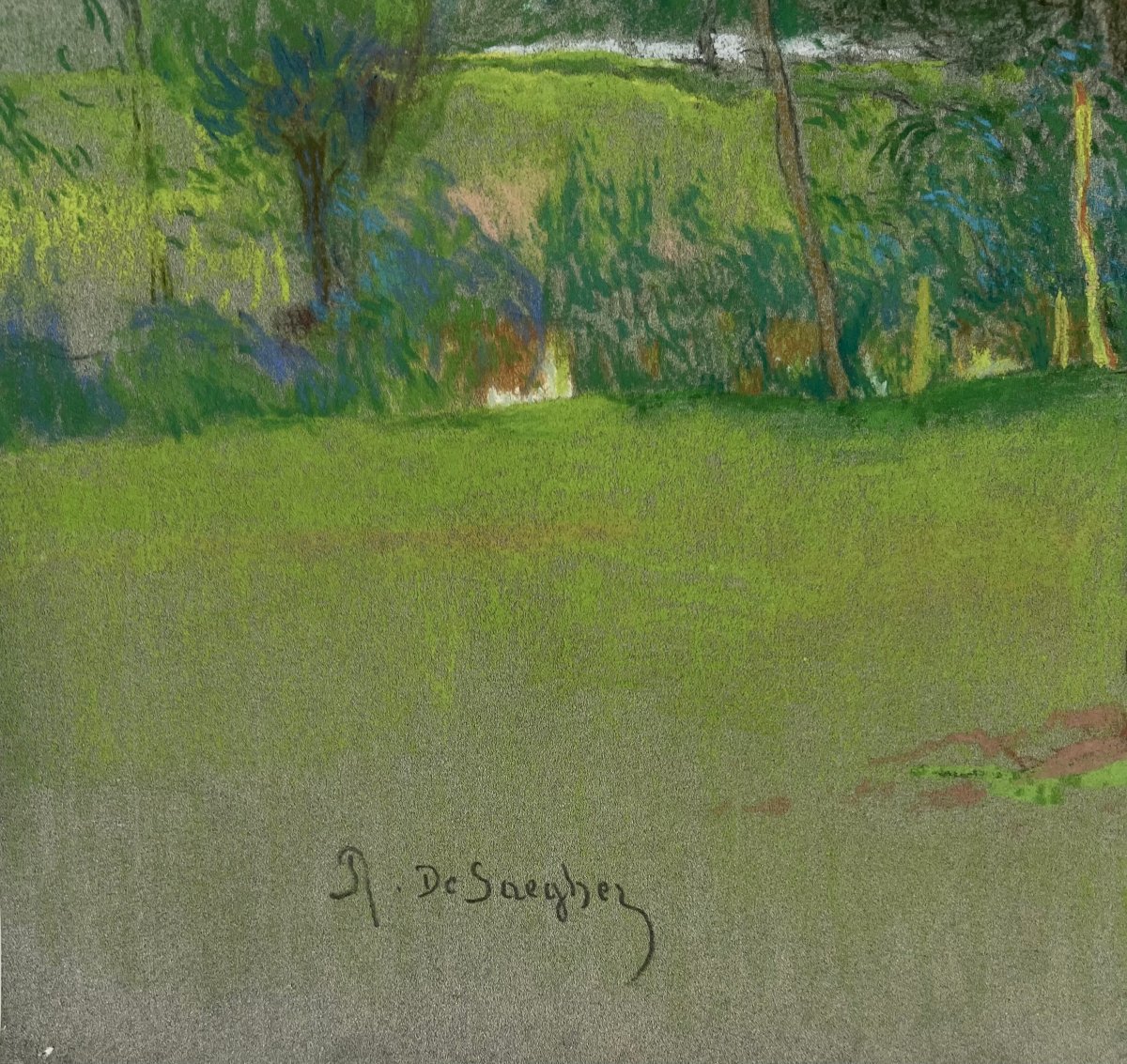
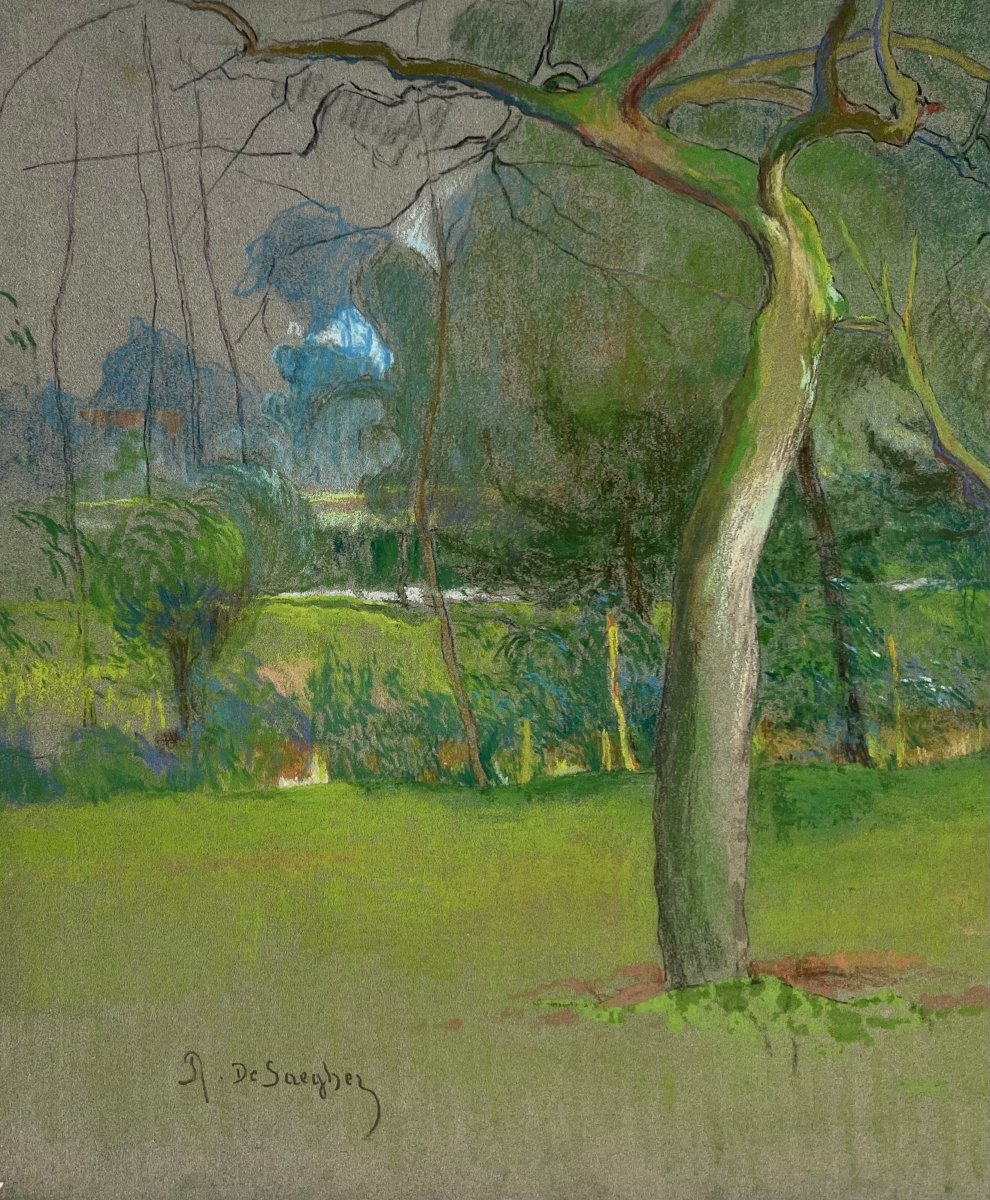
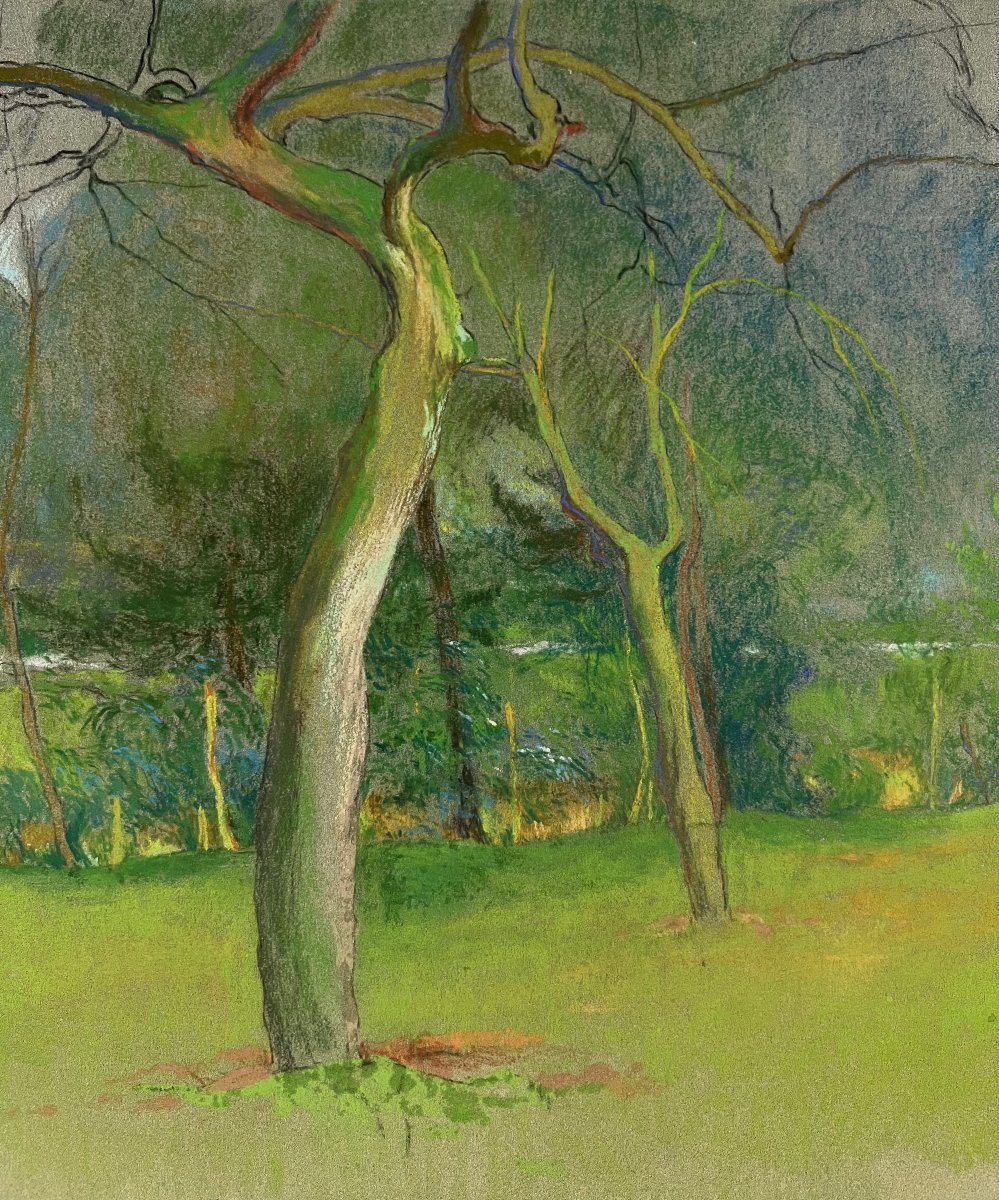
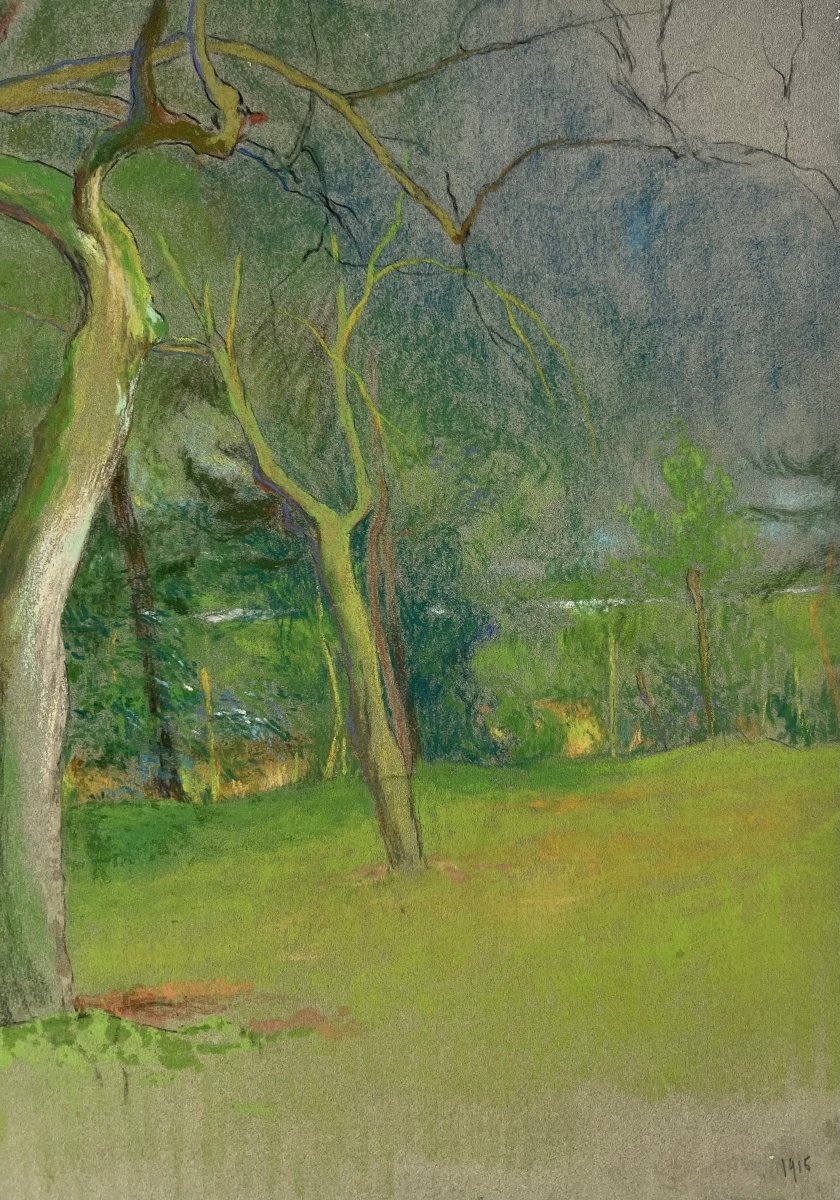
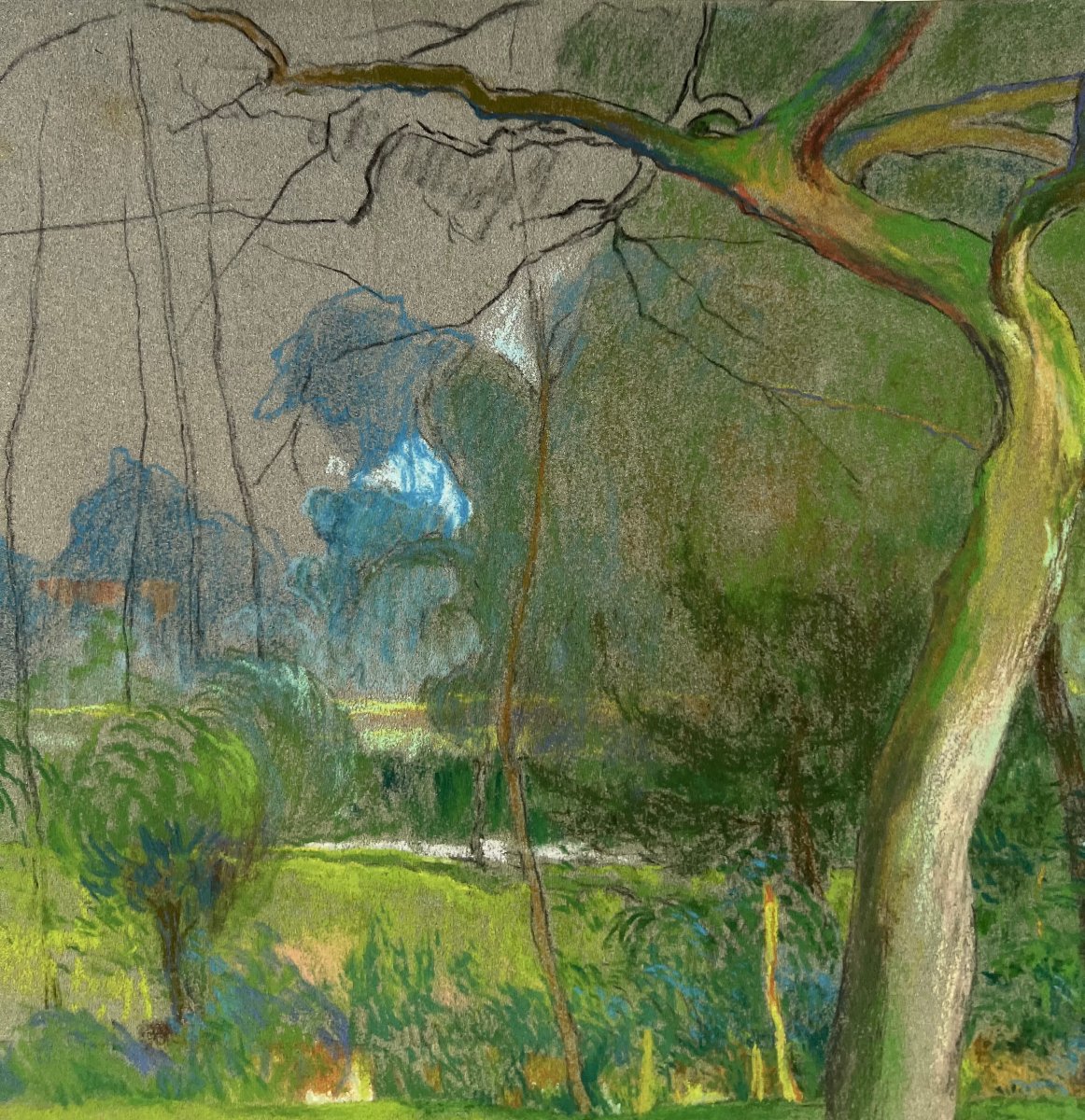


Rodolphe De Saegher (1871–1941) Landscape Near Ghent, Pastel On Paper, Signed, 1915
Rodolphe de SAEGHER
Gavere 1871– Ghent 1941
Spring Landscape in the Vicinity of Ghent
1915
Pastel on paper
31.5 x 40.5 cm sheet
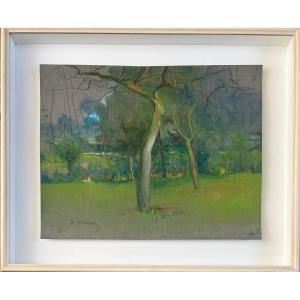
43.5 x 53.5 cm American box/frame
In perfect condition
Provenance: DE GEEST, Joost. Rodolphe De Saegher 1871–1941. Ghent (Gent), Galerie Francis Maere Fine Arts, 2014, reproduced on pp. 62–63.
Bibliography: Goyens de Heusch, Serge, Impressionism and Fauvism in Belgium, Antwerp, Fonds Mercator, 1988, p. 214.
A native of Ghent, Rodolphe de Saegher was one of the leading figures of Belgian Luminism. A student and later a friend of Émile Claus, he helped found the “Vie et Lumière” group in 1904, which brought together painters eager to express the clarity and modernity of their era through direct observation of nature.
Indeed, although influenced by French Impressionism and its pictorial innovations, Belgian Luminism distinguishes itself through a sublime representation of nature—by emphasizing the exaltation of light and atmospheric vibrations—which gives the movement’s work a contemplative dimension. The French movement, on the other hand, although multifaceted, is driven more by a rational, realistic, and social vision. In this sense, the systematic use of dry pastel by the leading members of the Belgian movement (Claus, de Saegher, Boch, de Weert) is no coincidence: by its very nature, it allows them to graspand capture the immediacy of variations in light and atmosphere.
He exhibited regularly at the Triennial Salons of Belgium and at the Société des Arts in Brussels, and took part in several international events—notably the Secessions in Vienna, Munich, and Dresden—which helped to raise the profile of Luminism abroad. As a contributor to magazines such as L’Art moderne and La Revue de Belgique, he championed the distinctiveness of the Flemish pictorial revival in contrast to French Impressionism.
A master of the pastel,with which he explored the possibilities of transparency and luminous vibrancy, De Saegher created landscapes of great subtlety, combining rigorous draftsmanship with chromatic lightness. In My Orchard (1915)illustrates his mastery of the medium: an intimate scene, observed in a shifting yet serene light, emblematic of his artistic maturity.
After Émile Claus’s death, he was appointed an expert on his friend’s work, thereby cementing their intellectual and personal bond at the heart of the Life and Light movement.
Period: 20th century
Style: Modern Art
Condition: Perfect condition
Material: Paper
Length: 31.5
Width: 40.5
Reference (ID): 1820310
Availability: In stock