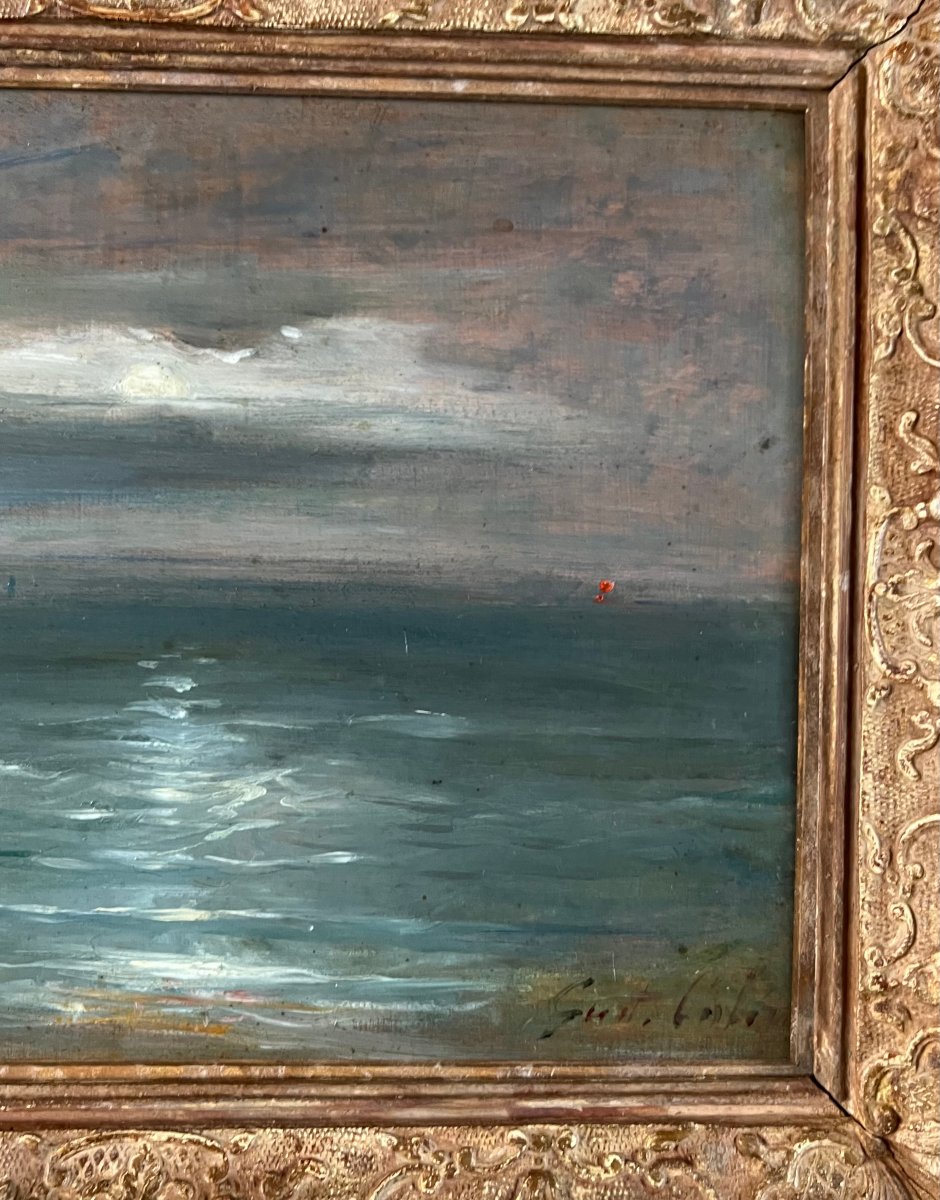


Gustave-henri Colin (1828–1910) The Biartiz Lighthouse In The Moonlight, Oil On Panel, Signed
Arras 1828 – Paris 1910
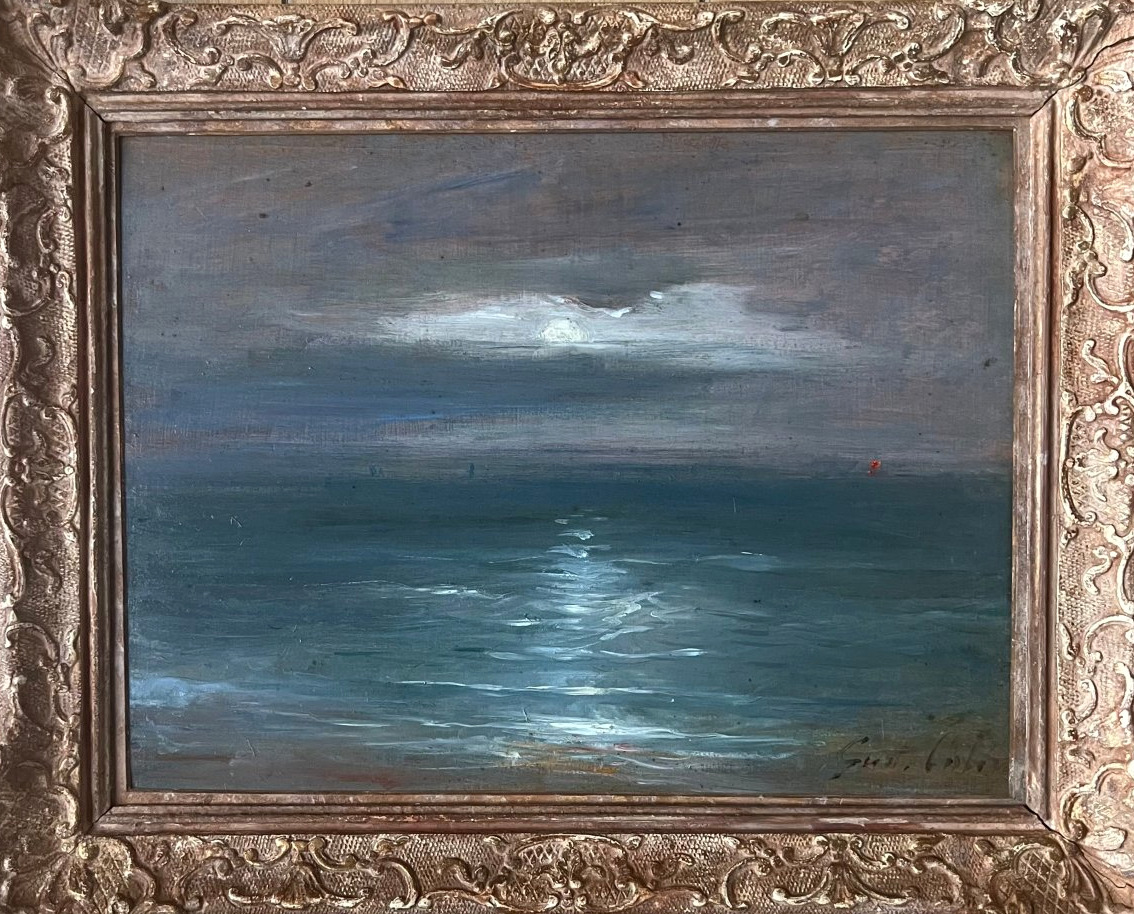
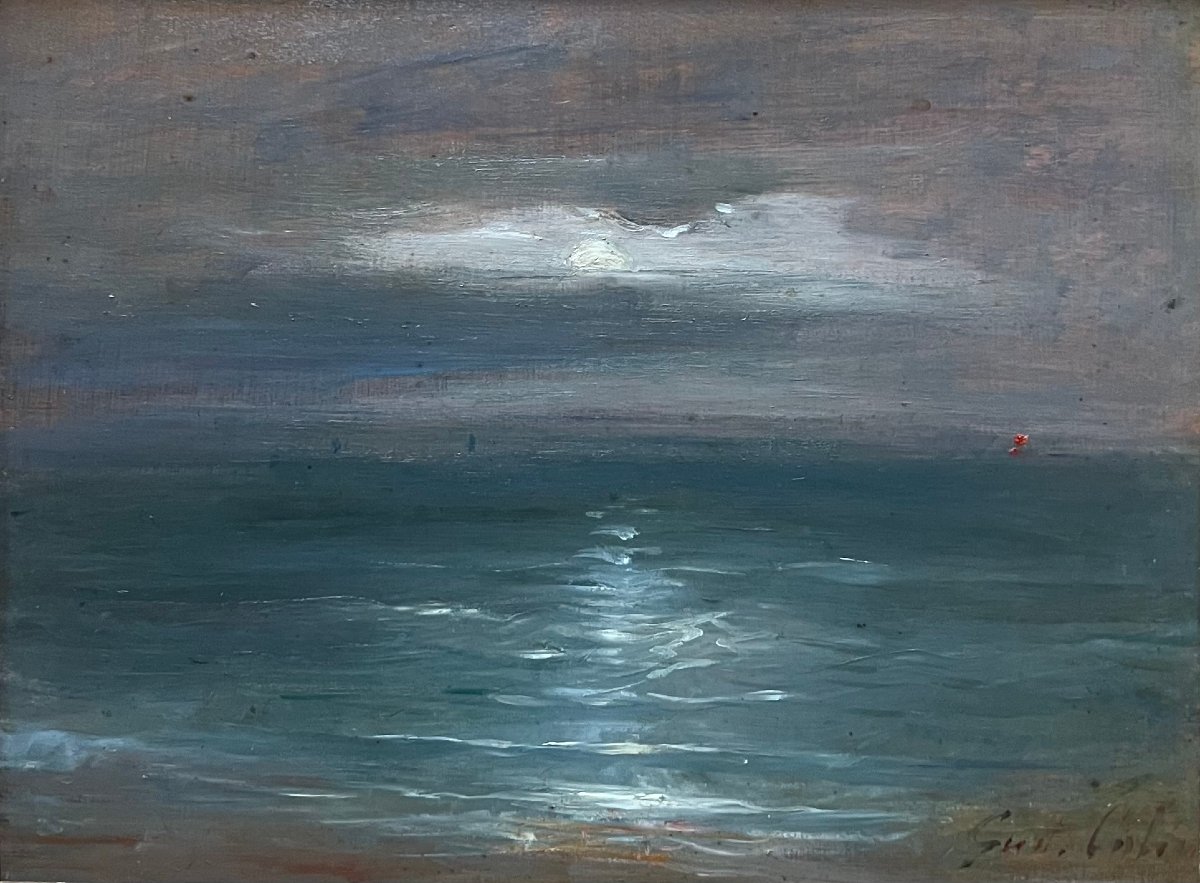
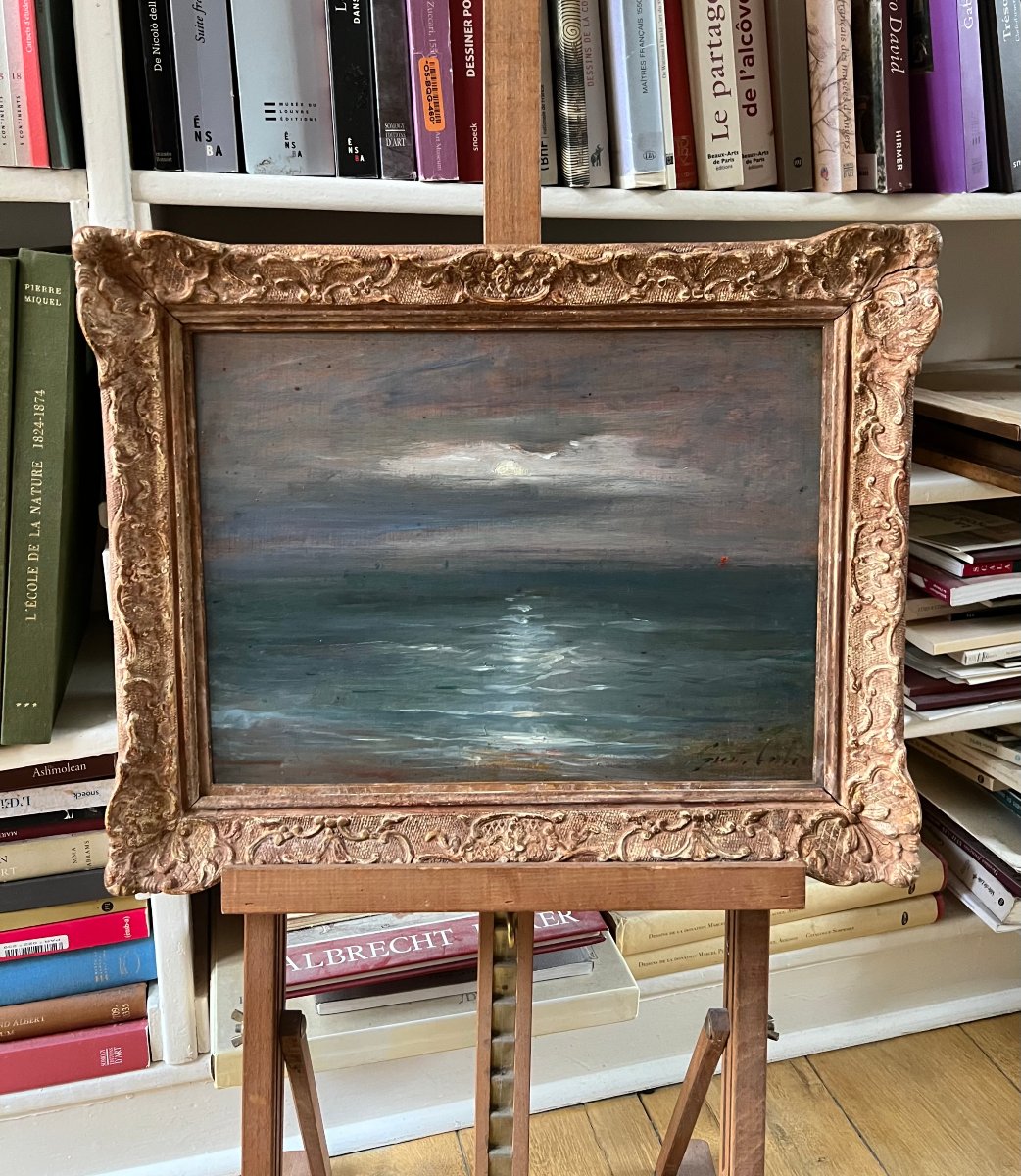
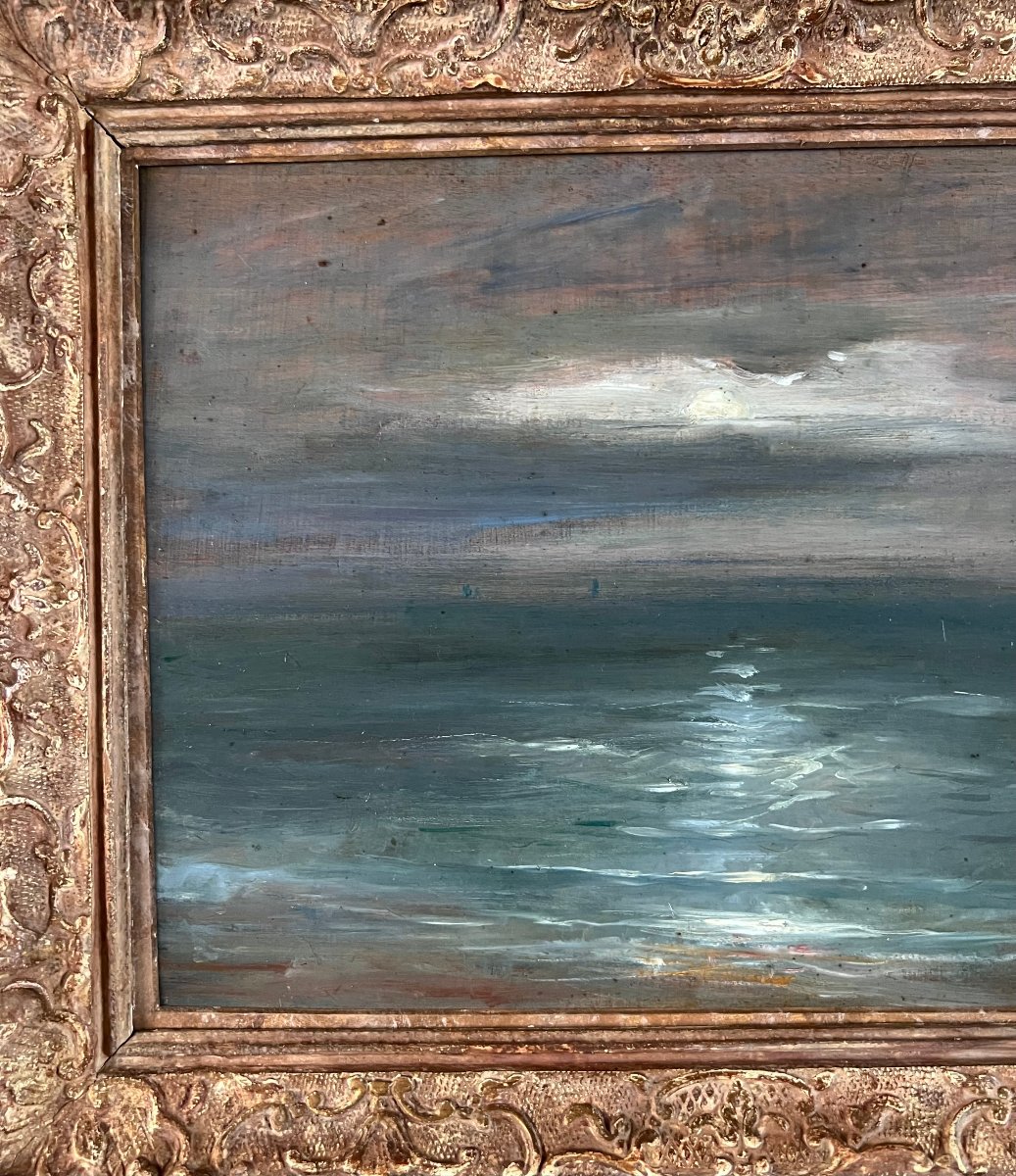
The Lighthouse at Biarritz in Moonlight
1895
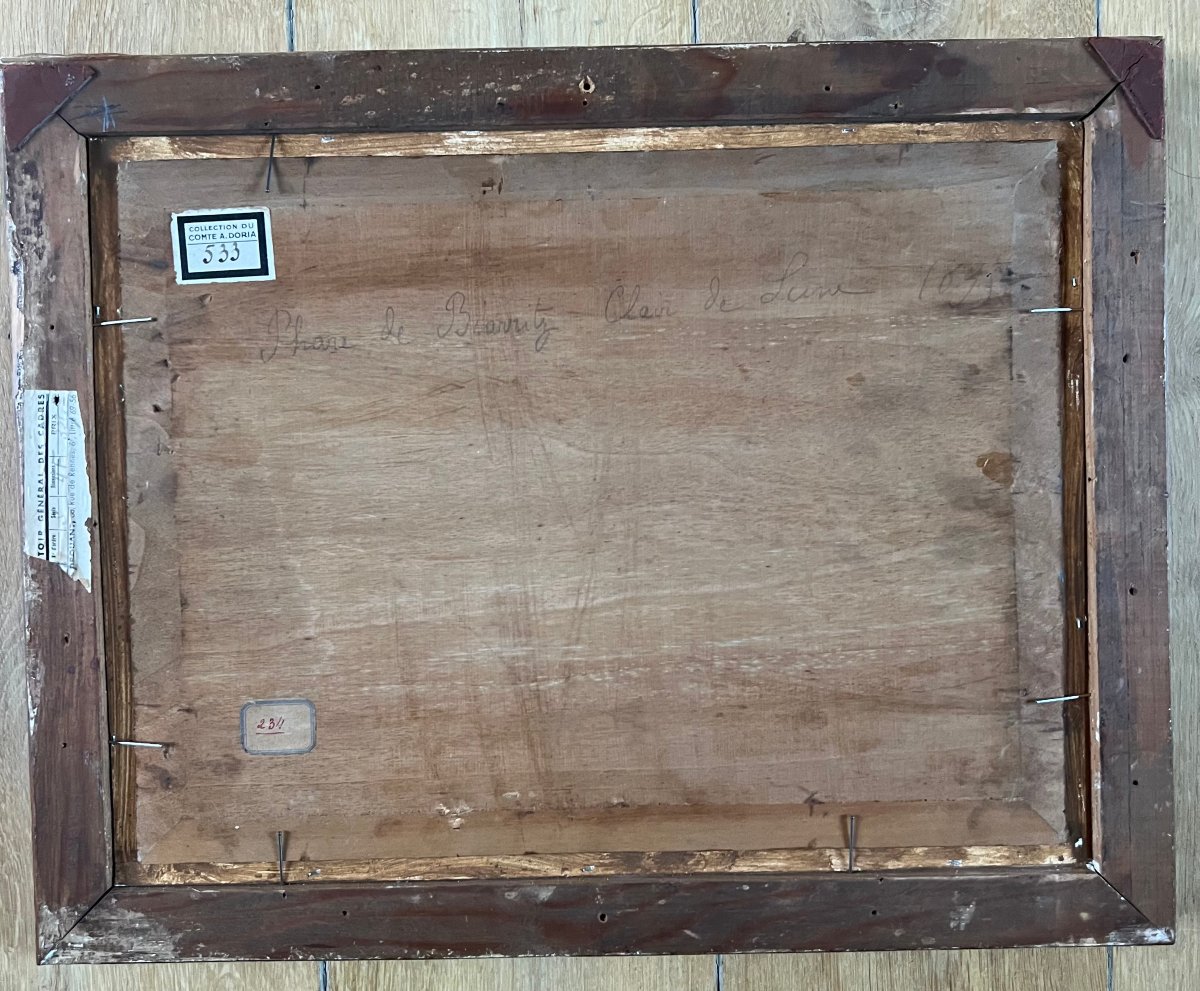
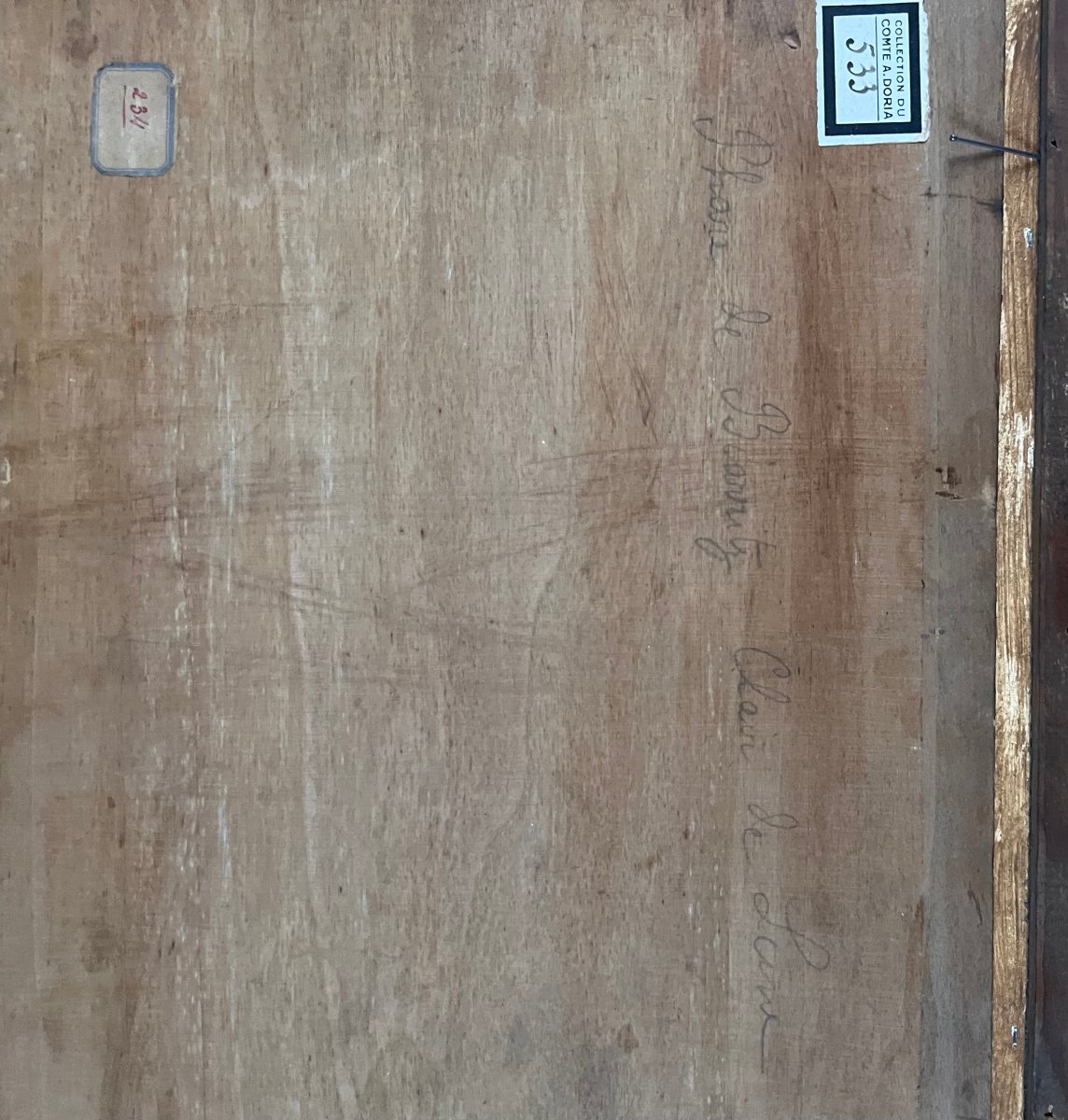
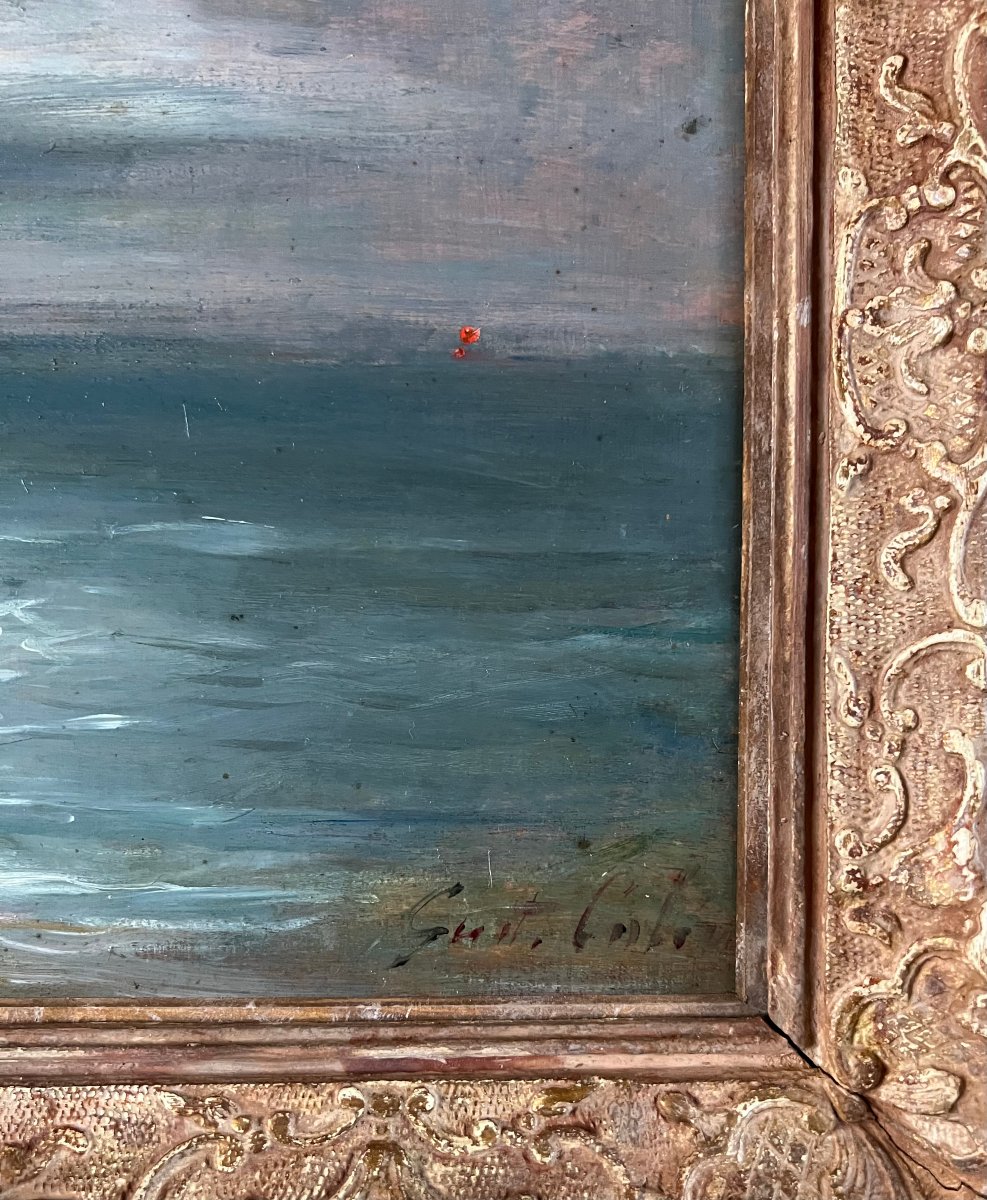
Oil on mahogany panel, signed lower right, located and dated on the reverse
On the reverse, two collection labels from Counts Armand and Arnauld Doria
27 × 35 cm
Very good condition
Provenance:
- Collection of Count Armand Doria (1824–1896), no. 234
- Collection of Count Arnauld Doria, no. 533
- Private collection, by descent
GustaveHenri Colin, born in Arras in 1828 and died in Paris in 1910, occupies a unique place in the history of French painting of the second half of the 19th century. Trained in the studios of Ary Scheffer, Thomas Couture, and Camille Corot—whose influence he retained strongly—he made his debut at the 1857 Salon and quickly broke free from academicism to explore plein air painting that focused on the effects of natural light.
Colin is considered one of the pioneers of the Impressionist movement: he participated in the first Salon des Refusés in 1863 and in the first Impressionist exhibition in 1874, alongside Monet, Renoir, Degas, and Pissarro, thereby affirming his commitment to a modern style of painting based on direct observation and spontaneous brushwork. His work reveals an for the chromatic and atmospheric explorations that would define themovement.
Beginning in the 1860s, Gustave Colin regularly stayed in Biarritz, Saint-Jean-de-Luz, and the Basque hinterland, of which he became one of the most faithful interpreters. Fascinated by the Atlantic coast, its ever-changing skies, and local life, he devoted a major portion of his output to landscapes, genre scenes, and portraits of this region. His attachment to the Basque Country earned him the reputation of being the “painter of Biarritz,” and several of his paintings are now part of the collections at the Basque Museum in Bayonne.
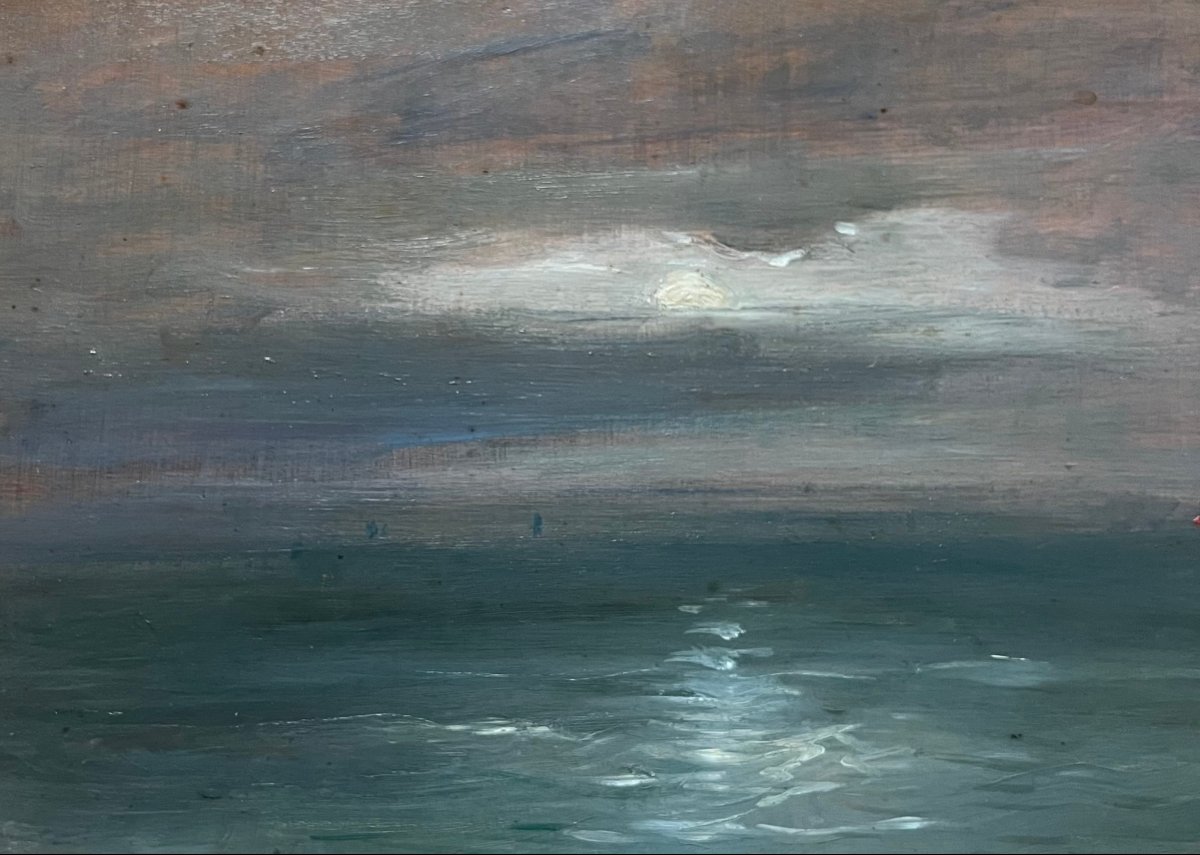
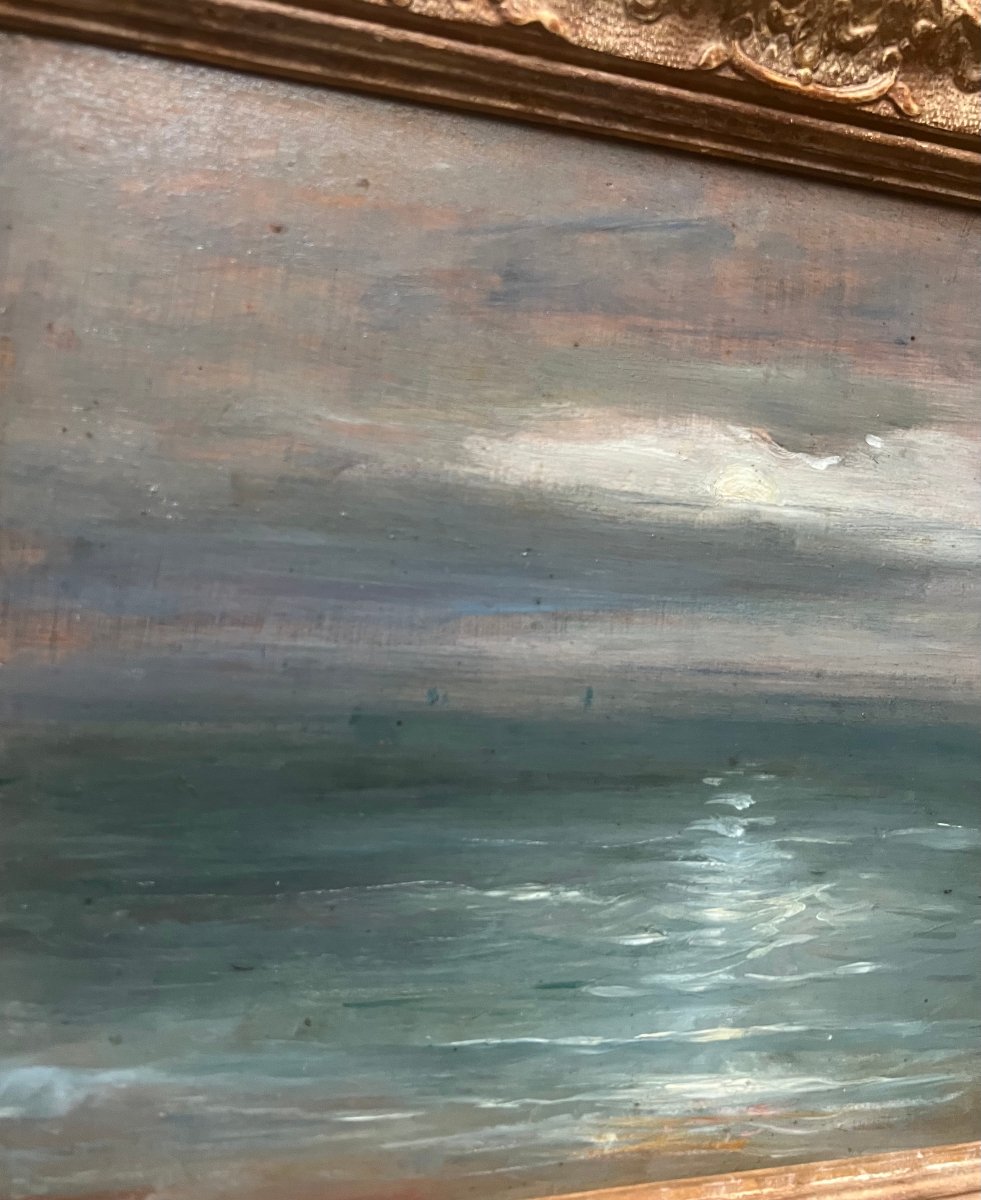
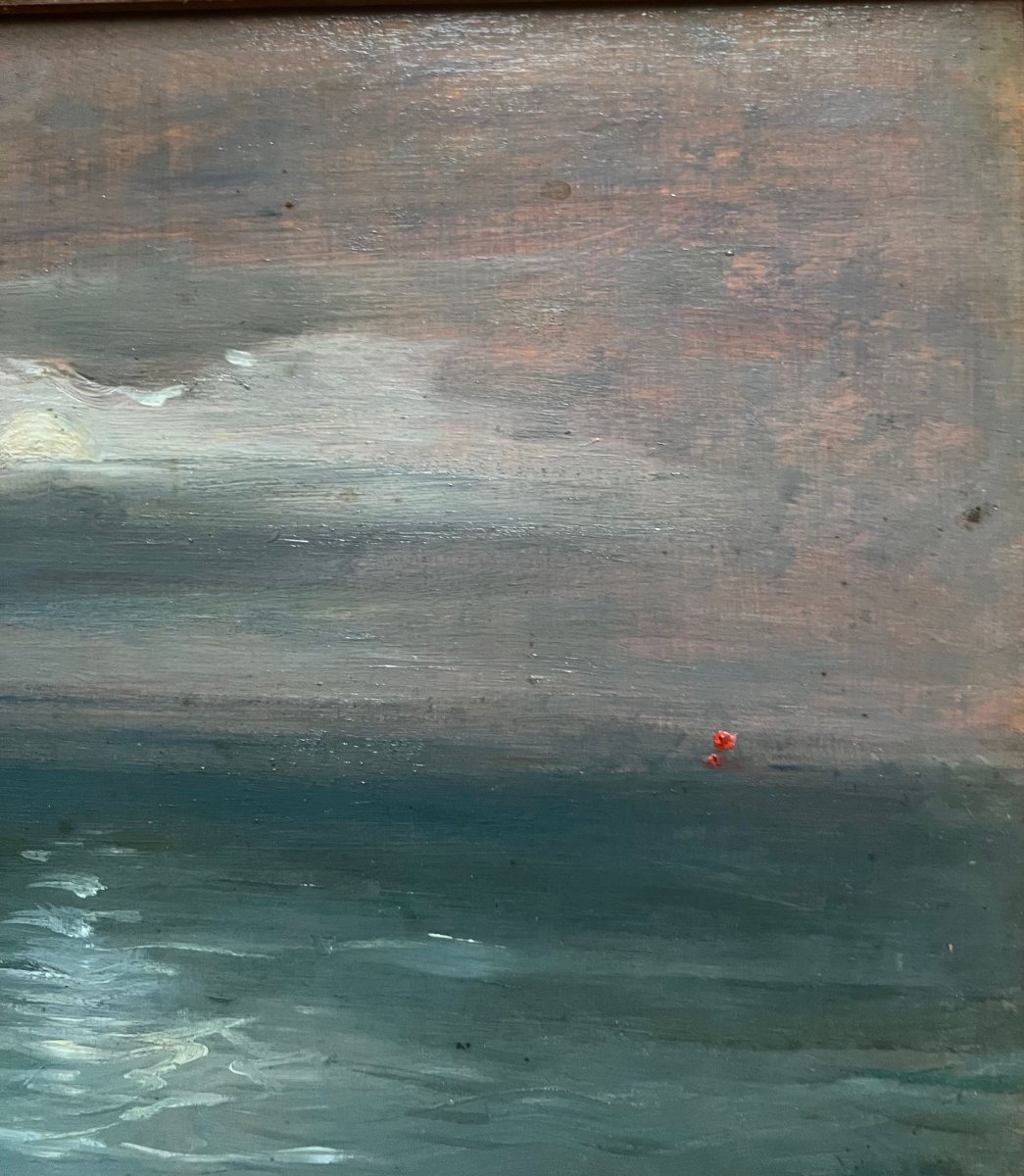
Our panel, dated 1895, reveals Colin’s mastery in rendering atmospheric effects. The moon, veiled by a break in the clouds, casts a cold, white light that reflects off the water’s surface in silvery streaks. The palette, limited to bluish grays, deep blacks, and pearly whites, lends the scene an atmosphere of suspended calm.
The composition, with its great simplicity, is reminiscent of Eugène Boudin’s twilight seascapes—particularly his studies of the skies above Trouville or the Normandy coast. As with Boudin, the essence lies in capturing a fleeting moment: the light breaking through the cloud cover, theglistening water, the silent immensity of the night sea.
The modest size and mahogany support suggest awork captured en plein air, or painted in the immediate freshness of memory—a truly remarkable spontaneity.
Period: 19th century
Style: Other Style
Condition: Excellent condition
Material: Oil painting on wood
Length: 27
Width: 35
Reference (ID): 1781906
Availability: In stock