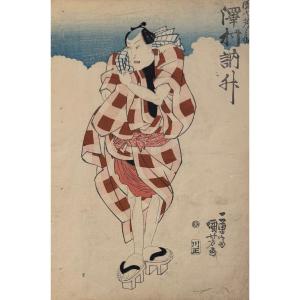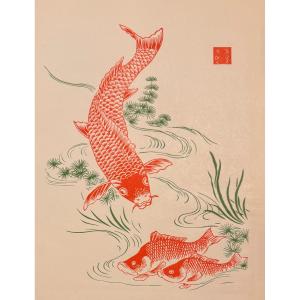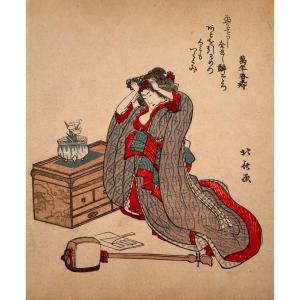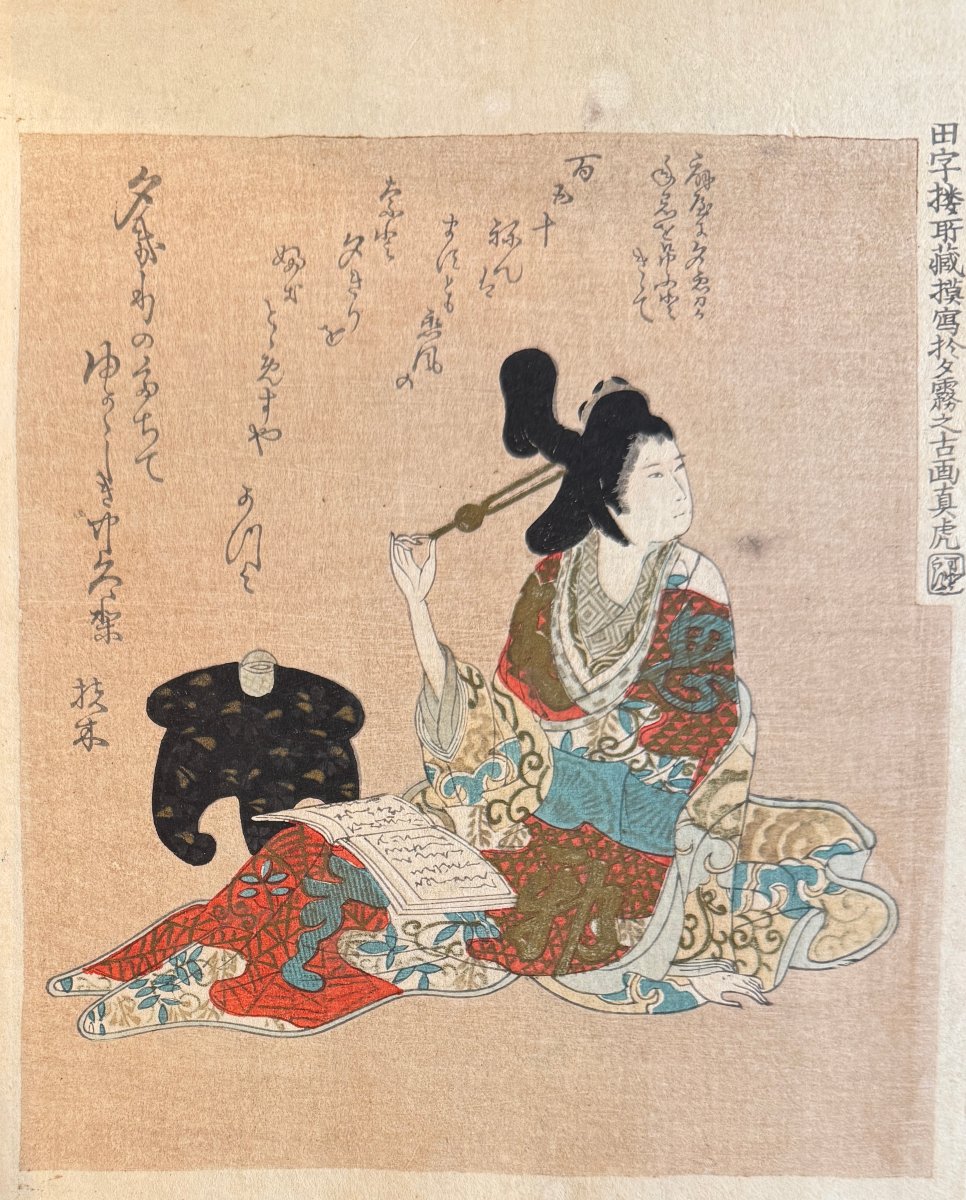

Japanese Surimono Print By Matora: The Courtesan Yugiri Reading
Surimono with gold highlights,
Shikishiban,
Nishiki-e
ca. 1880.
Edmond de Goncourt defined them as follows: “The surimonos […], these images which, through the silkiness of the paper, the quality of the colors, the care taken in the printing, and the gold and silver highlights, and furthermore through the addition of embossing […] —these images have no equivalent in the engravings of any other people on earth.”
Unlike prints produced by publishers for the general public, surimono prints are private, non-commercial commissions, printed in very small numbers.
These prints were often commissioned by literary circles and other groups for special occasions: invitations, New Year’s, commemorations, new theatrical productions, etc. Surimonos were created for and addressed to an urban bourgeois elite, passionate about literature, navigating between classical culture and contemporary entertainment.
Free from commercial constraints, these surimonos are are characterized by luxurious prints, using rare metallic pigments and refined printing techniques: embossing, paper polishing, and lacquering. The artist enjoys great freedom of expression and artistic interpretation. The value of the surimono lies in the dual semantic complexity of the poems and the image.
(See: SURIMONO, Treasures of Japanese Print Art, co-published by the Jerzy Leskowicz Foundation / In Fine Éditions d’Art—with the support of the Sasakawa Franco-Japanese Foundation, 2019)
Period: 19th century
Style: Asian art
Condition: Good condition
Material: Paper
Width: 185 mm
Height: 205 mm
Reference (ID): 1817861
Availability: In stock