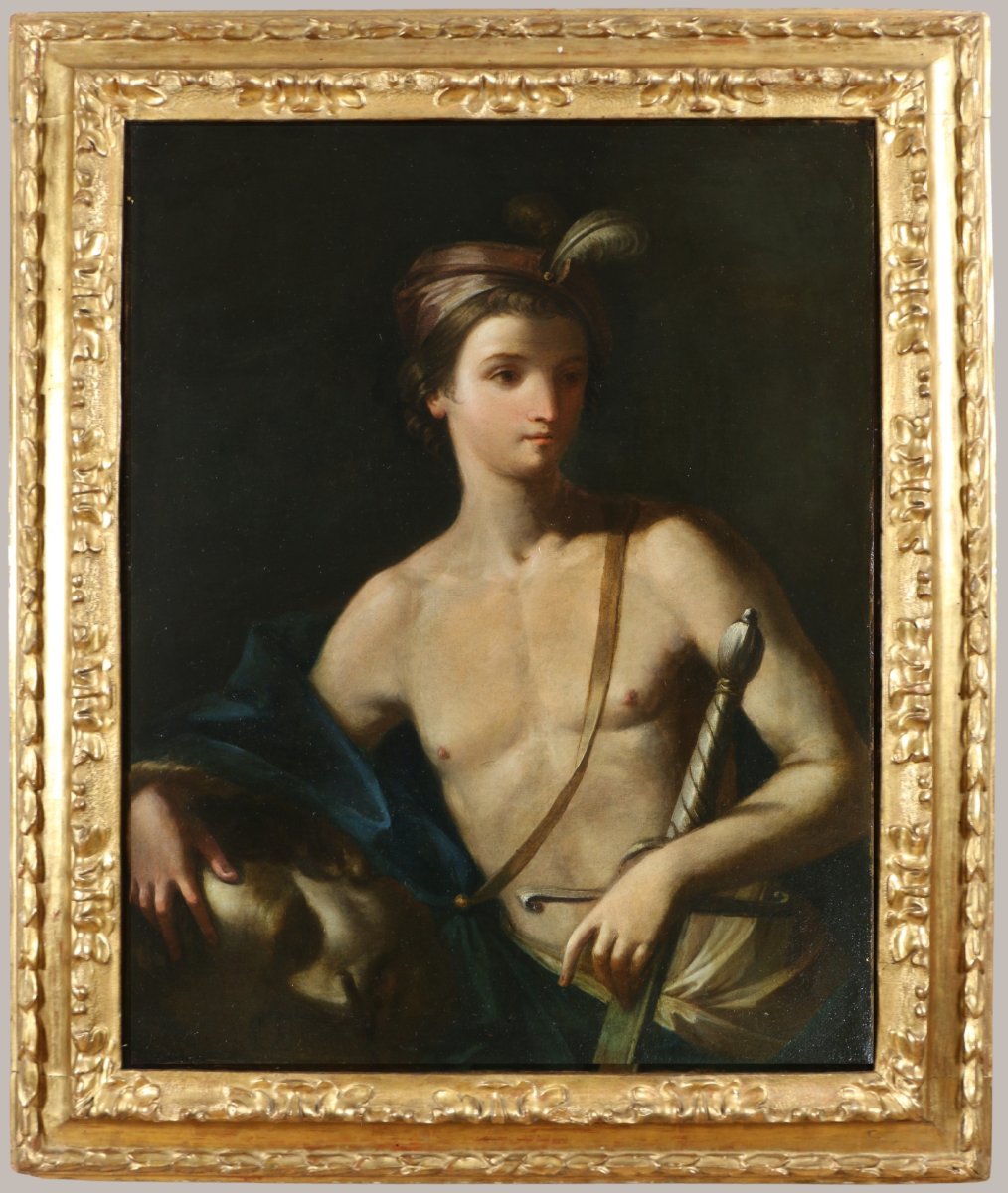
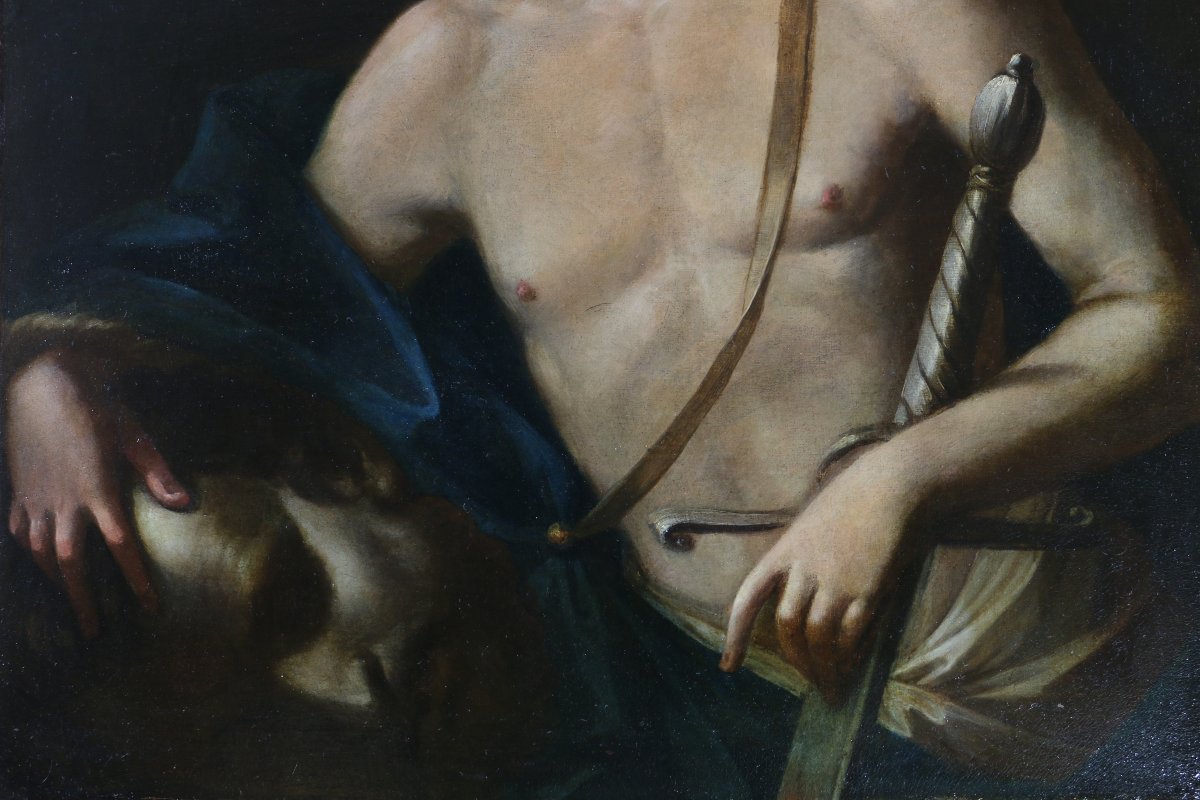


Florentine School, Circa 1625–1635. *david And Goliath*, Attributed To Francesco Lupicini.
Artist: Francesco Lupicini (1591-1656) Attrbué
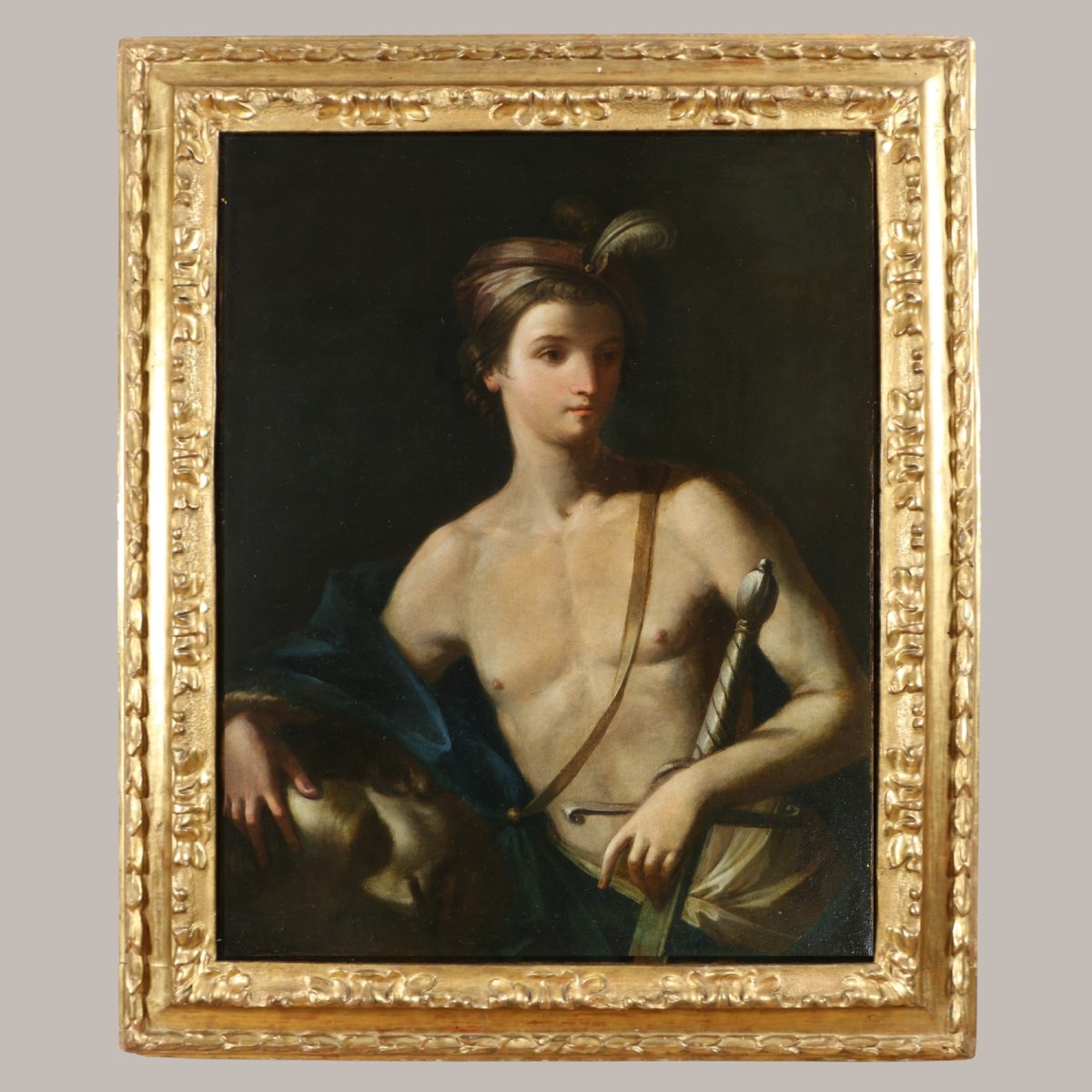
Florentine School, c. 1625–1635. David and Goliath, attributed to Francesco Lupicini.
Oil on canvas (relined), 95.5 cm x 76.5 cm.
17th-century Bolognese frame, 118 cm x 99 cm.
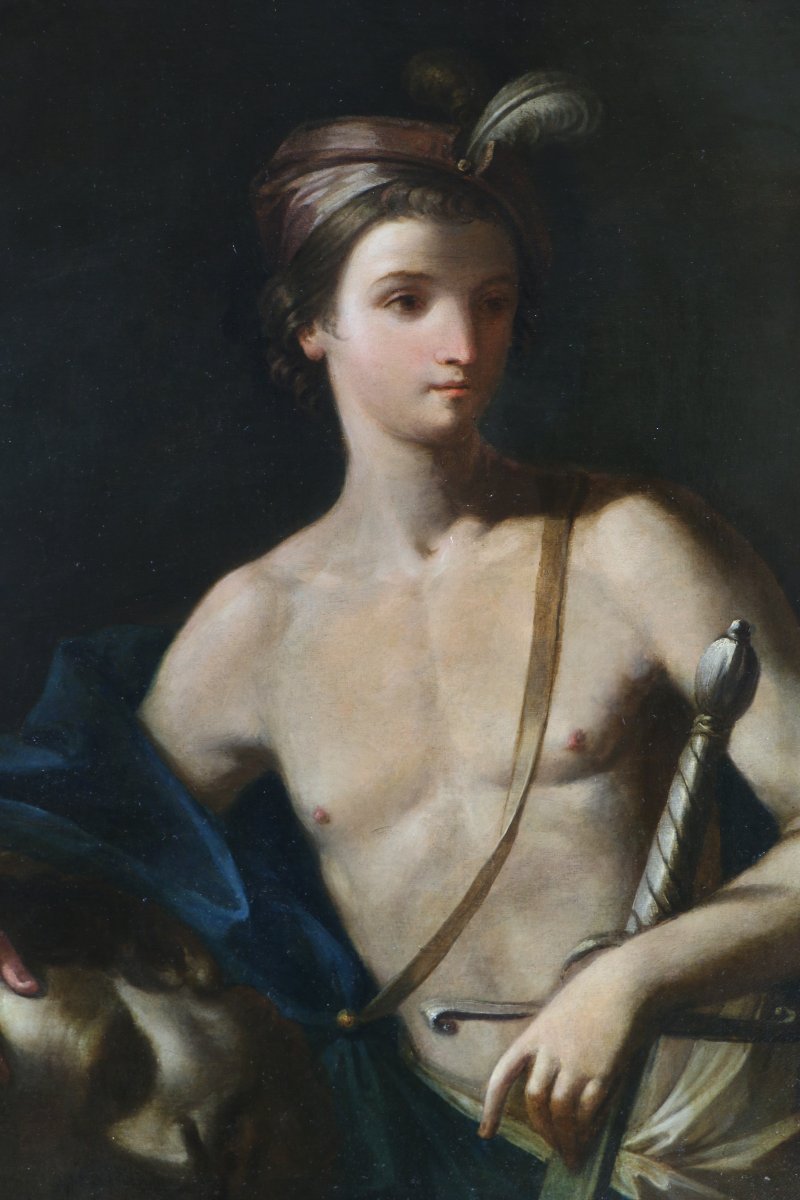
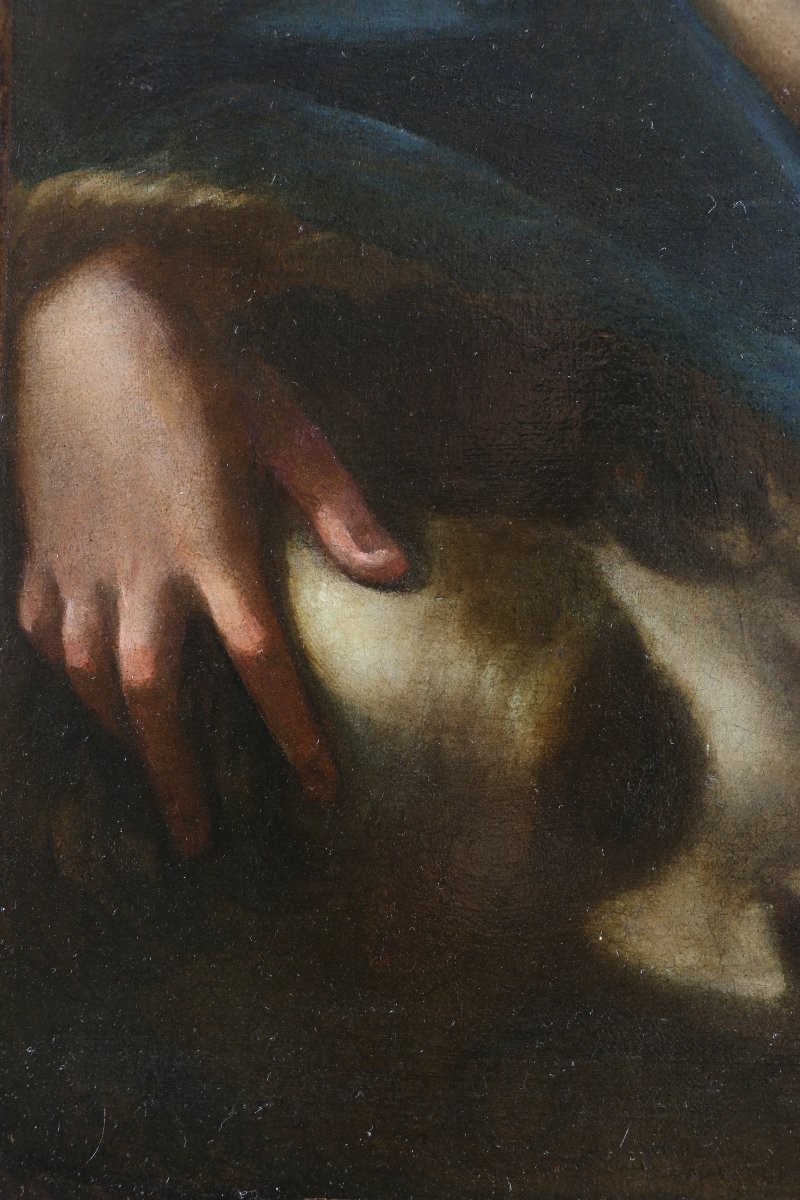
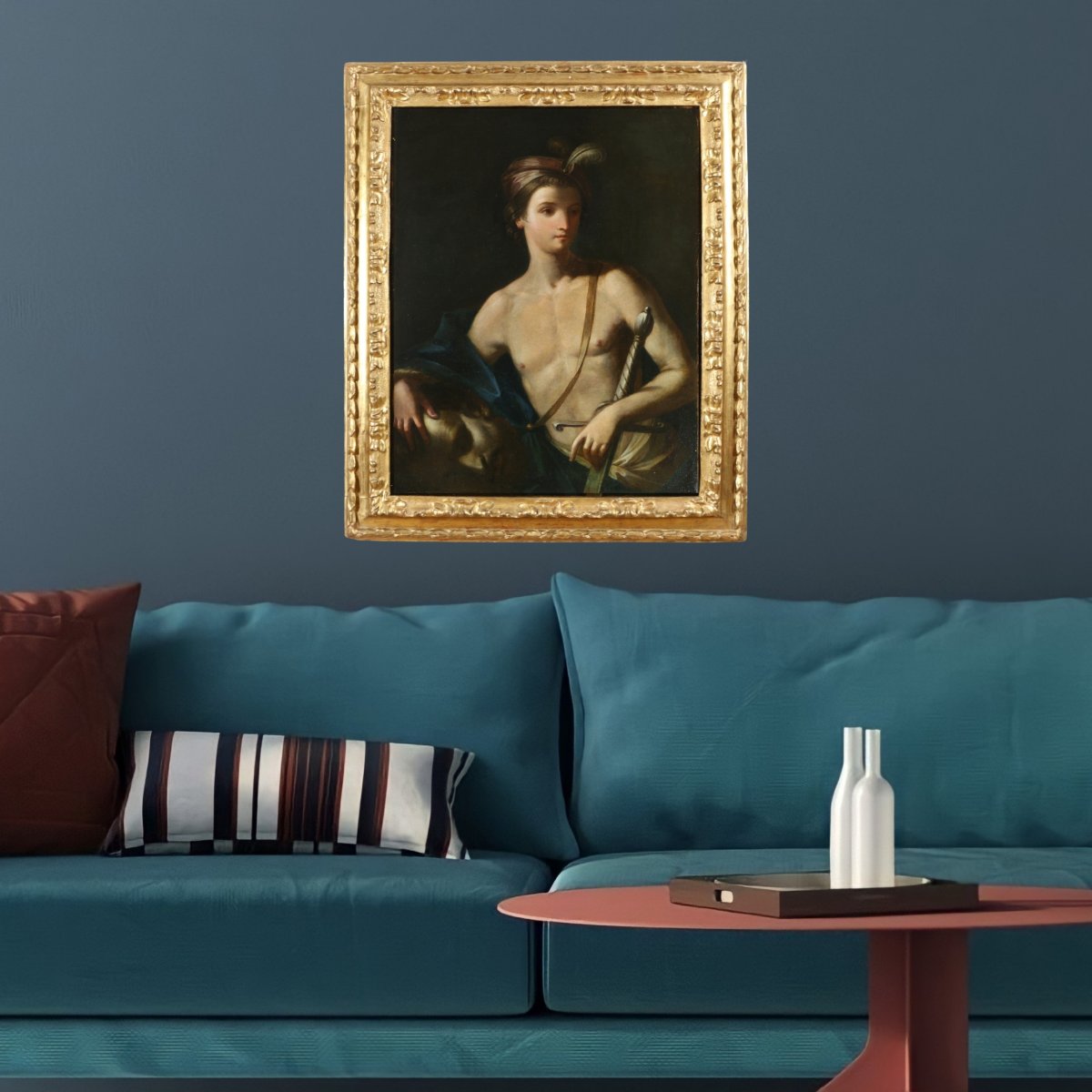
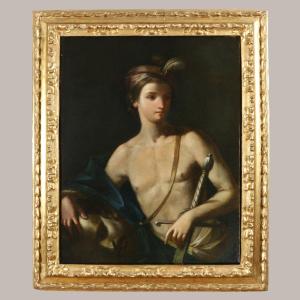
In this half-length depiction of David victorious over Goliath, the young hero appears almost entirely unclothed against a dark background. His brightly lit body stands out from the gloom, while the giant’s severed head—relegated to the lower part of the composition—remains largely swallowed by shadow. Yet David displays neither exultation nor violence; with his gaze averted and a meditative expression, he rests his hand upon his defeated adversary’s head with surprising gentleness.
The painter thus replaces the traditional image of the triumphant hero with that of a quiet, melancholic young man. The sensuality of the bare torso, the delicacy of the features, and the elegance of the long hands contrast deliberately with Goliath’s earthy, almost spectral face. The juxtaposition of David’s luminous skin and the dark substance of the severed head suggests not so much the dramatic moment of combat as a silent confrontation between youth and death.
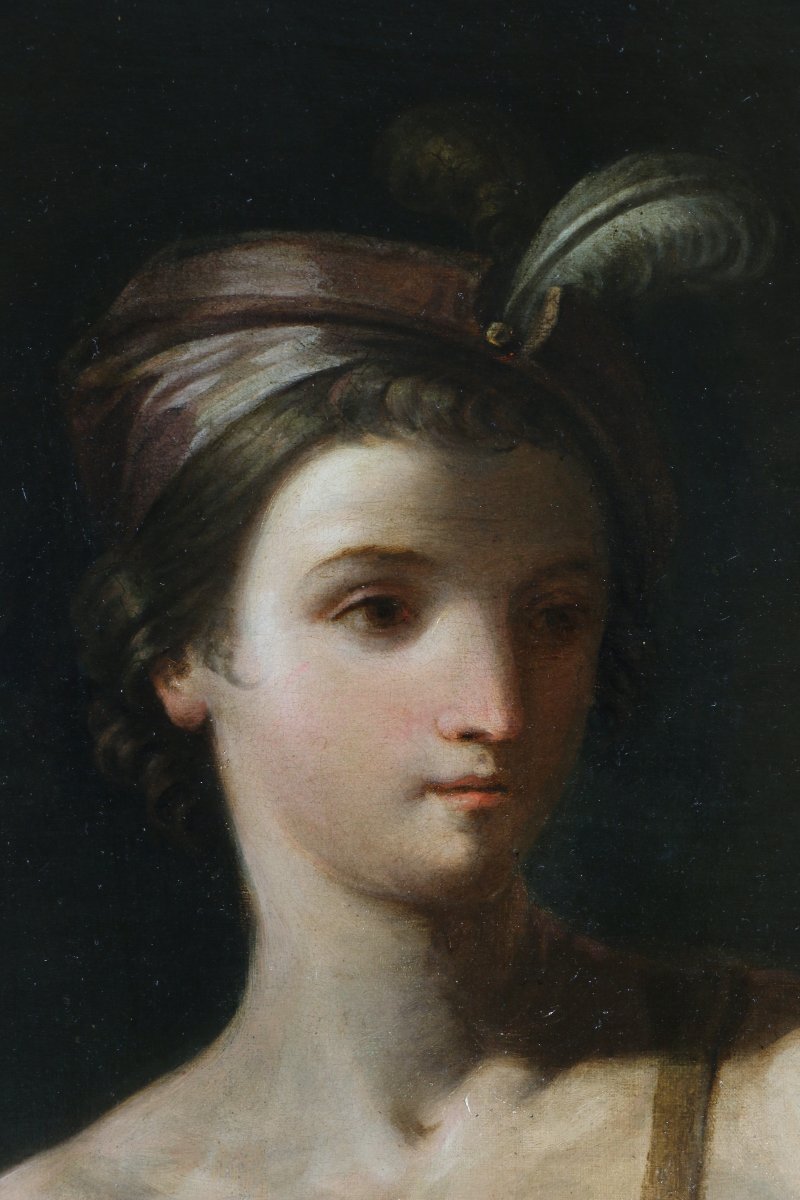
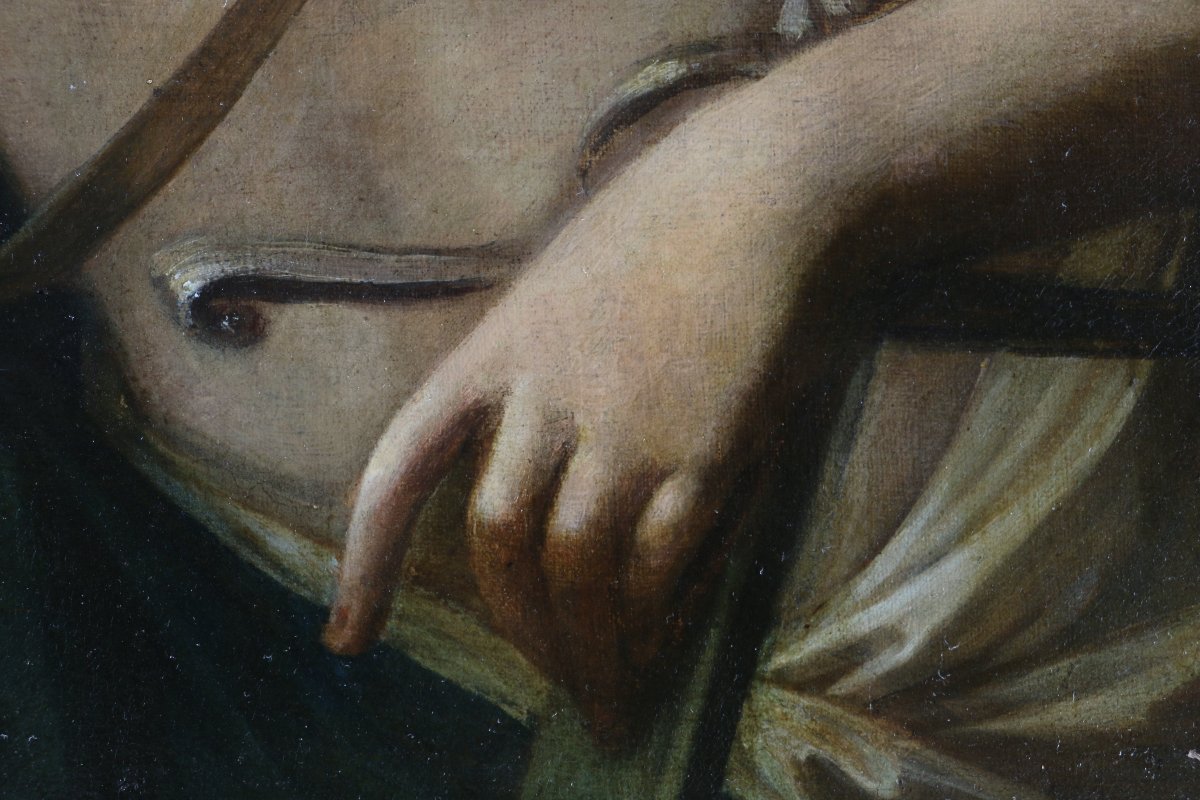
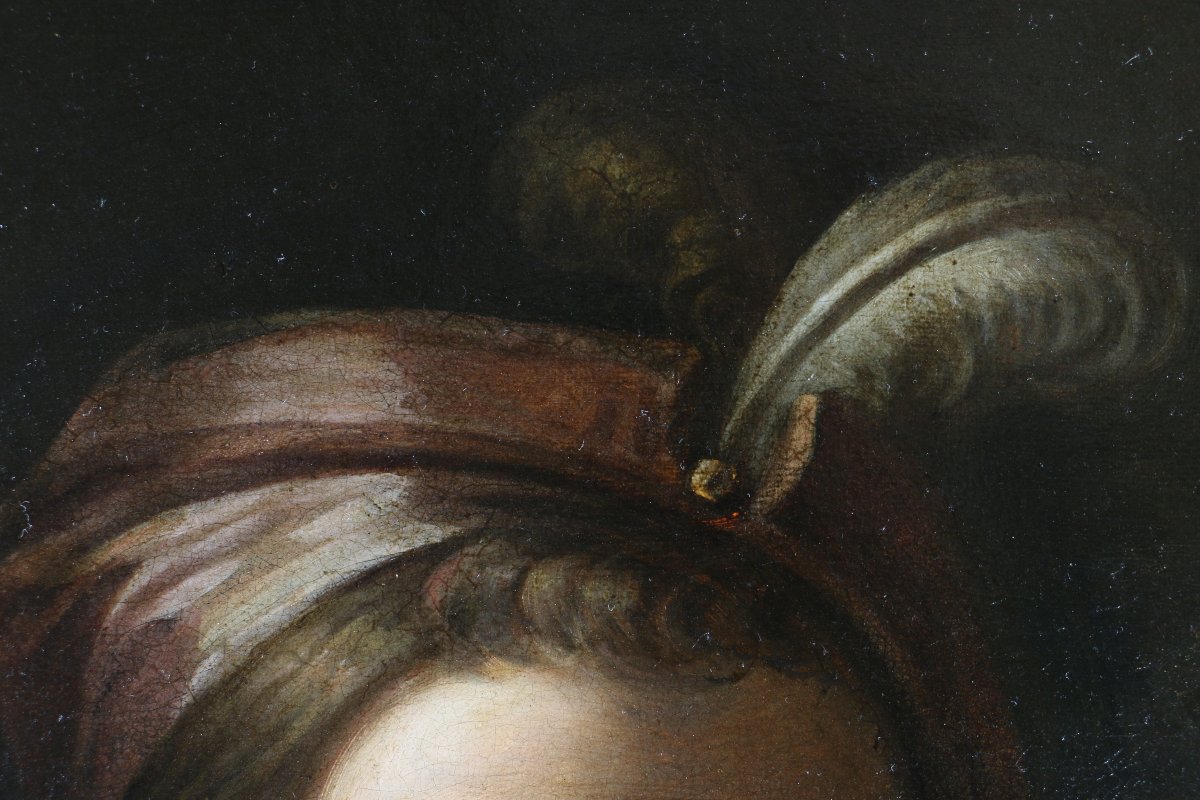
The refined elegance of the costume contributes to this transformation of the heroic subject. David wears a voluminous pinkish-brown headpiece adorned with a spectacular white feather featuring greenish-grey highlights. The sword—its pommel visible near his right hand—serves as a subtle reminder of the battle’s outcome. A deep-blue drapery, nearly lost in the darkness, completes a deliberately restrained palette dominated by browns, muted pinks, greys, and subdued greens, alongside ivory skin tones.
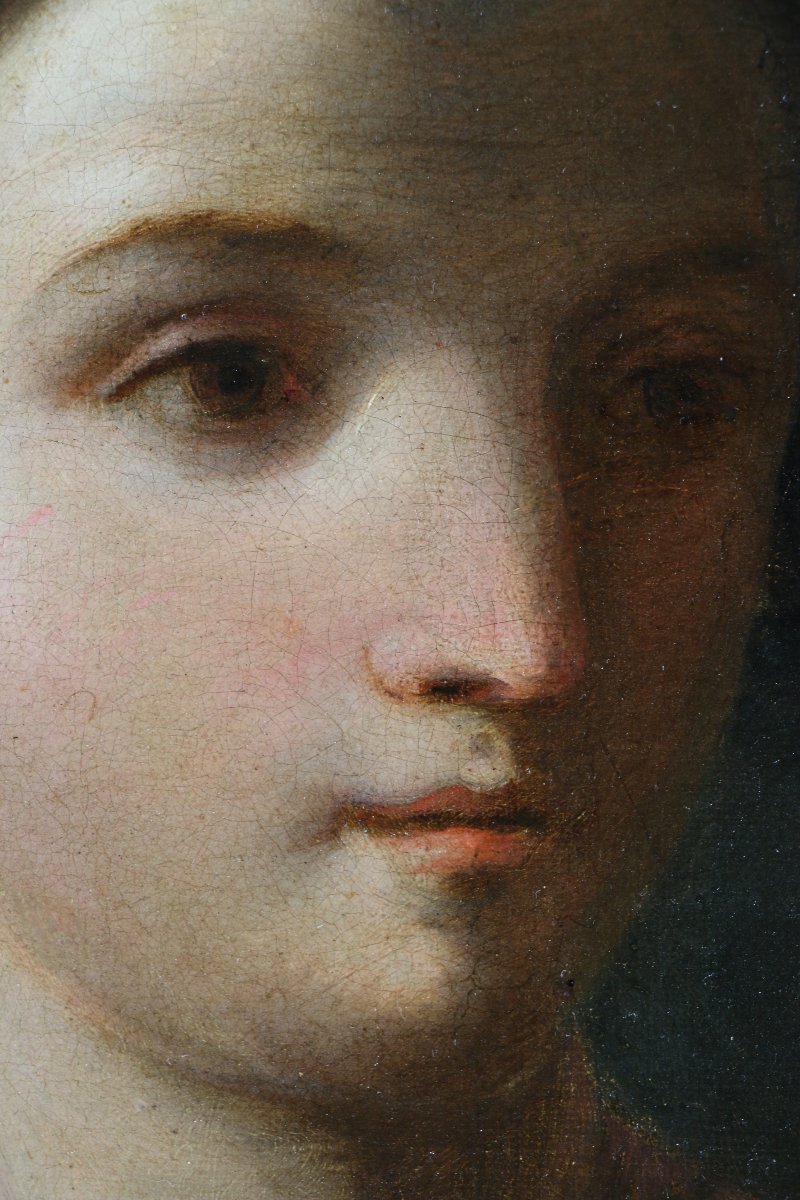
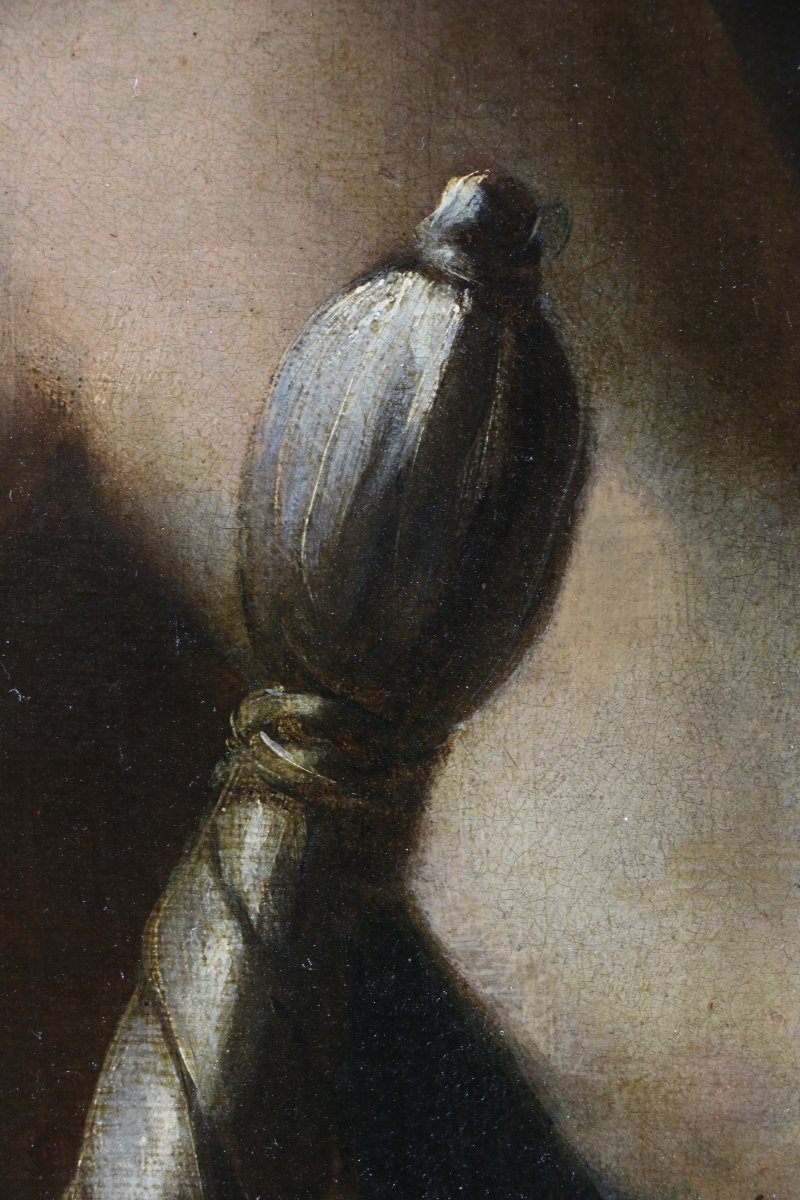
The painting technique combines supple modeling with firm draftsmanship. The flesh tones are built up through delicate transitions of halftones, while the eyelids, mouth, nostrils, and the spaces between the fingers are defined with greater precision. The freer handling of the accessories—the feather, fabrics, and sword hilt—contrasts with the careful modeling of the face and torso. The chiaroscuro never reaches the dramatic intensity of Caravaggism; instead, it serves primarily to isolate the figure, accentuate his inwardness, and allow Goliath to fade gradually into the background.
Attribution
Given its refinement, tempered chiaroscuro, soft flesh tones, and—above all—the almost androgynous, melancholic beauty of David, the painting likely belongs to the Florentine milieu of the second quarter of the 17th century. A date of around 1625–1635 appears consistent with its pictorial style.
These characteristics suggest an attribution to Francesco Lupicini, a Florentine painter whose body of work—long ill-defined—has been the subject of relatively recent critical reassessment. Lupicini’s Florentine period is marked notably by an assimilation of the traditions of Matteo Rosselli and Giovanni Bilivert, combined with more pronounced chiaroscuro, a muted palette, and a tendency toward the introspective portrayal of figures.
The work’s affinity with Francesco Furini is also worth noting. The youthful torso, the almost feminine ambiguity of David’s beauty, and the sensual, meditative atmosphere undeniably evoke certain works by Furini from the 1620s and 1630s. However, the relatively firm rendering of the facial features and hands, along with the more distinct handling of chiaroscuro, seem to point more strongly toward Lupicini. Indeed, this stylistic proximity to Furini reflects the specific Florentine context in which the work appears to have been created.
Francesco Lupicini
Florence, 1591 – Zaragoza, c. 1656
Francesco Lupicini belongs to the generation of painters who revitalized the Florentine tradition during the second quarter of the 17th century. Born in Florence in 1591, he trained under Cristofano Allori—his uncle and collaborator—and subsequently in the workshop of Matteo Rosselli. His painting thus maintains continuity with the Florentine tradition of draftsmanship while placing increasing emphasis on chiaroscuro, the sensuality of flesh tones, and the psychological expression of his figures.
During his Florentine period—a particularly prolific time between 1625 and 1635—Lupicini developed a distinctive style characterized by elegant, introspective figures, delicate yet firmly constructed modeling, and a preference for muted color harmonies. His *Triumph of David*, recently re-examined by Francesca Baldassari, exemplifies this evolution: the subject's heroism is tempered by a meditative, melancholic quality. The artist also explored this theme in a *David and Goliath* painted on copper, published by Baldassari in 2016.
In 1636, Lupicini left Florence for Spain and spent the remainder of his career in Zaragoza, where he integrated into the Florentine and Genoese networks established in Aragon. There, he was highly active as a religious painter, adapting the pictorial culture he had acquired in Tuscany to the Spanish context. He died in Zaragoza around 1656.
Long ill-defined and sometimes confused with the work of other painters, Lupicini’s oeuvre is now undergoing a significant re-evaluation, driven by the research of Francesca Baldassari and the monograph published by Álvaro Vicente Romeo: *Francesco Lupicini, caballero noble florentín*. *Un pintor entre la Toscana y Aragón (1591–c. 1656)* makes it possible to expand and refine his catalogue, covering both his Italian period and his activity in Aragon. This recent study now positions Lupicini among the distinctive figures of seventeenth-century Florentine painting and highlights his role as a link between Florence and Spain.
Oil on canvas (relined), 95.5 cm x 76.5 cm.
17th-century Bolognese frame, 118 cm x 99 cm.
In this half-length depiction of David victorious over Goliath, the young hero appears almost entirely unclothed against a dark background. His brightly lit body stands out from the gloom, while the giant’s severed head—relegated to the lower part of the composition—remains largely swallowed by shadow. Yet David displays neither exultation nor violence; with his gaze averted and a meditative expression, he rests his hand upon his defeated adversary’s head with surprising gentleness.
The painter thus replaces the traditional image of the triumphant hero with that of a quiet, melancholic young man. The sensuality of the bare torso, the delicacy of the features, and the elegance of the long hands contrast deliberately with Goliath’s earthy, almost spectral face. The juxtaposition of David’s luminous skin and the dark substance of the severed head suggests not so much the dramatic moment of combat as a silent confrontation between youth and death.
The refined elegance of the costume contributes to this transformation of the heroic subject. David wears a voluminous pinkish-brown headpiece adorned with a spectacular white feather featuring greenish-grey highlights. The sword—its pommel visible near his right hand—serves as a subtle reminder of the battle’s outcome. A deep-blue drapery, nearly lost in the darkness, completes a deliberately restrained palette dominated by browns, muted pinks, greys, and subdued greens, alongside ivory skin tones.
The painting technique combines supple modeling with firm draftsmanship. The flesh tones are built up through delicate transitions of halftones, while the eyelids, mouth, nostrils, and the spaces between the fingers are defined with greater precision. The freer handling of the accessories—the feather, fabrics, and sword hilt—contrasts with the careful modeling of the face and torso. The chiaroscuro never reaches the dramatic intensity of Caravaggism; instead, it serves primarily to isolate the figure, accentuate his inwardness, and allow Goliath to fade gradually into the background.
Attribution
Given its refinement, tempered chiaroscuro, soft flesh tones, and—above all—the almost androgynous, melancholic beauty of David, the painting likely belongs to the Florentine milieu of the second quarter of the 17th century. A date of around 1625–1635 appears consistent with its pictorial style.
These characteristics suggest an attribution to Francesco Lupicini, a Florentine painter whose body of work—long ill-defined—has been the subject of relatively recent critical reassessment. Lupicini’s Florentine period is marked notably by an assimilation of the traditions of Matteo Rosselli and Giovanni Bilivert, combined with more pronounced chiaroscuro, a muted palette, and a tendency toward the introspective portrayal of figures.
The work’s affinity with Francesco Furini is also worth noting. The youthful torso, the almost feminine ambiguity of David’s beauty, and the sensual, meditative atmosphere undeniably evoke certain works by Furini from the 1620s and 1630s. However, the relatively firm rendering of the facial features and hands, along with the more distinct handling of chiaroscuro, seem to point more strongly toward Lupicini. Indeed, this stylistic proximity to Furini reflects the specific Florentine context in which the work appears to have been created.
Francesco Lupicini
Florence, 1591 – Zaragoza, c. 1656
Francesco Lupicini belongs to the generation of painters who revitalized the Florentine tradition during the second quarter of the 17th century. Born in Florence in 1591, he trained under Cristofano Allori—his uncle and collaborator—and subsequently in the workshop of Matteo Rosselli. His painting thus maintains continuity with the Florentine tradition of draftsmanship while placing increasing emphasis on chiaroscuro, the sensuality of flesh tones, and the psychological expression of his figures.
During his Florentine period—a particularly prolific time between 1625 and 1635—Lupicini developed a distinctive style characterized by elegant, introspective figures, delicate yet firmly constructed modeling, and a preference for muted color harmonies. His *Triumph of David*, recently re-examined by Francesca Baldassari, exemplifies this evolution: the subject's heroism is tempered by a meditative, melancholic quality. The artist also explored this theme in a *David and Goliath* painted on copper, published by Baldassari in 2016.
In 1636, Lupicini left Florence for Spain and spent the remainder of his career in Zaragoza, where he integrated into the Florentine and Genoese networks established in Aragon. There, he was highly active as a religious painter, adapting the pictorial culture he had acquired in Tuscany to the Spanish context. He died in Zaragoza around 1656.
Long ill-defined and sometimes confused with the work of other painters, Lupicini’s oeuvre is now undergoing a significant re-evaluation, driven by the research of Francesca Baldassari and the monograph published by Álvaro Vicente Romeo: *Francesco Lupicini, caballero noble florentín*. *Un pintor entre la Toscana y Aragón (1591–c. 1656)* makes it possible to expand and refine his catalogue, covering both his Italian period and his activity in Aragon. This recent study now positions Lupicini among the distinctive figures of seventeenth-century Florentine painting and highlights his role as a link between Florence and Spain.
13 600 €
Period: 17th century
Style: Renaissance, Louis 13th
Condition: Excellent condition
Material: Oil painting
Length: 95 cm, 118 cm avec le cadre
Width: 76 cm, 99 cm avec le cadre
Reference (ID): 1817134
Availability: In stock
Print