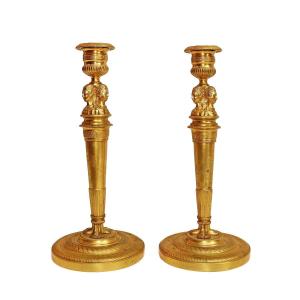
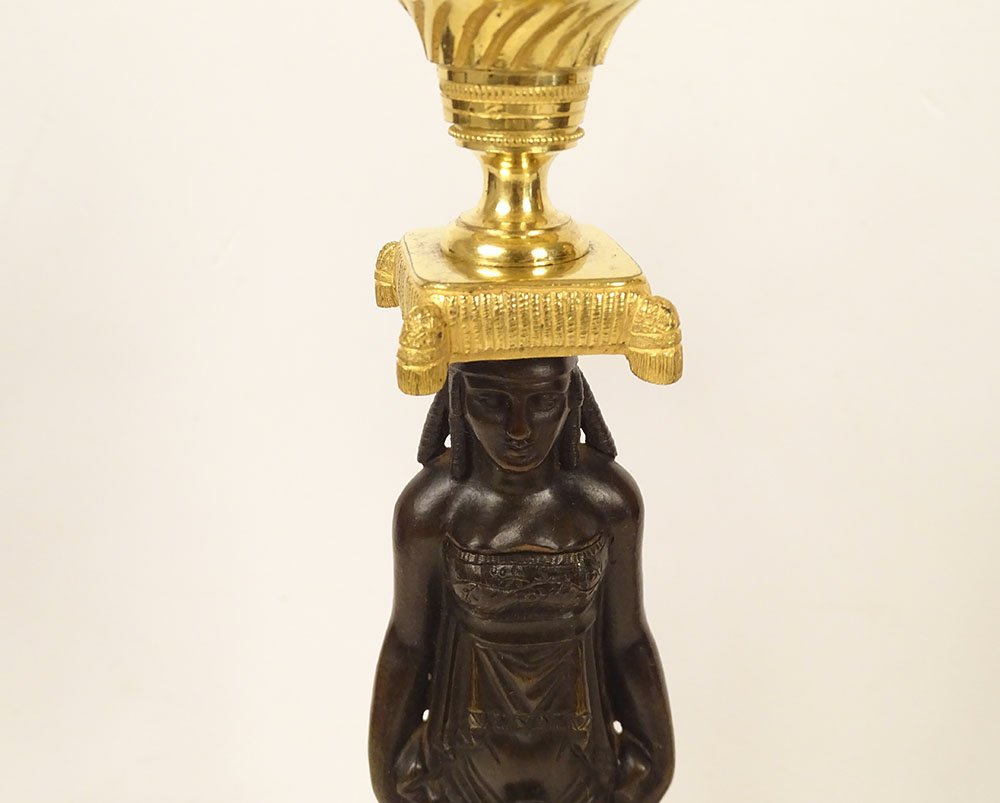
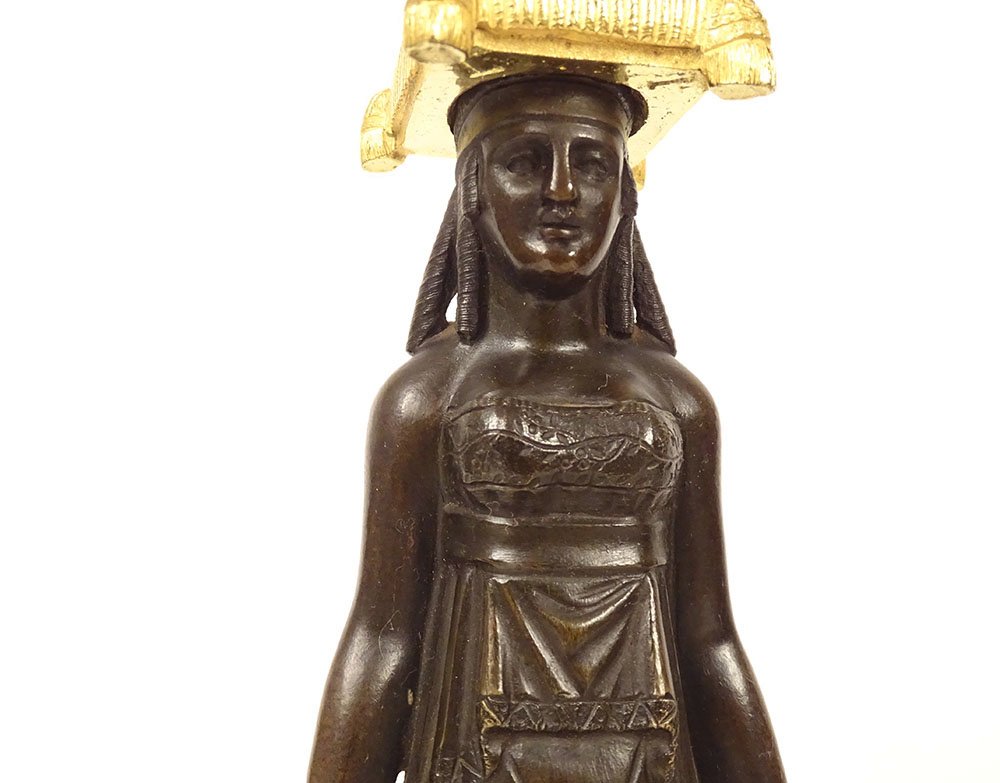
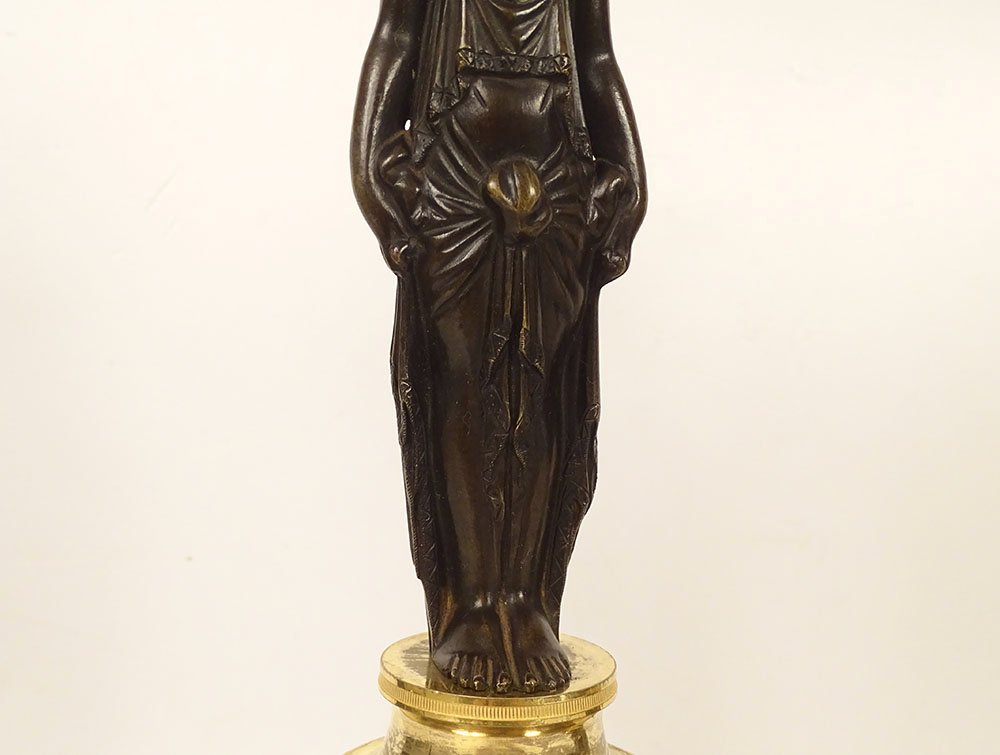
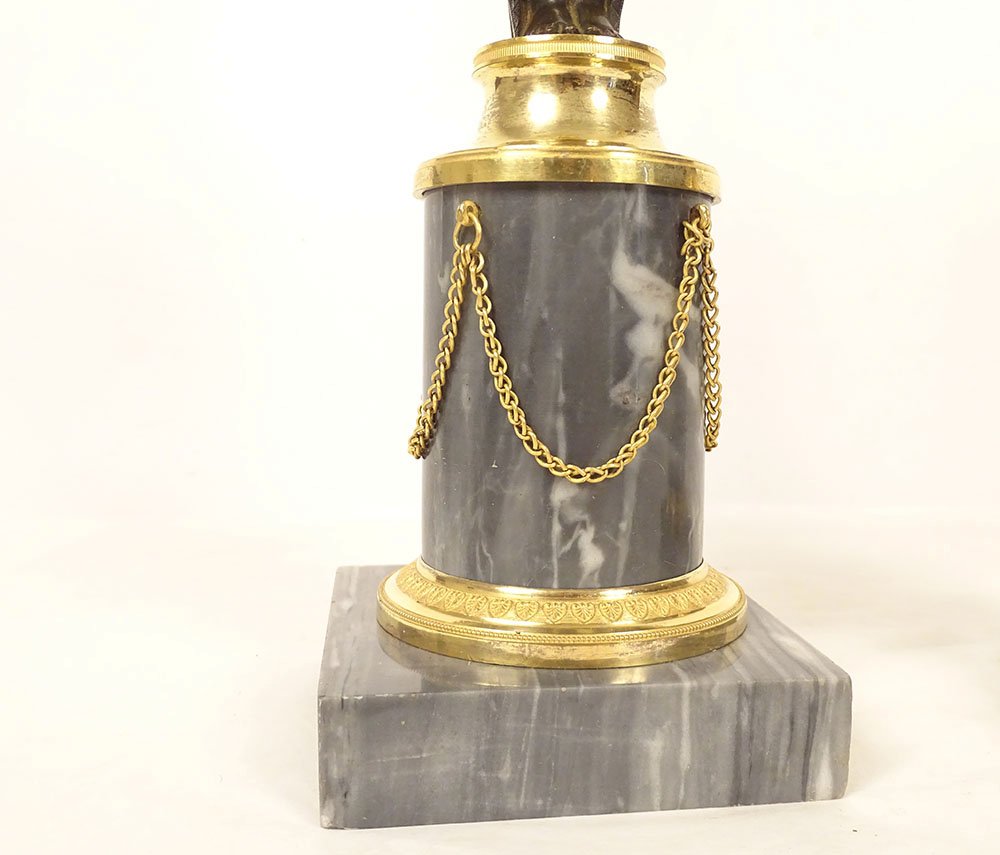
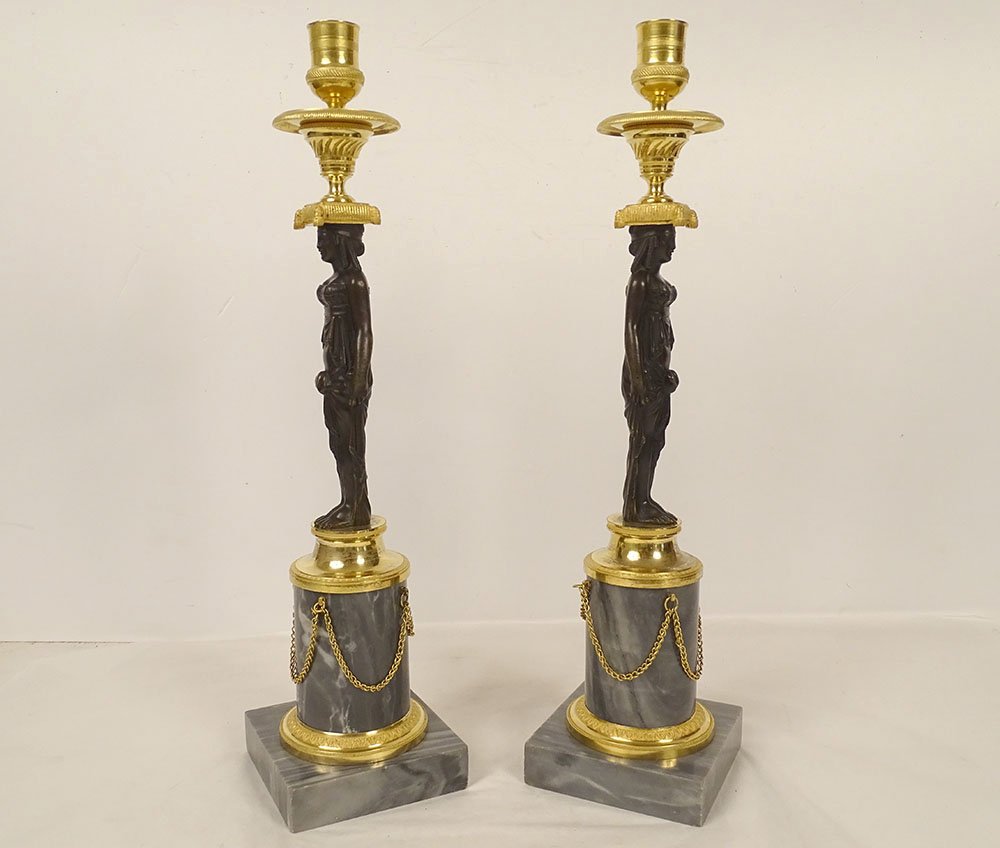
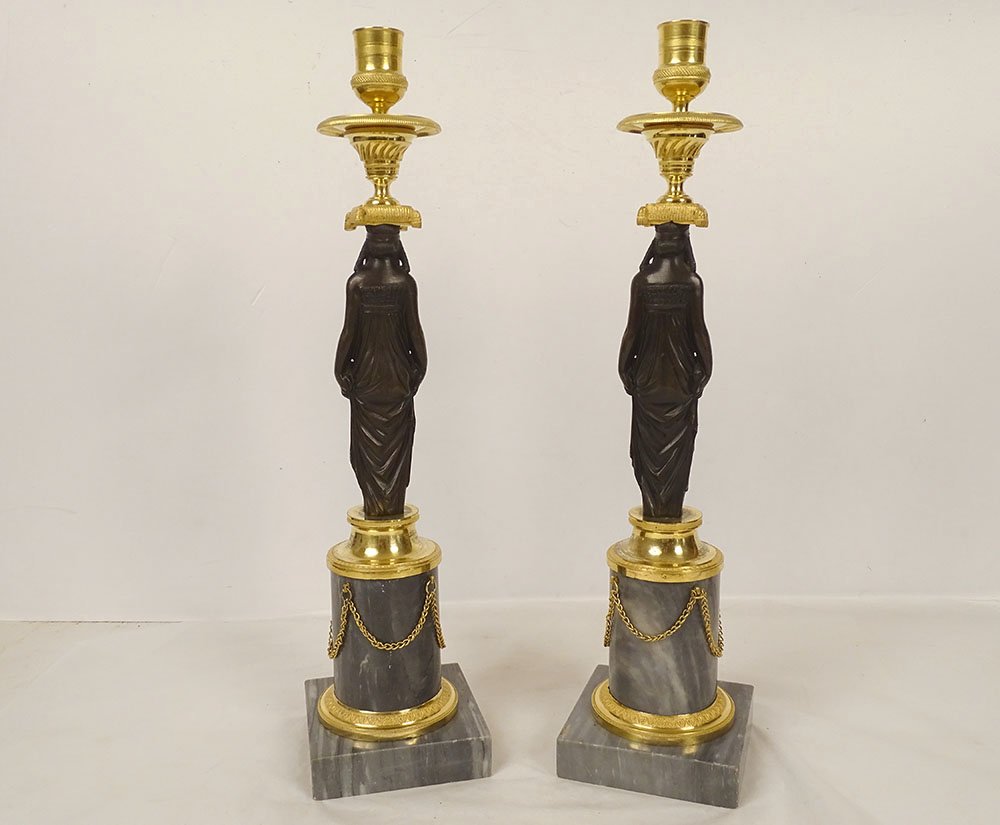


Pair Of Bronze Candlesticks Featuring Female Caryatids, "return To Egypt," Consulat Style, Marble, 19th Century
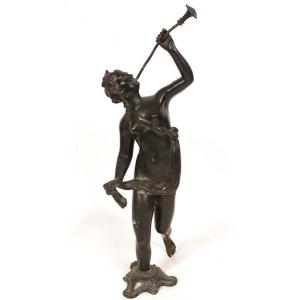
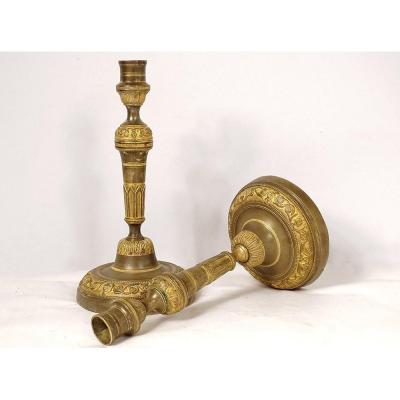
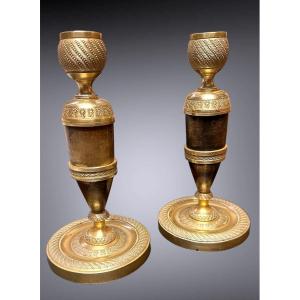
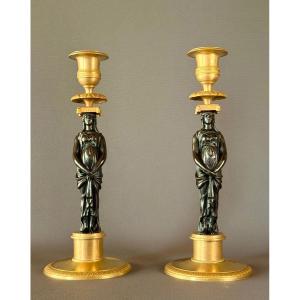
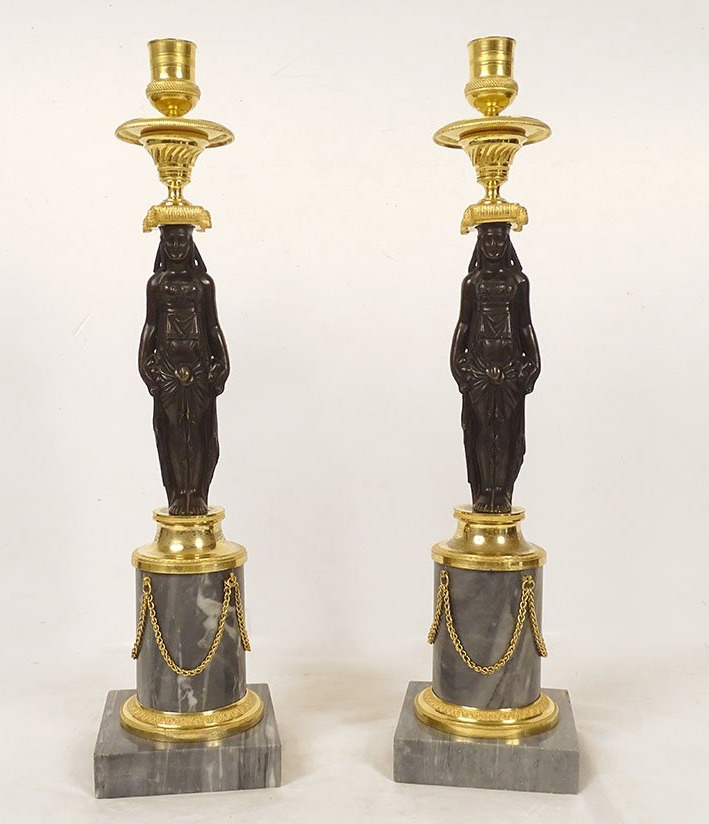
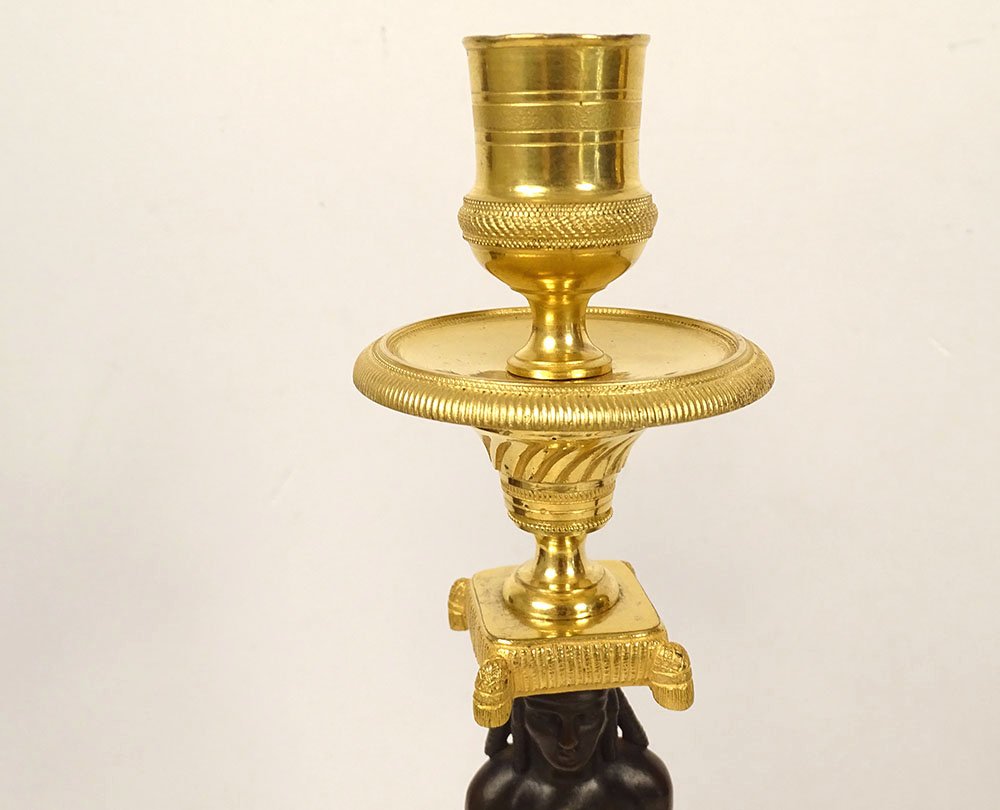
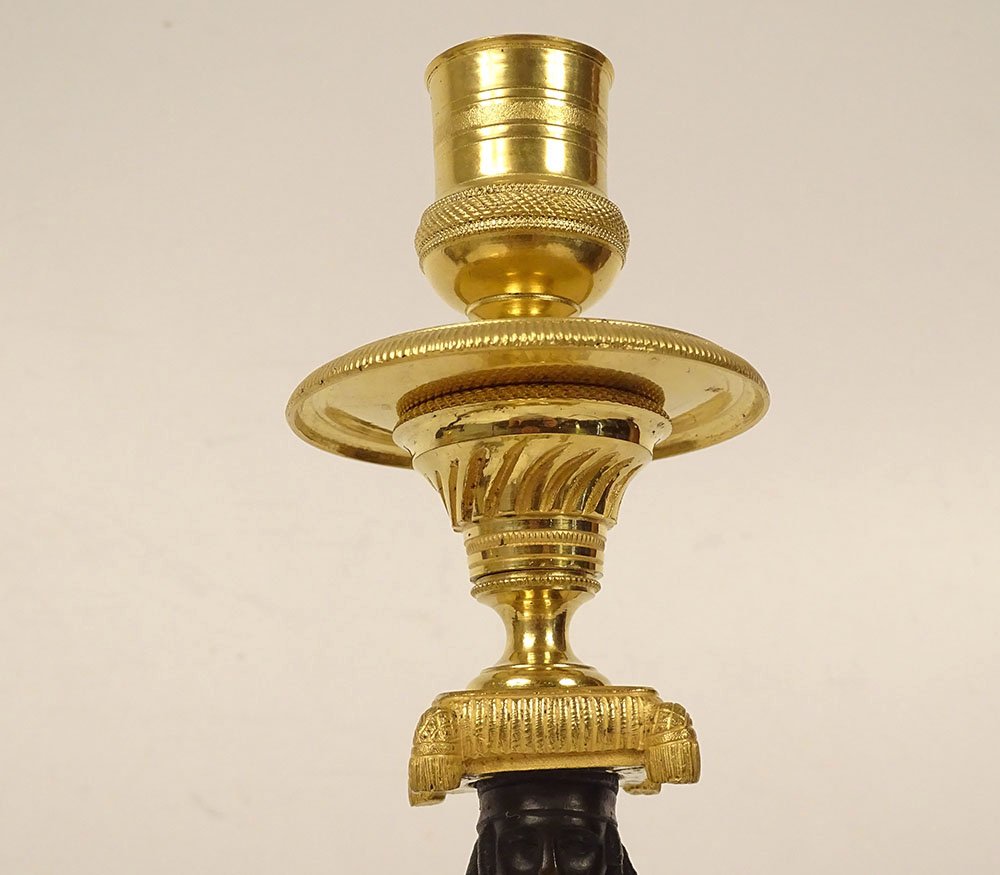
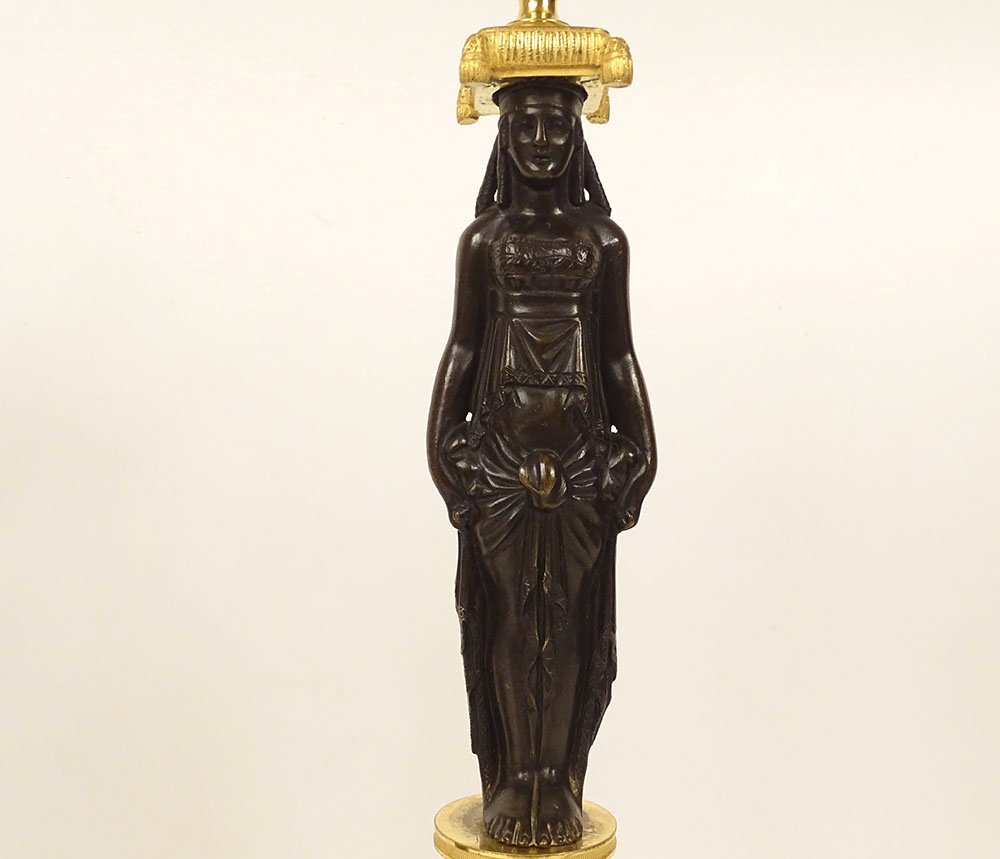
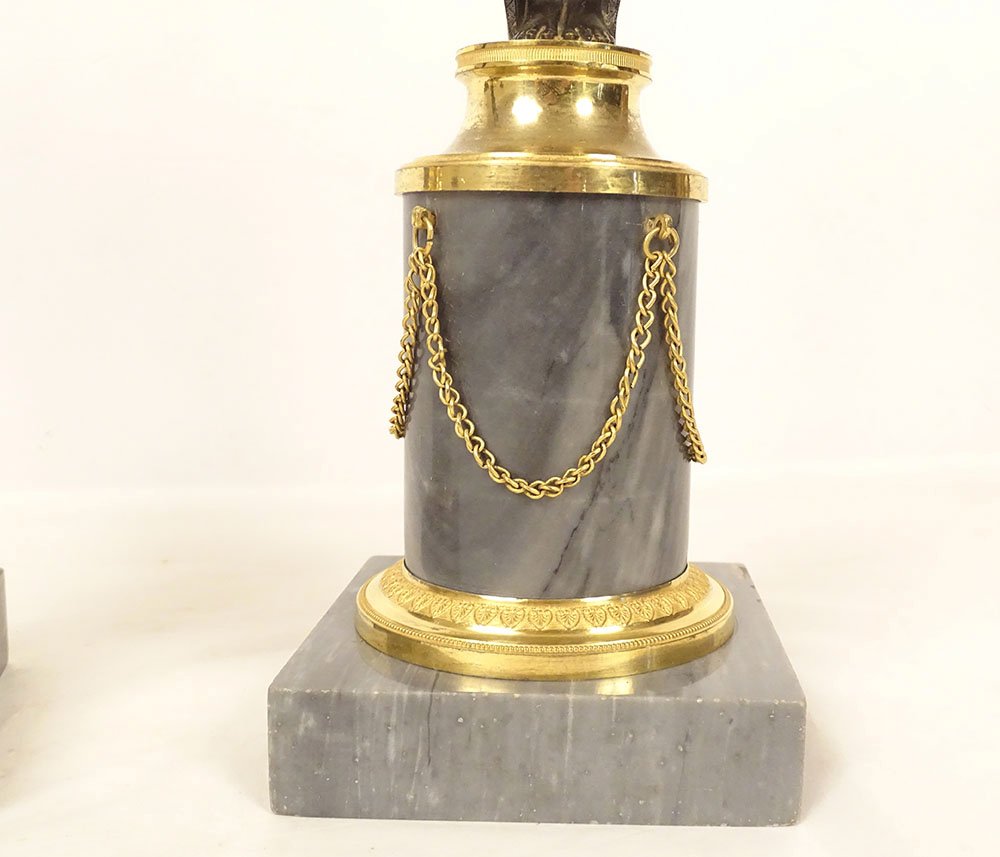
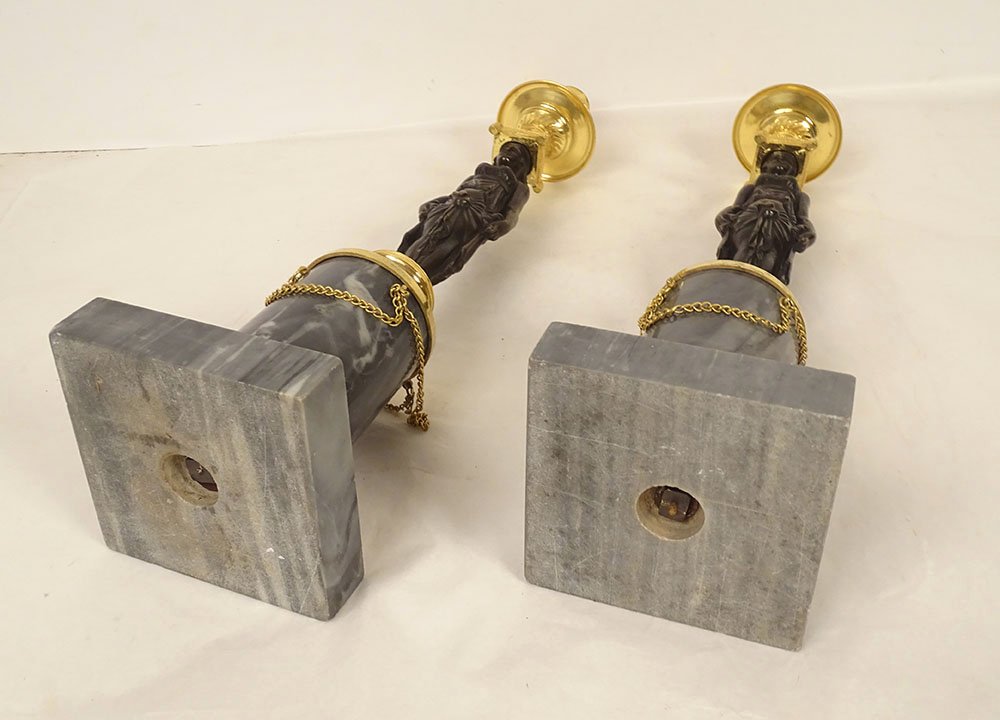
Pair of large bronze candlesticks with two patinas (gold and brown), the shaft depicting two caryatids—women draped in the classical style, carrying on their heads a cushion and a kalathos on which the lamp rests, a cylindrical gray marble pedestal adorned with chains on a square base, in the "Return from Egypt"* style, dating from the Consulate period (1800) to the early 19th century.
These candlesticks are in very good condition and are of exceptional quality.
Please note: slight scratches and wear from age, tiny micro-chips on the edge of the marble; see photos.
* The “Retour d’Egypte” style:
Egyptian influences became prominent following the Battle of the Pyramids and the capture of Cairo in July 1798 by General Bonaparte. Napoleon organized a scientific and cultural expedition to Egypt, bringing together figures from the arts and sciences. The publication of the expedition’s work— “Description of Egypt,” begun in 1802 and finally published in 1826, was brimming with new insights, inspiring numerous artists and offering an unexpected vision of these mysterious regions transformed the French cultural landscape through architecture and the decorative arts. A veritable trend spread from France to all of Europe,as far as Russia. Houses, fountains, and interiors were decorated in the Egyptian style. This style, contemporary to the Consulate era, was called the “Return from Egypt.” It lasted only a very short time (about a decade) before being replaced by the Empire style. New decorative elements then emerged: heads adorned with the nemes, scarabs, sphinxes, winged lions, caryatids, and lotus motifs were extensively incorporated into classical-style furniture; as well as in many other objects: the Sèvres porcelain factory created Egyptian-style tableware sets, sphinxes were used as andirons or inkwells, and candelabras were supported by Egyptian women. The legs of the chairs are generally saber-shaped at the back and turned or shaped like animal legs at the front, thus evoking Egyptian models. The crozier-shaped backrest is common; it will disappear during the Empire period.
See ProAntic Magazine Article
- Height 41.5 cm
- Base 10 cm x 10 cm
- 300 407
- All photos are available at:
www.antiques-delaval.com
Period: 19th century
Style: Consulat, Empire
Condition: Excellent condition
Length: socle 10 cm x 10 cm
Height: 41,5 cm
Reference (ID): 1816532
Availability: In stock