THIS OBJECT WAS SOLD
Pair Of Stirrups Known As Abumi - Japan - Edo Period (1603–1868)
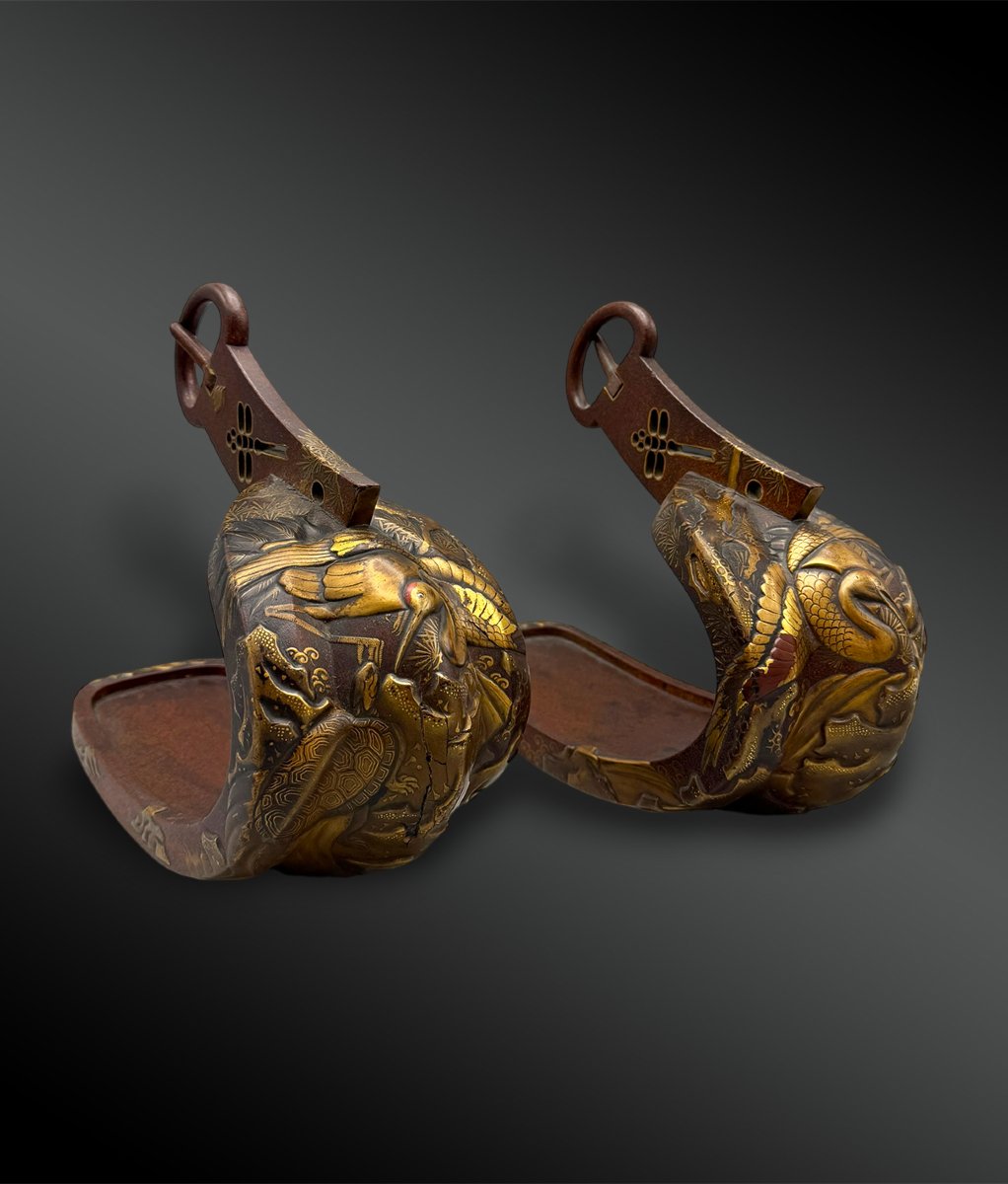
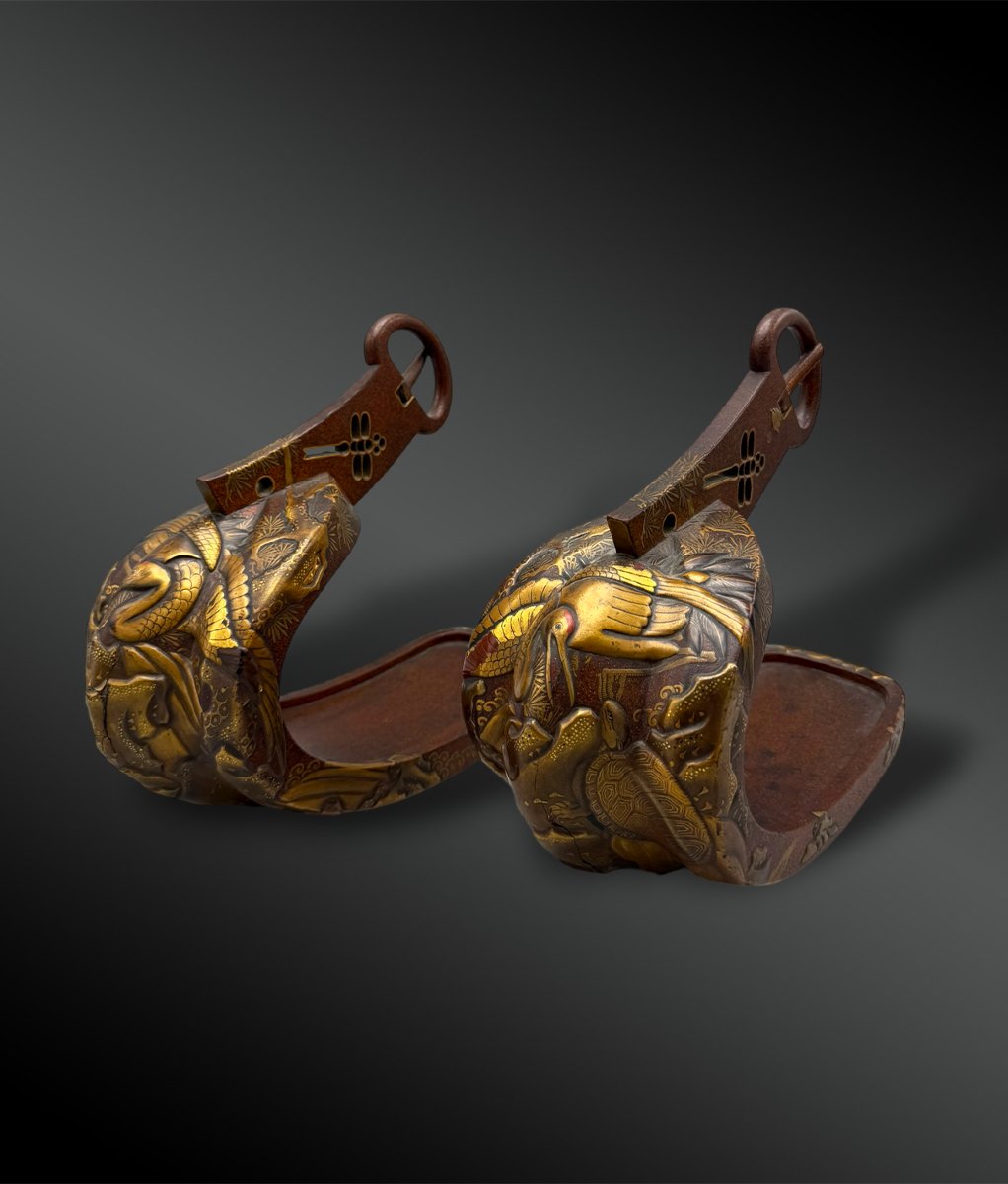
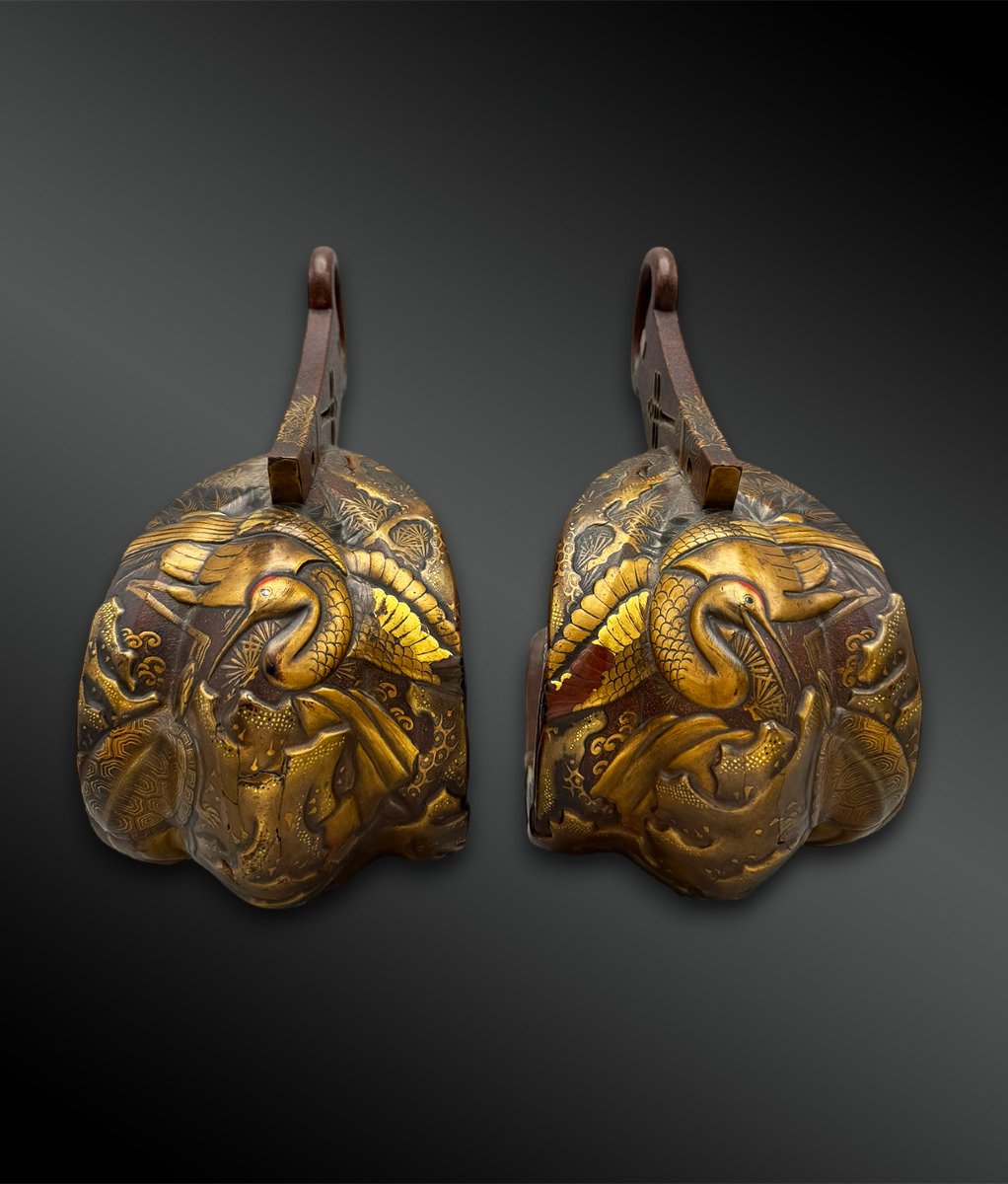


PAIR of STIRRUPS known as Abumi
Japan
Edo Period (1603–1868)
Wood and lacquer
H.: 26; L.: 28; W.: 12 cm
(small chips and imperfections)
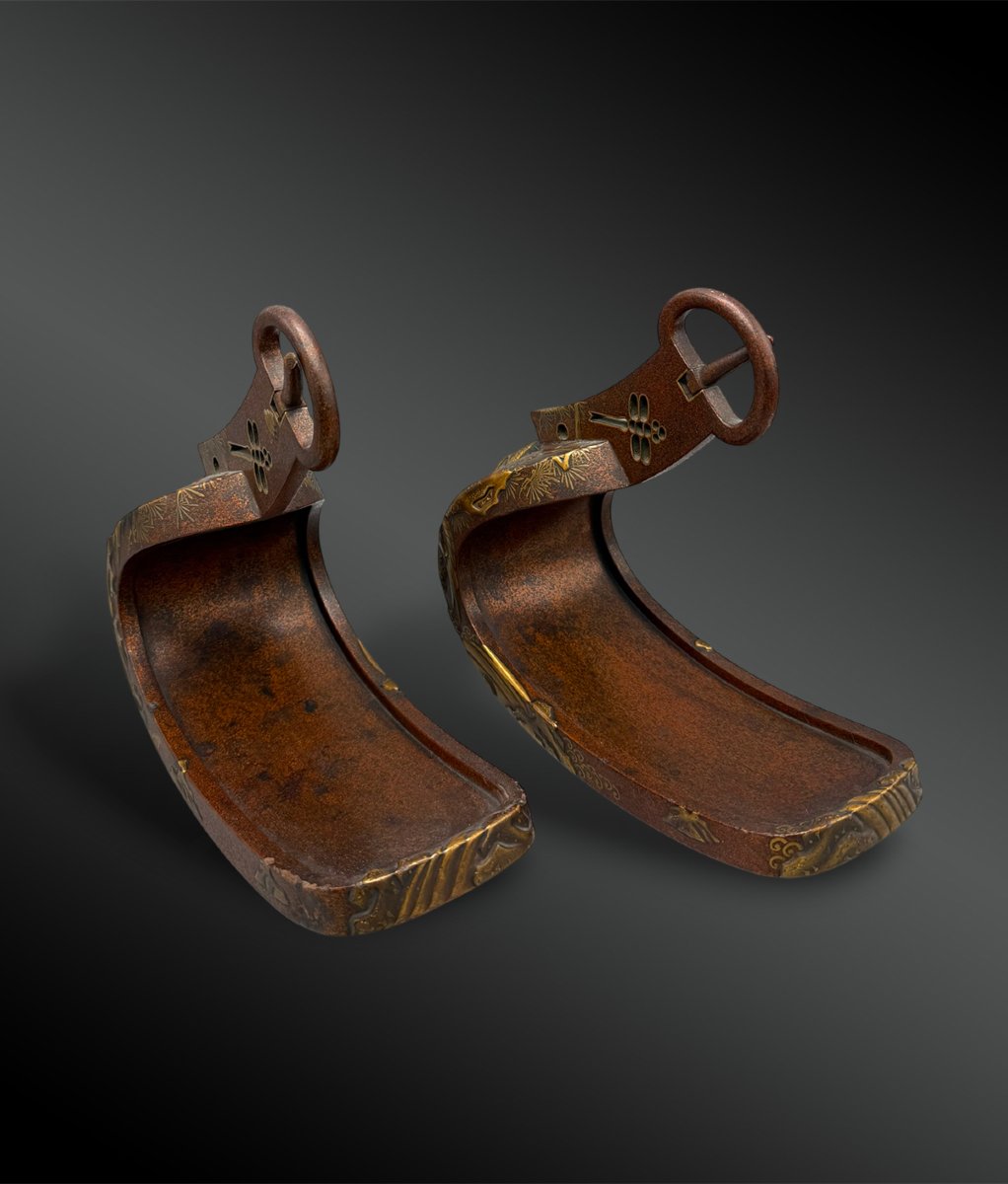
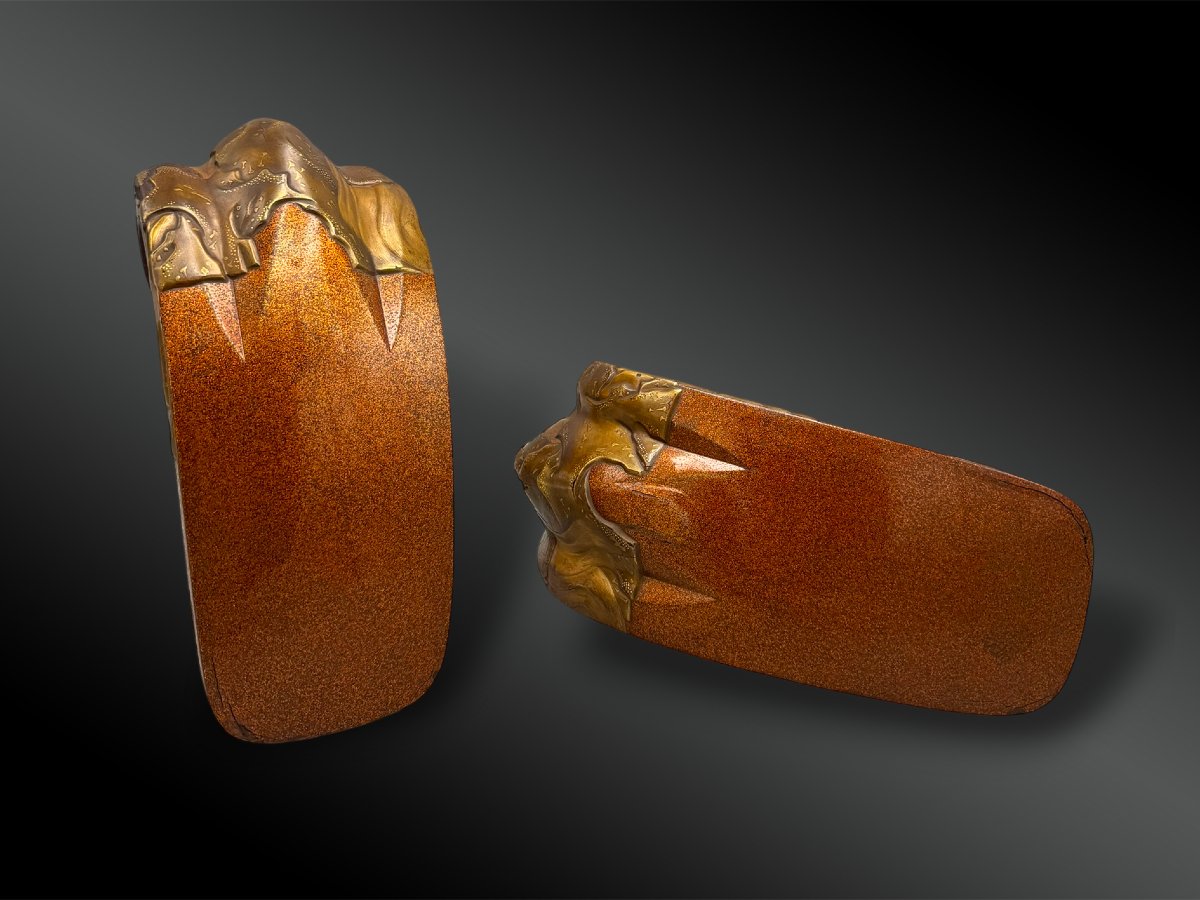
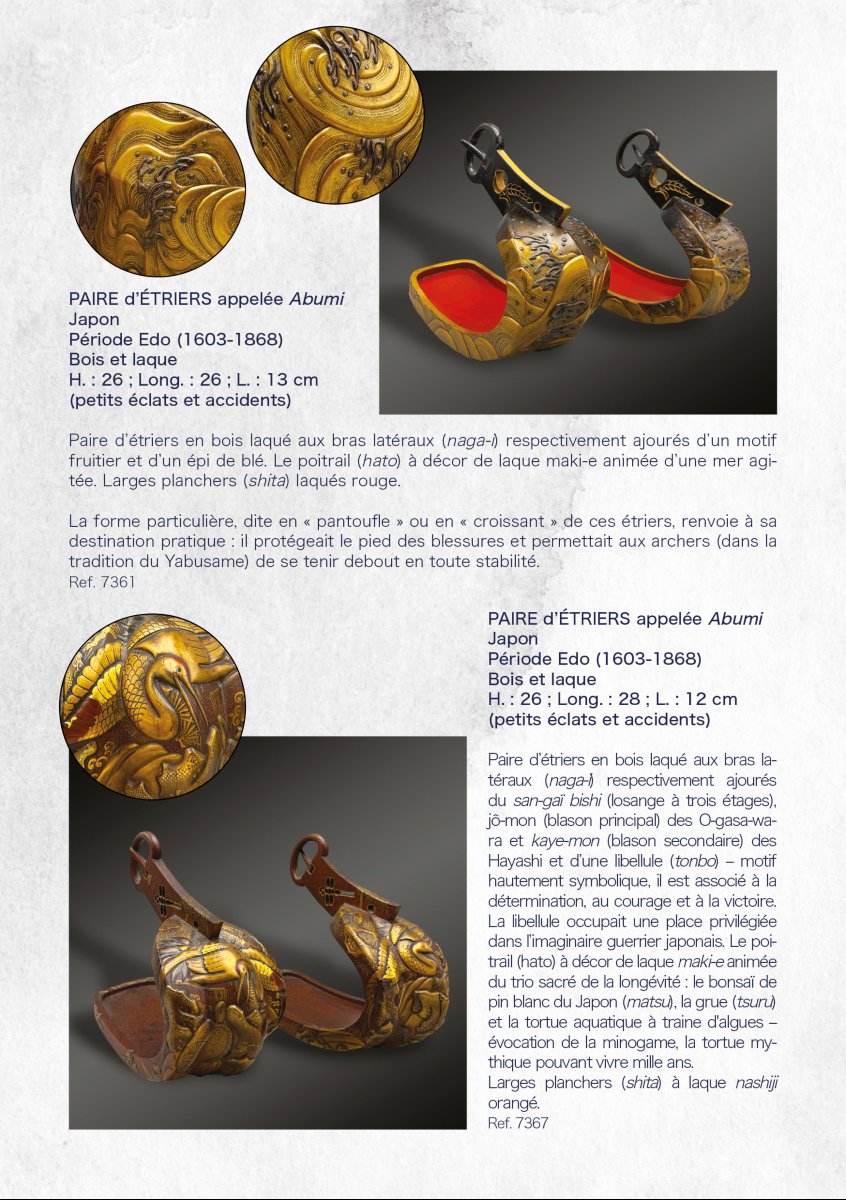
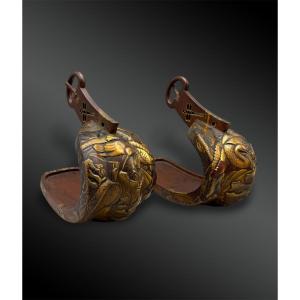
Pair of lacquered wooden stirrups with lateral arms (naga-i) openworked with the san-gai bishi (three-tiered diamond), the jô-mon (main crest) of the O-gasa-wara clan and the kaye-mon (secondary crest) of the Hayashi clan, as well as a dragonfly (tonbo)—a highly symbolic motif associated with determination, courage, and victory. The dragonfly held a special place in the Japanese warrior’s imagination. The decorative maki-e lacquered hatō (mail) features the sacred trio of longevity: the Japanese white pine bonsai (matsu), the crane (tsuru), and the aquatic turtle trailing seaweed—an evocation of the minogame, the mythical turtle said to live a thousand years.
Wide panels (shita) finished in orange nashiji lacquer.
Ref. 7367
Text and photos © FCP CORIDON
Japan
Edo Period (1603–1868)
Wood and lacquer
H.: 26; L.: 28; W.: 12 cm
(small chips and imperfections)
Pair of lacquered wooden stirrups with lateral arms (naga-i) openworked with the san-gai bishi (three-tiered diamond), the jô-mon (main crest) of the O-gasa-wara clan and the kaye-mon (secondary crest) of the Hayashi clan, as well as a dragonfly (tonbo)—a highly symbolic motif associated with determination, courage, and victory. The dragonfly held a special place in the Japanese warrior’s imagination. The decorative maki-e lacquered hatō (mail) features the sacred trio of longevity: the Japanese white pine bonsai (matsu), the crane (tsuru), and the aquatic turtle trailing seaweed—an evocation of the minogame, the mythical turtle said to live a thousand years.
Wide panels (shita) finished in orange nashiji lacquer.
Ref. 7367
Text and photos © FCP CORIDON
Explore similar pieces and discover your ideal find:
Curiosities