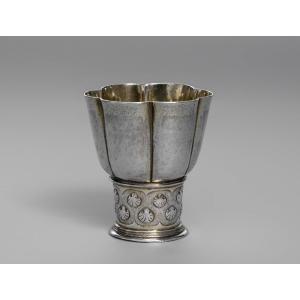


Holy Roman Empire, Circa 1540–1580, Renaissance Goblet, Solid Silver And Vermeil
Renaissance Silver Beaker with Partial Gilding
German-speaking world, probably Central Europe, circa 1550–1580
Partly gilt silver.
Height: 8 cm; diameter: 7.5 cm; weight: 105 g.
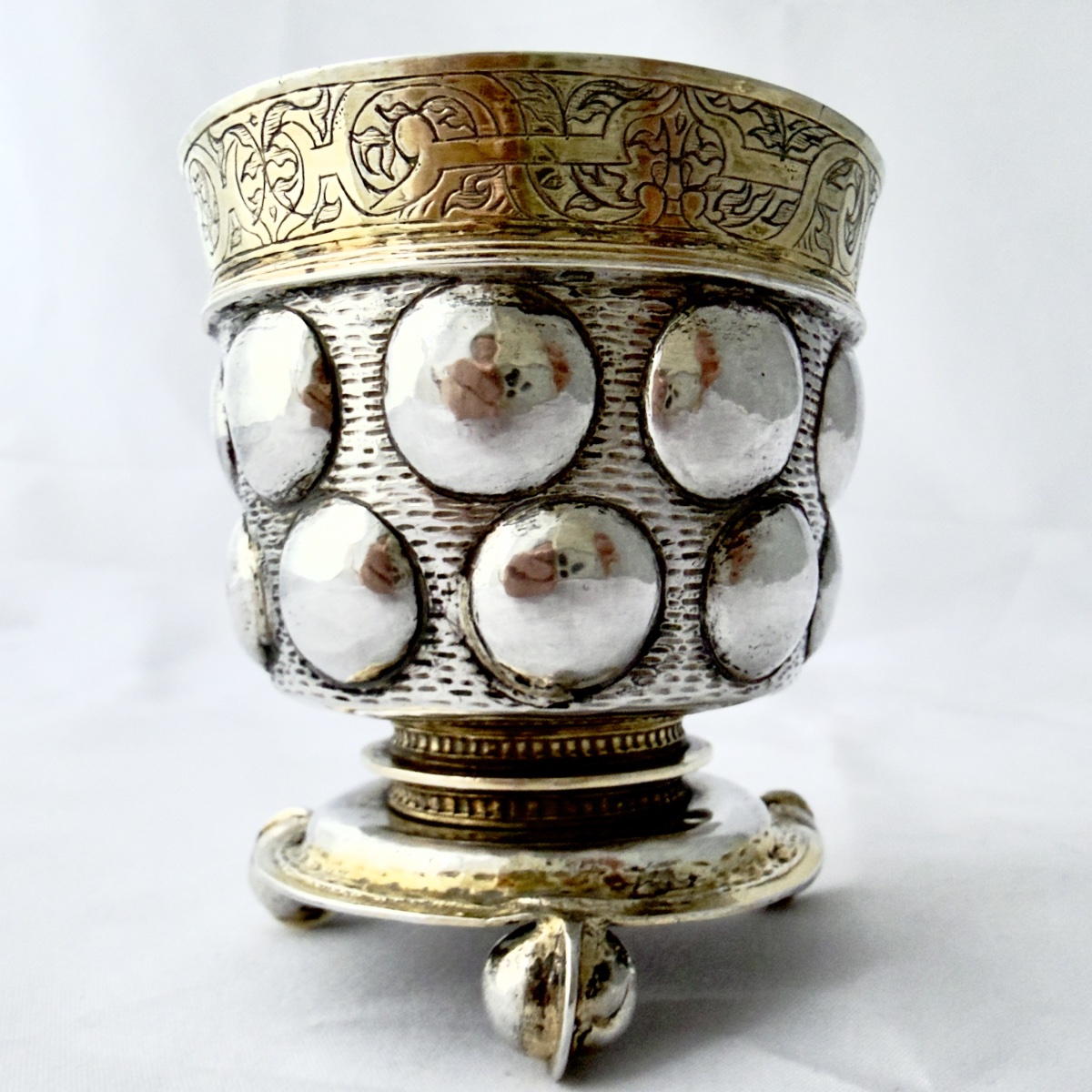
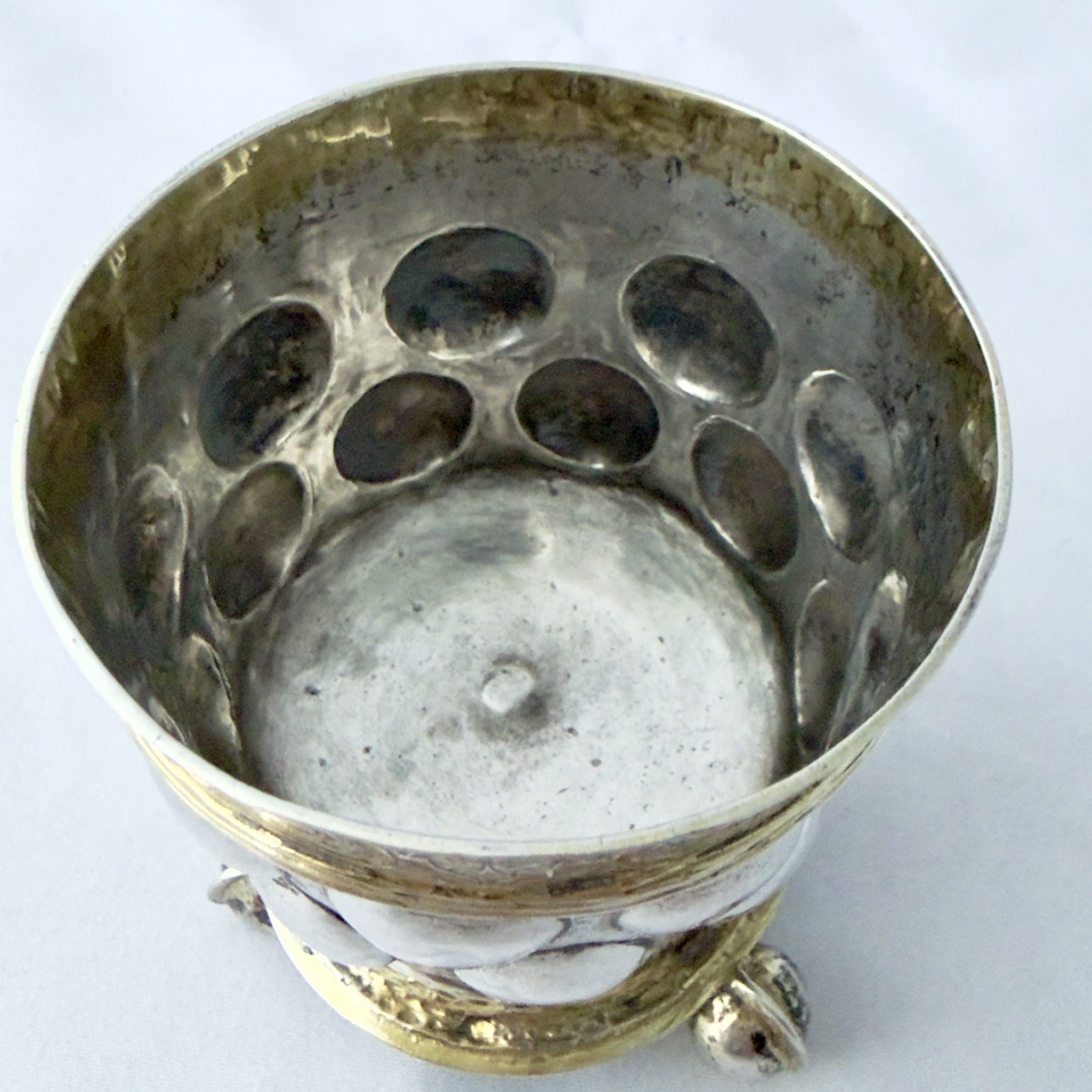
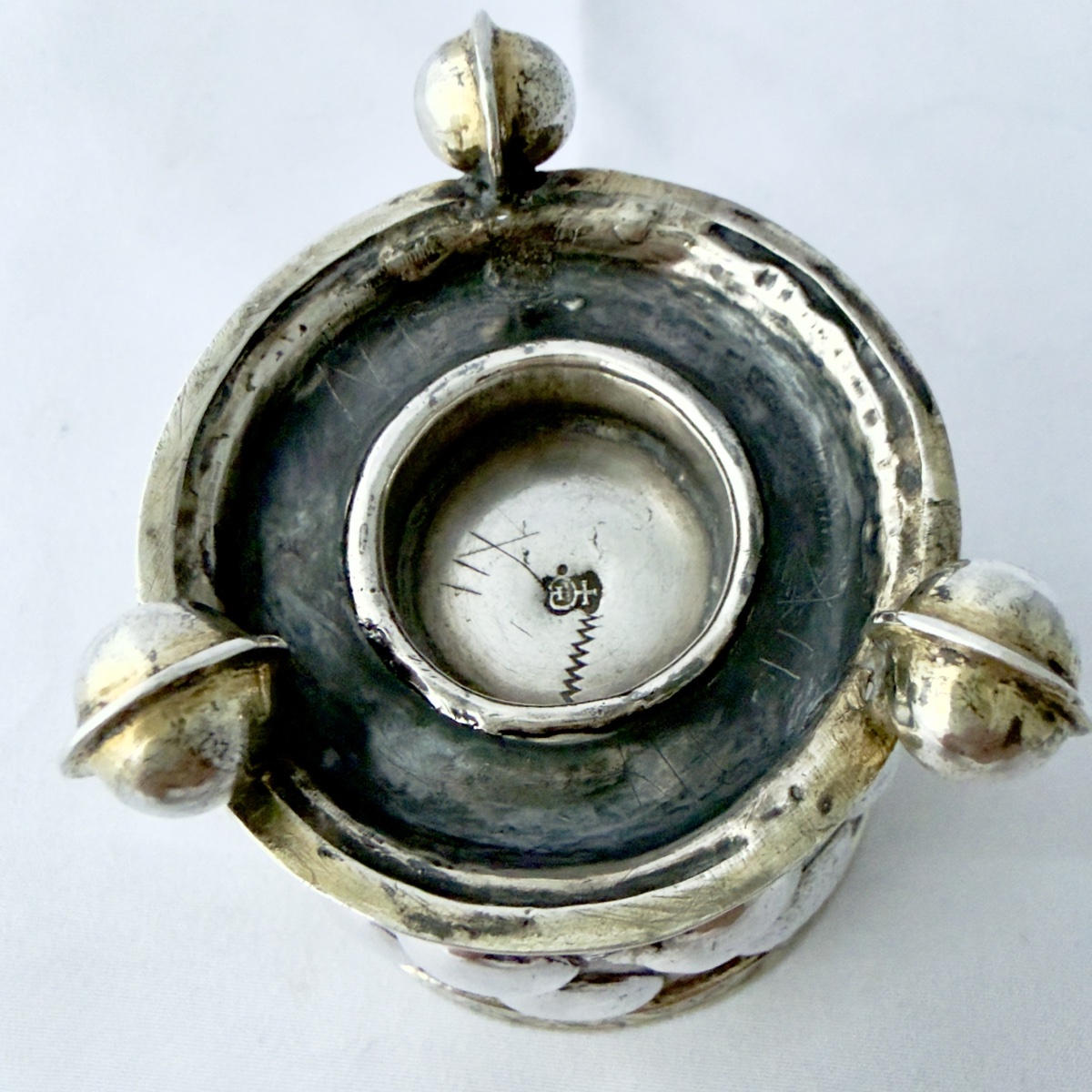
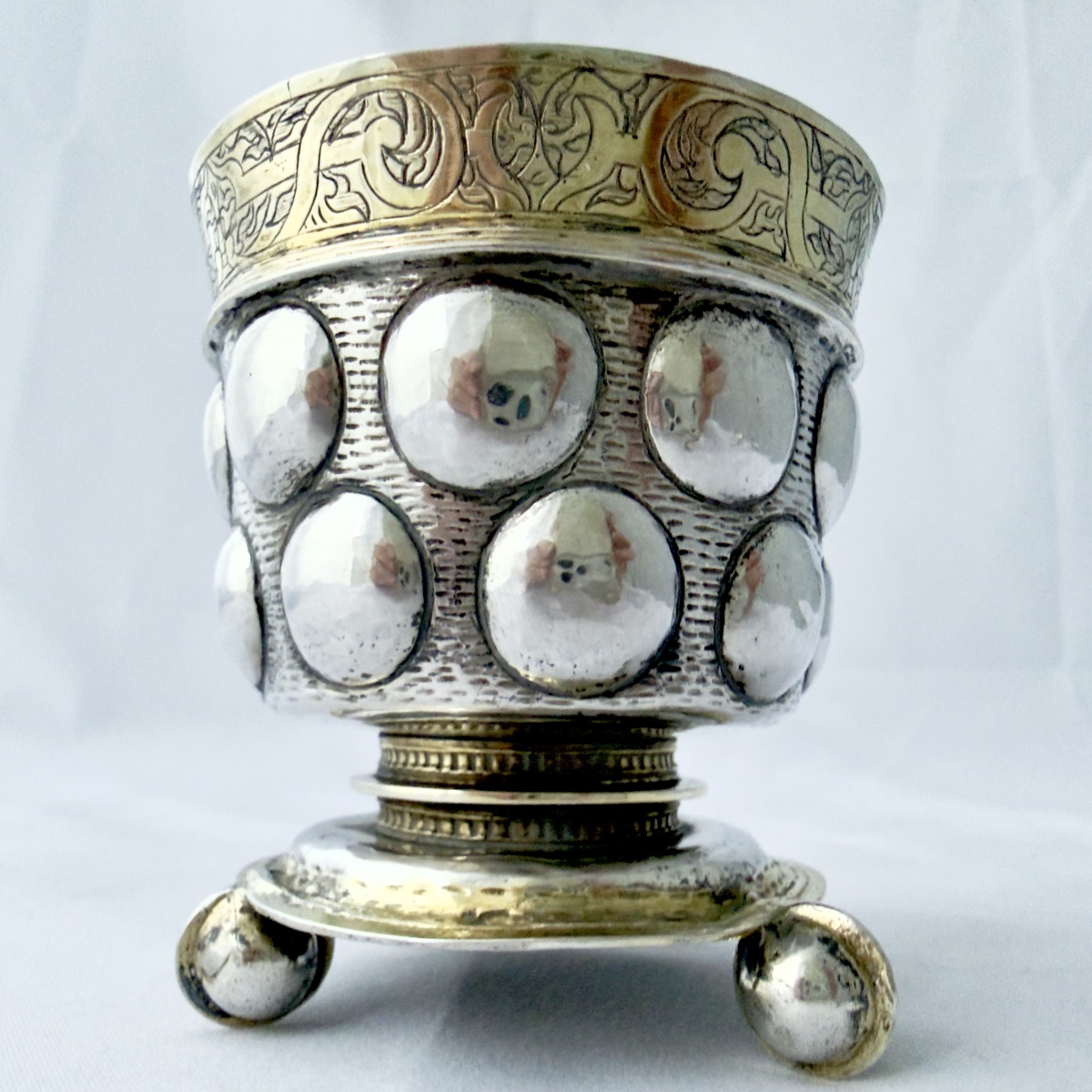
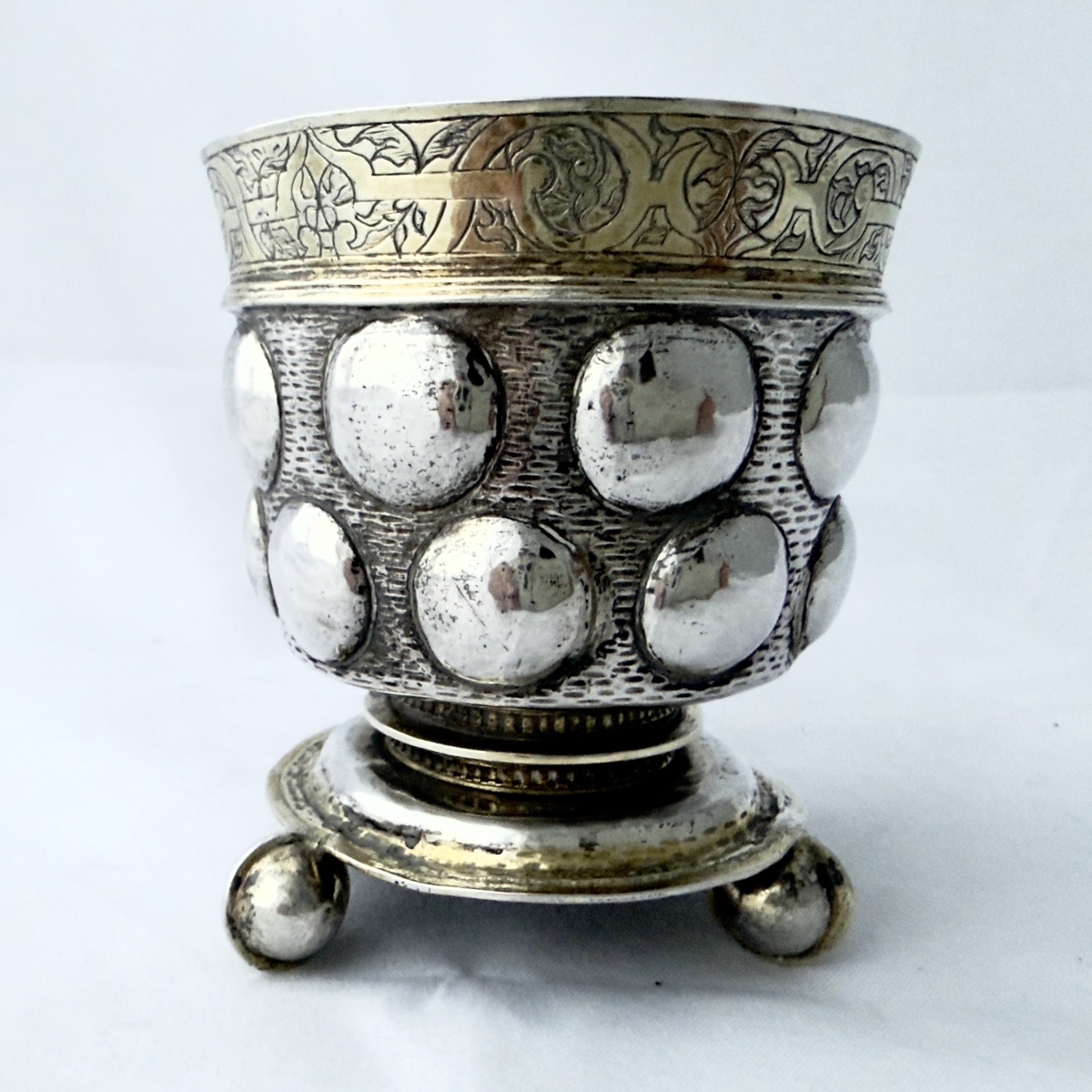
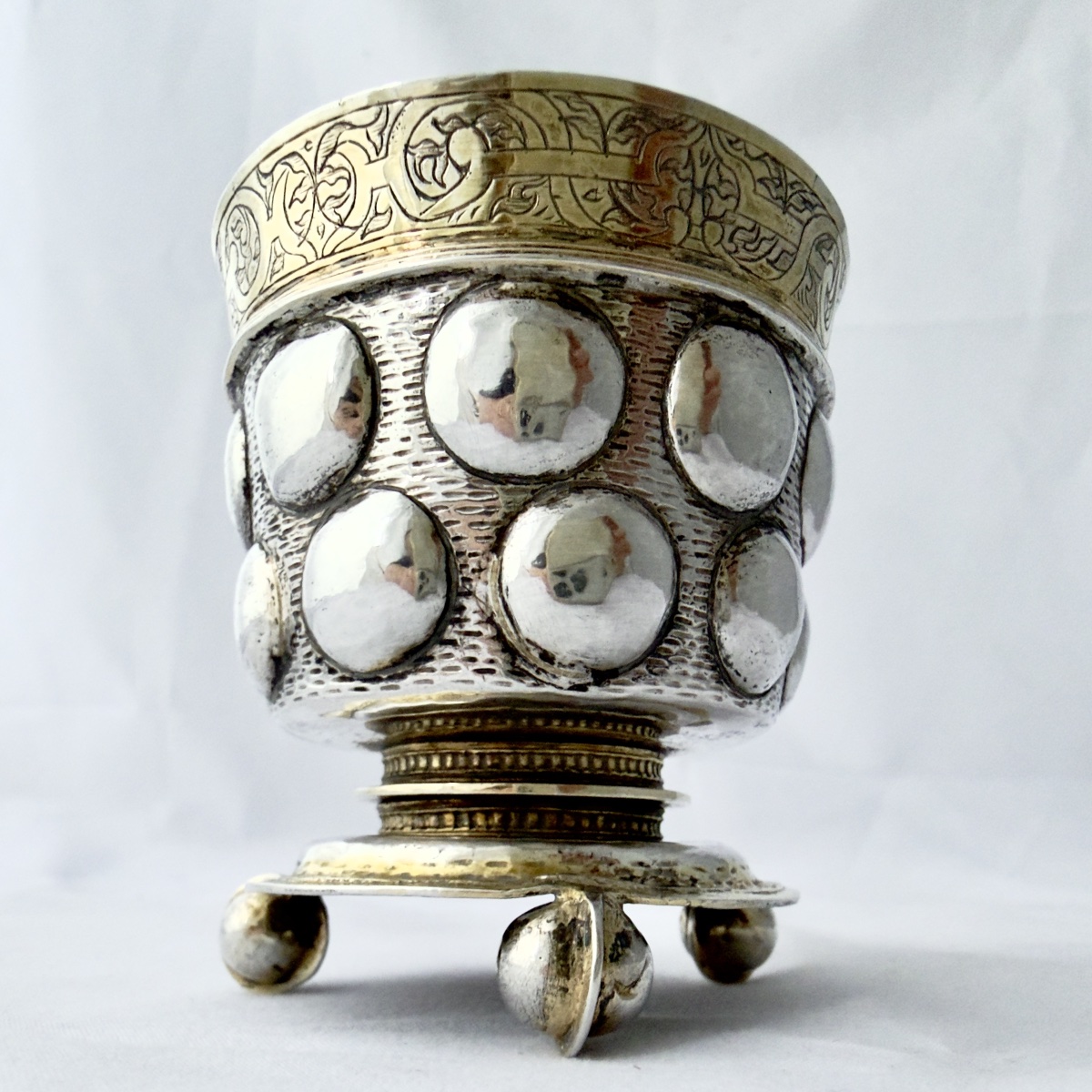
This remarkable silver beaker belongs to a family of drinking vessels characteristic of Renaissance goldsmiths’ work in the German-speaking world. Its strongly architectural form combines a cylindrical bowl with a low spreading circular foot resting on three spherical feet.
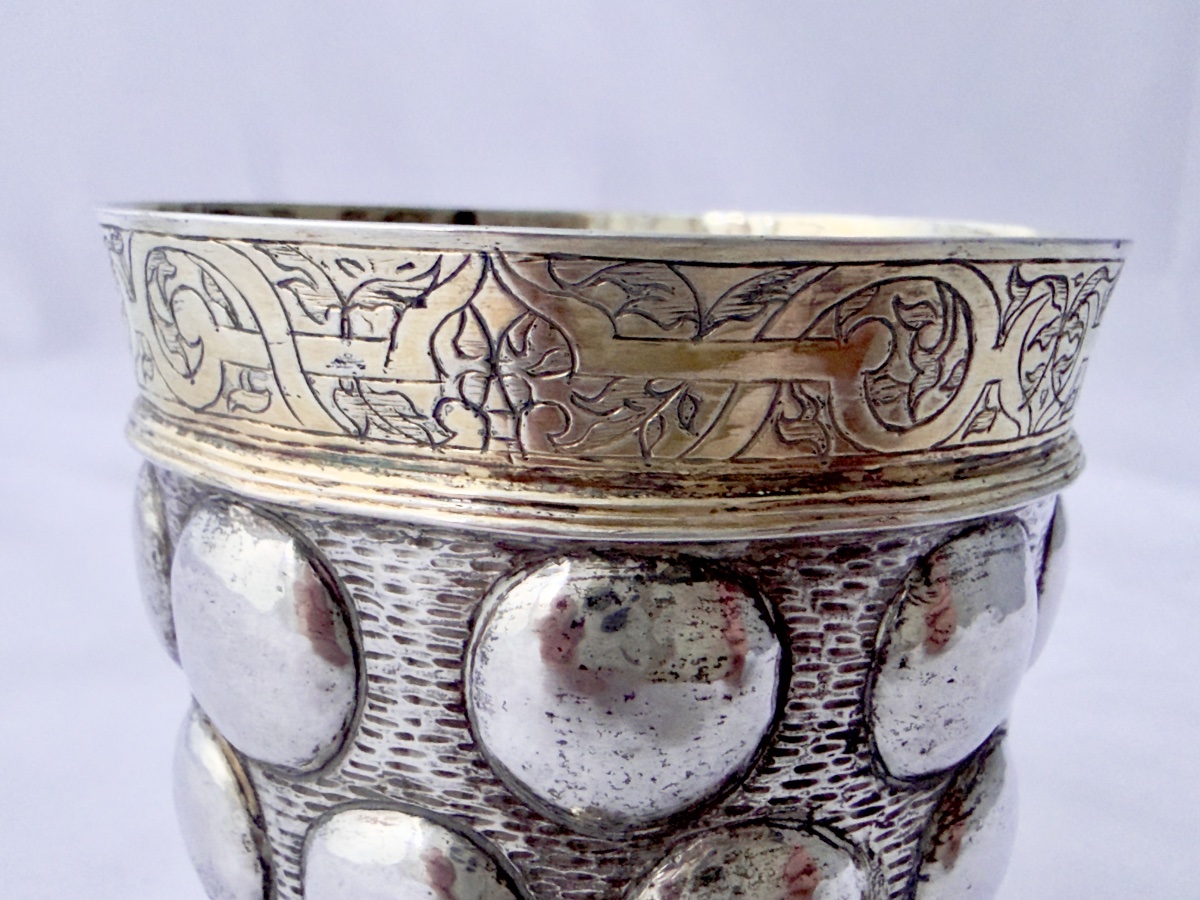
The body is decorated with a continuous row of large repoussé oval bosses, left plain and highly polished. They stand out against a matted ground worked with a multitude of short horizontal striations, creating a particularly striking contrast between the smooth, rounded volumes and the densely worked surface surrounding them. This decorative technique finds particularly close parallels in German and Transylvanian silver of the mid-sixteenth century.
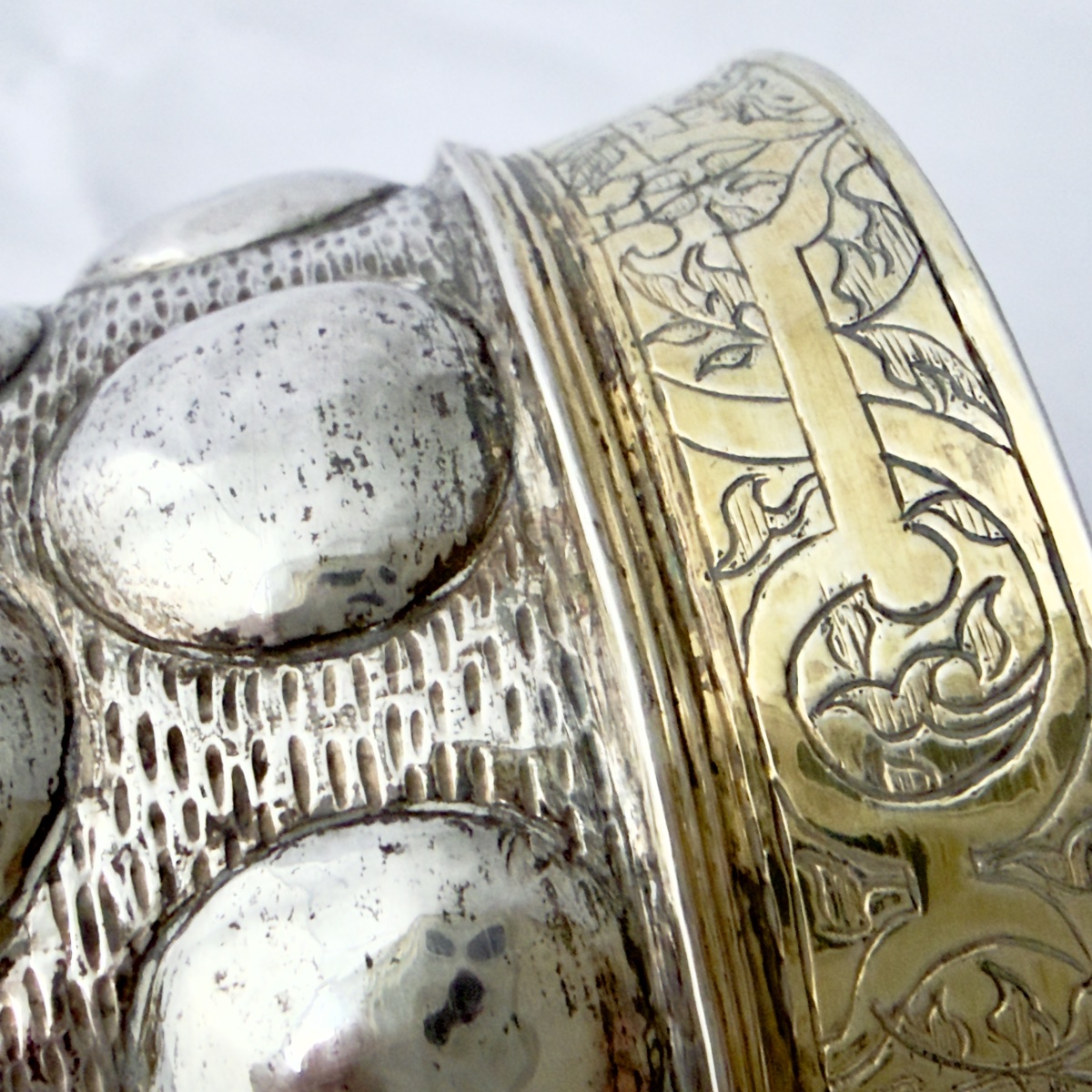
The upper section is encircled by a broad gilt band engraved with an elegant continuous pattern of scrolling and interlaced foliage. This ornamental vocabulary, firmly rooted in the Renaissance, finds numerous parallels both in contemporary engraved designs and in silver produced throughout the German-speaking world during the sixteenth century.
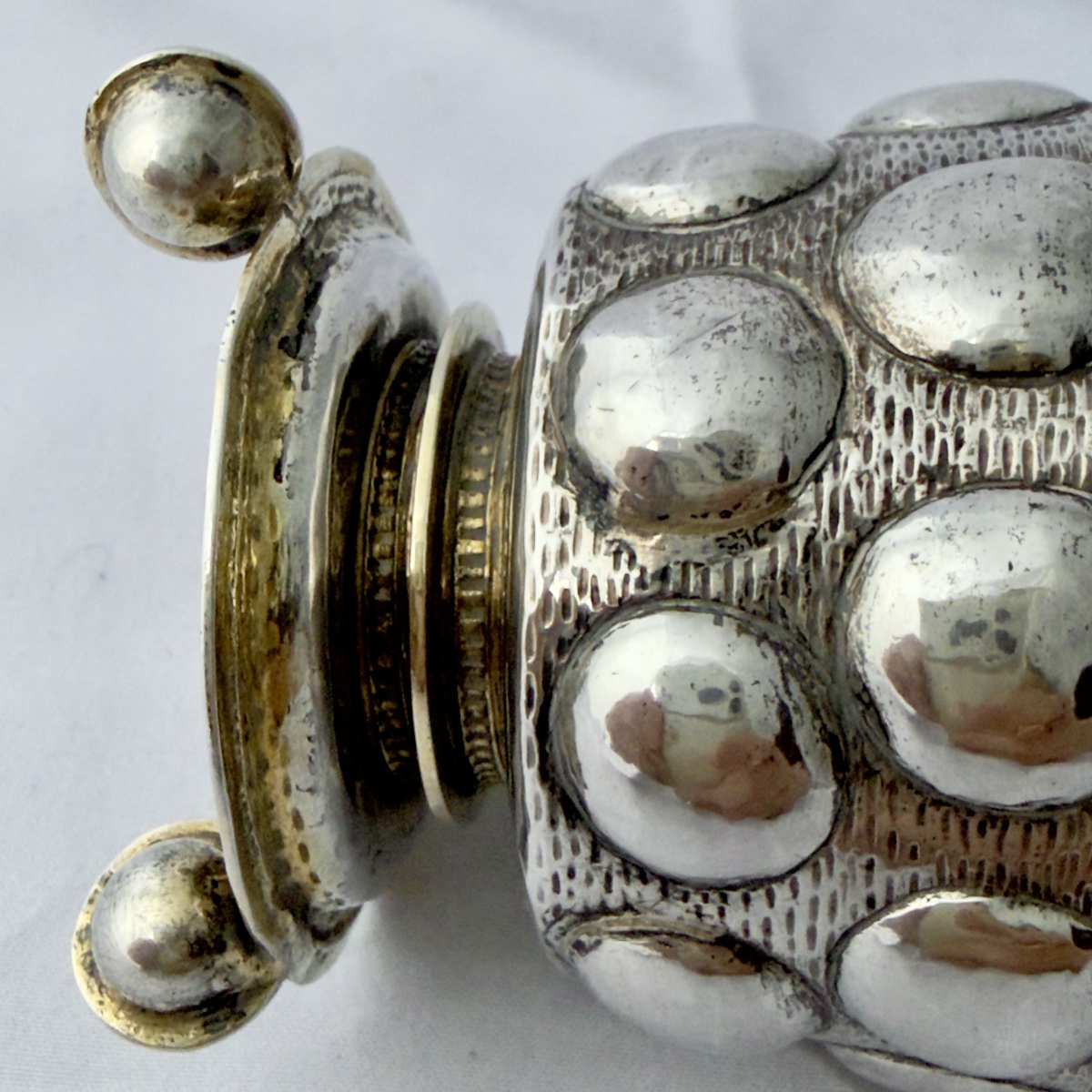
The construction of the lower section is also significant for the dating of the beaker. The bowl narrows markedly at its base before joining the spreading foot through a succession of moulded rings. Some of these rings are articulated by small geometric elements, with recessed rectangles alternating with raised rectangular or square motifs. This architectural treatment of the mouldings is entirely characteristic of the Renaissance decorative vocabulary.
The foot rests on three balls which are not simply smooth spheres: each is articulated around its middle by a circular moulding. The care devoted even to these supporting elements contributes to the particularly accomplished character of the object.
The combination of these features — plain repoussé oval bosses against a striated ground, an engraved and gilt foliage frieze, the pronounced narrowing between bowl and foot, the succession of geometrically ornamented mouldings, and the moulded spherical feet — places this beaker firmly within the tradition of sixteenth-century German Renaissance silver, most probably around the middle or in the second half of the century.
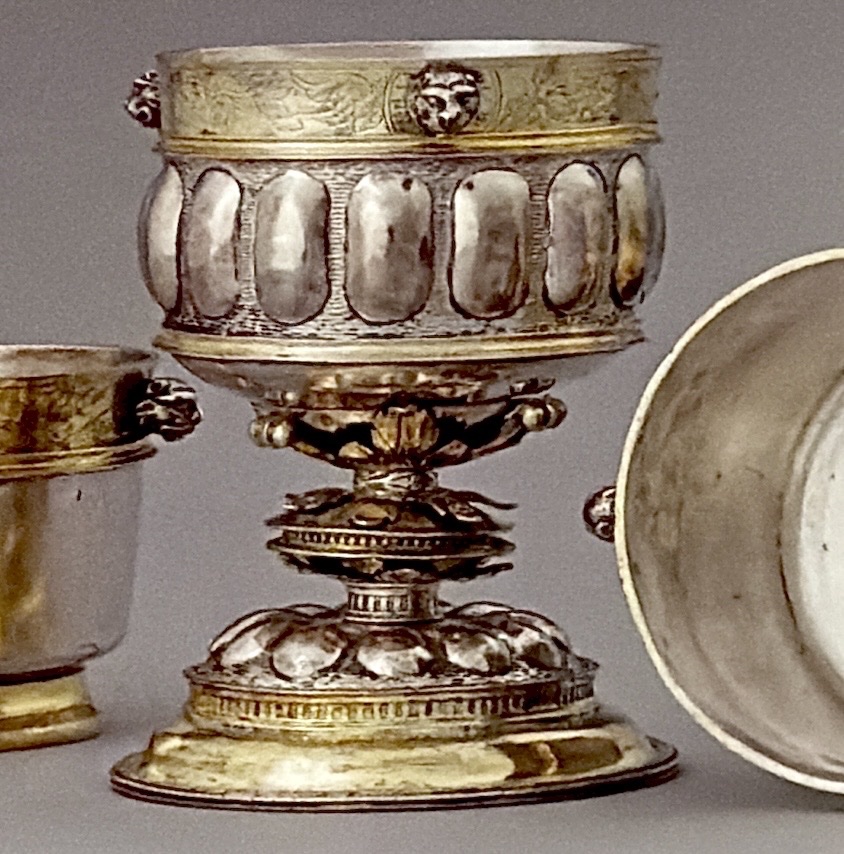
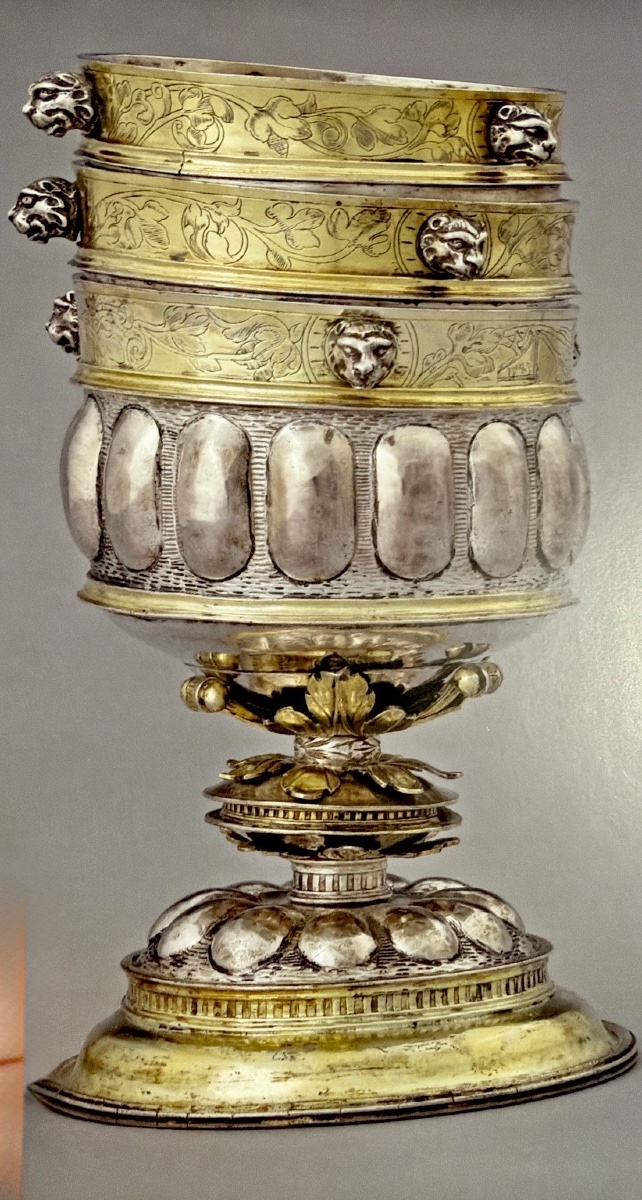
A particularly significant comparison can be made with the three Satzbecher, or stacking beakers, made in 1543 at Kronstadt, present-day Brașov in Transylvania, by the goldsmith Ludovicus Goldschmied. Formerly in the prestigious Mayer Carl von Rothschild Collection, these beakers were presented to the Musée de Cluny during the interwar period and subsequently entered the collections of the Musée national de la Renaissance at the Château d’Écouen. Their decoration consists of large repoussé gadroons against a ground matted with fine horizontal striations, together with a gilt upper band engraved with scrolling foliage. The decorative principle is therefore remarkably close to that employed on the present beaker.
The catalogue of the Musée national de la Renaissance itself places the Kronstadt beakers within the context of the early German Renaissance and emphasizes their relationship with the work produced in the major German goldsmithing centres. Comparable techniques occur particularly at Nuremberg, in works associated with Ludwig Krug and in the production of Melchior Baier, as well as in other important German-speaking centres such as Augsburg and Basel.
These stylistic relationships should be understood within the highly international artistic context of sixteenth-century Central Europe. Designs created in the major goldsmithing centres of the Holy Roman Empire circulated widely through prints, merchants and craftsmen. Kronstadt was particularly important in this respect. It was one of the principal cities of the Transylvanian Saxons, a German-speaking population established in the region since the Middle Ages and organized into powerful craft guilds. Its goldsmiths belonged to an artistic culture closely connected with that of the German cities of Central Europe.
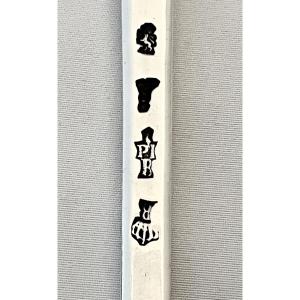
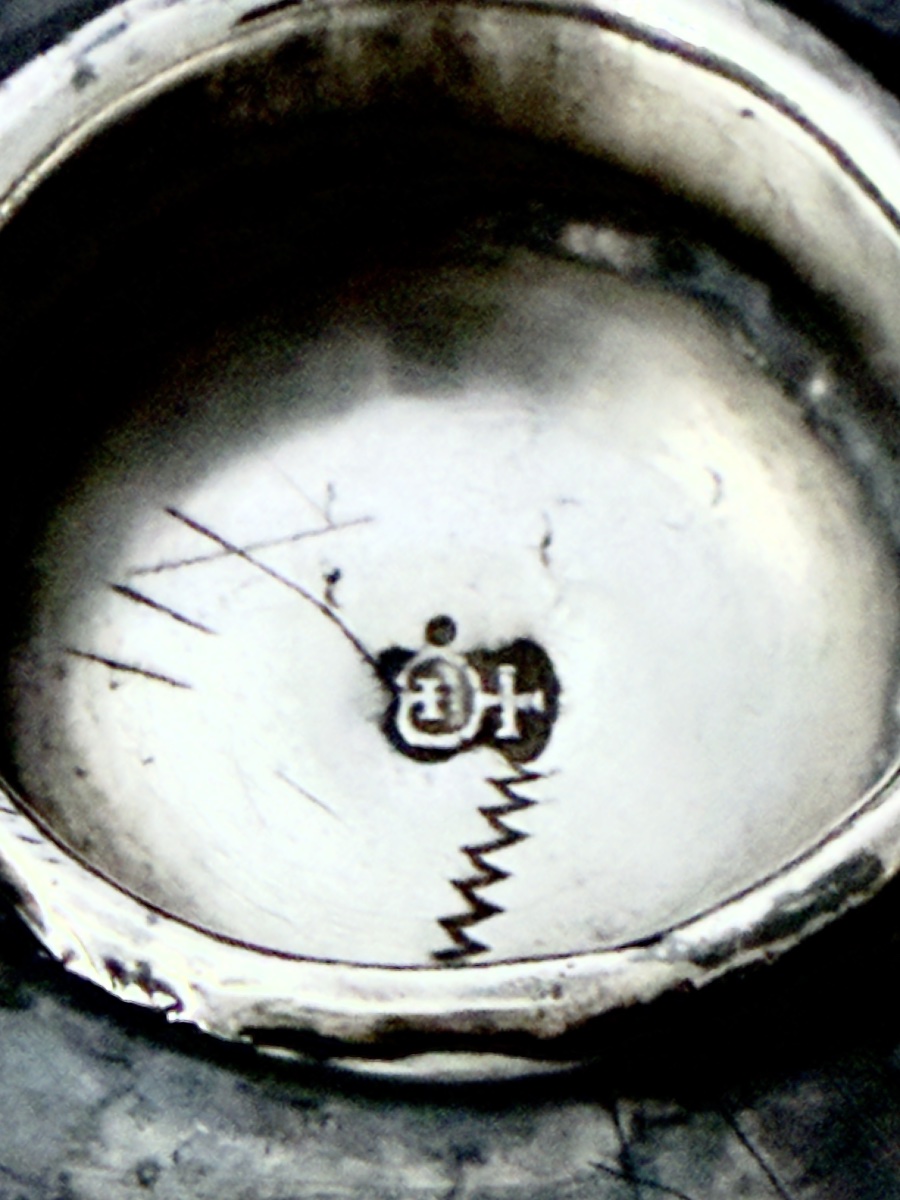
On the underside, the beaker bears a maker’s mark, accompanied by a pronounced zigzag assay trace (Tremolierstich). The form of the mark shows certain similarities with monograms used by Kronstadt goldsmiths during the sixteenth century. Kronstadt therefore represents a particularly interesting possibility for the origin of the object, especially since several goldsmiths bearing the name Goldschmied are documented there during the century. As the mark has not yet been identified with certainty, however, a precise attribution to Kronstadt must remain a hypothesis.
In both its construction and decoration, this beaker is therefore a remarkable example of sixteenth-century German Renaissance silver, reflecting the artistic connections between Nuremberg, Augsburg and the major German-speaking centres of Central Europe.
German-speaking world, probably Central Europe, circa 1550–1580. An origin in Kronstadt/Brașov, Transylvania, may be considered.
Period: 16th century
Style: Renaissance, Louis 13th
Condition: Excellent condition
Material: Sterling silver
Diameter: 7,5 cm
Height: 8 cm
Reference (ID): 1816383
Availability: In stock