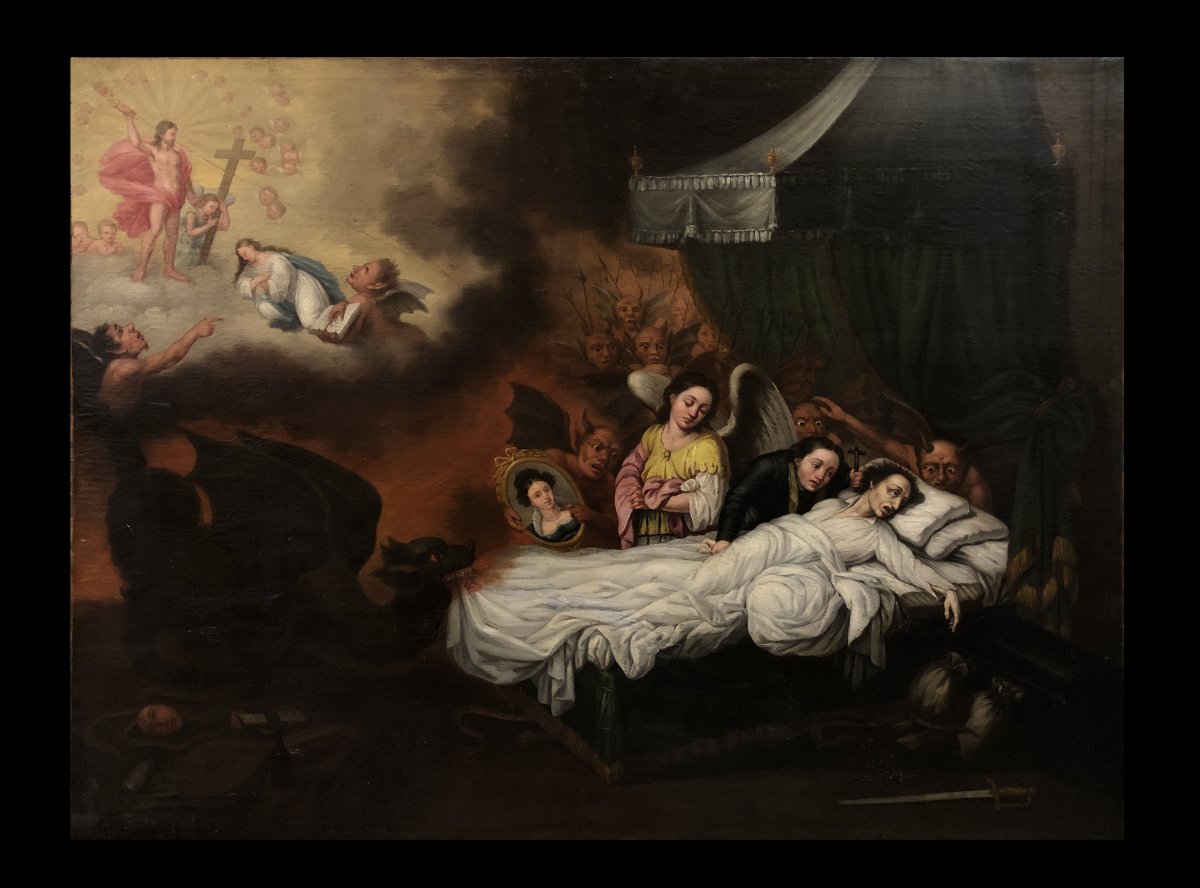


Brazilian School (c. 1810) - The Death Of The Sinner
- Oil on canvas.
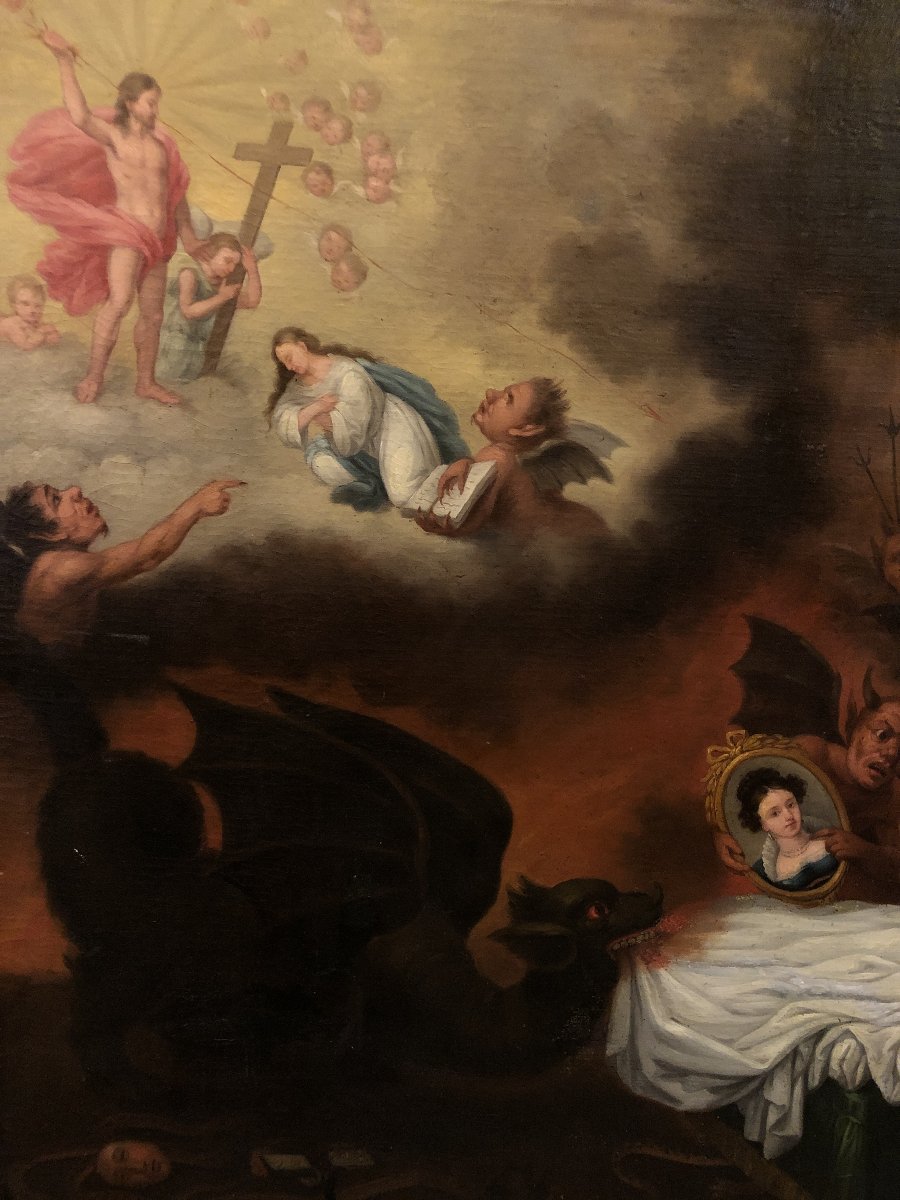
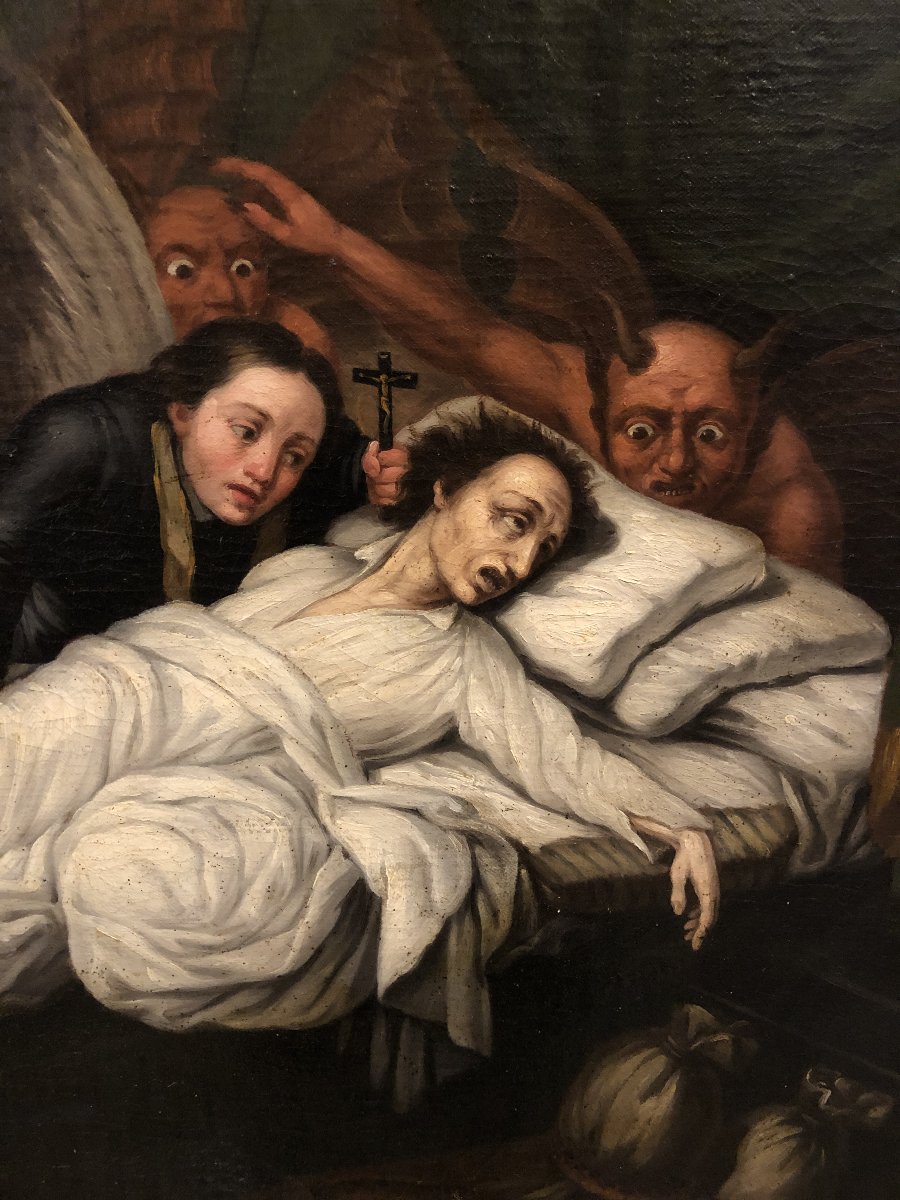
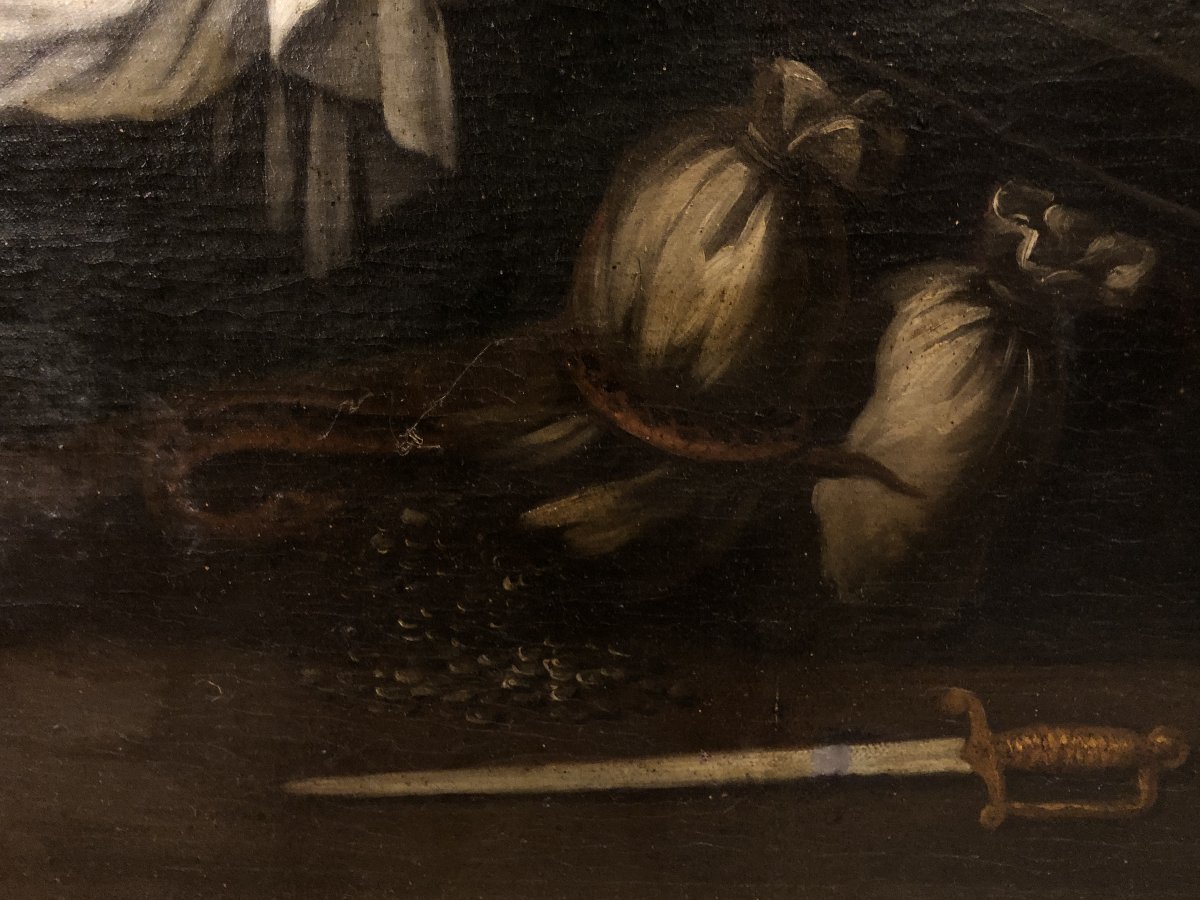
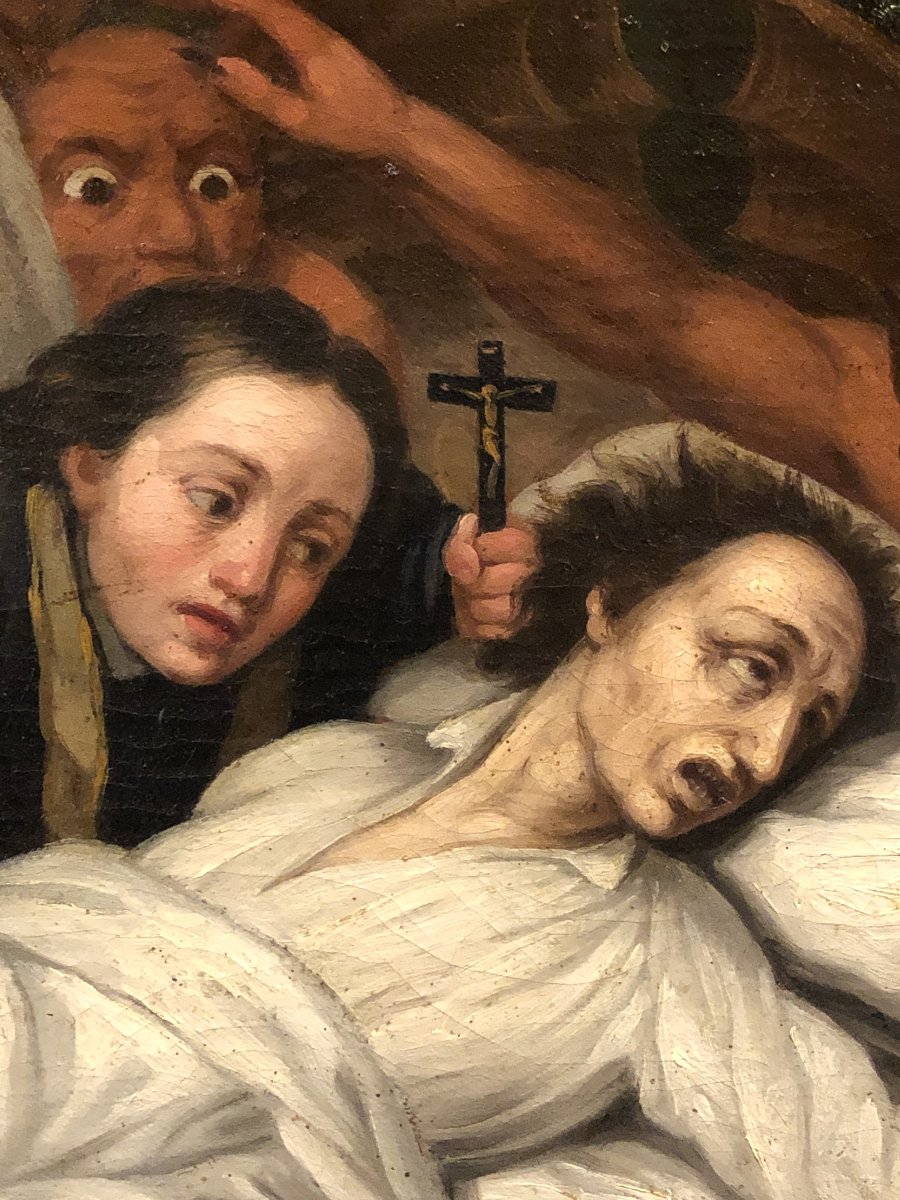
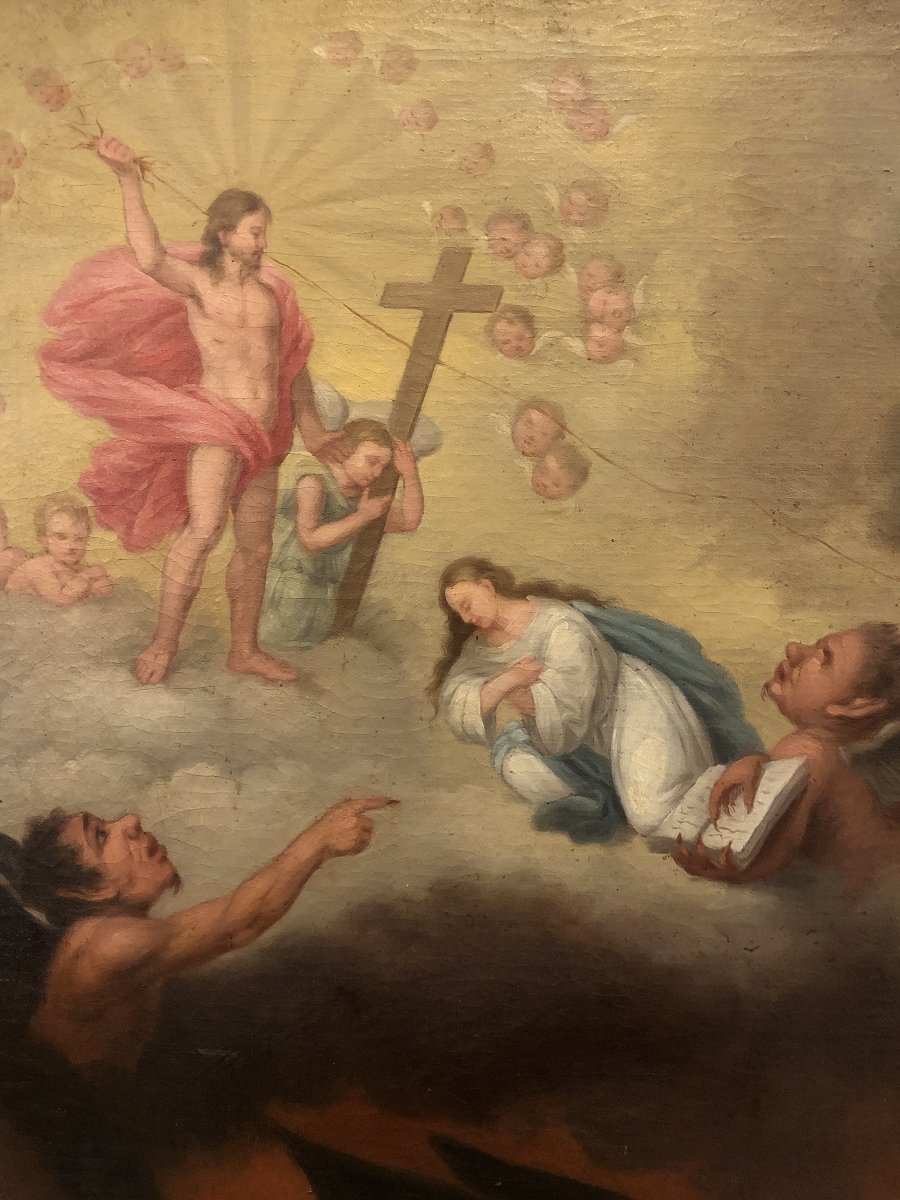
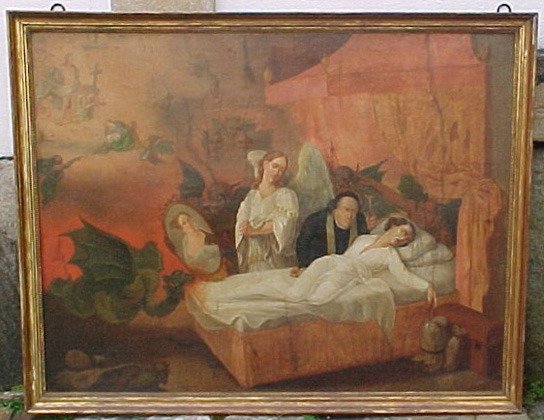
- The didactic and moralizing genre of “The Death of the Righteous” and “The Death of the Sinner” is one of the most striking expressions of colonial art from around the 19th century, finding its most eloquent expression in Brazil in the late 18th and early 19th centuries. Conceived as Dantean pairs of striking contrasts, these paintings were displayed in the naves and sacristies of churches in Minas Gerais and Rio de Janeiro with the unambiguous purpose of serving as memento mori and models of conduct for the faithful. The deathbed is transformed into an eschatological theater where the final battle for the soul is waged: while the righteous person breathes his last, surrounded by virtues, intercessory angels, and the consoling light of the sacraments, the sinner struggles amid metaphors of shattered vanity—scattered coins, unfinished wills, and shattered mirrors—under attack by grotesque demonic effigies.
Gradually, the visceral and hyperbolic plasticity inherited from the Baroque and the Art moriendi tradition took shape under the formal rigor imposed by the French Artistic Mission of 1816. The influence of figures such as Nicolas-Antoine Taunay and Jean-Baptiste Debret introduced into the pictorial space an unprecedented academic restraint and geometric order. Thus, the drama of the transition was subjected to the analytical clarity of Neoclassicism: the theatrical architecture of the dying man’s bed adopts pure orthogonal lines, the arrangement of the figures takes on the austere coldness of a sculpted frieze, and the light becomes Cartesian, modulating the moral conflict through a compositional sobriety rooted in classicism. Through this synthesis of doctrinal fervor and the academic structure of the French Mission, these compositions crystallized into powerful visual sermons in which the turmoil of the soul and the ephemeral nature of earthly glories succumbed to inexorable and methodical divine justice at the final hour. A very similar painting is housed in the museum dedicated to the Inconfidência Mineira Revolt in Ouro Preto.
- 111 x 146 cm
- The didactic and moralizing genre of “The Death of the Righteous” and “The Death of the Sinner” is one of the most striking expressions of colonial art from around the 19th century, finding its most eloquent expression in Brazil in the late 18th and early 19th centuries. Conceived as Dantean pairs of striking contrasts, these paintings were displayed in the naves and sacristies of churches in Minas Gerais and Rio de Janeiro with the unambiguous purpose of serving as memento mori and models of conduct for the faithful. The deathbed is transformed into an eschatological theater where the final battle for the soul is waged: while the righteous person breathes his last, surrounded by virtues, intercessory angels, and the consoling light of the sacraments, the sinner struggles amid metaphors of shattered vanity—scattered coins, unfinished wills, and shattered mirrors—under attack by grotesque demonic effigies.
Gradually, the visceral and hyperbolic plasticity inherited from the Baroque and the Art moriendi tradition took shape under the formal rigor imposed by the French Artistic Mission of 1816. The influence of figures such as Nicolas-Antoine Taunay and Jean-Baptiste Debret introduced into the pictorial space an unprecedented academic restraint and geometric order. Thus, the drama of the transition was subjected to the analytical clarity of Neoclassicism: the theatrical architecture of the dying man’s bed adopts pure orthogonal lines, the arrangement of the figures takes on the austere coldness of a sculpted frieze, and the light becomes Cartesian, modulating the moral conflict through a compositional sobriety rooted in classicism. Through this synthesis of doctrinal fervor and the academic structure of the French Mission, these compositions crystallized into powerful visual sermons in which the turmoil of the soul and the ephemeral nature of earthly glories succumbed to inexorable and methodical divine justice at the final hour. A very similar painting is housed in the museum dedicated to the Inconfidência Mineira Revolt in Ouro Preto.
- 111 x 146 cm
6 500 €
Period: 19th century
Style: Other Style
Condition: Excellent condition
Material: Oil painting
Reference (ID): 1815533
Availability: In stock
Print