

Bottle Cooler, Manufacture De La Reine, Rue Thiroux, Ca. 1785
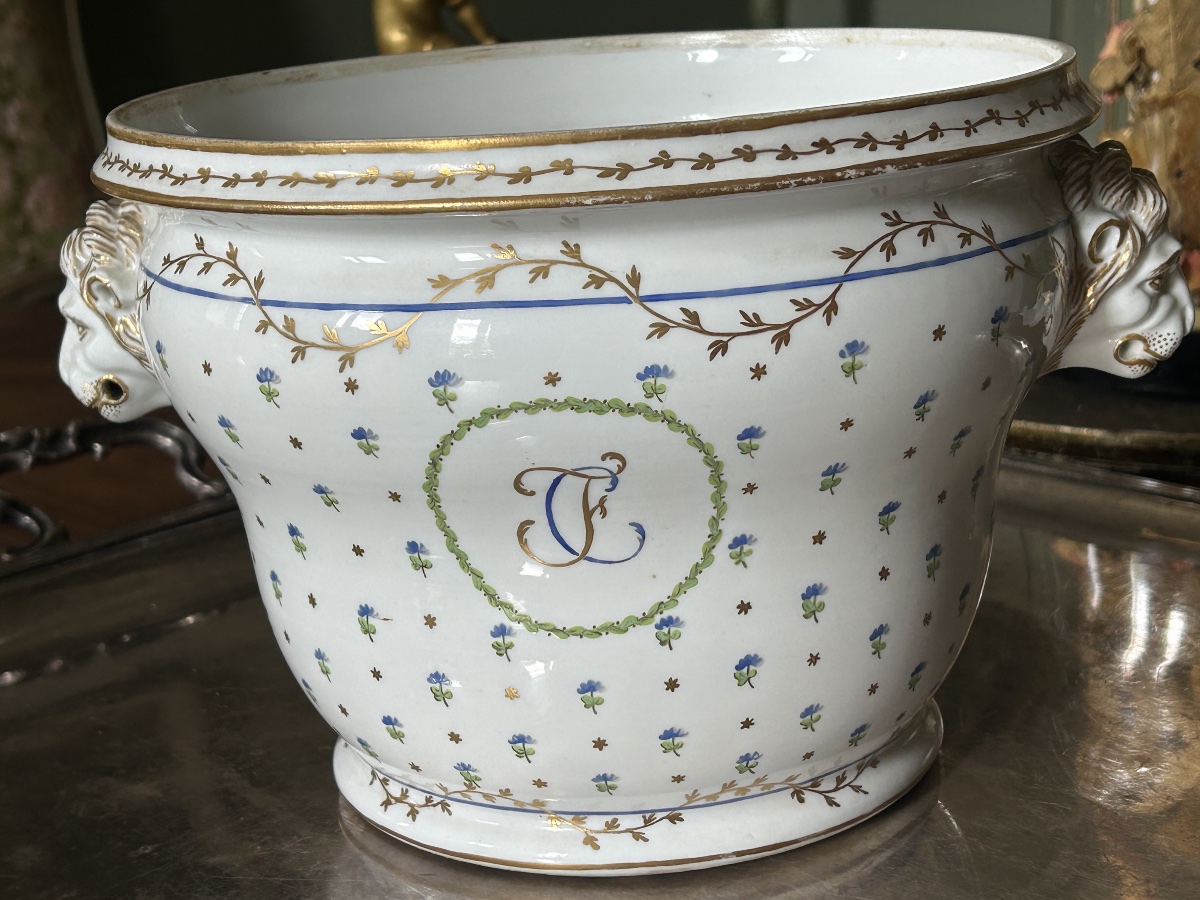
A large, bulbous bottle cooler (or bottle bucket) made of hard Paris porcelain, from the famous Manufacture de la Reine (located on Rue Thiroux).
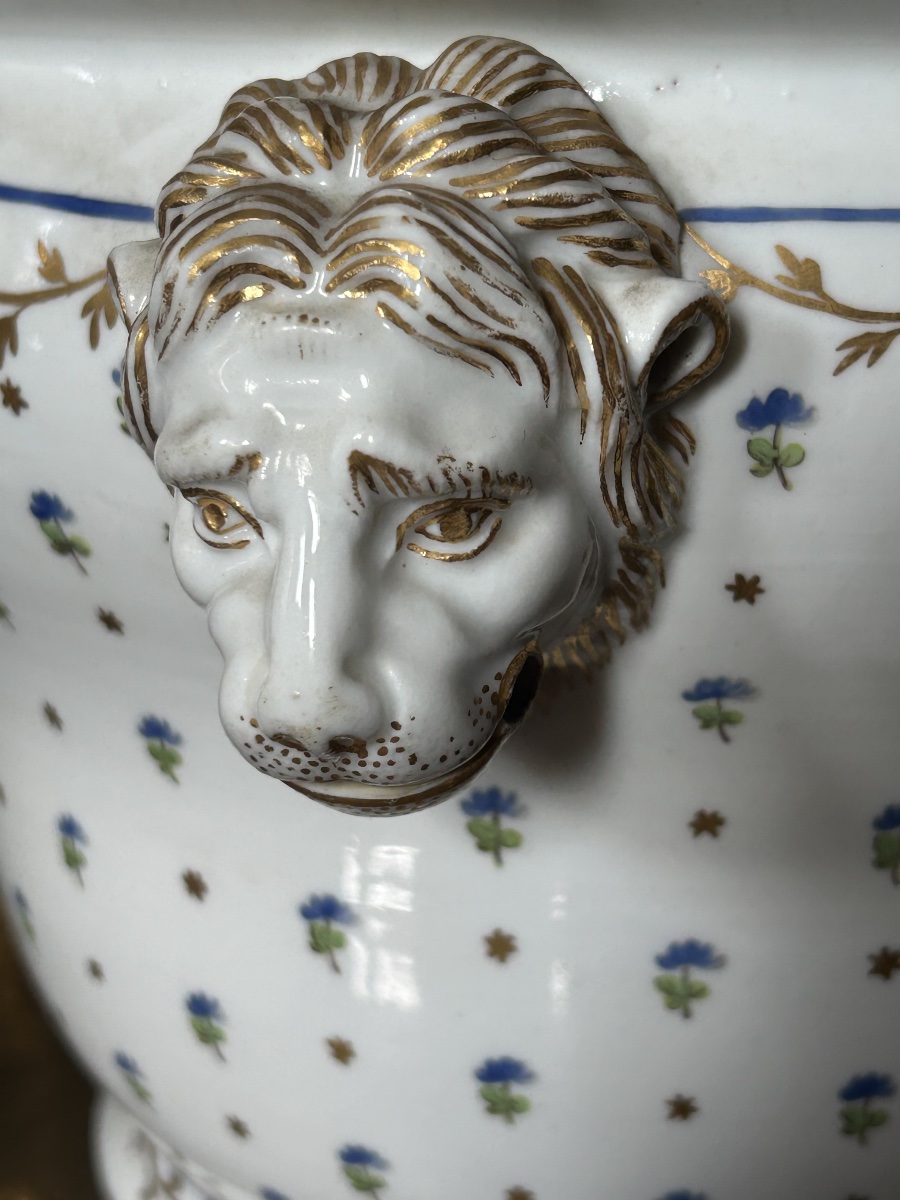
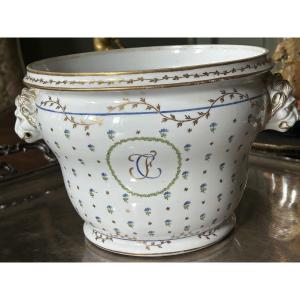
It features magnificent relief handles on both sides depicting lion muzzles delicately accented with gold. Its refined and refreshingly fresh design consists of:
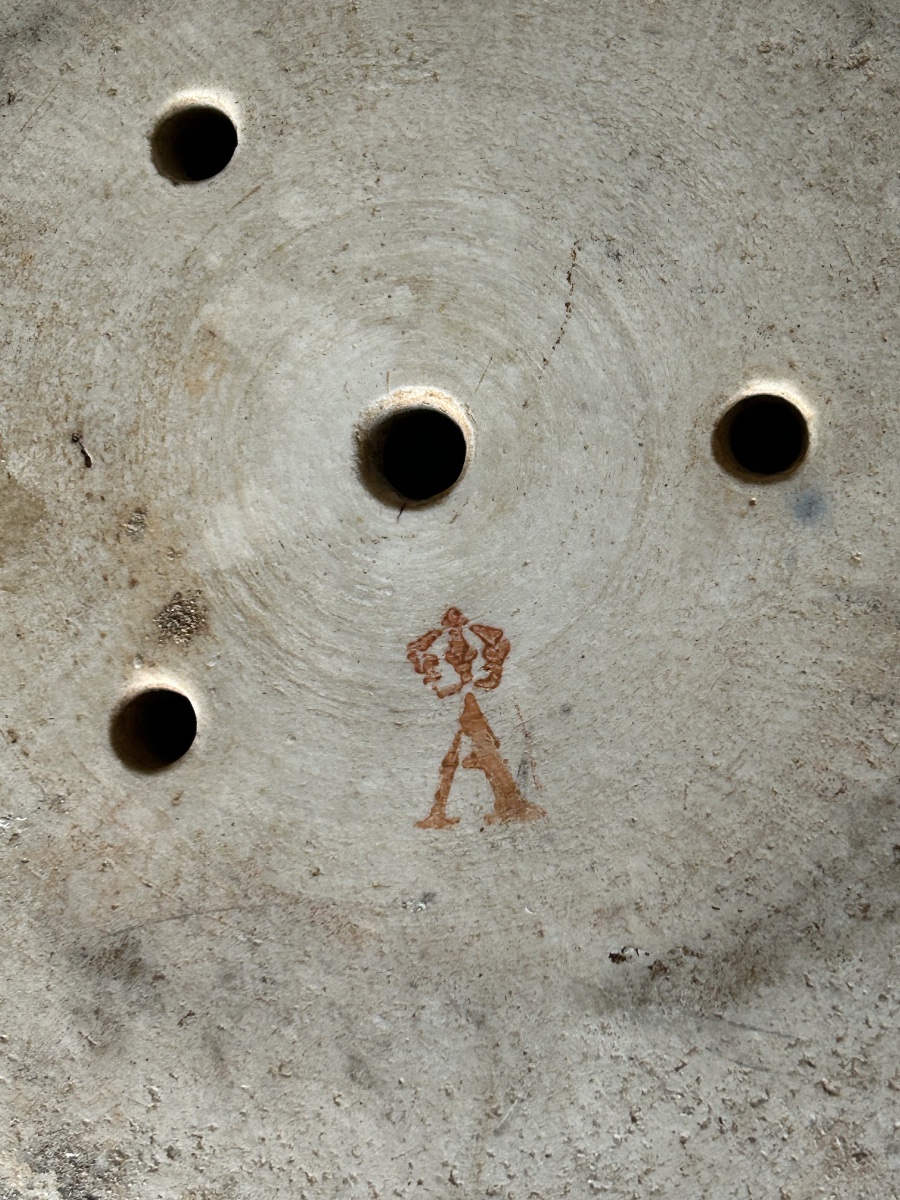
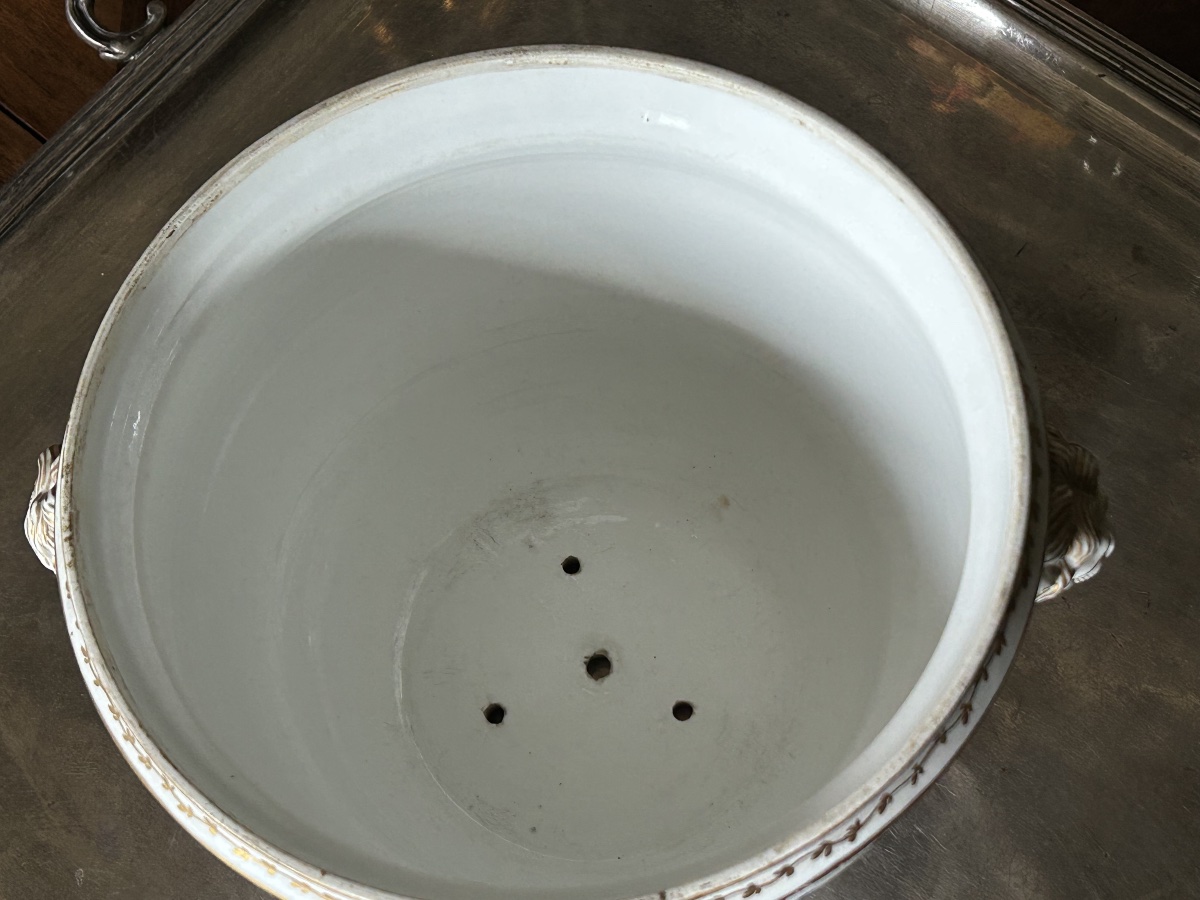
Below its base, the piece is signed with the characteristic red-stamped mark depicting the letter “A” surmounted by a royal crown (The “A” stands for Queen Marie Antoinette). The outer rim also features four original drying holes. Historical context: Marie Antoinette and the Queen’s Mint
Founded in 1776 by André Marie Leboeuf, the manufactory on Rue Thiroux in Paris was granted, in 1778, the exceptional privilege of being placed under the direct protection of Queen Marie Antoinette. It was this royal patronage that gave the manufactory its name and authorized the use of the crowned “A” mark, painted in red. Under the sovereign’s guidance, the manufactory developed a style of great lightness, breaking with the rigid formalism of the Royal Manufactory of Sèvres.
Our ice bucket perfectly illustrates this “Queen’s taste” that flourished at the Petit Trianon. The design featuring barbeaux (the name used at the time for cornflowers) and small gold stars was one of Marie Antoinette’s favorite motifs; she loved the rustic simplicity of this wildflower, which reminded her of nature and the gardens of her Hameau. This type of piece, called a “wine cooler” or “bottle bucket,” was placed on tables or serving tables during intimate dinners. Crushed ice was placed inside to keep the wine at the right temperature, allowing guests to serve themselves without the cumbersome presence of servants, thereby fostering the freedom of speech so cherished by late 18th-century society. The presence of a monogram inscribed within a medallion attests that this was a prestigious custom-made commission for a prominent family of the French aristocracy.
It features magnificent relief handles on both sides depicting lion muzzles delicately accented with gold. Its refined and refreshingly fresh design consists of:
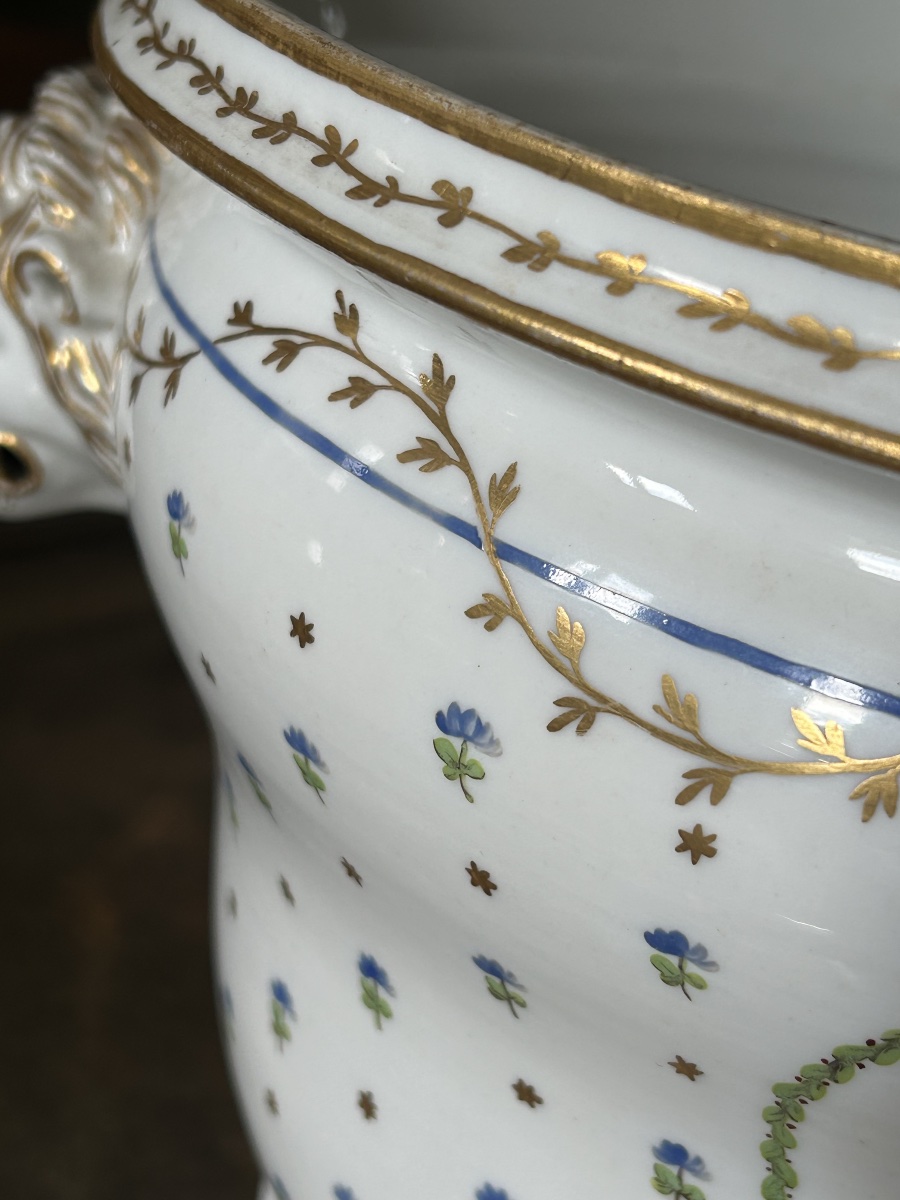
- A regular pattern of polychrome cornflowers and small gold-colored stars.
- An upper frieze accented by a royal blue border and a delicate gold-leaf garland.
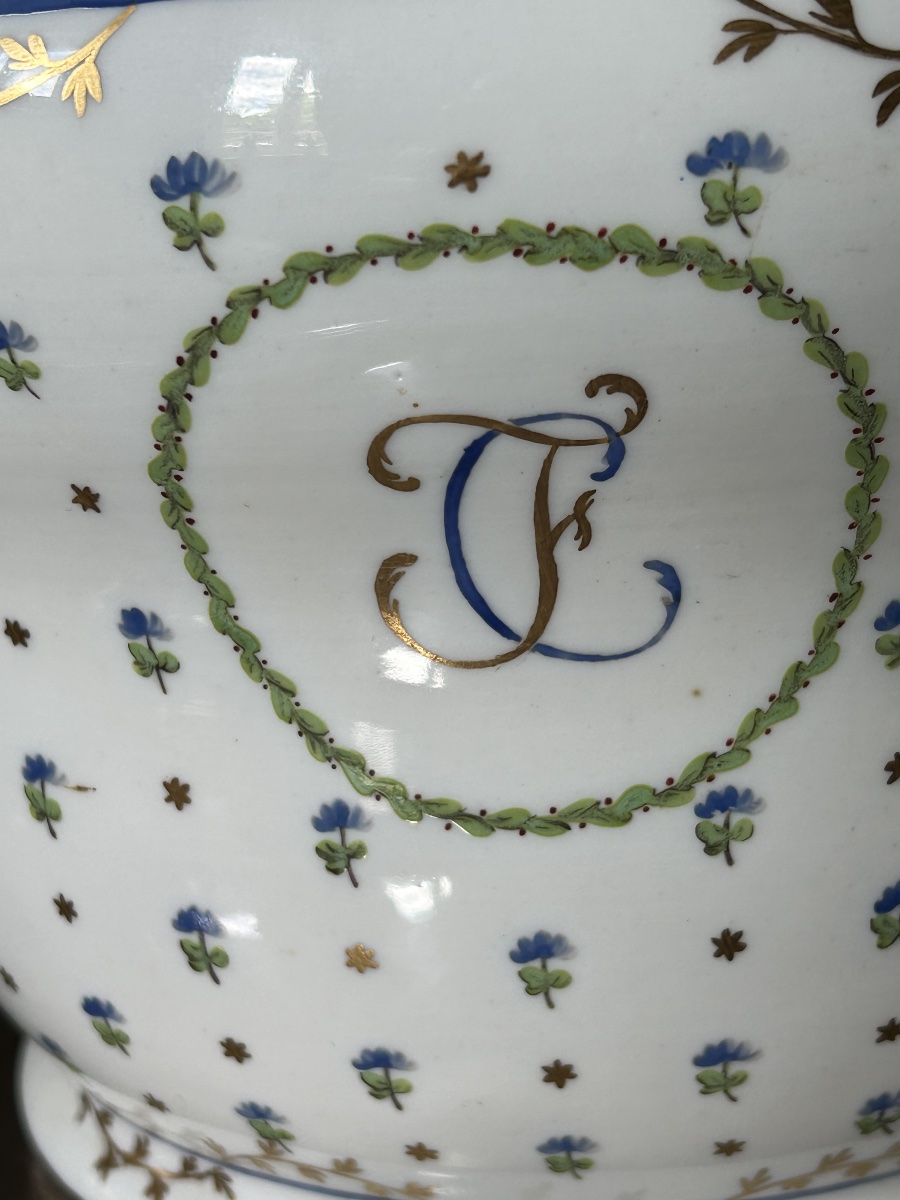
- On the main face, at the center of a circular medallion formed by a wreath of foliage, stands out an elegant intertwined gold and blue monogram (letters FC or TC).
Below its base, the piece is signed with the characteristic red-stamped mark depicting the letter “A” surmounted by a royal crown (The “A” stands for Queen Marie Antoinette). The outer rim also features four original drying holes. Historical context: Marie Antoinette and the Queen’s Mint
Founded in 1776 by André Marie Leboeuf, the manufactory on Rue Thiroux in Paris was granted, in 1778, the exceptional privilege of being placed under the direct protection of Queen Marie Antoinette. It was this royal patronage that gave the manufactory its name and authorized the use of the crowned “A” mark, painted in red. Under the sovereign’s guidance, the manufactory developed a style of great lightness, breaking with the rigid formalism of the Royal Manufactory of Sèvres.
Our ice bucket perfectly illustrates this “Queen’s taste” that flourished at the Petit Trianon. The design featuring barbeaux (the name used at the time for cornflowers) and small gold stars was one of Marie Antoinette’s favorite motifs; she loved the rustic simplicity of this wildflower, which reminded her of nature and the gardens of her Hameau. This type of piece, called a “wine cooler” or “bottle bucket,” was placed on tables or serving tables during intimate dinners. Crushed ice was placed inside to keep the wine at the right temperature, allowing guests to serve themselves without the cumbersome presence of servants, thereby fostering the freedom of speech so cherished by late 18th-century society. The presence of a monogram inscribed within a medallion attests that this was a prestigious custom-made commission for a prominent family of the French aristocracy.
- Period: 18th century, Louis XVI period (circa 1785).
- Condition: Very good overall condition (slight signs of wear on the gilding).
- Material: Hard Paris porcelain.
- Dimensions: Height 17.5 cm / Diameter 22 cm.
1 400 €
Period: 18th century
Style: Louis 16th, Directory
Condition: Excellent condition
Material: Porcelain
Reference (ID): 1813351
Availability: In stock
Print