

French Orientalist School George Washington 19th-century Study Of A Berber Man
Artist: George Washington 1827-1901
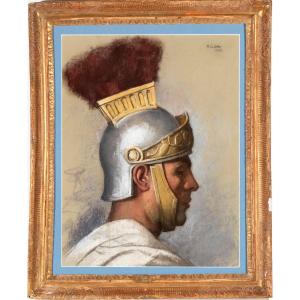
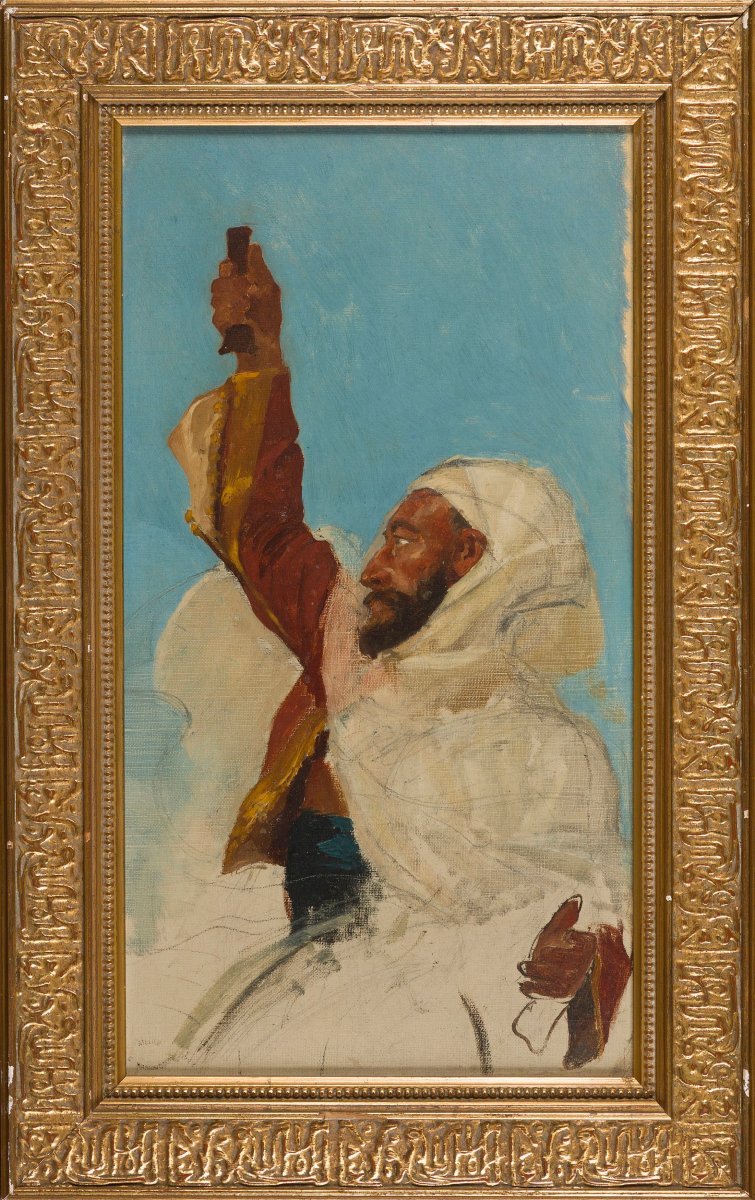
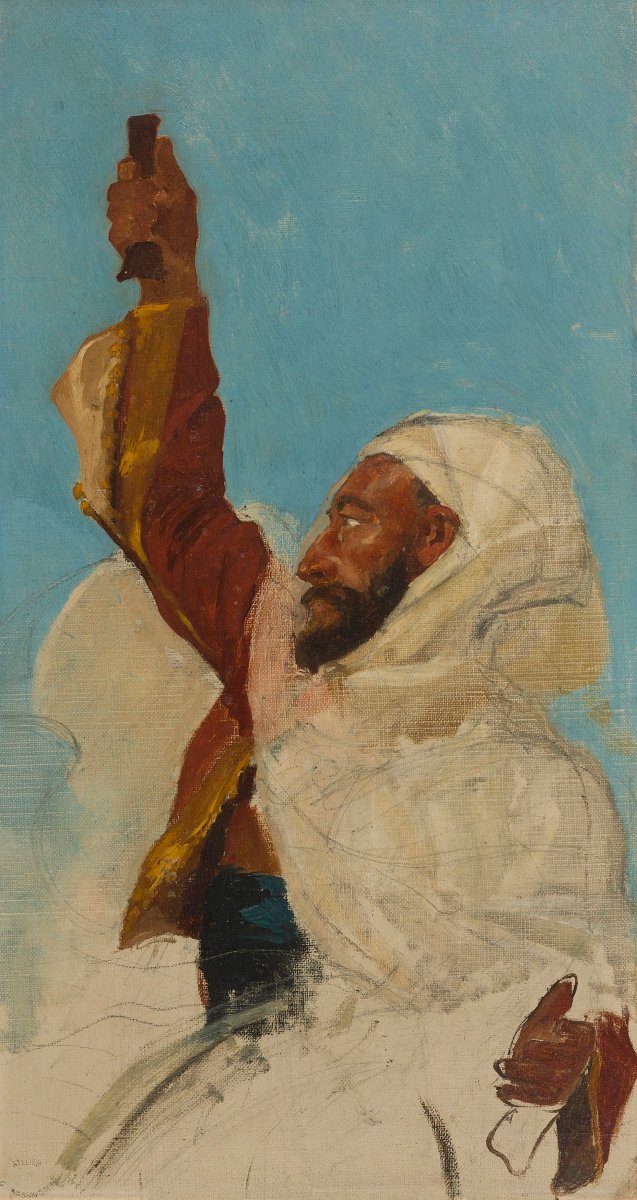
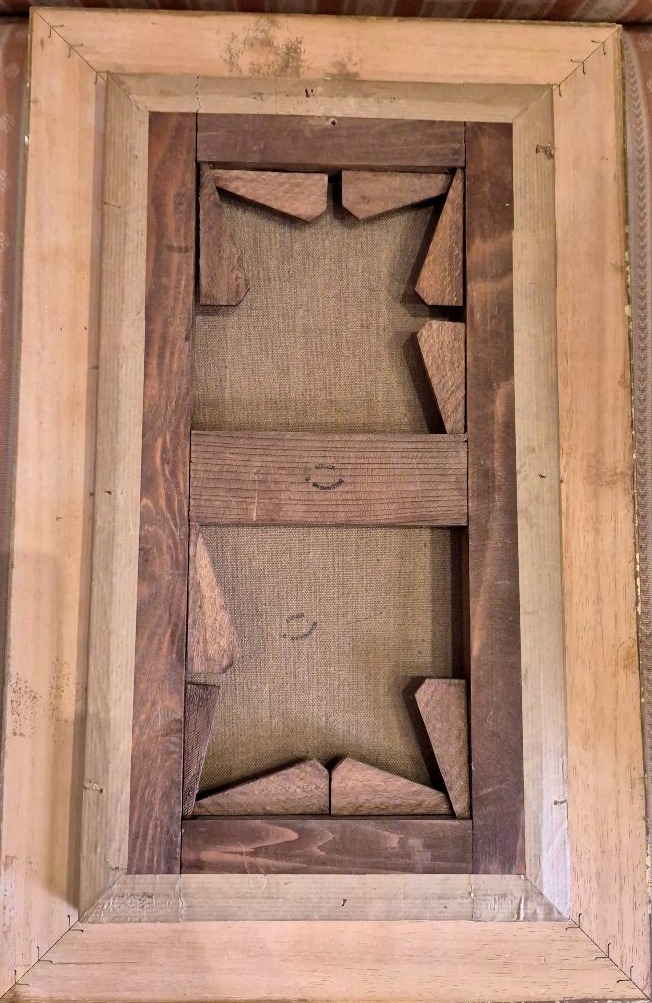
Preparatory sketch for an oil painting on canvas depicting a Berber horseman, by the painter George Washington. The study bears the stamp “G. WASHINGTON Atelier” in the lower right corner and on the stretcher.
Painted on wood and framed with gilded stucco and Moorish decorations.
Overall dimensions: 49 x 31x3 cms
Discovered as a child by his mother, Marie Besse, it was not recognized until he was forty years old. He was born under the pseudonym George Washington.
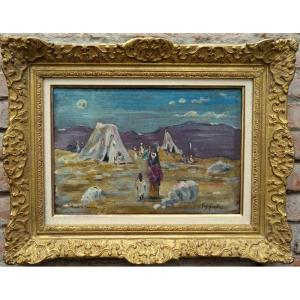
Picot’s studies, and in particular a trip to North Africa, shaped his artistic calling: Orientalism. He made his debut at the 1857 Salon and established his style in 1901, painting scenes of rural and nomadic life, ranging from caravan oases in the desert (“Nomads of the Sahara in Winter,” Lille Museum; “Horses Bathing, African Coast,” Dijon Museum, located on the cliffs of Aokas, east of Béjaïa/Bougie) to tumultuous fantasies amid clouds of dust, full of warmth and color (“Arabian Fantasies,” Sète Museum). The watercolors presented here explore this theme.
The 1879 trip to Morocco. This work represents the culmination of two commissions from a Belgian company, which began in 1879 in Morocco, Hong Kong, Bulgaria, Turkey, and elsewhere, for the purpose of conducting studies. It accompanies the paintings exhibited in Moscow in 1881.
In 1884, his stepfather’s father, the battalion painter Henri Philippoteaux, owned a modest apartment in Montmartre. The sale of numerous other canvases at Drouot was intended to support Breton agriculture, but the attempt failed, and the two returned to New York to take on a new position before returning to France in financial straits. The painter resumed creating these Orientalist works in Montmartre before retiring to Douarnenez, where he lived a long and difficult life.
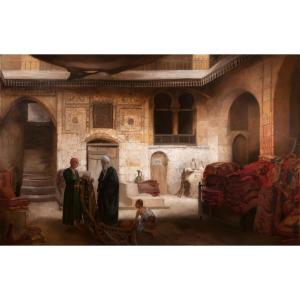
These works mainly depict scenes from Algeria (the Sahara, Constantine, the Kabylie, and the Kantara) and Morocco, but also include cavalry halts, fantastical scenes, encampments, and hunting scenes. Eugène Fromentin and Eugène Delacroix were major sources of inspiration for him. These works are now housed in museums in Dunkirk, Limoges, and Sète.
Painted on wood and framed with gilded stucco and Moorish decorations.
Overall dimensions: 49 x 31x3 cms
Discovered as a child by his mother, Marie Besse, it was not recognized until he was forty years old. He was born under the pseudonym George Washington.
Picot’s studies, and in particular a trip to North Africa, shaped his artistic calling: Orientalism. He made his debut at the 1857 Salon and established his style in 1901, painting scenes of rural and nomadic life, ranging from caravan oases in the desert (“Nomads of the Sahara in Winter,” Lille Museum; “Horses Bathing, African Coast,” Dijon Museum, located on the cliffs of Aokas, east of Béjaïa/Bougie) to tumultuous fantasies amid clouds of dust, full of warmth and color (“Arabian Fantasies,” Sète Museum). The watercolors presented here explore this theme.
The 1879 trip to Morocco. This work represents the culmination of two commissions from a Belgian company, which began in 1879 in Morocco, Hong Kong, Bulgaria, Turkey, and elsewhere, for the purpose of conducting studies. It accompanies the paintings exhibited in Moscow in 1881.
In 1884, his stepfather’s father, the battalion painter Henri Philippoteaux, owned a modest apartment in Montmartre. The sale of numerous other canvases at Drouot was intended to support Breton agriculture, but the attempt failed, and the two returned to New York to take on a new position before returning to France in financial straits. The painter resumed creating these Orientalist works in Montmartre before retiring to Douarnenez, where he lived a long and difficult life.
These works mainly depict scenes from Algeria (the Sahara, Constantine, the Kabylie, and the Kantara) and Morocco, but also include cavalry halts, fantastical scenes, encampments, and hunting scenes. Eugène Fromentin and Eugène Delacroix were major sources of inspiration for him. These works are now housed in museums in Dunkirk, Limoges, and Sète.
1 500 €
Period: 19th century
Style: Orientalism
Condition: Condition of use
Material: Oil painting
Width: cm 22,5
Height: cm 40,5
Reference (ID): 1812386
Availability: In stock
Print