THIS OBJECT WAS SOLD
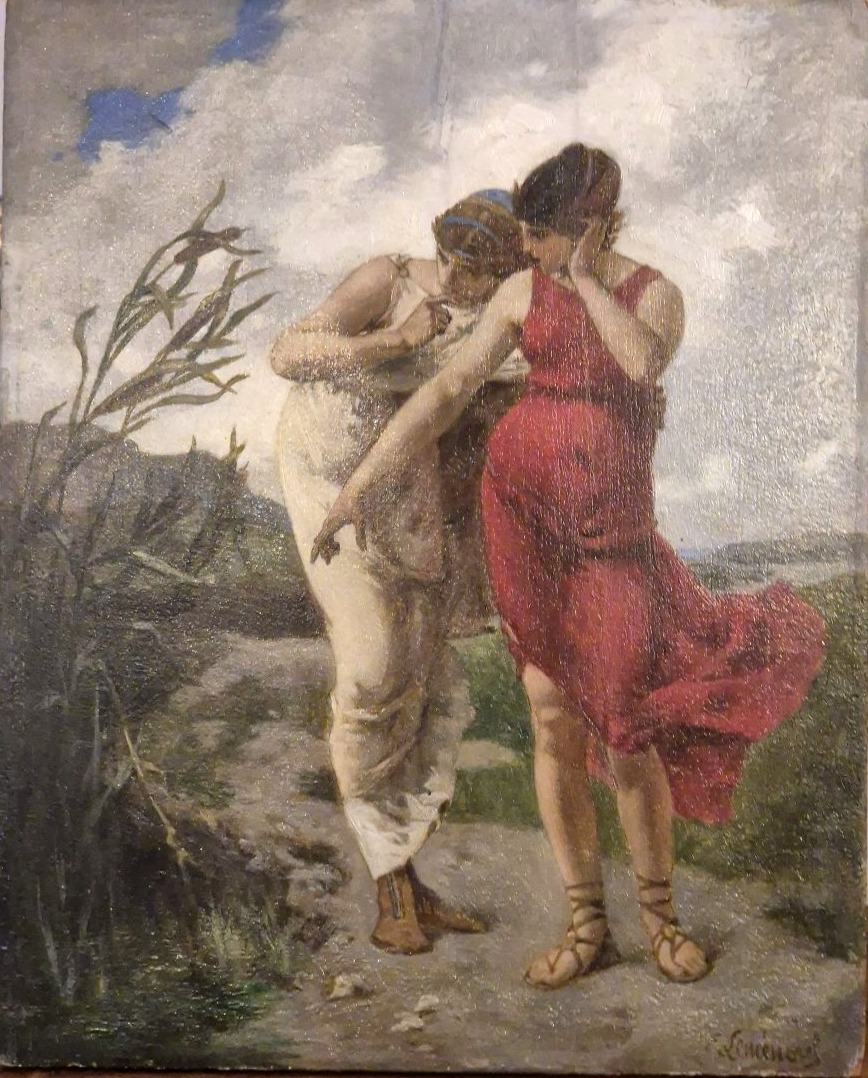
French School, Ernest Emile Leménorel, Mythological Scene, 19th Century
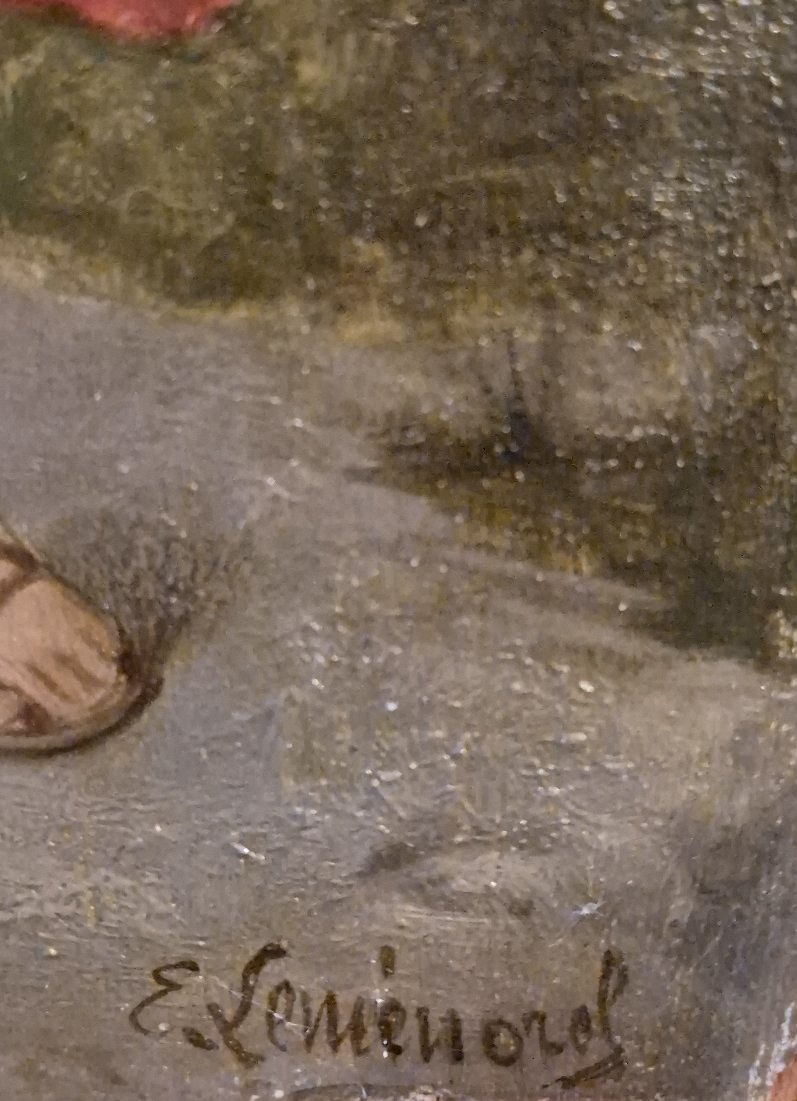



The painter Ernest-Émile Lemenorel, born in 1848 and died in 1934, was a French artist active in the late 19th and early 20th centuries. Specializing in rural landscapes and pastoral scenes, his style is rooted in the naturalist tradition, with particular attention to light and atmosphere. There is little detailed biographical information about Lemenorel. He was a student of Ôvariste Vital Luminais and exhibited his works at the Salon des Artistes in 1882.
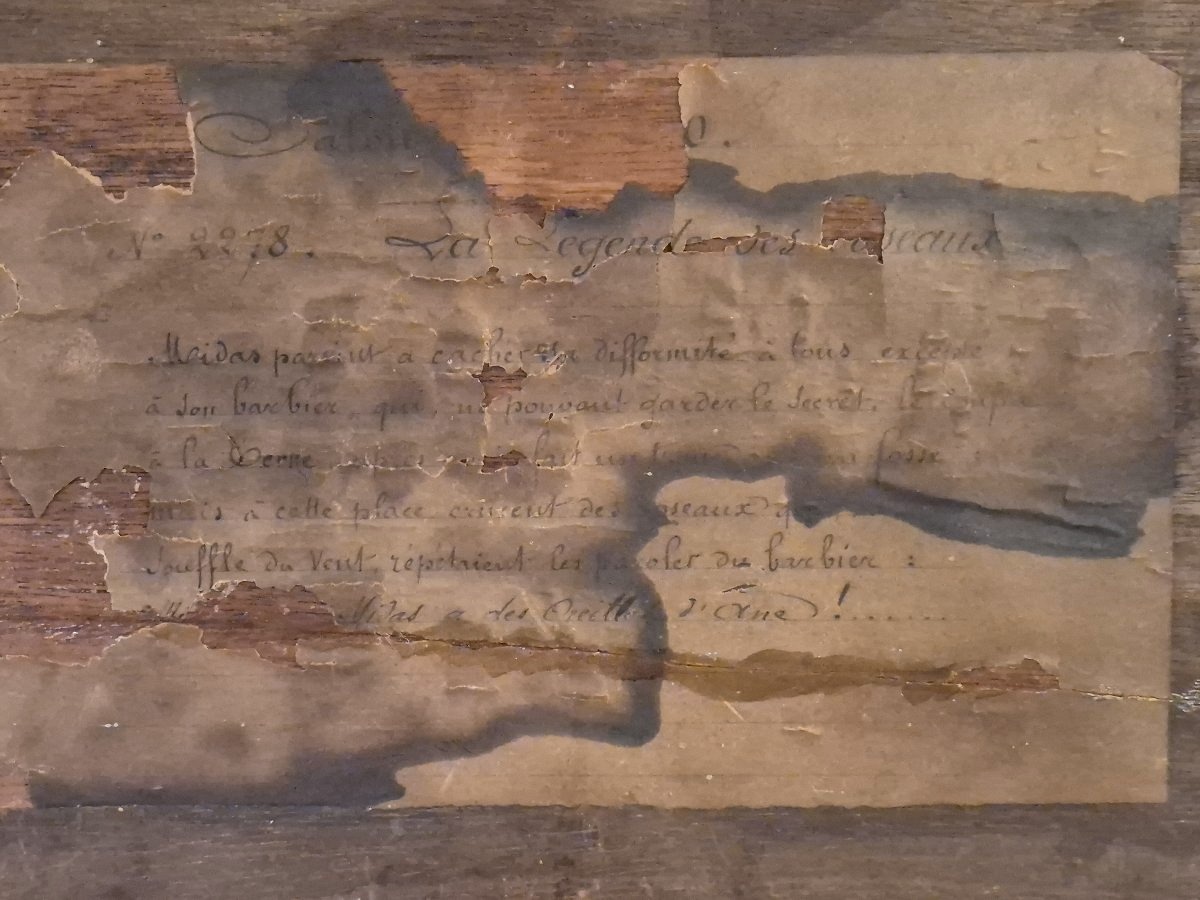
The scene depicted is described on the back, on a sheet of paper that is partially damaged (see photo). It refers to a part of the myth of King Midas, known for turning everything he touched into gold.
Midas was punished by Apollo because he had failed to declare him the winner in a musical contest with Marsyas (or Pan). As punishment, the king grew a pair of donkey ears. Only the king’s barber knew of this, as it was impossible to hide it from him; but the king ordered him not to tell anyone about his deformity, on pain of death. The barber, however, unable to keep the secret, went to confess it into a hole near a pond. Thus, the servant was convinced he had lifted a heavy burden from his shoulders without telling a soul. Some time later, a faint whisper spread through the palace and the city, and the secret was no longer a secret: from that hole, by the will of Apollo, reeds had sprung up that whispered as they were stirred by the wind: “King Midas has donkey ears!”
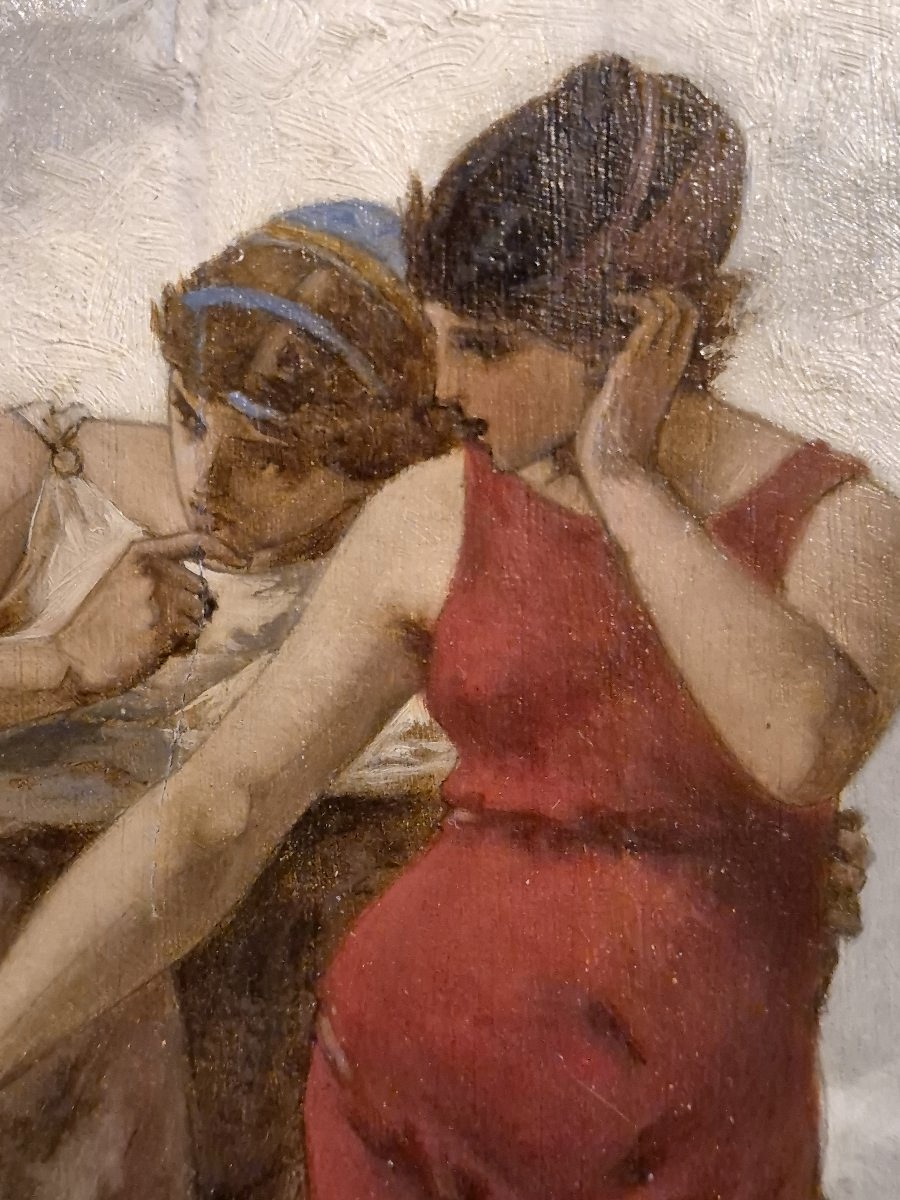
The painting depicts two young girls, wearing white and red peplos, their hair and clothes billowing in the wind, passing in front of the hole surrounded by reeds that whispered as they were swayed by the wind: “King Midas has donkey ears!”
Late 19th century.
The panel was in two pieces. It has been glued back together, and the painting, in good condition, has been cleaned.
The scene depicted is described on the back, on a sheet of paper that is partially damaged (see photo). It refers to a part of the myth of King Midas, known for turning everything he touched into gold.
Midas was punished by Apollo because he had failed to declare him the winner in a musical contest with Marsyas (or Pan). As punishment, the king grew a pair of donkey ears. Only the king’s barber knew of this, as it was impossible to hide it from him; but the king ordered him not to tell anyone about his deformity, on pain of death. The barber, however, unable to keep the secret, went to confess it into a hole near a pond. Thus, the servant was convinced he had lifted a heavy burden from his shoulders without telling a soul. Some time later, a faint whisper spread through the palace and the city, and the secret was no longer a secret: from that hole, by the will of Apollo, reeds had sprung up that whispered as they were stirred by the wind: “King Midas has donkey ears!”
The painting depicts two young girls, wearing white and red peplos, their hair and clothes billowing in the wind, passing in front of the hole surrounded by reeds that whispered as they were swayed by the wind: “King Midas has donkey ears!”
Late 19th century.
The panel was in two pieces. It has been glued back together, and the painting, in good condition, has been cleaned.
Explore similar pieces and discover your ideal find:
Genre Scenes, Nudes