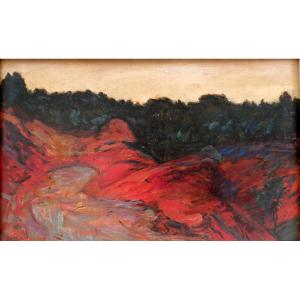


René Seyssaud (1867–1952) In The Ochres Of Roussillon
Artist: René Seyssaud (1867-1952)
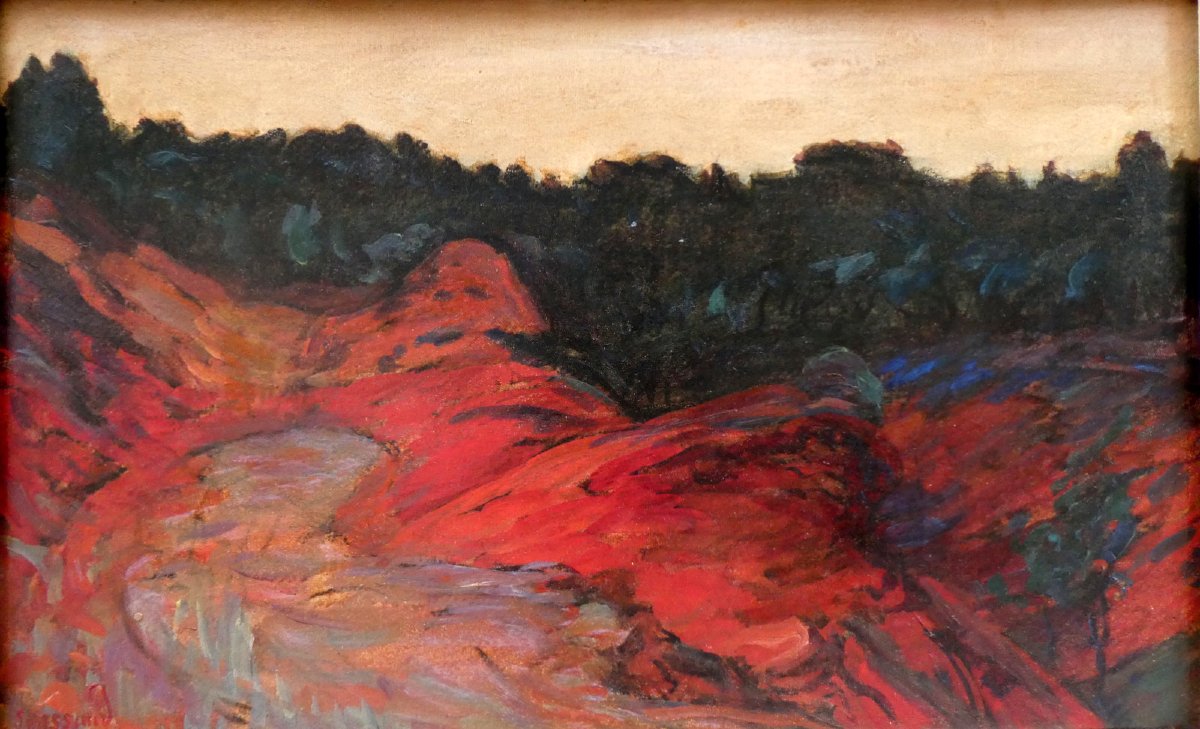
The famous ochre quarries and cliffs of the Vaucluse (Roussillon, Rustrel), a region Seyssaud knew intimately since hehad set up his studio in Villes-sur-Auzon, in the heart of this land of that have served as a source of inspiration for many artists.
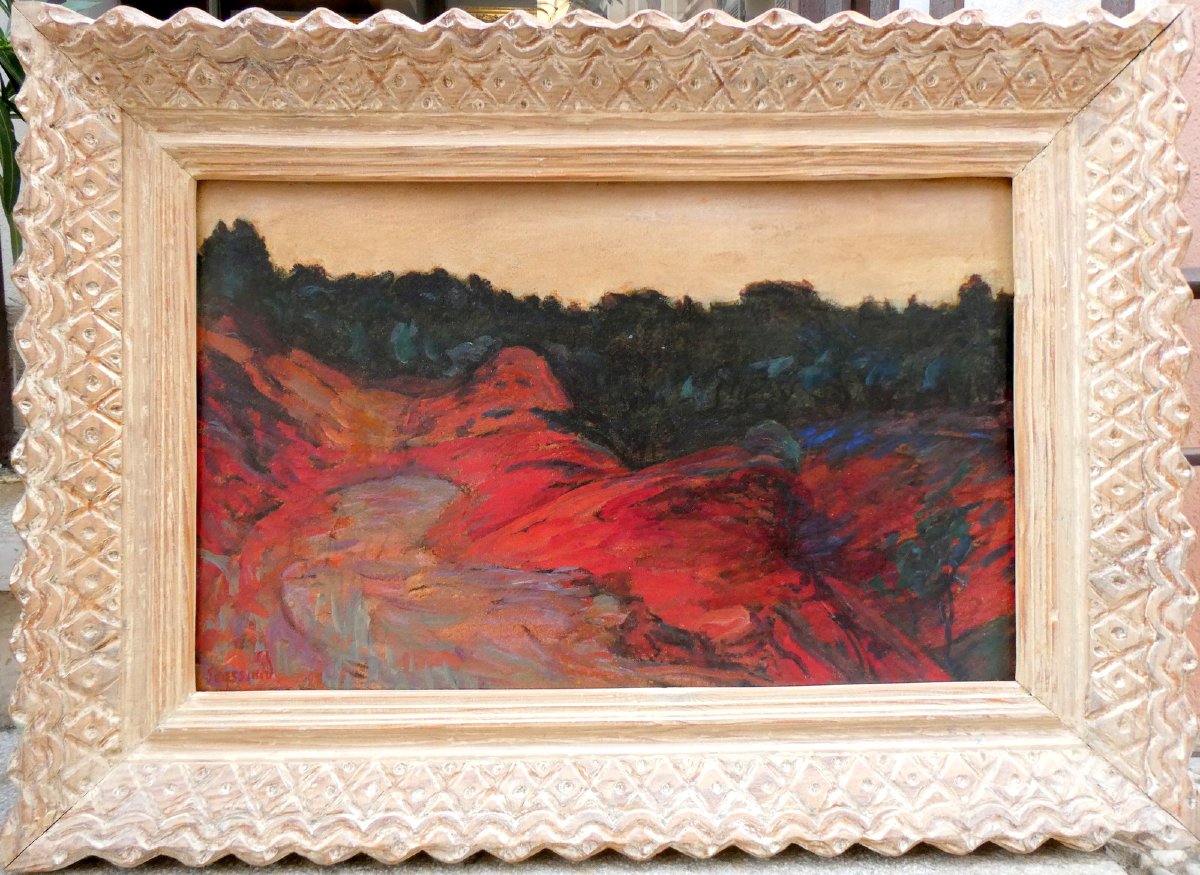
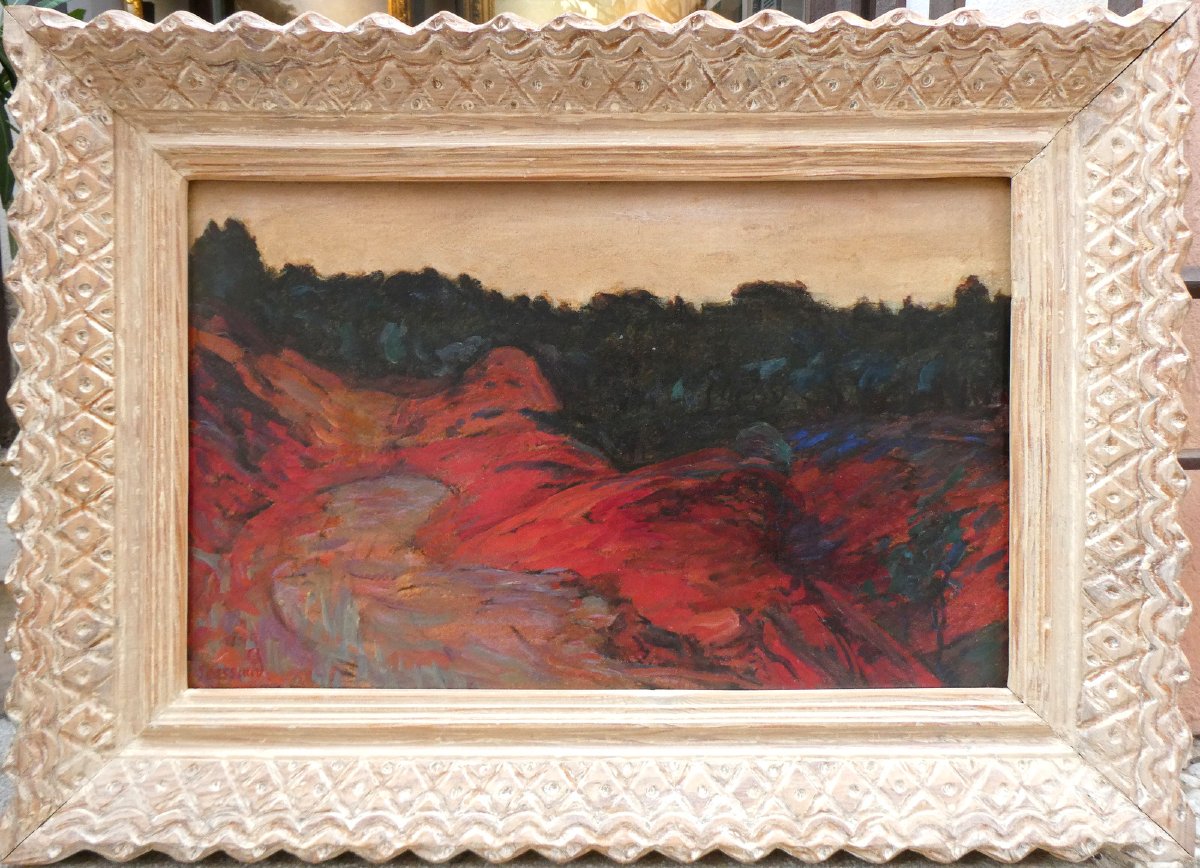
The work is an oil painting on cardboard mounted on a stretcher, presented in a beautiful sculpted Bouche frame with a light patina that measures 59 cm by 82 cm, with the painting itself measuring 39 cm by 61.5 cm.
In 1906, Seyssaud was in his forties and at the height of his artistic maturity.
He stood out for his powerful temperament and abold palette of vivid colors, which led him to be regarded as aprecursor of Fauvism—although he developed this style independently, in Provence, far from the Parisian art circles.
Beginning in the 1890s, he forged a personal artistic language composed of dense and bold colors.
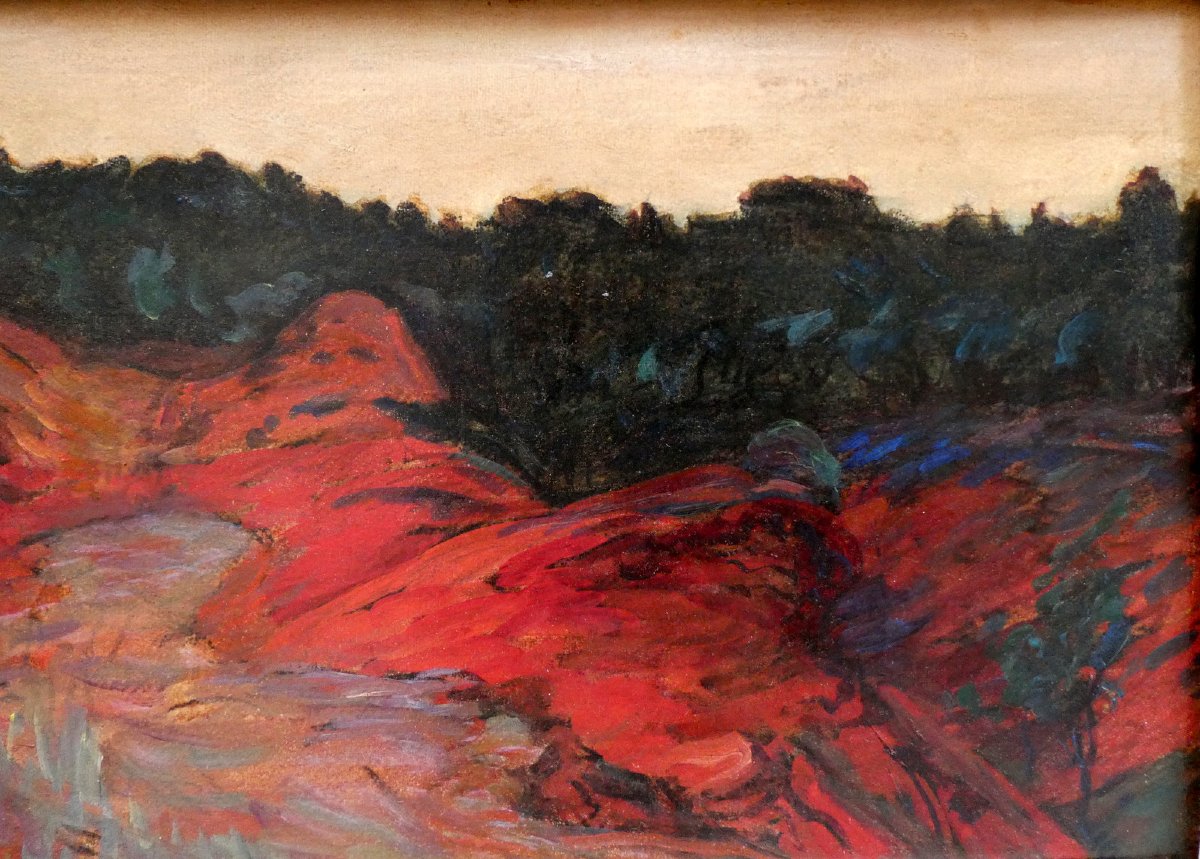
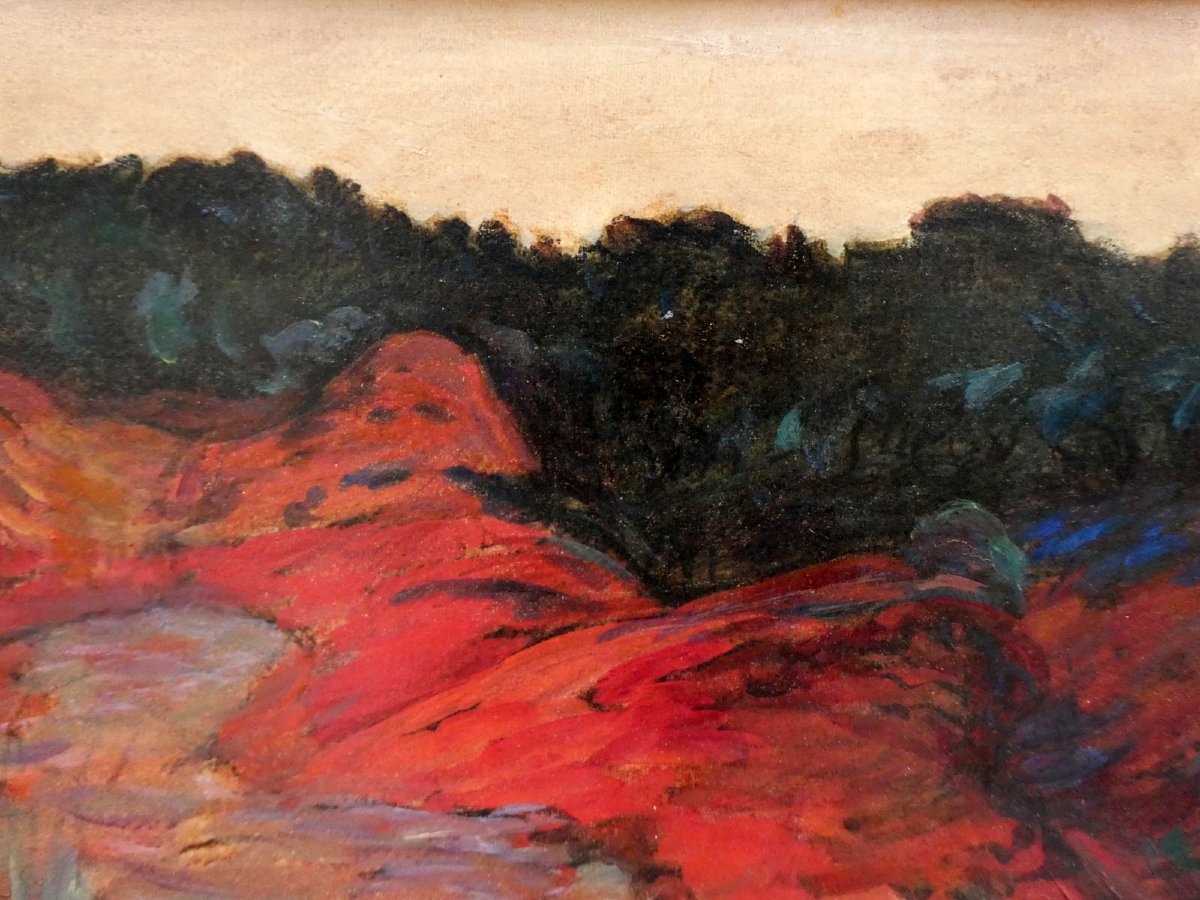
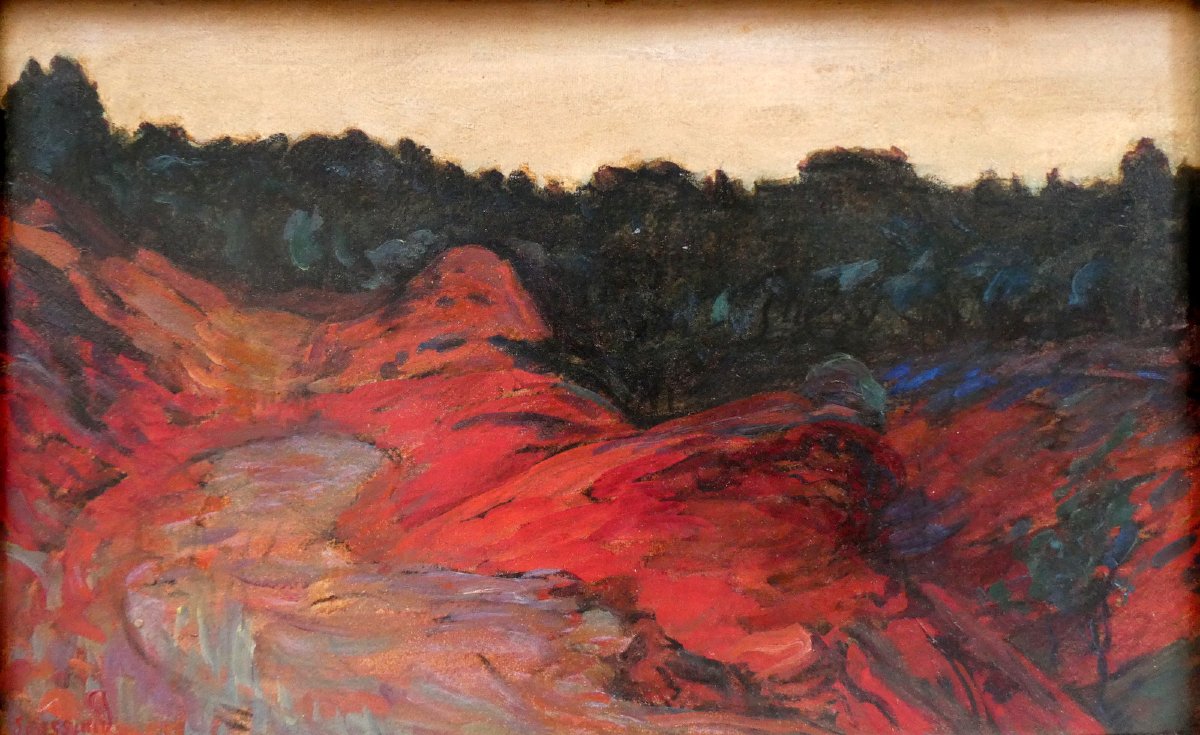
The red in this painting is not anaturalistic observation nor the representation of reality, but an expressive transposition.
Normally, the actual ochres of the Vaucluse tend toward orange, yellow, and sometimes purple, but Seyssaud, with boldness and audacity, pushes the palette to ward an almost incandescent red—nearly blood-red—which dominates and saturates the entire lower half of the composition.
Color constructs the space rather than describing it.
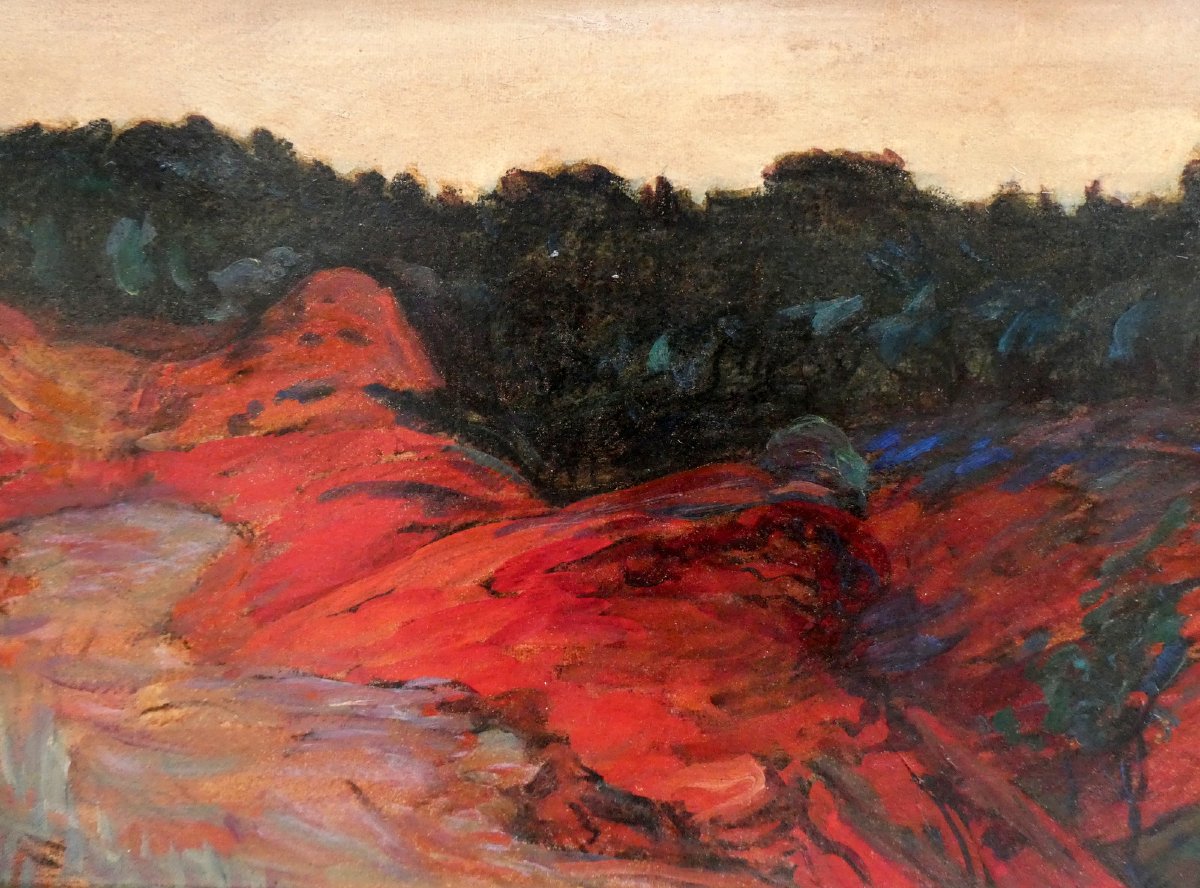
A cream-ochre sky at the top, the dark, dense band of vegetation stretching across the entire width, then the red mass of the terrain at the bottom; the lighter path winding down the lower left brings a bit ofmuch-needed calm and breathing room to this dense chromatic mass, and guides the viewer’s eye toward the depth of the sunken path.
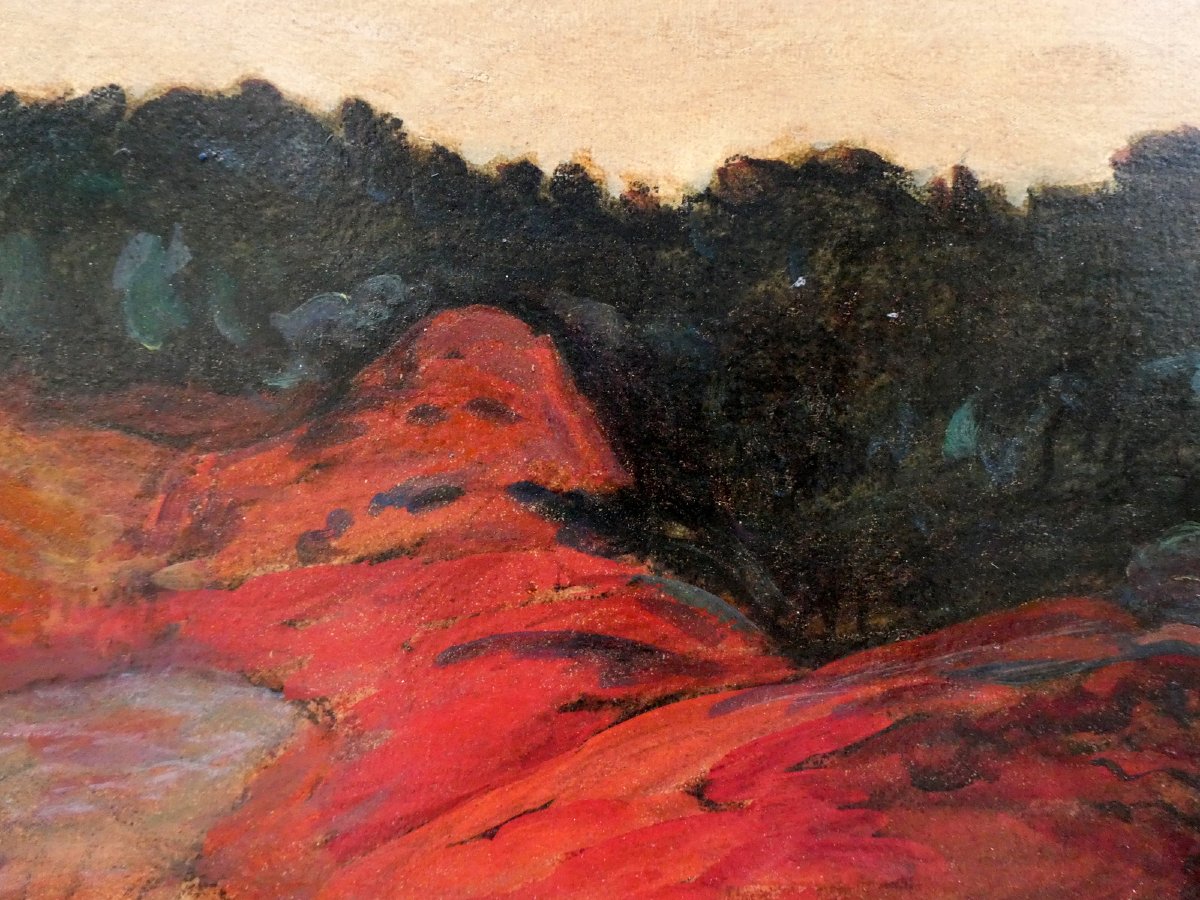
Driven more by the vigor of his brushwork than by detail, the artist must have executed this work quickly and most certainly "en plein air", in oil on cardboard—a suitable medium that absorbs paint and dries quickly.
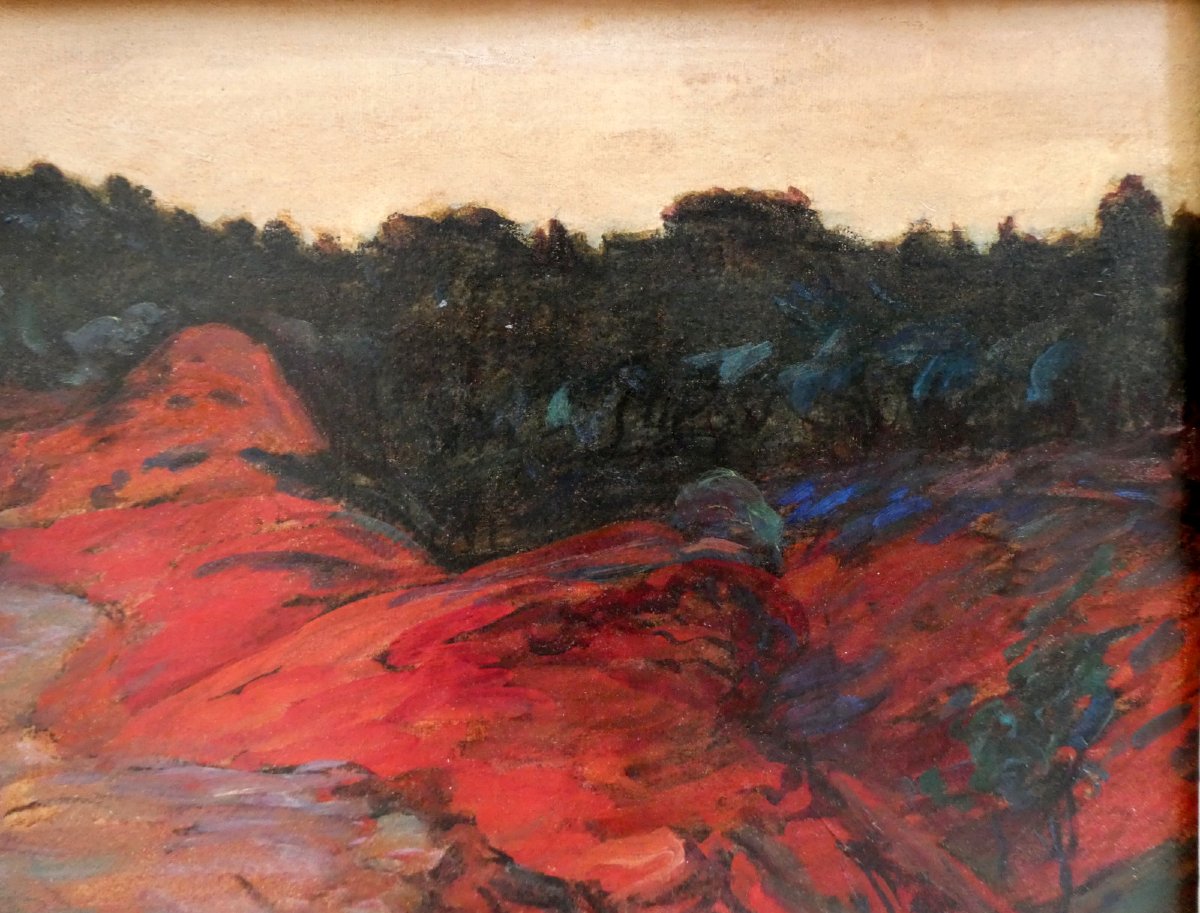
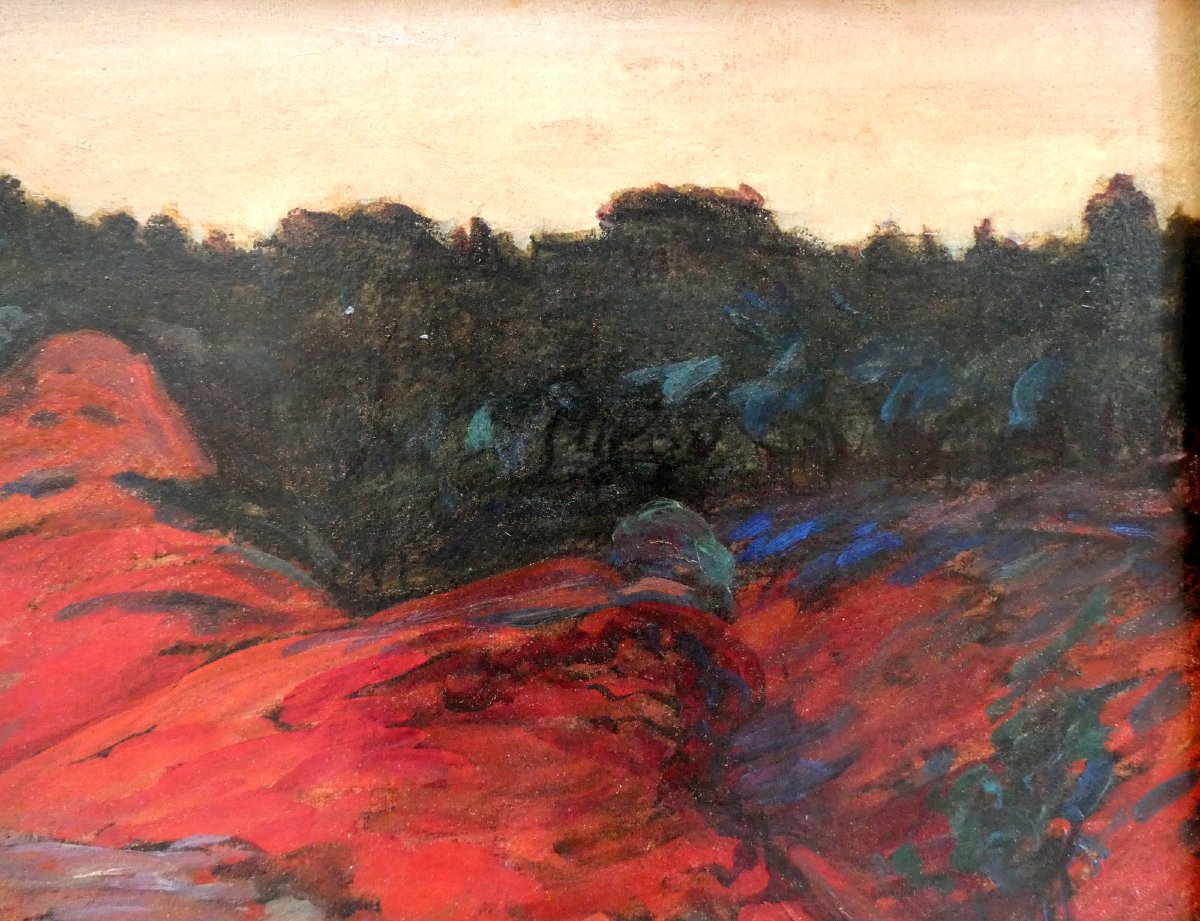
The touches of blue and violet slipped into the red areas (on the right, in the bushes) prevent the monotony of too much red, balance the painting, and create reflections and vibrations.
As with the great artists of Fauvism, color is fully embraced and gives the painting an immediate, almost brutal—the red of the ochres becomes a physical experience of southern light and heat rather than a mere reproduction of reality.
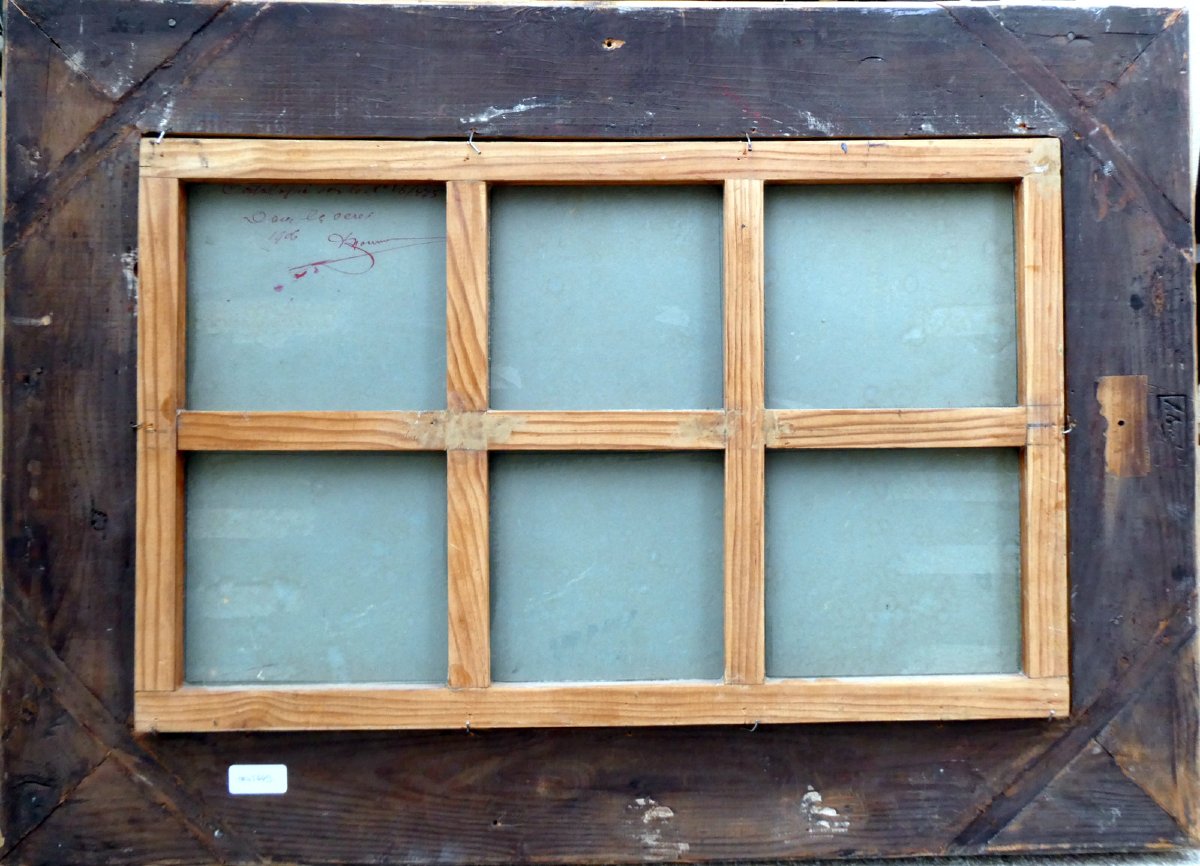
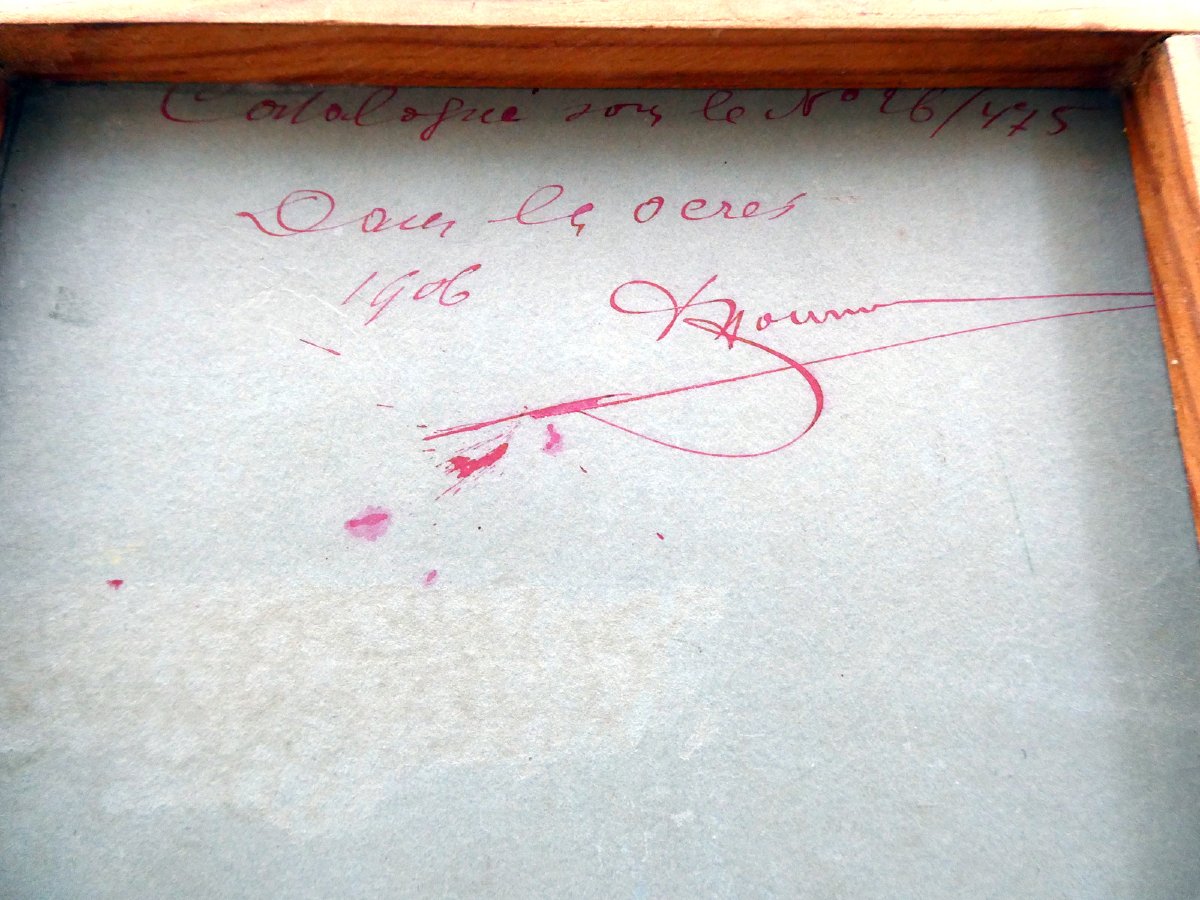
On the back is the signature of Honnorat, the artist’s friend and dealer, who has affixed a (26/475) and titles it “Dans les Ocres,” dating this extraordinary work—which leaves no one indifferent—to 1906.
A pioneer of Fauvism and a member of the Nouvelle École d’Avignon in 1892, Seyssaud submitted works to the Indépendants as well as to the Champs de Mars.
He exhibited at the Salon d’Automne from its inception, at the Parc de Bouteville in 1897, and in 1899 at Vollard’s gallery.
He achieved all the success he had hoped for.
Vollard offered Seyssaud a contract, but Seyssaud, out of loyalty to his friend and Marseille-based art dealer François Honnorat, declined.
In 1901, he began exhibiting annually at Bernheim Jeune.
Like Vollard, Bernheim Jeune offered to manage his interests.
Seyssaud again chose to reject this partnership, however lucrative it might have been.
After 1911, Seyssaud stopped exhibiting at Bernheim and chose instead to exhibit at Rosemberg (1914), Druet (1924), (1927), Printz (1929), Georges Petit (1930), Javal and Boudeaix (1933), and Printz (1933).
He exhibited in Marseille in 1905, 1907, 1920, 1921, 1922, 1928, 1947, 1949.
In Avignon, Aix-en-Provence, Tunis, etc...
In America in 1947.
Seyssaudparticipated in official exhibitions in Berlin (1903), Amsterdam (1912), Barcelona (1917, 1929), New York (1929), Wiesbaden (1921), Ghent (1922), Stockholm (1923), Geneva (1923, 1942), Turin (1951), the Colonial Exhibition in Marseille (1922), the Paris International Exhibition (1937), the of Marseille (1949), Menton Biennial (1951), Cantini Museum (1954), Zurich (1955), Galliera Museum (1956), Oxford, London, Edinburgh (1957), Aix-en-Provence, Festival (1957).
His works were acquired by the French government for the Luxembourg Museum (1903, 1904, 1921, 1927, 1929, 1930).
His works were alsoacquired by the museums of Marseille (1908, 1919), Lyon (1924), and Avignon (1920), the Bouches-du-Rhône Prefecture (1933), the City Hall of Saint-Chamas (1909), the National Museum of Modern Art (1957).
His works are on display at the Petit Palais, the Museum of Modern Art, the Léon Dierx Museum (Reunion Island), and in Moscow.
Also in Dijon, Nîmes, Aix-en-Provence, Arles, Grenoble, Montpellier, Albi, etc...
He has received various medals and awards.
Amongothers, the Gold Medal at the 1937 International Exposition in Paris,the Medal of the City of Marseille in 1947, and the Grand Prix of the French Provinces in 1951 at the Menton Biennale.
Seyssaud had been an Officer of the Legion of Honor since 1947.
Among the posthumous
retrospective exhibitions were those at the Calvet Museum (1953), the Cantini Museum (1954), the Salon d’Automne, Château d’Arbon in Switzerland (1955), and the Galliera Museum.
His paintings are included in the collections of Gustave Geffroy, Frantz Jourdain, Vollard, Georges Feydeau, Sacha Guitry, Armand Dayot, Lucien Poincaré, Maurice Sarraut, Albert Sarraut, Paulhan, Bernheim, Estaunié, Descaves, Morsolf, Fernand Bouisson, Drouant, André Marie, the Marquis de Biron, the Princess de la Tour d’Auvergne, de Wagram, etc.
The work is an oil painting on cardboard mounted on a stretcher, presented in a beautiful sculpted Bouche frame with a light patina that measures 59 cm by 82 cm, with the painting itself measuring 39 cm by 61.5 cm.
In 1906, Seyssaud was in his forties and at the height of his artistic maturity.
He stood out for his powerful temperament and abold palette of vivid colors, which led him to be regarded as aprecursor of Fauvism—although he developed this style independently, in Provence, far from the Parisian art circles.
Beginning in the 1890s, he forged a personal artistic language composed of dense and bold colors.
The red in this painting is not anaturalistic observation nor the representation of reality, but an expressive transposition.
Normally, the actual ochres of the Vaucluse tend toward orange, yellow, and sometimes purple, but Seyssaud, with boldness and audacity, pushes the palette to ward an almost incandescent red—nearly blood-red—which dominates and saturates the entire lower half of the composition.
Color constructs the space rather than describing it.
A cream-ochre sky at the top, the dark, dense band of vegetation stretching across the entire width, then the red mass of the terrain at the bottom; the lighter path winding down the lower left brings a bit ofmuch-needed calm and breathing room to this dense chromatic mass, and guides the viewer’s eye toward the depth of the sunken path.
Driven more by the vigor of his brushwork than by detail, the artist must have executed this work quickly and most certainly "en plein air", in oil on cardboard—a suitable medium that absorbs paint and dries quickly.
The touches of blue and violet slipped into the red areas (on the right, in the bushes) prevent the monotony of too much red, balance the painting, and create reflections and vibrations.
As with the great artists of Fauvism, color is fully embraced and gives the painting an immediate, almost brutal—the red of the ochres becomes a physical experience of southern light and heat rather than a mere reproduction of reality.
On the back is the signature of Honnorat, the artist’s friend and dealer, who has affixed a (26/475) and titles it “Dans les Ocres,” dating this extraordinary work—which leaves no one indifferent—to 1906.
A pioneer of Fauvism and a member of the Nouvelle École d’Avignon in 1892, Seyssaud submitted works to the Indépendants as well as to the Champs de Mars.
He exhibited at the Salon d’Automne from its inception, at the Parc de Bouteville in 1897, and in 1899 at Vollard’s gallery.
He achieved all the success he had hoped for.
Vollard offered Seyssaud a contract, but Seyssaud, out of loyalty to his friend and Marseille-based art dealer François Honnorat, declined.
In 1901, he began exhibiting annually at Bernheim Jeune.
Like Vollard, Bernheim Jeune offered to manage his interests.
Seyssaud again chose to reject this partnership, however lucrative it might have been.
After 1911, Seyssaud stopped exhibiting at Bernheim and chose instead to exhibit at Rosemberg (1914), Druet (1924), (1927), Printz (1929), Georges Petit (1930), Javal and Boudeaix (1933), and Printz (1933).
He exhibited in Marseille in 1905, 1907, 1920, 1921, 1922, 1928, 1947, 1949.
In Avignon, Aix-en-Provence, Tunis, etc...
In America in 1947.
Seyssaudparticipated in official exhibitions in Berlin (1903), Amsterdam (1912), Barcelona (1917, 1929), New York (1929), Wiesbaden (1921), Ghent (1922), Stockholm (1923), Geneva (1923, 1942), Turin (1951), the Colonial Exhibition in Marseille (1922), the Paris International Exhibition (1937), the of Marseille (1949), Menton Biennial (1951), Cantini Museum (1954), Zurich (1955), Galliera Museum (1956), Oxford, London, Edinburgh (1957), Aix-en-Provence, Festival (1957).
His works were acquired by the French government for the Luxembourg Museum (1903, 1904, 1921, 1927, 1929, 1930).
His works were alsoacquired by the museums of Marseille (1908, 1919), Lyon (1924), and Avignon (1920), the Bouches-du-Rhône Prefecture (1933), the City Hall of Saint-Chamas (1909), the National Museum of Modern Art (1957).
His works are on display at the Petit Palais, the Museum of Modern Art, the Léon Dierx Museum (Reunion Island), and in Moscow.
Also in Dijon, Nîmes, Aix-en-Provence, Arles, Grenoble, Montpellier, Albi, etc...
He has received various medals and awards.
Amongothers, the Gold Medal at the 1937 International Exposition in Paris,the Medal of the City of Marseille in 1947, and the Grand Prix of the French Provinces in 1951 at the Menton Biennale.
Seyssaud had been an Officer of the Legion of Honor since 1947.
Among the posthumous
retrospective exhibitions were those at the Calvet Museum (1953), the Cantini Museum (1954), the Salon d’Automne, Château d’Arbon in Switzerland (1955), and the Galliera Museum.
His paintings are included in the collections of Gustave Geffroy, Frantz Jourdain, Vollard, Georges Feydeau, Sacha Guitry, Armand Dayot, Lucien Poincaré, Maurice Sarraut, Albert Sarraut, Paulhan, Bernheim, Estaunié, Descaves, Morsolf, Fernand Bouisson, Drouant, André Marie, the Marquis de Biron, the Princess de la Tour d’Auvergne, de Wagram, etc.
4 800 €
Period: 20th century
Style: Other Style
Condition: Good condition
Material: Oil painting on cardboard
Length: 61,5 cm
Height: 39 cm
Reference (ID): 1809859
Availability: In stock
Print