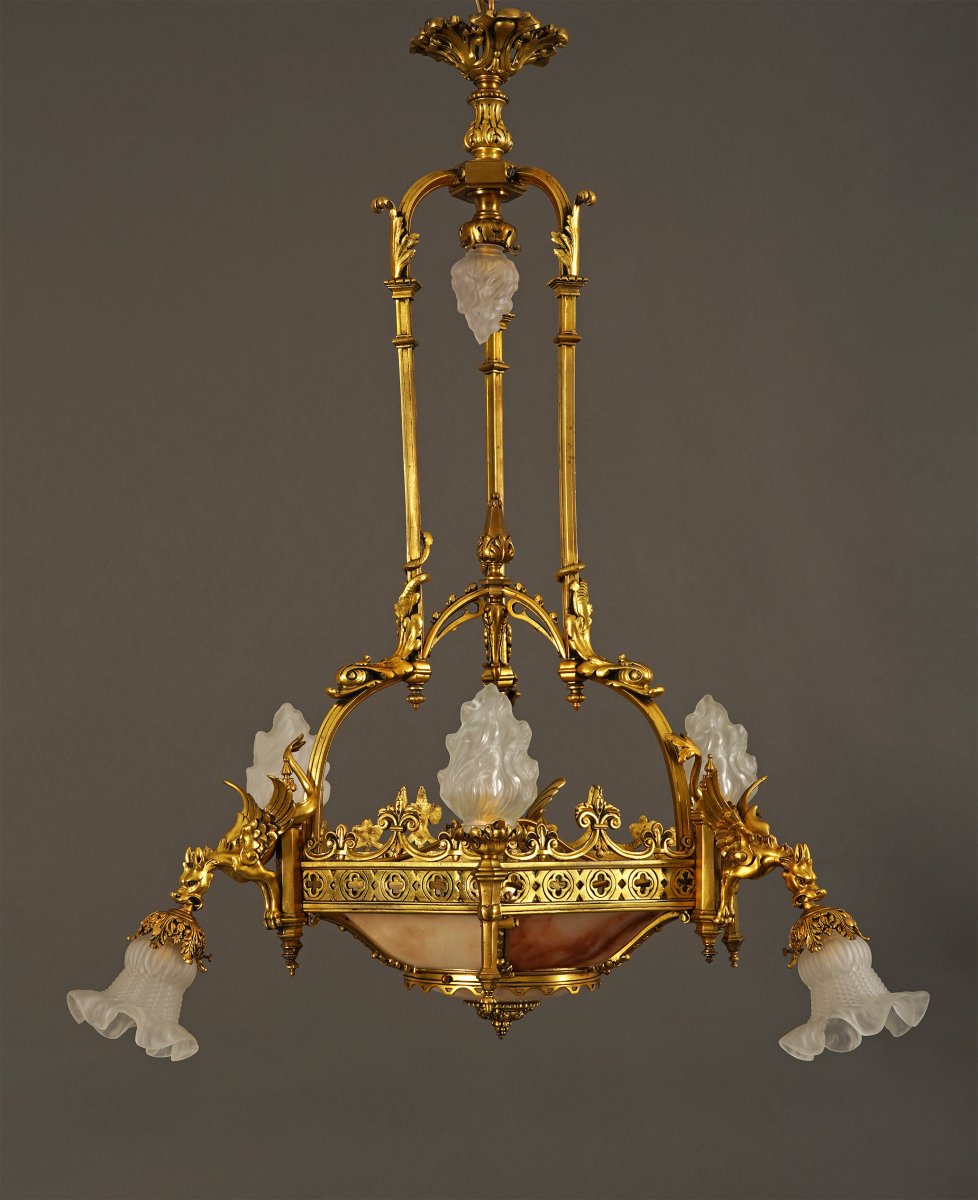
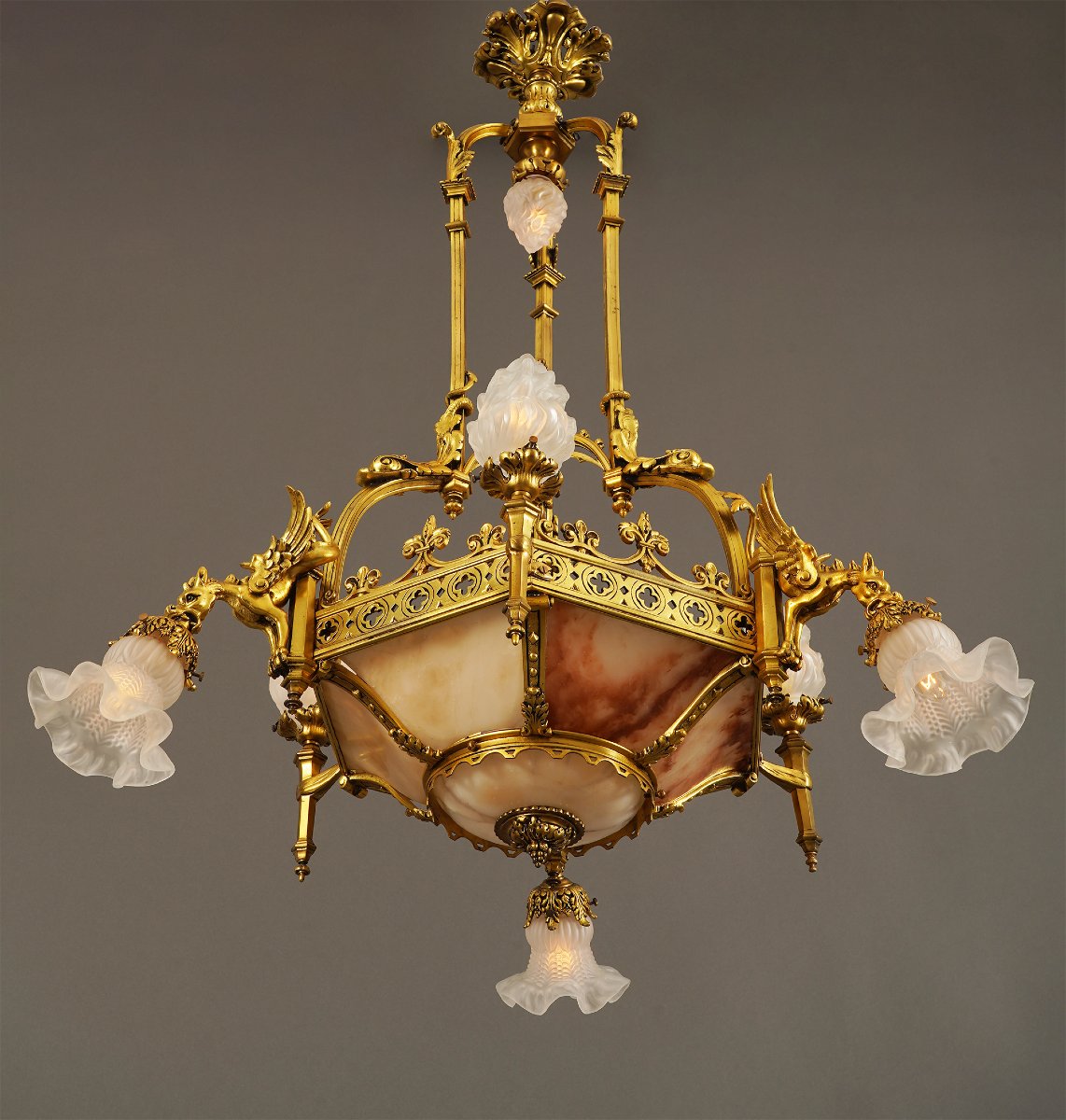


Susse & Lelièvre, Neo-gothic Chandelier With Dragons, France, Circa 1890, Alabaster Bronze
Artist: Susse & Lelièvre
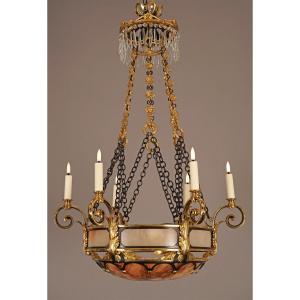
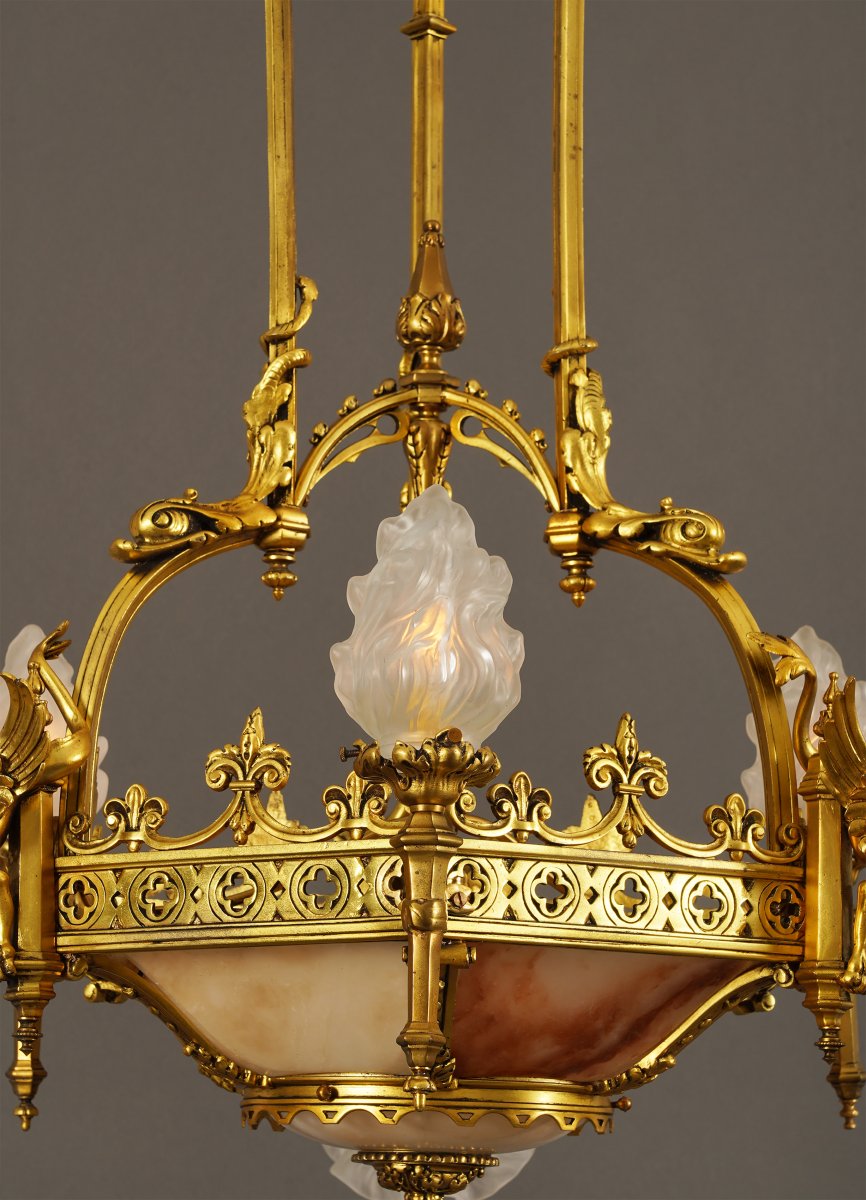
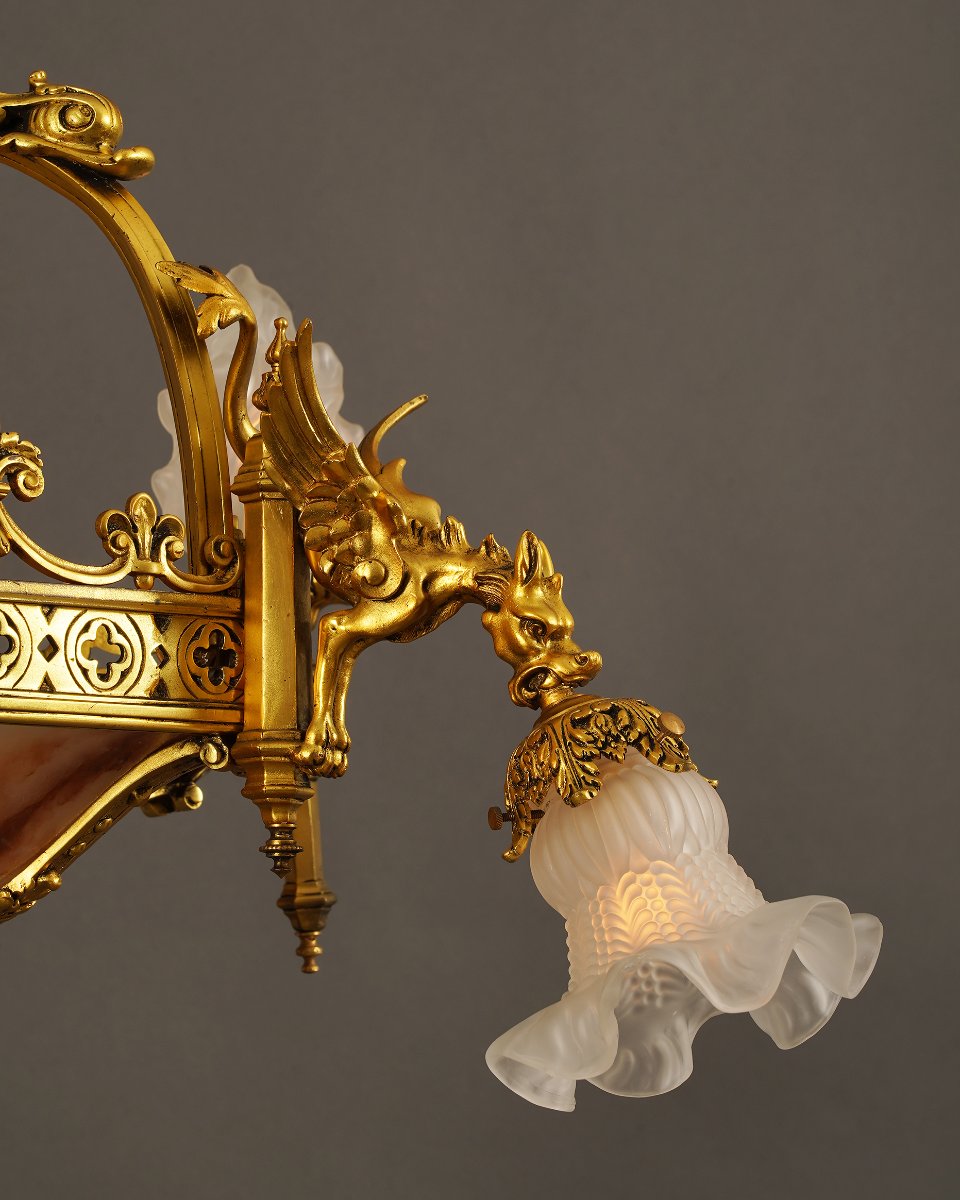
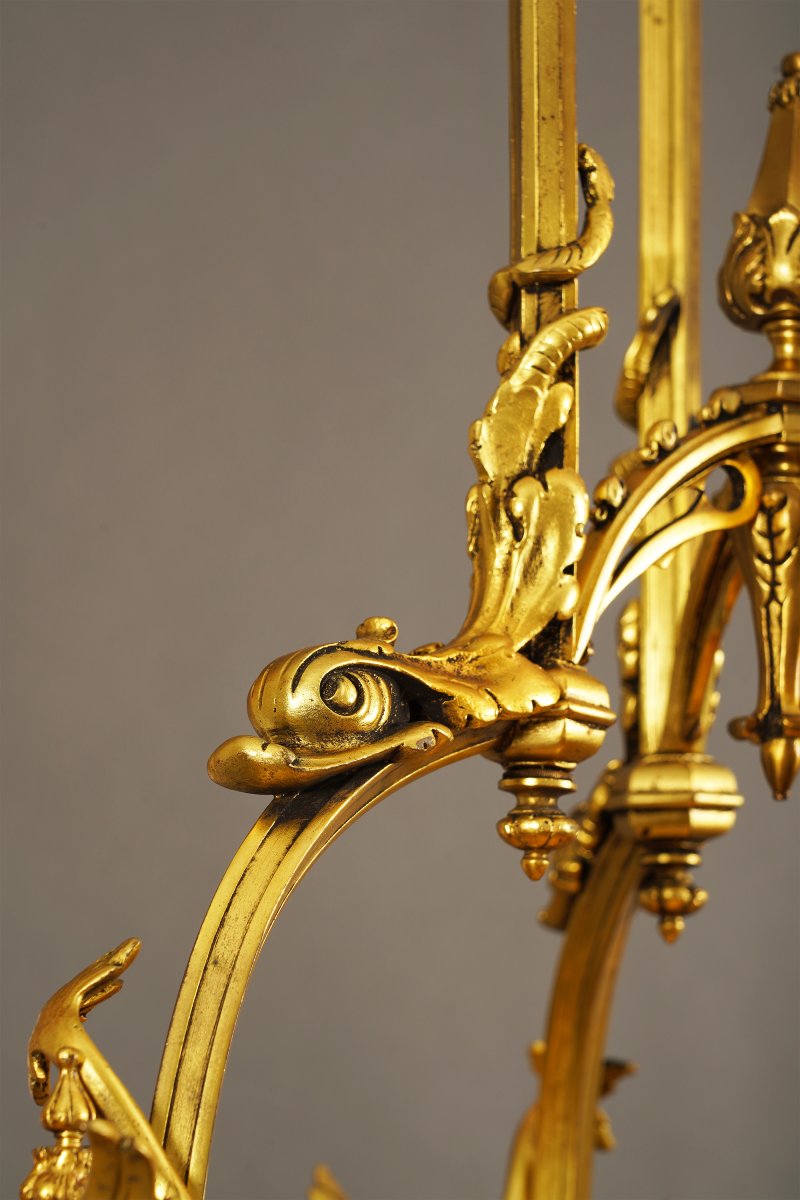
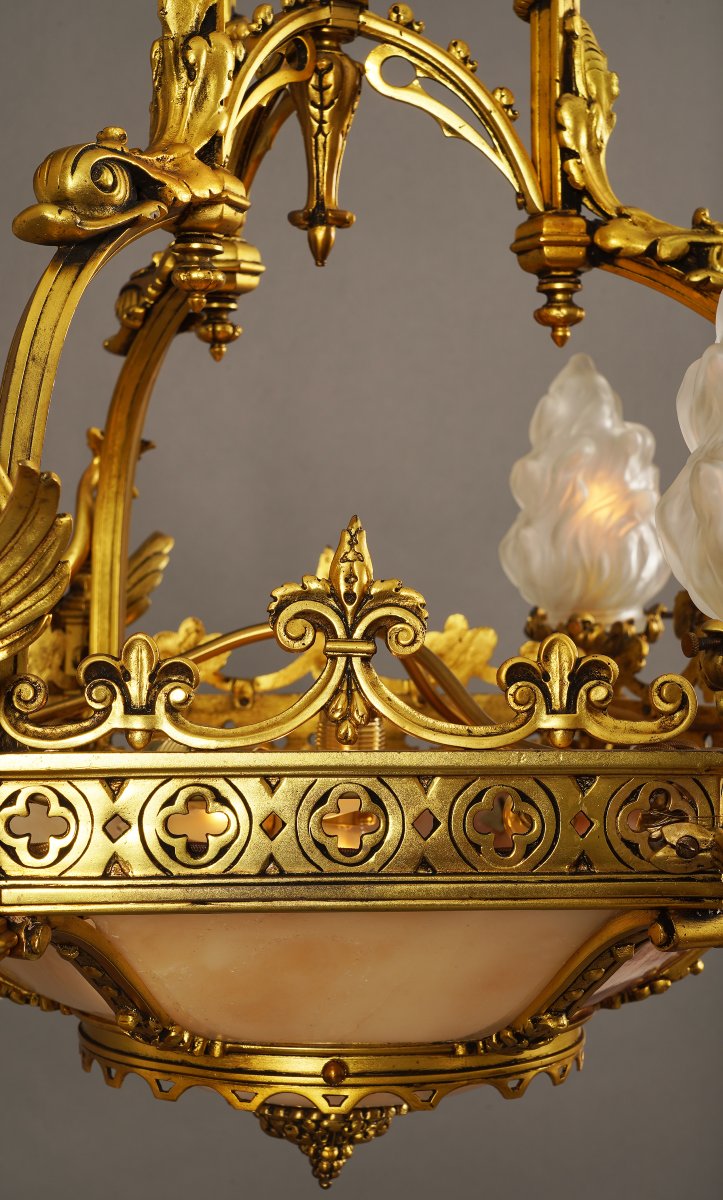
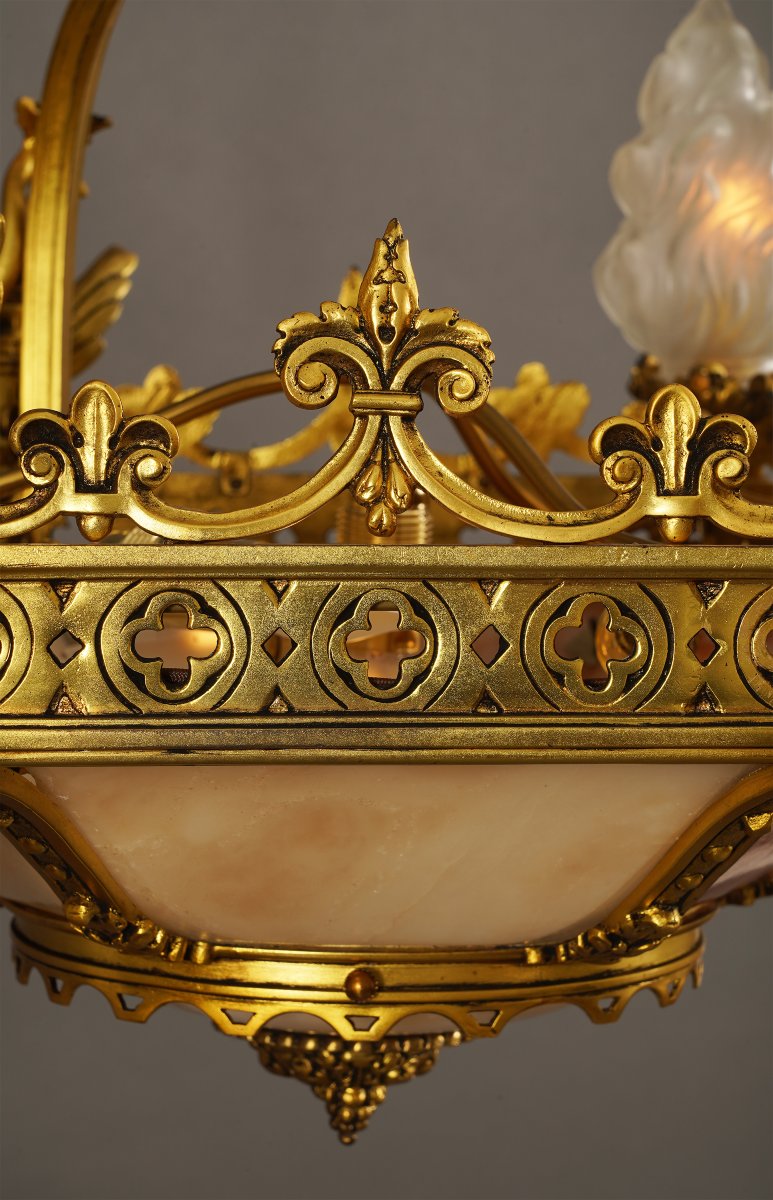
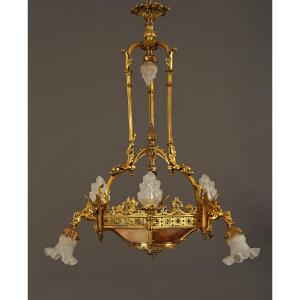
Elegant neo-Gothic chandelier in gilded bronze with seven lights, consisting of a veined alabaster bowl mounted within abronze frame and topped by a gallery and a finial. The bowl iscrowned by a wide openwork frieze of quatrefoils and fleurons, punctuated bycapitals and leaf-decorated crossettes, in an architectural styledirectly borrowed from Gothic art. The most spectacular feature consistsof three corbelled dragons, mouths open, wings spread. Each holds a glass tulip at the tip of its snout. The entire structure is supportedby three arched uprights adorned with dolphins and acanthus leaves, allattached to a crown with foliage motifs from which a seventhlight emanates. This chandelier is likely the result ofthe fruitful collaboration between the sculptor Olivier Lelièvre (1869–1947) and the prestigious Parisian art foundry Susse Frères, for which he designed and modeled sculptures.
Biography
A world-renowned foundry, Maison Susse began producing bronze works as early as the first half of the 19thcentury. Confirming their success during the famous Industrial Expositionin Paris, the Susse brothers, Victor (1806–1860) and Amédée(1808–1880), were listed as early as 1841 as manufacturers of “art bronzes forclocks, candelabras, vases, statuettes, etc.” The greatestFrench sculptors entrusted their sculpted works to them to be cast inbronze, such as James Pradier (1790–1852), who signed the oldest known contract commission contract currently known. After the death of the two brothers, AlbertSusse succeeded them as head of the firm from 1880 to 1922. He gave itnew momentum and significantly expanded the foundry. Albert opened a luxurious store at 13 Boulevard de la Madeleine in Paris. Octave Georges Lelièvre (1869–1947) wasa French sculptor and ornamental artist associated with the decorative arts of the BelleÉpoque and the revived Louis XVI style. A student of the sculptor Théodore EugèneVictor Barrau, as well as of Dumont and Gumery, his work is primarilyknown for decorative bronzes, clocks, candelabras, desk accessories, and decorative objects produced by major art bronze foundries, notably Susse Frères. Active from around 1890 to 1930, he workedin the tradition of French decorative sculpture, blending Neoclassical influences with the refinement of Art Nouveau and later Art Deco. His creations frequently feature gilded bronze, with decorations of acanthus leaves, garlands,mascarons, and motifs inspired by 18th-century France.
Biography
A world-renowned foundry, Maison Susse began producing bronze works as early as the first half of the 19thcentury. Confirming their success during the famous Industrial Expositionin Paris, the Susse brothers, Victor (1806–1860) and Amédée(1808–1880), were listed as early as 1841 as manufacturers of “art bronzes forclocks, candelabras, vases, statuettes, etc.” The greatestFrench sculptors entrusted their sculpted works to them to be cast inbronze, such as James Pradier (1790–1852), who signed the oldest known contract commission contract currently known. After the death of the two brothers, AlbertSusse succeeded them as head of the firm from 1880 to 1922. He gave itnew momentum and significantly expanded the foundry. Albert opened a luxurious store at 13 Boulevard de la Madeleine in Paris. Octave Georges Lelièvre (1869–1947) wasa French sculptor and ornamental artist associated with the decorative arts of the BelleÉpoque and the revived Louis XVI style. A student of the sculptor Théodore EugèneVictor Barrau, as well as of Dumont and Gumery, his work is primarilyknown for decorative bronzes, clocks, candelabras, desk accessories, and decorative objects produced by major art bronze foundries, notably Susse Frères. Active from around 1890 to 1930, he workedin the tradition of French decorative sculpture, blending Neoclassical influences with the refinement of Art Nouveau and later Art Deco. His creations frequently feature gilded bronze, with decorations of acanthus leaves, garlands,mascarons, and motifs inspired by 18th-century France.
10 000 €
Period: 20th century
Style: Other Style
Condition: Good condition
Diameter: 71
Height: 107
Reference (ID): 1808292
Availability: In stock
Print