

Baccarat, Neo-greek Pendant, France, Circa 1860
(Attributed to)
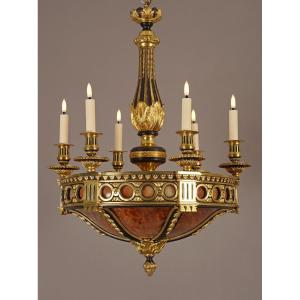
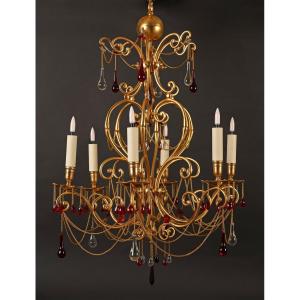
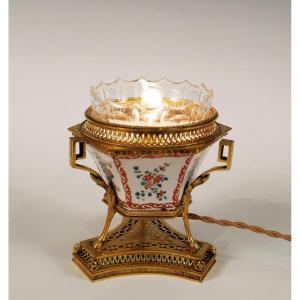
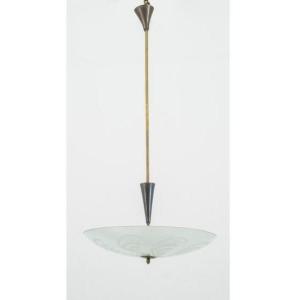
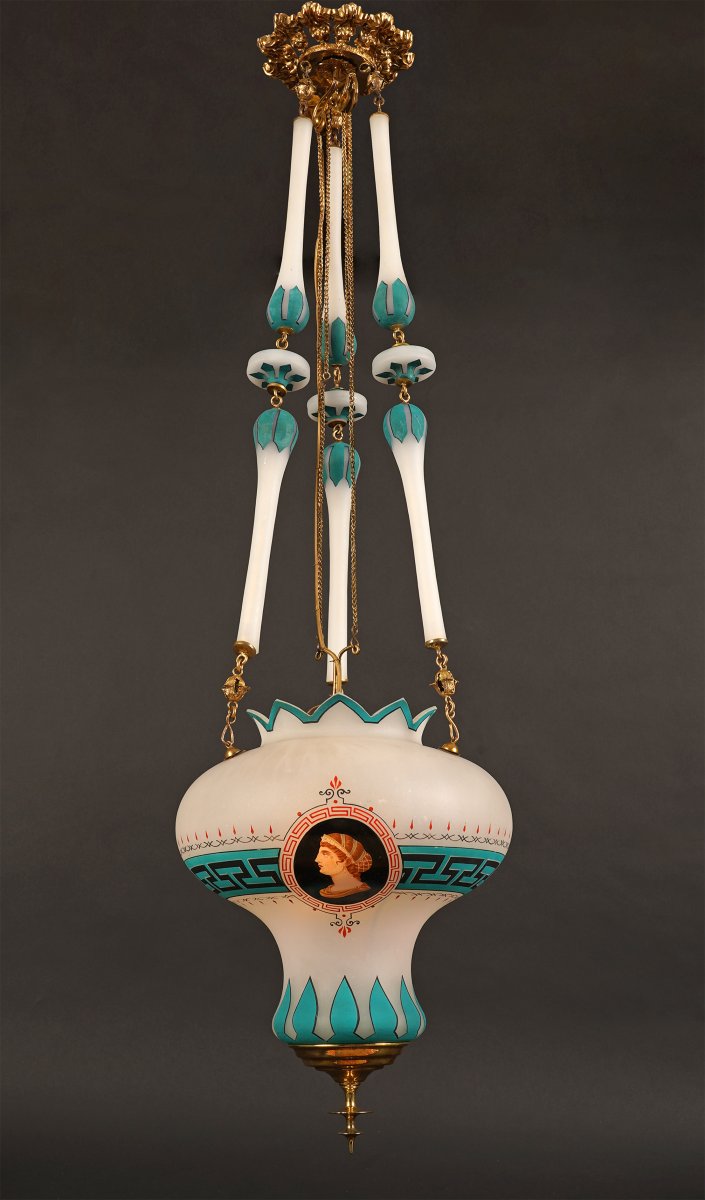
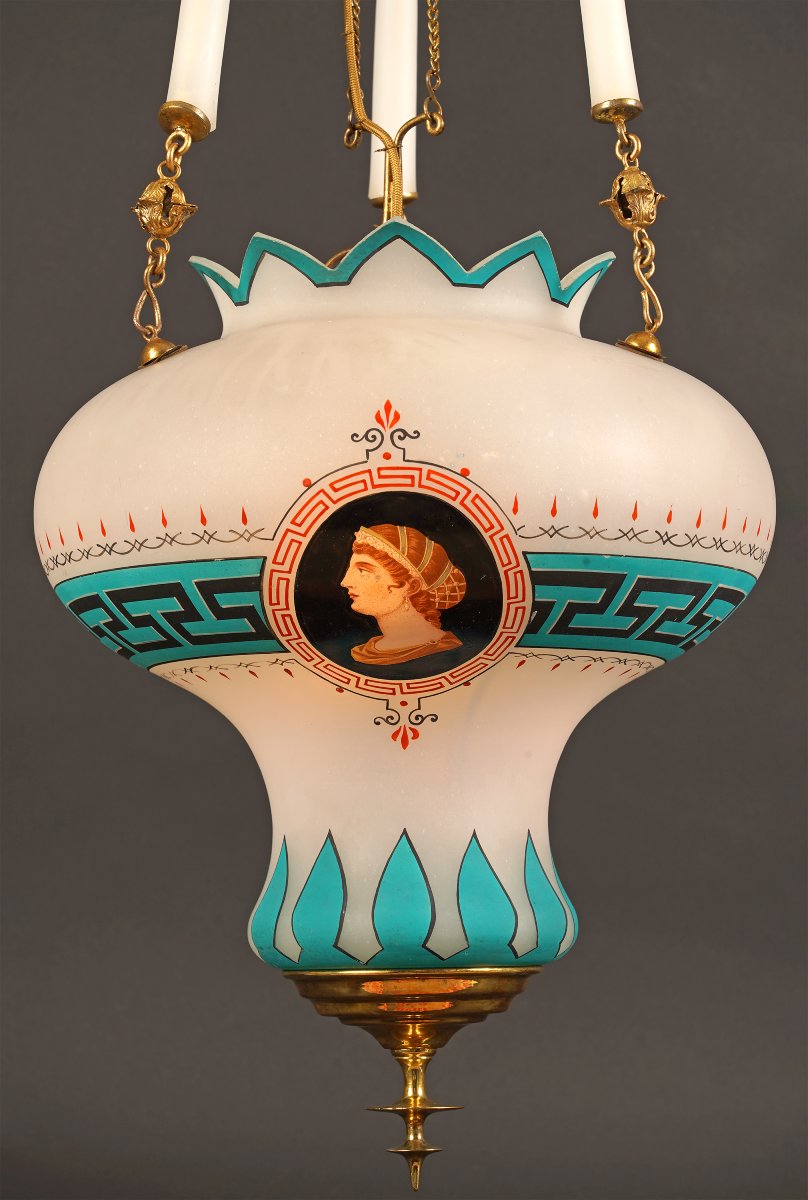
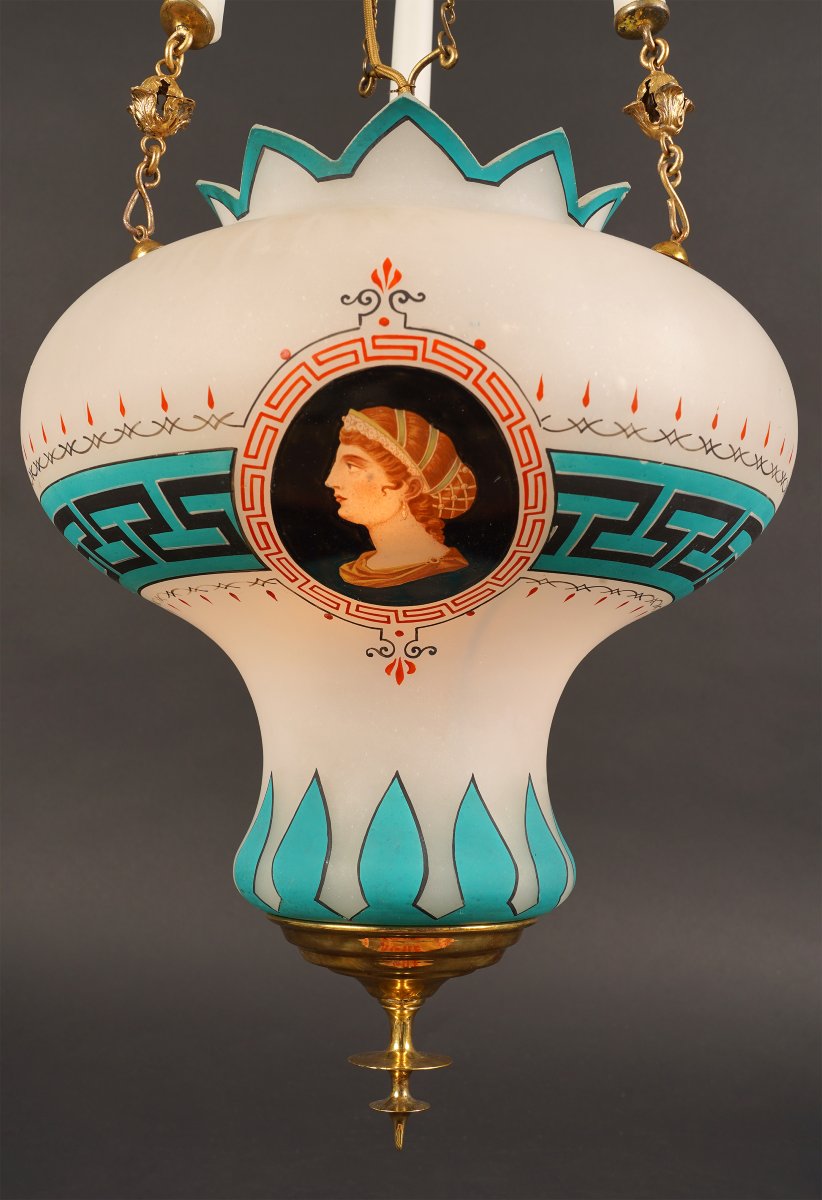
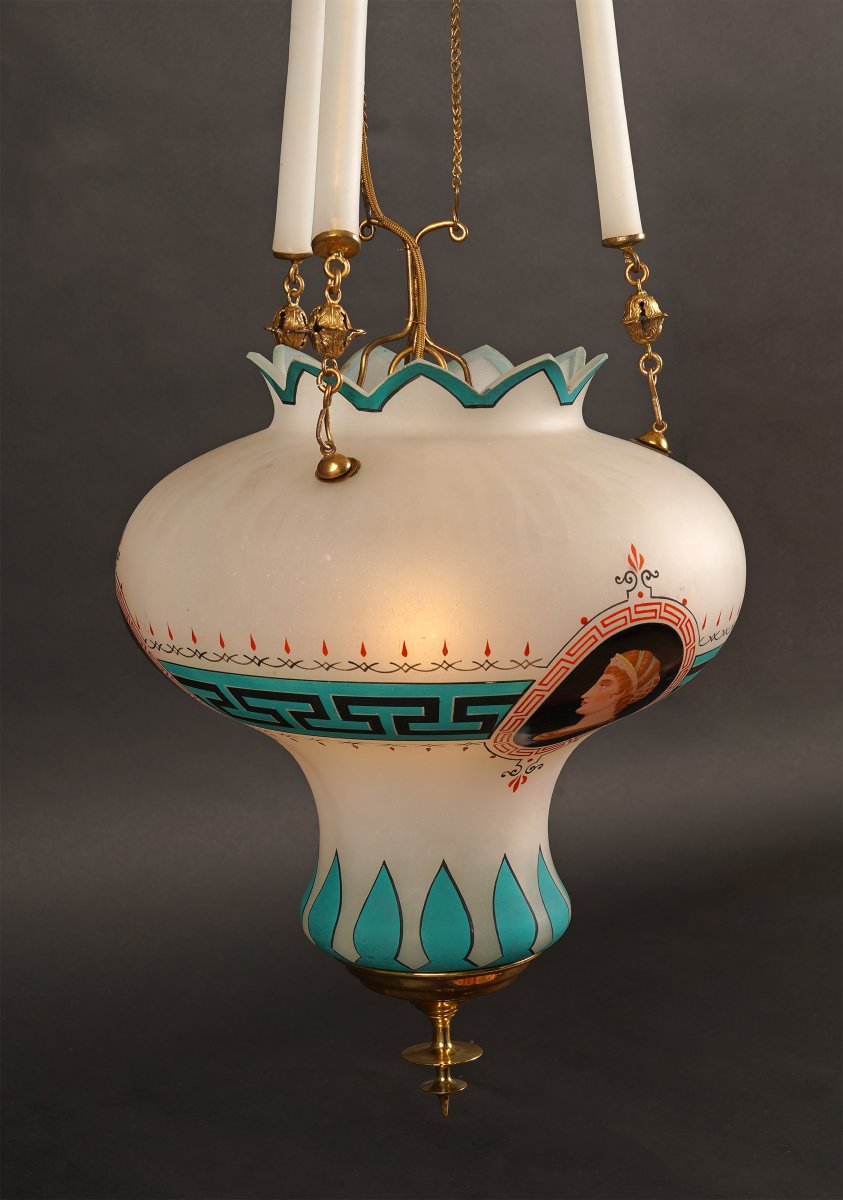
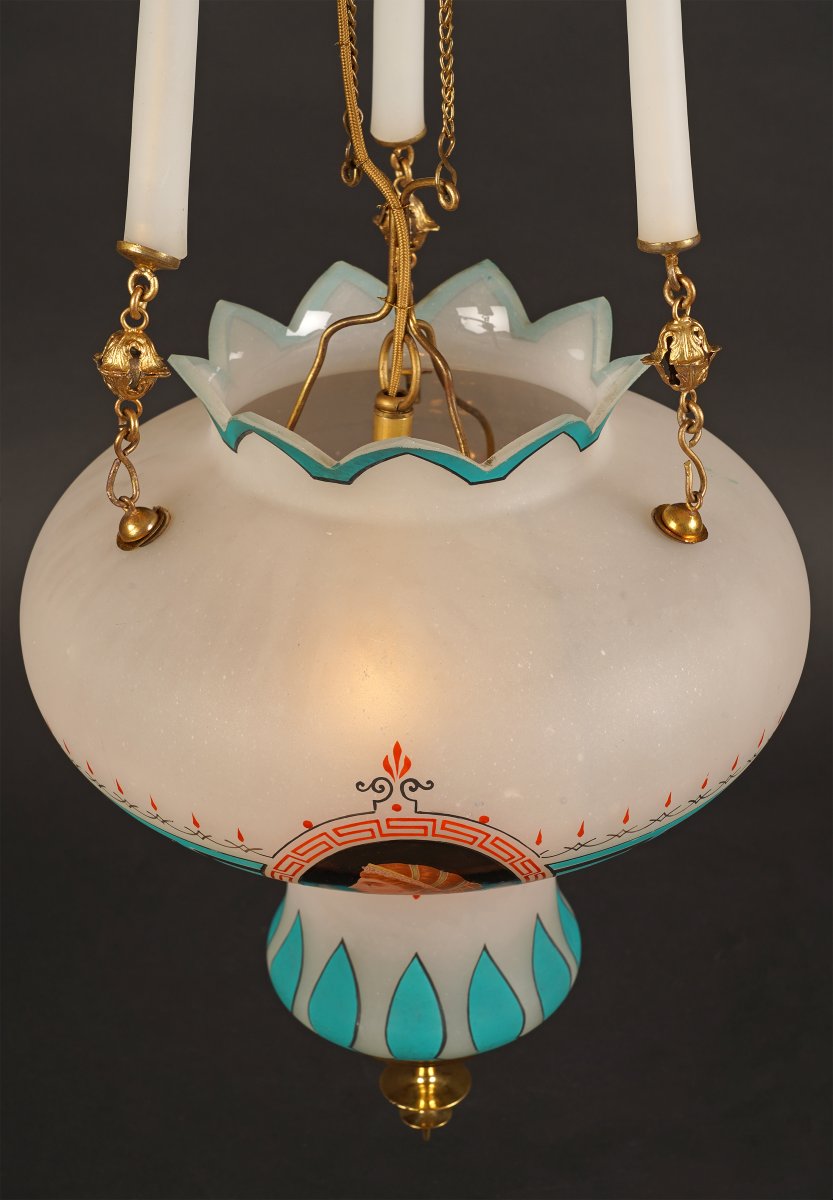
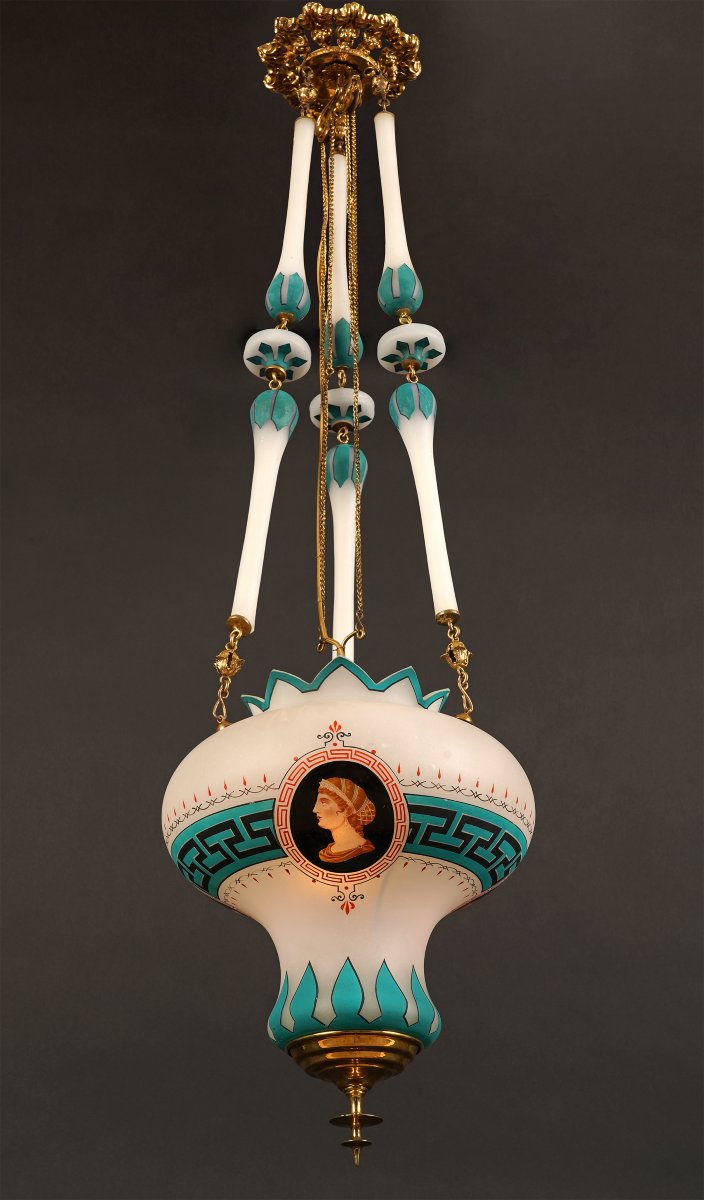
Beautiful white opaline pendant lamp withpolychrome decoration inspired by the Neo-Greek style. The rounded bowl, with a flared neckcut into pointed festoons and accented with a turquoise border, tapers toward thebottom to form a bell-shaped base adorned with turquoise leaves, restingin a gilded bronze cup that ends in a spinning top shape. It is adorned with acentral medallion featuring an antique-style female profile reminiscent of a cameo, framedby an orange Greek fret frieze, encircled by a wide band of black Greek frets ona turquoise background. It is suspended by three baluster-shaped double rods froma gilded bronze ceiling fixture adorned with foliage motifs. This pendant is a fine example ofthe virtuosity of mid-19th-century glass manufacturers (such asBaccarat, Saint-Louis, or other Parisian workshops specializing inopaline). The use of light—the opaline becoming translucent andglowing when illuminated from within—enhances thedecor. The piece reflects a “reinvented” style of antiquity—colorful andtheatrical—typical of the taste in bourgeois and aristocratic interiors of theNapoleonic period.
Biography
The famous Baccarat crystal glassworks, whose origins date backto the 18th century, won its first gold medal at the 1823 Exhibitionof Industrial Products, where it was praised for “the brilliance andfinesse of the crystal” and became France’s leading crystal manufacturer. Baccarat wasundoubtedly the only French industry at the time that was consistently andmasterfully represented at the various exhibitions in which itparticipated, thereby winning honors and prestigious awards.A key phrase, “the perfection of the material and the cut,” recurs in allthe reports from the World’s Fairs between 1855 and 1867, where theBaccarat crystal factory stood out for the quality of its crystal, deemed superior to that of Bohemiaand England. To retain the loyalty of its wealthy clientele—which, of course,included members of the Royal Family—Baccarat had to discoverand launch new trends, new designs, and newmaterials.
Beautiful white opaline pendant lamp withpolychrome decoration inspired by the Neo-Greek style. The rounded bowl, with a flared neckcut into pointed festoons and accented with a turquoise border, tapers toward thebottom to form a bell-shaped base adorned with turquoise leaves, restingin a gilded bronze cup that ends in a spinning top shape. It is adorned with acentral medallion featuring an antique-style female profile reminiscent of a cameo, framedby an orange Greek fret frieze, encircled by a wide band of black Greek frets ona turquoise background. It is suspended by three baluster-shaped double rods froma gilded bronze ceiling fixture adorned with foliage motifs. This pendant is a fine example ofthe virtuosity of mid-19th-century glass manufacturers (such asBaccarat, Saint-Louis, or other Parisian workshops specializing inopaline). The use of light—the opaline becoming translucent andglowing when illuminated from within—enhances thedecor. The piece reflects a “reinvented” style of antiquity—colorful andtheatrical—typical of the taste in bourgeois and aristocratic interiors of theNapoleonic period.
Biography
The famous Baccarat crystal glassworks, whose origins date backto the 18th century, won its first gold medal at the 1823 Exhibitionof Industrial Products, where it was praised for “the brilliance andfinesse of the crystal” and became France’s leading crystal manufacturer. Baccarat wasundoubtedly the only French industry at the time that was consistently andmasterfully represented at the various exhibitions in which itparticipated, thereby winning honors and prestigious awards.A key phrase, “the perfection of the material and the cut,” recurs in allthe reports from the World’s Fairs between 1855 and 1867, where theBaccarat crystal factory stood out for the quality of its crystal, deemed superior to that of Bohemiaand England. To retain the loyalty of its wealthy clientele—which, of course,included members of the Royal Family—Baccarat had to discoverand launch new trends, new designs, and newmaterials.
6 800 €
Period: 19th century
Style: Other Style
Condition: Good condition
Diameter: 28
Height: 100
Reference (ID): 1807895
Availability: In stock
Print