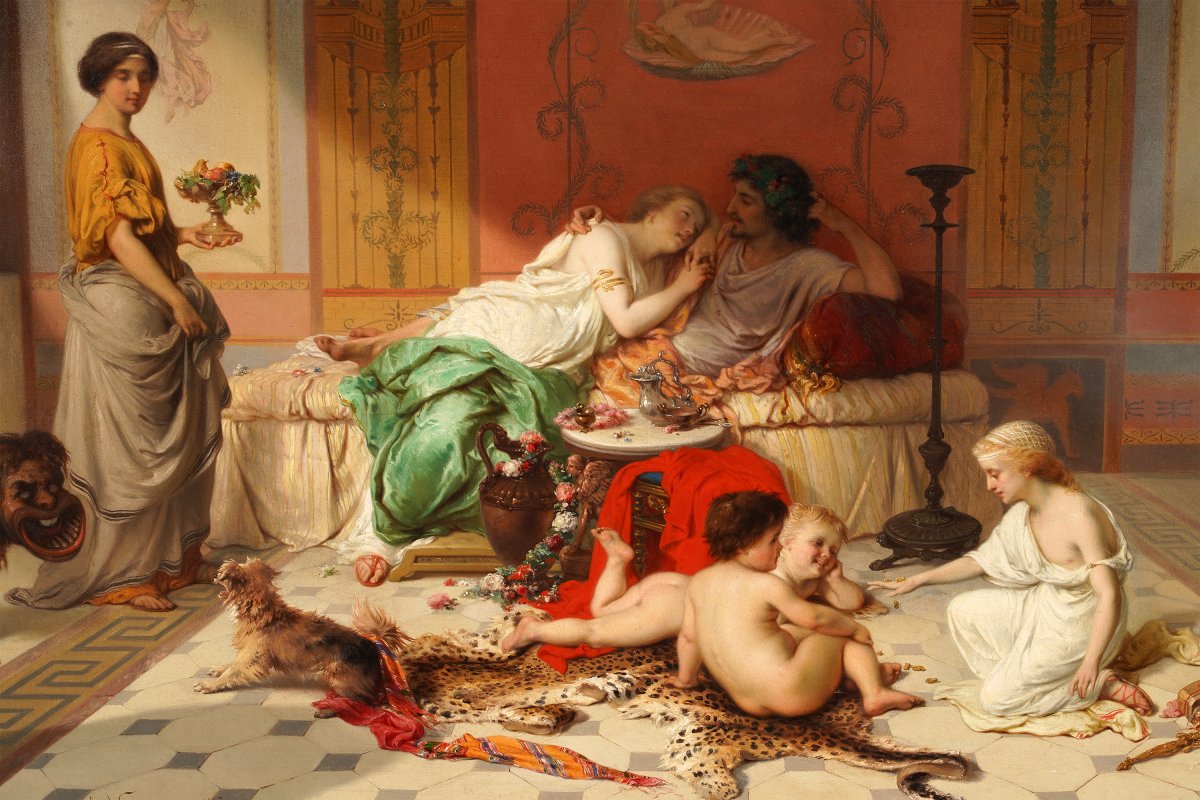

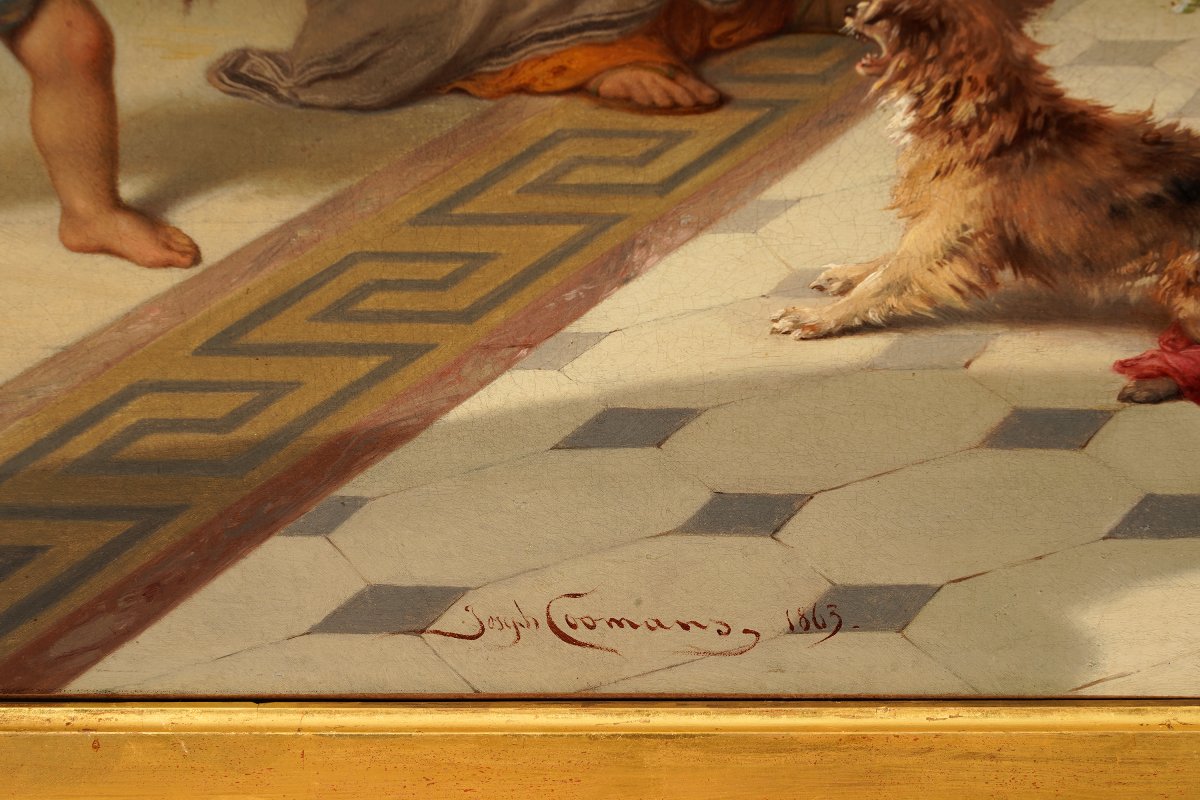

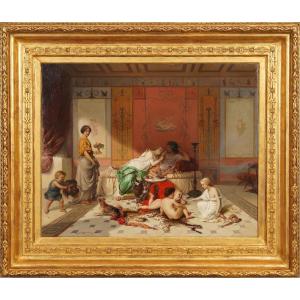


J. Coomans, "last Days Of Happiness In Pompeii", France, 1863
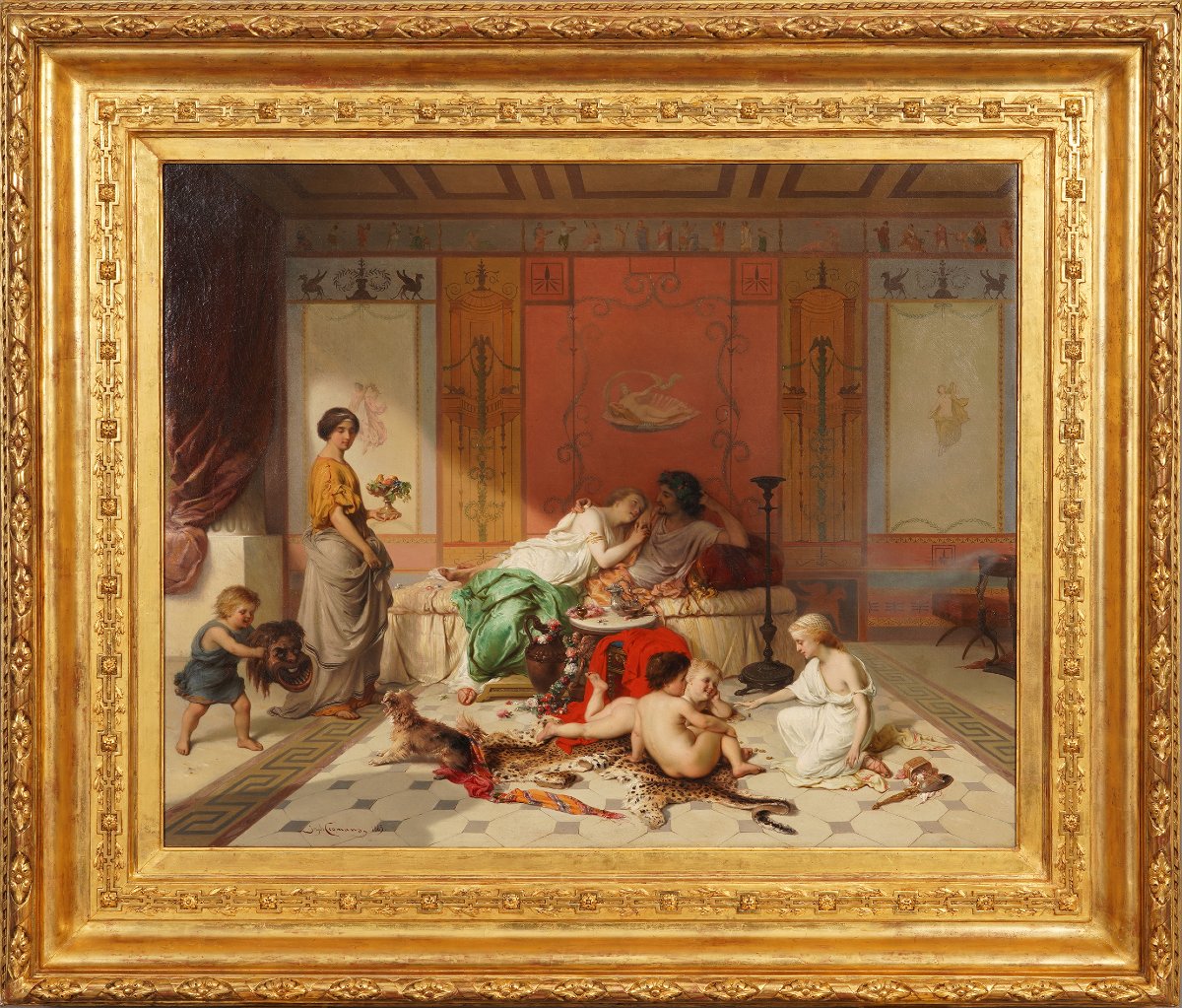
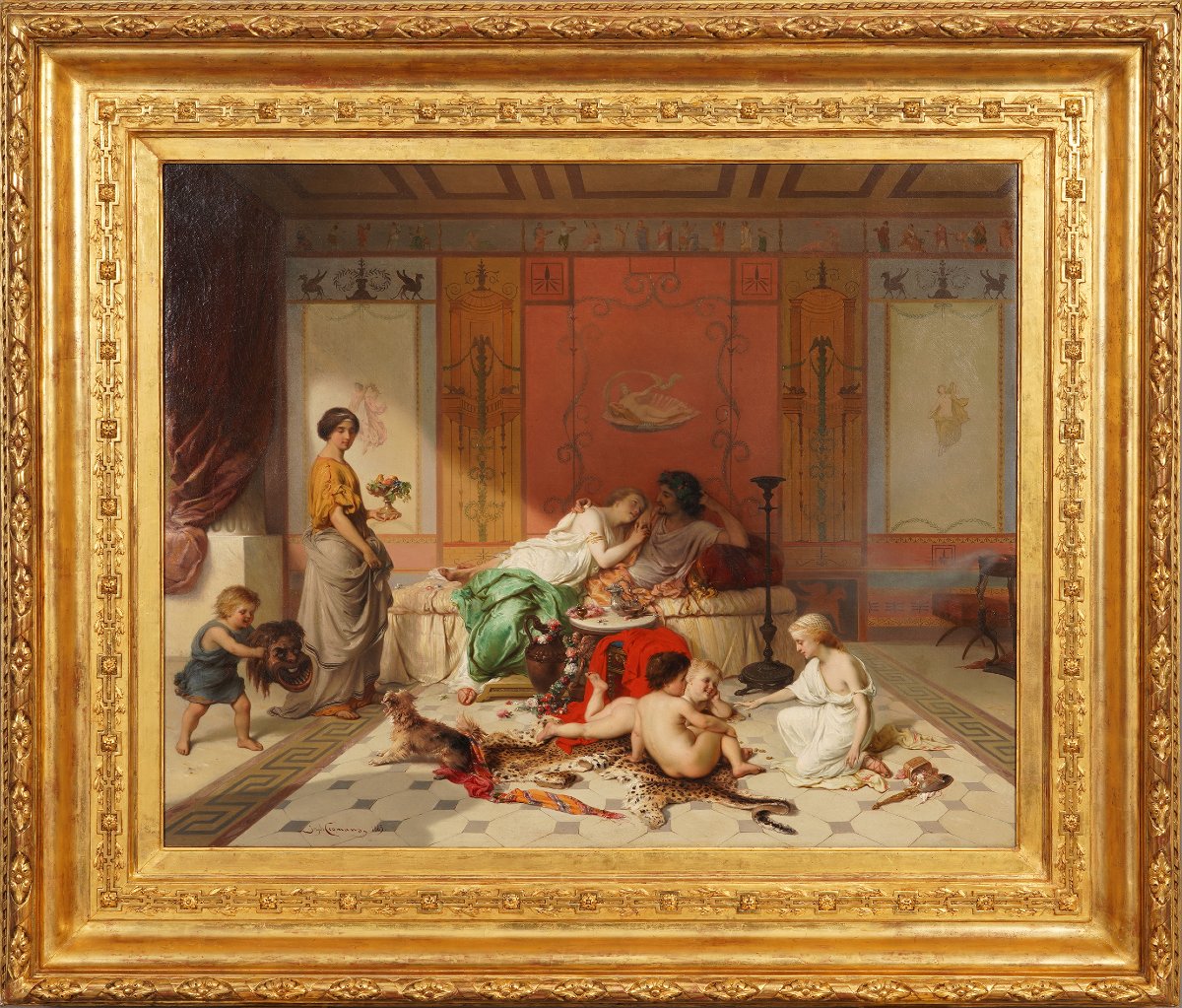
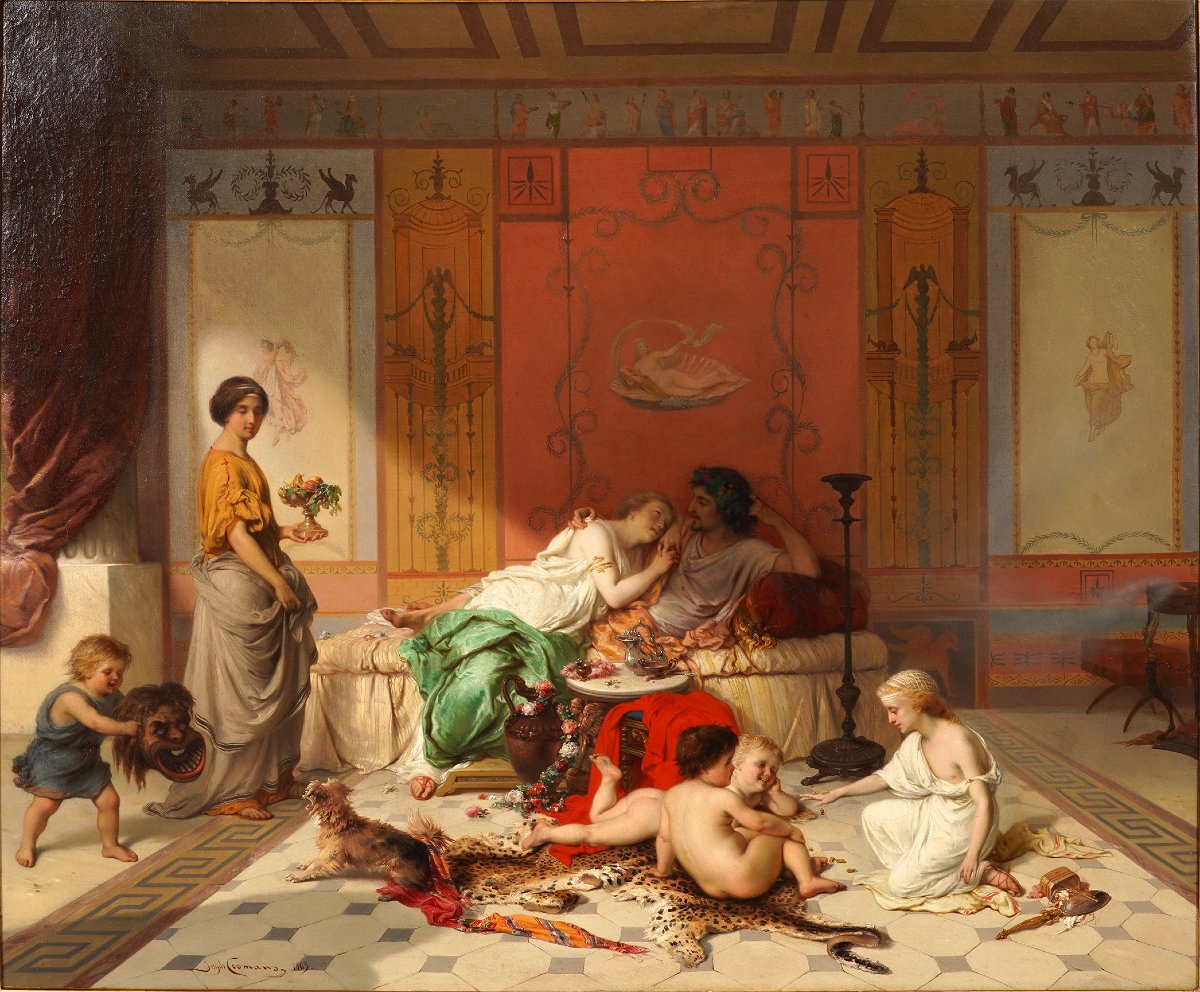
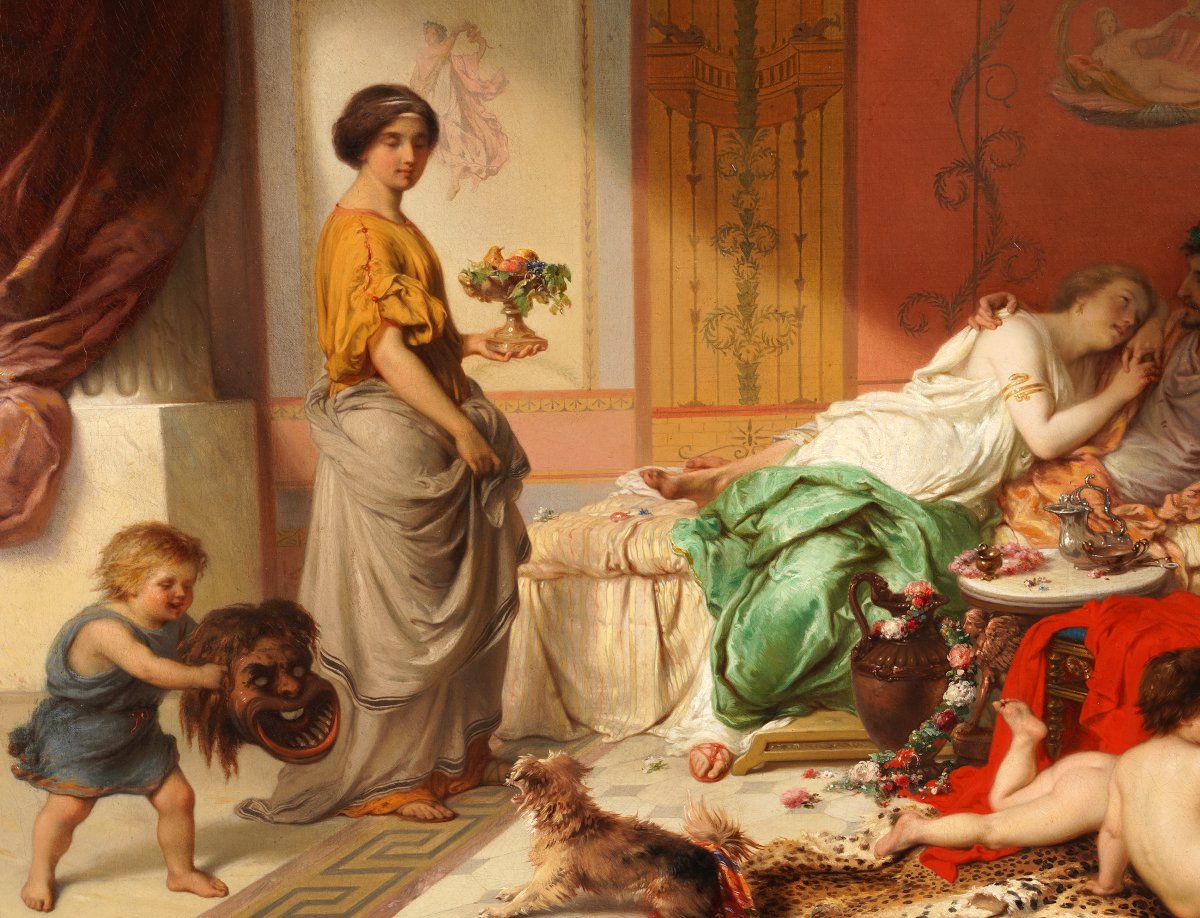
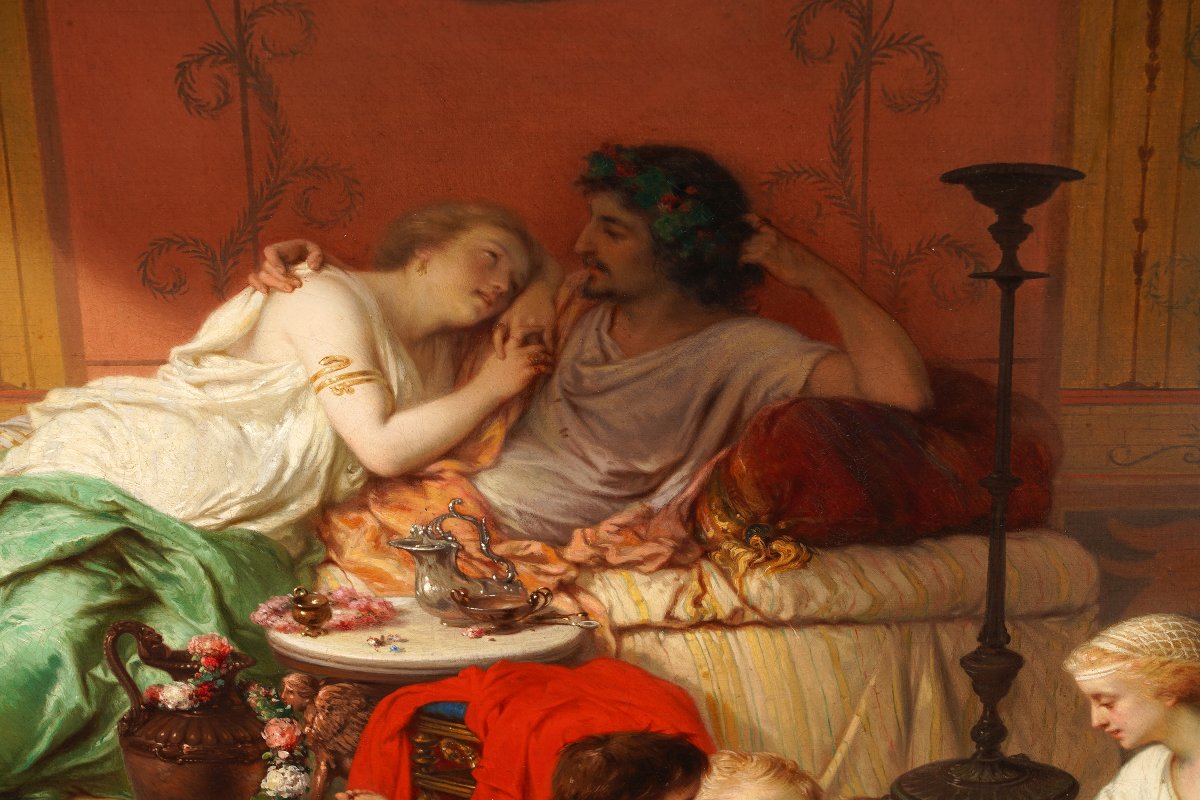
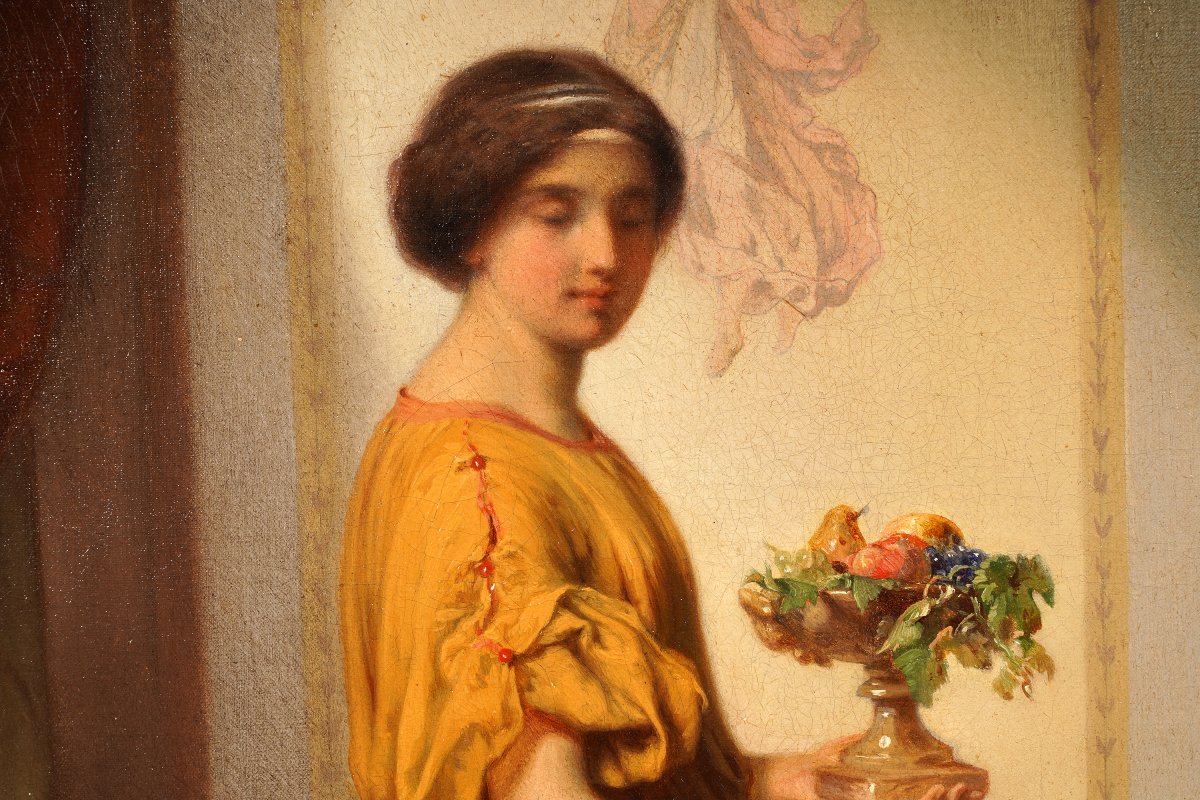
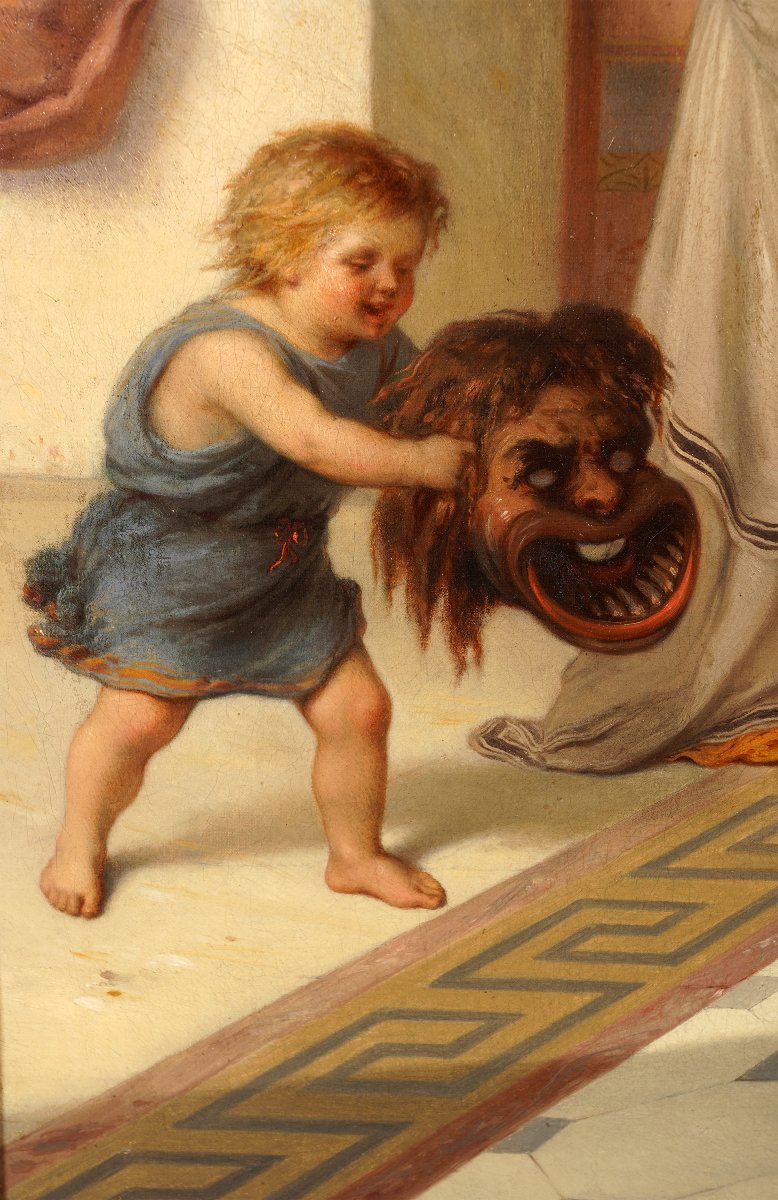
A beautiful painting depicting a scene of family life in an idealized Pompeian interior, featuring wall panels typical of the Fourth Style, framing mythological scenes such as a Venus in a shell, friezes of parading figures, and chimeras. Lying on a bed, a couple rests, in front of whom two naked children on a sumptuous leopard skin and a young girl innocently play knucklebones, a very popular ancient pastime often depicted in Roman art. On the left, a young boy brandishes an imposing grotesque theater mask, causing a small dog to bark. A servant stands on the left, holding a bowl of fruit, a symbol of abundance and refinement.
This work is a perfect example of 19th-century academic painting, and more specifically of the Neo-Greek movement (or “Pompeian style”). Strongly influenced by the archaeological discoveries at Pompeii and Herculaneum, Coomans specialized in the idealized and anecdotal depiction of ancient domestic life. Far from grand heroic or mythological narratives, the painter offers here an intimate genre scene, celebrating Roman otium (leisure time).
Biography :Pierre-Olivier-Joseph Coomans (1813–1889) was a Belgian genre and history painter who trained under Nicaise de Keyser and Baron Wappers at the Royal Academy of Fine Arts in Antwerp. In 1843, Queen Louise-Marie d’Orléans sent him to Algeria to follow the French army in Kabylie. There he met the military painter Horace Vernet. His three stays in Algeria (1843, 1844, and 1845) introduced Orientalism into his work. He was awarded a vermeil medal at the 1848 Brussels Salon for Dernière charge d’Attila à la bataille de Châlons-sur-Marne.
In 1855, he settled in the vicinity of Naples, and the Roman frescoes of Pompeii led him to gradually abandon Orientalism in favor of romantic Neapolitan scenes, and then a new genre known as the “Pompeian style.”
In 1860, he settled in Paris and began to move toward academic classicism. From October 1888 to June 1889, he stayed in Philadelphia and New York, where he painted mainly portraits.
– J. Girard de Rialle, À travers le Salon de 1863, Paris, 1863, pp.63-64 ;
– Explication des ouvrages de peinture […] exposés au palais des Champs-Élysées le 1er Mai 1863, Paris, 1863, p. 57, no. 452.
Period: 19th century
Style: Other Style
Condition: Good condition
Material: Oil painting
Length: 135
Height: 118
Reference (ID): 1773045
Availability: In stock