

Antique Japanese Butsudan – Home Buddhist Altar In Black Lacquer And Gold Leaf, Japan
Antique Japanese butsudan – Domestic Buddhist altar in black lacquer and gold leaf (Japan, circa 1900)
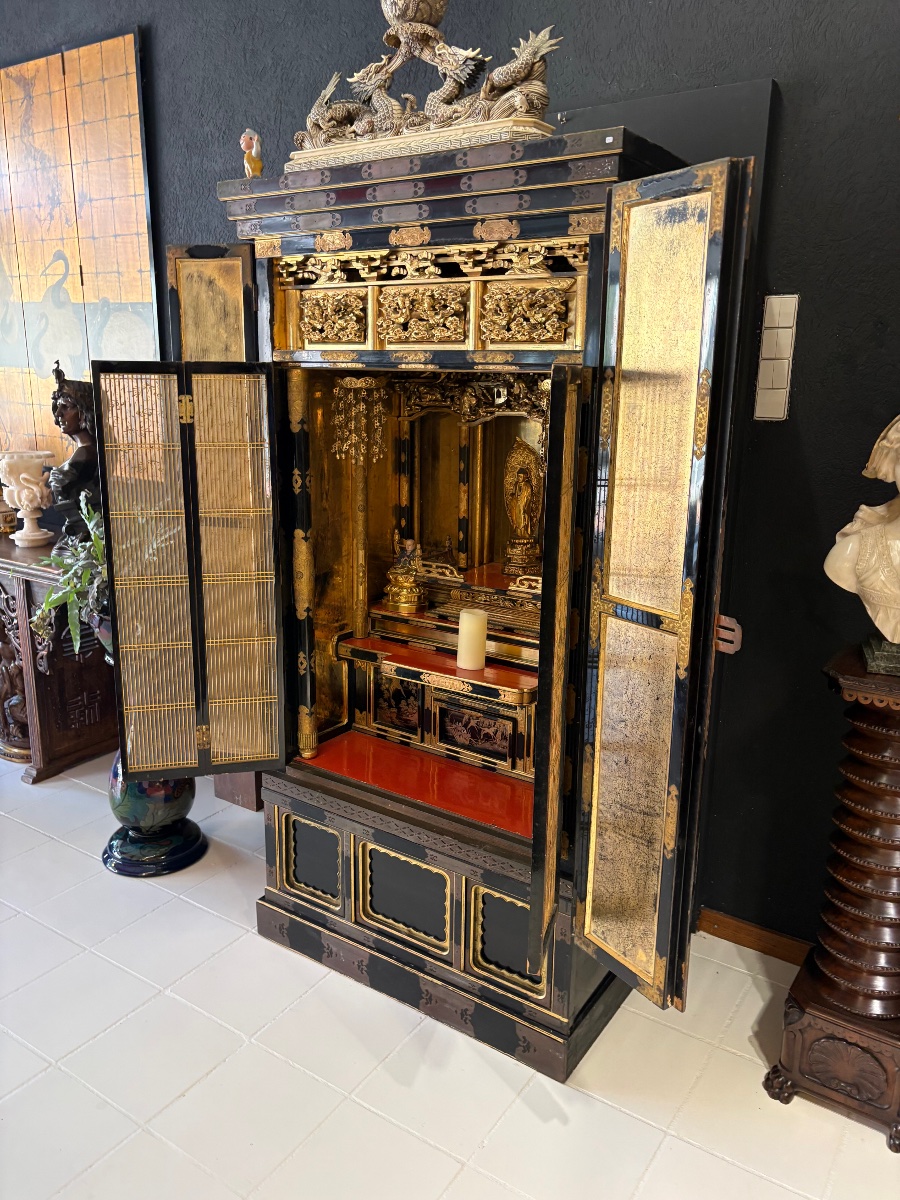
A butsudan (literally “house of the Buddha”) is a traditional Japanese domestic Buddhist altar: a cabinet with doors that, when opened, reveal the interior of a richly gilded miniature temple. It forms the spiritual heart of the Japanese home, intended for the veneration of the Buddha and the commemoration of deceased ancestors. This type of piece, characterized by deep black lacquer, an abundance of gold leaf, and refined wood carvings, is called *kin-butsudan* (gilded butsudan); it represents the most luxurious and complex variety to produce.
Description
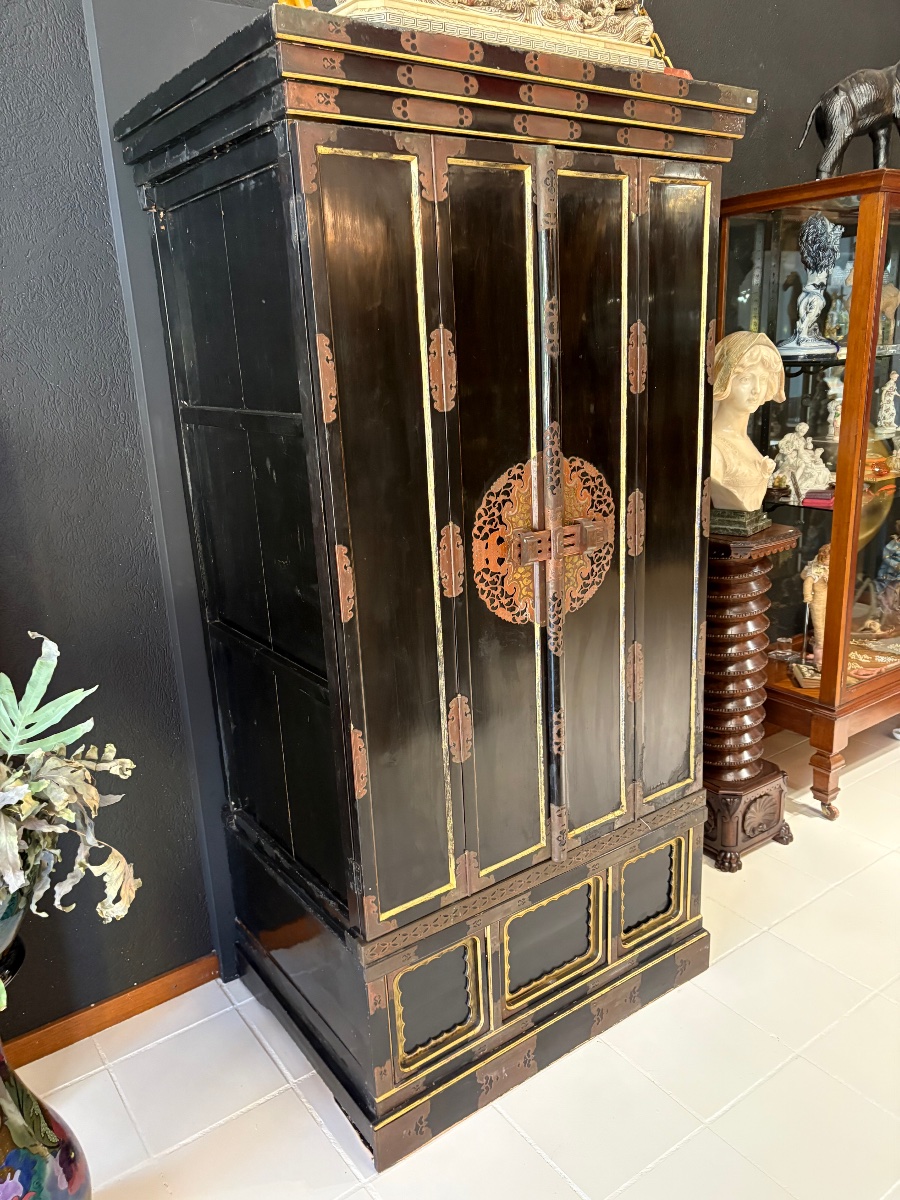
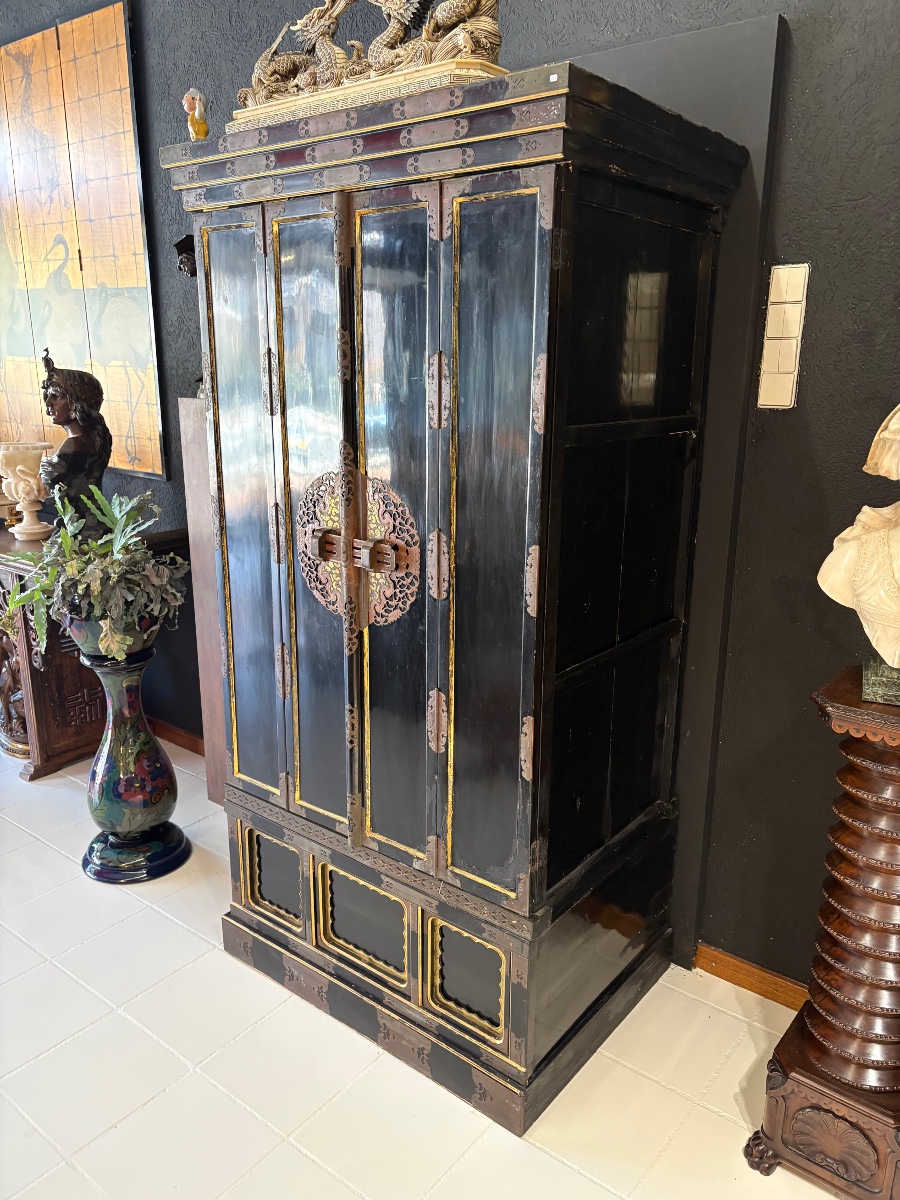
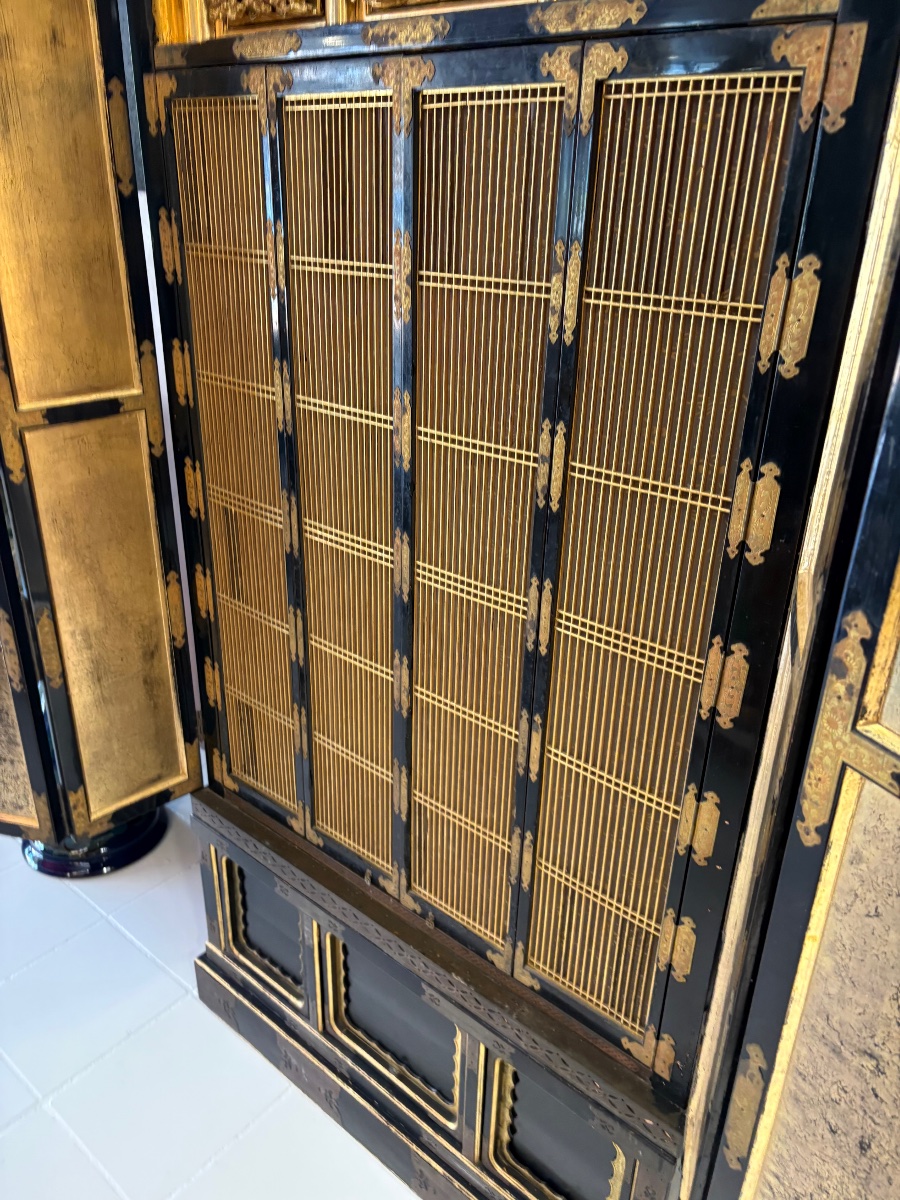
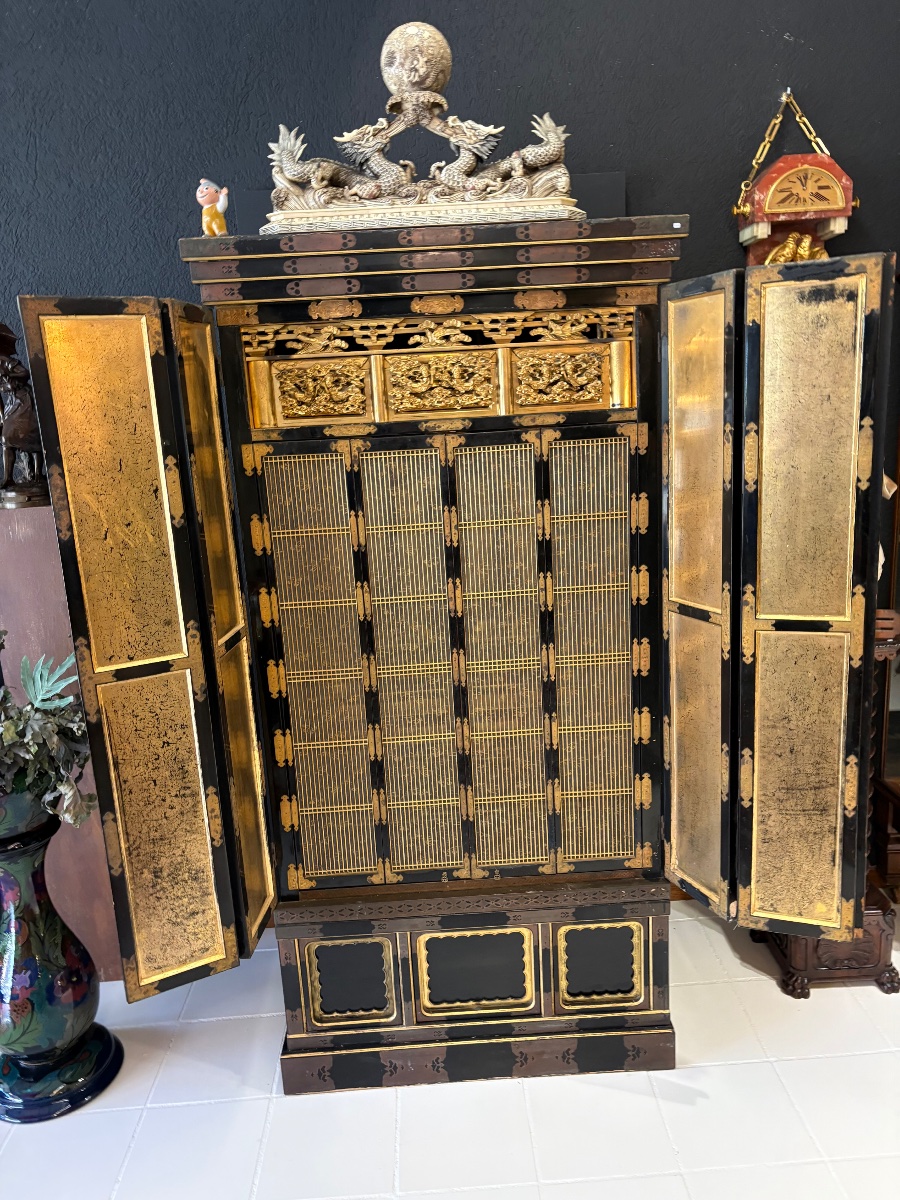
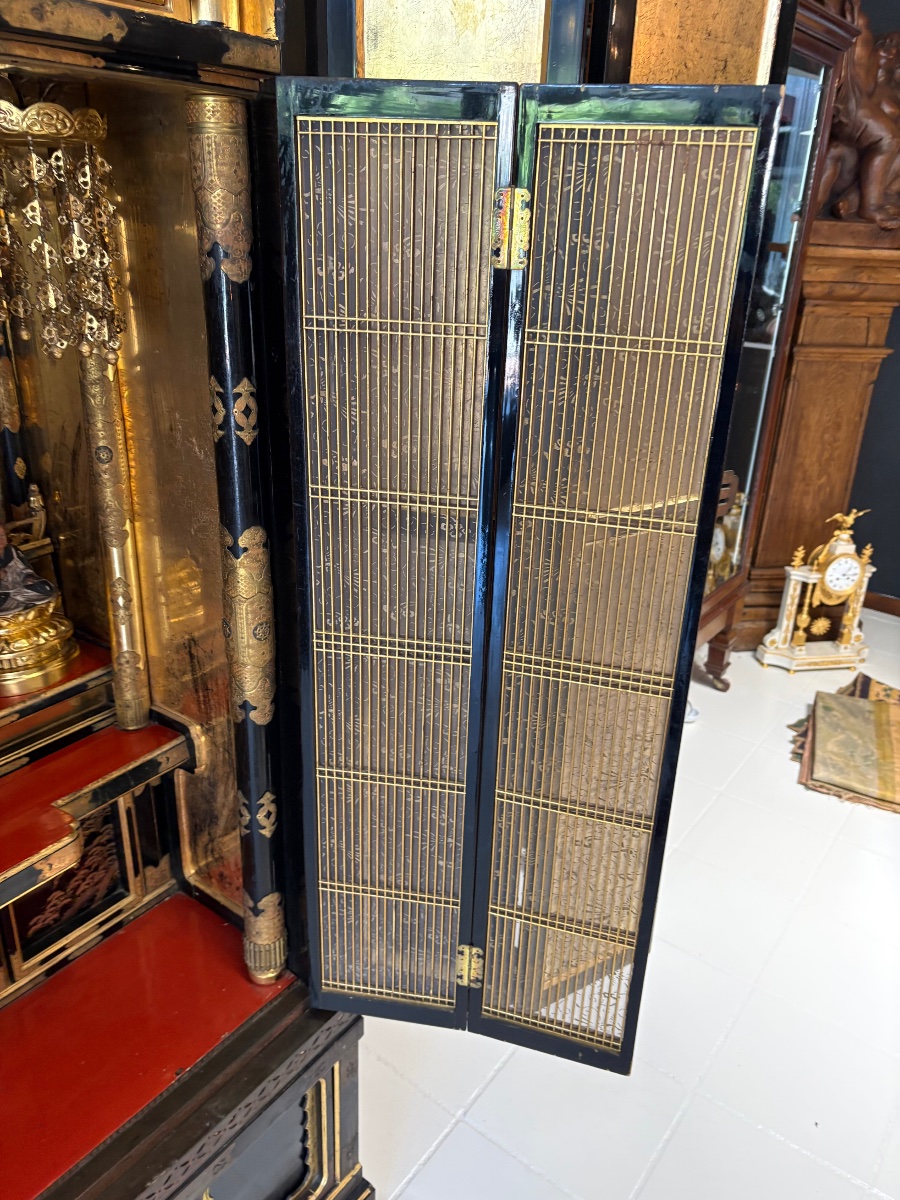
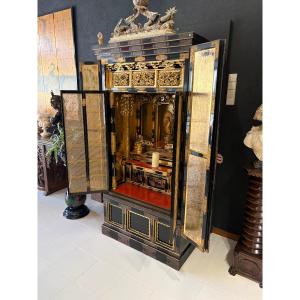
An imposing and richly decorated butsudan, featuring a glossy black lacquer finish accented with gold leaf and decorative copper or brass trim. The exterior features two lacquered doors fitted with engraved metal hinges and a decorative openwork gilded plate serving as a lock. When opened, the piece reveals a pair of gilded lattice doors, giving way to the magnificent interior of the shrine.
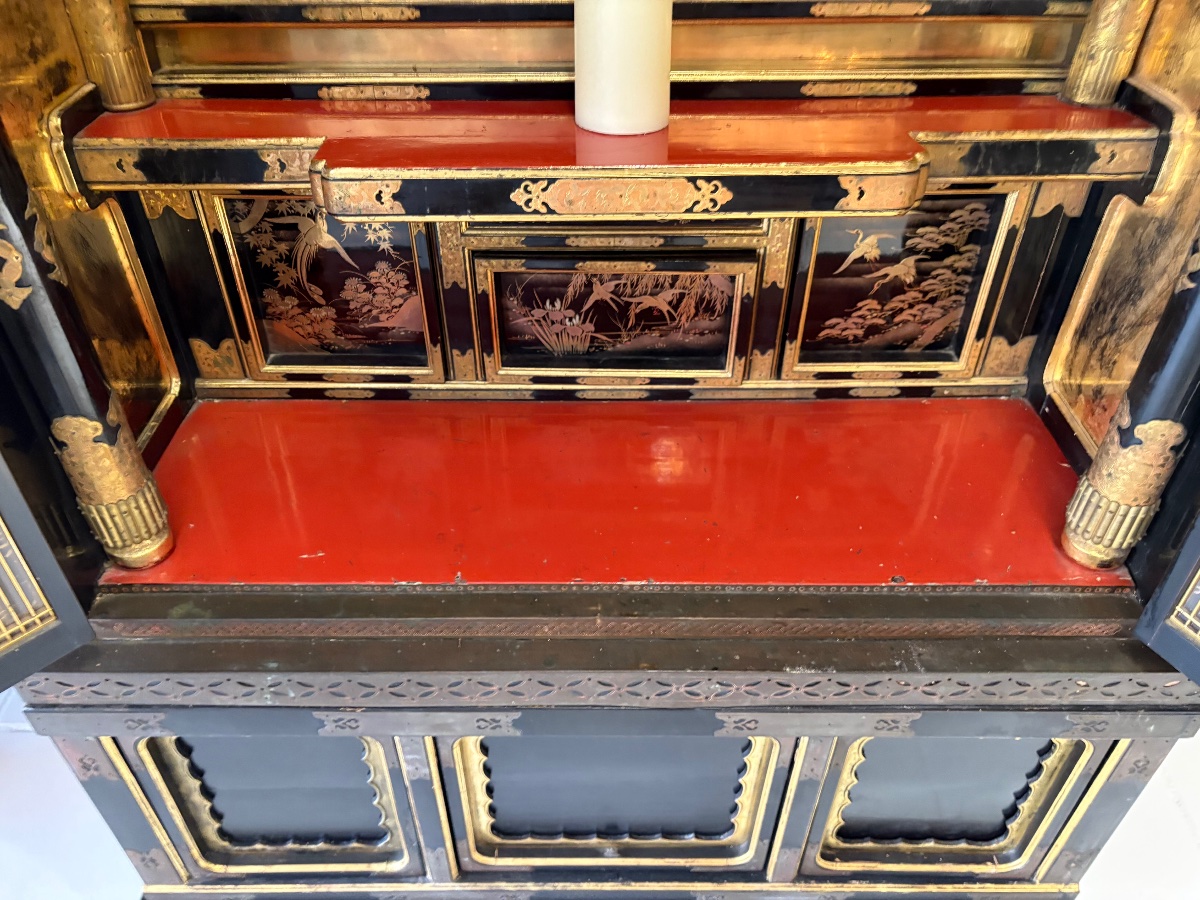
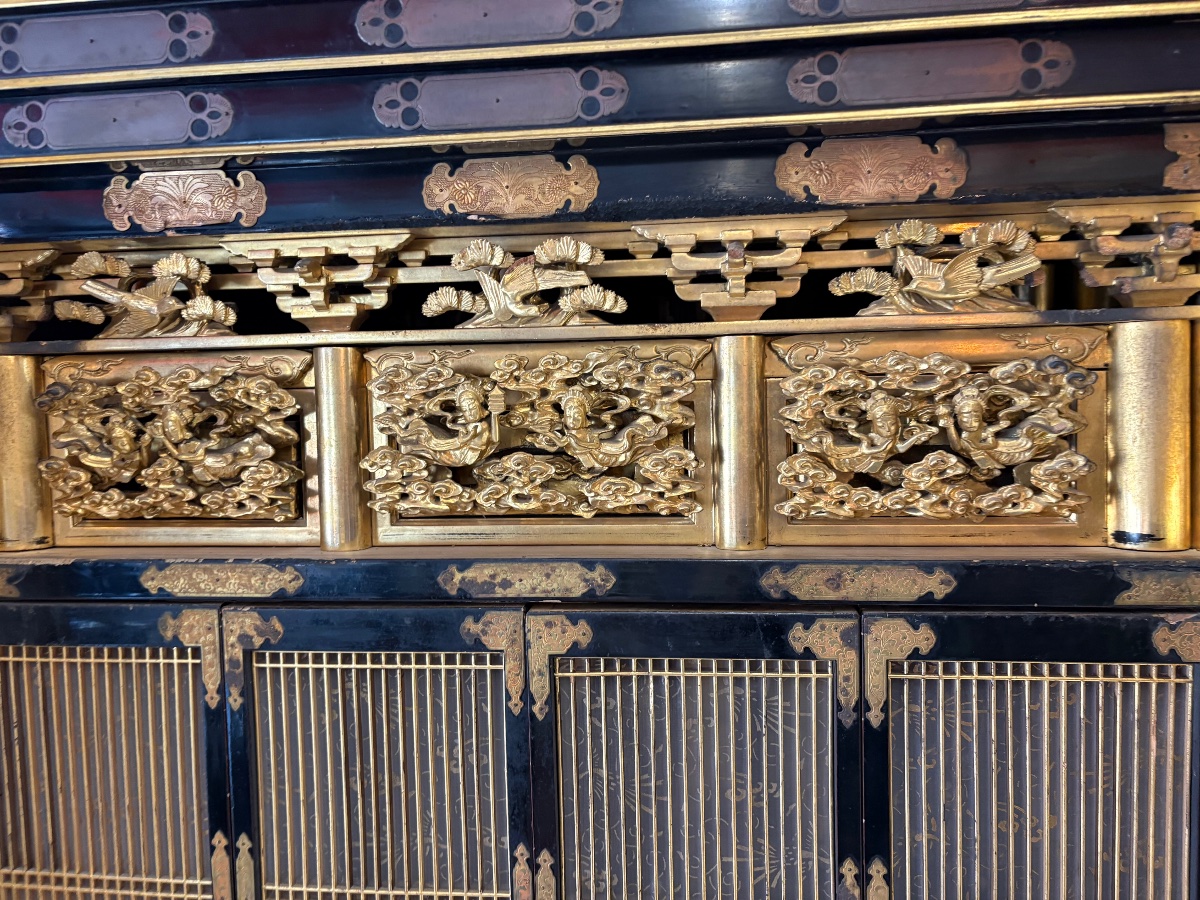
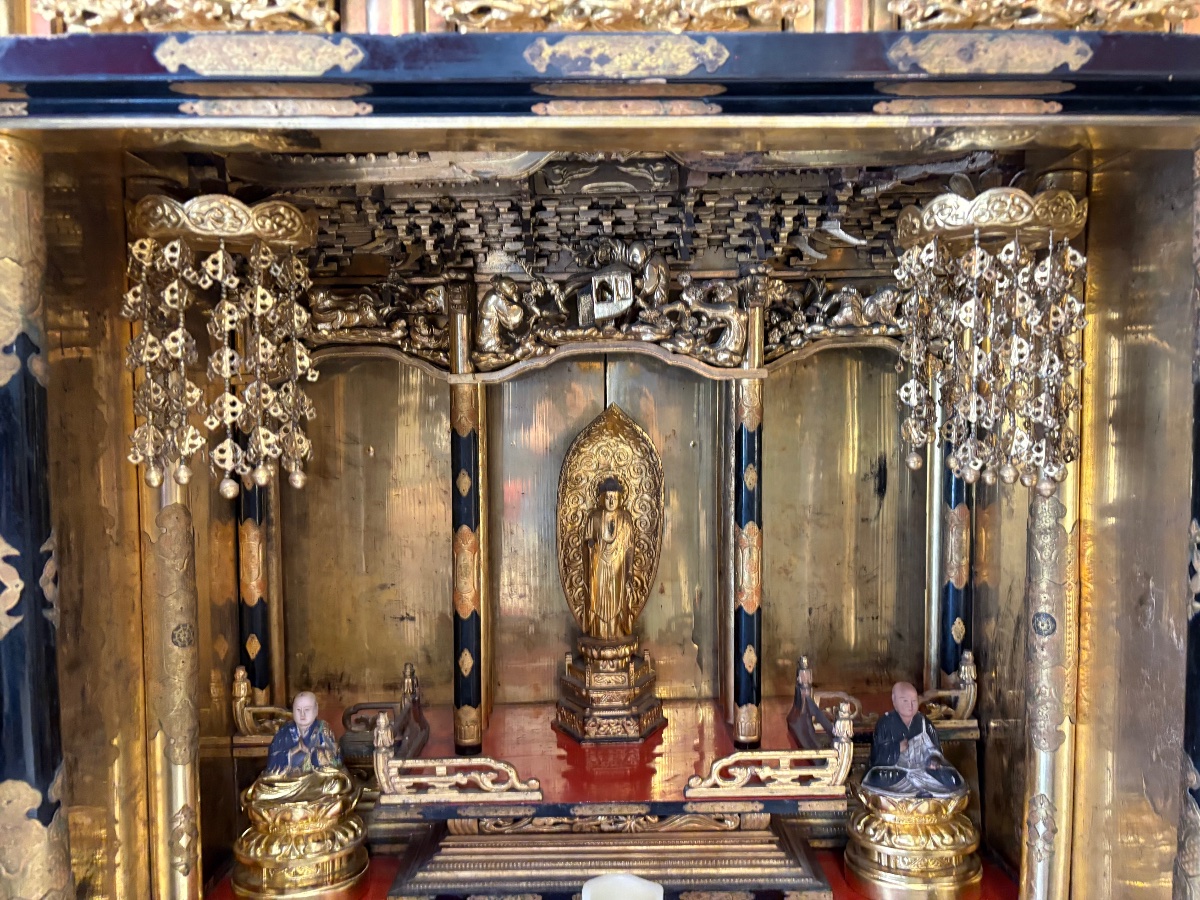
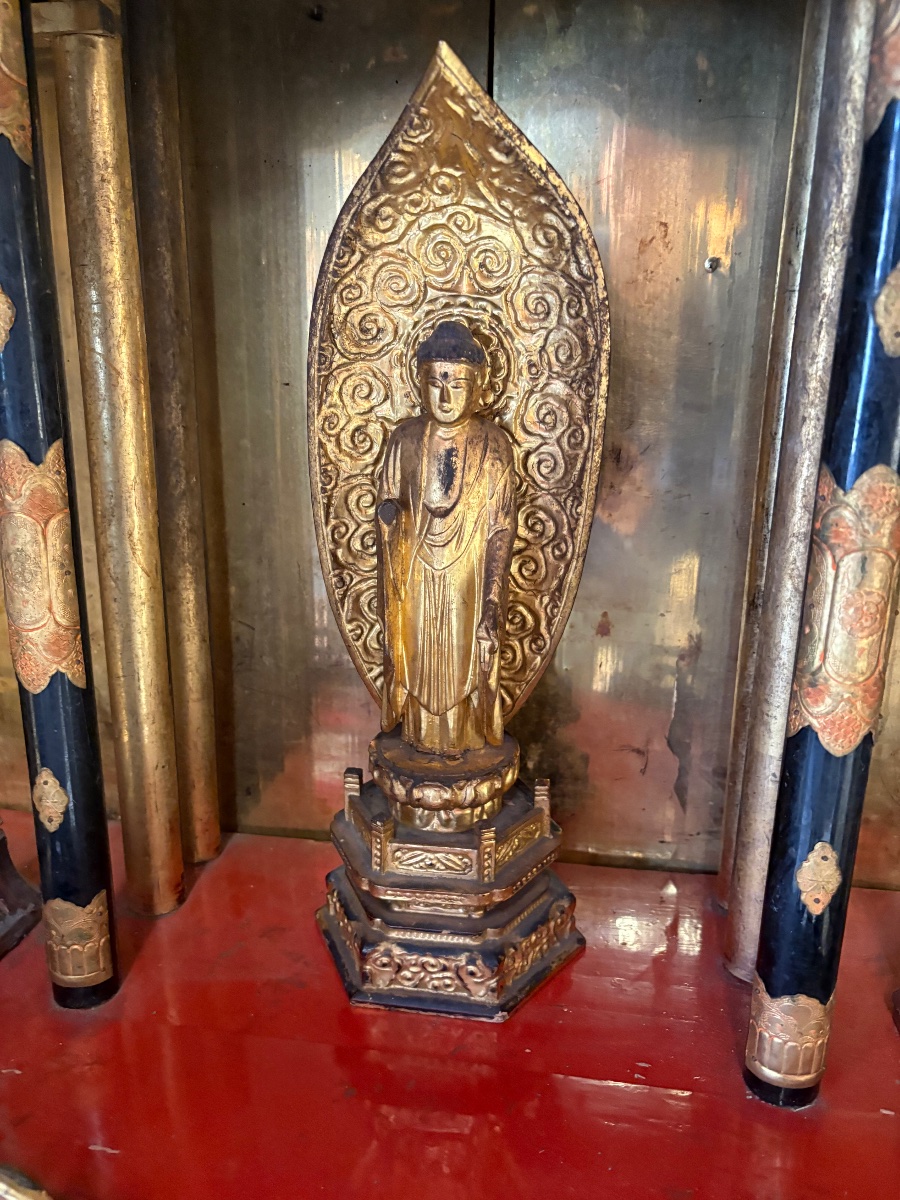
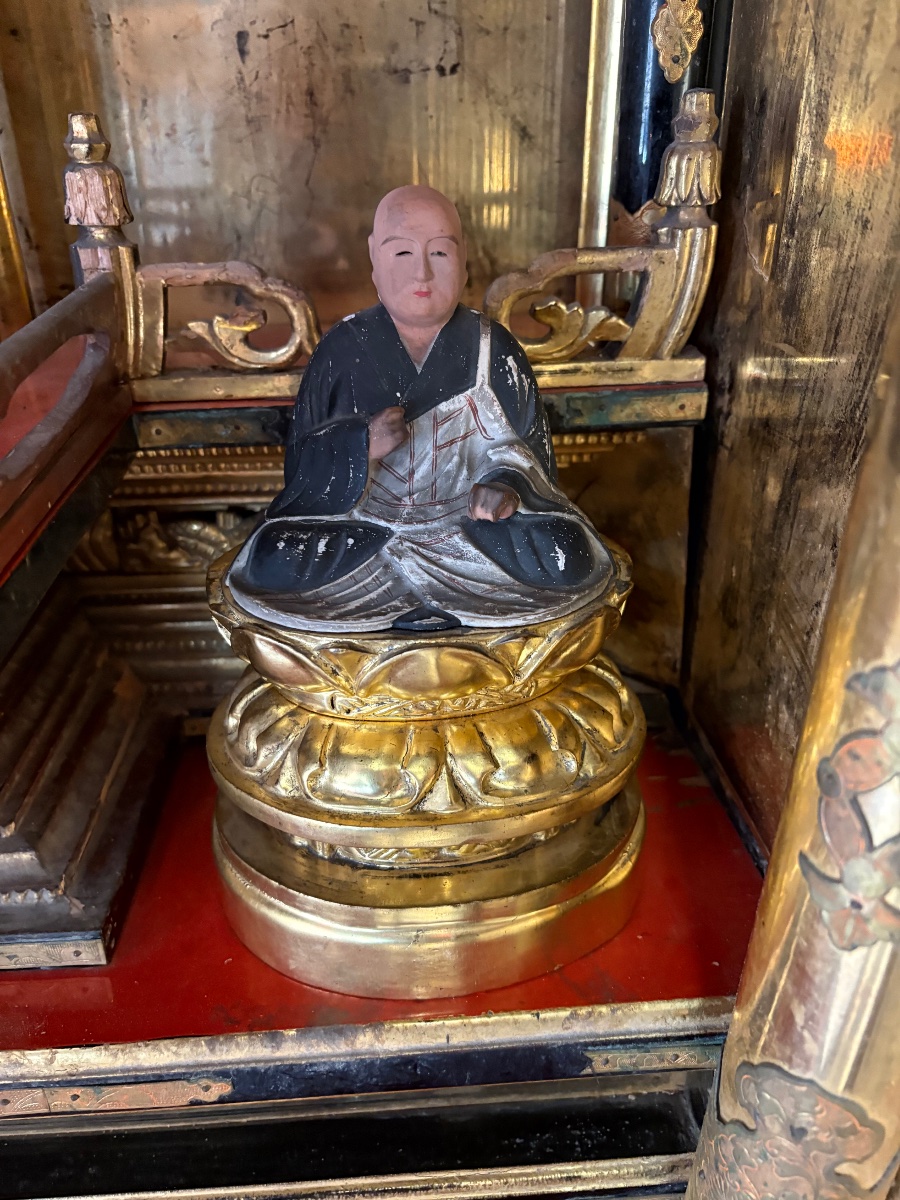
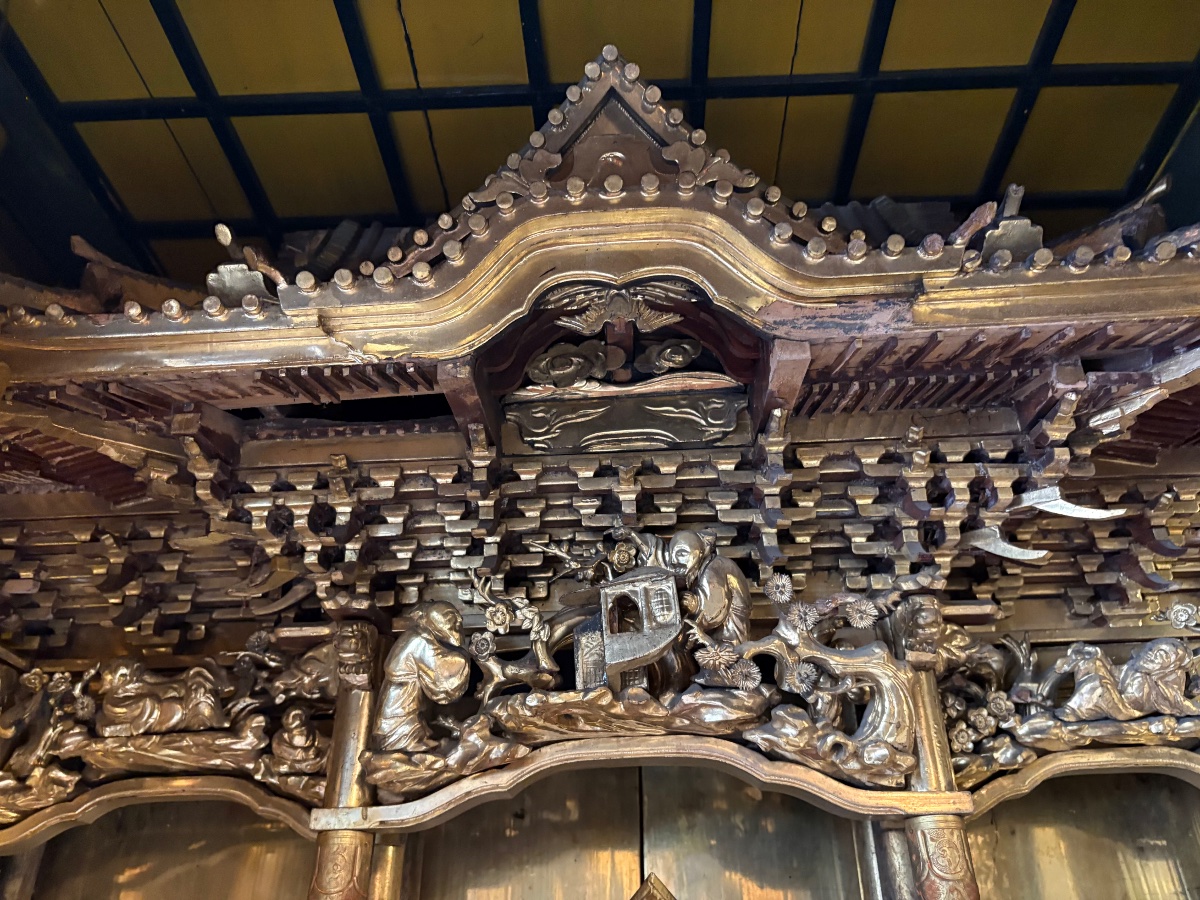
The interior is a true masterpiece of craftsmanship: a gilded sanctuary (*kūden*) adorned with high-relief and openwork motifs depicting dragons, phoenixes, cranes, pine trees, and clouds; gilded decorative pendants; tiered altar platforms in red lacquer; and a central statue of a standing Buddha (Amida) with a halo, flanked by two praying monks seated on lotus-shaped thrones. The upper section is adorned with finely carved friezes depicting dragons and pine trees.
Meiji period, Japan (circa 1880–1910). An impressive object, imbued with a unique and rare atmosphere, possessing great decorative and spiritual significance: a centerpiece for connoisseurs of Japanese art and religious antiques.
Height 196 cm
Width 100 cm
Depth 72 cm
A butsudan (literally “house of the Buddha”) is a traditional Japanese domestic Buddhist altar: a cabinet with doors that, when opened, reveal the interior of a richly gilded miniature temple. It forms the spiritual heart of the Japanese home, intended for the veneration of the Buddha and the commemoration of deceased ancestors. This type of piece, characterized by deep black lacquer, an abundance of gold leaf, and refined wood carvings, is called *kin-butsudan* (gilded butsudan); it represents the most luxurious and complex variety to produce.
Description
An imposing and richly decorated butsudan, featuring a glossy black lacquer finish accented with gold leaf and decorative copper or brass trim. The exterior features two lacquered doors fitted with engraved metal hinges and a decorative openwork gilded plate serving as a lock. When opened, the piece reveals a pair of gilded lattice doors, giving way to the magnificent interior of the shrine.
The interior is a true masterpiece of craftsmanship: a gilded sanctuary (*kūden*) adorned with high-relief and openwork motifs depicting dragons, phoenixes, cranes, pine trees, and clouds; gilded decorative pendants; tiered altar platforms in red lacquer; and a central statue of a standing Buddha (Amida) with a halo, flanked by two praying monks seated on lotus-shaped thrones. The upper section is adorned with finely carved friezes depicting dragons and pine trees.
Meiji period, Japan (circa 1880–1910). An impressive object, imbued with a unique and rare atmosphere, possessing great decorative and spiritual significance: a centerpiece for connoisseurs of Japanese art and religious antiques.
Height 196 cm
Width 100 cm
Depth 72 cm
3 250 €
Period: 19th century
Style: Asian art
Condition: Good condition
Material: Gilted wood
Width: 100
Height: 196
Depth: 72
Reference (ID): 1806772
Availability: In stock
Print