

Paul Duchein, Unique Art, Art Brut, Box, Object, Surrealism, The Garden Of Eden, Night, André Breton
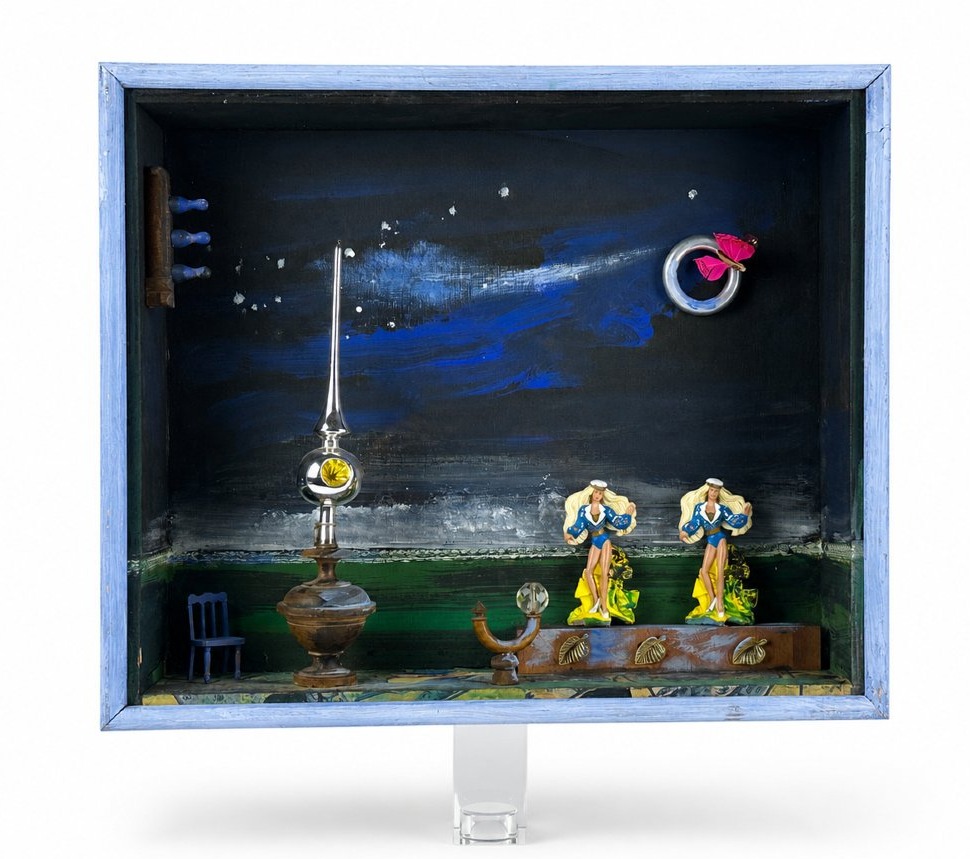
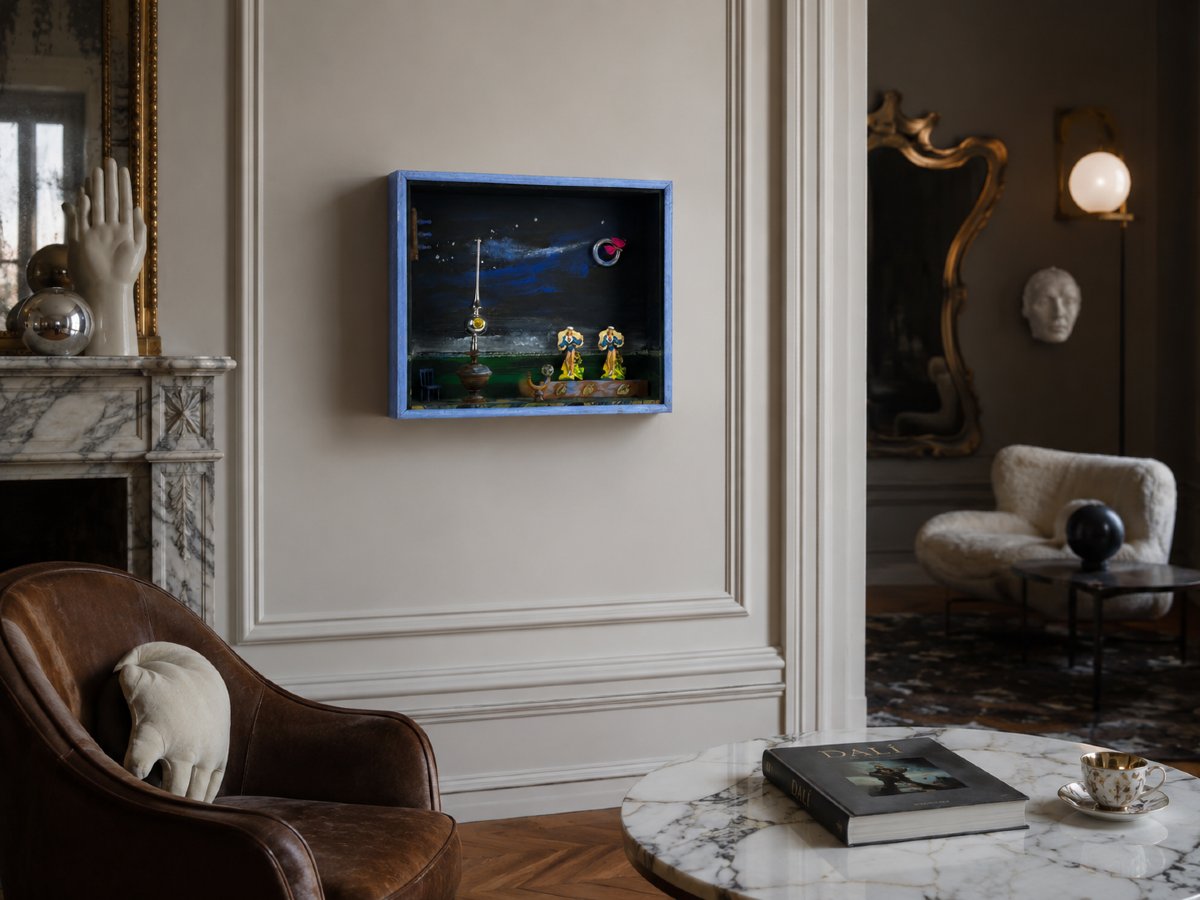
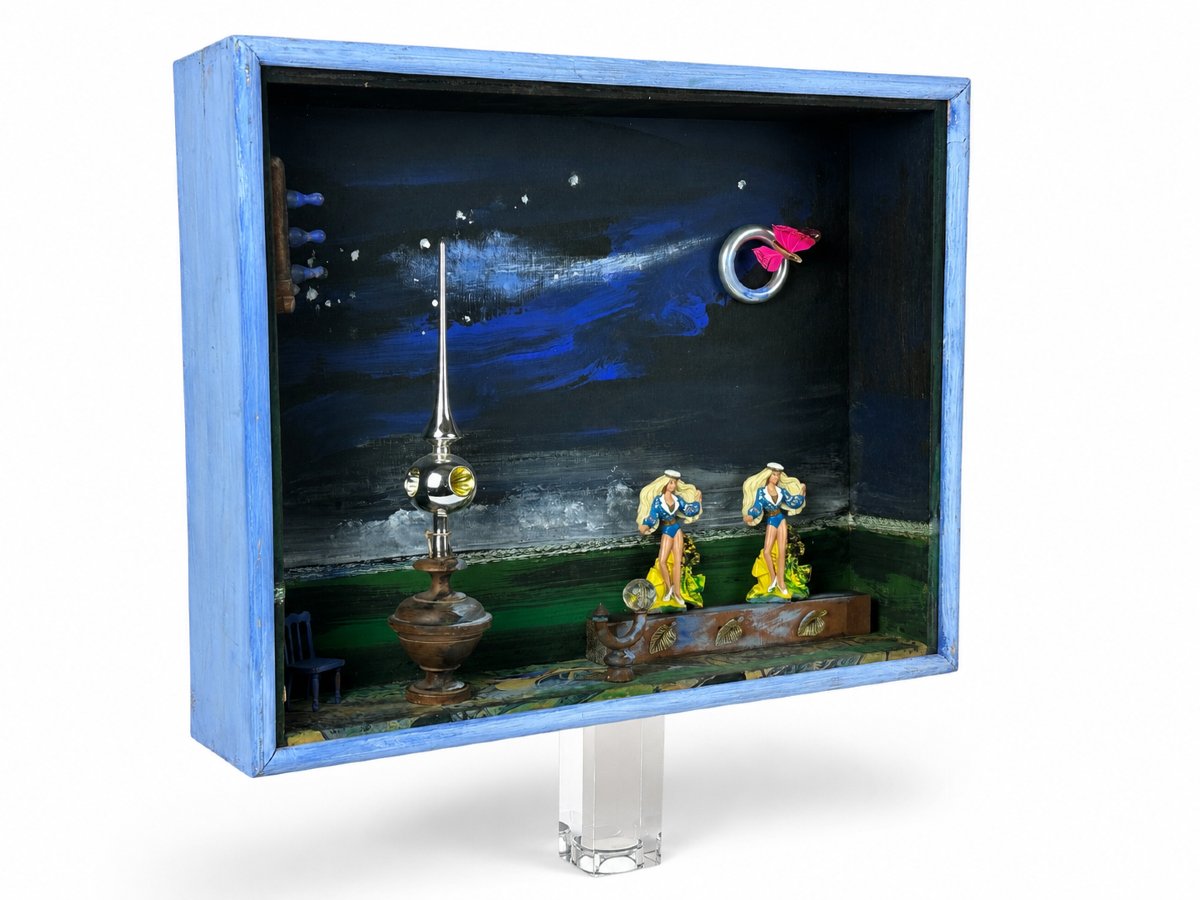
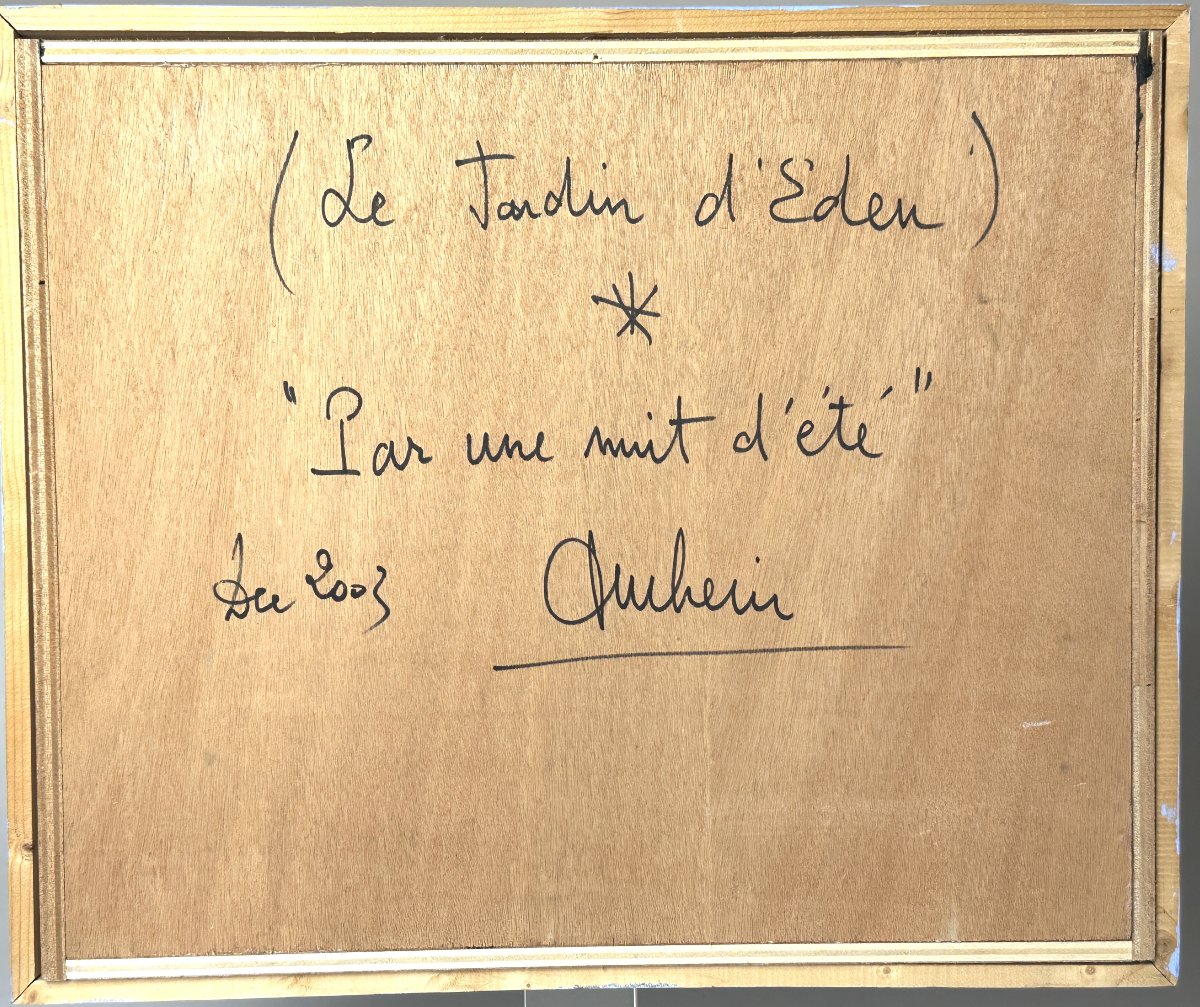
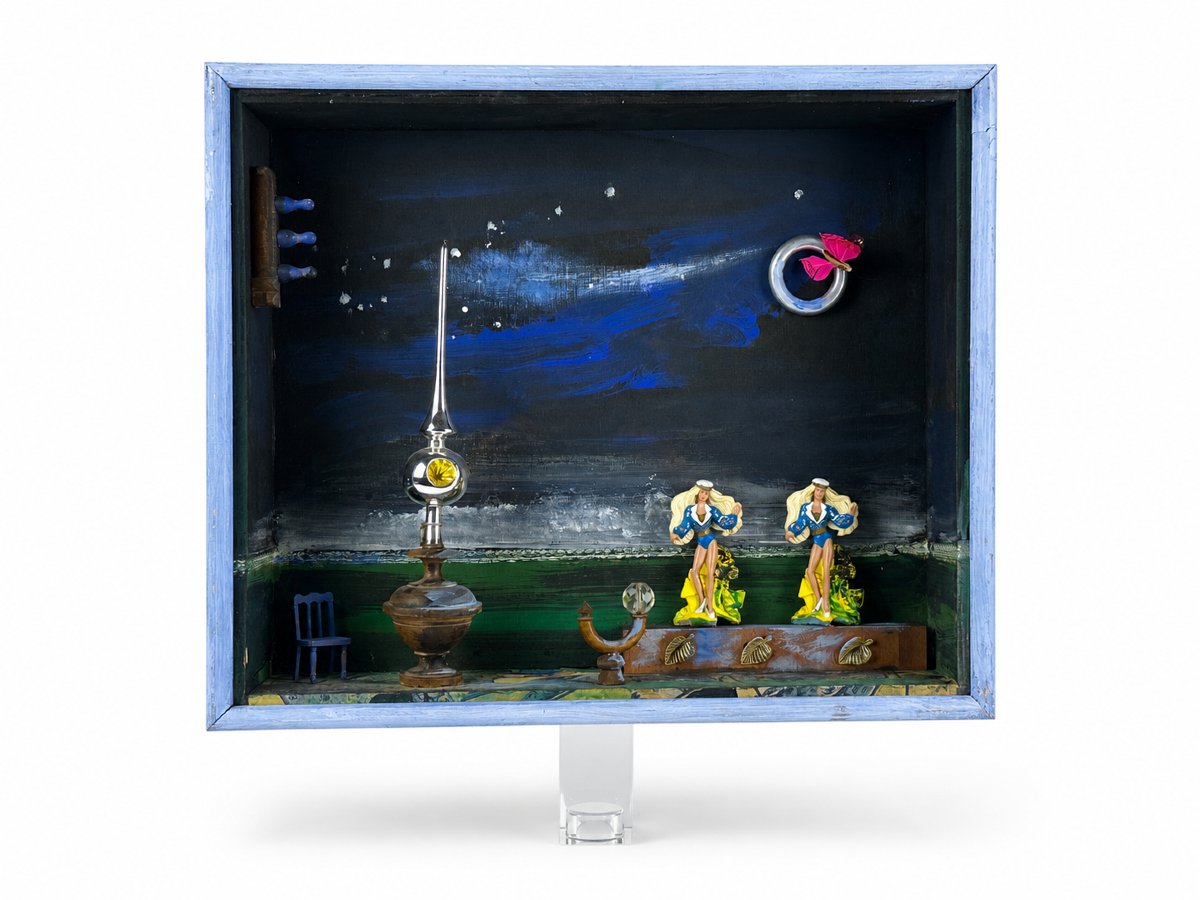
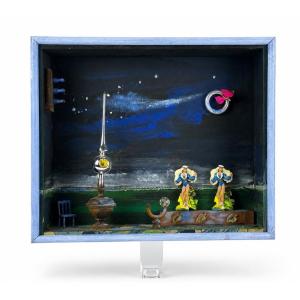
Display box by Paul Duchein, signed on the back, titled *Le Jardin d’Éden* and subtitled “Par une nuit d’été.” The work is dated December 2003. It takes the form of a diorama enclosed by glass, constructed within a light blue-painted wooden box, serving as a wall-mounted object, a miniature theater, and a poetic assemblage.
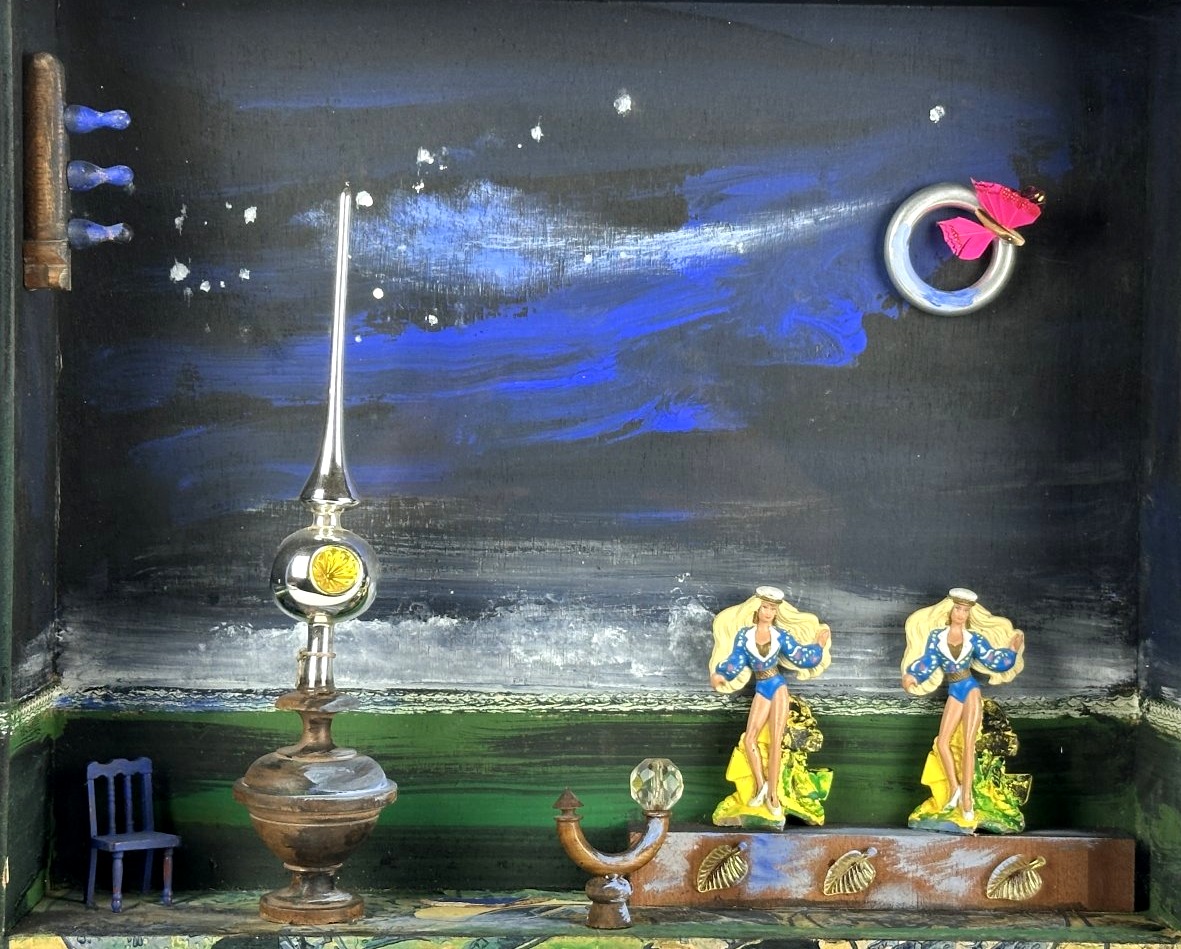
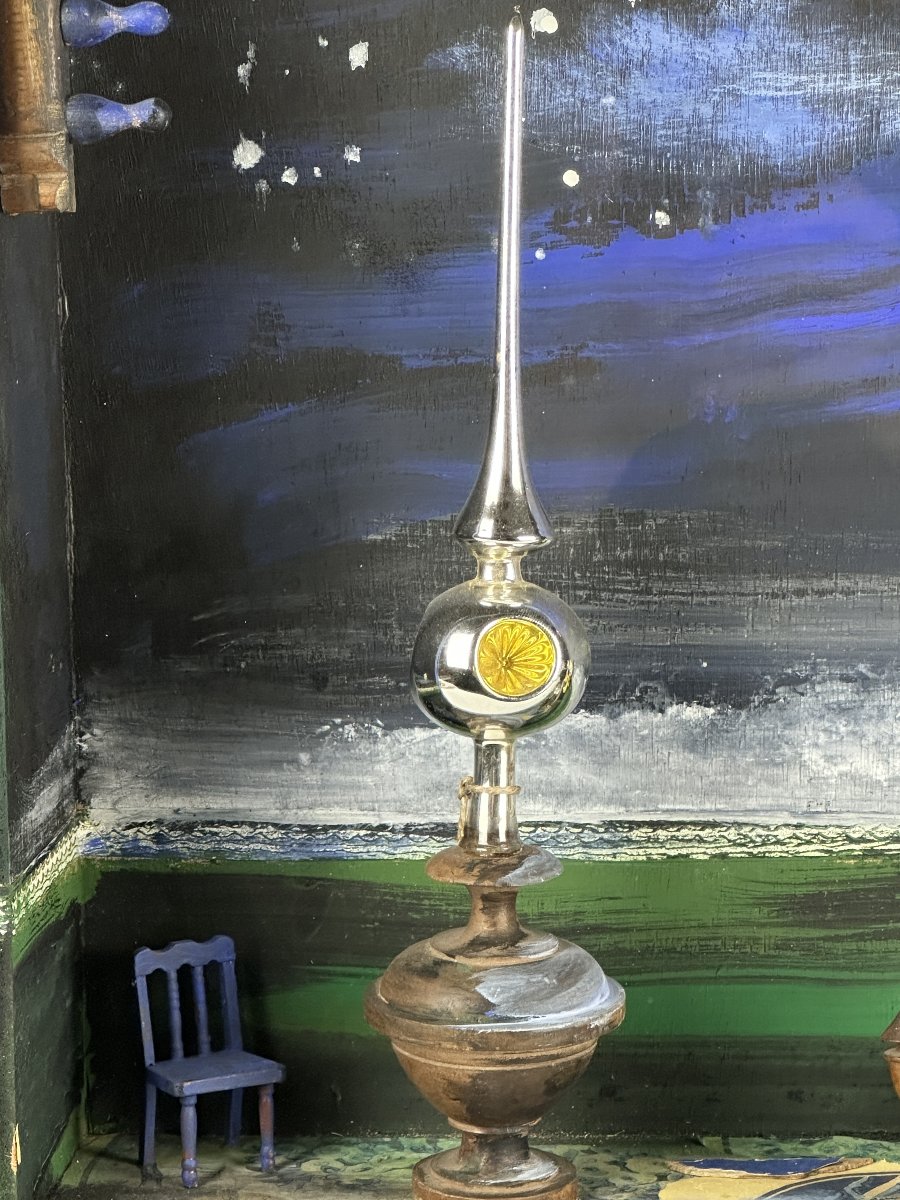
The composition is arranged like a nocturnal scene. The painted background, very dark, blends black, deep blue, silvery gray, and dark green. This brush-stroked surface evokes a summer sky, a night at sea, or a mental landscape rather than a realistic setting. The small white specks, resembling stars or glowing dust, lend the whole piece a cosmic depth. On the right, a metal ring accompanied by a pink butterfly introduces a note of movement, desire, or metamorphosis.
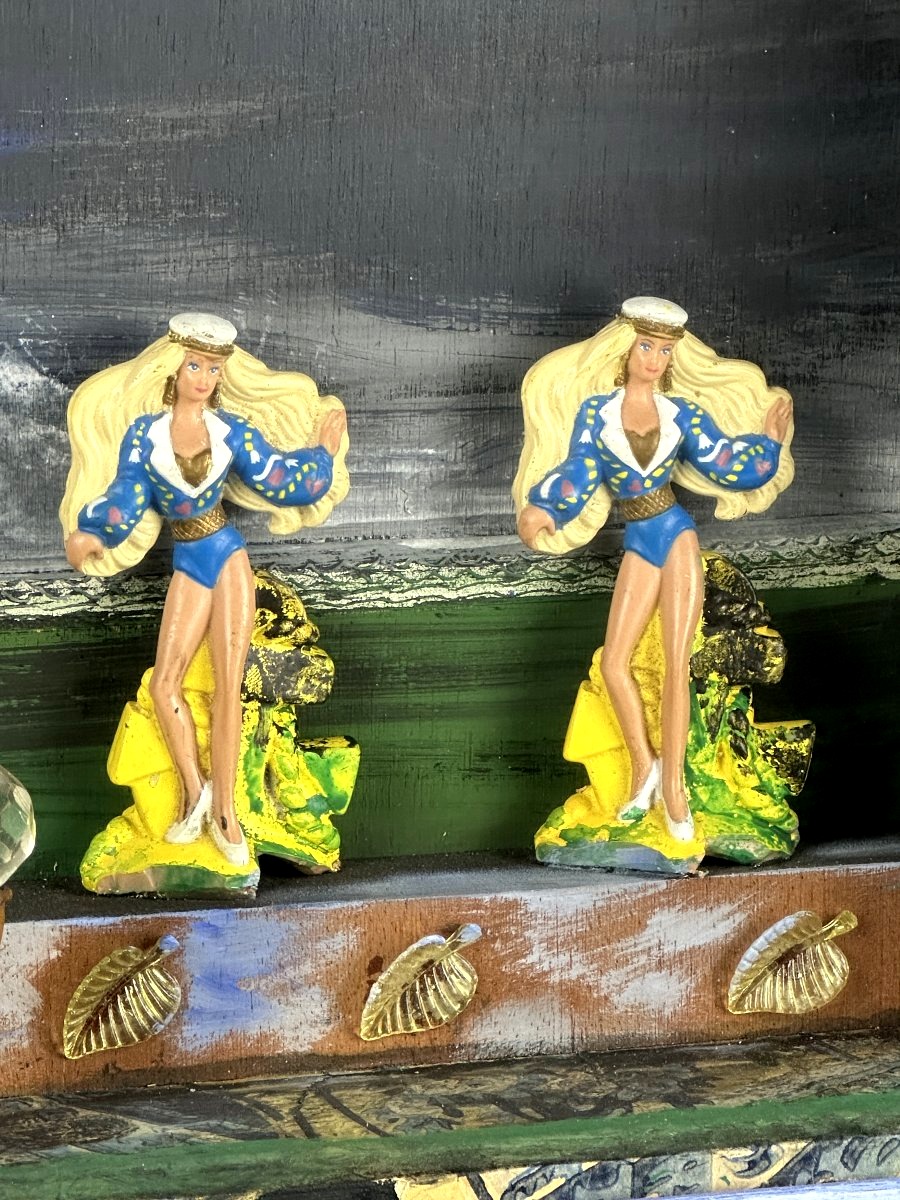
In the foreground, the artist arranges several found and whimsical objects: a small blue chair, a vertical element with three blue buttons on the left side, a vase or metal instrument on a pedestal, a glass sphere, a small curved stand, a frieze of golden leaves, as well as two identical female figurines—blonde, dressed in blue and yellow. These two figures, deliberately at odds with the box’s poetic atmosphere, lend a strange, almost kitsch dimension that reinforces the work’s surrealist character. They seem posed like apparitions, folk-style Eves, or dancers emerging from an artificial dream.
The title *Le Jardin d’Éden* provides an important key to understanding the work. Duchein does not depict a natural or biblical paradise in the classical sense; rather, he constructs a reimagined Eden using humble fragments, found objects, toys, decorative remnants, and celestial symbols. The garden becomes a mental space—enclosed, fragile, artificial—where childhood, desire, carnival scenery, night, theater, and memory intersect. The subtitle “On a Summer Night” accentuates this dreamlike impression: the scene seems suspended in the night, somewhere between a carnival attraction, a romantic reverie, and a cabinet of curiosities.
The work is fully in the spirit of poetic assemblage and singular art. It can be compared to artists’ boxes, secular reliquaries, small object theaters, and, in spirit, to the world of Joseph Cornell or Surrealist practices centered on found objects. The power of this piece stems from the contrast between the box’s very simple structure and the symbolic richness of the elements it contains. Each object seems modest when taken separately, but the whole creates an open-ended, enigmatic, and deeply personal narrative.
Color plays an essential role. The light blue of the frame acts as a soft border around the nocturnal space. Inside, deep blues and dark greens establish a nocturnal atmosphere, while the yellows of the figurines, the pink of the butterfly, the golden leaves, and the metallic reflections create small flashes of light. This interplay between shadow and flashes of light gives the box its character, which is both melancholic and wondrous.
The use of depth is also remarkable. At 14 cm thick, the box truly functions as a small stage. The eye enters the space, moving between the chair, the vertical instrument, the figurines, the butterfly, and the painted background. The glass adds an extra layer of distance: it transforms the object into a reliquary, a showcase of dreams, a closed world that we observe without being able to enter.
Paul Duchein: Born in 1930 in Rabastens, Paul Duchein was introduced to art by the Italian artist and ceramist Giovanni Leonardi, whose studio he frequented; he later discovered Surrealism and met André Breton in the 1950s. In 1957, he took over the family pharmacy in Montauban, which he ran until 1995, while also pursuing a career as a writer, collector, and exhibition organizer. For twenty years, he served as editor of the *Revue nationale des pharmaciens*. His first assemblages date from 1966. Since 1972, he has organized, among other events, the Rencontres d’art at the Musée Ingres. His first solo exhibition took place in 1986 at the Alphonse Chave Gallery in Vence, followed by numerous exhibitions throughout the region and in Paris.
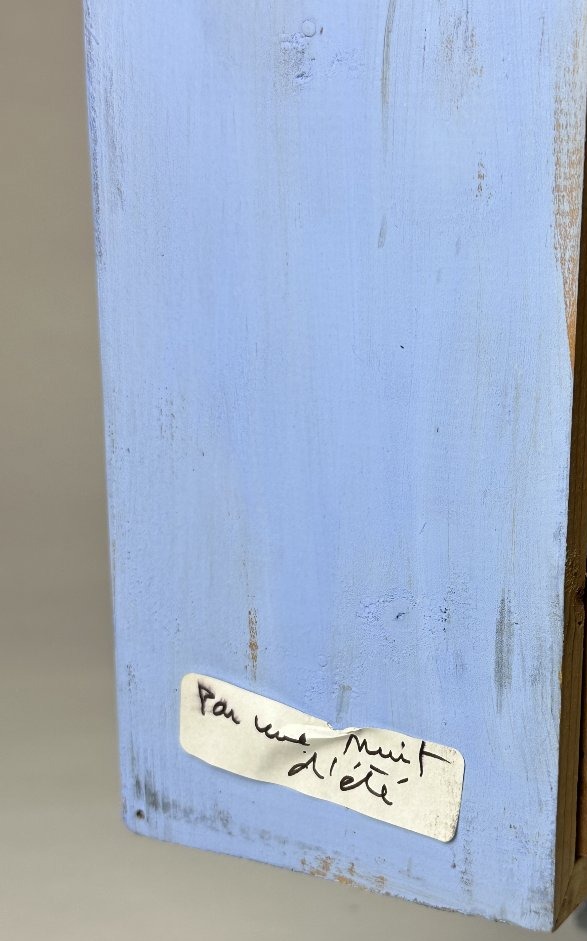
Signature and inscriptions: signed on the reverse “Duchein,” titled *Le Jardin d’Éden*, subtitled “Par une nuit d’été,” dated December 2003. A handwritten label on the side also reads “Par une nuit d’été.”
Condition: in good overall condition. See photographs.
Dimensions: 41 x 53 x 14 cm.
Period: 20th century
Style: Modern Art
Condition: Excellent condition
Width: 53
Height: 41
Reference (ID): 1806553
Availability: In stock