

Tapestry From The Brussels Workshop, C. 1550 - The Works Of Mercy - No. 1703
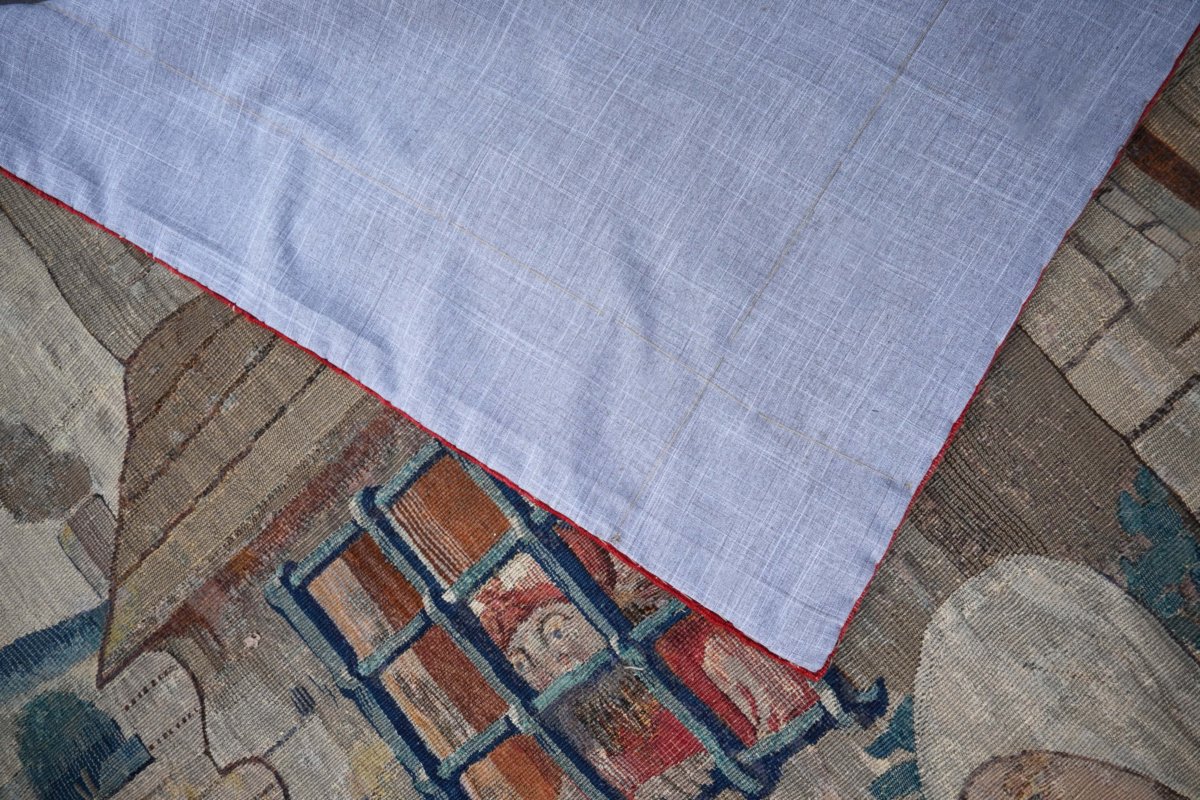
This magnificent tapestry has undergone a thorough cleaning, as well as being hand-backed with 100% linen fabric and meticulously inspected by our experts in our artisanal workshop. It is now ready to adorn your home
Tapestry from the Brussels Manufactory
The Works of Mercy
Circa 1550–1570
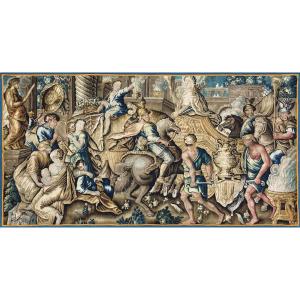
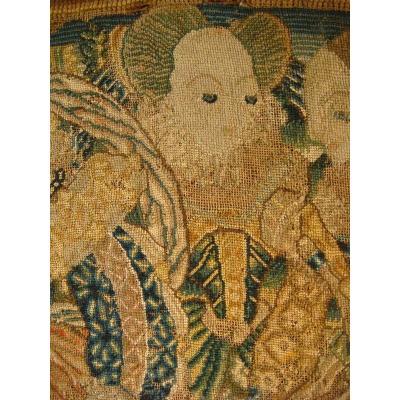
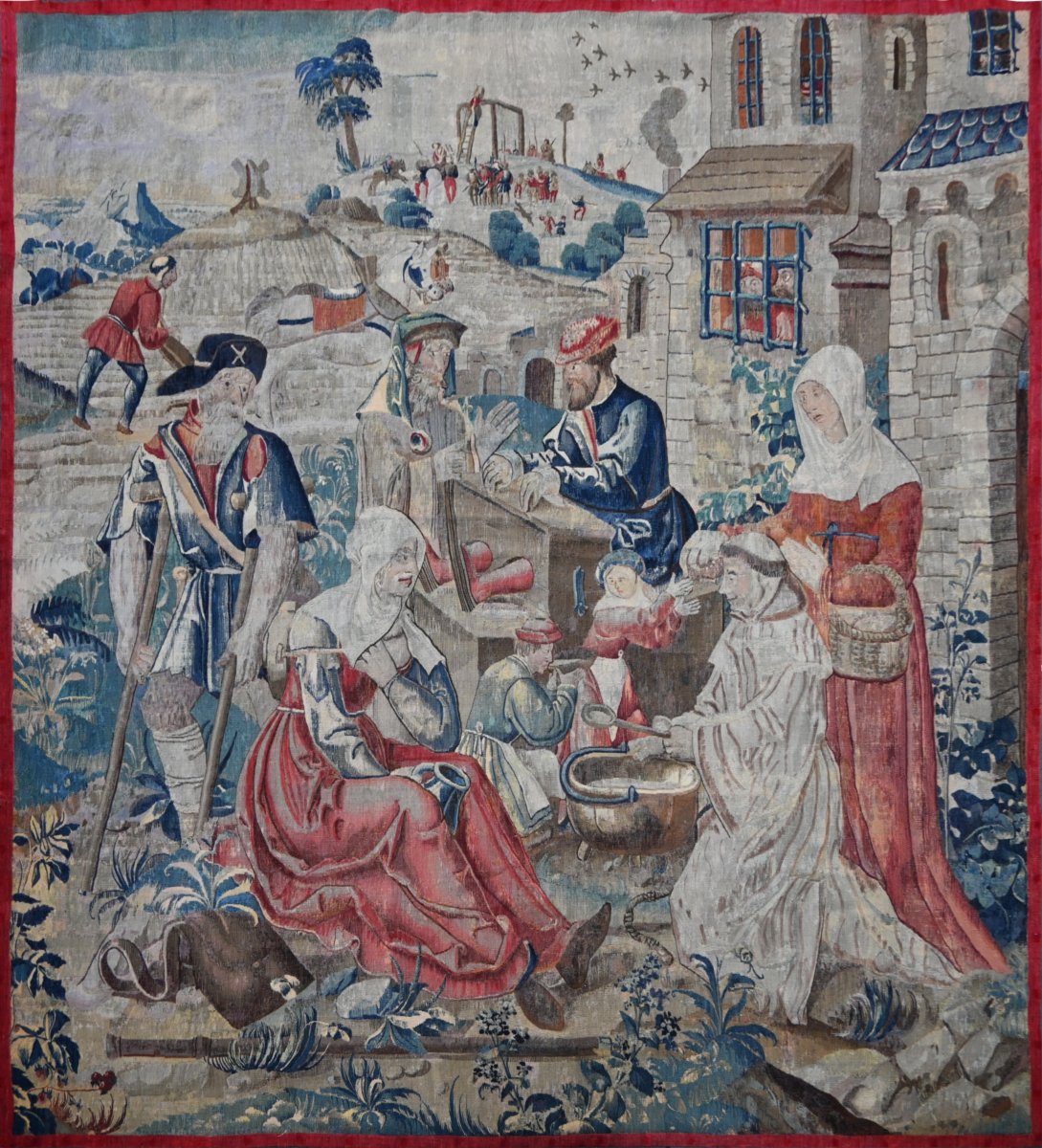
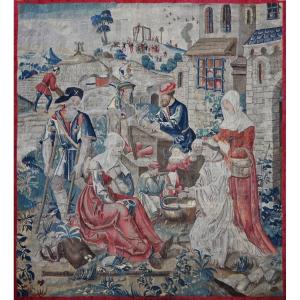
A tapestry panel attributed to the Brussels Manufactory, created around 1550–1570 in wool and silk, depicting the theme of the Works of Mercy, one of the major iconographic themes of the Christian Renaissance.
The composition offers a moral reflection on charity, justice, Christian salvation, and the ideal organization of society. Several scenes unfold simultaneously within a vast landscape, providing a spiritual, social, and political interpretation.
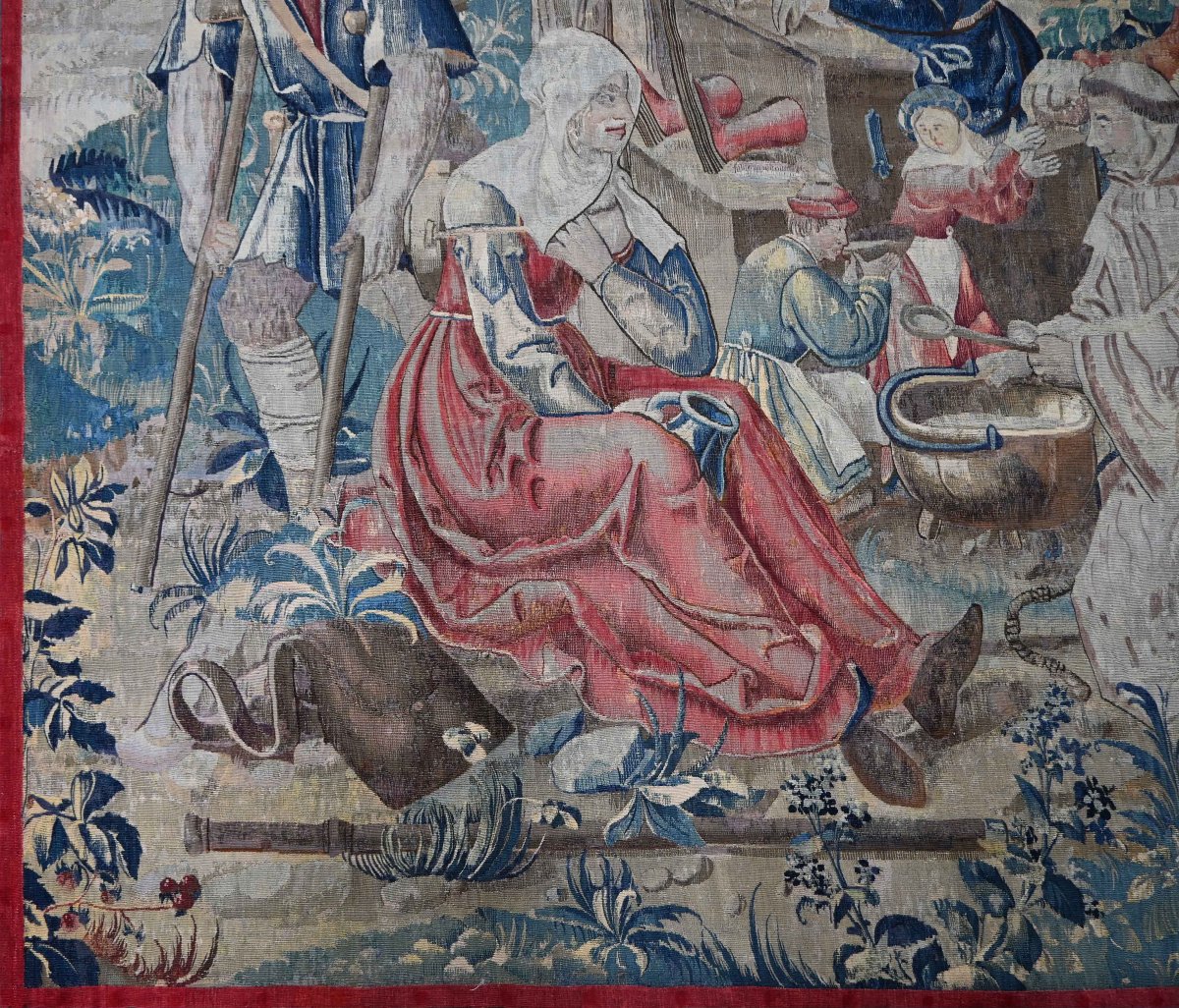
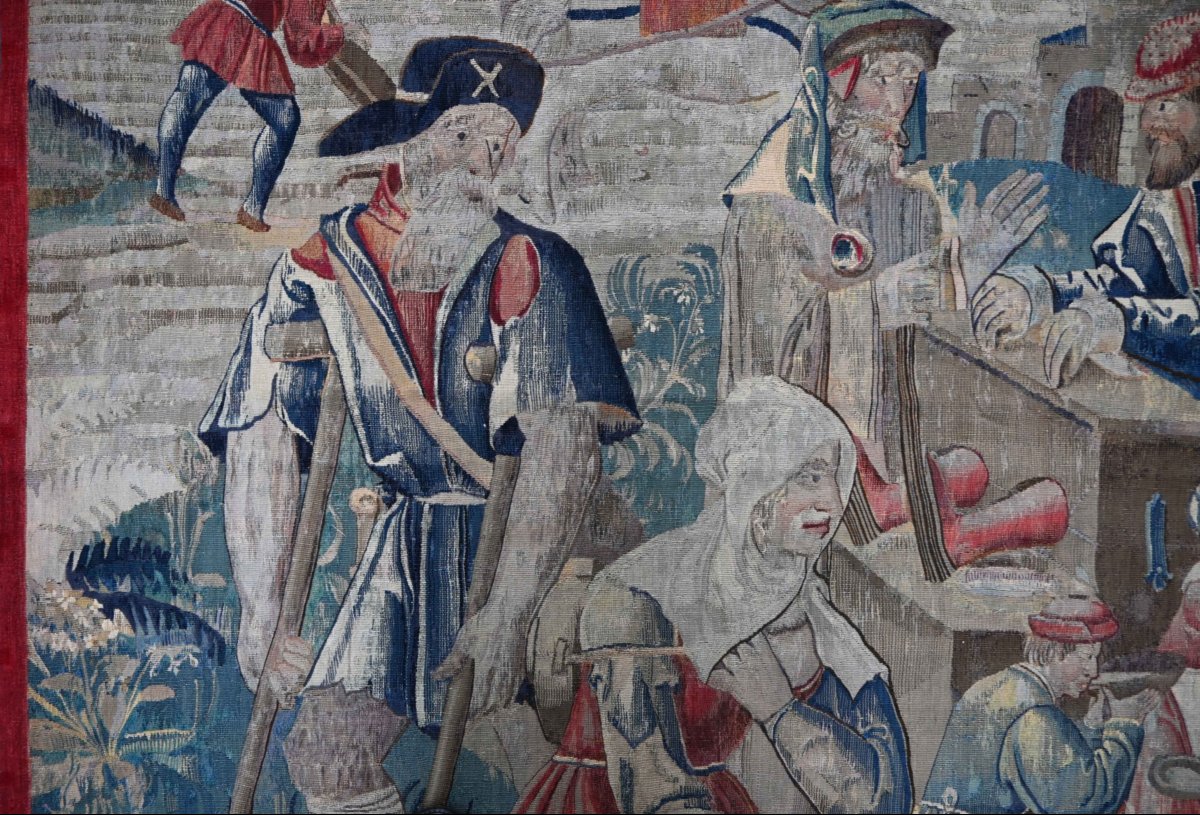
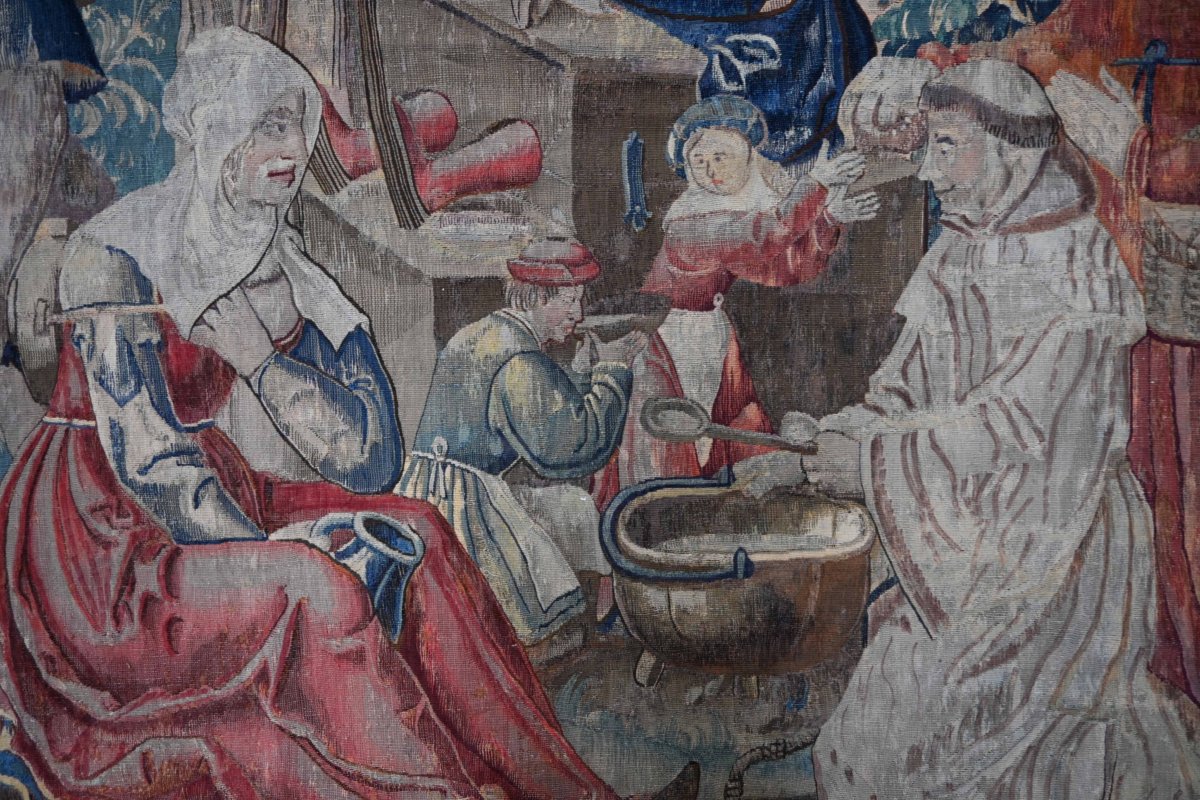
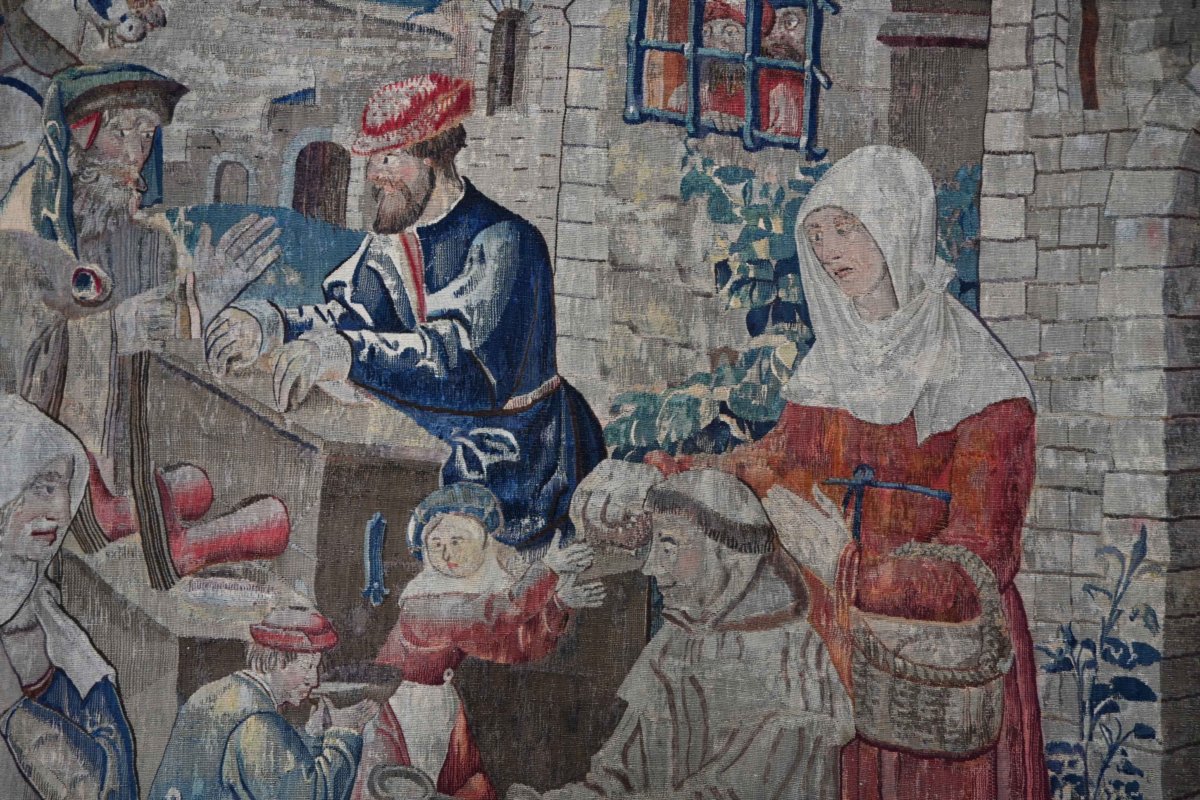
In the foreground, a Franciscan monk distributes soup to the poor, embodying the work of mercy of feeding the hungry. Beside him, a noblewoman carrying a basket offers bread to a woman in need, recalling the duty of charity owed by the powerful. A seated woman, holding a jug on her lap, symbolizes sustenance or the community being aided, while a man receives his meal in a bowl.
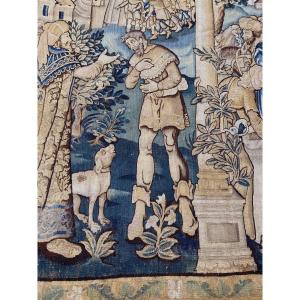
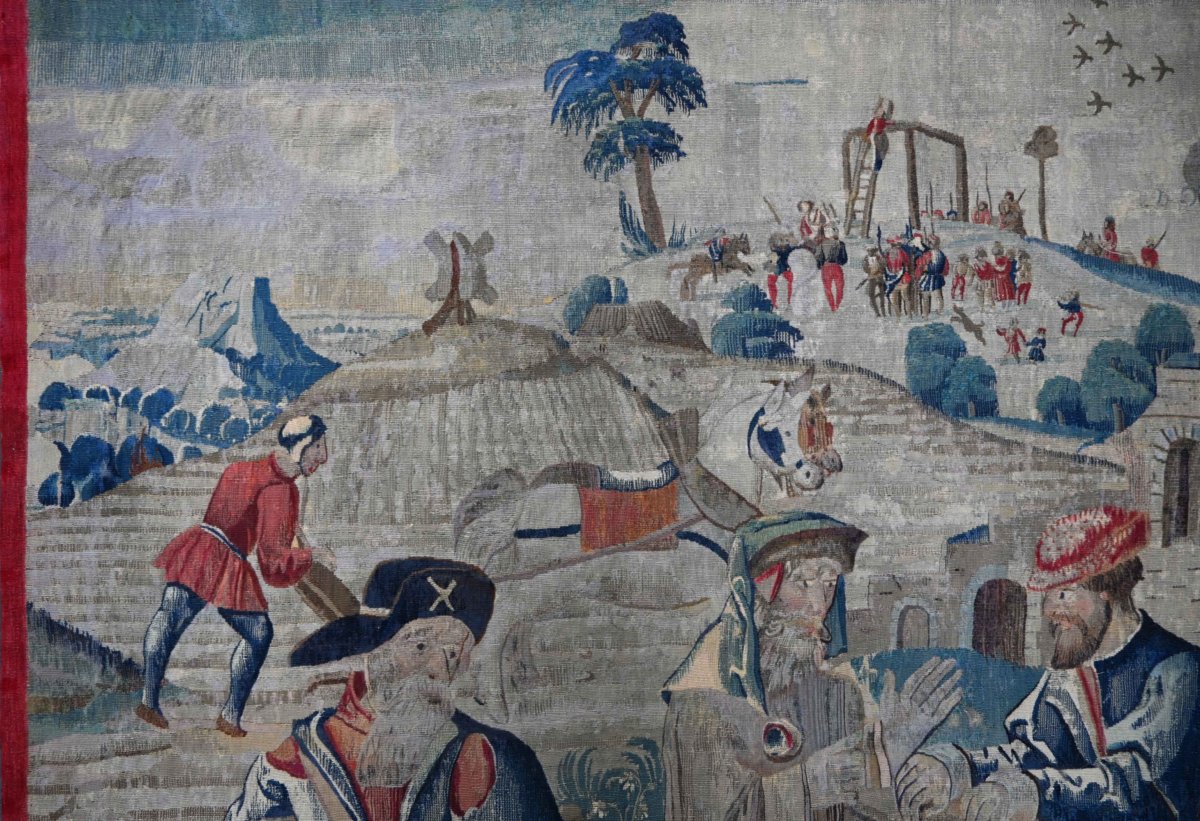
On the left, a frail old man, dressed in rags and leaning on a crutch, waits his turn.
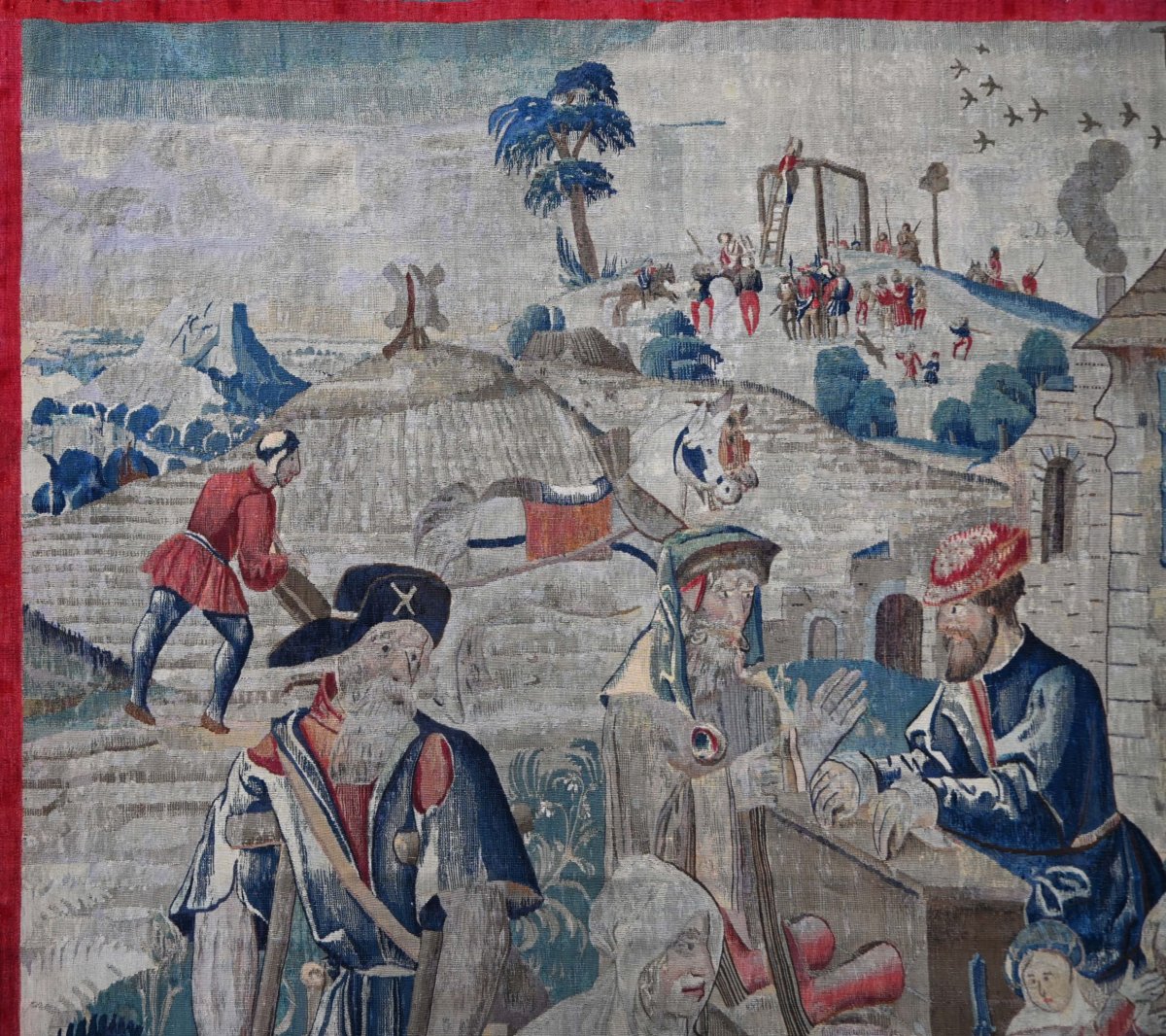
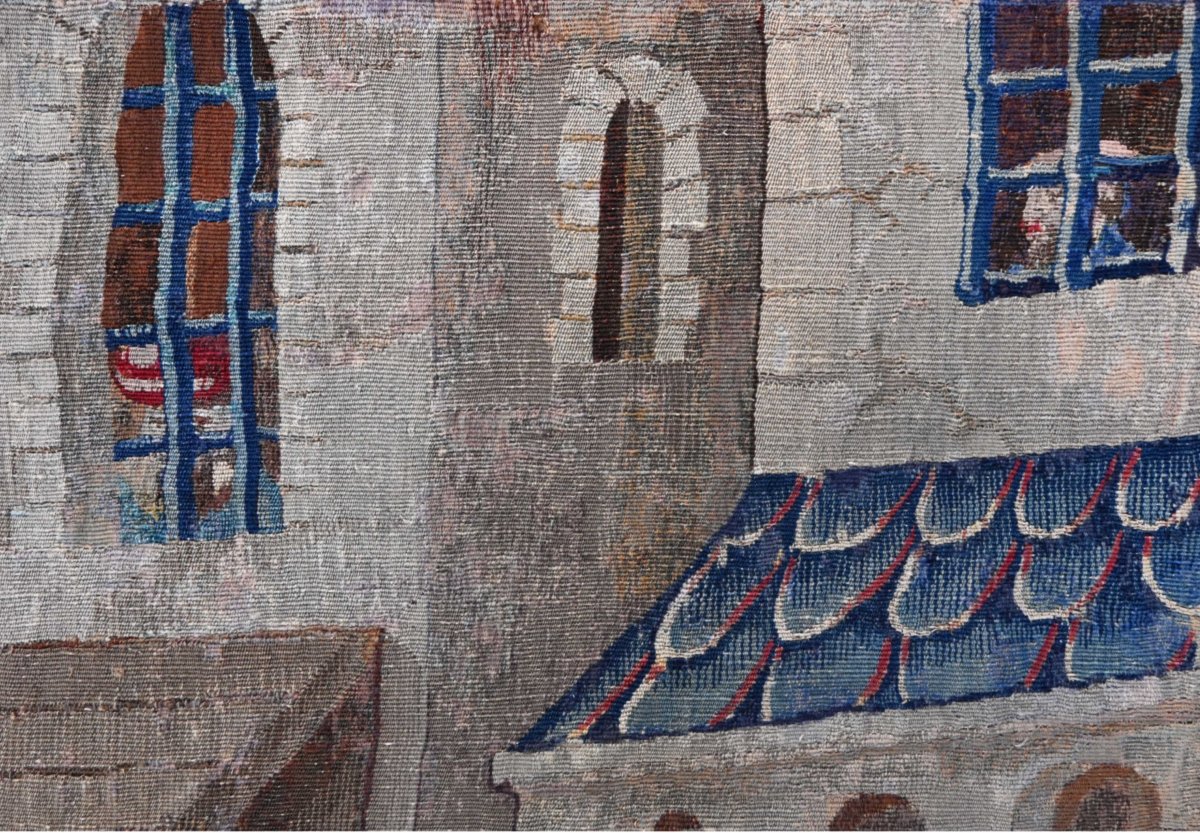
The background depicts earthly justice. A man immobilized in a stocks is visited by an elderly nobleman, illustrating the work of mercy that involves visiting prisoners. Behind the windows of a castle, two prisoners appear, extending this reflection on confinement and compassion.
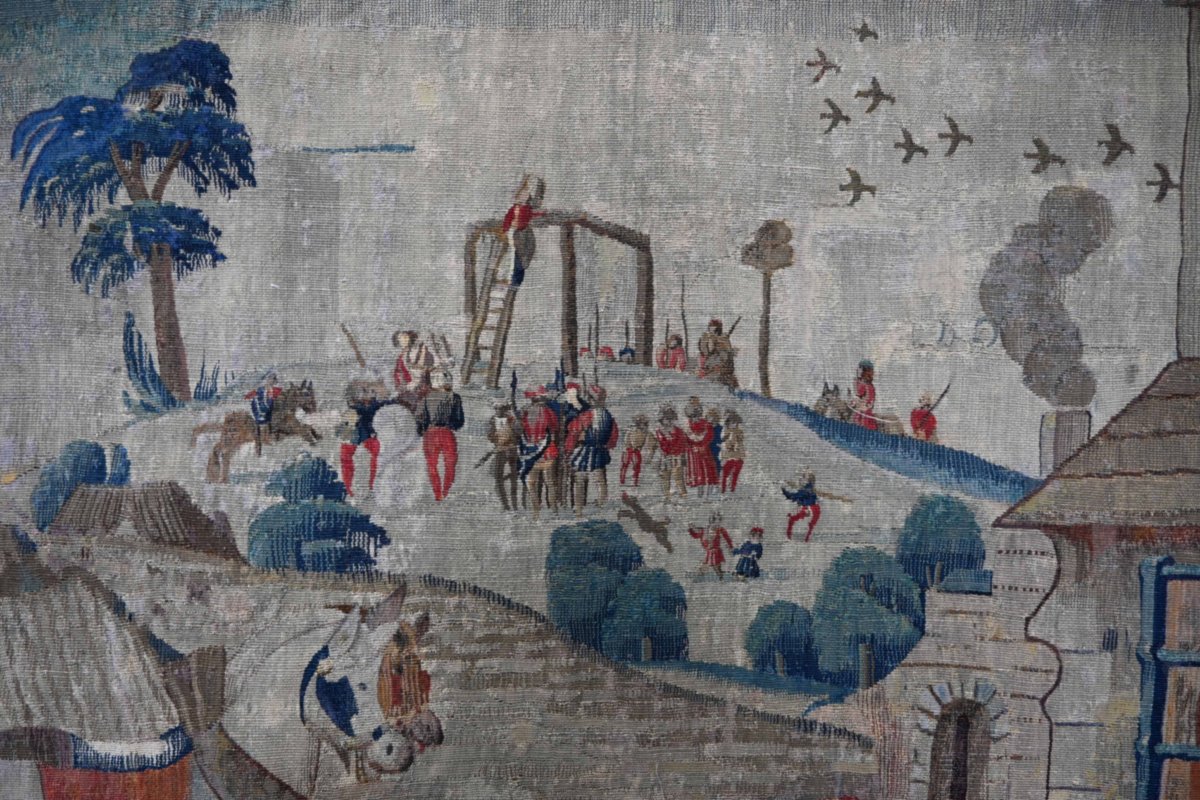
In the background, a plowman leads his horse through a field—a symbol of labor and social order—while a hanging scene serves as a reminder of human justice. Placed in the distance, it allows the scenes of aid and charity to take center stage.
The border is adorned with a floral design framing an elegant festoon. Grape-harvesting putti move among the vines, some playing with a goat—an allusion to Bacchus and the humanist legacy of the Renaissance.
The work as a whole draws a parallel between two essential concepts of 16th-century Christian thought: justice and mercy. Clergy, nobles, peasants, the poor, prisoners, and the condemned each participate in a representation of the social order based on moral duties, compassion, and salvation.
This tapestry was part of a set of which two other panels are known today.
Provenance
Hôtel de Conti, Fontainebleau.
24 850 €
Period: 16th century
Style: Renaissance, Louis 13th
Condition: Perfect condition
Material: Wool
Width: 230 cm
Height: 245 cm
Reference (ID): 1804747
Availability: In stock
Print