


Monumental Buddhist Altar, Edo Japan (1603–1868) / Buddha / Butsudan / Zushi / Chinese Lacquer
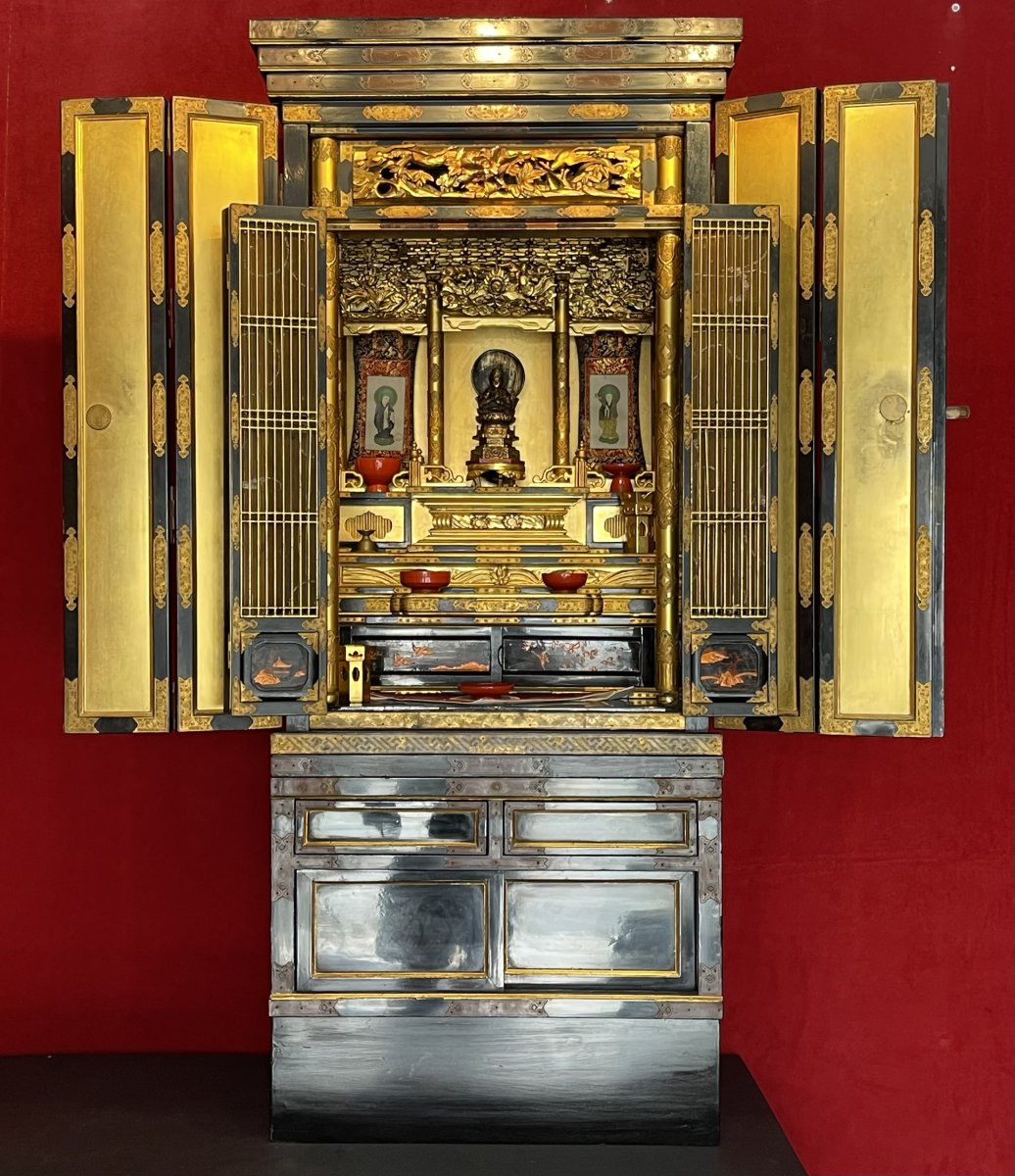
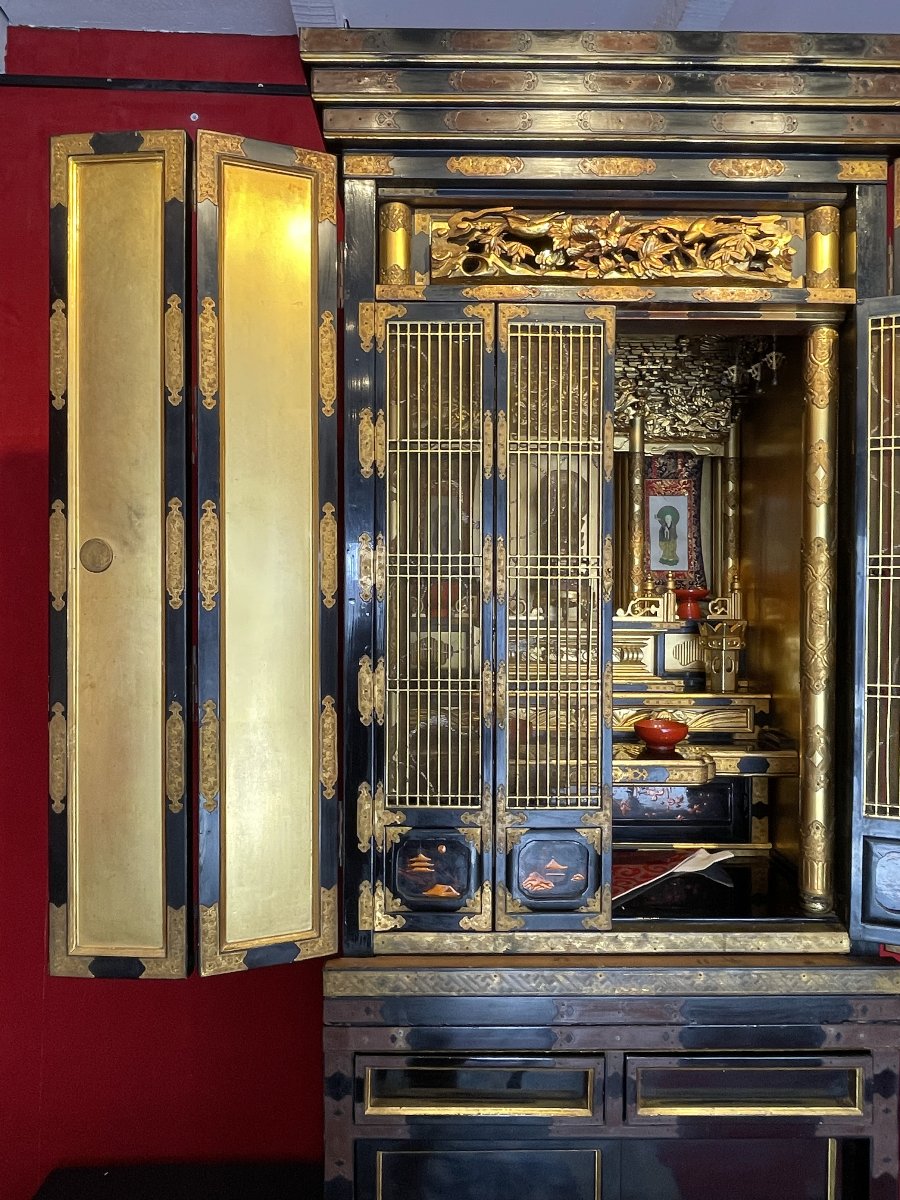
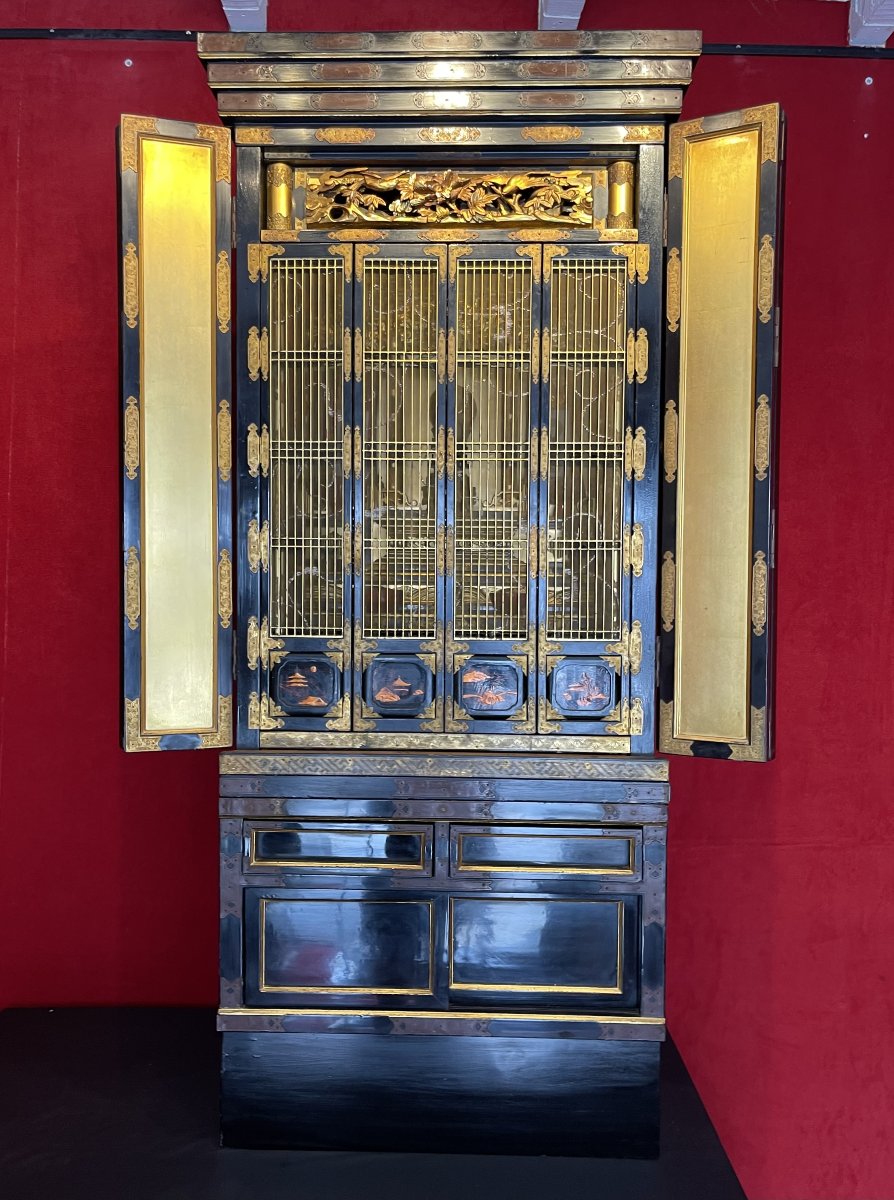
A monumental and sumptuous Japanese Buddhist altar, known as a "butsudan," dating from the first half of the 19th century—the Edo period (1603–1868).
A rare find, it is complete with all its original elements, including its deities and ritual objects.
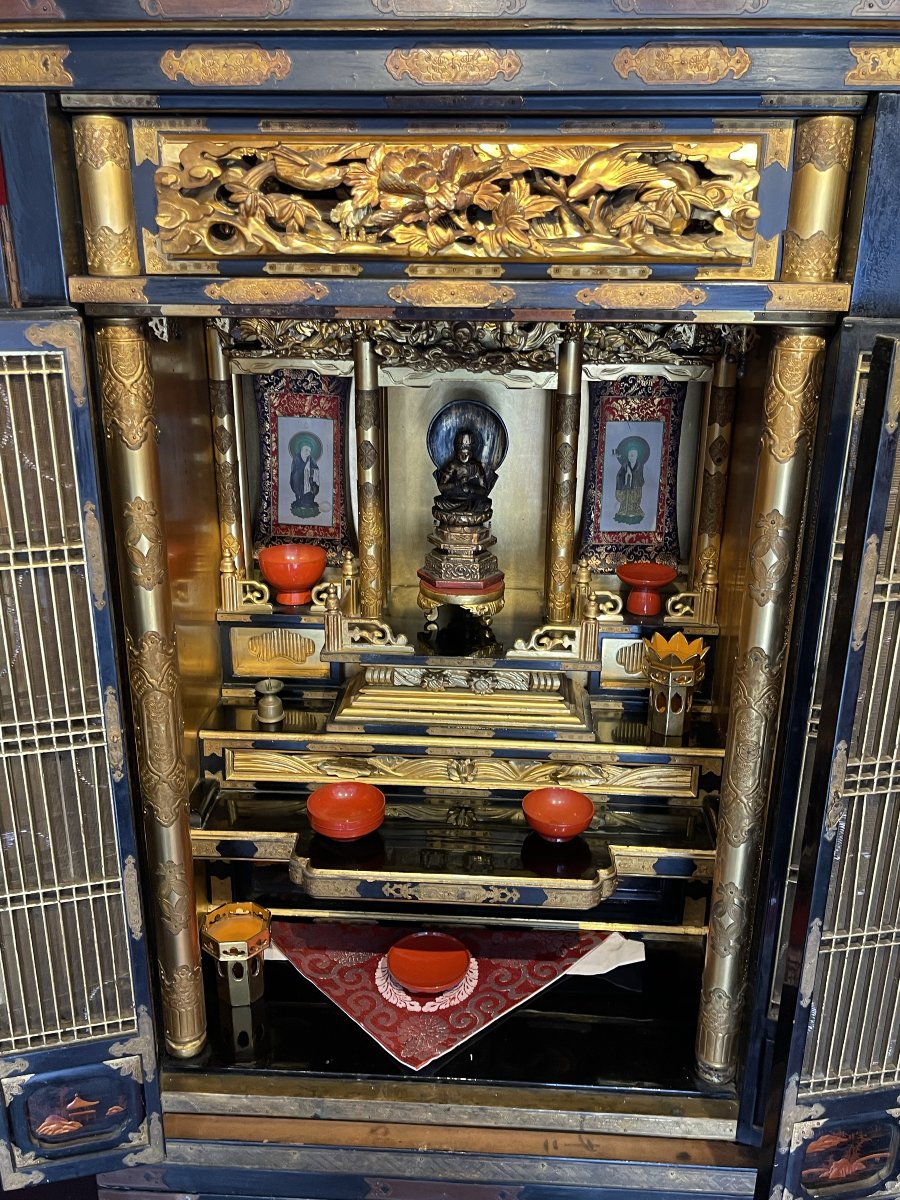
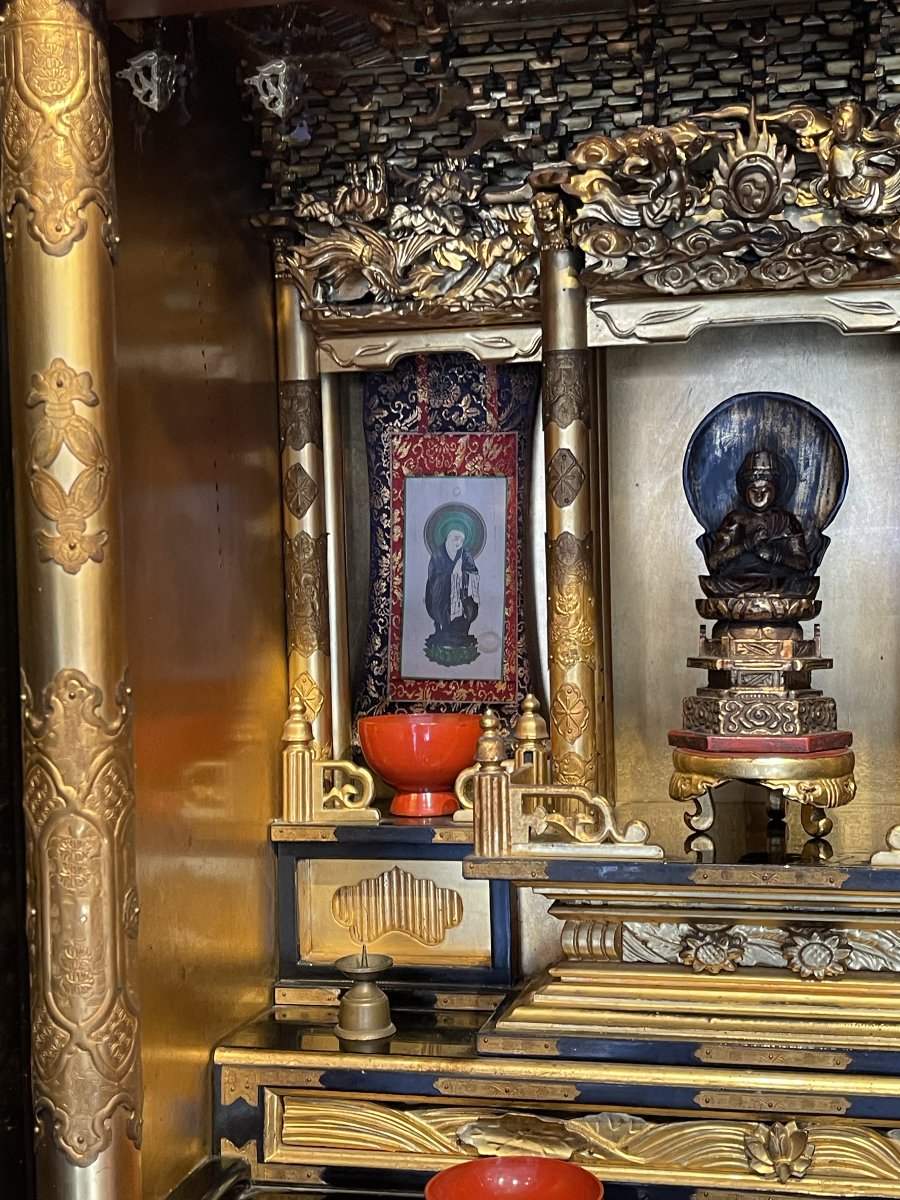
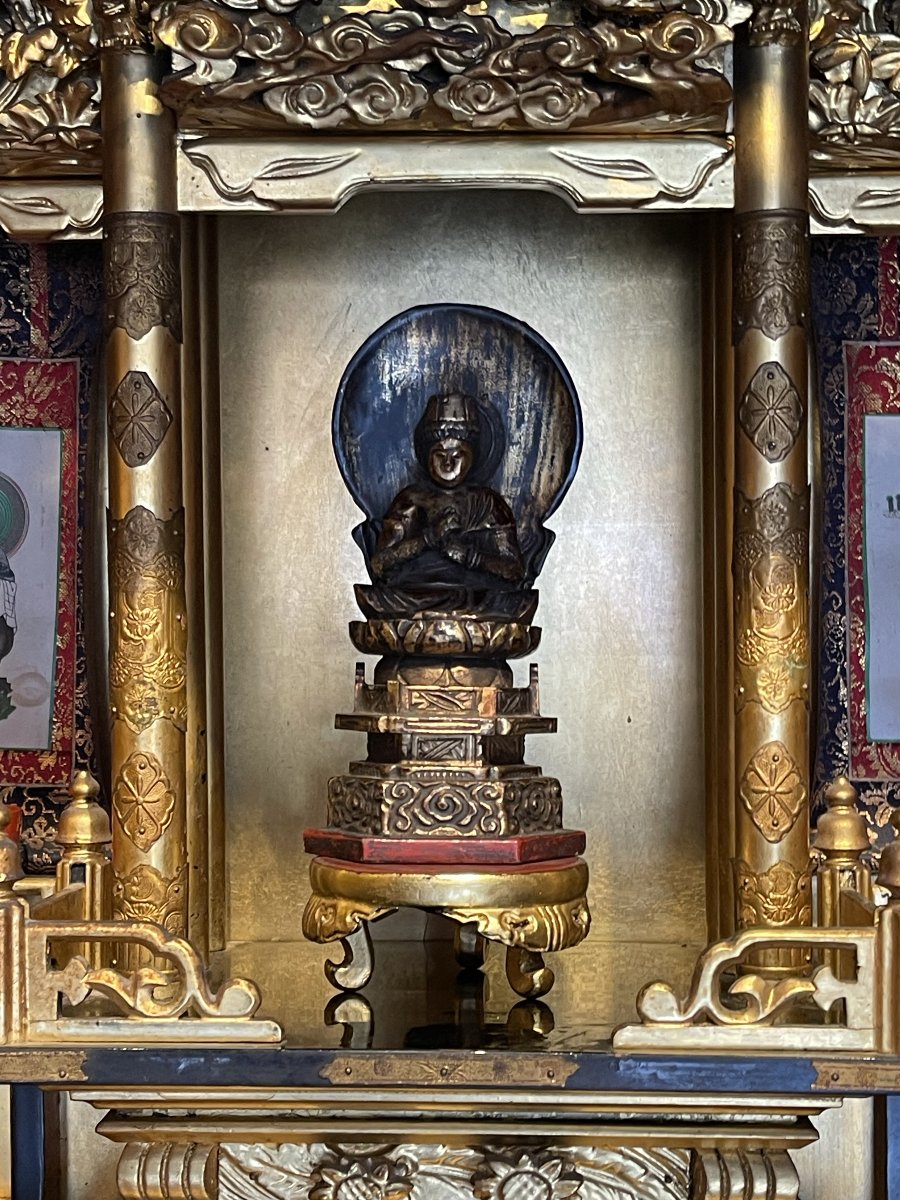
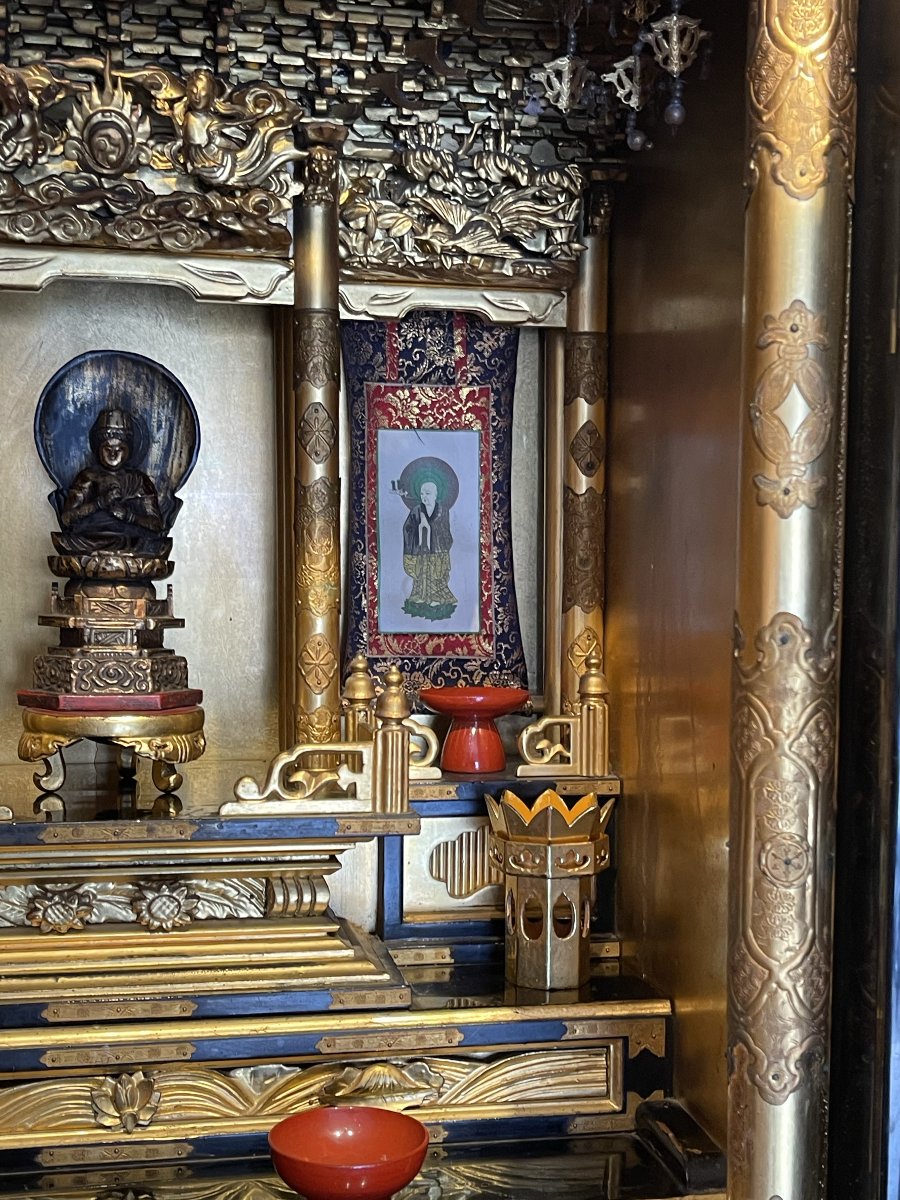
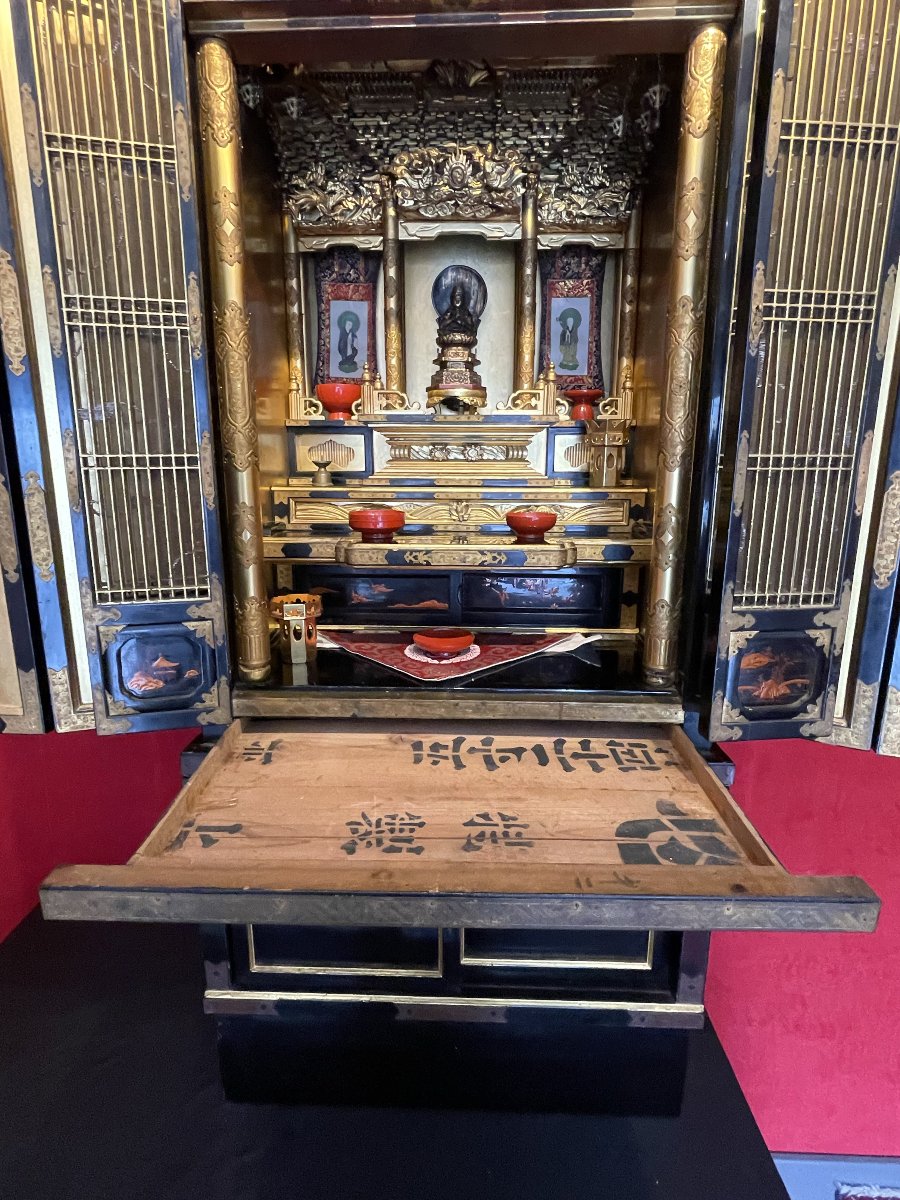
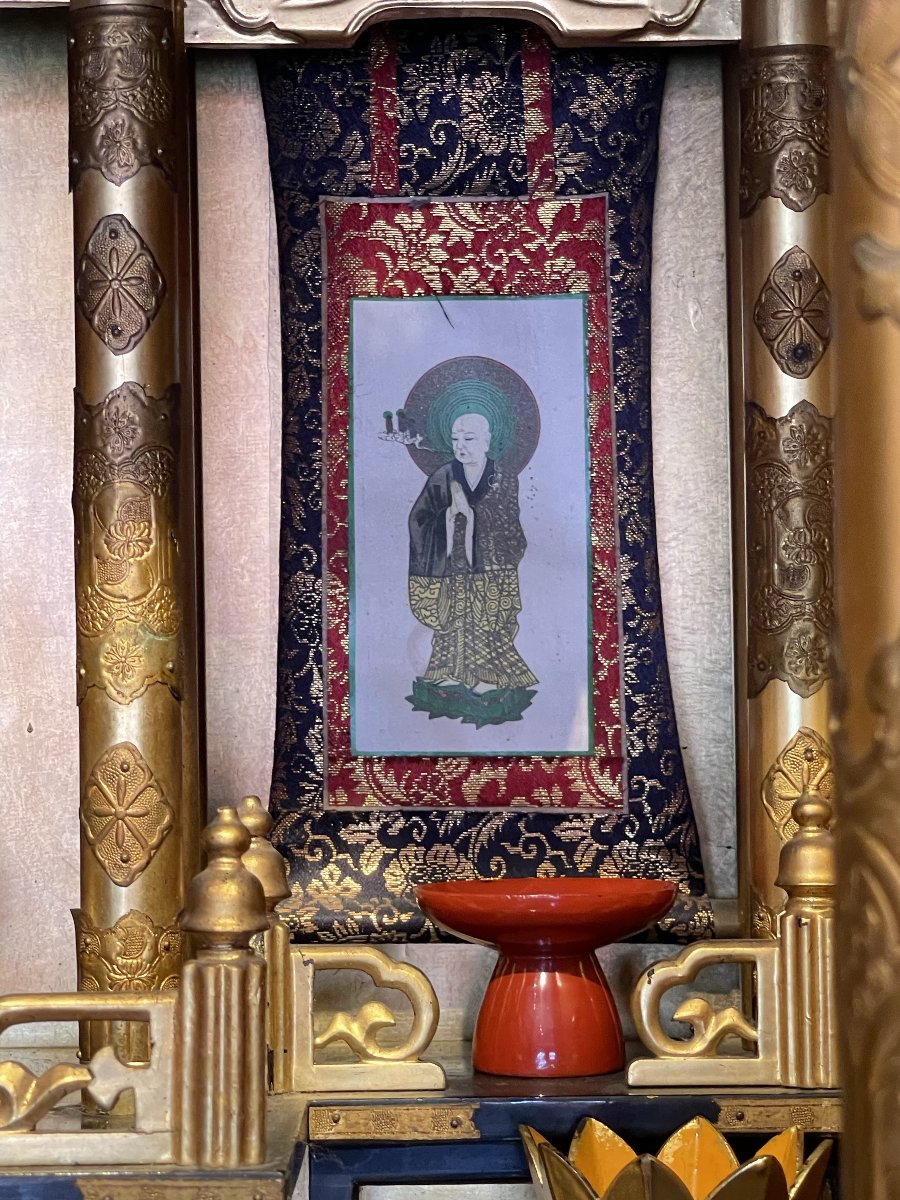
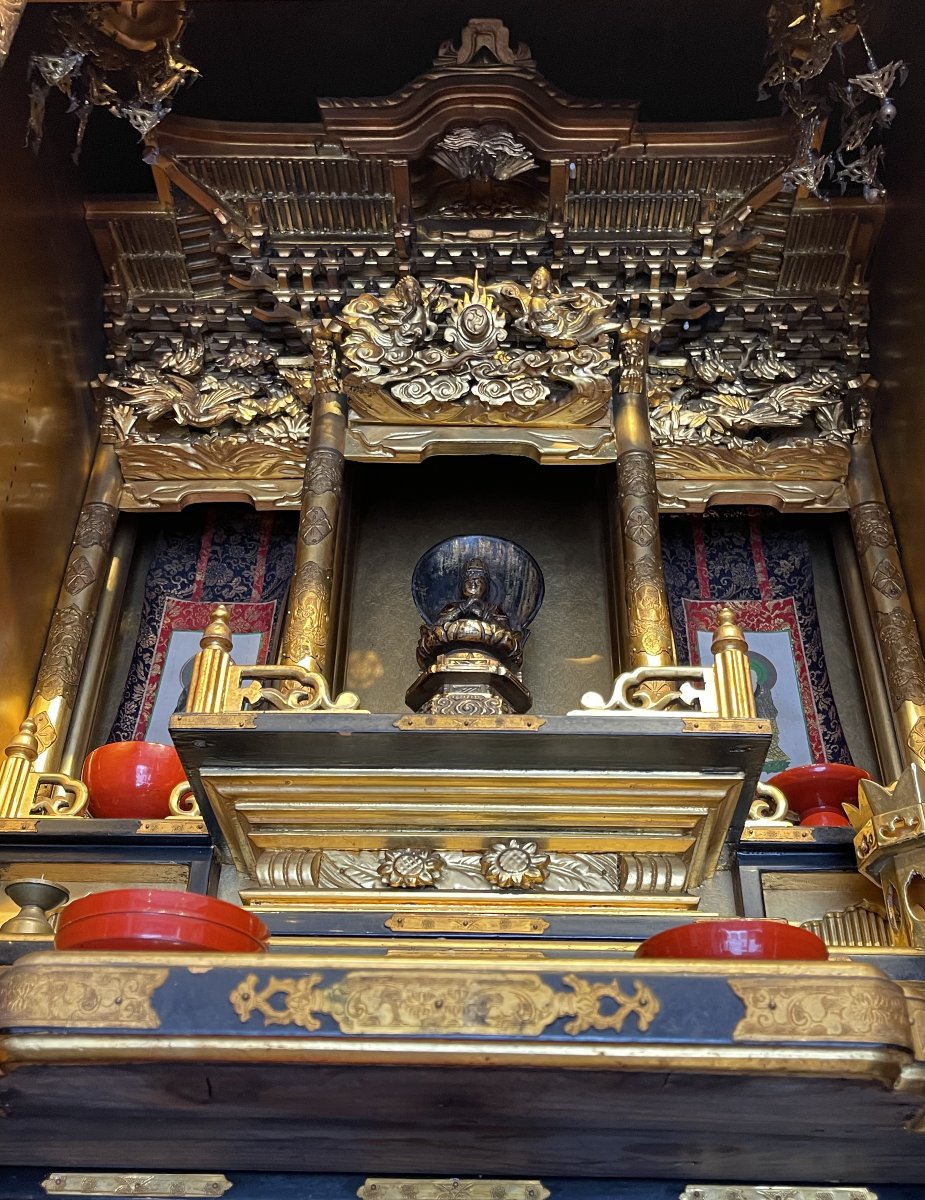
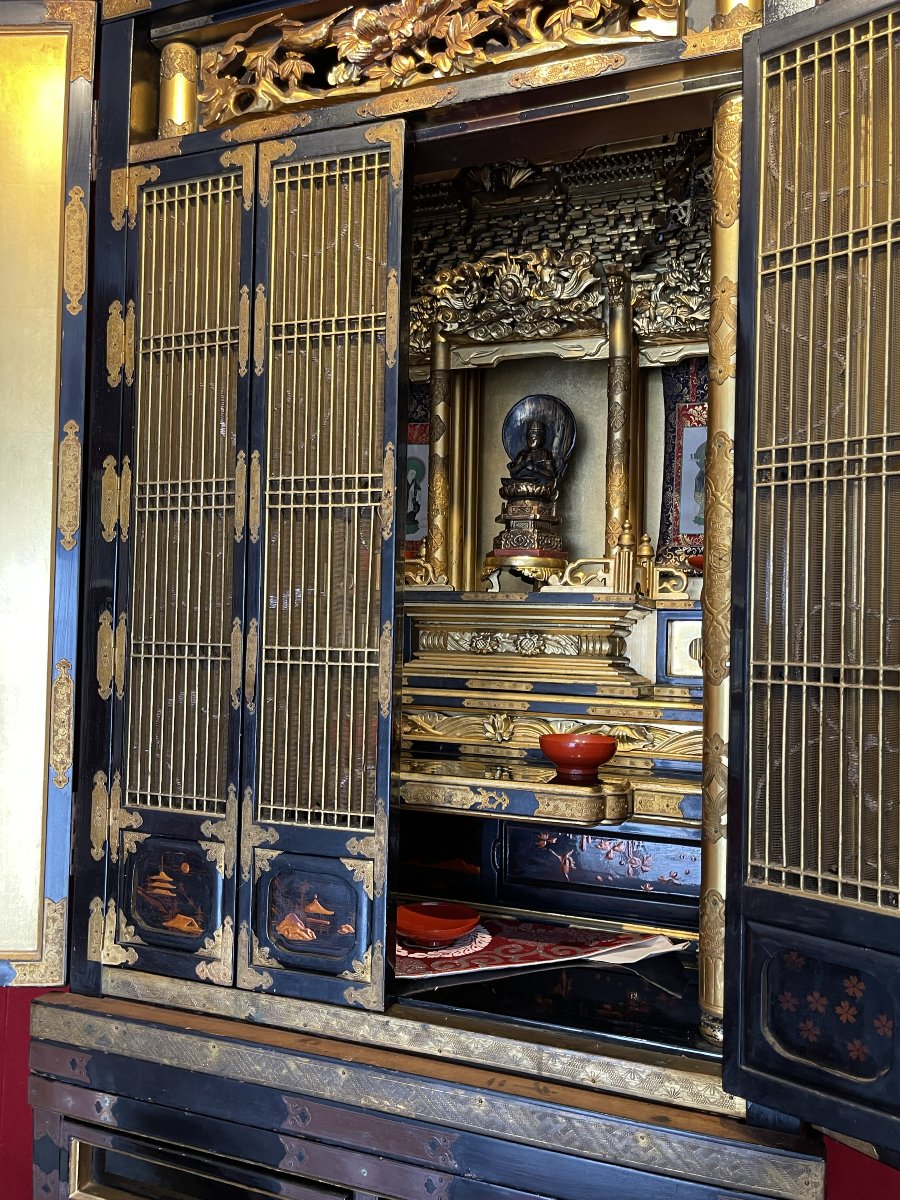
Crafted from lacquered and gilded wood, this highly elaborate and refined butsudan opens via a double set of doors to reveal an architectural design featuring three niches housing deities. In the center, Buddha is seated on a lotus-shaped pedestal in front of a mandorla.
At mid-height, a wide, flat drawer opens to allow for the placement of offerings to Buddha. It bears numerous inscriptions in Japanese, including “made to order with love.”
In the lower section, a set of sliding doors and drawers provides space for storing ritual objects.
Monumental butsudan—such as this one—were generally commissioned by Buddhist temples or wealthy families. They were renowned for their exceptional quality. Dozens of highly skilled artists and artisans (sculptors, painters, cabinetmakers, gilders, engravers, lacquerers, weavers, etc.) worked for months to create such masterpieces.
Today, butsudan are part of Japan’s “National Intangible Cultural Heritage” since 1976.
This magnificent collector’s item is sold with its certificate of authenticity.
It is in very good condition, with only minimal signs of wear and a few small chips and restaurations.
Dimensions:
Height: 150 cm.
Width (closed): 61 cm.
Width (open): 115 cm.
Depth: 51 cm.
A rare find, it is complete with all its original elements, including its deities and ritual objects.
Crafted from lacquered and gilded wood, this highly elaborate and refined butsudan opens via a double set of doors to reveal an architectural design featuring three niches housing deities. In the center, Buddha is seated on a lotus-shaped pedestal in front of a mandorla.
At mid-height, a wide, flat drawer opens to allow for the placement of offerings to Buddha. It bears numerous inscriptions in Japanese, including “made to order with love.”
In the lower section, a set of sliding doors and drawers provides space for storing ritual objects.
Monumental butsudan—such as this one—were generally commissioned by Buddhist temples or wealthy families. They were renowned for their exceptional quality. Dozens of highly skilled artists and artisans (sculptors, painters, cabinetmakers, gilders, engravers, lacquerers, weavers, etc.) worked for months to create such masterpieces.
Today, butsudan are part of Japan’s “National Intangible Cultural Heritage” since 1976.
This magnificent collector’s item is sold with its certificate of authenticity.
It is in very good condition, with only minimal signs of wear and a few small chips and restaurations.
Dimensions:
Height: 150 cm.
Width (closed): 61 cm.
Width (open): 115 cm.
Depth: 51 cm.
6 900 €
Period: 19th century
Style: Asian art
Condition: Excellent condition
Material: Gilted wood
Width: 115 cm
Height: 150 cm
Depth: 51 cm
Reference (ID): 1803190
Availability: In stock
Print