






Japanese Lacquer Vase By Hattori Shunsho - Japan
Artist: Hattori Shunsho
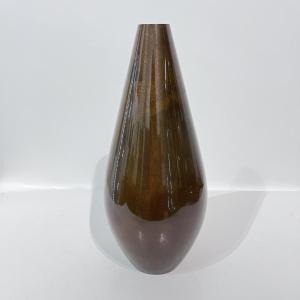
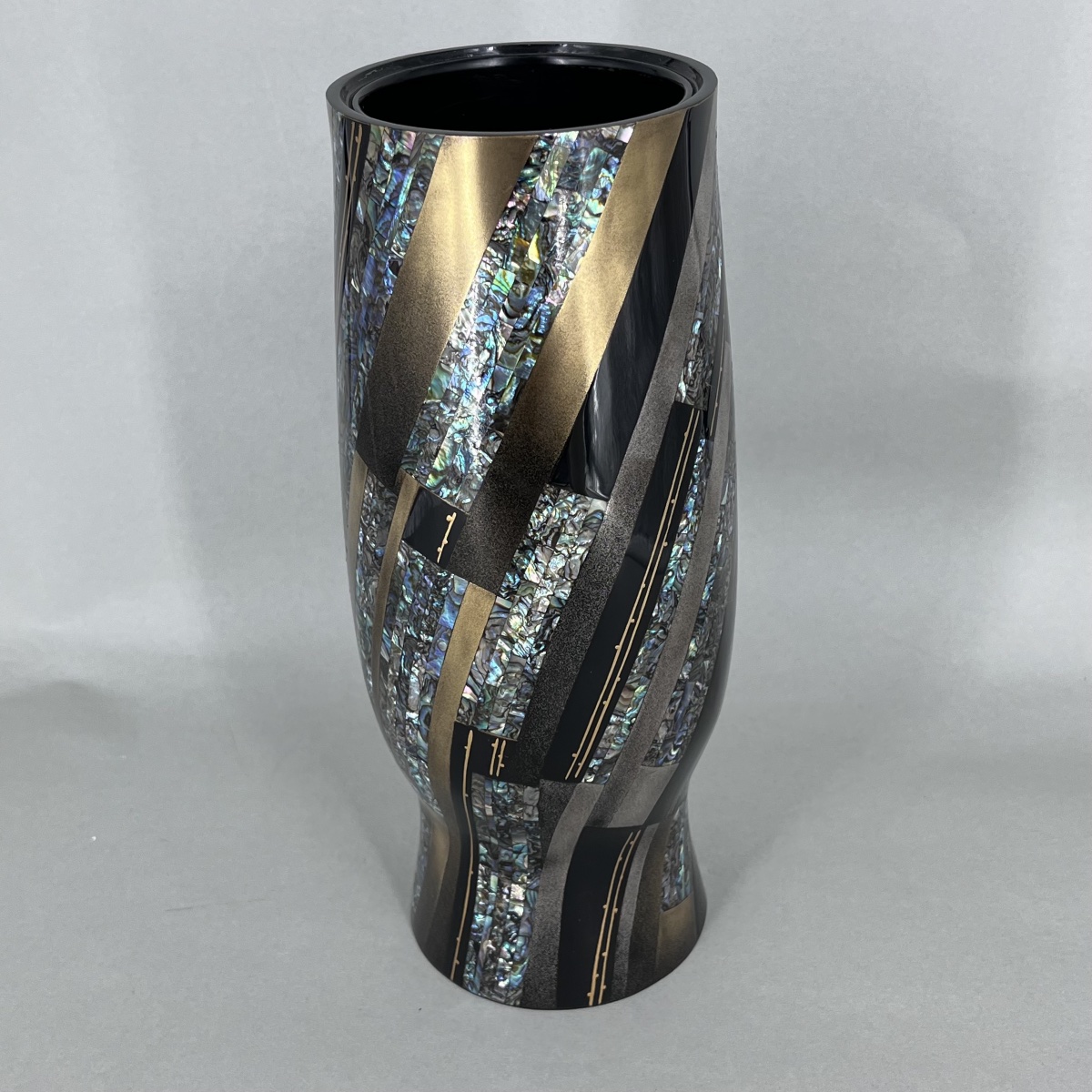
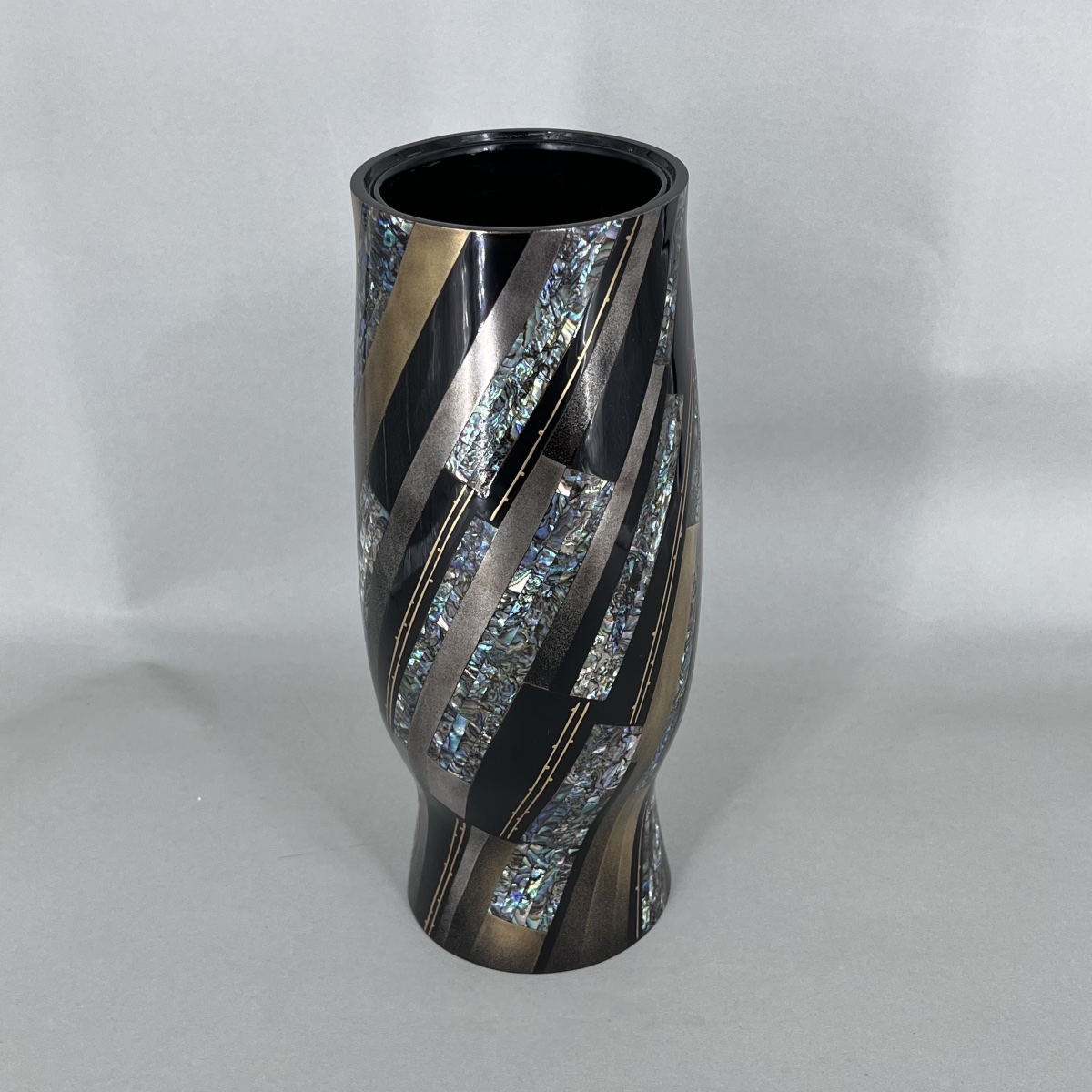
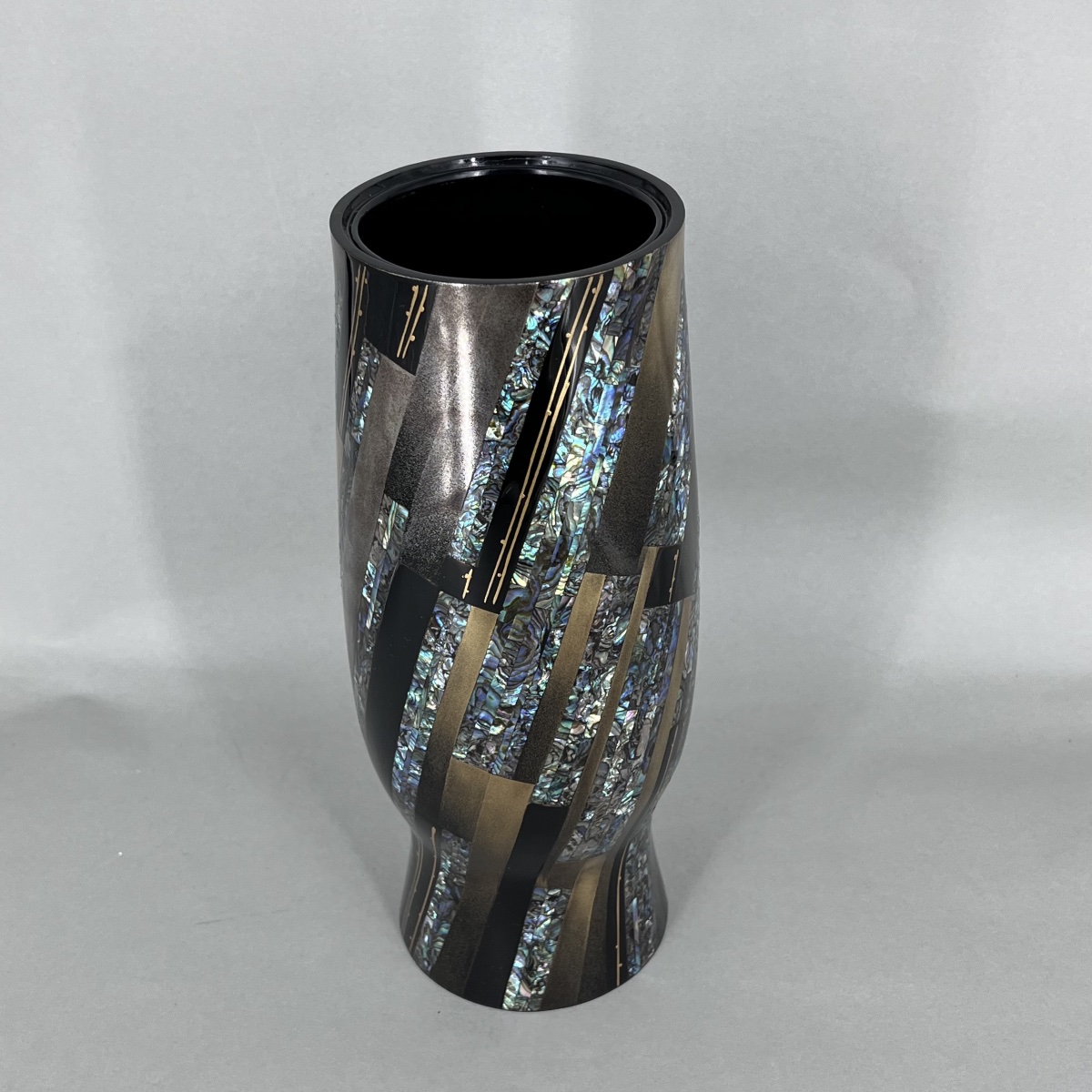
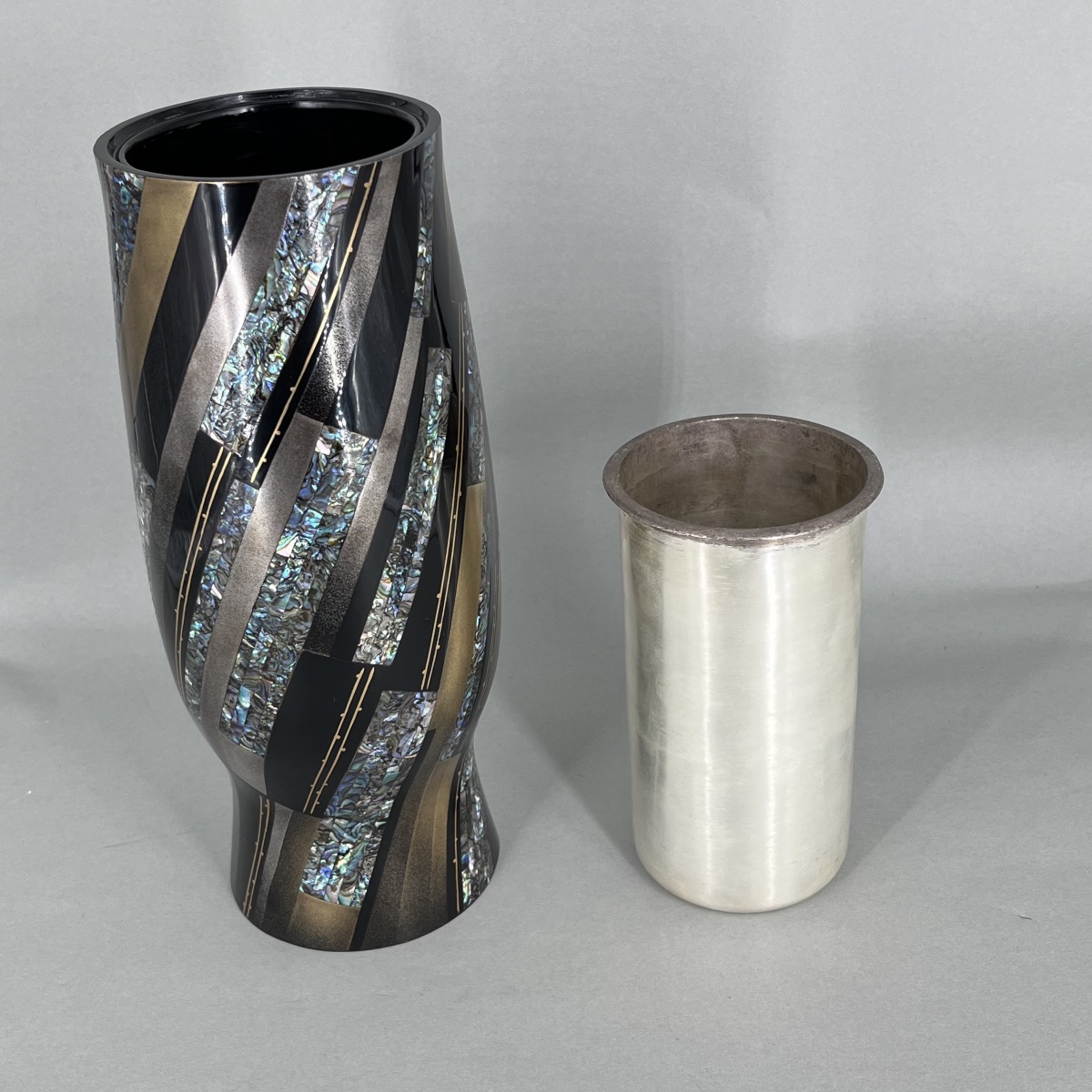
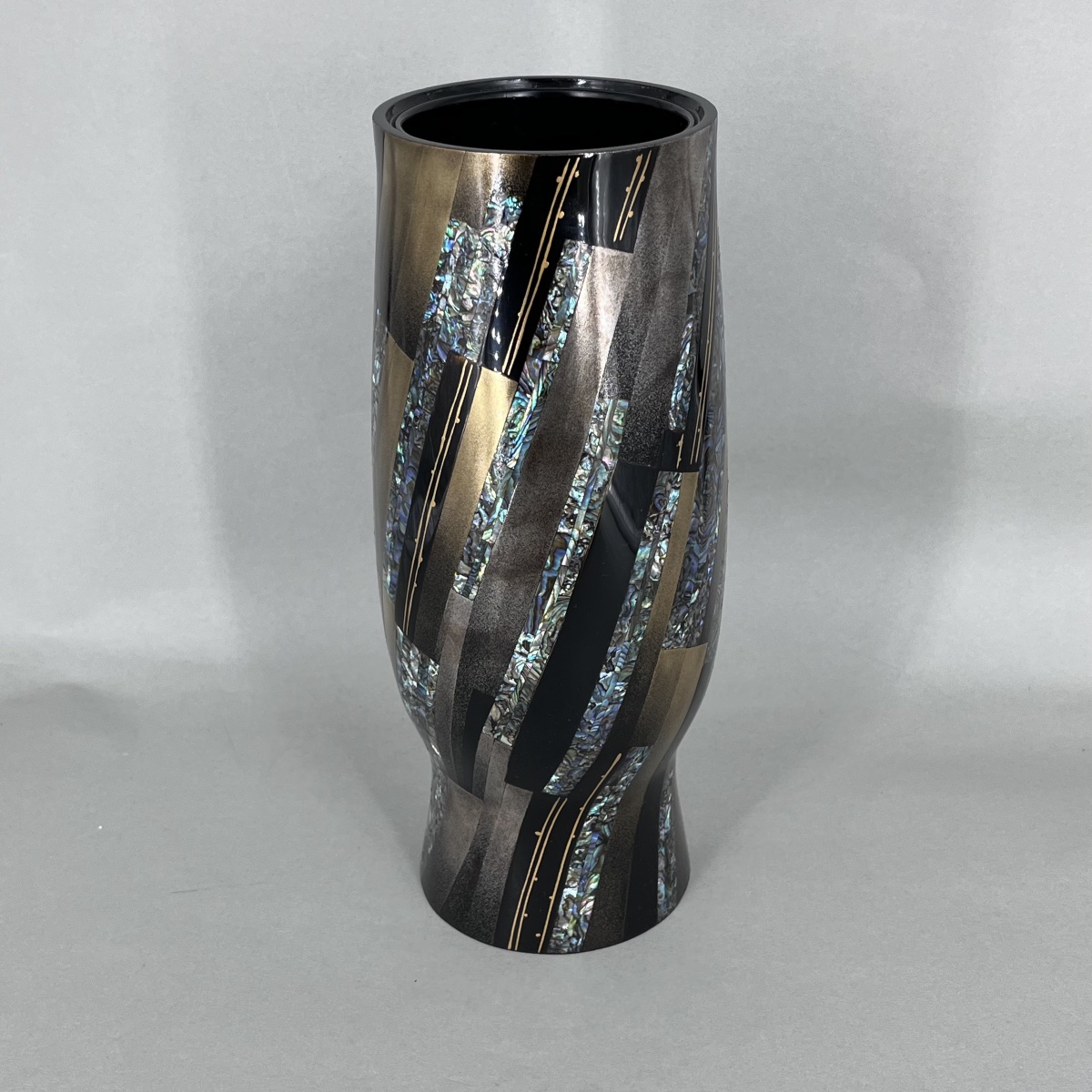
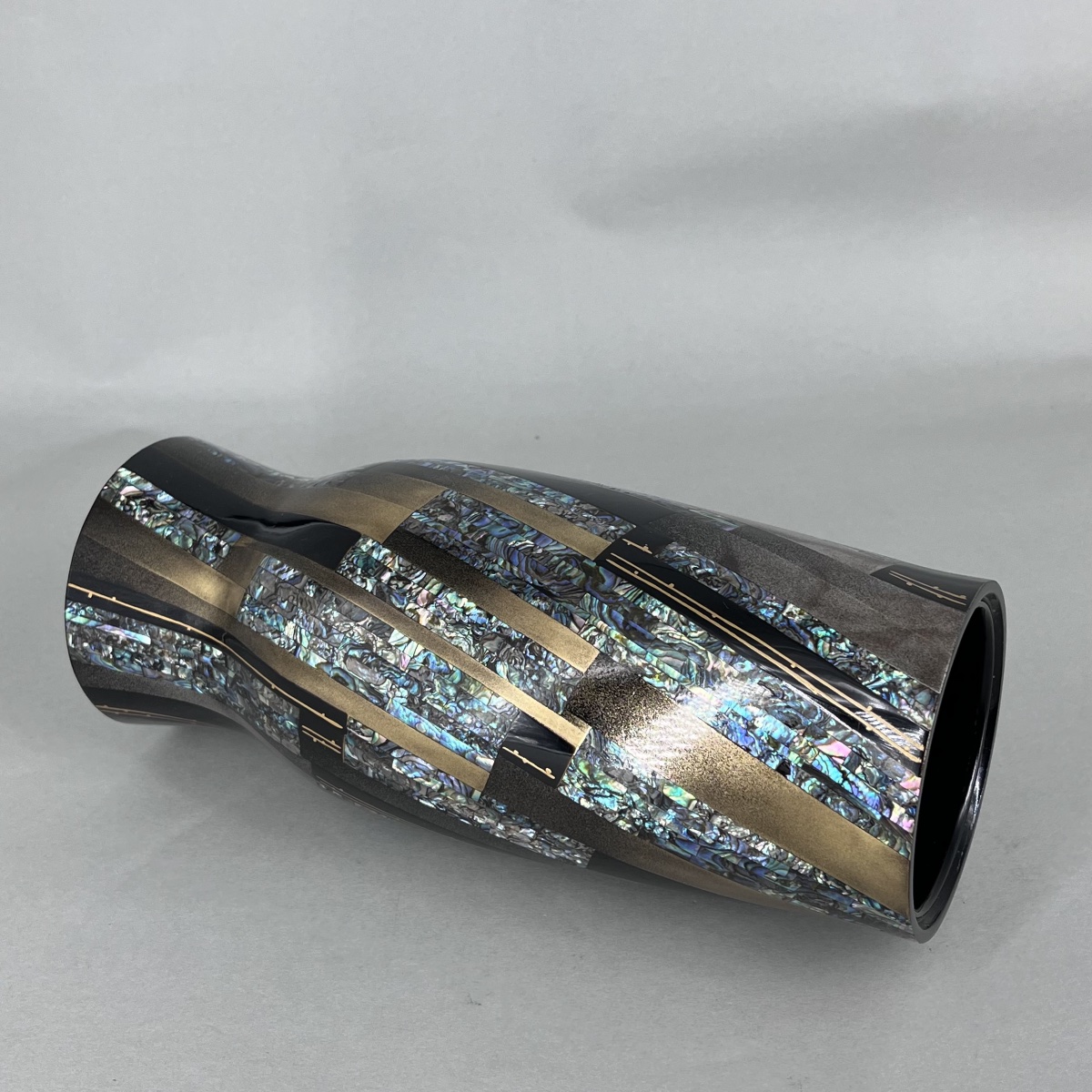
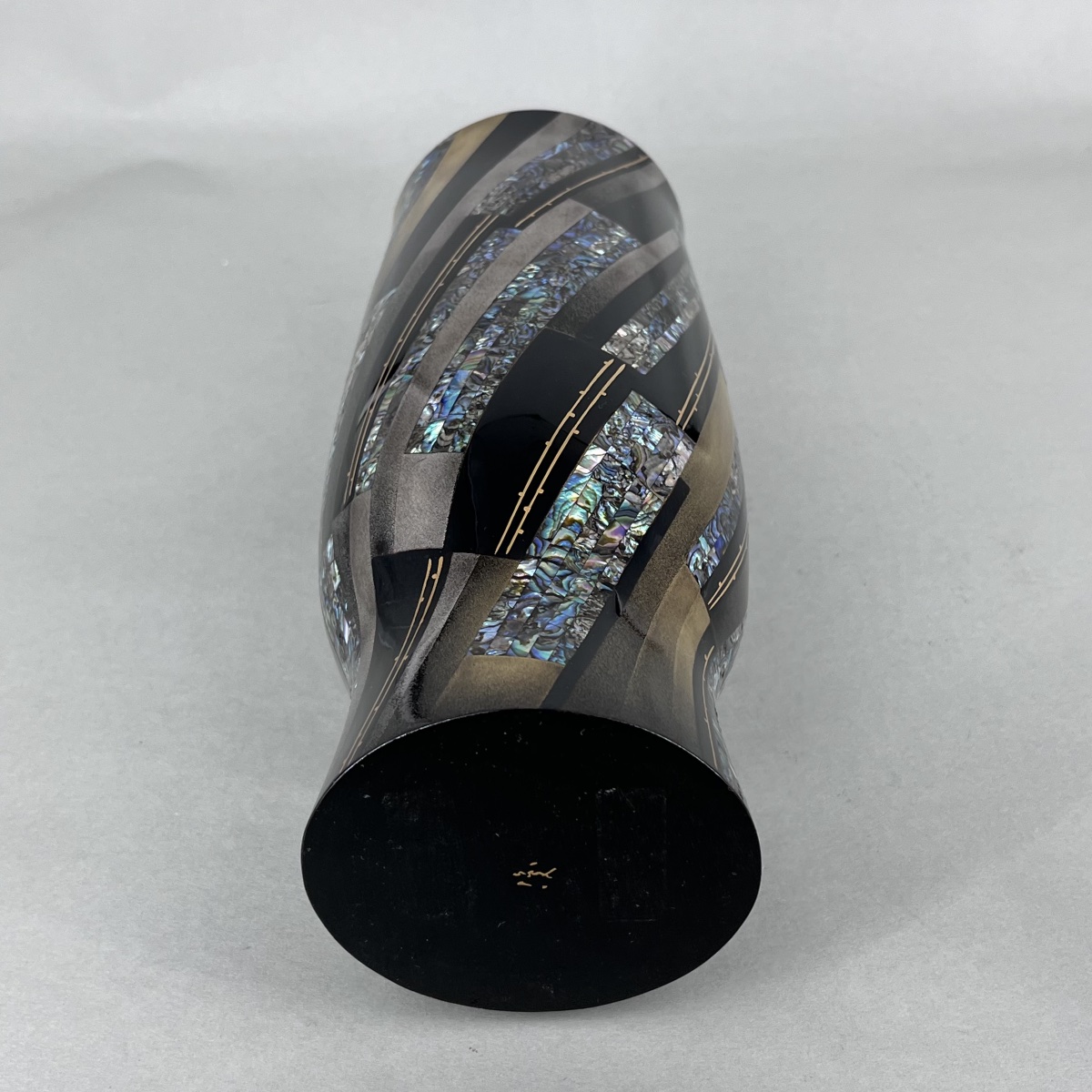
A tapered vase with a unique shape, decorated with maki-e lacquer featuring a cascading pattern of gold and silver alternating with rich mother-of-pearl inlays. The vase contains an otoshi, a silver-plated insert designed to protect the lacquer and hold water for a floral arrangement.
The artist’s lacquer signature is located on the bottom.
Artist: Hattori Shunsho (1943–2018).
Dimensions: 24.5 x 11.5 cm.
Japan, circa 2000.
Hattori Shunsho is one of Japan’s great 20th-century lacquer artists.
Beginning in the early 1960s, his works were regularly selected for major exhibitions such as Kyoten, Shin-Nitten, and the Kyoto Crafts Exhibition. In 1964, he joined the Shugen-kai research group on contemporary lacquer art, where he studied under Banura Shōgo, then honed his skills in maki-e techniques under Uehara Kiyoshi.
Further recognition followed with the Award of Excellence at the Kyoto Craft Exhibition in 1969 and the Mayor’s Award at the Kyoten Exhibition in 1970.
Public collections:
National Craft Museum
MOMAT Museum of Modern Art, Tokyo
KYOCERA Kyoto City Museum of Art
Okawa Museum of Art (Gunma).
In 1970, he co-founded Forme, an experimental collective of Kyoto lacquer artists that explored new materials such as acrylic and cashew nut lacquer, reflecting the influence of postwar avant-garde movements and increased global access to materials.
His work continued to garner acclaim, notably with a Special Prize at the Nitten Exhibition in 1972.
In 1975, he undertook training abroad in Europe and the United States, studying engraving and etching in Sweden and France—experiences that enriched his material and conceptual approach to contemporary lacquer art.
The artist’s lacquer signature is located on the bottom.
Artist: Hattori Shunsho (1943–2018).
Dimensions: 24.5 x 11.5 cm.
Japan, circa 2000.
Hattori Shunsho is one of Japan’s great 20th-century lacquer artists.
Beginning in the early 1960s, his works were regularly selected for major exhibitions such as Kyoten, Shin-Nitten, and the Kyoto Crafts Exhibition. In 1964, he joined the Shugen-kai research group on contemporary lacquer art, where he studied under Banura Shōgo, then honed his skills in maki-e techniques under Uehara Kiyoshi.
Further recognition followed with the Award of Excellence at the Kyoto Craft Exhibition in 1969 and the Mayor’s Award at the Kyoten Exhibition in 1970.
Public collections:
National Craft Museum
MOMAT Museum of Modern Art, Tokyo
KYOCERA Kyoto City Museum of Art
Okawa Museum of Art (Gunma).
In 1970, he co-founded Forme, an experimental collective of Kyoto lacquer artists that explored new materials such as acrylic and cashew nut lacquer, reflecting the influence of postwar avant-garde movements and increased global access to materials.
His work continued to garner acclaim, notably with a Special Prize at the Nitten Exhibition in 1972.
In 1975, he undertook training abroad in Europe and the United States, studying engraving and etching in Sweden and France—experiences that enriched his material and conceptual approach to contemporary lacquer art.
2 500 €
Period: 20th century
Style: Asian art
Condition: Excellent condition
Material: Lacquer
Width: 11,5
Height: 24,5
Reference (ID): 1796453
Availability: In stock
Print