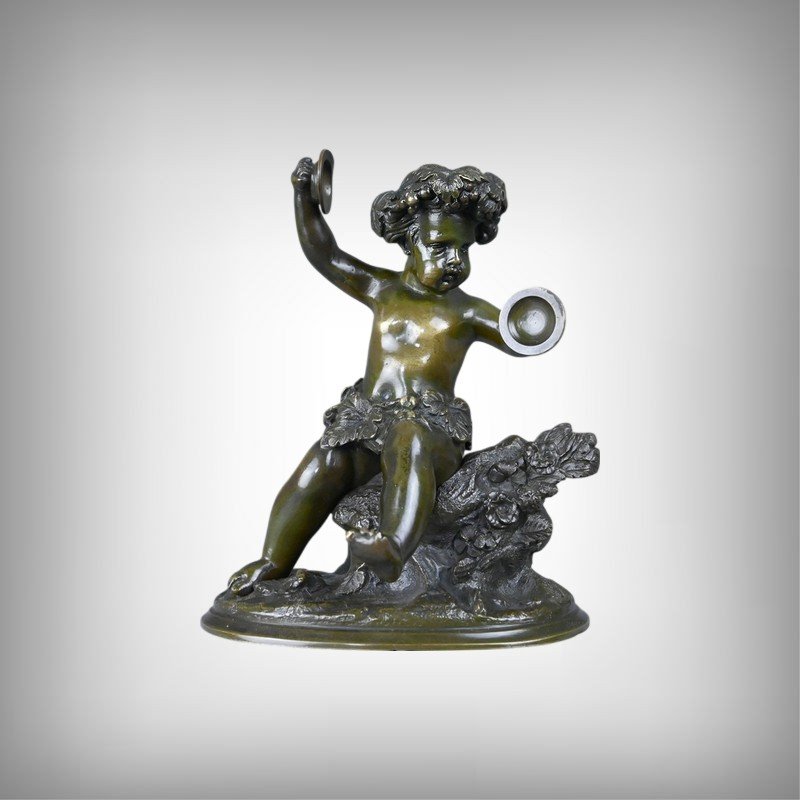
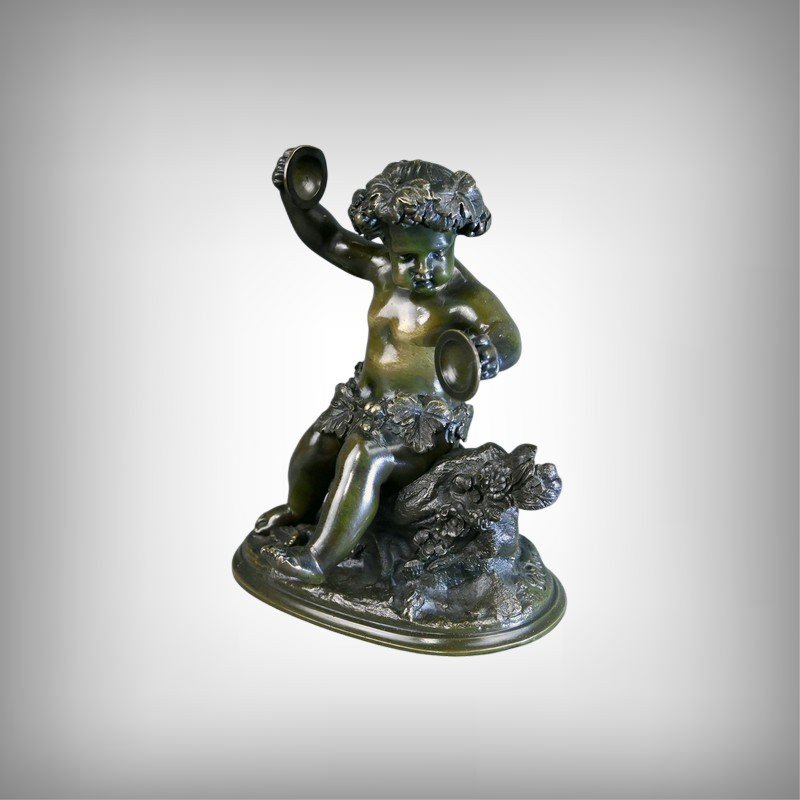
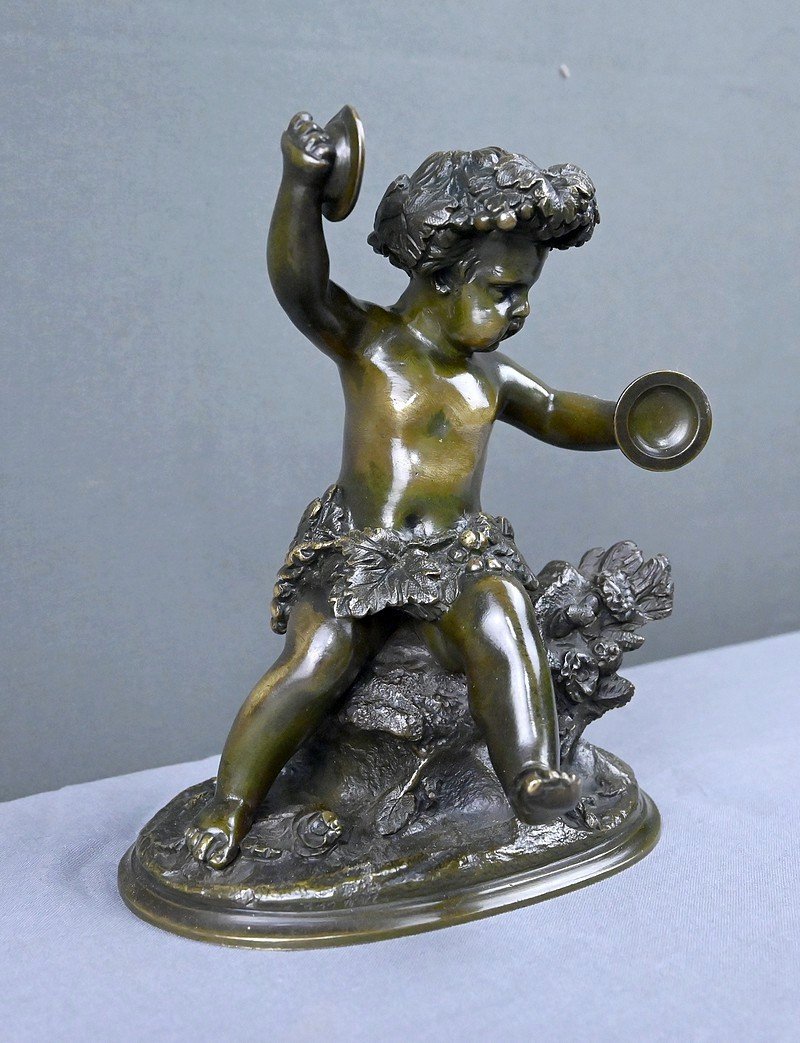
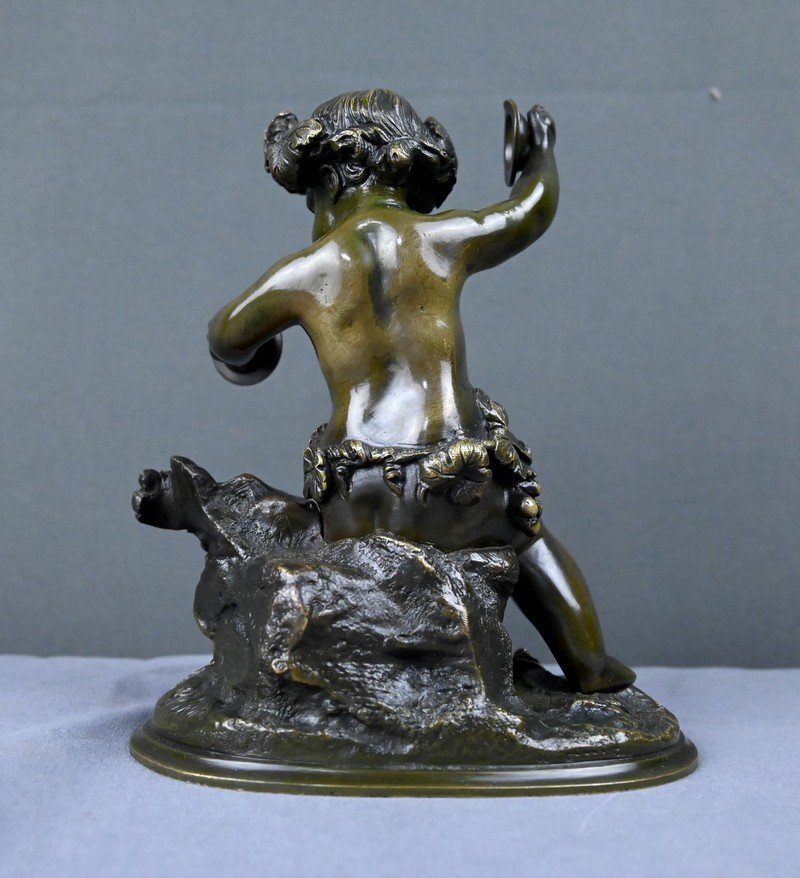
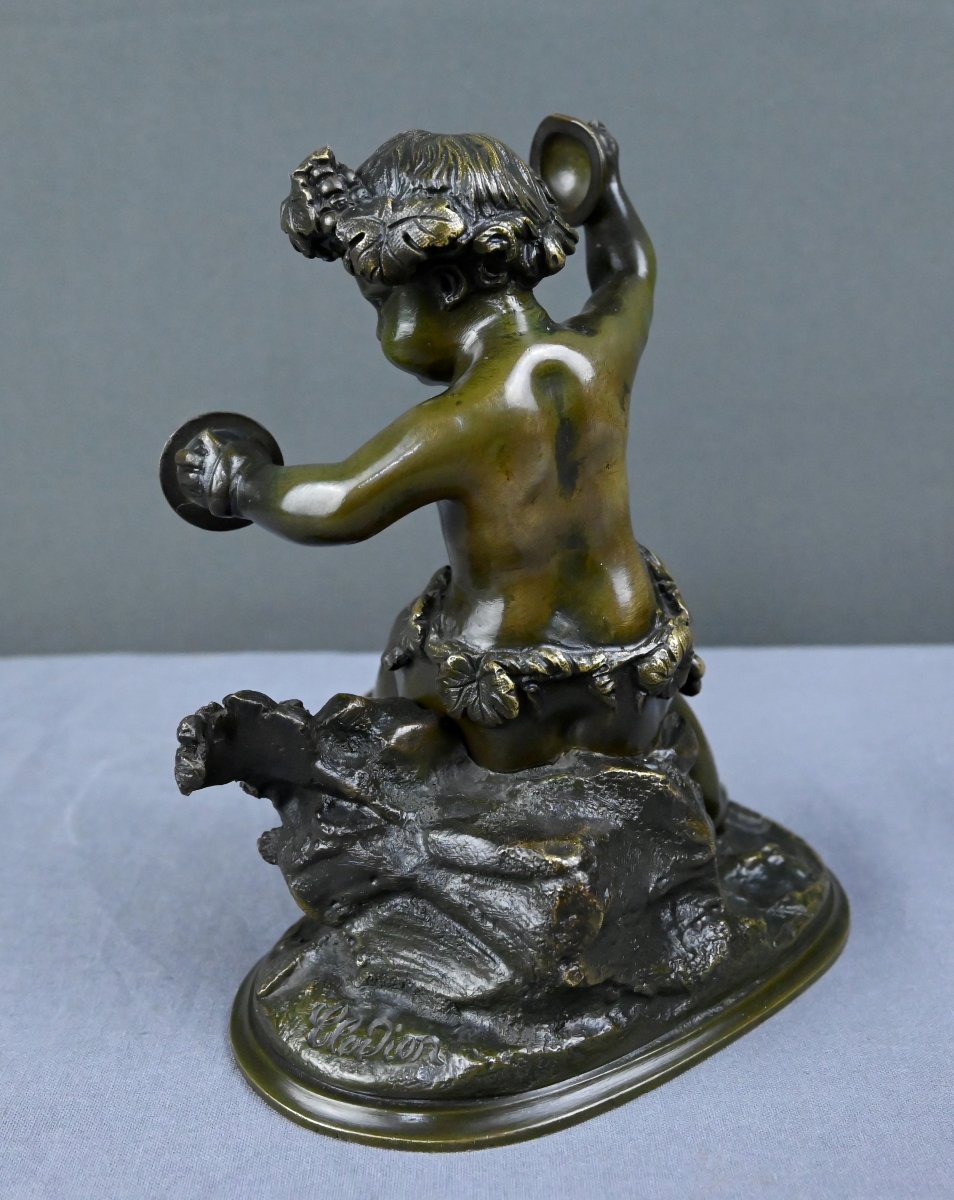


Bronze “bacchus With Cymbals,” After Clodion – Second Half Of The 19th Century
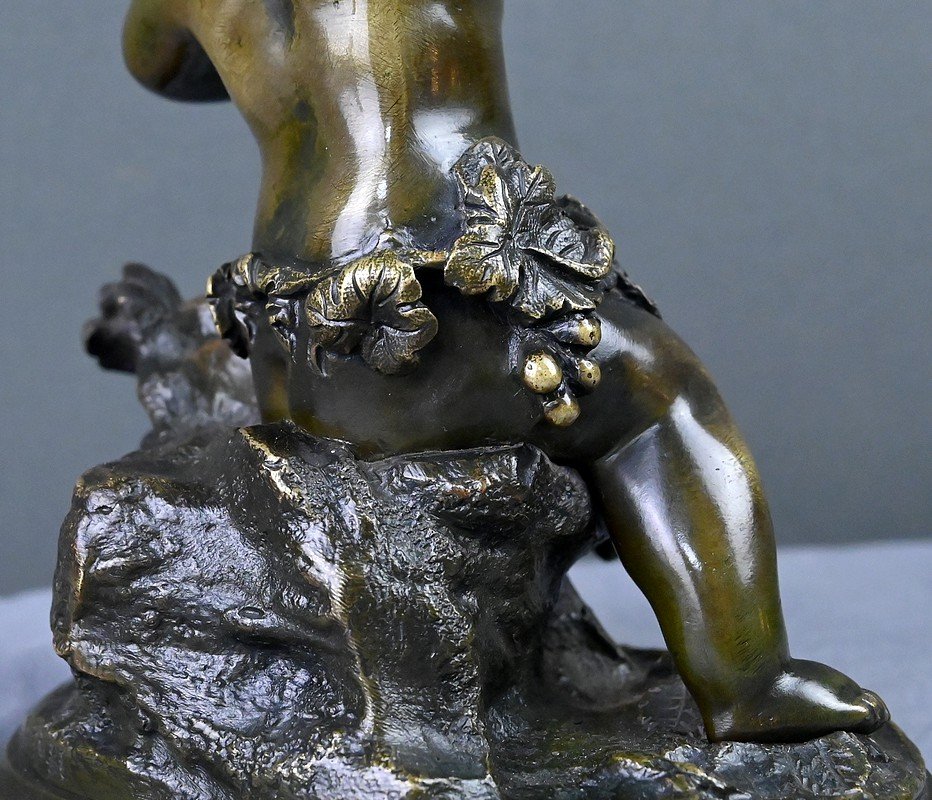
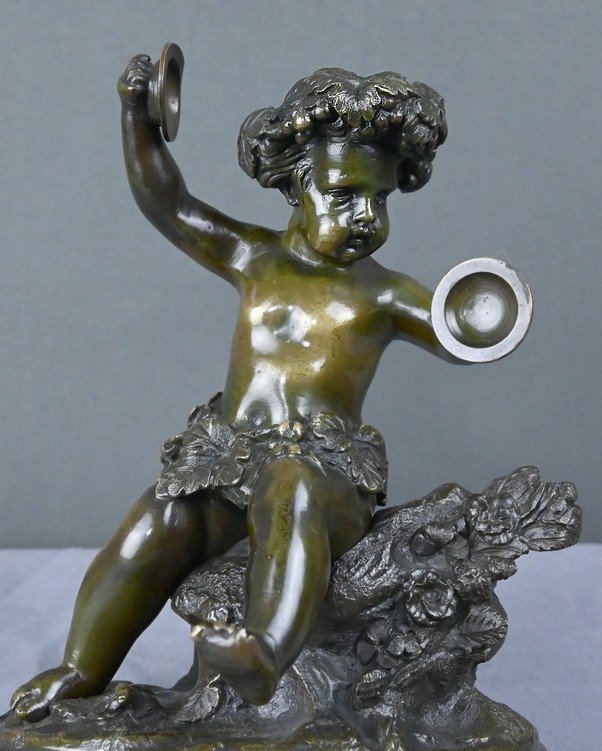
This green-patinated bronze of the young Bacchus, modeled with Clodion’s characteristic sensual virtuosity, appears here in all the freshness of a Bacchic genius, seated with natural ease on a rocky mound adorned with foliage and clusters of grapes. His delicately plump childlike body catches the light in a subtle interplay of curves and volumes, revealing the sculptor’s mastery in the art of rendering flesh vibrantly through bronze. With his head crowned with leaves and fruit, he tilts his youthful face slightly; his soft, pouting features express carefree abandon. In each hand, he raises small cymbals, as if caught in the midst of an improvised dance—a gesture that imbues the composition with an inner movement, a festive pulse characteristic of the Dionysian world.
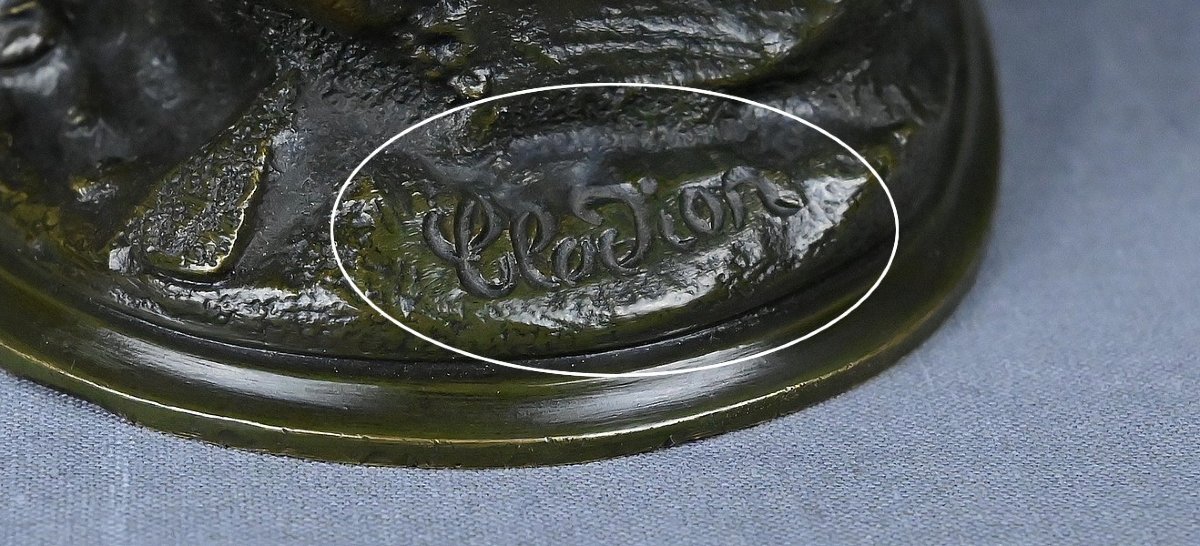
The vegetal drapery surrounding his hips, rendered with precision, reinforces the harmony between the figure and nature—a theme dear to the artist. The richly textured base extends this fusion by evoking a miniature landscape where the vine—a symbol of fertility and abundance—seems to flourish under the young god’s inspiration. The work as a whole exudes a light elegance and a vibrant poetry, in which technical virtuosity serves a profoundly hedonistic and luminous vision of the ancient world. Clodion’s signature is engraved on the pedestal. Through the finesse of its modeling and the spontaneous grace of its composition, this bronze fully embodies the spirit of the late Rococo.
Clodion (1738–1814), an iconic French Rococo sculptor, is famous for his mythological scenes in terracotta. A winner of the Prix de Rome, he is renowned for his graceful style, characterized by lively and sensual compositions. His work embodies 18th-century elegance.
********
Period: Second half of the 19th century
Good condition
Shipping available upon request in France and internationally.
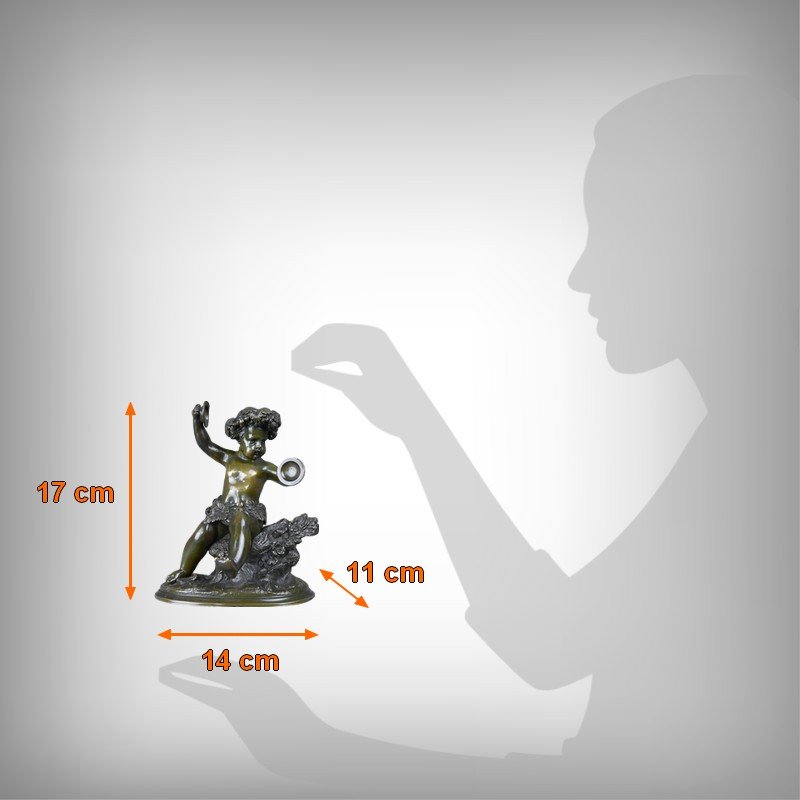
Dimensions:
Width: 14 cm
Depth: 11 cm
Height: 17 cm
Weight: 2 kg
Reference: 634V
Period: 19th century
Style: Rome and Antic Greece
Condition: Fully restored in our whorkshop
Material: Bronze
Width: 14
Height: 17
Depth: 11
Reference (ID): 1794519
Availability: In stock