



Auguste Chabaud (1882–1955) Travelers On A Bridge In The Alpilles
Artist: Auguste Chabaud (1882-1955)
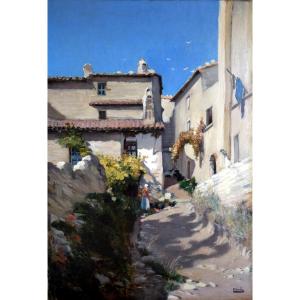
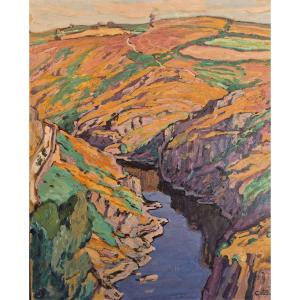
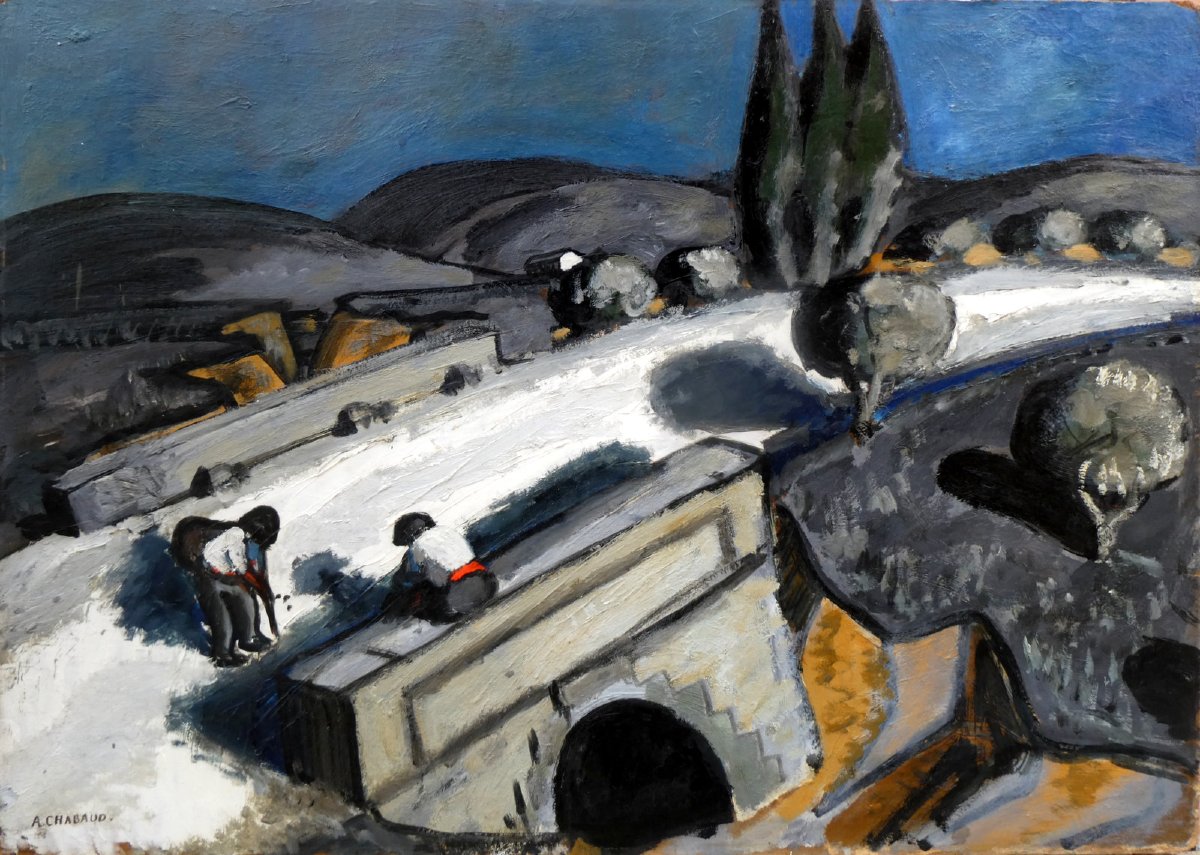
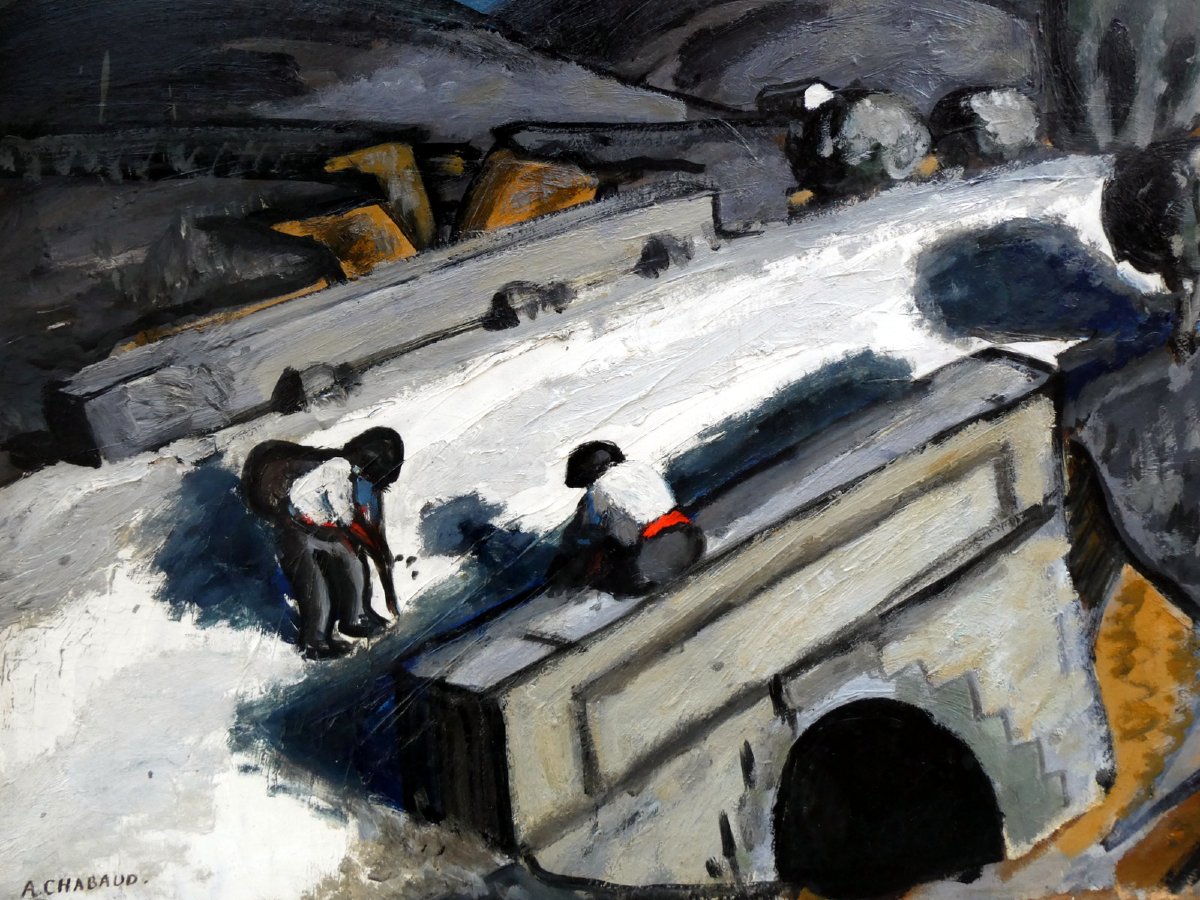
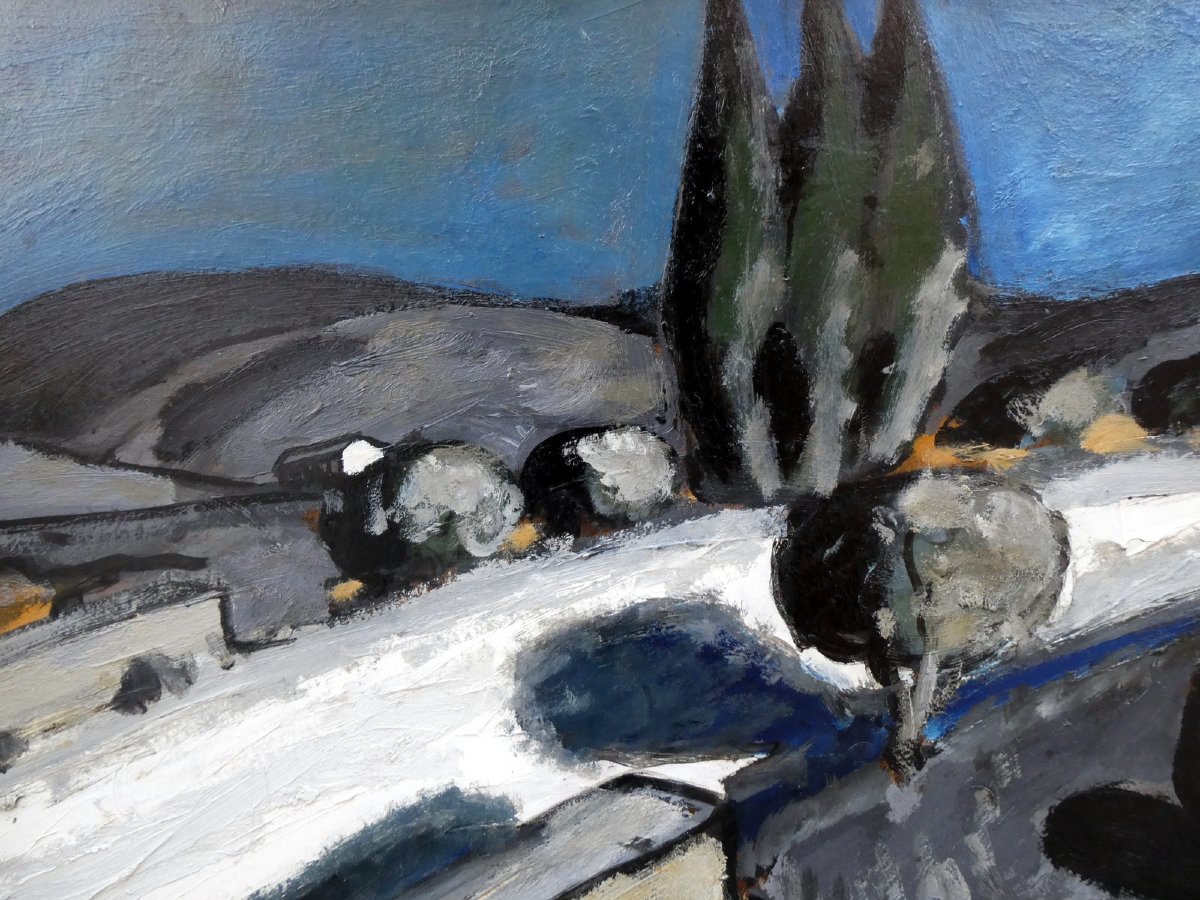
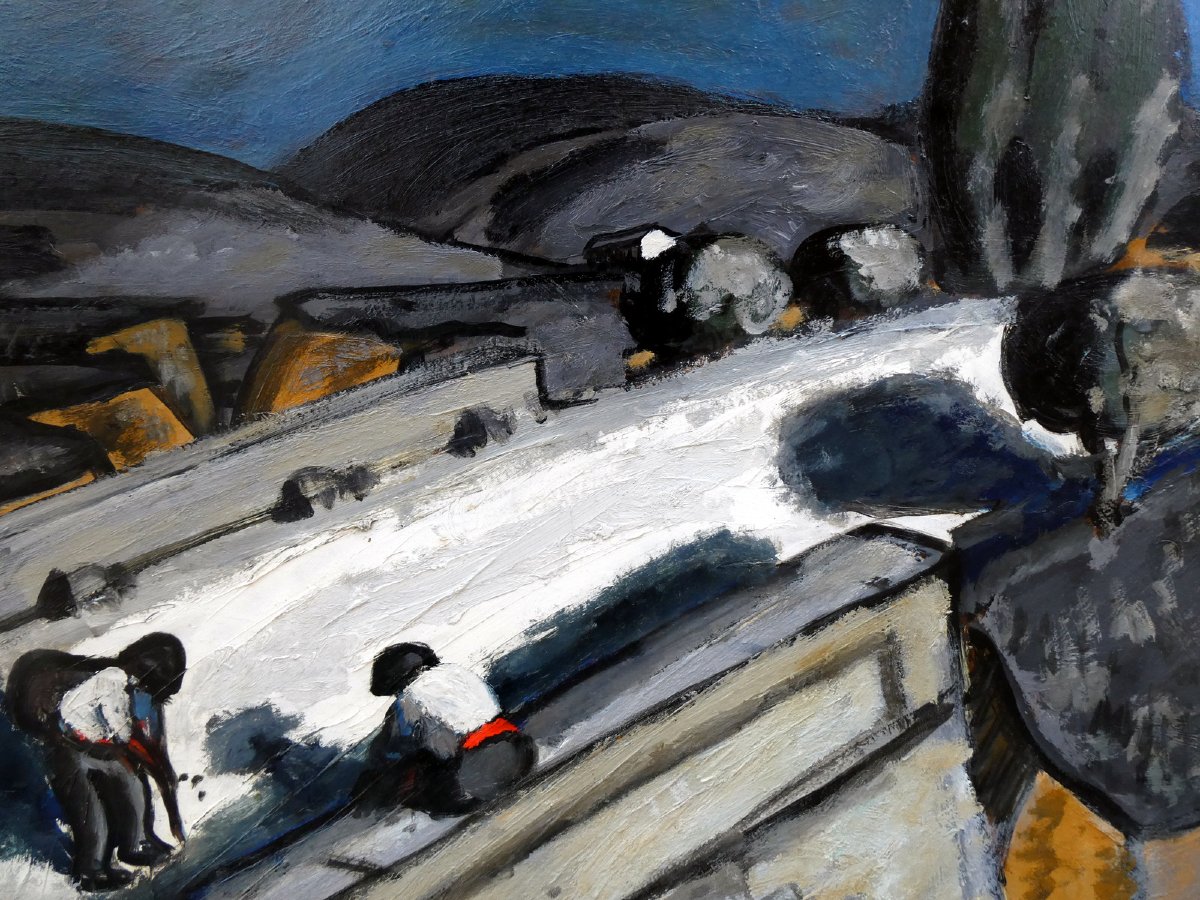
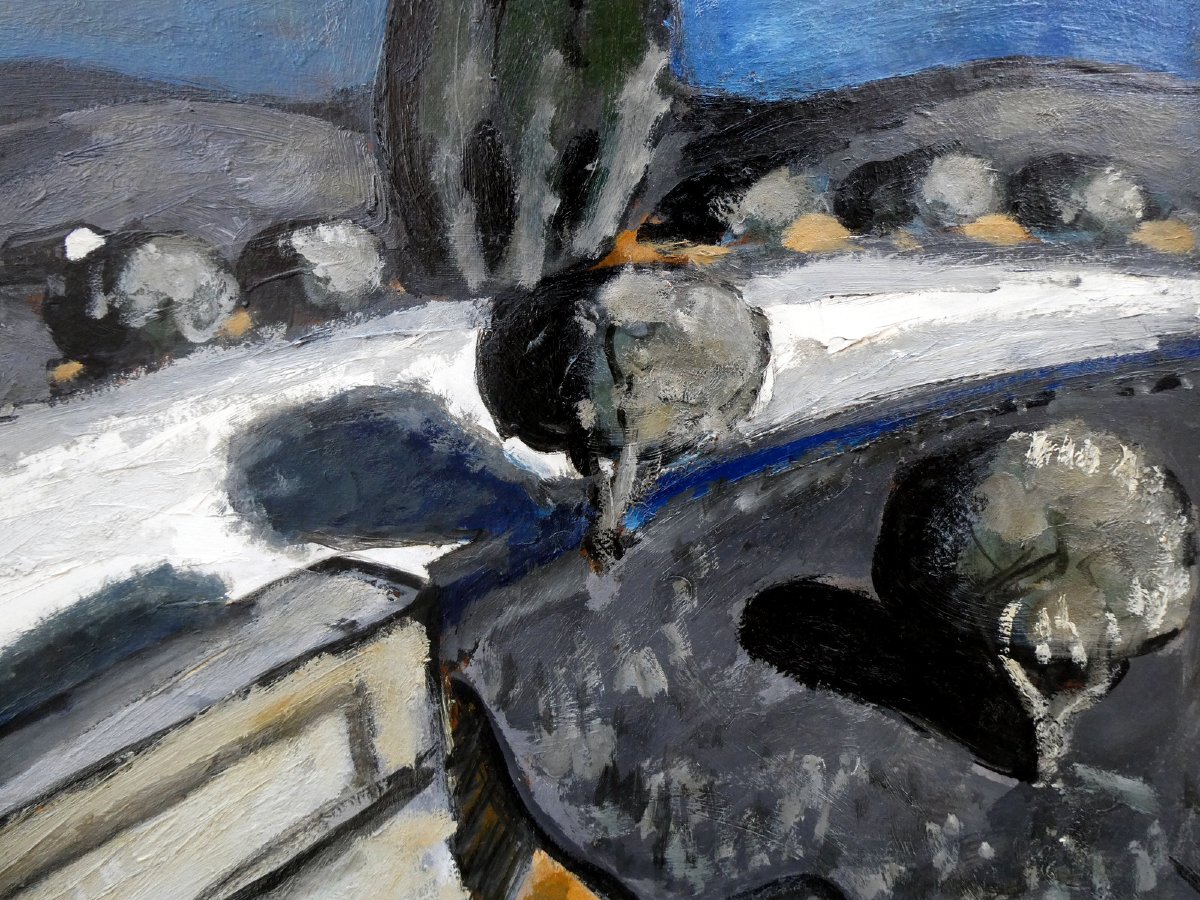
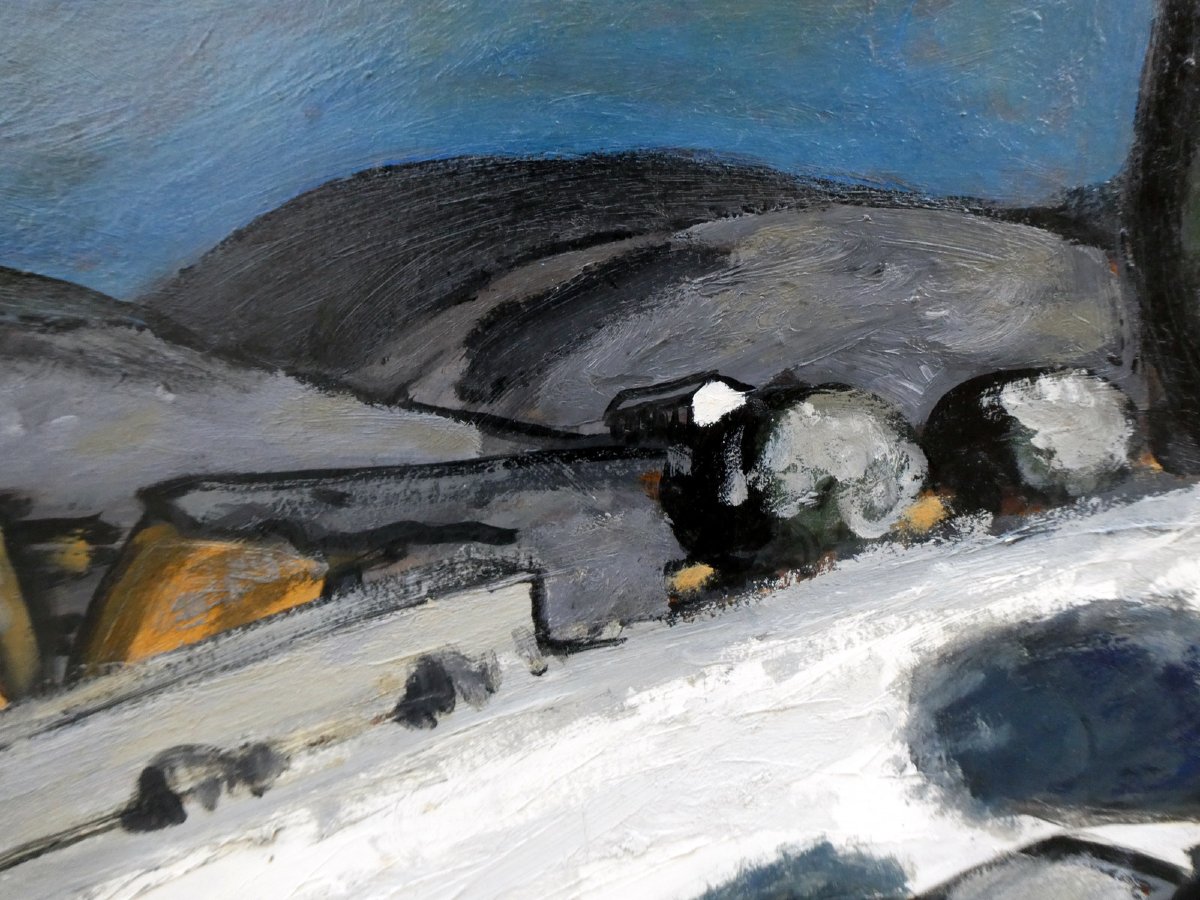
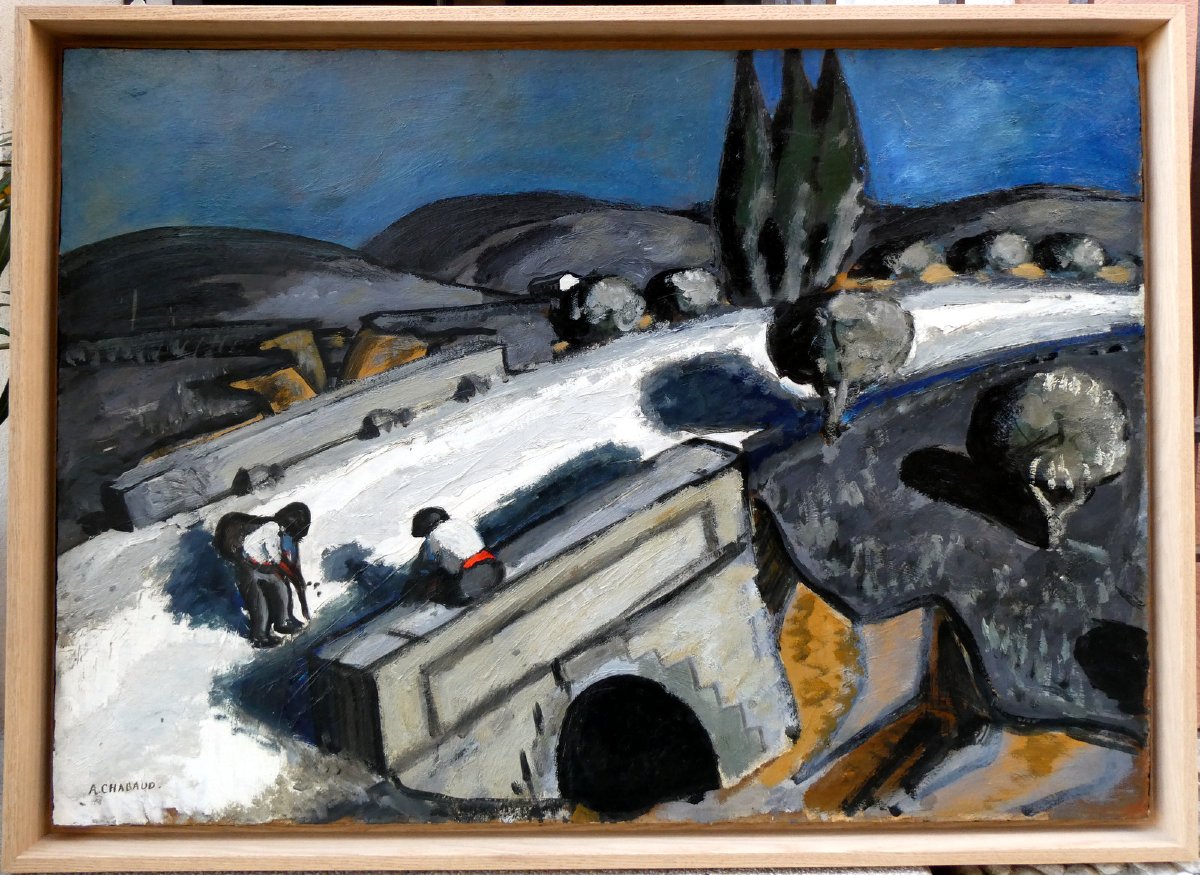
A bird’s-eye view of the subject, rendered with a minimalist style stripped down to the essentials, without superfluous details—the intense blue of a sky that harmonizes with the grays andochres of a landscape that might seem somewhat austere were it not illuminated by the pure white of a road bustling with two figures—two wanderers on abridge, somewhere in the Alpilles, the playground of the great Provençal artist Auguste Chabaud, who, with his distinctive palette and use of false perspective endows this work with a power and presence that only great artists are capable of conveying.
The work, in excellent condition, is executed, as is often the case, in oil on cardboard.
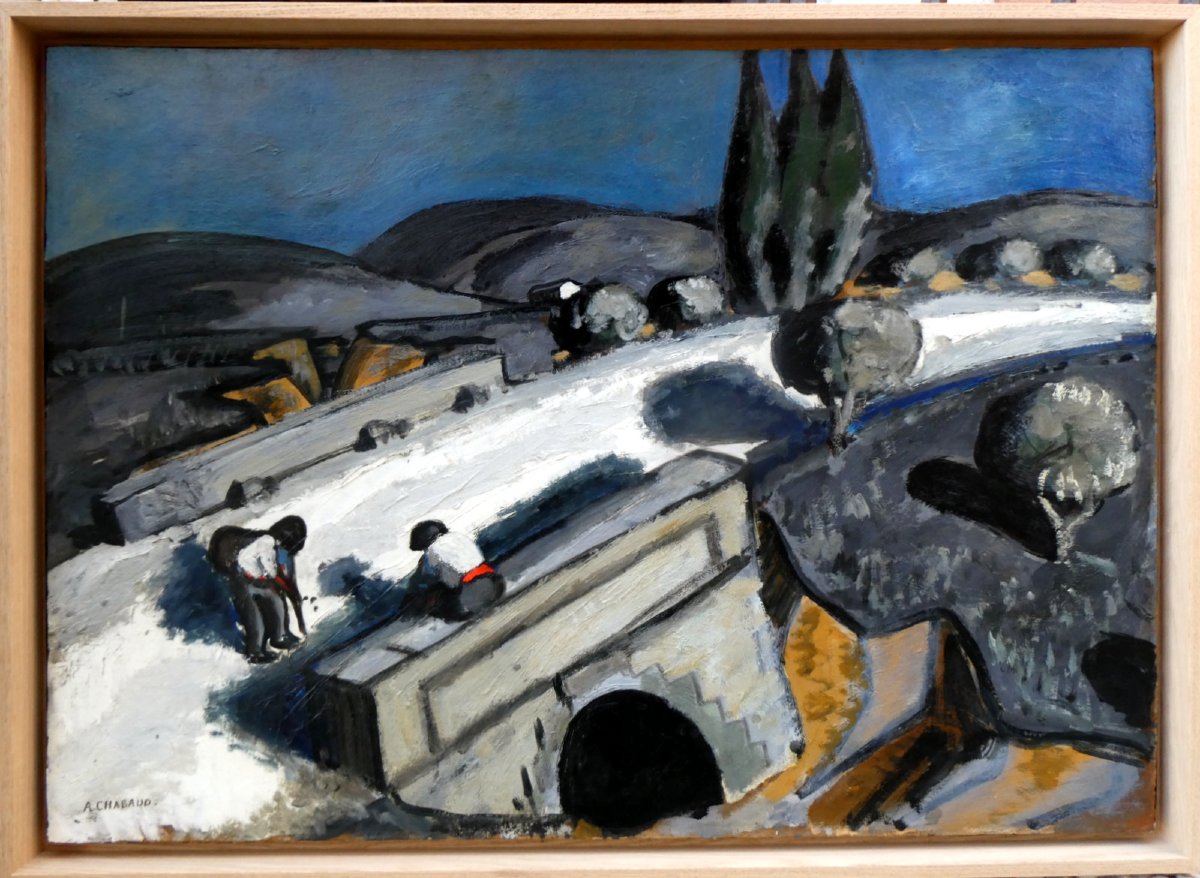
It is presented in a modern American-style frame made of natural oak, measuring 83 cm by 114 cm, with the painting itself measuring 76.5 cm by 107.5 cm.
It depicts a landscape of the Alpilles near Les Baux-de-Provence and Saint-Rémy, brought to life by two figures on a bridge.
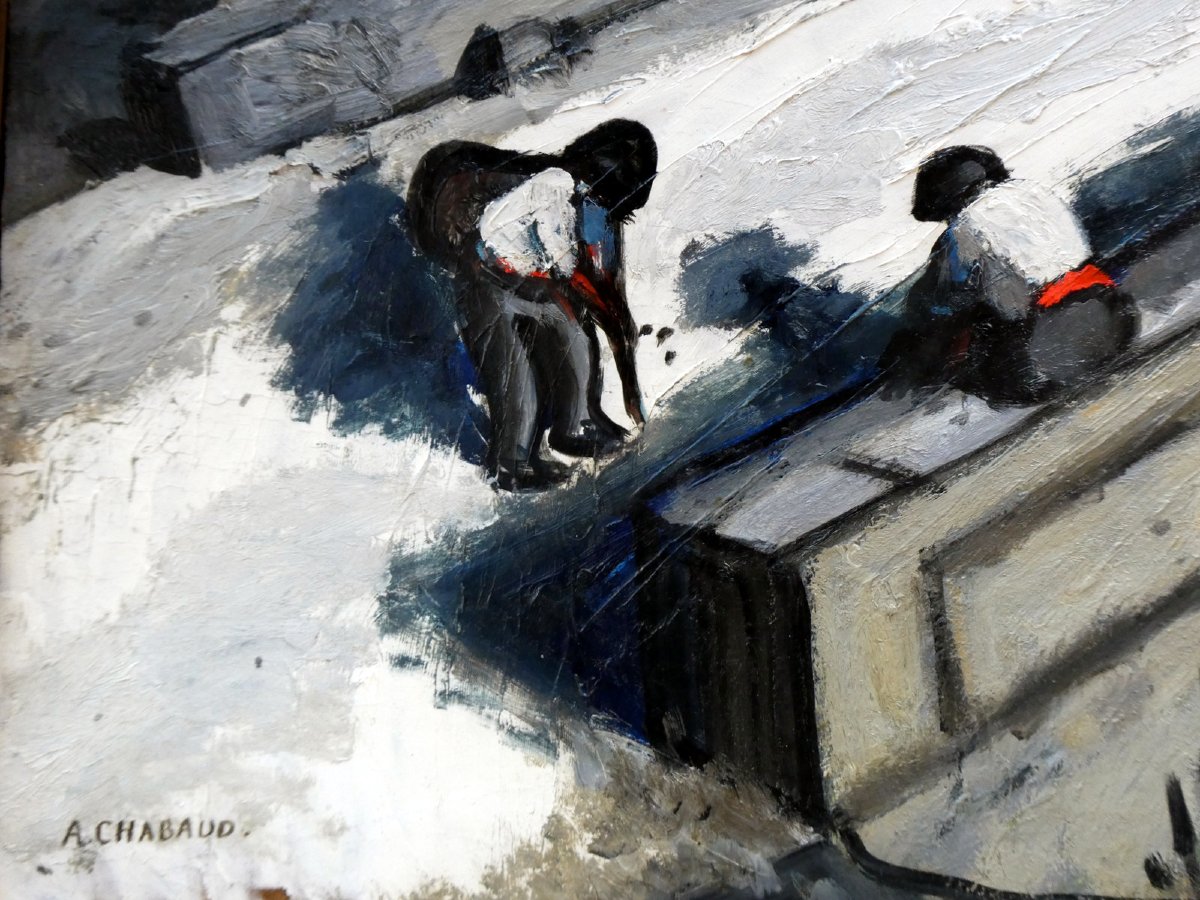
It is signed in the lower left corner, countersigned on the back, and titled “Chemineaux sur le pont” (Wanderers on the Bridge), which, according to the definition in the dictionary, refers to vagabonds on the roads who make a living through odd jobs,alms, and petty theft.
A work of imposing scale—modern, powerful, and intense—that leaves no one indifferent.
Auguste Chabaud entered the Avignon School of Fine Arts in 1896, where he studied under Pierre Grivolas. Then, in 1899, he went to Paris to continue his studies at the Académie Julian and the École des Beaux-Arts, in the studio of Fernand Cormon (1845-1924). There he met Henri Matisse and André Derain. His parents' vineyard suffered during the 1900 economic crisis, forcing Auguste Chabaud to return to the South of France. In 1901, to earn a living, Auguste Chabaud had to leave Paris and signed on as a pilot on a ship, discovering the West African coast. That same year, his father died; he and his brother inherited the vineyard and the land, which only his brother would manage. During this period, Chabaud worked extensively on butcher's paper. From 1903 to 1906, he served in the military in Tunisia, returning with sketchbooks filled with local scenes, including numerous drawings of soldiers, indigenous people, and bar scenes populated by women and sailors. Back in Paris, Chabaud made his debut in 1907 at the Salon des Indépendants, exhibiting alongside the Fauves. He discovered a new life: Parisian nightlife and cabarets. Collectors began to take an interest in his work. In Montmartre, where he had his studio, he painted the bustling and deserted streets and squares, scenes of nightlife, and brothels. In 1911, he began his Cubist period, working on large canvases and sculpting.
Numerous exhibitions followed, including one in New York in 1913 where he exhibited alongside Henri Matisse, André Derain, Maurice de Vlaminck, and Pablo Picasso, and later in Chicago and Boston.
His Fauvist paintings depict Parisian nightlife: cabarets, café-theaters, prostitutes, rendered in vibrant colors (yellow, red) contrasting with the colors of the night (navy blue, black).
Upon his return from the First World War in 1919, Auguste Chabaud settled permanently in Graveson, in the Alpilles mountains.
From 1920 onward, he began his Blue Period (using pure Prussian blue) in which Provence, its people, and its customs took center stage.
The South, which he had never ceased to paint, even during his time in Paris, would henceforth occupy his entire life.
Like Paul Cézanne with Mont Sainte-Victoire, Auguste Chabaud immortalized "the small mountain," painting rural scenes of peasants traversing the hills and paths of the Alpilles. He remained there until the end of his life, living a secluded life in his home with his wife and seven children.
Nicknamed the "Hermit of Graveson," he died in 1955.
Some of his works can be seen in Marseille at the Cantini Museum, in Paris at the National Museum of Modern Art and the Museum of Modern Art of the City of Paris, and in Geneva at the Petit Palais.
In 1992, the PACA Regional Council opened a museum in his honor in Graveson. Painters regularly pay tribute to him, such as Claude Viallat in 2003.
Auguste Chabaud wrote poems and books such as: *L'Estocade de vérité*, *Le Tambour Gautier*, and *Je me suis pris pour Démosthène*.
Works in public collections:
France: Toulon, Museum of Art: *Villeneuve-lès-Avignon*, oil on cardboard, 53 × 76 cm.
Troyes, Museum of Modern Art: *La Gare*, 1907, oil on canvas, 73 × 100 cm.
Centre National Pompidou, Beaubourg Museum Paris,
Hermitage Museum Saint Petersburg,
Vatican Museum Rome,
Switzerland Geneva, Petit Palais Museum.
The work, in excellent condition, is executed, as is often the case, in oil on cardboard.
It is presented in a modern American-style frame made of natural oak, measuring 83 cm by 114 cm, with the painting itself measuring 76.5 cm by 107.5 cm.
It depicts a landscape of the Alpilles near Les Baux-de-Provence and Saint-Rémy, brought to life by two figures on a bridge.
It is signed in the lower left corner, countersigned on the back, and titled “Chemineaux sur le pont” (Wanderers on the Bridge), which, according to the definition in the dictionary, refers to vagabonds on the roads who make a living through odd jobs,alms, and petty theft.
A work of imposing scale—modern, powerful, and intense—that leaves no one indifferent.
Auguste Chabaud entered the Avignon School of Fine Arts in 1896, where he studied under Pierre Grivolas. Then, in 1899, he went to Paris to continue his studies at the Académie Julian and the École des Beaux-Arts, in the studio of Fernand Cormon (1845-1924). There he met Henri Matisse and André Derain. His parents' vineyard suffered during the 1900 economic crisis, forcing Auguste Chabaud to return to the South of France. In 1901, to earn a living, Auguste Chabaud had to leave Paris and signed on as a pilot on a ship, discovering the West African coast. That same year, his father died; he and his brother inherited the vineyard and the land, which only his brother would manage. During this period, Chabaud worked extensively on butcher's paper. From 1903 to 1906, he served in the military in Tunisia, returning with sketchbooks filled with local scenes, including numerous drawings of soldiers, indigenous people, and bar scenes populated by women and sailors. Back in Paris, Chabaud made his debut in 1907 at the Salon des Indépendants, exhibiting alongside the Fauves. He discovered a new life: Parisian nightlife and cabarets. Collectors began to take an interest in his work. In Montmartre, where he had his studio, he painted the bustling and deserted streets and squares, scenes of nightlife, and brothels. In 1911, he began his Cubist period, working on large canvases and sculpting.
Numerous exhibitions followed, including one in New York in 1913 where he exhibited alongside Henri Matisse, André Derain, Maurice de Vlaminck, and Pablo Picasso, and later in Chicago and Boston.
His Fauvist paintings depict Parisian nightlife: cabarets, café-theaters, prostitutes, rendered in vibrant colors (yellow, red) contrasting with the colors of the night (navy blue, black).
Upon his return from the First World War in 1919, Auguste Chabaud settled permanently in Graveson, in the Alpilles mountains.
From 1920 onward, he began his Blue Period (using pure Prussian blue) in which Provence, its people, and its customs took center stage.
The South, which he had never ceased to paint, even during his time in Paris, would henceforth occupy his entire life.
Like Paul Cézanne with Mont Sainte-Victoire, Auguste Chabaud immortalized "the small mountain," painting rural scenes of peasants traversing the hills and paths of the Alpilles. He remained there until the end of his life, living a secluded life in his home with his wife and seven children.
Nicknamed the "Hermit of Graveson," he died in 1955.
Some of his works can be seen in Marseille at the Cantini Museum, in Paris at the National Museum of Modern Art and the Museum of Modern Art of the City of Paris, and in Geneva at the Petit Palais.
In 1992, the PACA Regional Council opened a museum in his honor in Graveson. Painters regularly pay tribute to him, such as Claude Viallat in 2003.
Auguste Chabaud wrote poems and books such as: *L'Estocade de vérité*, *Le Tambour Gautier*, and *Je me suis pris pour Démosthène*.
Works in public collections:
France: Toulon, Museum of Art: *Villeneuve-lès-Avignon*, oil on cardboard, 53 × 76 cm.
Troyes, Museum of Modern Art: *La Gare*, 1907, oil on canvas, 73 × 100 cm.
Centre National Pompidou, Beaubourg Museum Paris,
Hermitage Museum Saint Petersburg,
Vatican Museum Rome,
Switzerland Geneva, Petit Palais Museum.
14 000 €
Period: 20th century
Style: Other Style
Condition: Perfect condition
Material: Oil painting on cardboard
Length: 107,5 cm
Height: 76,5 cm
Reference (ID): 1792728
Availability: In stock
Print