




Katana Tsuba – Zaimei - Mogarashi Nyudo Soten Sei Goshu Hikone-ju
Artist: Mogarashi Nyudo Soten Sei Goshu Hikone-ju
Soten-Style Katana Tsuba – Zaimei - MogarashiNyudo Soten Sei Goshu Hikone-ju
Selling price, excluding shipping costs.
Thistsuba is a fascinating testament to the craftsmanship of Omi Province (Goshu).
A: Unlikethe better-known works of the Soten school, which are often characterized by anextreme density of figures and narrative details, this tsuba adopts amore understated and refined approach.
The: Despite this stylistic difference,it bears the signature of Mogarashi Nyudo Soten and thelocation of the Hikone workshop. This makes it a rare piece that raisesfascinating questions about the diversity of production within a singleworkshop or the specific style of the artisan who signed this piece.
It is a tangible testamentto the craftsmanship of Omi Province, a major center for the production ofsword fittings during the Edo period. Whether the piece comes directly from themaster’s workshop or from a regional workshop working in the same tradition, itis an authentic collector’s item, endowed with beautiful,poetic iconography.
IDENTIFICATION:
Associated school: Mogarashi Soten (Hikone)
Period: Edo period (1603–1868)
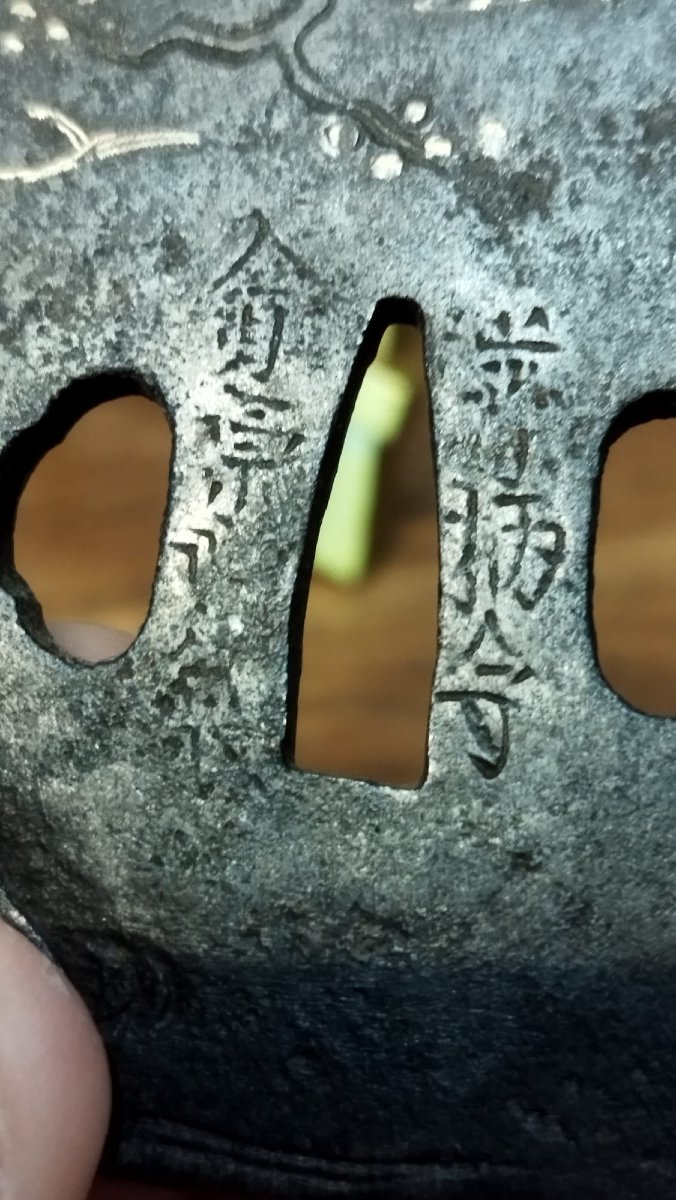
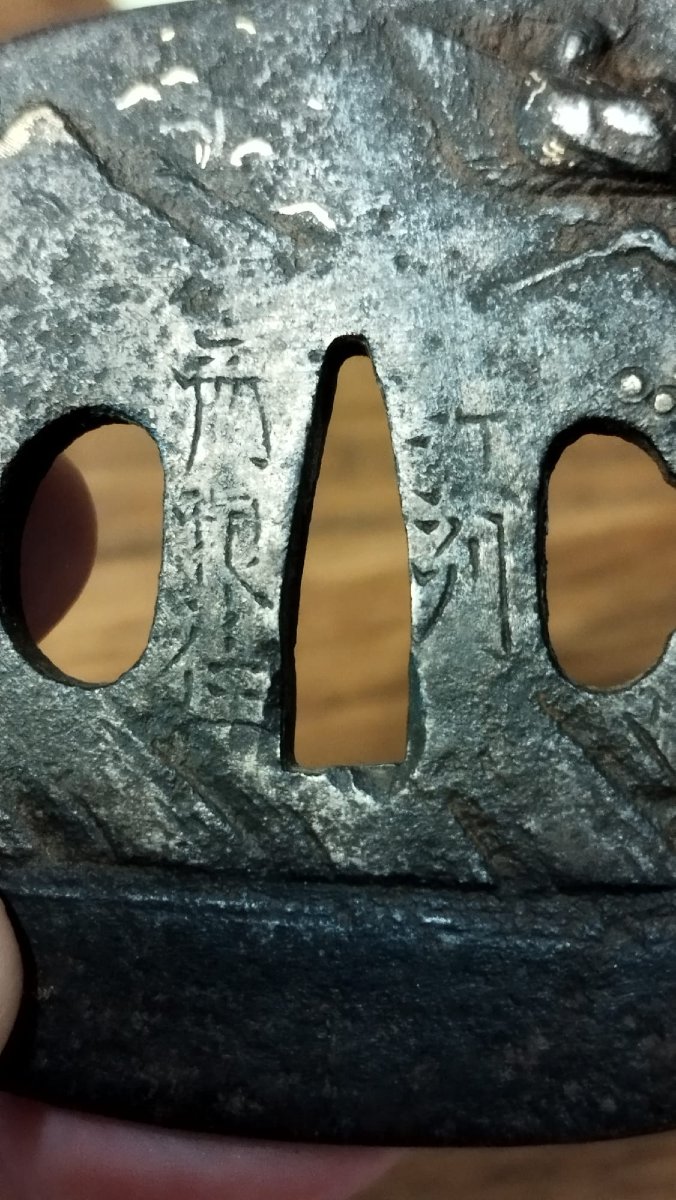
Signature(Mei):
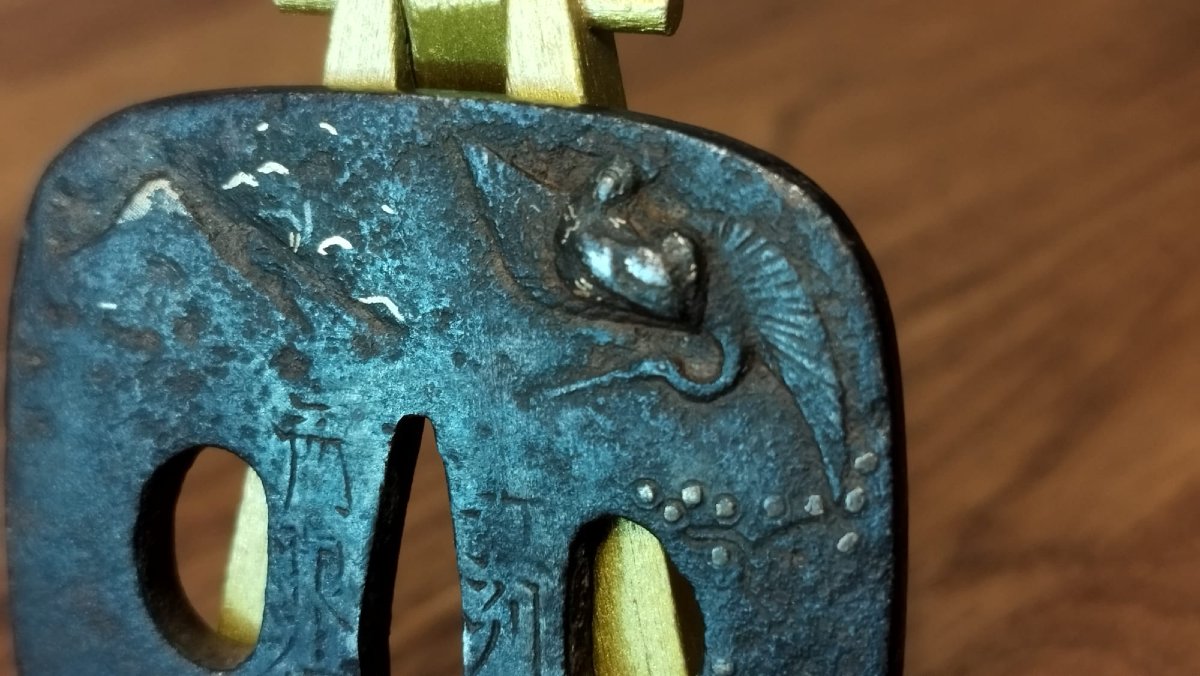
Ura Side: 藻柄子 入道宗典製 (Mogarashi Nyudo Soten Sei)
Omote Side: 江州 彦根住 (Goshu Hikone-ju)
Note on the Signature:
Thepiece bears the signature and traditional location marks ofthe Hikone school. In the realm of Edo-period tsuba, these signatureswere frequently used by workshops in Omi Province, whetherthey were direct productions by Master Soten or works fromcontemporary workshops operating within the same aesthetic and geographical tradition.
CHARACTERISTICS:
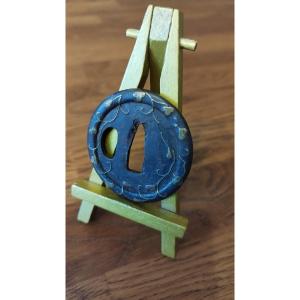
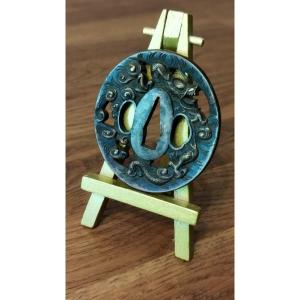
Materials: Forged iron, inlays of Shakudo (preciousmetals).
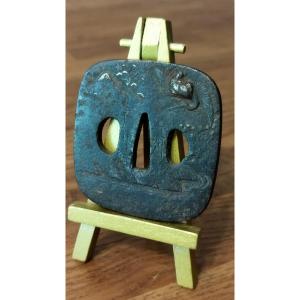
Dimensions: 7 cm x 7.2 cm
Weight : 175 gramsShape: Nade-kaku-gata (rectangular withrounded corners).
ARTISTIC DESCRIPTION AND CONDITION:
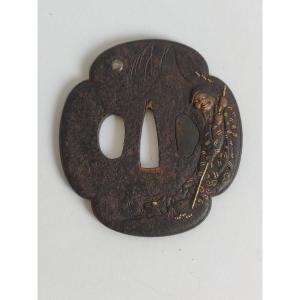
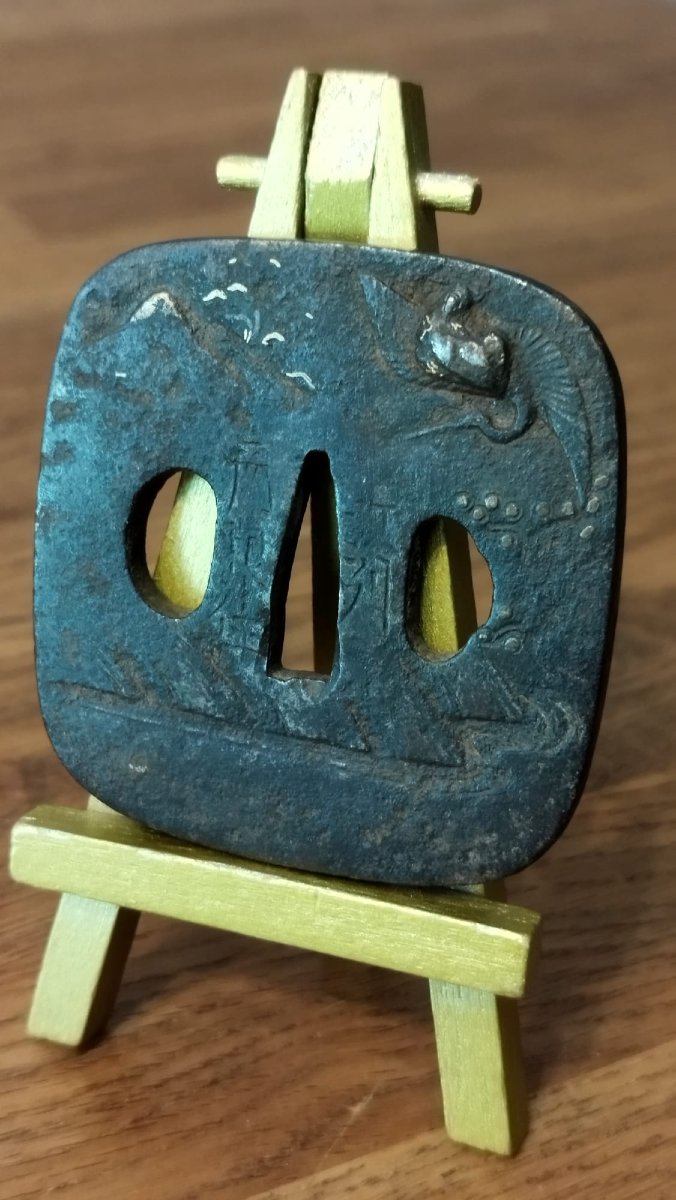
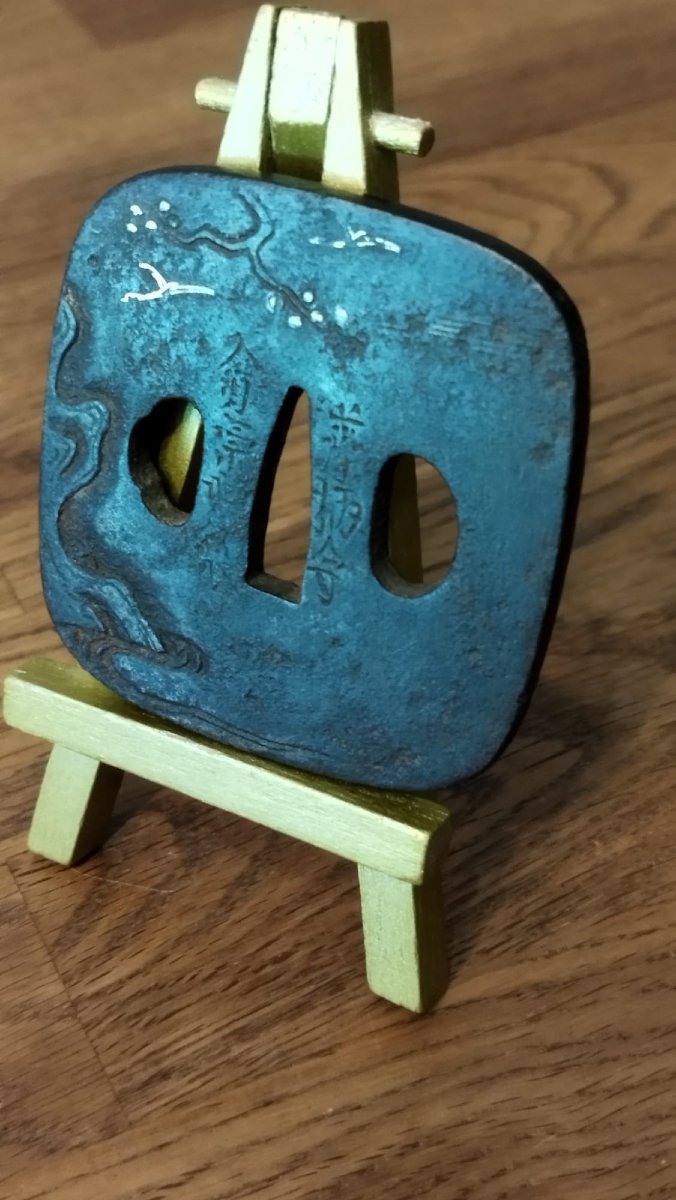
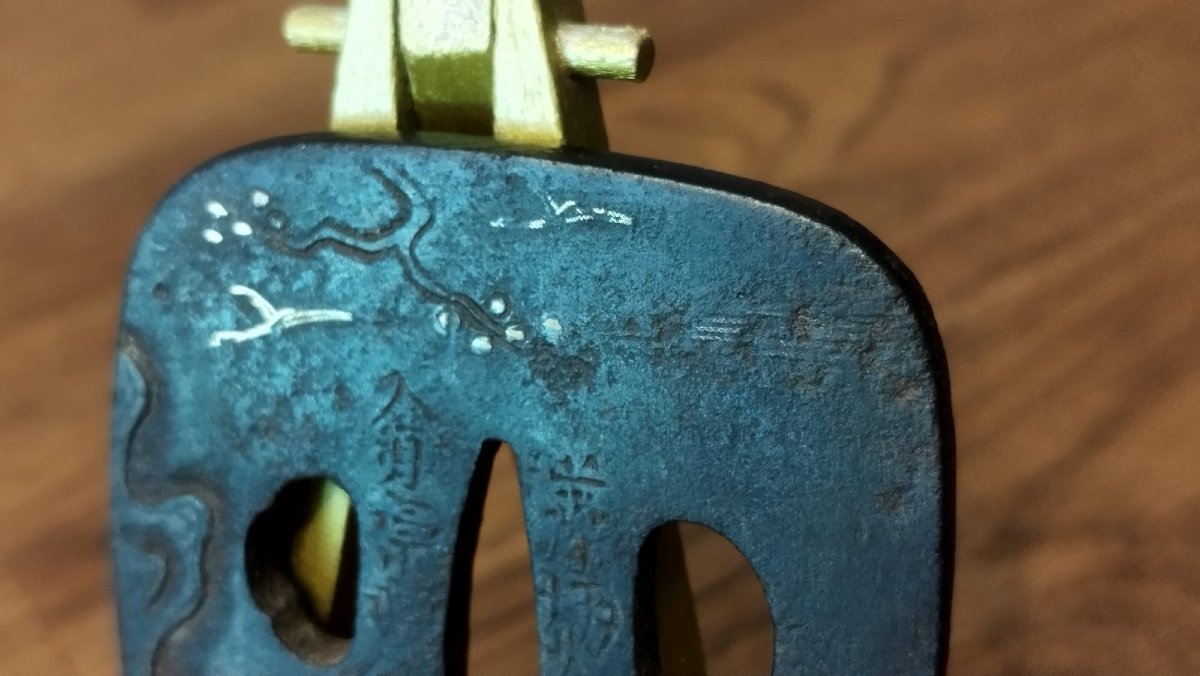
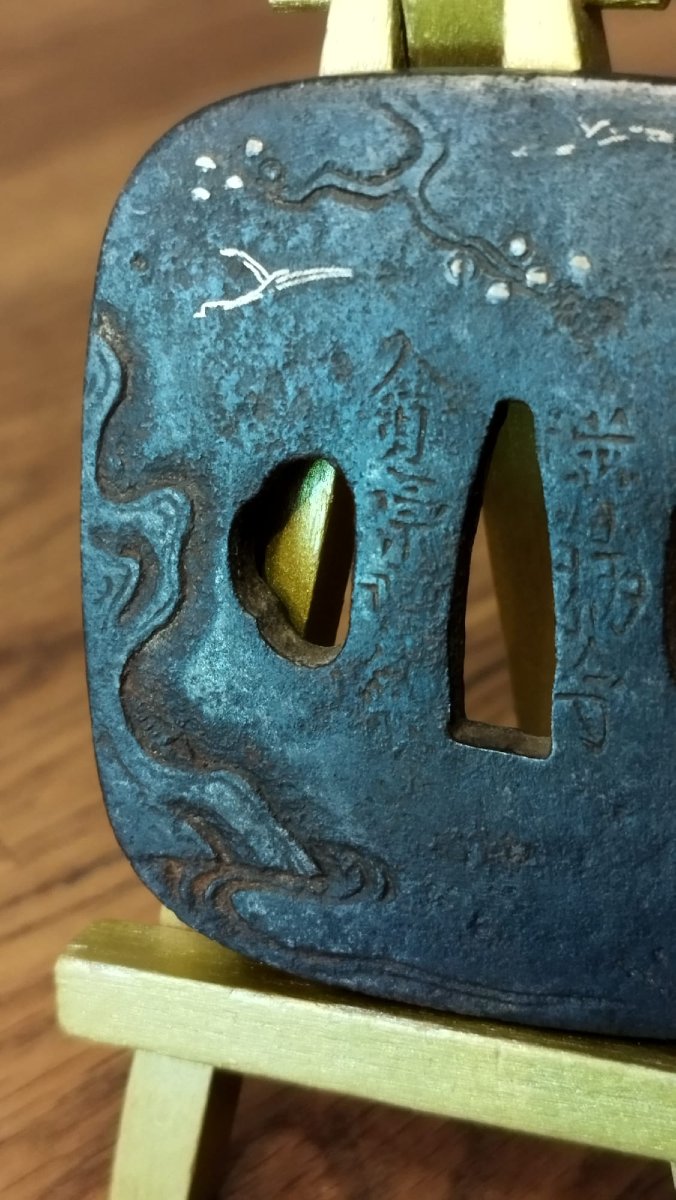
Iconography: The scene depicts a classic landscape: acrane in flight, Mount Fuji in the background, and a river. These themes areemblematic of the narrative imagery of Japan during that period.
Style: The piece features relief work (Taka-zogan)characteristic of regional production in Omi. The contrast between thedark patina of the iron and the metallic details creates a balanced aesthetic,typical of prestigious samurai mountings.
Condition: The tsuba displays a natural, antique patina,consistent with a piece from the Edo period. The wear on the inlays attests to its historical age.
Selling price, excluding shipping costs.
Thistsuba is a fascinating testament to the craftsmanship of Omi Province (Goshu).
A: Unlikethe better-known works of the Soten school, which are often characterized by anextreme density of figures and narrative details, this tsuba adopts amore understated and refined approach.
The: Despite this stylistic difference,it bears the signature of Mogarashi Nyudo Soten and thelocation of the Hikone workshop. This makes it a rare piece that raisesfascinating questions about the diversity of production within a singleworkshop or the specific style of the artisan who signed this piece.
It is a tangible testamentto the craftsmanship of Omi Province, a major center for the production ofsword fittings during the Edo period. Whether the piece comes directly from themaster’s workshop or from a regional workshop working in the same tradition, itis an authentic collector’s item, endowed with beautiful,poetic iconography.
IDENTIFICATION:
Associated school: Mogarashi Soten (Hikone)
Period: Edo period (1603–1868)
Signature(Mei):
Ura Side: 藻柄子 入道宗典製 (Mogarashi Nyudo Soten Sei)
Omote Side: 江州 彦根住 (Goshu Hikone-ju)
Note on the Signature:
Thepiece bears the signature and traditional location marks ofthe Hikone school. In the realm of Edo-period tsuba, these signatureswere frequently used by workshops in Omi Province, whetherthey were direct productions by Master Soten or works fromcontemporary workshops operating within the same aesthetic and geographical tradition.
CHARACTERISTICS:
Materials: Forged iron, inlays of Shakudo (preciousmetals).
Dimensions: 7 cm x 7.2 cm
Weight : 175 gramsShape: Nade-kaku-gata (rectangular withrounded corners).
ARTISTIC DESCRIPTION AND CONDITION:
Iconography: The scene depicts a classic landscape: acrane in flight, Mount Fuji in the background, and a river. These themes areemblematic of the narrative imagery of Japan during that period.
Style: The piece features relief work (Taka-zogan)characteristic of regional production in Omi. The contrast between thedark patina of the iron and the metallic details creates a balanced aesthetic,typical of prestigious samurai mountings.
Condition: The tsuba displays a natural, antique patina,consistent with a piece from the Edo period. The wear on the inlays attests to its historical age.
750 €
Period: 17th century
Style: Asian art
Condition: Excellent condition
Material: Wrought iron
Reference (ID): 1791970
Availability: In stock
Print